

'MLB 15 The Show' Review: Gameplay Videos, Features and Impressions
"Baseball is better." That's what Sony tells us in its tagline for the MLB The Show series. Since the franchise's inception back in 2006, the statement has been true for the most part. The Show was consistently better than the now defunct MLB 2K, and it currently ranks near the top when compared to the other sports game franchises that are still in existence.
Like every new season in real life, every year presents a different challenge for developers to not only top the last effort but to do something that no other game in the sports video game genre is doing.
TOP NEWS

Unranked CFB teams cause chaos in Week 8

Brown with an all-time summary of relationship with Tatum

More top teams upset and more takeaways from CFB Week 8
In almost every case, MLB 15 The Show accomplishes its goals.
Important Information
This has been one heck of a review process, to say the least. Normally, I'd have the game in hand a week or so before release date to put it through the paces in each mode. This year, Sony didn't release any copies of the game until release day at midnight. This came in digital form and anyone who has ever had to download a game on PlayStation 4 or Xbox One knows it can take a while.
Luckily, I was at the MLB 15 The Show spring training event in Scottsdale, Arizona, on Monday. I was able to get two full games in against the CPU. Once I returned home, I had a hard copy, and I've been a reviewing fool ever since.
That said, some online components that were working crisply on release day seemed to be a bit less responsive on Wednesday, when perhaps the servers were a little more taxed. This could be temporary, and it won't actually impact the final review score.
Patches and updates are almost a given with any release these days, but it's worth mentioning. That said, here's my take on the latest version of The Show.
The Look
Likes
MLB 14 The Show looked really good, but MLB 15 looks great.
Before the players even take the field, the game looks beautiful. Lighting and shading make all the difference. The new sun positioning that recognizes the time of your game and progresses realistically makes everything on the field pop. Even during night games, the action, players and crowd seem to come alive.
Based on the stadium renders, this game jumps to the head of the class as it pertains to realistic environments in sports games.
Every single stadium looks photo realistic, from unique grass patterns to signature nuances in the outfield and surrounding area.
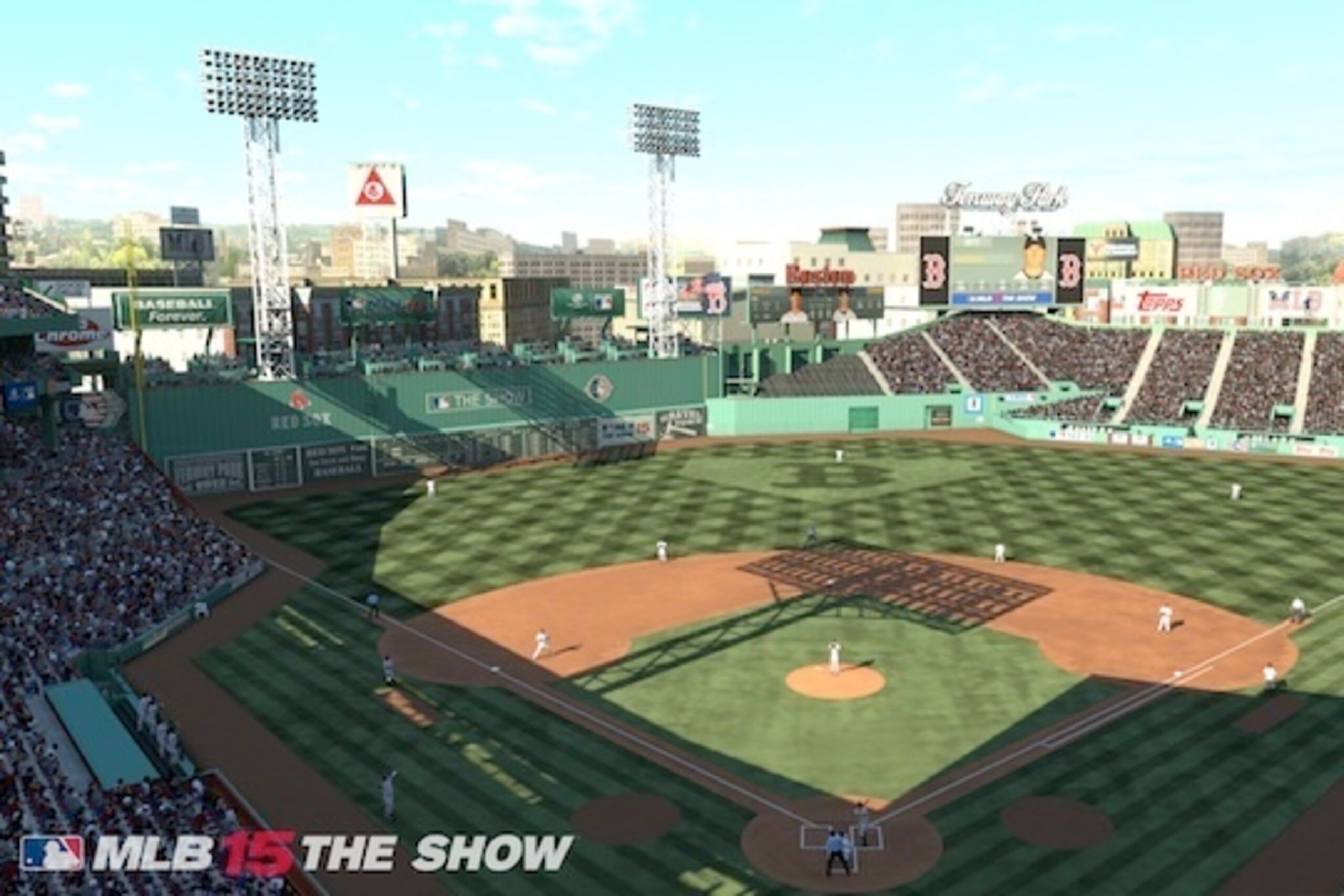
Even the color of the infield dirt is stadium-specific. At the beginning of games, when the dirt is still wet, you can see the discolorations that the wetness creates. Marks in the dirt from slides are more pronounced, as are the stains left on player jerseys after sliding, diving or dodging inside pitches.
The visual excellence doesn't end with the environments. Players look far more lifelike thanks to the new skin-tone-matching technology. In previous versions, every player had to be tagged with one of eight skin tones. In this year's game, a color match was taken from every player's skin to ensure the complexion was accurately depicted in the game.
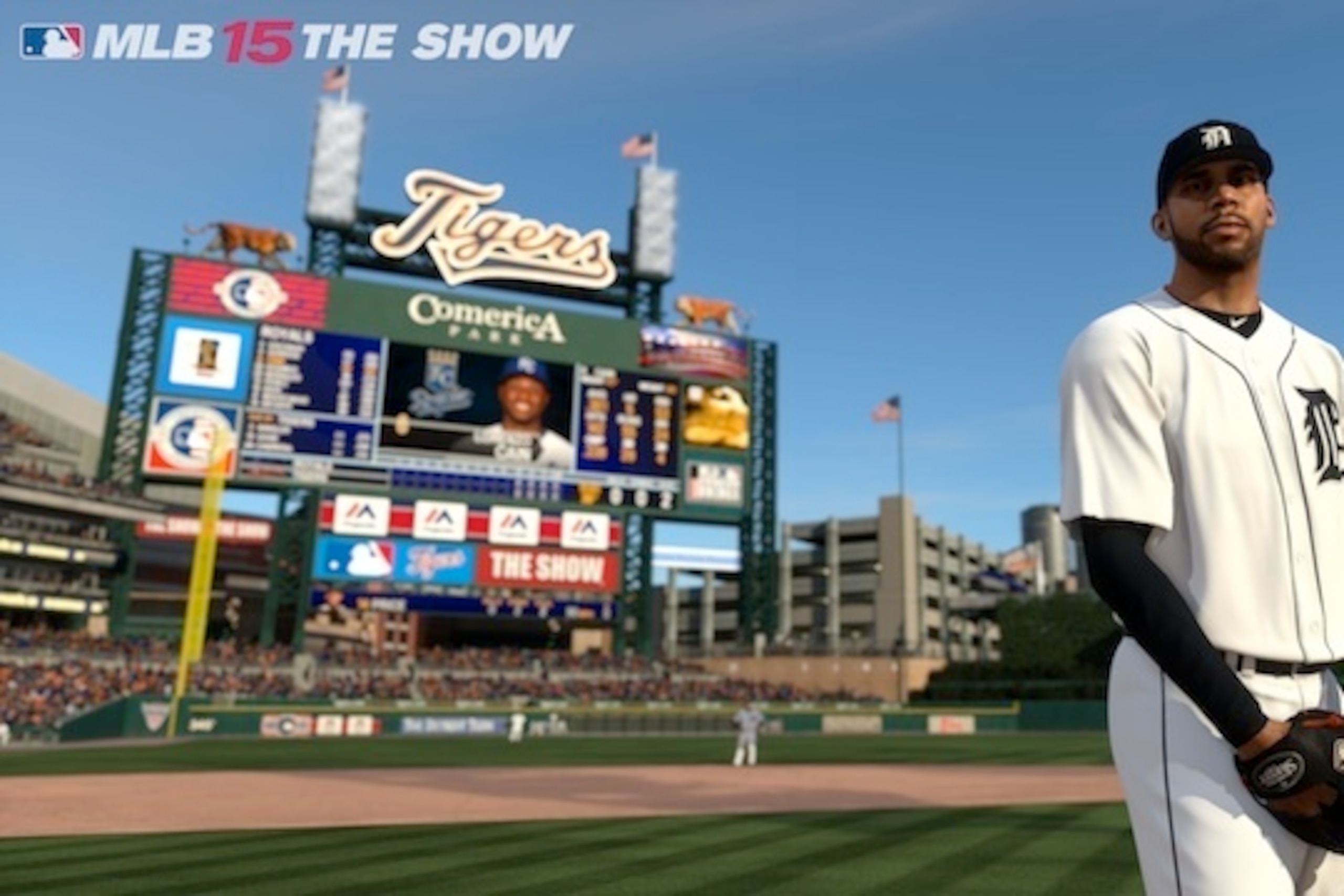
When you put such authentic player models under the realistic sun and shadows of each recreated ballpark, the results are downright impressive.
For the most part, animations are still smooth, and that aspect has been augmented by countless new physical actions players do at different points in the game.
For example, when a player is clearly going to be out on a routine grounder, he doesn't run as hard as he would if the play was going to be close. There's also a ton of new third-out animations that add some realism.
Dislikes
The player's hair is still a bit generic. Everyone has the same texture, and for some players it looks inappropriate. For example, the Toronto Blue Jays Jose Reyes' beard is straight in texture in the game but not in real life.
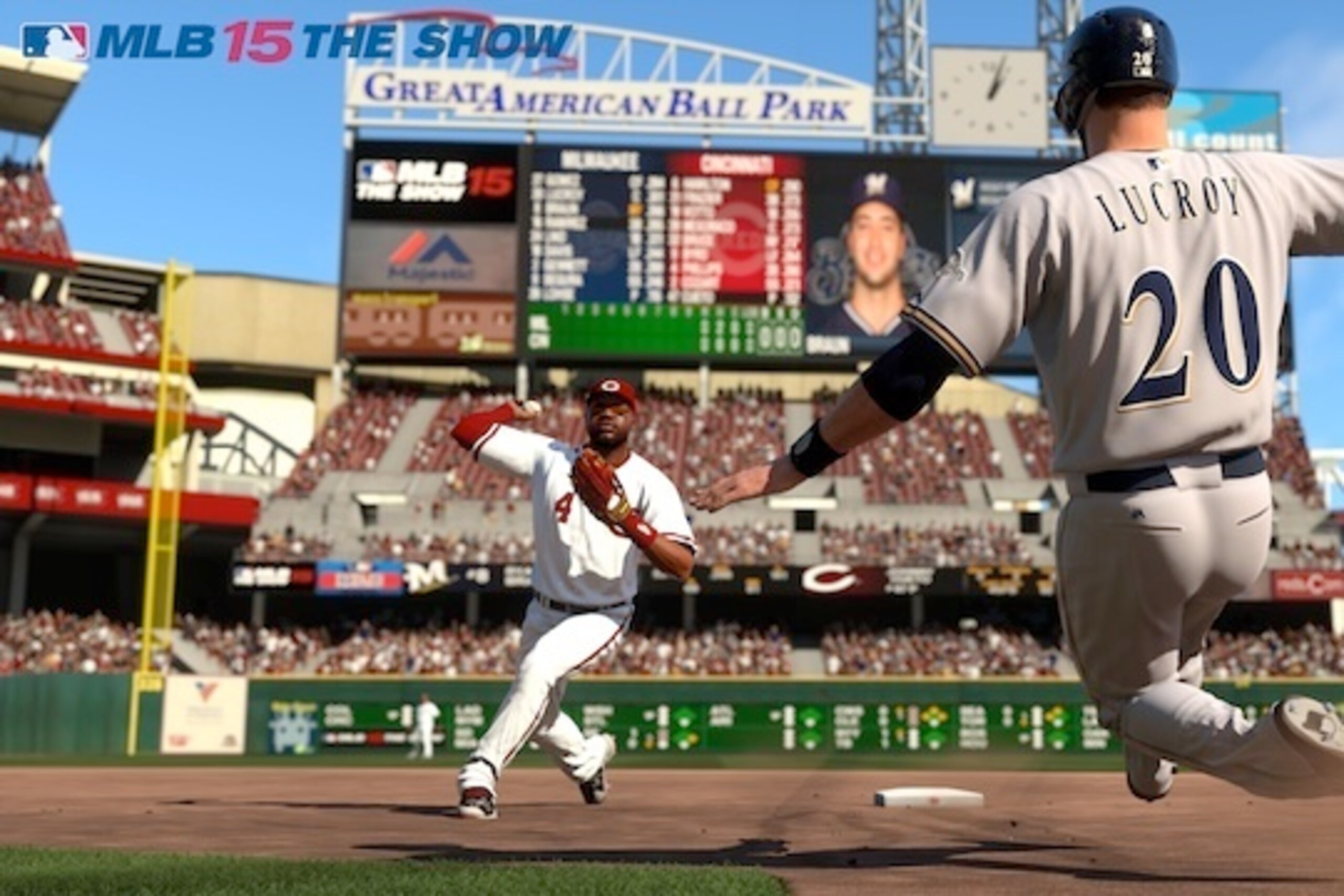
His player model is not the only one with that issue. Nearly everyone with the slicked-back style looks a bit unnatural when or if his hat comes off. It's relatively minor considering how good most everything else looks, but it's still something that should be pointed out while we gush over stadiums, skin tones and grass patterns.
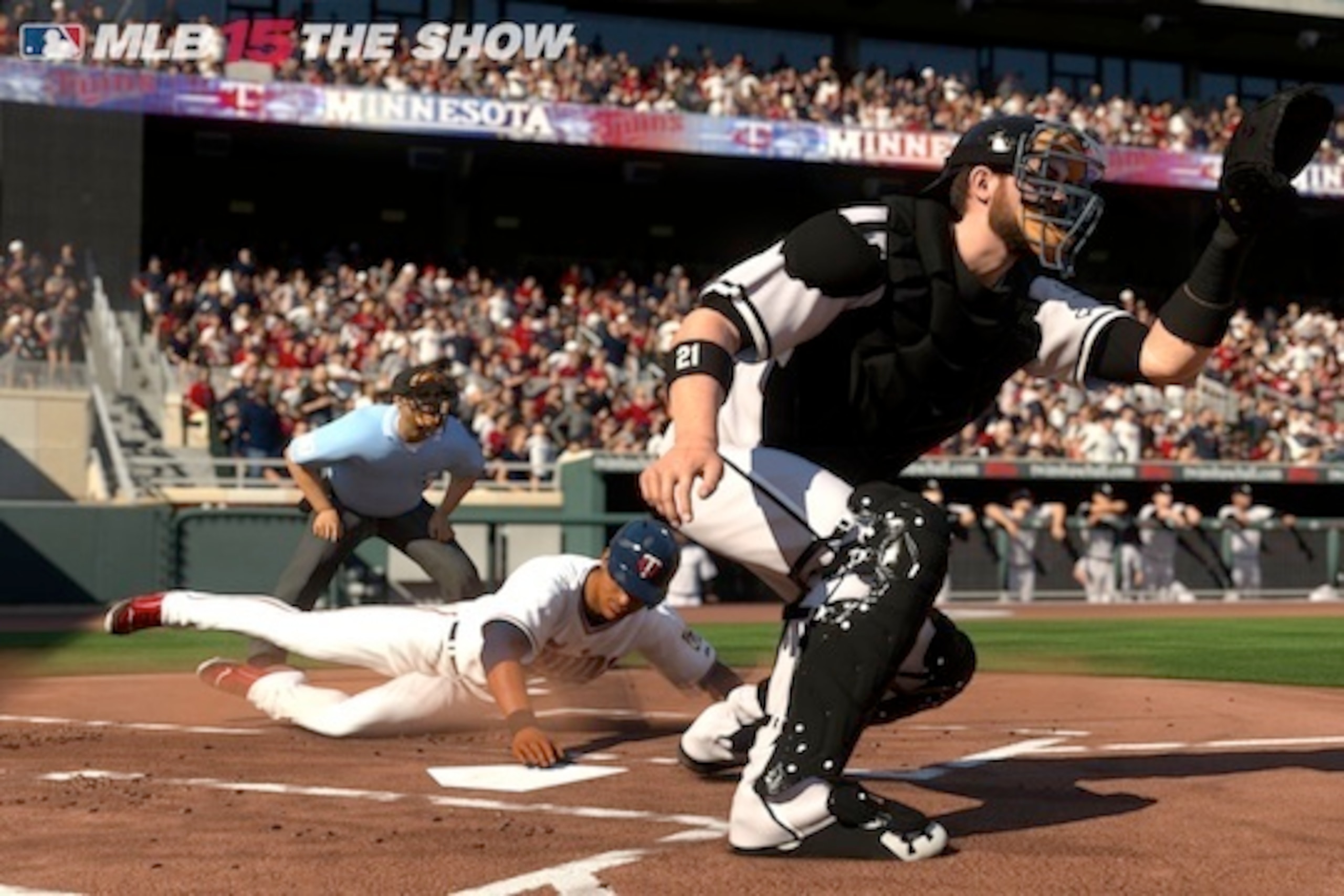
Also, the animations still have a few too many pass-throughs on the basepaths. If you run the replay on a bang-bang play at first, you may see arms and bodies passing through one another. This is a common issue in sports games. To be frank, the only game that seems to have totally licked this issue is FIFA 15.
While there isn't as much physical interaction between players in baseball as there is in soccer, it's still a part of the game that could be improved upon.
The Feel
Likes
One of the best things about The Show over the years has been its gameplay. There have been some bumps along the way, like speed ratio issues that made triples impossible and some inconsistent trajectory on batted balls. Thankfully, that stuff was cleared up for the most part two or three years ago, and the latest versions of the series have played both fun and realistic.
That being said, MLB 15 builds on the positives from previous versions and smartly adds a few key features without changing too much.
The biggest addition is directional hitting. When you're at the plate, you're able to actually try to pull the ball or go the other way. This is different than past versions when the direction you hit the ball was based purely on the timing of your swing and the type of hack you took.
When I originally heard about this feature, I was lukewarm on the concept. The one concern I had was that the directional hitting would completely override the timing aspect. That's actually not the case at all.
It works together in a realistic fashion that appears to accurately simulate the marriage between timing and the hitter's intention. For the cyber aspect of the situation, each hitter's spray chart also influences the direction the ball goes when he makes contact. Here's a spot of gameplay I posted on FranchisePlay's YouTube channel.
Perhaps the best thing about this feature—and just about every new feature The Show adds—is you don't have to use it if you don't want to. There are certain aspects of The Show's gameplay that I love, and it's cool that the developers don't force-feed you their newest idea.
It's more of "try this, see if you like it." If not, go back to your way.
Dislikes
The other major gameplay addition is the fielder's path to fly balls in the outfield. This takes some getting used to. After an unhealthy amount of innings in a 72-hour span, I've come to the realization that I don't like it very much.
I totally get the concept and what the devs were going for, but it seems to cause a few too many errors on routine plays. I'm a believer that sports video games shouldn't present a stiff learning curve for what should be easy tasks for professional ballplayers. In some ways, it feels like that's what this feature does.
After all, I'm not me when I play, I'm Mike Trout doggone it.
The Immersion
Likes
I'll admit, I totally undersold the inclusion of licensed equipment in the game. It seemed like just one of those fluffy things that really wouldn't matter much while I was playing.
I won't say it's the thing that should sell you on purchasing a copy of the game, but it's a little more than nice to have. The texture of the leather on the gloves, and the way the respective logos pop off the equipment, brings a level of authenticity that definitely boosts the overall immersion.
Within franchise modes, you have the ability to grab sponsorships that can be incorporated into your TV-style broadcast. This also helps add to the feeling that you're watching/playing a real baseball game.
Most of the sound effects are the same as previous versions, aside from some nice new organ music in certain ballparks. Since that has been a positive area of the game, it remains a recognizable quality.
Aside from licensed equipment, the other huge presentation addition is the new radio show that plays between games during your franchise modes and Road to the Show experience.
The virtual broadcast is called Inside the Show, and it serves as a way to update gamers on what's going on around the league within the mode they're playing. Trade announcements, rumors, injuries, hot streaks and scores are announced. It's a nice first step from a full-season, full-league immersion standpoint.
Dislikes
There are new lines of commentary in MLB 15 but still no conversational elements between Matt Vasgersian, Eric Karros and Steve Lyons. All three men still sound as if they are in different rooms recording their audio.
While it's better than games like WWE 2K in this regard, it's still not on par with the likes of FIFA 15 and NBA 2K15. In blowouts, these three should be telling stories with the action in the game as more of an afterthought—unless there's a significant comeback.
That's the way real baseball broadcasts are handled.
Another gripe is with the previously mentioned radio show. I acknowledge it was a nice step in the right direction, but I wonder how long it'll be before people stop listening to content. It's delivered dryly and without the benefit of video, it seems to fall flat.
I don't want it to go away, but I do want it to be a little sexier.
The Depth
Likes
The positives are plenty when it comes to the overall options in MLB 15. First and foremost, the franchise mode has been given increased depth with the addition of general manager contracts.
You won't be rewarded for failing to meet ownership expectations. Those expectations are team-specific. There is also performance-based player progression. Just because you have a prospect with high ratings for his age doesn't mean he'll become a stud. He has to perform well with what he has to continue to reach his potential.
I simulated a season with the Chicago Cubs. Second baseman Javier Baez is one of the organization's top prospects. In this his second season in the majors, he hit .256 with 23 home runs with 73 RBI. He saw all of his pertinent and relevant ratings go up from two to four points.
In another season, he struggled and put up a sub-.200 batting average with nine homers. Baez stats were static in most areas, but he did see some decline in other ratings.
That realism is good for franchise modes. There's also new trade logic and thankfully a trade finder. In other versions of The Show, simply completing a trade was worrisome because it was hell trying to find a willing trade partner.
Now you simply choose the player you want to move and you'll see what teams are willing to give you.
In franchise mode, your objectives are to win and make virtual dough. You can do that by obtaining the aforementioned licenses and incorporating them into your stadium and broadcast elements. The licenses come with cool incentives such as $10,000 for every home run hit, etc.
Overall, these additions work to make more aspects of franchise mode compelling.
The other mode that has seen notable improvements is Diamond Dynasty. I've shied away from DD beyond playing it enough to evaluate the mode in previous years, but this year's incarnation may be enough to get me to play past the week of release.
MLB 15 is furthering its concept of virtual currency, building on some solid principles and blazing a few trails of its own. First, you don't have to play DD to start building a team. You're awarded cards for every mode you play.
Whether it's exhibition, franchise, online or Road to the Show, you'll get cards when the game is done. This is a smart way to get gamers who haven't tried the mode to give it a look.
If you've played DD in the past, you might be pleased to see the more simplified menu and overall concept. Other games that use the trading card/fantasy sports concept require you to manage the contracts of the players you acquire through virtual pack openings.
It can get a little cumbersome. It was especially bothersome in MLB The Show because the menus were a mess before. This has changed in MLB 15. Once you have a player, he's yours to keep for as long as you want him. That's pretty cool.
Overall, DD is easier to get into and hooked on.
Another new concept in the mode is the DD Player. MLB 15 has you create one player who will be the signature player on your team. He can play any position, and you build him up by feeding him unwanted cards. Obviously, if you just give him only scrubs, he won't improve quickly. However, if you give him star players—or even legends—he'll become a beast.
This concept makes duplicate cards much more useful.
I mentioned legends. For the first time, legends are incorporated in DD as unlockable players, and there are 30 with one representing every current major league organization. What's even better is that the unlocked legends are transferable to your franchise modes.
No other game that uses a similar concept allows that. Hopefully, MLB 15 will be the trend-setter in this regard.
Also along the lines of breaking new ground is the full implementation of the year-to-year saves feature. It can't be overstated how important this feature is to the sports game genre. Like no other type of video game, sports games are episodic. Thus, having the option to continue what you began in the previous version of the game only makes sense. Before now, no other sports game allowed this seemingly essential feature.
Baseball is a long season. You stand to experience more if you can chain together your experience from last year's version. The video below explains how to pick up where you left off in franchise and Road to the Show.
Quick Counts and Player Lock return as an option for those looking for a quicker game and different experience. I enjoyed them both last year. Changes have been made to QC to help allow some of the strategy that was taken away in shortening the game, but some issues can't be changed while still maintaining the concept of quickening the pace.
Dislikes
Road to the Show is virtually untouched, which leaves it lagging behind similar modes from other franchises—namely NBA 2K. There's no storyline to alter the experience, and it's kind of bland. The gameplay and journey are still fun, but it's clear this concept could use a refresh in the same way the franchise mode has been updated.
I wouldn't be surprised if that was a major focus for MLB 16.
The year-to-year saves is obviously excellent, but what is missing is the ability to carry over roster saves from previous versions. If you're a roster creator like myself who puts in a lot of work on a roster from MLB 14, that labor kind of gets wasted.
You could start a franchise with the roster and carry it over, but you'll never have that base you created or continue the work on a really long project. That's a bummer and something that can hopefully be fixed in future versions.
Lastly, there's the absence of a feature that I've been pining for over the years: the ability to create a ballpark. It makes so much sense for a baseball video game. It could really help to set off the customization of your DD team and your franchise mode.
Overall
To call MLB 15 just good would be an understatement. Frankly, it's superb. While there are some things I'd like to see added or refreshed, those areas are overwhelmingly overshadowed by the awesome look, gameplay and depth.
Simply put, this is the best baseball game ever.
The Bottom Line: 9
Follow Brian Mazique aka FranchisePlay, the Sports Video Game Journalist

.jpg?w=2560 "Chiefs Giants Football")
.jpg?w=2560 "Jonathan Taylor Landing Spots 📍")

.jpg?w=2560 "5 Teams Eyeing Jonathan Taylor")

