

Selecting MLB's 2015 All-Future Team
In less than a week, Major League Baseball's 2015 regular season will begin. But just for fun, let's pretend the 2020 campaign were about to get underway.
In that fantastical, five-years-in-the-future world, what would be the best team one could put together on paper, filling out all nine positions along with four extra starting pitchers and a closer?
Because the goal strictly is to consider talent, salaries aren't a factor.
Oh, and one more important caveat: You can choose only players who either will be on Opening Day 2015 rosters or who already have made their big league debuts.
In other words, selecting Kris Bryant or Byron Buxton or Lucas Giolito isn't an option.
Join us as we time-jump to April 2020 and concoct a 14-man team, all with the goal of being a playoff-contending, championship-caliber club five years from now.
Keep in mind, that's a long, long way away, and age, despite the saying, is more than just a number when it comes to a baseball career.
Catcher: Salvador Perez, Kansas City Royals
1 of 14
Much as Yadier Molina and Buster Posey merit consideration merely by virtue of being the two best backstops in the game the past several seasons, by 2020, the former could be out of the majors and the latter will be well on the wrong side of 30, which is when catchers often tend to break down or move off the position to prolong their careers.
If allowed to choose a prospect, the pick would be Blake Swihart a nearly big league-ready youngster who has both the offensive and defensive skill set to become the sport's next great catcher. Alas, even with the recent injury to Christian Vazquez, Swihart is unlikely to crack the Boston Red Sox's Opening Day roster.
The other quality candidates are Yan Gomes and Devin Mesoraco, but even both of them will be 31 or older. Plus, they have but one season as full-timers on their resumes. More is needed, especially from a position that arguably requires more out of a player than any other in the game.
Thus, Salvador Perez of the Kansas City Royals gets the nod behind the dish, because he'll be only 29 years old five Aprils from now, and already he's been one of the better all-around backstops in baseball for two seasons.
First Base: Anthony Rizzo, Chicago Cubs
2 of 14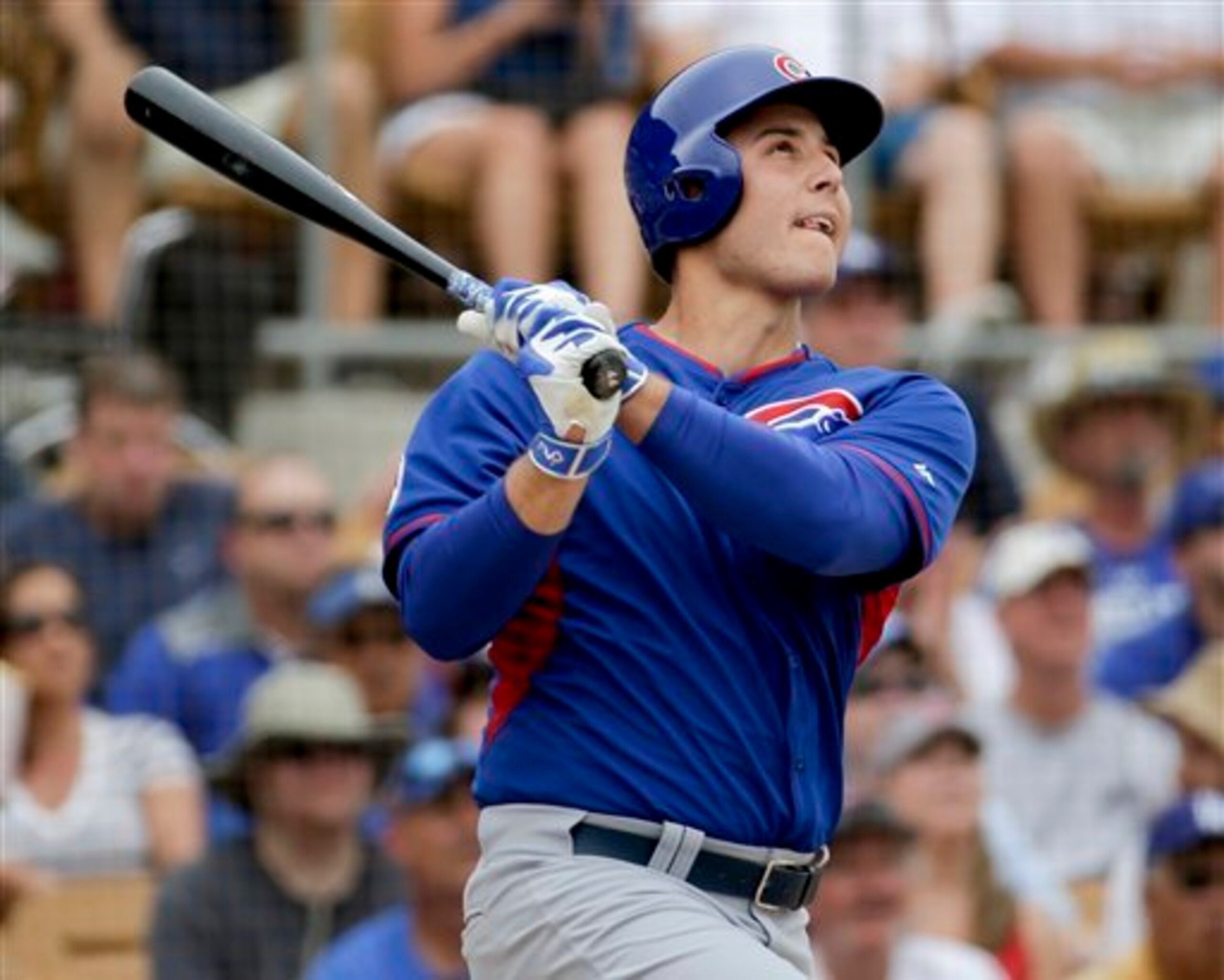
Some will argue for either Paul Goldschmidt or Jose Abreu, two in-their-prime-right-now stars who should be great for the next few seasons. But Goldschmidt will be 32 and Abreu 33. At that point, we'd be looking at two players who likely would be clinging to their last very good (or maybe great, if we're lucky) season.
And as Hall of Fame-worthy as Miguel Cabrera has been, that won't mask the fact that he'll be turning 37 years old in 2020 (but still making $30 million for the Detroit Tigers).
That leaves a choice between the Atlanta Braves' Freddie Freeman and the Chicago Cubs' Anthony Rizzo, and in that fight of in-the-future 30-year-olds, we'll take Rizzo.
First base is a power-based position, and Rizzo's career isolated power (ISO) is .196, compared to Freeman's .179 mark. And Rizzo's number is on the rise after his breakthrough 2014 in which he slugged a career-high (so far) 32 home runs while also proving he can, in fact, not only handle but actually hurt left-handers (.300/.421/.507).
That's a sign that Rizzo, who's a really good defensive player too, can get even better.
Second Base: Jose Altuve, Houston Astros
3 of 14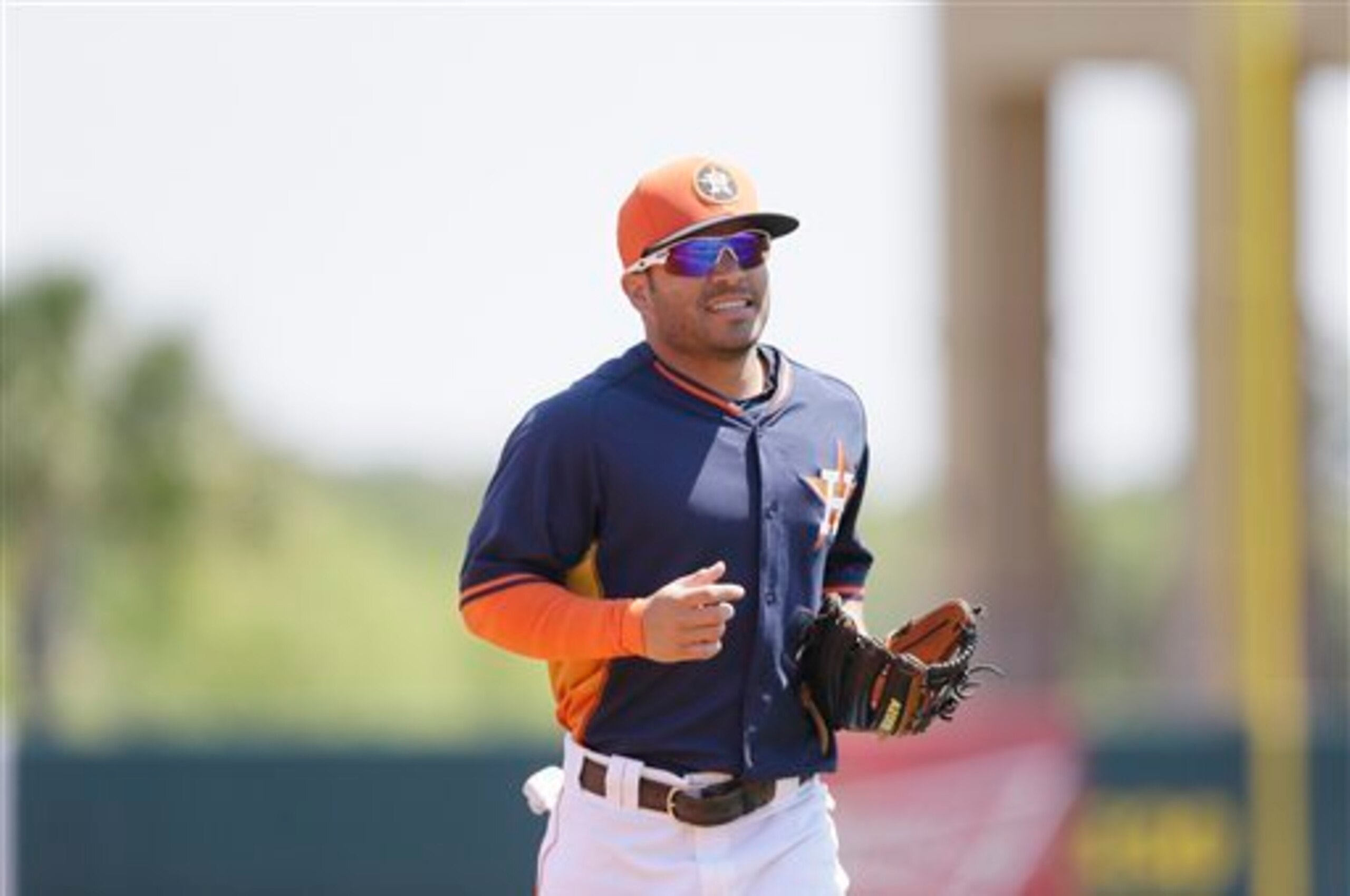
Were we including prospects, then it sure would be fun to feature Yoan Moncada, the not-yet 20-year-old, switch-hitting Cuban phenom who just signed with the Boston Red Sox.
Robinson Cano, meanwhile, is as consistent and durable as any player in baseball, having played at least 157 games each of the past eight seasons. But that consistency and durability will have dwindled, if not burned out, by the time 2020 rolls around. He'll be 37 by then (and earning $24 million per, it's worth reminding, even if it's not a factor here).
In case you were pondering Dustin Pedroia, he has become injury-prone and already is on the downside at 31. Oh, and both Jason Kipnis and Brian Dozier are entering their age-28 campaigns in 2015. Older than you thought, right?
That leaves the best choice as Jose Altuve, the Houston Astros' diminutive keystoner with a skill set that should age rather gracefully.
Altuve, who will be just 29 years old, possesses elite contact-making ability (10.7 strikeout rate for his career), and his athleticism and speed also should hold up well enough for the next half-decade.


Third Base: Manny Machado, Baltimore Orioles
4 of 14
As mentioned in the intro, Kris Bryant isn't eligible, because as you probably have heard by now, he's not starting 2015 in the majors.
Even though Evan Longoria (34 in 2020) and Josh Donaldson (34) will be old and Adrian Beltre will be turning an out-of-baseball ancient 41, third base might have the most candidates for this theoretical 2020 team of all positions, thanks to the likes of Nolan Arenado, Kyle Seager and Anthony Rendon.
A few weeks ago, the call very likely would have been Rendon for his all-around breakthrough in 2014. But the news of a sprained MCL in his left knee—and that he's going for a third opinion on the injury, per James Wagner of The Washington Post—makes it difficult to pick a player who is actively injured (which sounds like an oxymoron but isn't).
Granted, this could be the kind of thing that is in the past in just a few short weeks, but color us more than slightly concerned given Rendon's lengthy injury history involving his lower-body extremities (i.e., legs and ankles).
So the final answer is Manny Machado, who comes with his very own injury concerns after each of his past two seasons ended prematurely with knee surgeries, but who also has proved to be an elite defensive player with still-untapped offensive potential—all while entering his age-22 campaign.
That's not an insignificant final factor between Rendon, who would be 30 in 2020, and Machado, who will be merely 27.
Shortstop: Andrelton Simmons, Atlanta Braves
5 of 14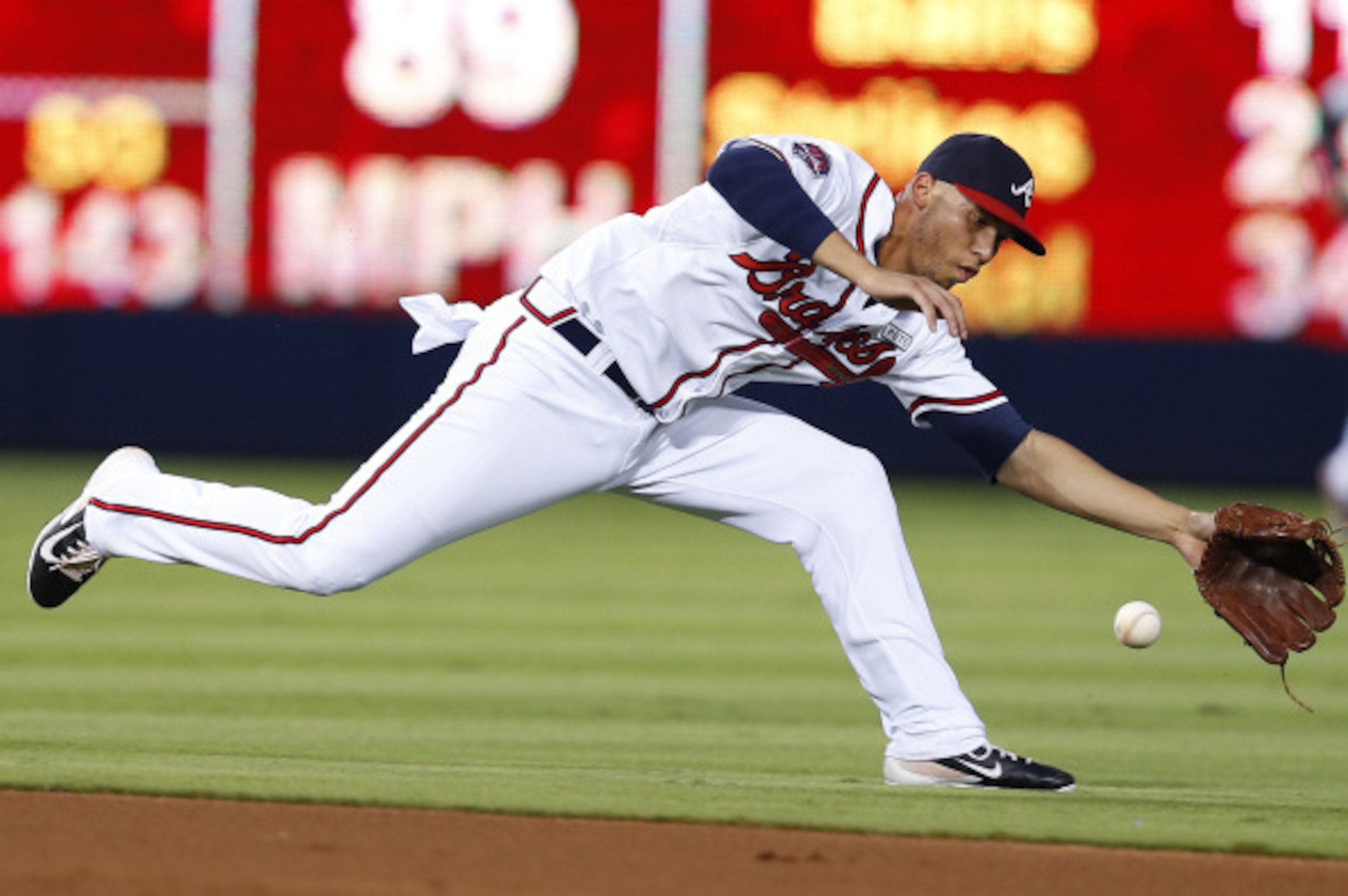
This decision wasn't easy because of the dearth of high-end talent already in the majors at this shallow position.
Apologies to Ian Desmond and Troy Tulowitzki, who are 29 and 30, respectively, right now, but they'll be too far into the twilight of their careers to be trusted as everyday shortstops in five years.
The best candidates, then, become the Boston Red Sox's Xander Bogaerts, who has some of the best upside in the sport but remains very much an unproven question mark of a player, and Andrelton Simmons, the defensive wizard of the Atlanta Braves.
This either/or presents a fundamental difference: the iffy defender who is more potential than production on offense or the stalwart defender with the non-intimidating stick.
If forced to choose right now—and that's the idea here—then it's Simmons. While his bat might not be much more than league average even in his prime when he's 30 in 2020, there's at least some hope that Simmons' incredible contact skills (9.6 strikeout percentage) will translate to a little more production.
And even if not, he's one of just a few players in baseball who can get by simply on his defense, especially from the shortstop spot. Like speed, that's something that never slumps, so Simmons should be plenty great even in a half-decade, whereas Bogaerts might not be able to capably handle the position by then.
If Bogaerts' bat breaks out in a big way in 2015, however, we reserve the right to tell ourselves "we told us so."
As an aside: There are oh-so-many shortstop prospects on the verge of breaking into the bigs, including Addison Russell, Carlos Correa, Corey Seager, Francisco Lindor and J.P. Crawford. Although none of them were pick-able here, it's going to be a fun position to watch over the next five seasons.
Outfield: Mike Trout, Los Angeles Angels
6 of 14
Easiest call in this entire endeavor.
Mike Trout has gotten his career off to a historically great start, posting a .305/.395/.549 career line, compiling 29.5 wins above replacement in three years (per FanGraphs) and winning an MVP—all by the tender age of 23.
With the Los Angeles Angels superstar being an elite hitter and runner who can play an up-the-middle position in center field, it's hard to see anyone being better between now and 2020, when Trout still will be in his prime at 28 years old.
Outfield: Giancarlo Stanton, Miami Marlins
7 of 14
Giancarlo Stanton deserves a spot in our 2020 outfield simply for his uncanny power, the one tool that is most at a premium in baseball's pitching-dominated environment right now. Hence, the Miami Marlins' decision to make Stanton the sport's first $300 million man ($325 million, to be exact).
That massive money also speaks to Stanton's age—he's just 25 entering 2015—and the scary-to-think possibility (likelihood?) that we haven't seen the best of him yet.
As great as his 2014 was, one gets the feeling Stanton's .288/.395/.555 with an NL-best 37 home runs won't wind up being his career year, especially if he can put together a string of healthy seasons.
Outfield: Bryce Harper, Washington Nationals
8 of 14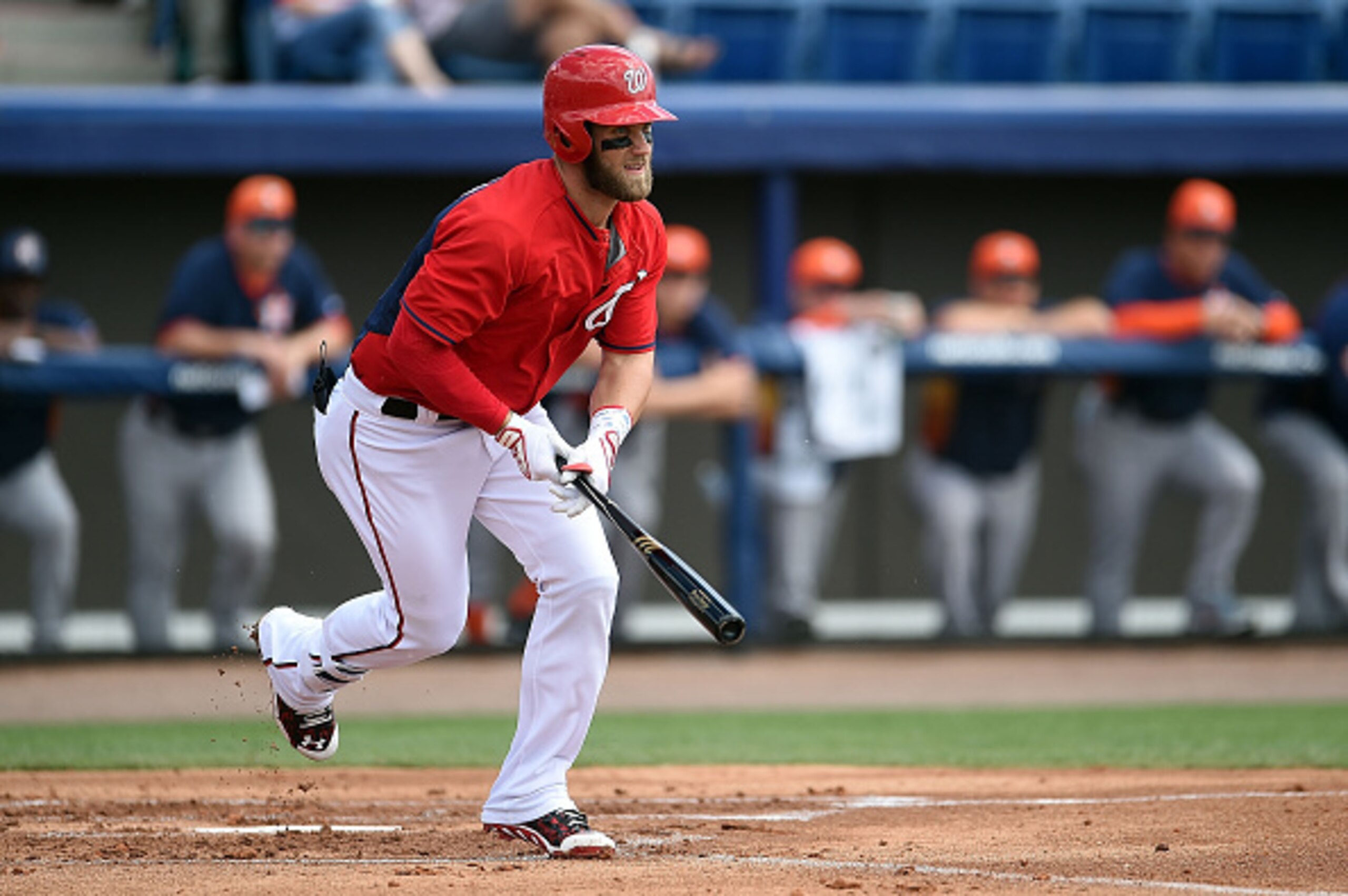
On one hand, remember: Byron Buxton, who is still in Double-A, can't be considered, although he would be a fun long-term play in this final outfield spot.
On the other hand, much as we'd like to think all-around superstar and 2013 NL MVP Andrew McCutchen still could be going strong in 2020, he'll be entering his age-33 season at that point, which might be asking too much when there are plenty of other options at a deep position. Ditto for Carlos Gomez, who will be 34.
As for Jason Heyward (30 in 2020), Christian Yelich (28) and Starling Marte (31), all of them still will be in their primes, but none has quite the upside of the player we're choosing.
That would be Bryce Harper.
Sure, you could argue that he's been disappointing to date relative to the hype, what with a .272/.351/.465 career line and an already lengthy injury history. But we'll argue that at age 22, Harper has more than held his own and only barely has scratched the surface of what his skill set and drive should allow him to become.
And in case you're yelling at your screen right now, yes, it pains us to pass on Yasiel Puig, who feels like he belongs but can't quite fit as long as baseball still requires only three starting outfielders in 2020. For what it's worth, Harper's lefty bat helps his cause a bit, because Rizzo is the only other southpaw-swinger of this bunch.
No. 1 Starter: Clayton Kershaw, LHP, Los Angeles Dodgers
9 of 14
When it comes to selecting a starting staff five years in advance, it's almost an exercise in futility and disappointment. Inevitably, it seems, some or all of these pitchers will suffer some sort of major career-threatening injury between now and then, thus rendering their inclusion here risky at best and utterly useless at worst.
That said, we simply can't quit Clayton Kershaw, not when he's still at the very top of his game in 2015 and still only 27 years old. In other words, he has a chance to be effective in 2020, unlike, say, Felix Hernandez, Max Scherzer or Adam Wainwright, three current studs who will be in their mid- to late 30s by then.
Besides, Kershaw is a generational player who possesses the fortitude, competitive nature and leadership qualities not only to front but also guide any rotation. Besides, since we're talking about five years in the future anyway, we're banking that Kershaw will have those pesky postseason pockmarks cleared up by then.
No. 2 Starter: Matt Harvey, RHP, New York Mets
10 of 14
Matt Harvey has had but one (nearly) full season in the majors—two years ago now—and yet he's still making this team based on how stupidly dominating he was before undergoing Tommy John surgery in 2013 (2.27 ERA, 0.93 WHIP, 9.6 K/9) and how back-to-full-strength he looks this spring.
Although it's something of a gamble to go with Harvey here based on his missing all of 2014, his 17-to-1 strikeout-to-walk ratio in 18.2 innings this exhibition season is an encouraging enough sign that he is ready to roll.
"I feel just as normal as I ever have," Harvey said after his most recent outing, according to Tim Rohan of The New York Times. "To know I can throw strikes with everything right now, I’m pretty happy."
And by "everything," Harvey—who just turned 26 on March 28—means his upper-90s heater, wicked slider, improving curveball and dive-bombing changeup. That four-pitch repertoire should help him be great for a long time.
No. 3 Starter: Chris Sale, LHP, Chicago White Sox
11 of 14
The only reason Chris Sale checks in as the No. 3? To split up him and fellow southpaw Clayton Kershaw. Otherwise, the nasty-as-all-get-out lefty with unhittable-at-times stuff would fit just fine as the No. 2.
Like Matt Harvey, Sale just turned 26 at the end of March, so he will be 31 come the 2020 season, providing hope that he still will have another great year or two at that time.
Heck, we're talking about a pitcher who owns a 2.76 ERA, 1.07 WHIP and 9.8 K/9 for his career, so even if Sale is a somewhat diminished version of himself by then, we're buying.
No. 4 Starter: Jose Fernandez, RHP, Miami Marlins
12 of 14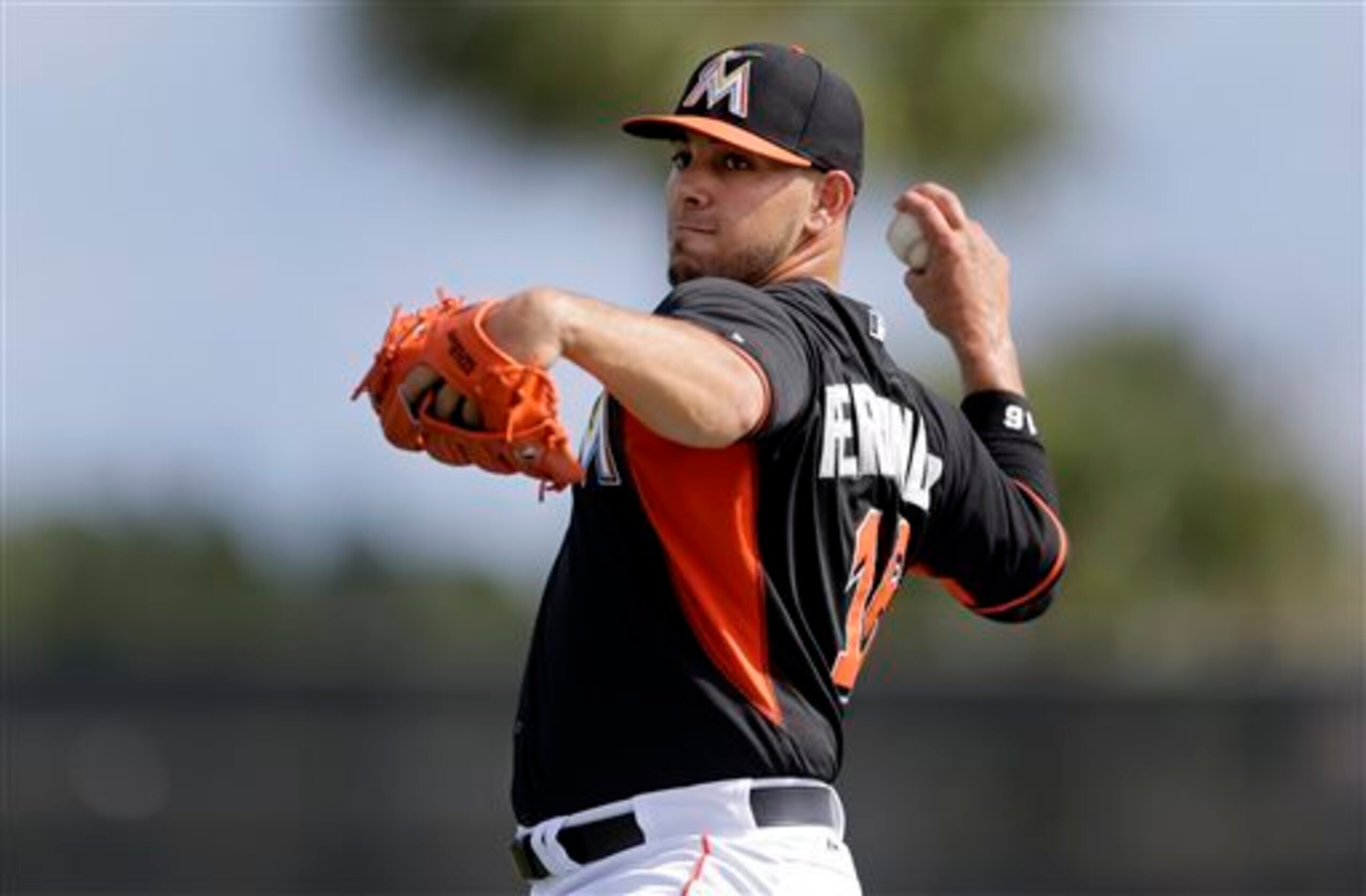
Frankly, the 22-year-old phenom probably could be the ace of this staff in 2020, when he'll be 27. But until we see Jose Fernandez make it all the way back from Tommy John surgery later this summer, we'll avoid putting that kind of responsibility on him.
Prior to his elbow ligament giving out last May, Fernandez was becoming perhaps the most must-watch starting pitcher in the sport, thanks to his explosive arsenal and his bulldog-on-the-mound demeanor. All of which resulted in a 2.25 ERA, 0.97 WHIP and 10.3 K/9 through his first 36 starts in the majors.
No. 5 Starter: Madison Bumgarner, LHP, San Francisco Giants
13 of 14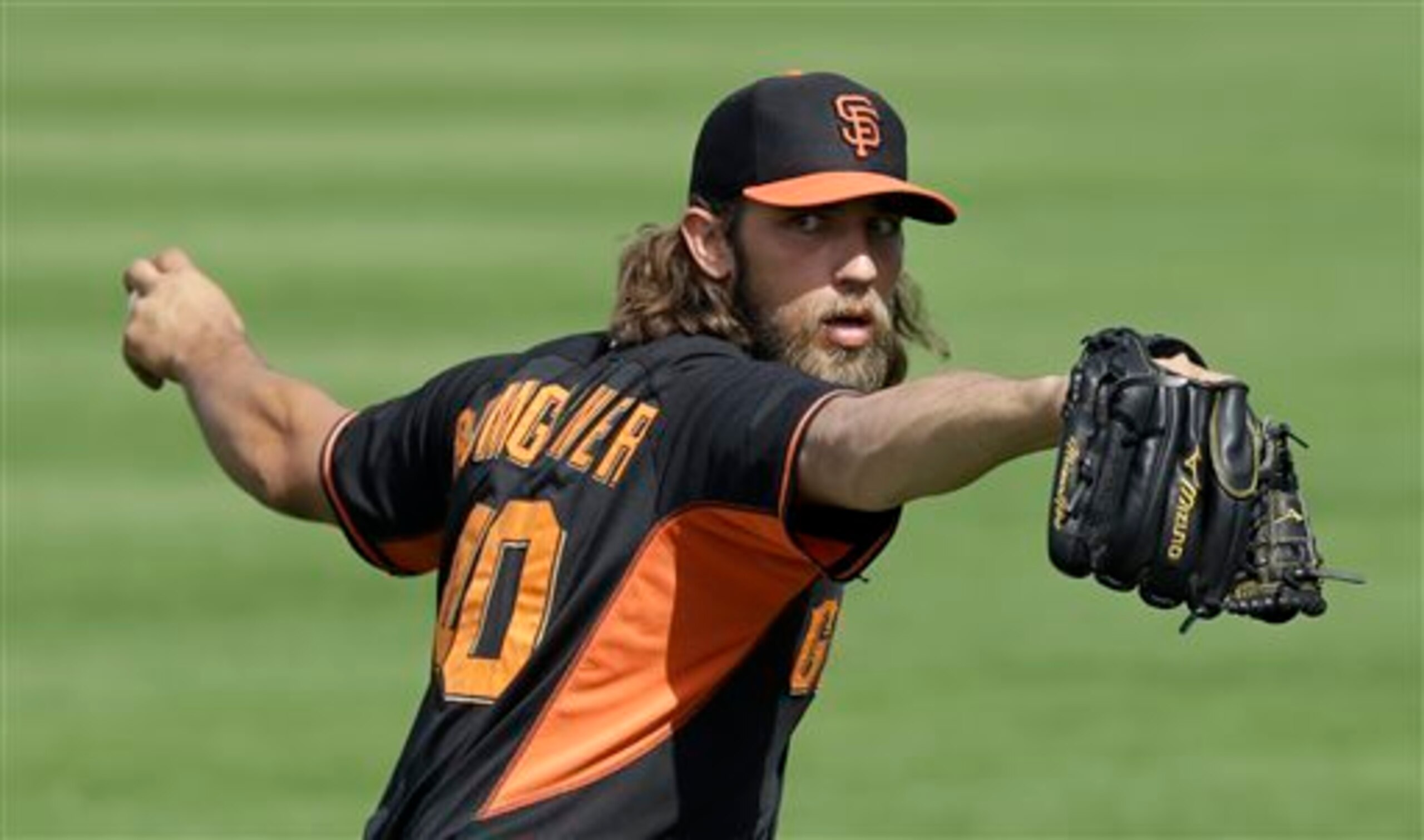
It would be tempting to go with a top prospect, like Lucas Giolito, Noah Syndergaard or even precocious 18-year-old lefty Julio Urias, but none of them can be candidates. Plus, with pitching in particular, it's better to take what you can get while you can get it.
That in mind, this ridiculous rotation is rounded out by a razor-thin decision between Madison Bumgarner of the San Francisco Giants and Stephen Strasburg of the Washington Nationals. While the latter actually has better stuff and might not have been quite at his best yet, we're going with Bumgarner for two reasons.
The first, frankly, is that too-good-to-ignore postseason resume, including a 2.14 ERA, 0.88 WHIP in 88.1 IP—and three rings. The other? Well, two of the other four starters already have had Tommy John surgery, so going with a third (Strasburg) just feels like relying on too many reconstructed elbows.
Bumgarner, on the other hand, has been completely healthy (30-plus starts each season since becoming a full-time big leaguer), so if he were to require the procedure at some point, there would be hope he could make it back and be nearly as good. Besides, the 25-year-old Bumgarner is almost a full year younger.
For the record, 24-year-old right-handers Julio Teheran and Gerrit Cole also earned some serious consideration.
Again, given how damaging a significant arm- or shoulder-related injury can be to a pitcher, any (or even all) of these five choices could require do-overs a year from now, at which point a still-unproven but uber-talented youngster like, say, Kevin Gausman or Taijuan Walker could look like a better pick.
Closer: Aroldis Chapman, LHP, Cincinnati Reds
14 of 14
The choice basically comes down to Aroldis Chapman or Craig Kimbrel, both of whom are in their age-27 season and easily the most dominant late-inning arms in baseball right now. If you would prefer to take the latter, by all means. We, however, will take the guy whose average—that's average—fastball comes in at triple digits.
Expecting Chapman (or Kimbrel) to remain as freakishly overpowering for five more years probably is short-sighted given the volatile nature of relievers. But it's impossible to know what other relief pitcher might be better that far into the future.
For now, it's hard to go wrong with the Cincinnati Reds closer, who has struck out an unfair 43.3 percent of the batters in his five-year career, which is—get this—the best rate in history.




.jpg?w=2560 "Mahomes Asked OT to Leave Meeting")
.jpg?w=2560 "Jonathan Taylor Landing Spots 📍")

.jpg?w=2560 "Five Teams Eyeing Taylor")

