
Chances of Each Top 2014 Rookie Suffering from 2015 Sophomore Slump
The latest crop of young talent from the 2014 MLB season enjoyed successful years in their inaugural campaigns in the league. But 2015 brings a new season, and each of MLB's top rookies will hope to avoid the dreaded sophomore slump in year two.
Jose Abreu headlines a talented group of position players, after slugging his way to American League Rookie of the Year. While his skill set bodes well for future production, can players like Danny Santana, Mookie Betts, George Springer and Billy Hamilton replicate their solid production from last year in 2015?
On the mound, the New York Mets' Jacob deGrom took home National League Rookie of the Year. But Collin McHugh, Yordano Ventura, Matt Shoemaker and Dellin Betances each finished last year as viable ROY candidates as well. With opposing hitters becoming more familiar with their stuff, can that collection of hurlers overcome setbacks in 2015?
We will dive into the stats to try to locate any red flags that may be hidden beneath the excitement and hope that comes with a successful rookie year.
Here we go!
Danny Santana, Minnesota Twins
1 of 102014 Stats
101 G, .319/.353/.472, 7 HR, 40 RBI, 70 R, 20 SB, 3.3 WAR
What to Expect in 2015
Danny Santana was a pleasant surprise for the Minnesota Twins in 2014, as the 24-year-old finished third on the team in WAR in just 101 games. Santana led all rookies in average and posted the fourth-highest WAR out of all first-year position players.
Despite that sunny start to his career, there are multiple red flags in terms of Santana's ability to duplicate that same production in 2015.
For one, Santana struck out over 22 percent of the time last year. That's not a huge deal for a rookie in just over 100 games, but he's whiffed at high rates throughout the minor leagues. Those K's have hurt him in the minors, as his .333 OBP at Double-A in 2013 was his highest mark while playing in at least 100 games.
So how did Santana hit over .300 for the first time in his career at the highest level of play?
Well, a .405 average on balls in play didn't hurt. As Parker Hageman of the Minneapolis Star Tribune notes, Santana's BABIP was the third-highest mark since 1961.
The Verdict: Extremely High
Santana showcased his versatility last season, playing both shortstop and the outfield. He also flashed both pop and speed, hitting seven homers and swiping 20 bags.
But there's no question that inflated BABIP is going to shrink in 2015. Combine that with his tendency to whiff and Santana's average could drop well below .300 this season.
Matt Shoemaker, Los Angeles Angels
2 of 102014 Stats
16-4, 136 IP, 3.04 ERA, 8.21 K/9, 1.59 BB/9, 2.3 WAR
What to Expect in 2015
Matt Shoemaker hasn't been as bright in spring training as he was in 2014 for the Los Angeles Angels, but the right-hander should enjoy another solid campaign this season.
Let's start with Shoemaker's polished repertoire, which indicates the 28-year-old is comfortable with multiple offerings.
Shoemaker mixed in four different pitches over 15 percent of the time, and not one of those pitches was used over 30 percent. He threw his four-seam fastball at the highest rate at 29 percent, but coupled that with a changeup (23 percent), two-seam (21 percent) and a slider (15 percent). Most young pitchers rely on one or two pitches early in their careers, but Shoemaker's arsenal has the versatility to get him out of different situations.
A deep selection of pitches is great, but not if you can't throw them for strikes. Shoemaker's 1.59 BB/9 would have ranked 12th in baseball if he had enough innings to qualify.
That control was especially beneficial with his fastball, which yielded only a 3.2 percent walk rate. His ability to throw his heater for strikes has made his changeup (.179 average against) and his slider (.227 average against) top off-speed offerings.
The Verdict: Low
While Shoemaker has logged only 141 innings in his career, his polished collection of pitches indicates he's here to stay. He gets ahead with his fastball, which makes his secondary pitches even more effective.
His lack of velocity could hurt him as hitters begin to figure him out, but Shoemaker has the stuff to be an effective major league starter for years to come. He'll prove that in 2015.
Mookie Betts, Boston Red Sox
3 of 102014 Stats
52 G, .291/.368/.444, 5 HR, 18 RBI, 34 R, 7 SB, 1.9 WAR
What to Expect in 2015
Mookie Betts played in only 52 games for the Boston Red Sox in 2014, but the 22-year-old flashed his five-tool talent in that small sample size. Betts hit for average and got on base, all while showcasing above-average power and game-breaking speed.
Betts has many talents in his locker, but his ability to work the count will most benefit him as he becomes more acclimated with the league. The former fifth-round pick posted a 0.68 walk-to-strikeout ratio, which would have ranked him in the top 25 if eligible.
His BABIP in 2014 doesn't indicate an abundance of good luck either. He hits the ball on the ground or on a line over 60 percent of the time, and posted an 11 percent infield-hit percentage. Betts plays to his strengths at the plate, working opposing pitchers and swinging on a downward plane to create hard contact.
The Verdict: Low
Not many 22-year-old hitters have the advanced approach that Betts showed last season. He puts together good at-bat after good at-bat, forcing pitchers to exert valuable energy just to keep him off the bases.
Even if his power doesn't linger, Betts has the type of hitting talent to become one of the better table-setters in baseball. His defensive versatility will make sure that his bat is always in the Boston lineup.


Dellin Betances, New York Yankees
4 of 102014 Stats
5-0, 90 IP, 1.40 ERA, 13.50 K/9, 2.40 BB/9, 3.1 WAR
What to Expect in 2015
Forget being the best rookie reliever in 2014. Dellin Betances might have been the top late-inning hurler in baseball last season.
That's what WAR thinks anyway, as the right-hander led all relievers in that category a season ago. He also logged the second-most innings and ranked in the top 10 in K/9. Not a bad way to start your career.
Betances did that while playing second fiddle to David Robertson last season, but the 27-year-old should be the New York Yankees closer in 2015. While he may see a dip in strikeouts with fewer innings, Betances should still be among baseball's best relief options.
He ranked in the top 25 in BB/9 out of pitchers with at least 60 innings of work last year, and his strikeout-to-walk ratio was the fifth-best mark in the league. While many relievers tout swing-and-miss stuff, Betances has shown enough control to significantly limit his baserunners.
The Verdict: Low
Betances has elite velocity and above-average control. Plus he's not just a one-pitch pony, as his curve held hitters to a .075 average last season in just as much usage as his heater.
He throws hard, and he throws strikes. Projecting young relief pitchers can be a crapshoot at times, but it's safe to say Betances will be among the league's best late-inning commodities once again in 2015.
George Springer, Houston Astros
5 of 102014 Stats
78 G, .231/.336/.468, 20 HR, 51 RBI, 45 R, 1.6 WAR
What to Expect in 2015
On the surface, it looks like George Springer had an unbelievable rookie season. Springer hit 20 homers and drove in 51 runs in just 78 games with the Houston Astros, leading one to believe that the 25-year-old would have likely approached 40 round-trippers and 100 RBI in a full year of action.
But the slugger does present a considerable amount of risk when you consider his whopping strikeout numbers.
Springer whiffed 33 percent of the time in 2014, and he swung and missed at the second-highest rate of any hitter with 300 plate appearances. No hitter made less contact than Springer a season ago.
What happens when you fan that much?
You get a .231 average and a .336 OBP. As Springer gets acclimated with the league, you would figure his K's to decrease a touch. But can he really cut down on his whiffs without losing some of his prodigious power?
The Verdict: Moderate
While the strikeouts are alarming, Springer has fanned at high clips all throughout the minors and still managed to be a formidable run producer. He's going to strike out in bunches in 2015, but he's also going to put some balls in the seats.
His BABIP was right around the league average in 2014, so better luck on balls in play could help his OBP and batting average improve to respectable marks. Springer has his flaws, but his power makes him a valuable asset all the same.
Yordano Ventura, Kansas City Royals
6 of 102014 Stats
14-10, 183 IP, 3.20 ERA, 7.82 K/9, 3.39 BB/9, 2.4 WAR
What to Expect in 2015
The Kansas City Royals enjoyed a magical march to the Fall Classic last season, and Yordano Ventura was a significant reason why. The right-hander won 14 games for the Royals during the regular season, before pitching like the club's ace in October.
Ventura throws hard, as evidenced by the second-hardest fastball velocity in baseball last year. Despite his blazing heater, Ventura fanned under eight per nine innings. While that number is nothing to scoff at, an impressive fastball like Ventura's should be generating more K's.
Unlike Matt Shoemaker, who was mentioned in a previous slide, Ventura relies heavily on his fastball. He tossed it over 50 percent of the time in 2014, which made his most dangerous weapon a league-average pitch, according to its 101 wRC+.
Something else to consider is Ventura's 77 percent strand rate, which was well above the league average.
His 1.30 WHIP actually ranks in the lower half of qualified pitchers, proving that Ventura's not shying away from his share of pitching jams. He has the stuff to wiggle out of messy situations, but his relatively low strikeout total when you consider his velocity indicates he may have seen good fortune in those tough spots.
The Verdict: High
Without a significant decrease in his fastball usage, Ventura's never going to fully get the most out of his electric stuff. Off-speed offerings are often the last piece of the puzzle for young pitchers, and Ventura needs a more reliable option that he trusts to take that next step.
He should still be a serviceable starter in 2015, but if his strand rate drops back closer to the league average, then his ERA is going to balloon closer to 4.00.
Billy Hamilton, Cincinnati Reds
7 of 102014 Stats
152 G, .250/.292/.355, 6 HR, 48 RBI, 72 R, 56 SB, 3.7 WAR
What to Expect in 2015
Billy Hamilton began making waves in the minor leagues with his gaudy stolen base totals, and he showcased that same elite speed with the Cincinnati Reds in 2014. Hamilton swiped 56 bags, which was the third-highest total in the league.
That speed and a solid approach at the plate positioned Hamilton as the front-runner for National League Rookie of the Year for most of the season. But the 24-year-old speedster proceeded to hit just .213 in the second half, striking out nearly as many times as he did in the first half in fewer at-bats.
For a player with such breathtaking speed, Hamilton fails to play to his strengths at the dish. The outfielder's fly-ball rate was above the league average, and his 1.11 ground ball-to-fly ball ratio compared similarly to players like Josh Donaldson, Ryan Howard, Freddie Freeman and Miguel Cabrera.
See a problem there? When you combine that with his near 20 percent strikeout percentage, there's plenty of reason to be concerned about Hamilton's 2015 campaign.
The Verdict: Extremely High
Hamilton's weaknesses began to be exploited in the second half of last season, causing him to lose an award he'd all but wrapped up.
His speed is a top-tier attribute as we all know, but Hamilton fails to use his biggest advantage properly. With an atrocious second half and eye-opening batted ball numbers, Hamilton has serious bust potential in 2015, despite his ability to steal bases.
Collin McHugh, Houston Astros
8 of 102014 Stats
11-9, 154.2 IP, 2.73 ERA, 9.14 K/9, 2.39 BB/9, 3.2 WAR
What to Expect in 2015
One of the biggest surprises of the 2014 season was the performance of Collin McHugh. The Houston Astros claimed the right-hander after he was designated for assignment by the Colorado Rockies, and McHugh proceeded to finish in the top 15 in ERA out of pitchers with at least 150 innings.
McHugh did so behind a 25.4 percent strikeout rate, which ranked ninth in all of baseball last season. Those impressive strikeout totals occurred in spite of a relatively average heater. McHugh's fastball averaged in the low 90s a year ago.
But McHugh is aware of that mediocre velocity, and uses his secondary pitches at a high rate.
The 27-year-old threw his slider 30 percent of the time and his curve 23 percent with tremendous success. While his slider held opposing hitters to just a .206 average, his curve yielded only a .140 average. McHugh's hook generated a 50 percent strikeout rate and 50 percent ground-ball rate as well.
I'd say that's pretty good, and an indication of sustainable success.
The Verdict: Low
While McHugh will likely see some regression, he has two above-average offerings to keep opposing hitters off his average fastball.
He doesn't issue free passes, and he keeps the ball in the ball park. His ERA may see a slight hike back to the mid-3.00's, but he'll remain a valuable piece in the Houston rotation even if that turns out to be true.
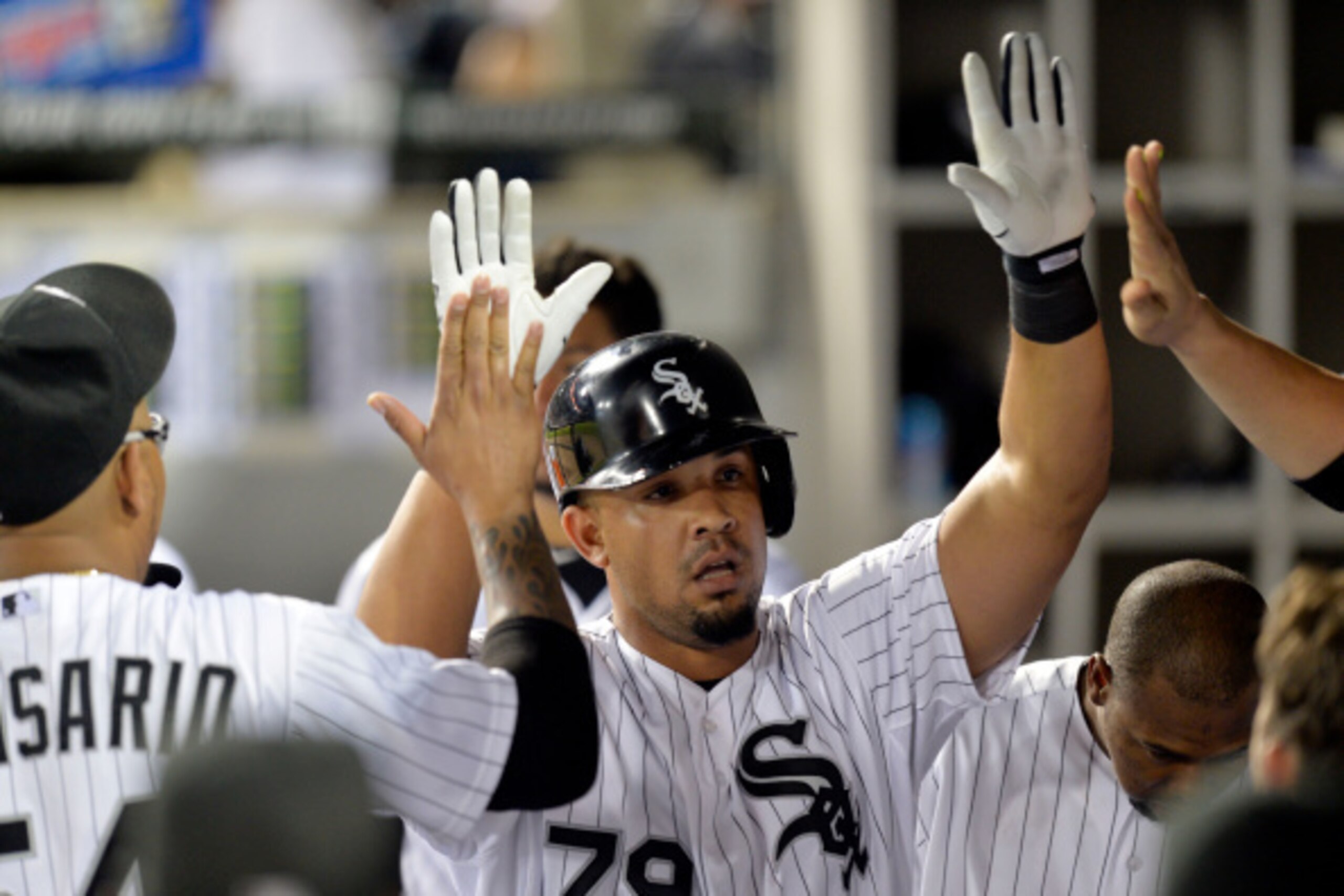
Jose Abreu, Chicago White Sox
9 of 102014 Stats
145 G, .317/.383/.581, 36 HR, 107 RBI, 80 R, 5.2 WAR
What to Expect in 2015
Jose Abreu wasn't just the best rookie hitter in baseball last season, but he was one of the top sluggers in the league as well. Abreu adjusted well in his first season in the big leagues, as he hit for both average and power.
Abreu's biggest red flag stems from an alarming swing-and-miss percentage. The 28-year-old posted the seventh-highest mark in that category, which led to a 21 percent strikeout percentage. Considering he didn't walk all that much for a powerful bat, those numbers are cause for concern.
While his swing-and-misses are a valid point, there are plenty of positives to take from Abreu's 2014.
He ranked fourth in isolated power and led the league in home run-to-fly ball ratio, despite only hitting the ball in the air 31 percent of the time. That's a fairly low number for such a powerful slugger, and an expected increase in his fly-ball percentage indicates a 40-homer season is well within Abreu's reach.
Abreu ranked fifth in baseball in batted ball distance last season, which supports his high home run-to-fly ball ratio. His BABIP will likely fall from its .356 mark a season ago, but all signs point to Abreu being among the league leaders in every power category.
The Verdict: Low
Swinging and missing is never a good thing, but it doesn't always tell the full story. Despite his tendency to whiff, Abreu posted both a high average and OBP a season ago.
Even if those numbers regress, which they should, in 2015, Abreu will likely hover around the .270-.280 mark. Would a 40-homer, .275-season work for you? Yeah, I think I'd take that, too.
Jacob DeGrom, New York Mets
10 of 102014 Stats
9-6, 140.1 IP, 2.69 ERA, 9.24 K/9, 2.76 BB/9, 3.5 WAR
What to Expect in 2015
The New York Mets boast a stable of young, talented hurlers, but it was Jacob deGrom that stole the show last year in Queens. Despite logging only 140 innings, the right-hander posted impressive run prevention and strikeout totals on his way to NL ROY.
He did so behind a mix of five legitimate major league pitches.
DeGrom threw a four-seam, two-seam, slider, curve and changeup all over 200 times last season. His mid-90s heater benefited from such an expansive repertoire, as opposing hitters hit just .181 against it. Four of those offerings generated swings-and-misses over 10 percent of the time, and his two-seamer created ground-ball contact over 50 percent of the time.
The K's will likely decrease in 2015, as he never exceeded eight strikeouts per nine innings at any stop in the minors where he logged more than 60 innings. But his ability to stay away from walks and keep the ball in the park indicates he should still be able to keep runs off the board.
The Verdict: Low
As with Abreu, there should be some expected regression from deGrom, but it won't be a substantial amount.
DeGrom touts an assortment of weapons that can get opposing hitters out, and is well adept at using those offerings in appropriate situations. Opponents should see better luck on balls in play and will likely whiff less, but deGrom has the stuff to stay productive even if that happens.
Advanced stats courtesy of FanGraphs.
.jpg?w=2560 "Mahomes Told Teammate to Leave Meeting")
.jpg?w=2560 "🚨 Week 8 AP Top 25 Poll")

.jpg?w=2560 "Baker Gets Glove From Rays 🧤")
.jpg?w=2560 "5 Teams Eyeing Jonathan Taylor")


.jpg?w=2560 "Steelers Roll Saints in Paris")
.jpg?w=2560 "NFL investigating Eagles")
