
The Story Behind Every Small-School NFL Draft Prospect
Every year, players fall through the cracks. In college football, there are essentially 60 or so gatekeepers to talent. If a team from a Power Five conference comes around with an offer, high school recruits generally accept it over mid-majors or lower-division teams.
Athletes' stories aren't over when they turn 18 years old, though. Some blossom in the lower divisions, earning their way to a foot in the door in the National Football League. When looking at these players as prospects, there's almost always a story behind why they went to a small school.
If it wasn't their size, it was their grades. If it wasn't because they transferred down, it's because they had only recently taken up the sport. Behind every small-school prospect, there's a story, and we'll dig into the 13 small-schoolers who appear to be locks to go in the 2015 NFL draft.
Jaquiski Tartt, S, Samford
1 of 13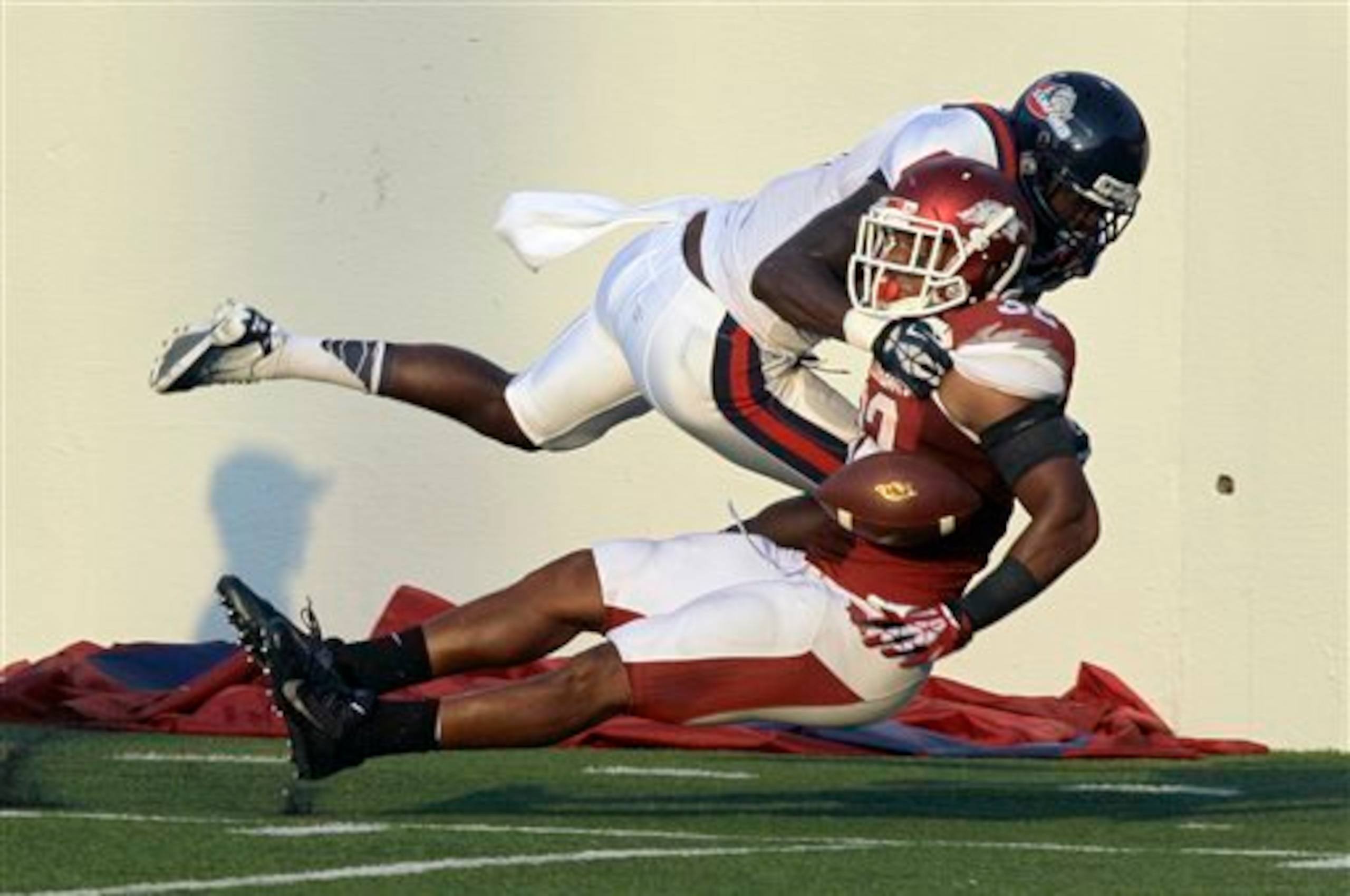
Jaquiski Tartt was a three-year starter for the Samford Bulldogs at the safety position. Though he played a free safety role, the 221-pounder is better suited at the next level as a box safety, somewhere between Kam Chancellor and Bernard Pollard. There, he can use his physicality and size to his advantage.
One reason the high-level box safety found his way down to the FCS level was because of his lack of high school experience. There are no accounts of off-field issues, and he was even an All-Academic basketball player in high school, per Samford's official site. The one glaring red flag on his high school resume was that he had only played one year of football in his life—his senior season at Davidson High School.
That seems to be what led him to stay in-state and play at Samford—located in Homewood, Alabama—instead of Auburn or Alabama. The program has had a recent "hit" in the draft at defensive back, despite the level of competition they participate in. Cortland Finnegan was drafted in the seventh round by the Tennessee Titans in 2006, where he was named as an All-Pro player in 2008.
Tartt may have only played one season of football prior to arriving at Samford, but his final three years were loaded with live reps. A transition to a new role might force a team to pause when considering his lack of a football background before college, but his film says he's worth a Day 2 selection.
David Johnson, RB, Northern Iowa
2 of 13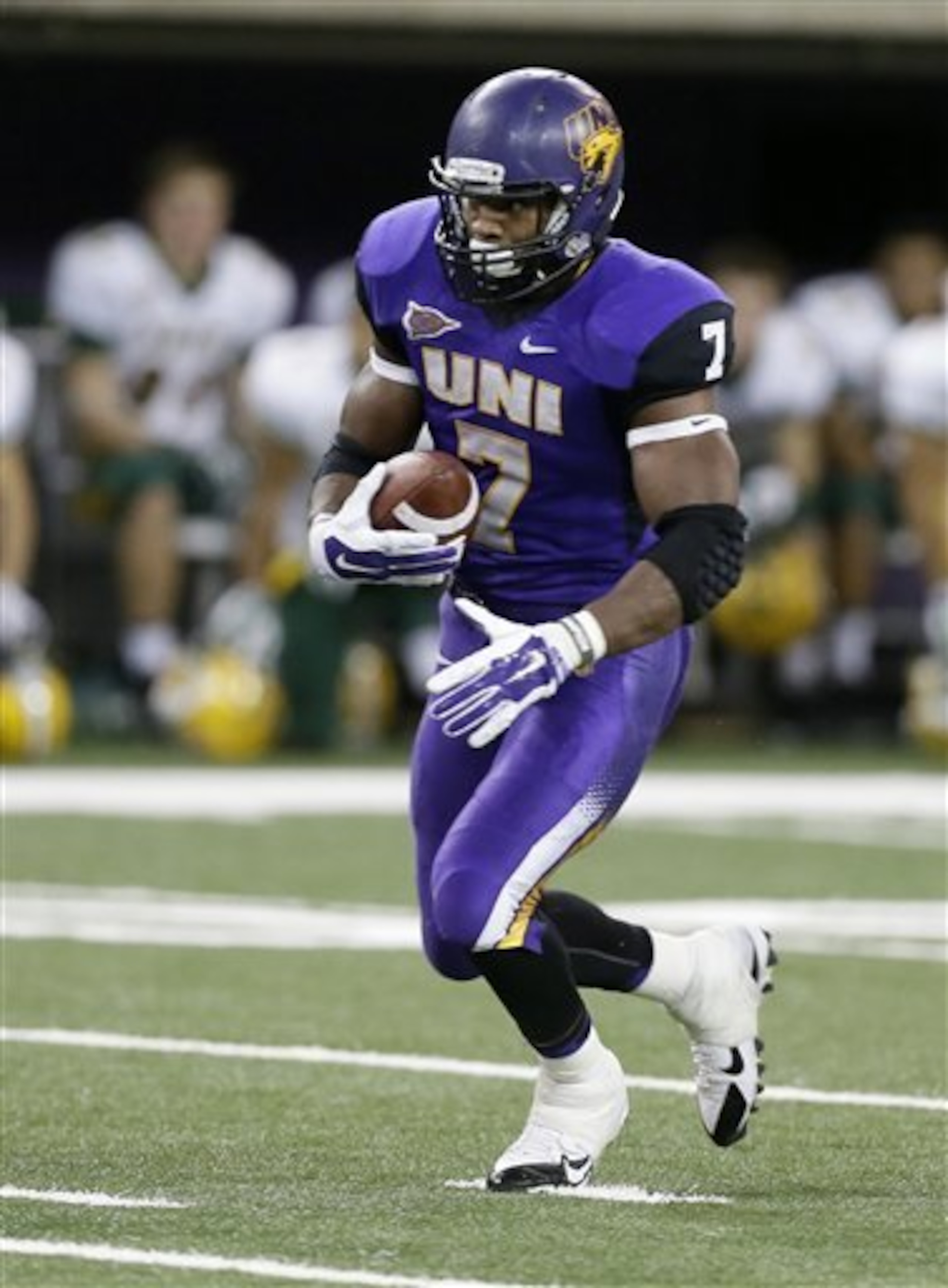
David Johnson is a James Starks type of running back who may not be a featured starter, but should be a very good rotational back early on. In a worst-case scenario, he should be able to contribute to a committee in his first two years in the league. Playing at the FCS level for Northern Iowa, though, some have questions about the rusher.
According to his Rivals recruiting profile, he was recruited by FBS schools like Iowa, but only had scholarship offers from two FCS schools: Northern Iowa and Illinois State. According to his UNI profile, he managed to compile a 3.0 GPA while at Clinton High School, and there's no history of him being in trouble with the law. On paper, it doesn't make much sense that Johnson didn't receiver more recruiting interest.
In an interview with CBS Sports' Dan Brugler, Johnson stated that he believes he was overlooked because of where he played high school ball:
"I think mainly because my high school wasn't known as a big program. We didn't have a lot of Division-I athletes. I was probably the biggest one for football. I was bigger than my linemen. Iowa scouts told me I was a good player but wasn't doing enough without the ball. My high school coaches didn't really teach me pass pro, I was more focused on running the ball and on defense.
"
He also said later on that Iowa and Iowa State, the major in-state programs, where his dream schools around that time.
Lynden Trail, EDGE, Norfolk State
3 of 13
Unlike some of the other lower-division players on this list, Lynden Trail of Norfolk State had a shot at a Power Five school before making a move down. He was a blue-chip recruit from Miami when he accepted a scholarship offer to the University of Florida. After redshirting for a season and seeing no playing time in his second year, he moved on.
According to Only Gators' Adam Silverstein, Trail couldn't see the field, at least in part, because of his talent and effort:
"Head coach Will Muschamp and defensive coordinator Dan Quinn each said this year that Trail was not playing well enough in practice to play let alone dress for the team.
Trail himself confirmed that the coaches told him this but maintained that he was playing to the best of his ability and trying his hardest to improve with each practice.
"
However, as Trail mentioned in an interview with Dane Brugler of CBS Sports, there was also an element of a new coaching staff coming in:
"I had a lot of offers, but I came to the conclusion that I wanted to sign with Florida. I loved the atmosphere, the coaching staff. Coach Urban Meyer really sold me. And then when I arrived and everyone was bigger than me, I came to the conclusion that I needed to gain weight. I decided on my own that I should redshirt so I went to coach Meyer and told him that I needed to gain weight. There were these 6 a.m. workouts, I ate what they told me to eat and I went from 200 pounds to 240 pounds within a year. After the Meyer era, Coach Will Muschamp came in and it didn't work out. There were 24 recruits in my class and 17 left (went early to the NFL or transferred) because they didn't want to be in that regime.
"
He found playing time at Norfolk State, starting his final two years. Peaking in 2014, he even had four tackles for losses in a game against the University of Maine. A long edge player who finally reached his potential, Trail has had interesting up and downs in his career so far, but is worthy of a draft pick.

.jpg?w=2560 "Cardinals Giants Football")
.jpg?w=2560 "Jets Dolphins Football")
Ali Marpet, IOL, Hobart
4 of 13
Ali Marpet was an unknown to the draft media when he was invited to the Senior Bowl in Mobile, Alabama. This shouldn't be surprising, as most of the focus was on players already considered to be top-100 prospects, not a Division III athlete. He showed amazing technique at the Senior Bowl, and some make the case that he had the best week there of any offensive lineman.
According to Bleacher Report's Dan Hope, Marpet was recruited by FCS schools like Holy Cross, Maine and Marist, but as a defensive lineman. His decision to attend Hobart, a Division III school and a non-scholarship division, came down to academics.
“It was one of the better schools that I could get into,” Marpet told Hope. “I was almost certain that I wanted to major in economics, and they had it there.”
In the end, Marpet's decision paid off. He's being looked at as a legitimate draft selection, potentially in the top 100, and he did it by getting a quality education.
According to his spider chart on Mock Draftable, he's well above average athletically, comparing to Joel Bitonio, who was a rookie starter after being drafted 35th overall last season by the Cleveland Browns. It's not crazy to think that Marpet can go in that same second-round range if a team leans heavily on measurements.
Dezmin Lewis, WR, Central Arkansas
5 of 13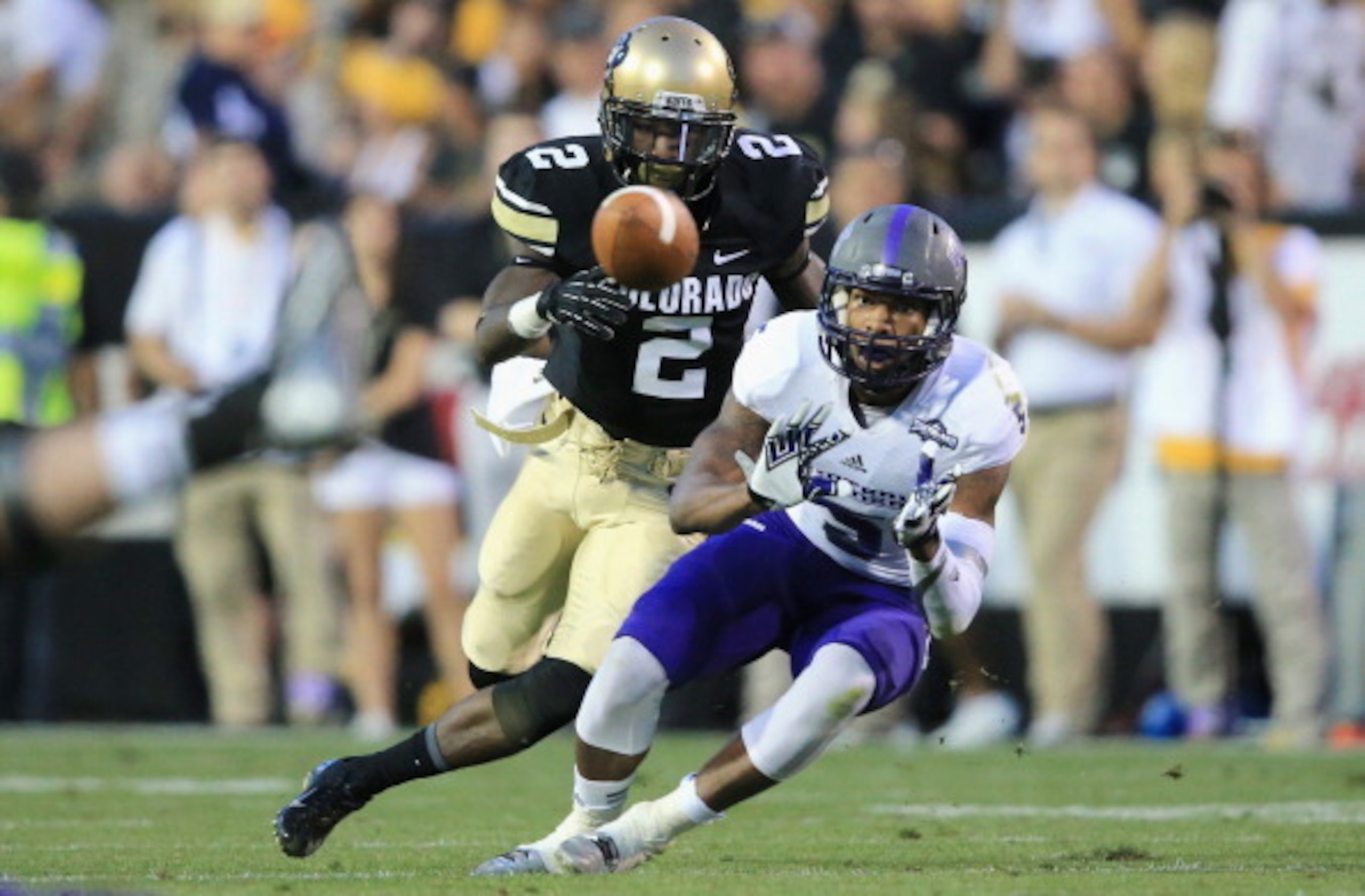
Dezmin Lewis of Central Arkansas is a receiver who wins with size. In Indianapolis, he stood at 6'4", towering over fellow athletes. While playing for the Bears in 2014, he scored nine touchdowns off 64 receptions. He wasn't always a featured player, though.
According to Central Arkansas' site, he wasn't even a football player until later in life, as he only received two varsity letters in the sport during high school. A member of National Honor Society, it's hard to imagine grades were an issue getting into an FBS school. Part of what held him back could have also been his offense at North Mesquite High School, where he only caught 19 passes his senior year.
In an interview with Bo Marchionte of Football Insiders, Lewis co-signed that notion:
"We had a running back named Joe Bergeron. He’s a good player and he went to Texas. They gave him the ball a lot so I was pretty much underrated. I was just blocking for him (laughing). I didn’t get to many opportunities to make plays, but when I did I made the big catch.
"
In each of his years at Central Arkansas, Lewis caught more passes than his senior year of high school. That's not something that everyone can say. The case here seems to revolve around a high school coach's issue with distributing the ball to two talents on the same field.
Zack Wagenmann, EDGE, Montana
6 of 13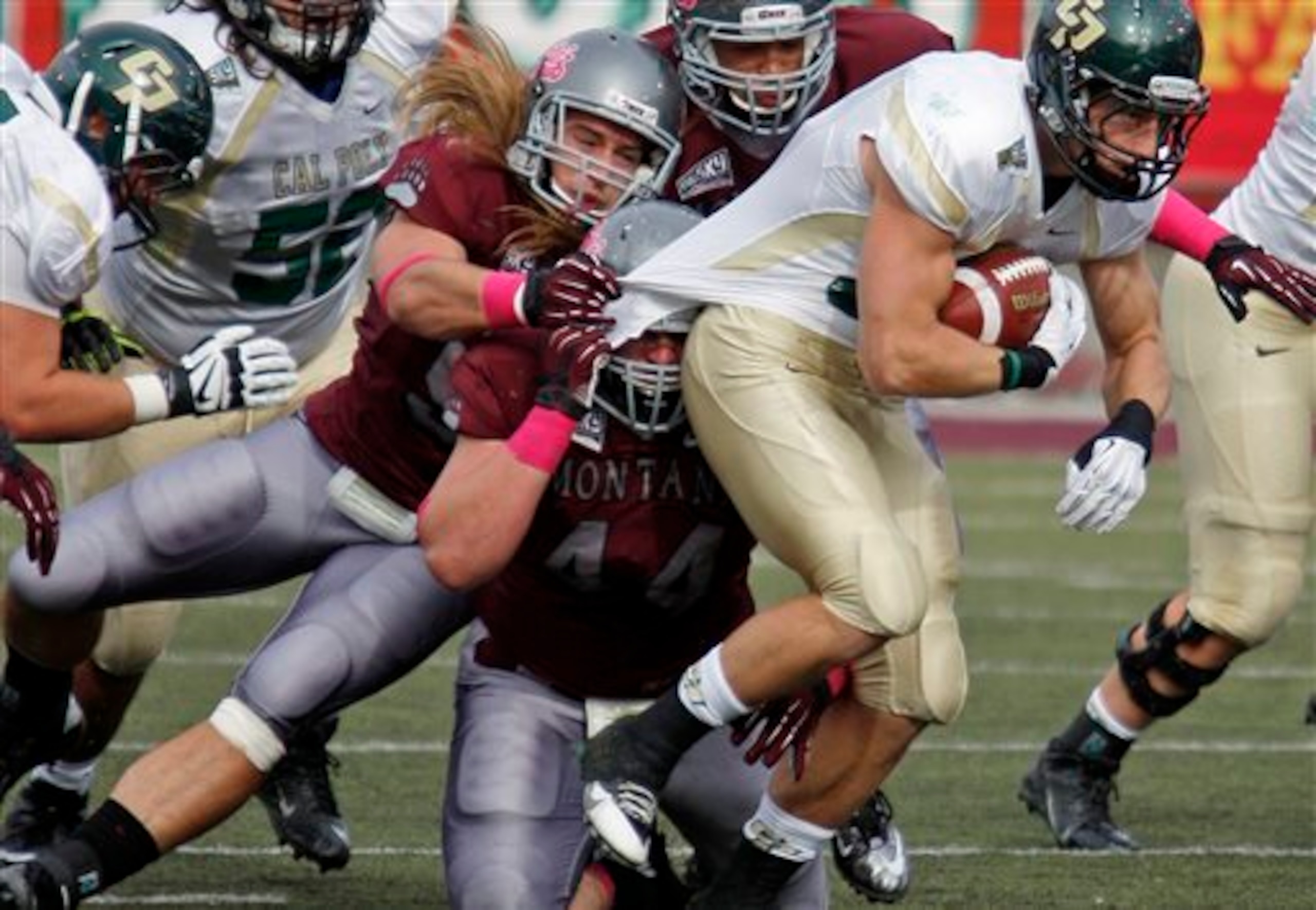
Zack Wagenmann is an interesting story to follow. When watching Montana football, he's hard to miss. His long hair coming off the edge makes him look like the Clay Matthews of the FCS level, and to some extent he is.
For three years, Wagenmann has compiled impressive production, even finishing third in the voting for the 2014 Buck Buchanan Award, which is essentially the defensive Heisman for the FCS. Still, this was done at Montana and not USC or Ohio State. Looking at his high school resume, it's hard to pin down why he chose Montana, other than geography.
He was a captain on the football and basketball teams and made an all-academic basketball all-star team while at Sentinel High School in Missoula, Montana. There weren't any big recruiting pages built for him while there. By his redshirt sophomore season with the Grizzlies, the hidden gem was a captain.
Montana probably had an advantage in scouting out the hometown Wagenmann in high school. With so much emphasis in recruiting being centralized around metropolitan areas or warm-weather states, it makes sense that the Floridas and Oklahomas missed out on a player in Montana. Other than that, there's no real logical reason why he had to play at a lower level of competition, as he even flashed early on in his career.
Tyler Varga, RB, Yale
7 of 13
Tyler Varga's story starts in another country. From Kitchener, Ontario, Canada, Varga was an all-star student-athlete, earning a 4.0 GPA while participating on the country's under-20 national teams. From high school, he went to the University of Western Ontario in the Canadian collegiate league, where he led the nation in scoring as a freshman.
The stage wasn't big enough for Varga, who was hidden in Canada. After his one year playing college football in his home country, he transferred to Yale, where he made an instant impact. The talented running back didn't really enter the draft conversation until he proved himself at the Senior Bowl this January, though, potentially having the best week of any running back at the event.
A strong runner with soft hands, Varga is now a known prospect. The 5'11", 222-pounder hid in Canada in a non-scholarship football conference, but the NFL somehow manages to filter though all of the talent across the map. It would appear as though he hit a home run with all eyes watching him in Mobile, Alabama, potentially vaulting him into draftable status.
MyCole Pruitt, TE, Southern Illinois
8 of 13
According to MyCole Pruitt's Rivals profile, the tight end received no major offers from FBS teams. Listed as interested were Kansas, Missouri and Wisconsin, but the recruiting site did not list a scholarship offer from any of those schools. The then-6'3", 225-pound tight end—who, on paper, was small for the position—had to participate in FCS football with Southern Illinois, who were one of few schools who actually did offer him.
In his freshman year, he sat down with The Southern Illinoisan's Todd Hefferman to discuss his early career. In the article, he stated he also visited Missouri State, another FCS program, and that basketball was his first love in high school. Basketball players are natural athletes with lower density than football players, as the game asks for more finesse moves rather than athleticism through contact.
If Pruitt was consistently trying to make weight to participate in high school basketball, it makes sense why his body type wasn't one which was very valuable to college coaches recruiting in the area. He was too thick to play receiver, he was too light for tight end and he didn't have great length.
While at Southern Illinois, though, he managed to throw on good weight, building his frame to an explosive 251 pounds. At the combine, his raw talent was shown to the universe, when he ran in drills well enough to compare to Daniel Graham—a former first-round selection—on Mock Draftable's spider chart.
Tre McBride, WR, William & Mary
9 of 13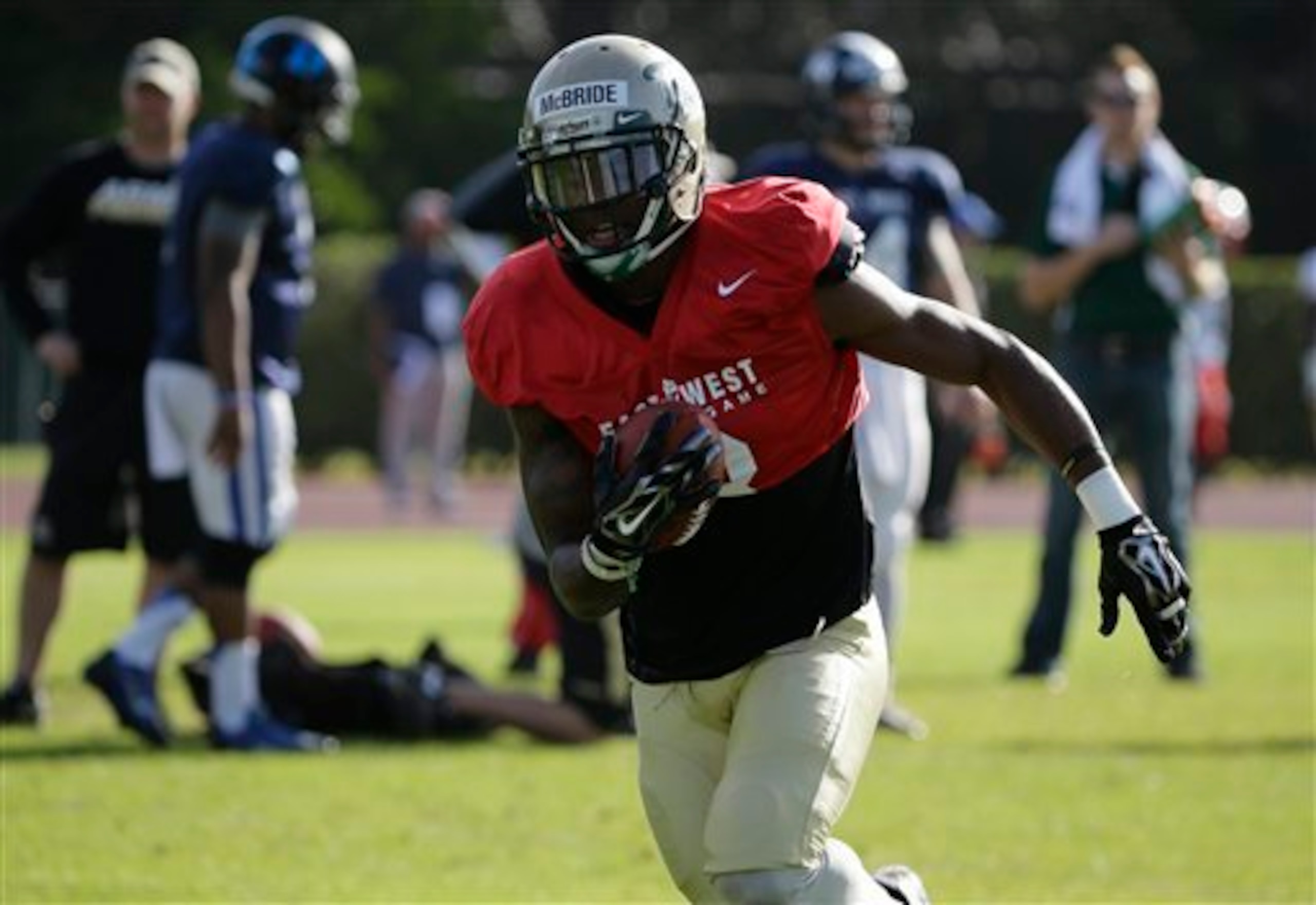
According to Scout.com, Tre McBride weighed 173 pounds in high school. At any position, that's rarely passable "football weight." By the time he was measured in Indianapolis for the combine, he was up to 210 pounds, a 37-pound difference. While 210 pounds for a receiver isn't anything to write home about, the split between what he came into college as and what he left college at is very impressive.
Per ESPN's recruiting service, McBride didn't have another college offer outside of William & Mary. On paper, it makes sense that college coaches weren't chomping at the bit to lock up a sub-180-pound pass-catcher. Other than that hangup, which he's since corrected, he appears to have a clean resume.
He won merit scholarships, graduated in the top 5 percent of his class and also played in the school band while in high school, according William & Mary's official athletics site. A late bloomer who focused on academics when he couldn't get into a larger school for athletics, McBride is now a legitimate option for an NFL team on Day 3 of the draft. After proving himself at the East-West Shrine Game, he solidified himself in the conversation.
Davis Tull, EDGE, Tennessee-Chattanooga
10 of 13
As a pass-rusher, Davis Tull was a force at the FCS level for Tennessee-Chattanooga, and he had by far the best combine for a small-school edge player this year. Some might even say he went toe-to-toe with the top players in the class. When digging into his background, though, it's easy to tell why he wasn't recruited by larger schools.
In an interview with Bruce Feldman of Fox Sports, Tull laid his story out. As a high school senior, he was looking at schools like the University of Tennessee and the University of Cincinnati, but a season-ending injury caused all of those letters and phone calls to stop. At only "205-210 pounds," the possibility of him landing on a major college roster looked slimmer than his frame.
Instead of giving up on the dream, Tull took a partial scholarship from Tennessee-Chattanooga and was a three-time Defensive Player of the Year in his conference. Making it through the struggle, Tull has put his past behind him. To NFL teams, nothing else matters besides his film and combine scores if he's healthy, which he looks to be.
Tevin McDonald, S, Eastern Washington
11 of 13
Tevin McDonald signed on to play with the UCLA Bruins after his blue-chip high school career. There, he was in-city rivals with his brother, T.J. McDonald, who went to USC and now plays for the St. Louis Rams. His father, Tim McDonald, also played at USC and was a six-time Pro Bowler.
After two years with the team, McDonald was forced to leave school due to a violation of team rules. According to Chris Foster of the Los Angeles Times, UCLA players lose their scholarship after four failed drug tests, and McDonald had already failed three at the time.
Transferring to Eastern Washington, considered to be the best Western football program outside of the FBS, he finished his career, staying clean during his time there. McDonald was obviously talented enough to play at a high level from early on, but bad habits led to him leaving Southern California. With those issues seemingly behind him, he may be able to compete for a starting job in the NFL in 2015.
Zach Hodges, EDGE, Harvard
12 of 13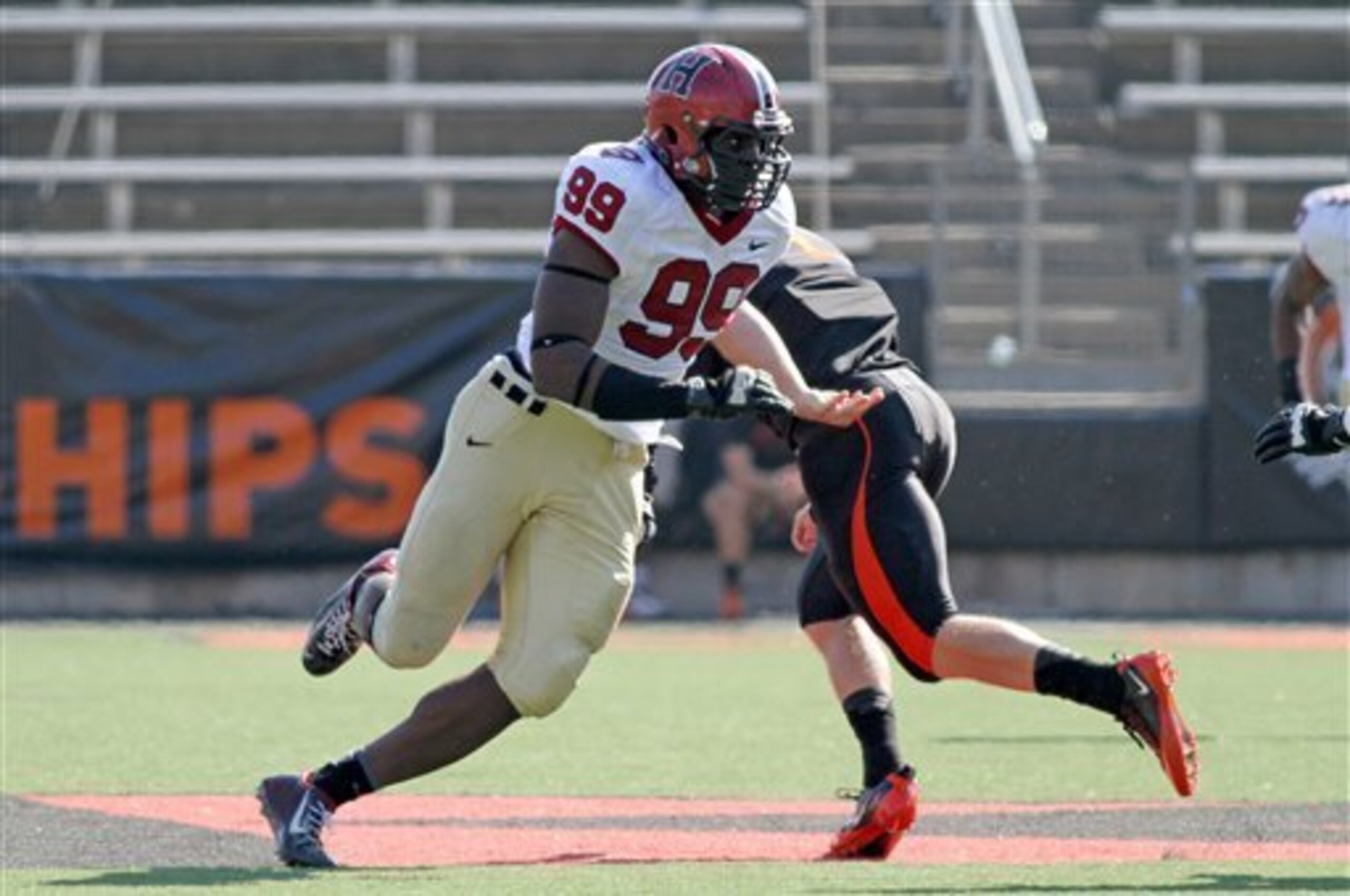
By no means is getting into Harvard, even as an athlete, a walk in the park. It's safe to rule out off-field and academic issues for Zach Hodges, who's the premier Ivy League player of the 2015 NFL draft. Instead, he was likely overlooked in high school by large Southern schools due to a substancial life event.
According to an interview with CBS Sports' Dane Brugler, Hodges lost his mother when he was 16 years old and moved from North Carolina to Atlanta. With the move occurring between his sophomore and junior seasons, it may have been hard for said schools to keep track of his talents:
"When I was 16, I made starting captain on the varsity. My mom passed away at 16 also so I moved from Independence (North Carolina) to Tri-cities in Atlanta to help my family. It was a different experience going from a team that was a top program to a program trying to build itself up. When I got to Tri-cities, I didn't really know what was going to happen, but I ended up being class President. By the end of my junior year, one of the first schools to look at me was Harvard and from that point on, I stuck with Harvard. They stuck with me. Harvard was my last official visit, I wasn't the best student in the world and they wanted me to go to a boarding school. I had decent grades. I prayed on it. I wanted to make the best decision, and if that was Harvard, do whatever it takes.
"
At Harvard, Hodges played as a hybrid linebacker and defensive end, specializing at getting after the passer. At the next level, he's probably going to be looked at as a Jamie Collins type of linebacker: A strong-side player with a pass-rushing background who does more dropping into coverage than pinning his ears back.
Bryan Bennett, QB, Southeastern Louisiana
13 of 13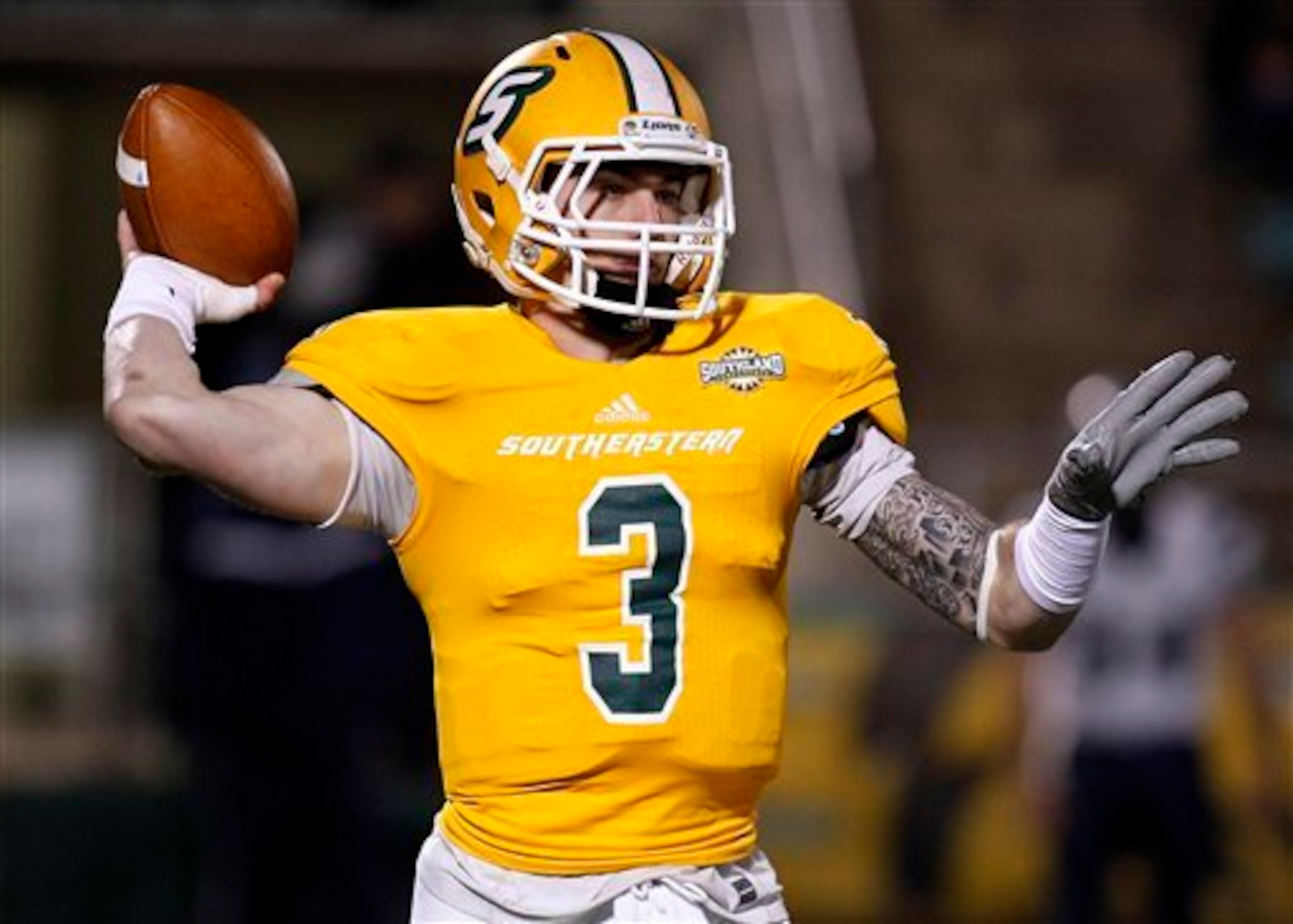
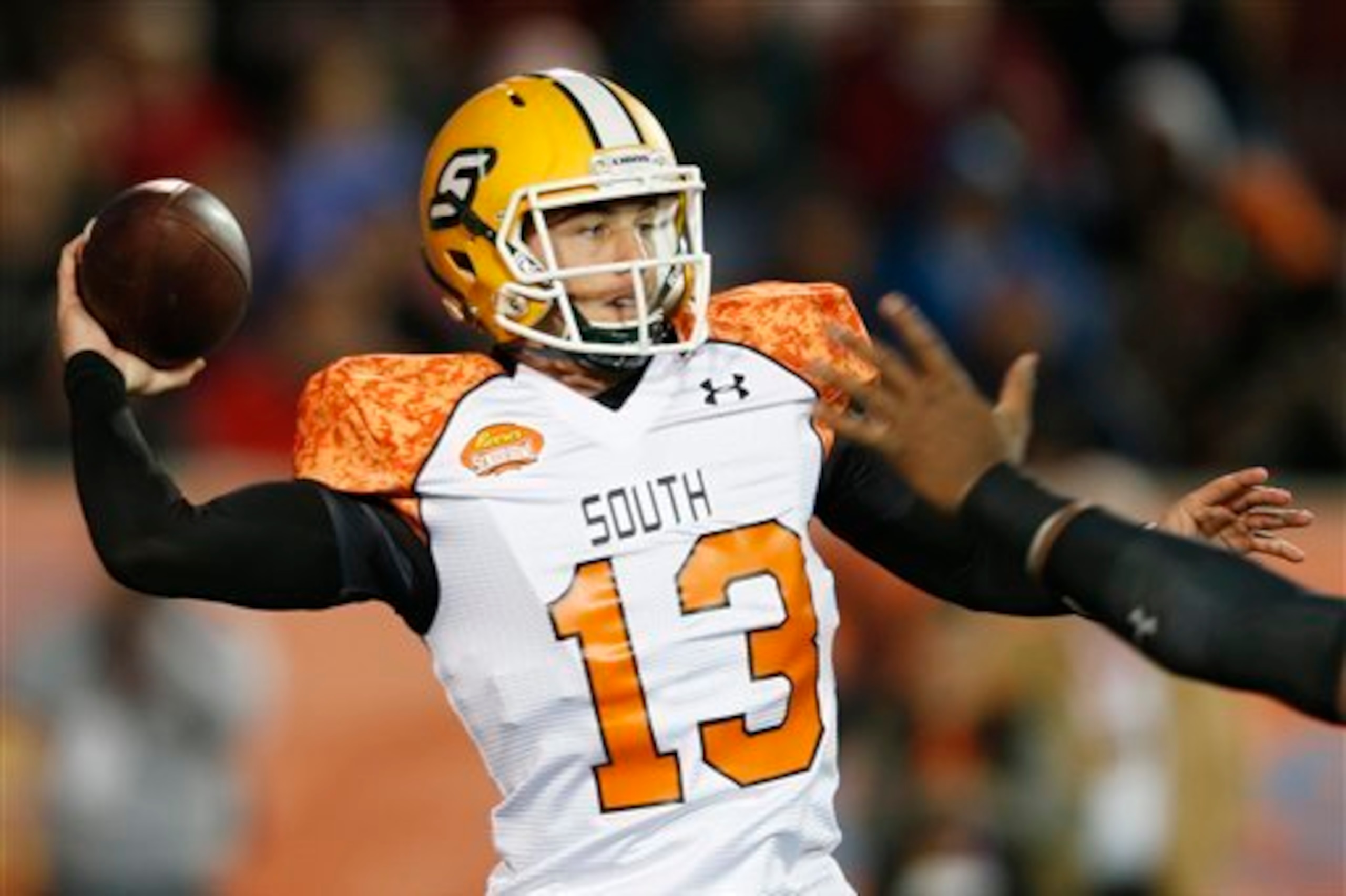
Bryan Bennett is a mobile quarterback who spent his last two years at Southeastern Louisiana, attempting to turn the program around. A former major recruit from California, he was tested multiple times in his college career before eventually landing in the South.
Out of high school, Bennett committed to the University of Oregon. There, when starter Darron Thomas was injured, he entered the lineup as a passer. After Thomas' junior season, though, he suddenly declared for the NFL, where he went undrafted. Lined up to replace him were Bennett, who had experience under his belt, and redshirt freshman Marcus Mariota.
Mariota shockingly won the starting gig and didn't look back. Bennett was a backup quarterback that season—and had the option to stay and compete for playing time as a defensive back—but chose to leave in search of a starting passing job.
In an interview with CBS Sports' Dane Brugler, Bennett stated that his selection of Southeastern Louisiana, where he didn't have to sit out a year to participate, was partially influenced by Archie Manning:
"It was a crazy time for me, a lot was going on. I wasn't sure if I wanted to change positions. I could have stayed at Oregon but not at the position I played my whole life. I came out here to Louisiana in 2011 to do the Manning Camp and I got a little taste of the culture and met a lot of people in the football world. That was my first initial experience and I liked it. I remember leaving and I sent out a tweet and I said I could picture myself living in the south. Talking to Archie (Manning), he recommended the Southeastern Louisiana coaches. I talked to them and they were the only school that hadn't started yet so it worked with my timeline. The coaches showed great interest and made me feel welcome, as if they really wanted me.
"


.jpg?w=2560 "Ward Nearly Walks Out of Presser ▶️")
