

Pressure Mounts on Sunderland as Black Cats Dismiss Gus Poyet
After Saturday's drubbing at the hands of Aston Villa, the rationale behind Sunderland's decision to sack manager Gus Poyet was clear.
With nine games left and another Premier League relegation battle in store, the time was right to make a change.
Following that embarrassing 4-0 defeat at home to Villa over the weekend, Sunderland announced the sacking on their official website with a brief and to-the-point statement on Monday. Speaking on the dismissal, chairman Ellis Short said:
TOP NEWS
Live Highlights and Viral Moments 🍿

Final Men's Ballon d'Or Rankings 📊

Carrick Replacement Options 📝
"I would like to thank Gus for his endeavours during his time at the club, in particular last season’s ‘great escape’ and cup final appearance, which will live long in the memory of every Sunderland fan.
Sadly, we have not made the progress that any of us had hoped for this season and we find ourselves battling, once again, at the wrong end of the table. We have therefore made the difficult decision that a change is needed.
"
It's not difficult to understand why Short and the club made the decision. Consider the gruesome facts:
Sunderland's four league wins are joint-worst in the top flight this season with Leicester City.
With 23 goals in 29 games, the Black Cats have scored fewer times than any club besides Aston Villa—the same team that netted four times at the Stadium on Light on Saturday.
Perhaps more alarming was the team's recent trajectory. Sunderland have gone six games without a win, during which time their opponents have outscored them 10-2.
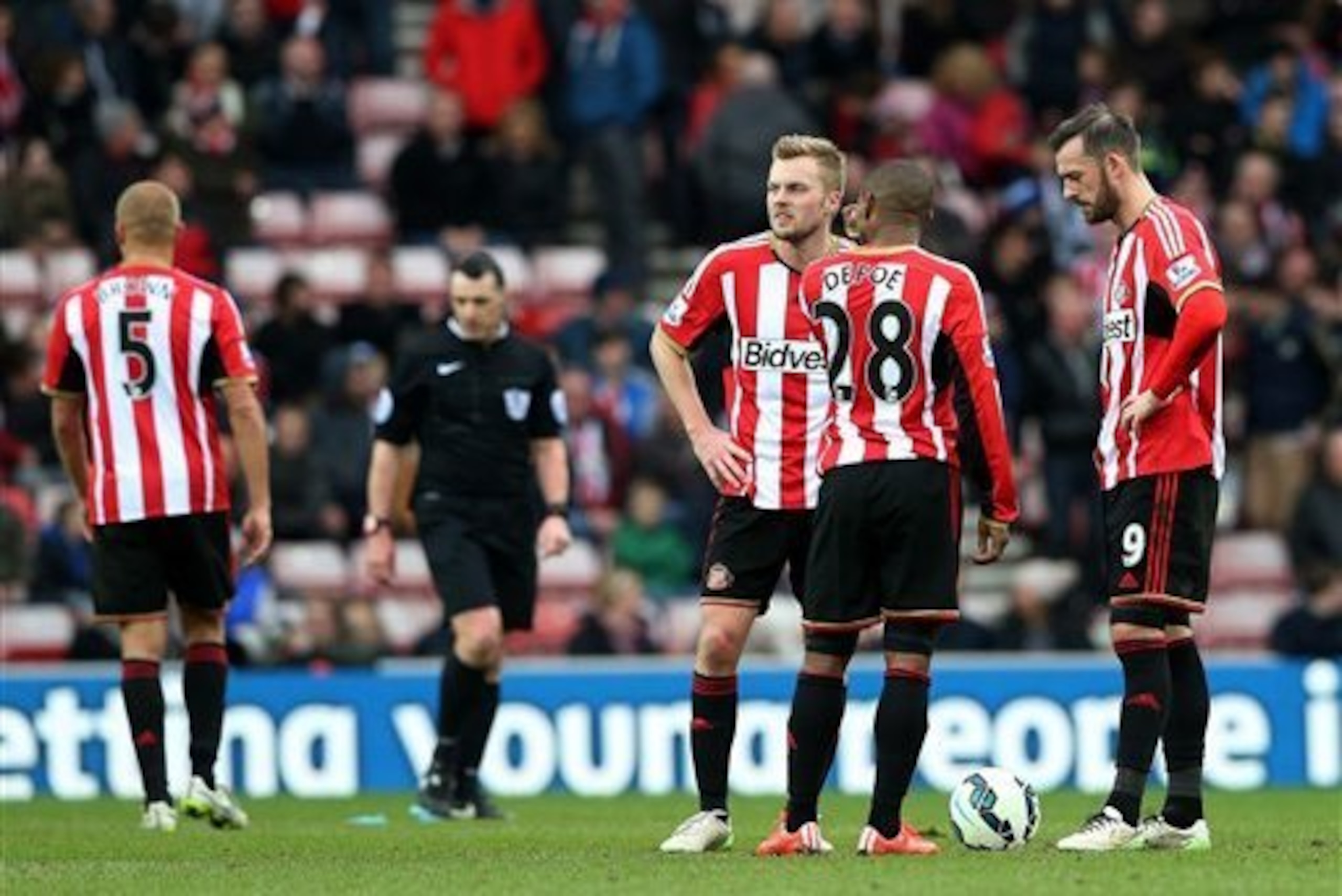
The club's last victory came on Jan. 31, at home to Burnley. Since then, the Black Cats have lost to or drawn with relegation rivals Queens Park Rangers, West Bromwich Albion (who might no longer belong in the category), Hull City and Villa.
Clearly, then, Poyet did not have the team moving in the right direction. And anyone who saw the home fans streaming out of the Stadium of Light during the first half on Saturday knew that Poyet's days were numbered.
Not that Poyet hadn't been here before. As Short alluded to in his statement, last season the situation was even more grim. With four matches left in the 2013-14 Premier League season, Sunderland sat at the bottom of the table. But thanks to wins over Chelsea, Manchester United and Manchester City over their final six matches, the Black Cats avoided relegation.
After such a great escape, Sunderland's supporters naturally expected more this season. Instead, their club is again in a relegation scrap. No surprise, then, that the club parted company with Poyet.
But after the sacking, it wasn't immediately clear what's in store for the club. According to Louise Taylor at the Guardian, Sunderland's top target for the full-time manager's job is Steve McLaren, but even if McLaren takes the job, it won't be until next season.
In the meantime, Taylor indicates that Sunderland could turn to Dick Advocaat, who is out of work after parting ways with Serbia's national team last fall.
While Advocaat is a big name with a long resume, Fulham might provide a cautionary tale for hiring a well-known manager in a relegation scrap. Last spring, the Cottagers went down despite bringing in Felix Magath.
None of which is to say Sunderland are doomed. As last spring's great escape showed, it's never too late to hold on to hope. But as Paul Lambert's sacking at Aston Villa earlier this season demonstrated, Premier League clubs are under unprecedented pressure to remain in the top flight following the news of the league's lucrative new television deal.
As Michael Caley at the Washington Post noted:
"Relegation has always been damaging, but with the Premier League’s revenue shooting up and the Football League trailing far behind, the gap is only growing. For the 2013-2014 season, according to the Telegraph’s reporting, Aston Villa made about $110 million in television revenue, with about $65 million coming from the domestic television deal. If Aston Villa were to earn a similar split of the league’s revenue under the new deal, they would rake in $110 million just from the domestic deal. And while the league has yet to settle on new international rights, it is likely that those fees will rise significantly as well. A lower-level Premier League club can probably expect television revenues in the range of $180 million for the 2016-17 season.
But if that club is relegated to the Championship, the bottom falls out. The average Championship club makes under $5 million from television rights, according the Guardian. If Aston Villa were relegated they would also receive “parachute payments” totaling around $25 million per year. So relegation currently costs clubs $60 million to $80 million in just one season, and in the future the losses could run as high as $150 million.
So if staying in the league is worth one hundred million dollars or more, how bad a decision could it be to sack a manager who isn’t working out?
"
In short, relegation will be more costly than ever this spring, and a wise club will do anything possible to avoid it. With that in mind, Sunderland probably had little choice but to make a change.
Even after orchestrating Sunderland's great escape a year ago, Poyet pretty much had to go. The economics of modern football pretty much demanded it.
Of course, that doesn't mean Sunderland are out of the woods, so to speak. If their current form continues, it's hard to see the Black Cats staying in the Premier League, no matter who replaces Poyet. And whether or not McLaren is the right man for the long-term job, the short-term job is profoundly more important for now.
So the mandate is clear: All the Black Cats will want from Poyet's short-term successor—whoever that might be—is another season in the top flight. Only after that can the club look forward to anything more.
.jpg?w=2560 "Chiefs Giants Football")
.jpg?w=2560 "🚨 Week 8 AP Top 25 Poll")
.jpg?w=2560 "Baker Gets Glove From Rays 🧤")
.jpg?w=2560 "Steelers Roll Saints in Paris")


.jpg?w=2560 "NFL investigating Eagles")
.jpg?w=2560 "5 Teams Eyeing Jonathan Taylor")
.jpg?w=2560 "Updates from EVERY Game")