

Texas' Malcolm Brown Has Chance to Be Next Late-Round Running Back Star
The market for top-shelf running backs is as strong as ever. NFL teams have rewarded star backs with rich new contracts this offseason despite a deep draft class filled with talent. For teams looking for the next stud running back taken late in the draft, Texas’ Malcolm Brown could be their man.
The devaluation of the running back position has led to less elite athletes playing there. History shows that production begins to dip once backs hit age 27, whereas other skill positions can play into their 30s. The threat of losing five years of earnings likely caused the current three-year stretch without a running back selected in the first round of the draft.
TOP NEWS

New NFL Power Rankings 📊
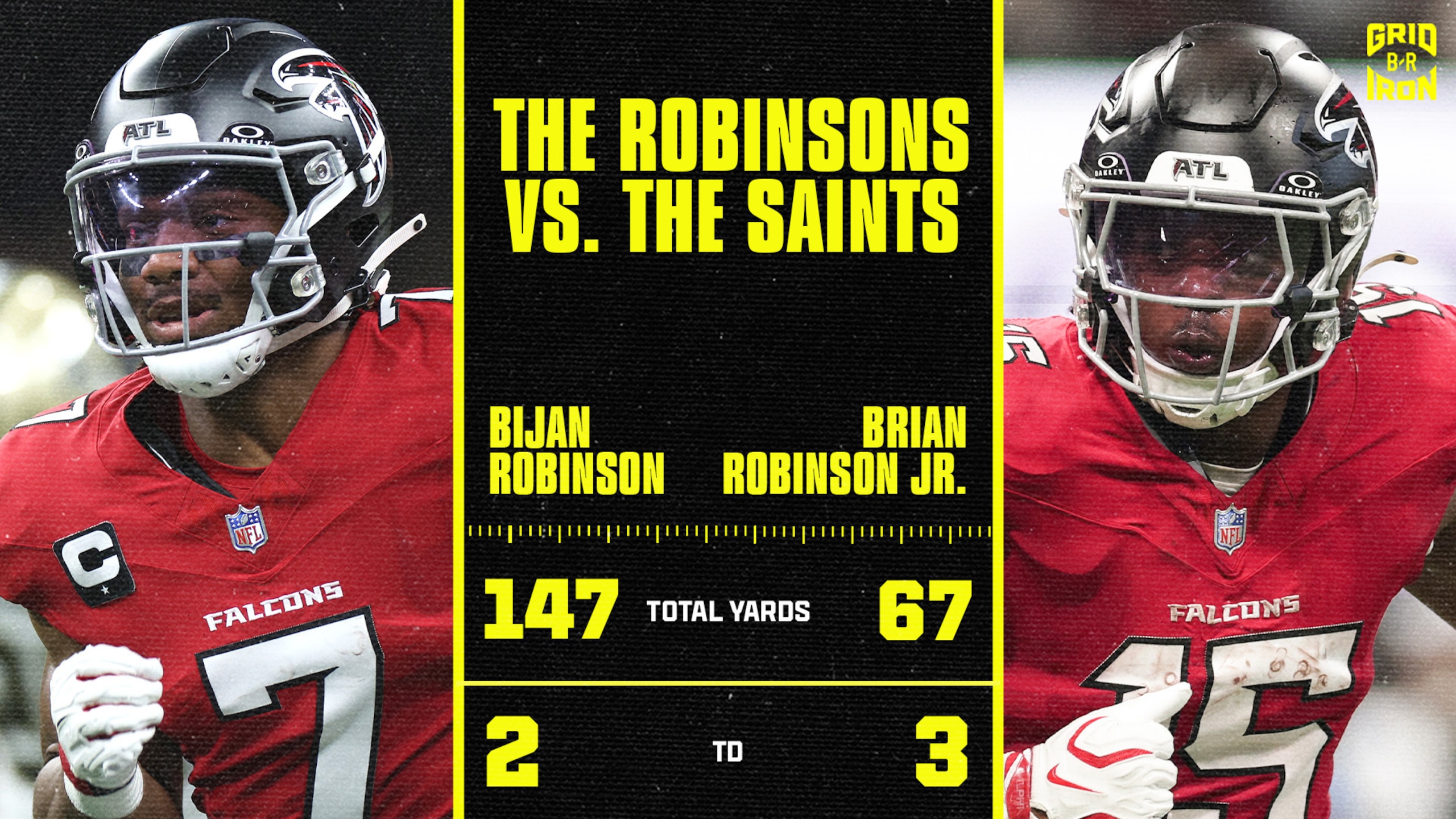
The Robinsons POUND the Rock 🪨
Takeaways from Falcons' dominant MNF win
Now we’ve gotten to the point that teams expect to find solid contributors later in the draft. Teams that run a zone-blocking scheme have capitalized on a particular market inefficiency for years. That’s a trend that other teams have slowly caught on to.
What separates most of the top backs from the serviceable group is the lack of elite physical traits. But one elite trait cannot overcome a major deficiency in vision, patience or instincts. Those unquantifiable talents reign as supreme indicators for success.
Much in the mold of Washington Redskins running back Alfred Morris, Brown has the goods to become a star. He has always been considered a highly talented player, as he was the seventh-best prospect in the nation out of high school, per ESPN (h/t TexasSports.com). But injury issues and lack of touches plagued Brown’s career throughout college, and he never fully delivered on his physical promise.
Brown’s production is a direct result from his best three skills. His vision allows him to knife through small spaces and get upfield. His power helps create extra yards. Finally, his agility is what allows him to execute his reads so effectively.
Vision
Although it is possible to have significant production with poor vision, not many running backs do. Chris Johnson’s run with the Tennessee Titans from 2008-2012 was highly impressive, but it's also one of the few examples of a running back without good vision excelling. His explosiveness was elite, and the situation around him was perfect.
On the other end of the spectrum is Trent Richardson. Richardson has been highly ineffective early in his career because he doesn’t see running lanes. His physical abilities aren’t overwhelmingly dominant enough to overcome his lack of vision, and his career is reaching turbulent levels.
Brown is a good, but not great, athlete. His combine performance reflects his film well, as he’s more smooth than explosive with the ball in his hands. It’s his vision that helps create extra yards.

Above is a good example of Brown’s vision. He takes the ball on the left hash mark and immediately has to overcome poor blocking in front of him. He glides to his left as the defender approaches to help reach the line of scrimmage, avoiding a loss on the play.
His eyes stay up as he gets to the second level of the defense. Brown sees the oncoming defender charging full speed but also notices a potential blocker he can utilize. He stays calm and subtly cuts outside without wasting movement or momentum to avoid the tackle.
The play we just broke down wasn’t flashy, but it was effective. Brown didn’t panic when he saw immediate pressure in the backfield. He was able to get a significant chunk of yards on a play that easily could’ve been a loss.
Looking just at Brown’s statistics in 2014, his 3.9 yards per carry is a concern. That’s below average for the NFL level, let alone in college where top backs can average as much as seven yards a pop. But the film showed that Brown did as well as he could when defenses loaded eight men in the box.
Power
No one would confuse Brown with a Marshawn Lynch-type power back, but he’s still effective when he drops his shoulder to fight through contact. Pad level and natural balance is a key factor for shedding tackles. Brown is a threat to reach the next level of the defense out of various formations, including shotgun and the I-form.
Set near the goal line, Brown can be a very physical presence. As much as anything, the right mindset is needed to be a solid short-yardage back. Brown shows that physicality below.

The first thing to note is that Brown immediately gets hit as he approaches the line of scrimmage. Many players will get hit on the hip and stop their legs from churning, but Brown refuses to do so. He simply deflects the impact and focuses on the next would-be tackler.
Most impressive is the hit he delivers on the Texas Tech defender. Brown drops his hips and shoulders to explode upward into the chest. The result leaves the defender laying on the ground, and Brown standing tall in the end zone.
Agility
Vision and power are a good starting point for a well-rounded star at running back. Evading defenders to create advantageous angles is just as much a critical skill, and it is something that separates third-down specialists from starters. Using head fakes and quick feet, Brown is a perfect zone-block fit.

My favorite example of Brown’s change-of-direction ability is above. This is a traditional inside zone run that stretches the defense horizontally, and it is up to the back to either continue stretching outside of the tackles or to cut back at the opportune time. It takes a combination of agility, vision and patience to execute well.
Starting from the right hash mark, Brown stretches left until he hits the middle of the field. He has two options because there is a linebacker who is on a blocker directly in front of him. Brown could bounce it outside or cut back inside. Many college backs who are reliant on physical abilities will opt to bounce the run to the sideline unnecessarily, but Brown makes the correct choice and goes inside.
Again Brown takes contact to his lower body and fights through it at the second level. The 17-yard gain is modest and not a home run play, but he’s able to create an extra something out of very little. The goal of the zone-blocking scheme is to consistently average over four yards a carry, and Brown can do so with a good offensive line.
Finding the next NFL star in the late rounds of the draft is like winning the ring-toss game at the county fair. It takes luck and the right timing for both the player and organization. The opportunity to excel doesn’t exist everywhere.
Malcolm Brown could prove to be the next Alfred Morris, Terrell Davis or Lamar Miller if he goes to a zone-blocking scheme. His blend of vision, patience, power and agility is the recipe for a star. Now he must combine the ingredients to fulfill his potential.
All stats used are from Sports-Reference.com.
Ian Wharton is an NFL Draft Featured Columnist for Bleacher Report.

.jpg?w=2560 "Rams Eagles Football")
.jpg?w=2560 "Grading WWE Raw 🔠")


.jpg?w=2560 "Injury-stricken Seahawks signing veteran RB")
