
4 Young Players and 1 Executive Expected to Fill Big Shoes in 2015
The cleats are big.
They expanded over the years as the men in them had their accomplishments and legends grow. With each clutch home run or high-leverage strikeout, they stretched.
But as everything does, especially in professional sports, the good times came to an end. Reputations, some of them partially frayed, and plenty of exceptional feats in the memory banks were all that remained—not to mention those massive shoes, left behind for someone new to fill.
With those high-profile players either retired or playing in a new place, their former clubs are left handing their jobs to the likes of young, not completely proven players. While not all of them are being looked at to carry the torch alone, they will face plenty of pressure, as they will be playing in a shadow until they accomplish something meaningful of their own. And that happens to include the game's top executive.
From Derek Jeter to Matt Kemp to Bud Selig, there is a lot of star power to be replaced in 2015, and these are the guys being called upon to do so.
Didi Gregorius, SS, New York Yankees
1 of 5
Like David Robertson a year ago, Didi Gregorius is being tabbed to replace an all-time Yankees great. And while the 25-year-old athletic shortstop will never fulfill all that came with Derek Jeter’s legend, it is not impossible for him to replace Jeter’s production.
Gregorius is accustomed to being in the spotlight—not because he has earned it, but because he has been part of two blockbuster trades before collecting even 800 major league plate appearances. The first involved big-time pitching prospect Trevor Bauer and one of the game’s most underrated players, Shin-Soo Choo. The second, in December, involved a promising pitcher in Shane Green (sent from New York to Detroit) and a teenage shortstop, Domingo Leyba (sent from Detroit to Arizona), with high upside.
Gregorius ended up being a key piece in both trades, but he has not produced offensively as he did in the minors and has been just average to below-average defensively.
Still, he can be a boost at the position for New York. In Jeter’s final two seasons, he produced a 52 and 76 OPS-plus, respectively, and Baseball-Reference had him being worth not even one win above replacement in each year.
For his part, Gregorius has been worth slightly more than one win above replacement the past two seasons, and he is good enough to be light-years better defensively than Jeter had been for a decade.
Replacing the entire void left by Jeter’s retirement is impossible for Gregorius. But if he can manage to give above-average contributions on both sides of the ball, he will be an improvement.
Rob Manfred, MLB Commissioner
2 of 5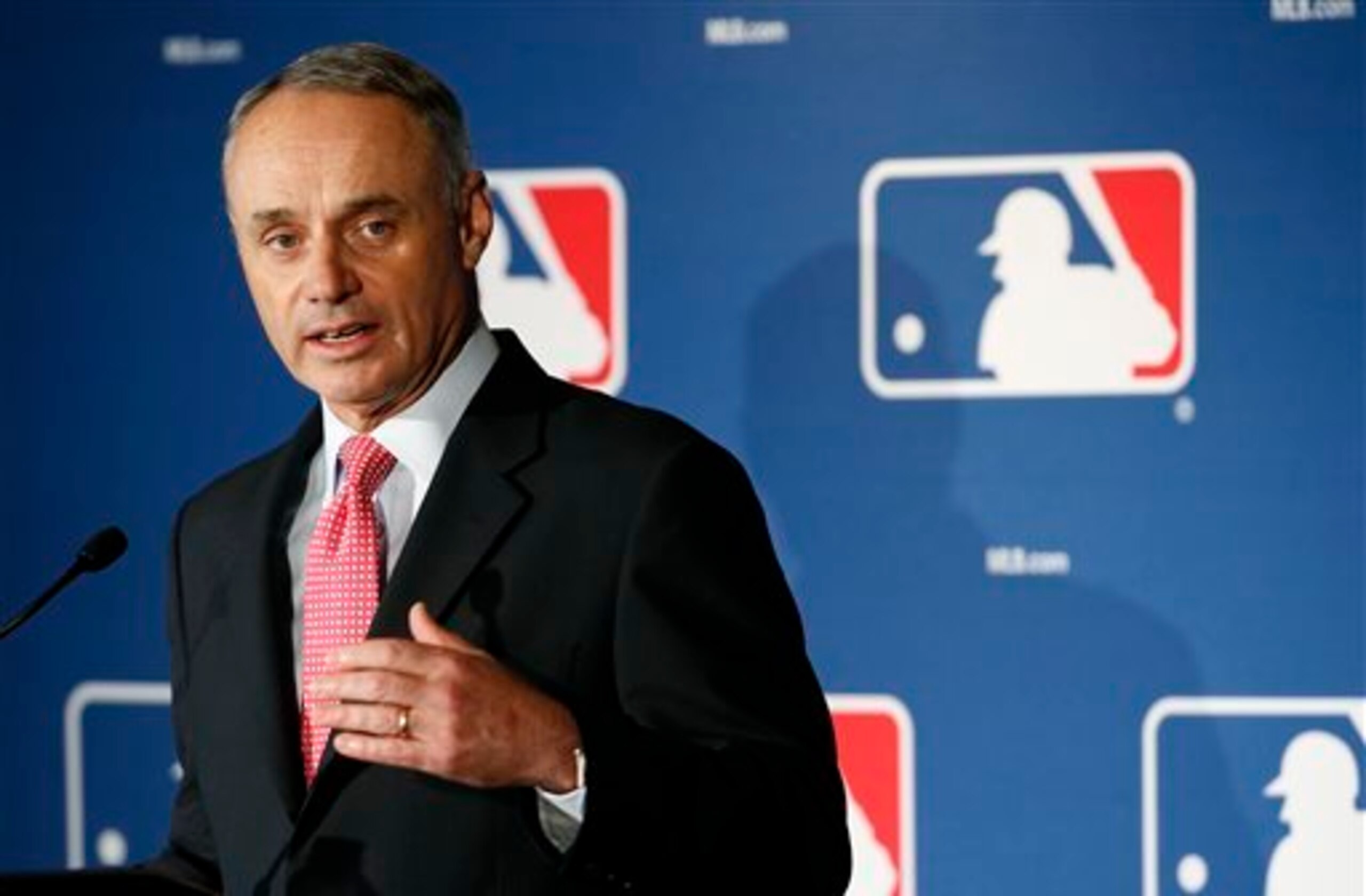
This is not an on-the-field replacement, but former commissioner Bud Selig left behind a massive legacy upon his retirement earlier this year. And while not all of it was positive, Manfred will be working to get out of that shadow, even if he sees his work as an extension of Selig’s.
“I have very big shoes to fill,” Manfred said in August. “There is no question I wouldn't be standing here today if it weren't for Bud. I hope that I will perform as 10th commissioner in a way that will add to his great legacy.”
Manfred has already gotten off to a running start. While Selig pretty much ignored problems plaguing the game throughout his tenure, Manfred is already working to address pace-of-play issues as well as plummeting offense. While he understands there are fans of elite pitching, he also knows he needs a faster pace and more runs to grow the game to a younger, more diverse audience.
And while he has already met pushback from one of the game’s biggest stars, David Ortiz, Manfred is making his presence known.
Improving pace of play and finding ways to increase offense are fine and good for now, but Manfred’s first real and truly historic test could come after the 2016 season when the current collective bargaining agreement expires. At that time, talk of adjusting/changing the international free-agent market will be polarizing, and how he maneuvers through that situation could go a long way in separating his own legacy from Selig’s.
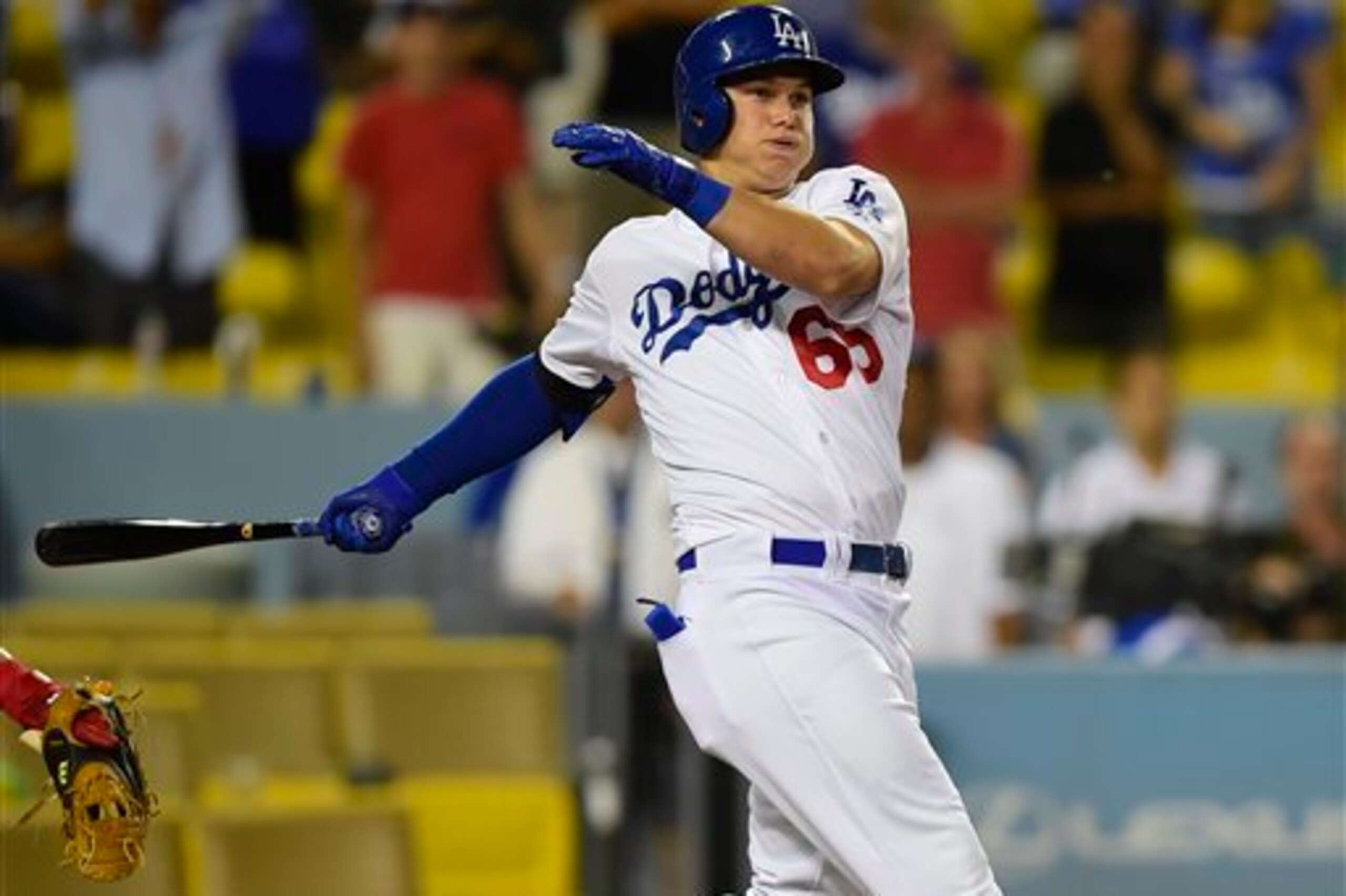
Joc Pederson, CF, Los Angeles Dodgers
3 of 5
When the Dodgers signed Matt Kemp to an eight-year, $160 million contract extension in 2011, nobody in Los Angeles saw it coming to an end as it did in December. Kemp was to be a franchise player at this point, entering his age-30 season on a World Series contender.
But after a slew of debilitating injuries and some clubhouse issues, Kemp was traded down a couple of Southern California freeways to division rival San Diego during the winter meetings. While the Padres are happy to have a potential MVP candidate in their outfield, the Dodgers are moving on.
And they hope Joc Pederson facilitates the move.
He has been one of the organization’s top prospects for a few years now, and as long as his spring training progresses without any serious obstacles, he will be asked to replace Kemp, once an MVP runner-up and the best offensive player in baseball after last year’s All-Star break.
Kemp’s WAR for last season was somewhere between 1.1 and 1.8, lowered because of a so-so first half and atrocious defense. Over the course of 150 or so games and 600 plate appearances, assuming Pederson plays well enough to get them, it is not out of the question for an elite prospect to come in and at least duplicate that kind of production.
ZiPS sees Pederson as having a 20-20 season and being worth more than three wins above replacement as a rookie. And it is a pretty much unanimous verdict that he will be better in center field than Kemp or Andre Ethier.
One of Kemp’s final highlights as a Dodger was a game-winning home run in the postseason last October that sent Dodger Stadium into euphoria. That kind of dynamic player can be hard to replace, but if Pederson is what the organization believes he is—an elite prospect who can be a major league All-Star—it should not be a problem.

Yordano Ventura, SP, Kansas City Royals
4 of 5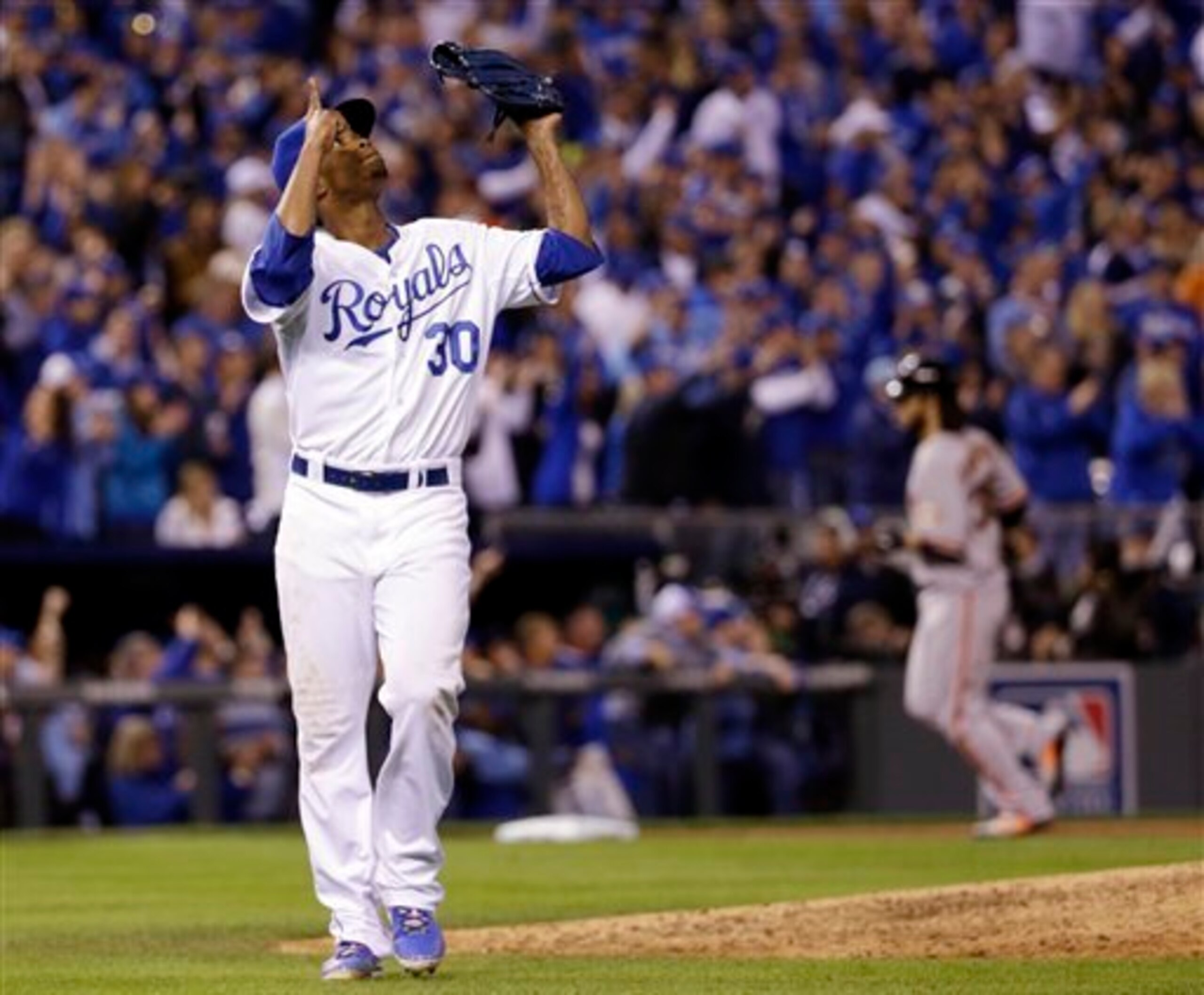
As the Royals come off their American League pennant, it can be difficult to see exactly how they got better as a team. Mostly because ace James Shields was lost in free agency, and there is no truly proven arm to replace him in the rotation.
But the Royals will look to 23-year-old Yordano Ventura to do so. The right-hander, whose fastball can touch triple digits and averaged 97 mph last season, posted a 3.20 ERA (3.60 FIP) and 125 ERA-plus in 183 regular-season innings in 2014. Now, he will likely become the team’s No. 1 starter with 26-year-old Danny Duffy slotted behind him.
Ventura will not be Shields, even if their ERA-pluses were similar—Shields’ was 124. Shields still pitched 227 innings in the regular season and put up a 2.14 ERA in his final six starts to push the Royals into their first postseason since 1985.
Ventura was also good in his final six starts with a 2.41 ERA, but the difference in innings over the course of the season is still big. While Ventura will increase that total if healthy, he is still a ways away from being a guy who can eclipse 200 innings.
Still, if the Royals are going to make a repeat run in October, Ventura will have to be good enough to make Shields’ 2014 contributions a distant memory.
Sonny Gray, SP, Oakland A’s
5 of 5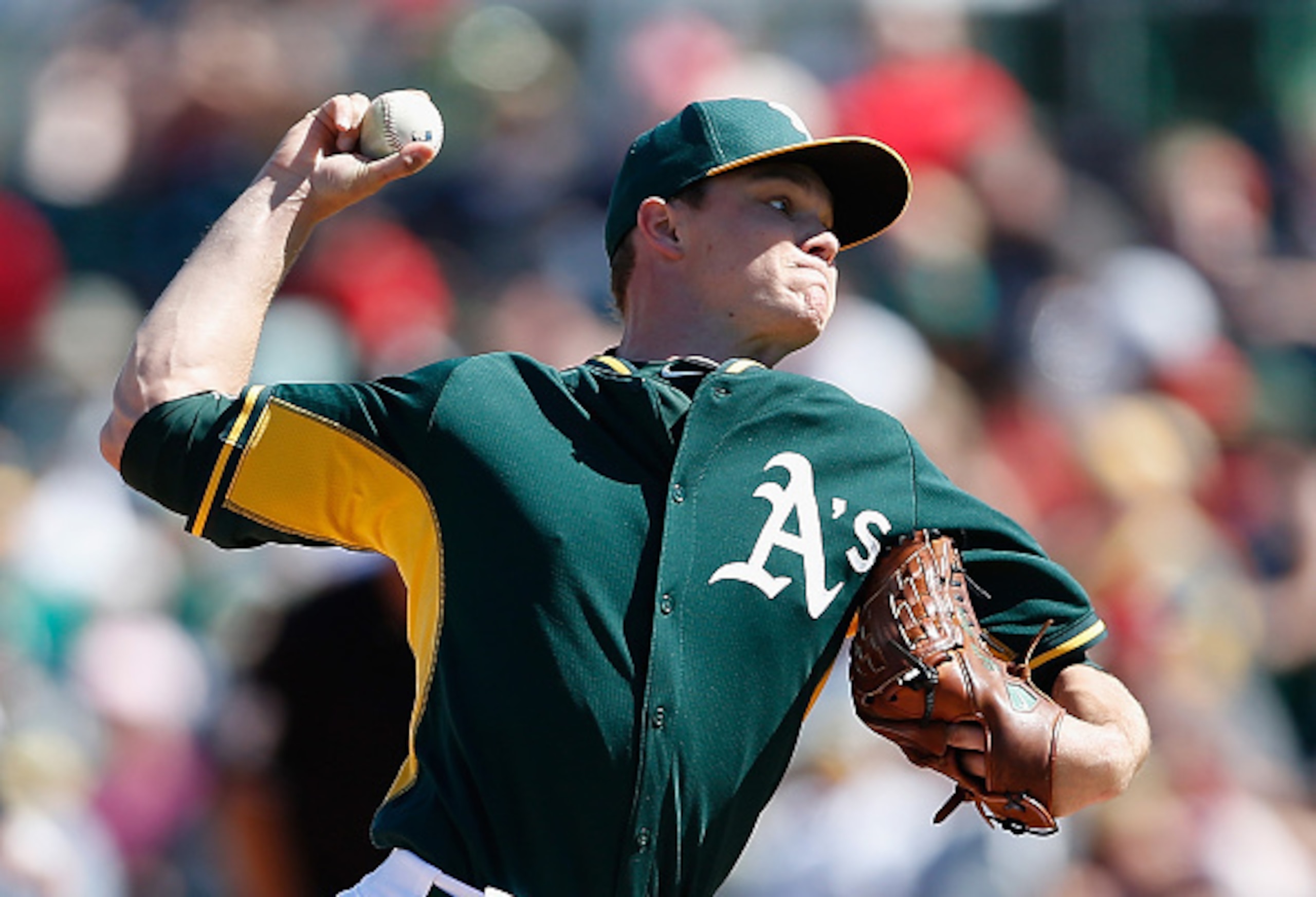
Many have mistaken the Oakland offseason as a rebuild rather than what it actually ended up becoming—a retooling.
Part of the reason it was not a total teardown is because the A’s truly believe in their pitching, especially their young ace in the making, Sonny Gray. At 25 years old, he is slotted to be the team’s Opening Day starter and the rotation’s front man. Last season, for 11 starts, that job belonged to Jon Lester, who gave the A’s a stellar 2.35 ERA and 159 ERA-plus.
Obviously, Lester’s time in Oakland was abbreviated. After a trade-deadline deal sent him to the A’s and after a dozen starts, including the American League Wild Card Game, Lester left via free agency. But the A’s also traded his potential replacement, Jeff Samardzija.
That leaves Gray, who made 33 starts in his second season. He went 14-10 with a 3.08 ERA (3.46 FIP) and 120 ERA-plus. Those numbers are not quite ace material, but they were leaning that way before Gray hit a wall and put up a 5.05 ERA in nine of his final 11 starts—his final two outings saw him allow one earned run over 16 innings.
If the A’s return to the playoffs in 2015, something many pundits do not expect to happen, it will be on Gray’s back.
Statistics courtesy of Baseball-Reference.com and FanGraphs.

.jpg?w=2560 "Mahomes Told Teammate to Leave Meeting")
.jpg?w=2560 "🚨 Week 8 AP Top 25 Poll")

.jpg?w=2560 "Baker Gets Glove From Rays 🧤")
.jpg?w=2560 "Steelers Roll Saints in Paris")


.jpg?w=2560 "NFL investigating Eagles")
.jpg?w=2560 "5 Teams Eyeing Jonathan Taylor")
.jpg?w=2560 "Updates from EVERY Game")