
Projecting MLB's 10 Most Dominant Rotations 5 Years in the Future
We are living, in case you hadn't heard, in the era of the pitcher.
Last year, MLB scoring fell to a 31-year low, per Baseball-Reference.com, and the trend shows no sign of abating. If the late '90s and early '00s were ruled by the hulking slugger, today (and, here's betting, tomorrow) is all about the arms.
OK, now the fun/tricky/crazy part: Let's hop in a time machine and set the coordinates five years ahead—to the spring of 2020. What teams will own the best starting rotations in that not-so-distant, still-pitching-rich future?
Obviously, it's impossible to say with any certainty. So much can happen—trades, injuries, signings, new prospects or international talent bursting onto the scene. The baseball landscape will inevitably (and unpredictably) shift in the next half-decade, then shift again.
Still, why not give it a whirl? It's spring, a time for hope, renewal and frivolous theoretical exercises.
Plus, there are some things we do know. We know which star pitchers are signed to long-term contracts that will carry them to 2020 and beyond. We know what clubs have the highest-rated hurlers in their farm systems, and which ones are best at bringing them along.
We also know what squads play in pitcher-friendly yards, and which general managers have the most scratch to spend in free agency.
So, with all that and a grain of salt in mind, let's flash forward. (Cue Wayne's World "doodly doo" sound effect.)
No. 10: San Francisco Giants
1 of 11
San Francisco's farm system is generally ranked in the bottom tier, and, indeed, the Orange and Black don't currently boast many can't-miss prospects.
The Giants do, however, have some intriguing arms stocked in the lower levels. They also have a sparkling track record of developing pitchers, including the championship core of Matt Cain, Tim Lincecum and Madison Bumgarner.
Will the likes of Keury Mella, Kyle Crick and Tyler Beede follow suit?
There's no guarantee. None of the Giants' young arms cracked Keith Law's influential top 100 prospects list at ESPN.com, though Law seems fairly high on Mella.
But after three rings in five years, won mainly on the backs of homegrown hurlers, it's tough to bet against San Francisco's rotation, especially at pitcher-friendly AT&T Park.
Heck, in five years Bumgarner will only be 30. And while the big left-hander is due to become a free agent after the 2019 campaign, the Giants have shown they're willing to spend to keep their own.
Picture a grizzled Bumgarner leading a new cast of characters by the Bay—maybe all the way to another Commissioner's Trophy.
No. 9: San Diego Padres
2 of 11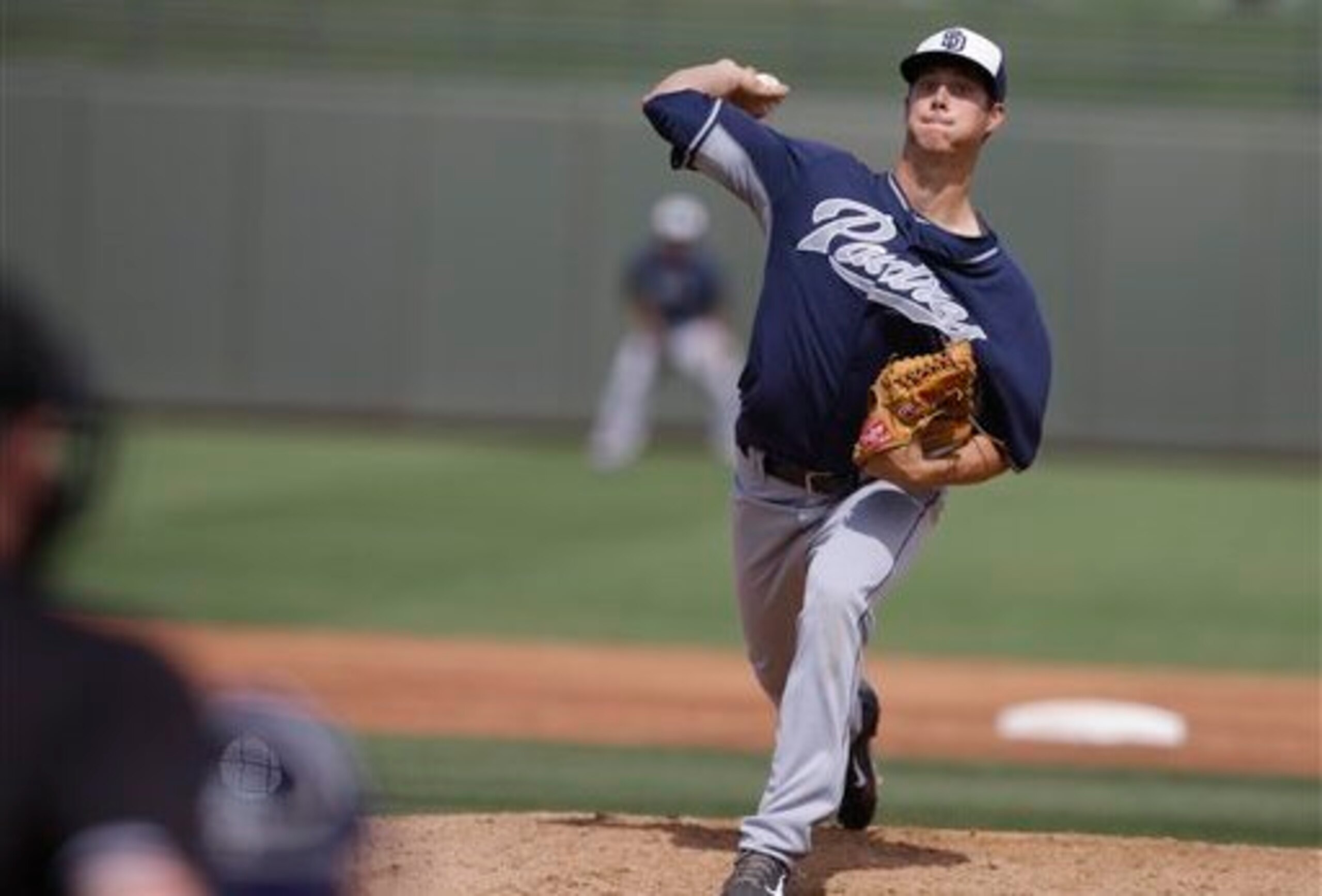
Tyson Ross and Andrew Cashner, the budding aces that anchor the Padres' current rotation, will both be free agents before 2020 unless the Friars lock them up. Ditto for Ian Kennedy and James Shields.
But despite all its offseason machinations, San Diego managed to hang onto right-hander Matt Wisler, the club's No. 1 prospect, per Baseball America.
Wisler struggled last season after a promotion to the hitter-friendly Pacific Coast League, but he went 3-1 over his final six starts and appears ticketed for a spot in San Diego's rotation sooner than later.
Who will pitch around him in the years to come remains an open question, but general manager A.J. Preller proved he's an aggressive wheeler and dealer in his first offseason at the helm.
And any pitcher who dons a Padres uniform gets to play his home games at Petco Park, the second-most pitcher-friendly field in MLB, according to ESPN's Park Factors.
No. 8: Miami Marlins
3 of 11Here's how far into the future we're peering: Jose Fernandez, just 22 years old, will theoretically be a free-agent before 2020.
The Marlins offered a six-year, $40 million extension to the 2013 NL Rookie of the Year, who is coming off Tommy John surgery, in December, per CBSSports.com's Jon Heyman.
Fernandez—who is represented by super-agent Scott Boras—didn't accept, and if he returns to the dominant form he showed before his injury, he'll get a lot more from someone.
It could even be the Marlins who make that offer, as they recently handed slugger Giancarlo Stanton a record-smashing $325 million deal and promised to build a winner around him.
If Fernandez does wriggle away, the Fish might have his heir apparent in Tyler Kolek, a 19-year-old, 6'5" flame-thrower from Shepherd, Texas, who Miami nabbed with the second overall pick in 2014.
Ideally, the Marlins will find a way to keep Fernandez—assuming he retains his powers post-Tommy John—in South Beach and pair him with Kolek to form a deadly one-two punch.


No. 7: Pittsburgh Pirates
4 of 11Tyler Glasnow and Jameson Taillon, the top two prospects in Pittsburgh's system according to Baseball America, are the names that jump out when assessing the future of the Bucs' rotation.
Taillon, the No. 2 overall pick in the 2010 draft, had Tommy John surgery in April 2014, but began throwing bullpen sessions off a mound in late February, per Bill Brink of the Pittsburgh Post-Gazette.
Even with the injury, Taillon clocked in at No. 36 on Law's top 100 list, 13 spots below Glasnow, who Law ranked as the fourth-best pitching prospect in baseball.
Now add Nick Kingham to the dynamic duo, a 23-year-old right-hander who might be the first of Pittsburgh's farm hands to crack the big league roster. Yours truly recently included Kingham on a list of sleeper prospects to watch.
The Pirates sit at the small-market kids' table, meaning they're unlikely to snag any top-shelf aces via free agency in the coming years.
But they did just hand a three-year, $39 million deal to Francisco Liriano, the biggest free-agent payout in franchise history. Clearly they're not averse to loosening the purse strings as they look to stay relevant in the hypercompetitive National League Central—now and down the road.
No. 6: Chicago White Sox
5 of 11The White Sox sent notice this offseason that they intend to be players in the American League.
So don't be surprised if Chicago makes moves to lock up right-hander Jeff Samardzija (a free agent next winter) and left-handers Chris Sale (a free agent in 2018) and Jose Quintana (a free agent in 2019).
The real hope on the south side, though, may come in the form of left-hander Carlos Rodon, the No. 3 pick in the 2014 draft.
Rodon's mechanics can get a little funky, but as Law notes:
"[The] White Sox have an exceptional track record of working with pitchers with different or unorthodox deliveries and improving their performance while keeping them healthy, making their system the perfect fit for Rodon's skill set and mechanics.
"
It's been six years and counting since the White Sox made the postseason. Here's betting they'll be nursing no such drought five years from now.
No. 5: St. Louis Cardinals
6 of 11
Despite their perennial success, the Cardinals always seem to have a well-stocked farm system, and this year is no exception.
On the pitching front, the Cards are currently holding Carlos Martinez, who's not really a prospect after throwing 89.1 big league innings last season and four more in the playoffs. Martinez spent time in the bullpen in 2014, but the hard-throwing, 23-year-old right-hander's future is in the rotation.
Martinez, like talented but injury-bitten Michael Wacha, is eligible to become a free agent after the 2019 season, so St. Louis will have decisions to make.
Marco Gonzales, a 23-year-old southpaw with plus off-speed stuff, can't touch triple digits like Martinez, but he also appears ticketed for the St. Louis starting five in the near future.
Add 20-year-old right-hander Alex Reyes—who cracked Law's top 100 at No. 77—and you've got the makings of a fine young nucleus on a team with a knack for development, the payroll to supplement with free agents and the pedigree (can you say four straight NLCS appearances?) to attract top talent.
No. 4: Los Angeles Dodgers
7 of 11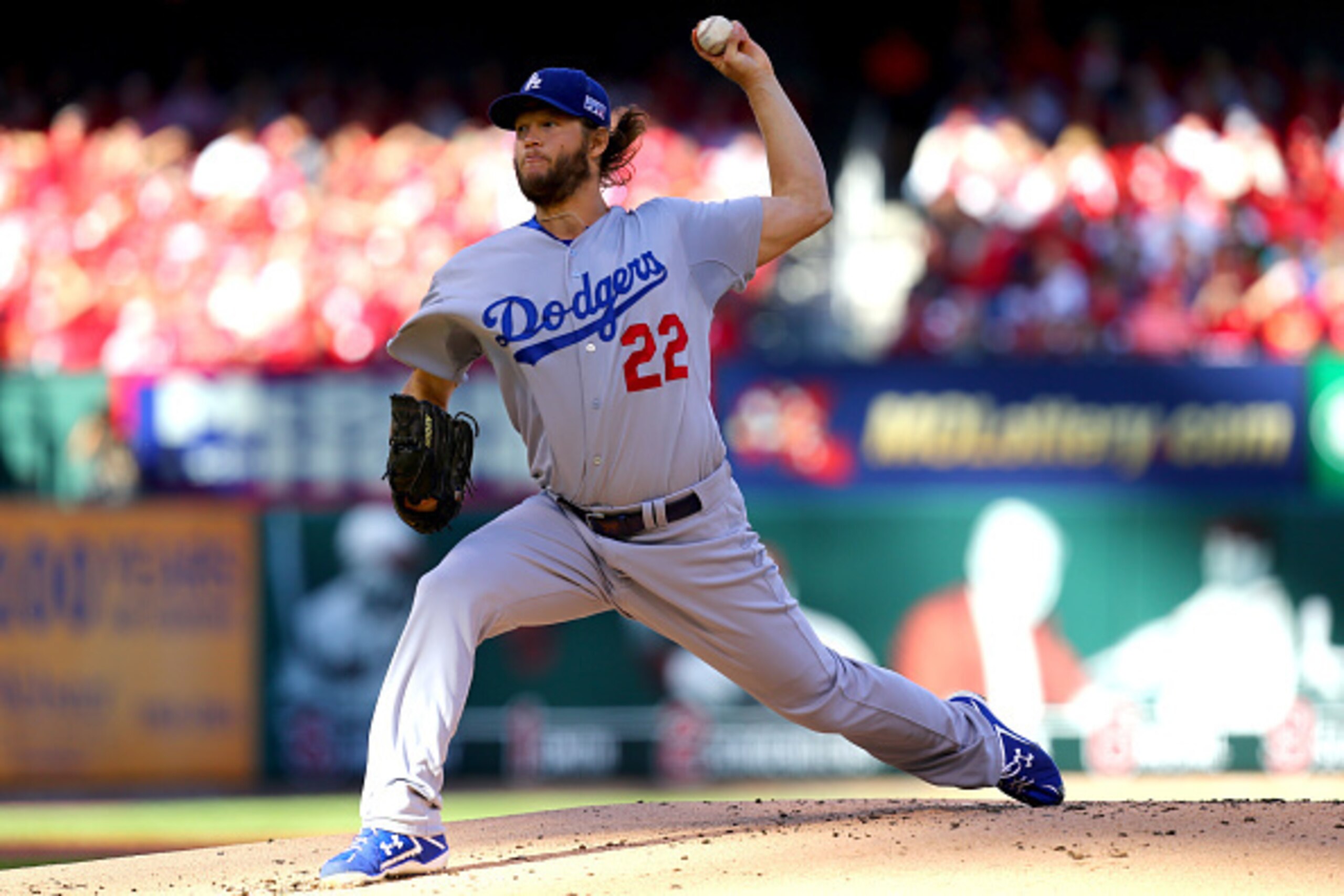
Considering the storage shed full of hardware he's amassed in his big league career, it's hard to believe Clayton Kershaw is still just 26 years old (27 on March 19). That means he'll be turning 32 in the spring of 2020, no longer a whipper-snapper but far from a washed-up vet.
So that alone vaults the Dodgers' future rotation into the conversation. Now add the intrigue of Julio Urias, the 18-year-old left-hander who has torn through Single-A and High-A over the last two seasons, striking out 176 hitters in 142 innings.
Urias threw live batting practice on March 1, and Dodgers infielder Alex Guerrero offered just about the highest praise imaginable. "When he threw a fastball," Guerrero told the Los Angeles Times' Dylan Hernandez, "I couldn’t see it."
A lot can happen with a player that young. But if Urias realizes his potential and ascends alongside Kershaw—and the Dodgers throw their considerable payroll bulk at one or more of the ace-caliber arms set to hit the market next winter—we could be looking at a legitimate pitching juggernaut.
TIE No. 3: Boston Red Sox
8 of 11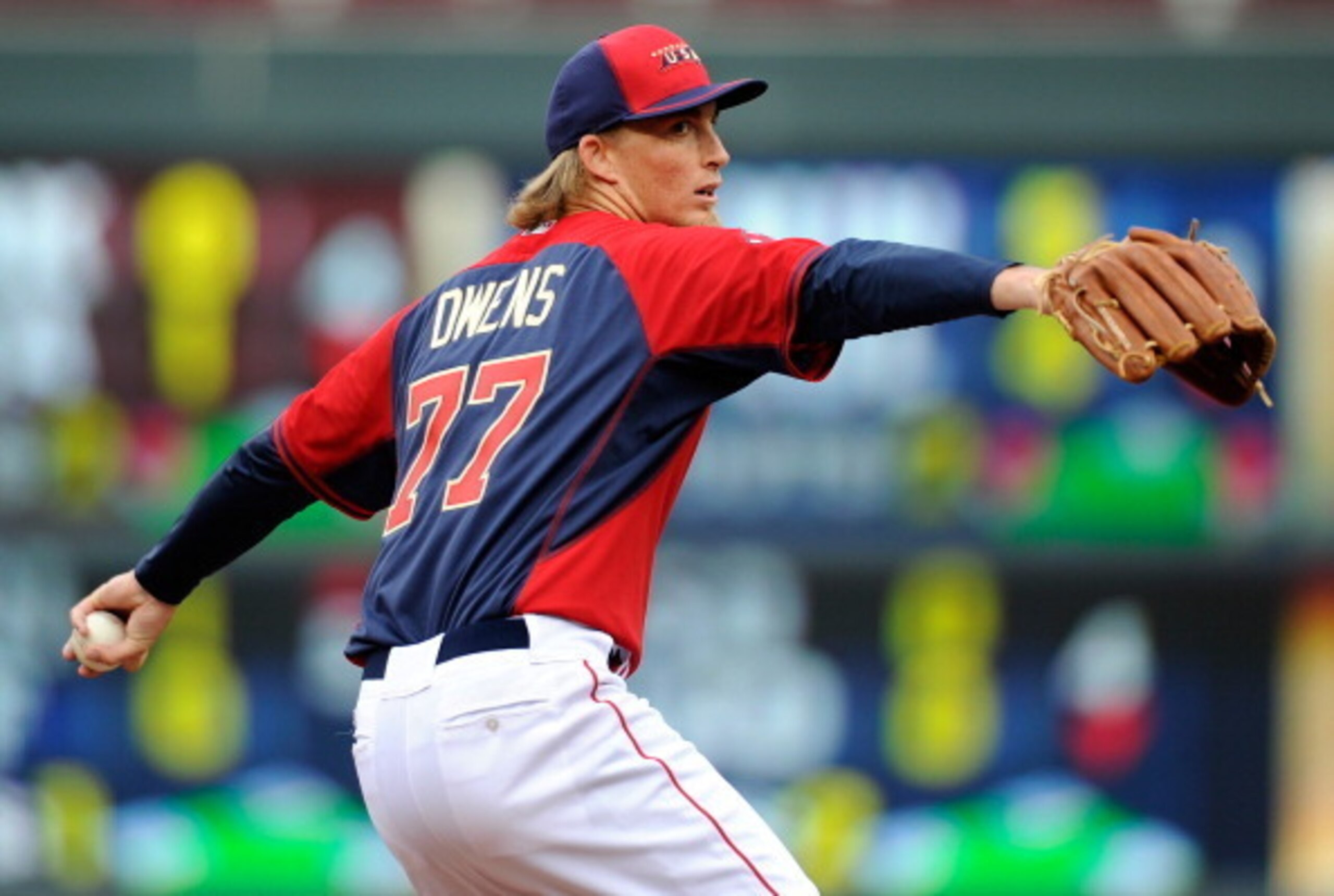
The Red Sox spent the winter overhauling their starting rotation, and while none of those pitchers are likely to be with the club five years out, it sent a clear message: Boston is committed to rebounding from its last-place finish in 2014.
So expect the Sox to spend—cash, prospects or both—to bring in outside help. And expect that help to coalesce around Henry Owens, a 22-year-old, 6'7" southpaw who posted a 2.94 ERA between Double-A and Triple-A last year.
Owens impressed in camp with his changeup, which Red Sox catcher Ryan Hanigan told Jason Mastrodonato of the Boston Herald has "great deception."
He's joined in the cadre of promising young Beantown arms by another left-hander, Eduardo Rodriguez, who was acquired from the Baltimore Orioles for reliever Andrew Miller. Still just 21, Rodriguez needs more seasoning, but could crack the Red Sox rotation as early as 2016.
And don't be surprised if the Sox dip into next offseason's deep free-agent pitching class. As they showed with an aggressive winter, capped off by the Yoan Moncada deal, they're in it to win it.
TIE No. 3: Baltimore Orioles
9 of 11The Orioles placed two pitchers in Law's top 30: 20-year-old right-hander Hunter Harvey (No. 16) and 22-year-old righty Dylan Bundy (No. 26).
Add 24-year-old Kevin Gausman, who posted a 3.57 ERA in 20 starts for the O's last year and won't become a free agent until 2021, and Baltimore has the makings of a deep, reliable rotation.
That's the blueprint that propelled the Orioles to the top of the AL East and into the American League Championship Series in 2014.
With talent in the pipeline and a yard that last season skewed toward pitchers, expect them to do everything they can to repeat the blueprint.
No. 2: New York Mets
10 of 11
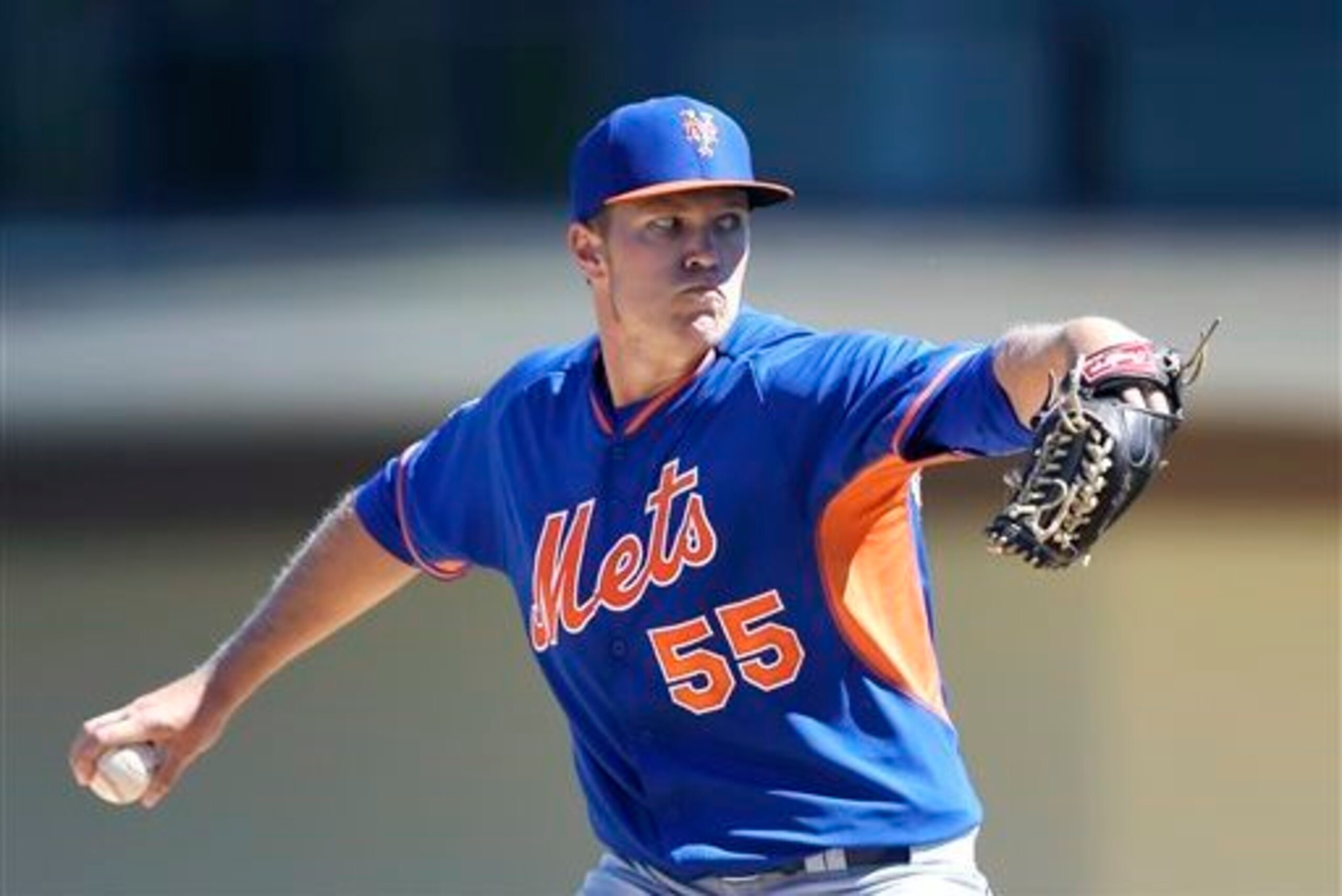
Reigning NL Rookie of the Year Jacob deGrom won't be a free agent until 2021. Noah Syndergaard, the Mets' No. 1 prospect, is knocking on the door and remains under team control for the long-term. Zack Wheeler could hit the market after the 2019 season if the Amazin's don't nail him down first.
The point is, there's loads of burgeoning pitching talent in the Big Apple, and it isn't emanating from the Bronx.
Oh, sure, the Yankees are always a threat to open the wallet and sign everyone. Based on that alone, you could argue they belong on this list.
Right now, though, the Mets look like the club holding all the hurler cards, and appear poised to make some October noise for the first time in nearly a decade.
More importantly, based on the age of their arms, they look like they can keep making noise for years to come.
No. 1: Washington Nationals
11 of 11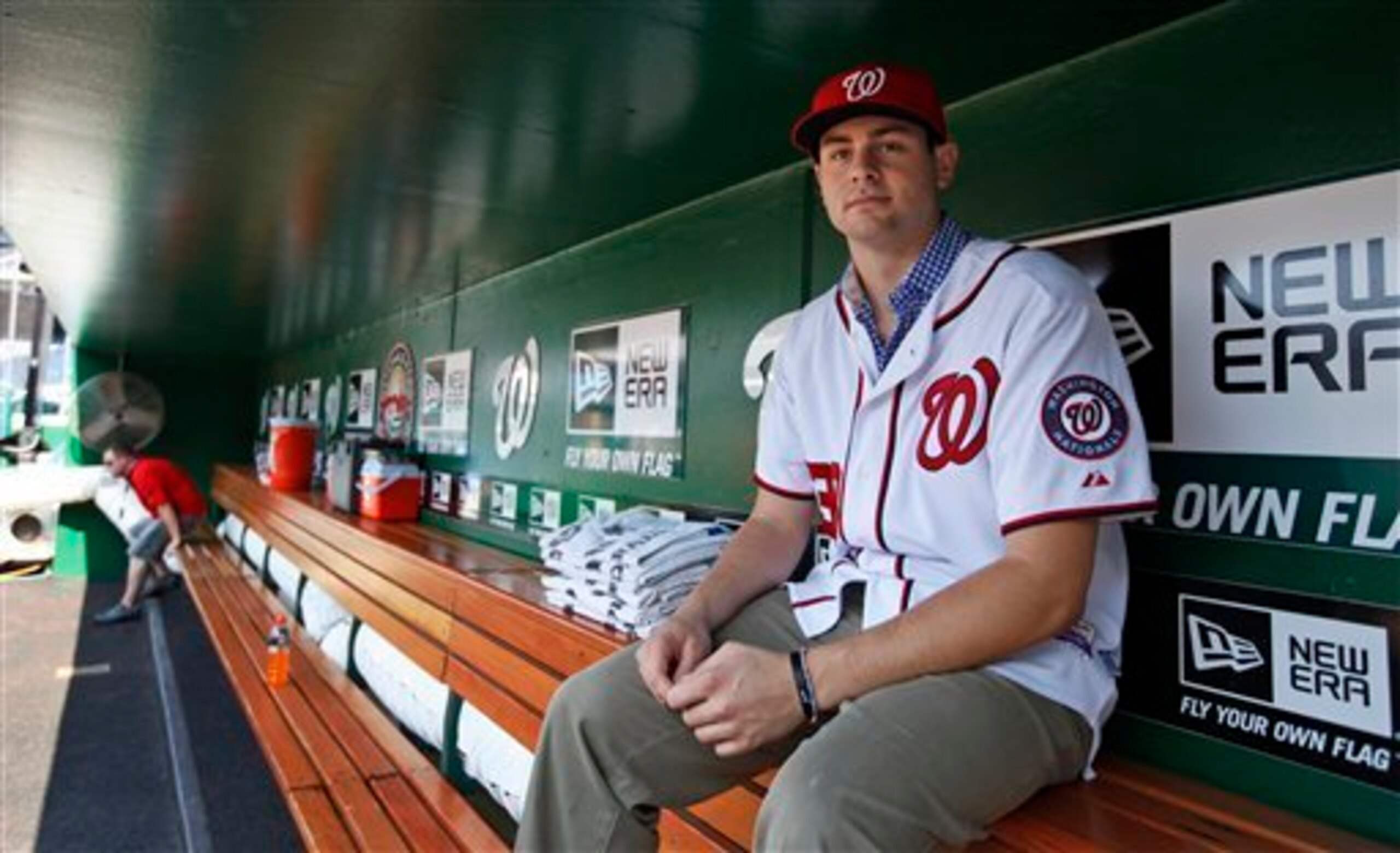
You know all about the Nationals' current super-rotation. But that's not what we're here to talk about.
We're here to discuss what's in store in D.C. And, well, it's pretty super, too.
Of Washington's current projected starting five, only Max Scherzer is signed beyond 2020. But given how much they've invested in pitching, it's safe to assume the Nationals will re-up some combination of Stephen Strasburg, Jordan Zimmermann, Doug Fister, Gio Gonzalez and Tanner Roark for the long haul.
Here's where Nationals fans are spoiled, though: There's even more blue-chip talent coming down the pipeline.
Like, say, 20-year-old right-hander Lucas Giolito, who Law opines "looks the part of a future ace." Or 23-year-old righty A.J. Cole, who would likely crack many MLB starting rotations but will almost certainly have to wait his turn in the nation's capital.
It's the definition of a good problem for the Nats, and as near as you can get to a guarantee that they'll be sitting—and throwing—pretty in perpetuity.
All statistics courtesy of Baseball-Reference.com unless otherwise noted.



.jpg?w=2560 "Love's Body Already 'Tired'")

.jpg?w=2560 "Tyreek Deal May Come Soon")
.jpg?w=2560 "Ward Nearly Walks Out of Presser ▶️")