

In Defense of College Football Stars' Combine 'Failures'
Fresh off a record-breaking 24-sack season in 2002, Arizona State defensive end Terrell Suggs took his immense gifts to Indianapolis for the NFL Scouting Combine and stumbled out of the gate, both literally and figuratively.
Suggs’ slothful 4.8-ish 40-yard dash is what garnered the most attention, although he struggled in other arenas with watchful NFL eyes tuning in. His 33-inch vertical jump was fine but ordinary. His 19 bench-press repetitions of 225 were on the low end for someone of his size and at his position.
On paper, he looked extraordinarily average. The performance, even at a time when the combine was a niche gathering highlighted by a select few, sent the scouting world into a frenzy.
TOP NEWS

Week 5 AP Top 25 Poll 🔢

Updated CFP Bracket Projections 🔮
Top Overreactions after Week 5 of CFB Season 😧
Suggs ultimately “fell”—if you want to call it that—to the Baltimore Ravens at pick No. 10 in the 2003 NFL draft. He immediately contributed, winning Defensive Rookie of the Year. Suggs has since won a Super Bowl, been named the NFL Defensive MVP, made six Pro Bowls and sacked quarterbacks more than 100 times.
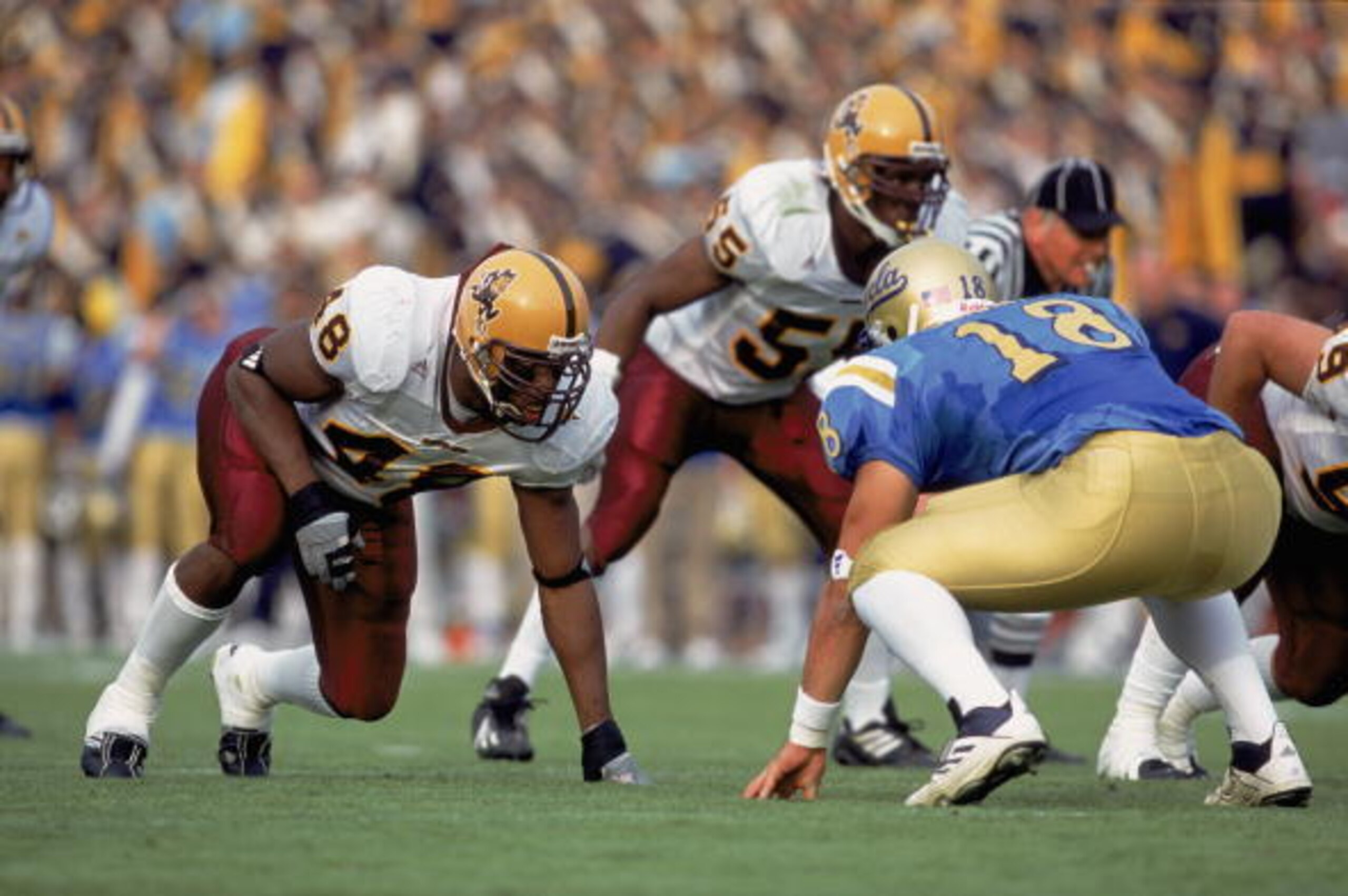
The ordinary tester, as it turns out, was pretty good at this. Those who watched him torment Pac-10 defenses knew better than to abandon ship.
"Just look at me playing football,” Suggs told Jarrett Bell of USA Today after his combine. “I can play football."
Over the past decade-plus, others were in a similar scouting quandary following disappointing combine showings. Good football players earned negative reputations based off a string of tests that tell us little about them.
As a result, players with exceptional college resumes and game tape to match have seen their abilities called into question. The 2015 NFL Scouting Combine was no different. While some physical freaks showed up and performed like freaks—take former Clemson defensive end Vic Beasley, for example—others came away with the opposite buzz.
There was Paul Dawson, TCU’s outstanding outside linebacker—a tackling cyborg—firing off a dismal 4.93 40, according to NFL.com. It was a time beat by all but four linebackers in Indianapolis. Like Suggs, he also struggled on the bench press, posting just 21 reps of 225 pounds.
Playing on a team that posted a tremendous resume to make the College Football Playoff, one could argue that Dawson was the team’s second-most important player behind only quarterback Trevone Boykin.
His 136 tackles were tops in the Big 12 and good for ninth nationally. He was also tied for ninth in the conference with six sacks. But those were just numbers, which have worked against Dawson in recent days. His play—what you saw with your own eyes—is really is what jumped out. He was regularly exceptional.
Following his combine showing, Dawson took to Twitter to defend the only thing that matters in all of this madness: his ability to play football, which is something not nearly as defined.
"I'm an awesome football player. The best/most productive linebacker in this draft. Not a track Star. #meetmeonthefield
— Paul Dawson Jr (@PjDawson47) February 22, 2015"
Josh Robinson endured a similar combine gauntlet. The former Mississippi State running back—basically a human bowling ball equipped with a V8 engine—had similar struggles with his Indy testing.
After a tremendous season, the 5’8” Robinson could only muster up a 4.7 40 at 217 pounds, according to his NFL.com profile. Despite running for 1,200 yards and averaging more than 6.3 yards per carry in 2014, similar negative rumblings matriculated.
Robinson, the proud owner of perhaps the most ridiculous and physical run of this past season, showcased a wide range of athletic capabilities in one chaotic play against Kentucky.
There were others, too. The annual tradition of “failing” the combine is not limited to just a handful of players. As the exposure of the event has increased, so has the pressure to perform up to—or beyond—standards deemed suitable to play in the NFL.
That’s not to say that physical measurements and times aren’t noteworthy. In a sport built on size, speed and strength, it would be unreasonable to completely set aside results based on the traits required to reach this level. But there are exceptions to this formula. There have to be. Mass multiplied by acceleration will tell you something about force and very little about the overall worth of a player.
Just ask Suggs, Vontaze Burfict, Joe Haden, Mark Ingram and the countless other players who have performed below expectations at the combine. These "failures" were chewed up, spit out and made a career out of what they do best: play football.
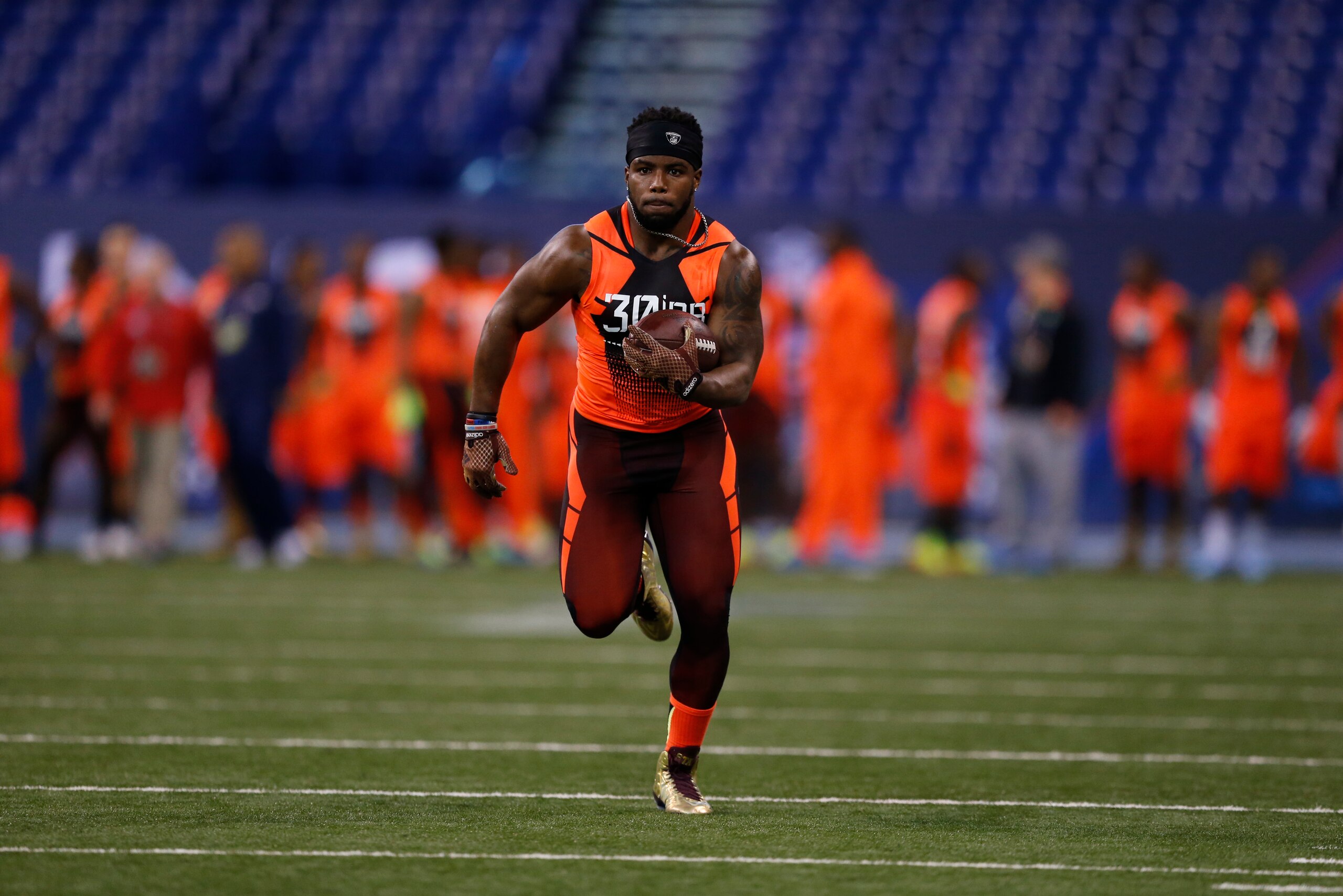
The true value of the meet-and-greet—at least for those in charge of dictating its value—is not in the numbers. It’s in the interviews and conversations that transpire behind the scenes; it’s the guts of this event that are not televised, at least not at the present time.
This in itself makes it unrealistic to deem any particular combine performance a success or a failure. Those not privy to these back-room conversations would be foolish to establish conclusions otherwise.
And then there’s the prospect of relying on numbers rather than the player, the things you already know. Compression shorts and vertical leaps do very little in terms of adding substance. They are fun to talk about and gawk over, although they are small pieces of a complex puzzle.
Paul Dawson isn’t just a linebacker with an athletic lineman’s 40; he’s a sure tackler with tremendous instincts, and yes, he probably shouldn’t be covering a team’s No. 1 wideout or a superbly athletic tight end. That hasn’t changed.
Josh Robinson isn’t Chris Johnson. His V8 engine is not a V12. But he is still a handful to bring down and he can also catch the football, something he did plenty of last season. That hasn’t changed.
There are no guarantees either player will turn outstanding collegiate careers into NFL success, but to assume that these public workouts will somehow swing their career paths one way or another is shortsighted. Both have excelled in unique ways and have the game tape to prove it. That is the only thing we know as it pertains to their football worth.
It’s not a perfect science. Not every player with a sluggish 40 will miraculously translate into Terrell Suggs. But more often than not, the games and snaps will tell you mostly everything you need to know about a player’s football future.
Good football players have the tendency to stay good football players, even when the competition undergoes a significant upgrade. It’s amazing how that works.
_0.png?w=2560)

.jpg?w=2560 "Grading WWE Raw 🔠")

.jpg?w=2560 "Viral Rams Coach Vid 🖕")
.jpg?w=2560 "Bijan's INSANE 1st Half 🤩")
.jpg?w=2560 "Injury-stricken Seahawks signing veteran RB")

.jpg?w=2560 "2 NFL Officials Suspended")

