

Impatient NFL Franchises Must Start Developing Quarterbacks Again
They used to say if you have two quarterbacks, you don't have one. Now, if you don't have one quarterback, you're fired.
Gil Brandt of NFL.com's list of the top three draft needs for all 32 teams cites a quarterback for eight franchises. He didn't include the Cleveland Browns and Philadelphia Eagles in that discussion, but those clubs clearly don't have long-term answers at quarterback. By consensus there are only two prospects in this draft good enough to step in and start, Jameis Winston and Marcus Mariota, and there are 10 teams who'd love to get a crack at them.
Where are the rest of those players going to come from?

.jpg?w=2560 "Rams Eagles Football")

The NFL is a quarterback's league. I've written that before, but it's becoming more apparent every year. Teams are more often spreading the field with multiple receivers, using shotgun snaps and calling pass plays than they did even five years ago, let alone 10 or 20.
Every time a team with a quality quarterback asks him to throw, it's pressing that advantage. Now more than ever, it shows up in the box score.
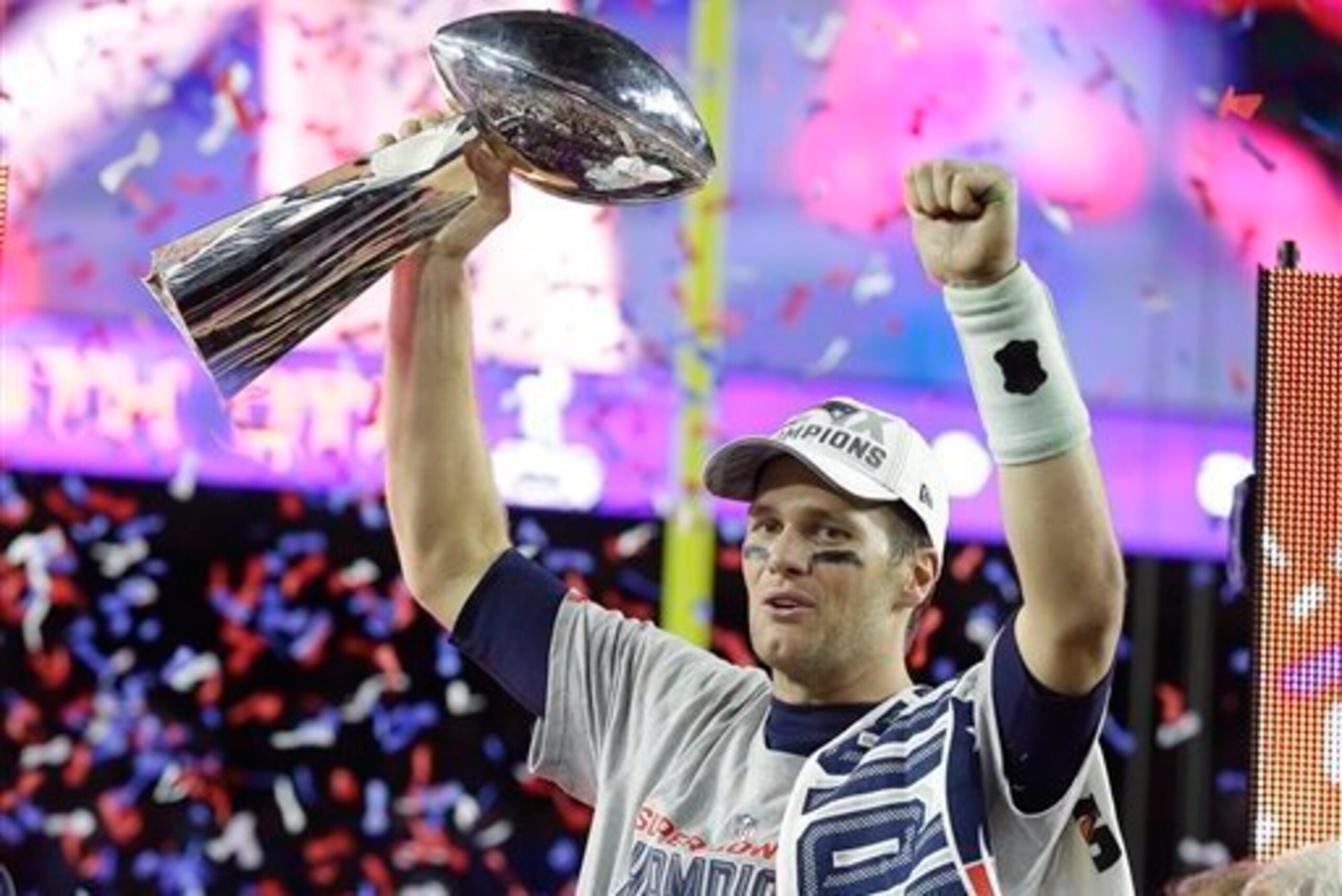
The gap between the NFL's quarterback haves and have-nots is widening. Teams that have a quality starter have an easy path to the playoffs; teams that don't have a mountain to climb. It used to be that abandoning the run was a fatal postseason mistake, but the New England Patriots needed all 50 of Tom Brady's Super Bowl XLIX pass attempts to win it all.
The 10 teams, and perhaps a few more, looking for a short-, medium- or long-term fix for their quarterback spot in this draft are going to have to dig deep and be patient.
The 2000 Baltimore Ravens proved that if you have everything else in place, a middling quarterback doesn't preclude a team from winning it all. However, even at the time, everything else had to be in place: an all-time great defense, a dominant run game, great special teams, quality coaching.
The league is different now.
There are many more quarterbacks throwing for many more yards. A 3,000-yard season used to be an achievement; 22 different quarterbacks hit that mark in 2014.
Chase Stuart of FootballPerspective.com studied the recent explosion of 3,000-, 4,000- and 5,000-yard passers. Of course, he found what we already know: NFL teams pass much more often today than any other time in NFL history. However, he also found something that isn't often talked about.
You know all those rule changes throughout the years designed to protect star quarterbacks? They're working.
Here's a chart, used with Stuart's permission, that shows the percentage of teams where one quarterback threw at least 75 percent of their pass attempts (red), at least 85 percent of their snaps (green) and at least 95 percent of their snaps (purple):
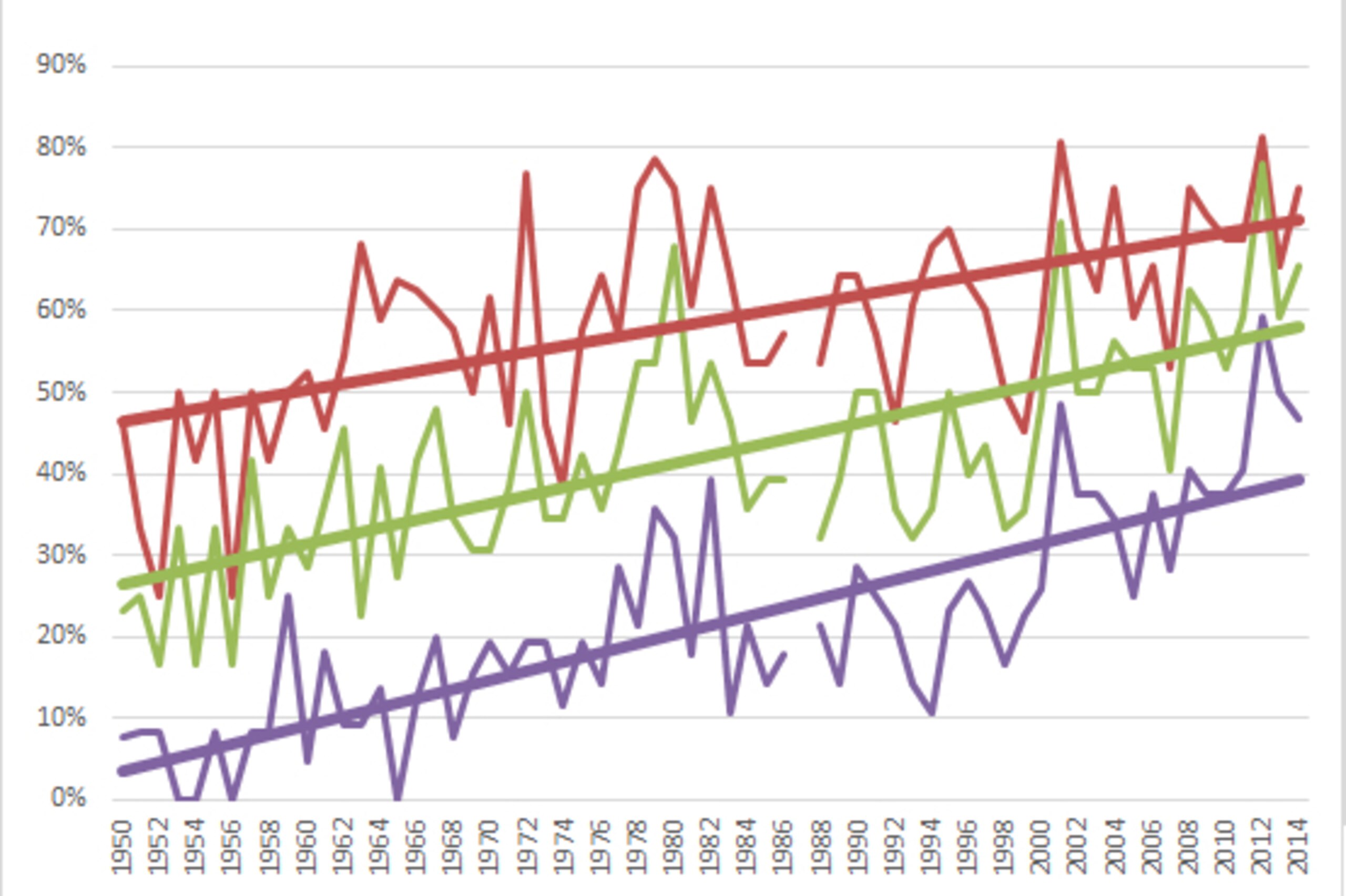
I was born in 1981, when fewer than 20 percent of NFL teams had one quarterback throw 95 percent of their passes. In the past few years, around half of all teams had that luxury. Per the best-fit trend line, such quarterbacks have become about 30 percentage points more common just since Trent Dilfer and the Ravens won that Super Bowl.
The upshot? Teams that invest in a quality quarterback have the services of that quarterback—and the huge offensive advantage he confers—far more often.
Dilfer ranked 20th in NFL passer efficiency rating in 2000. Of the 19 qualifying quarterbacks above him, only 10 started all 16 games for their team. Of course, Dilfer didn't start all 16 games either; he took over for the benched Tony Banks after the Ravens went four straight games without an offensive touchdown. Dilfer was better, but it wasn't like flipping a switch; the Ravens extended their futility streak to five games with him under center.
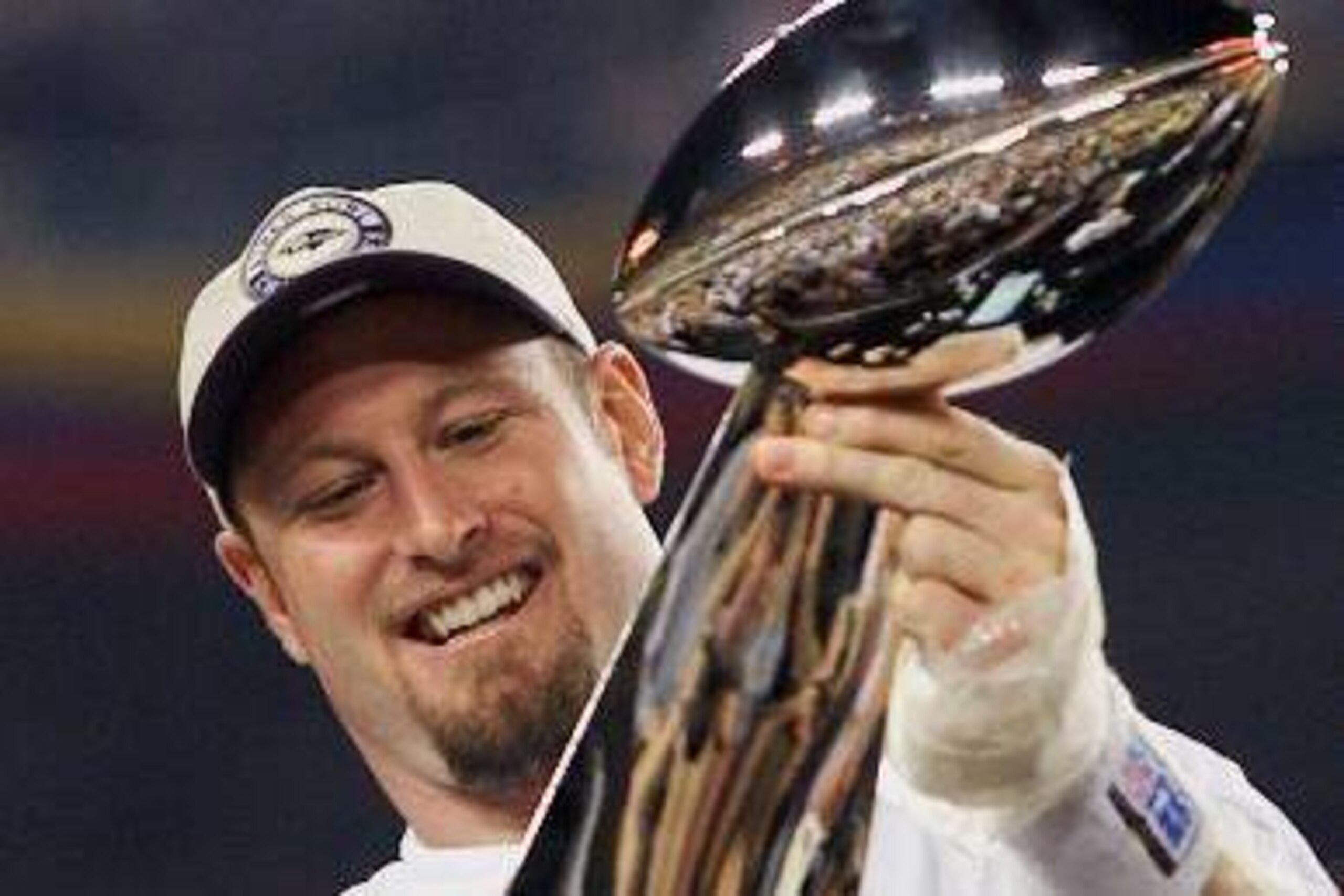
No matter how bleak things got, the Ravens didn't go to their emergency option: third-round rookie quarterback Chris Redman.
Redman was the third quarterback taken that season, in what might be the weakest quarterback prospect class of all time. But things were a little different then; teams guarded rookie quarterbacks like precious jewels.
Chad Pennington was the only first-rounder, and he dressed for just three games in his first two seasons. Third-rounder Giovanni Carmazzi never saw the field, ever. Redman himself only started six games for the Ravens, failing to impress in his third season and inspiring the team to go all-in on pro day superhero Kyle Boller.
The Ravens traded up to draft Boller No. 19 overall, and they started him from day one. By Week 10 of his rookie season, Boller was on the bench. His eventual flame-out cost head coach Brian Billick—six years removed from the Super Bowl championship—his job.
First-round quarterbacks have been starting early and busting for a long time, but the pace has quickened in recent years. Teams are reaching for iffy prospects earlier in the draft, starting them earlier and giving up on them earlier. Look at the last five crops of first-round quarterbacks:
| Cam Newton | CAR | 16 | 62 | 4 | 4 | 59 |
| Andrew Luck | IND | 16 | 48 | 3 | 3 | 42 |
| Robert Griffin | WAS | 15 | 35 | 3 | 2 | 32 |
| Ryan Tannehill | MIA | 16 | 48 | 3 | 3 | 32 |
| Sam Bradford | STL | 16 | 49 | 5 | 3 | 26 |
| Christian Ponder | MIN | 10 | 36 | 4 | 3 | 22 |
| Jake Locker | TEN | 0 | 23 | 4 | 1 | 15 |
| Brandon Weeden | CLE | 15 | 21 | 3 | 1 | 12 |
| Tim Tebow | DEN | 3 | 16 | 5 | 1 | 12 |
| Teddy Bridgewater | MIN | 12 | 12 | 1 | 1 | 9 |
| Blaine Gabbert | JAX | 14 | 27 | 4 | 2 | 8 |
| EJ Manuel | BUF | 10 | 14 | 2 | 1 | 7 |
| Blake Bortles | JAX | 13 | 13 | 1 | 1 | 5 |
| Johnny Manziel | CLE | 2 | 2 | 1 | 0 | 1 |
Fourteen signal-callers, all but three of whom started a majority of their team's games as rookies. However, out of 43 possible seasons these quarterbacks could have been the primary starter for their team, Pro Football Reference charts only 26 such campaigns. Most of these players have already been chewed up and spit out.
Of the 14, only eight are the nominal starter of the team that drafted them—and Robert Griffin III, Sam Bradford and EJ Manuel are on very shaky ground. That leaves just five as surefire starters, even including soon-to-be-sophomores Teddy Bridgewater and Blake Bortles.
Five. Out of 14.
Burning high draft picks on shaky prospects and betting the farm on them isn't working out well for anybody. It's not working for the quarterbacks, who are getting sent off to the glue factory before they can rent a car without a grownup's help. It's not working out for the head coaches, for whom a rookie quarterback used to be job insurance. It's certainly not working out well for the teams, who could have made do with a Dilfer while they bolstered the rest of their squad.
Looking at the dearth of ready-to-play signal-callers in the 2015 class, the answer is obvious: NFL teams have to go back to developing quarterbacks.
Here's how the predictable cycle of failure works: Some team will convince itself a second- or third-round prospect such as Brett Hundley is worth a late first-round pick. It takes him there, generates the excitement, interest, buzz and jersey sales that come with a first-round quarterback, and gets an extra year of control over his rights in the process.
Then, because you start first-round quarterbacks, the team starts him sometime during his rookie year. He plays poorly because he's not ready, and so the team that drafted him writes him off. It was hoping to catch lightning in a bottle, and poor Hundley wasn't lightning.
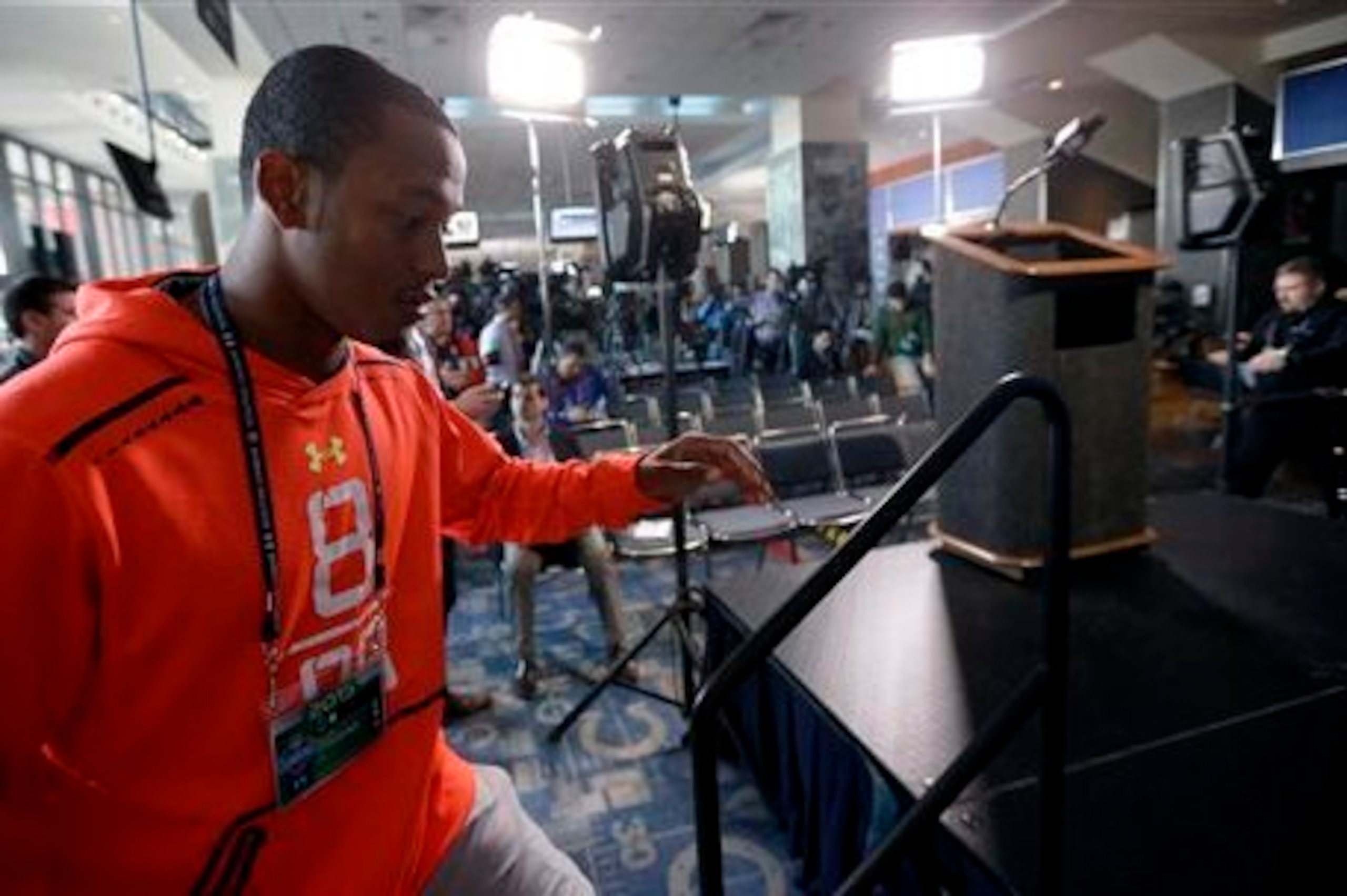
At this time next year, will we be writing off Hundley for good? Or will the team that takes him this spring be a little more patient?
As we saw in 2014, this process can even play out with mid- and late-round picks such as Zach Mettenberger and Tom Savage. Get drafted, get thrown out there, be judged savior or surplus on a handful of too-early starts.
For a special few, their combination of football IQ, college system, pro system and supporting cast makes them able to play well right away. But in a class where there's no Andrew Luck, teams have to be patient—waiting to take the kids on draft day and waiting until they're ready to give them starter's reps.
It's not likely that many of these rookies-to-be turn into impact players, but some of them certainly have the potential. Even that dismal 2000 quarterback draft class had a diamond in the rough. After sitting for a year, New England Patriots sixth-rounder Tom Brady was pressed into service during his sophomore season.
Fifteen years and four Super Bowl titles later, Brady's one of the best of all time. But that didn't stop the smartest organization in football from drafting Brady's successor, Jimmy Garoppolo, in the second round last year.
The team with the best quarterback situation is the best team in football. In today's NFL, that's not a coincidence.
.jpg?w=2560 "Texans-Mixon Released Football")

.jpg?w=2560 "Grading WWE Raw 🔠")


.jpg?w=2560 "Bijan's INSANE 1st Half 🤩")
