

Minnesota Vikings Mock Draft: 7-Round Predictions, Post-Combine
With the NFL combine nearly over, it's worth taking a look at how mock draft boards can change and what the Minnesota Vikings might do.
Given that the Vikings may have clear prototypes on the kind of players they want to acquire, winnowing down which players the Vikings may or may not select has become even easier.
All picks were made using Fanspeak’s On the Clock Mock Simulator, their composite Big Board and no trades selected.
Round 1: Amari Cooper, WR, Alabama
1 of 7
Though Shaq Thompson isn’t a bad pick by any means despite the relatively lackluster combine showing, here it seems like Amari Cooper may be the best value at receiver.
In this case, Kevin White from West Virginia and Brandon Scherff from Iowa were both gone (at No. 10 and No. 5, respectively), as well as La’el Collins, and the decision was between Cooper, Thompson, DeVante Parker and combine superstar Bud Dupree.
Though Dupree would have been an intriguing pick and the Vikings may have experimented with Vic Beasley at the other linebacker spot, Cooper works here simply by being one of the best players in the draft somehow available at pick 11.
Though receiver may not be the need many perceive it to be, that doesn’t mean Cooper can’t help. His underrated athleticism was on display at the combine, and it wasn’t just his 4.43 speed that people were able to see.
In addition to his straight-line athleticism, Cooper had astounding agility scores, with a 6.71 three-cone drill and a 3.98 20-yard shuttle, along with an explosive 10-foot broad jump.
Though Cooper doesn’t fit the Vikings’ model for a receiver, he’s not too far off. His vertical leap is lower than ideal (33”), but his astounding quickness and still-noteworthy explosiveness (an explosion index of 0.79 is better than the NFL average) mean he could be worth an investment.
Outside of the measured tests at the combine, Cooper aced the receiver positional drills, looking not just like the most comfortable and polished receiver out there, but a tier above the rest in terms of pure receiving ability.
That matches his performance on the game field as well, and Cooper’s familiarity with pro-style offenses should give him an additional boost above players like White in his first year with a team.
His polish is not just from knowledge of offenses, but the whole receiver skill set. Cooper knows that winning routes doesn’t come with just speed, it comes with telling a story to the defense and selling the wrong route while breaking open.
He’s better than anyone else in the draft at the subtleties of the position—something receivers take years to learn, if ever. He’ll immediately help the Vikings offense.
Round 2: Benardrick McKinney, LB, Mississippi State
2 of 7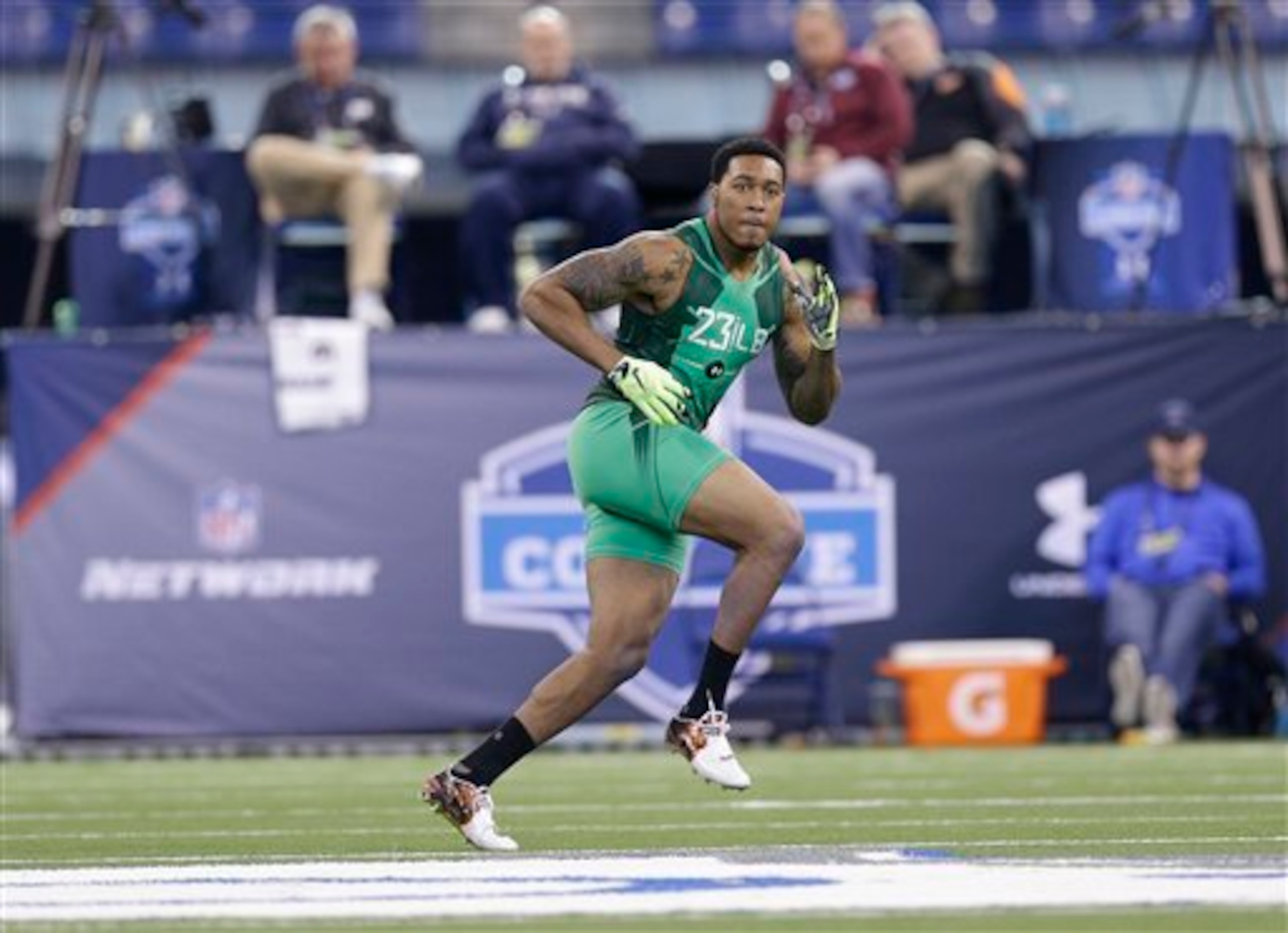
With Todd Gurley on the board, there was definitely something tempting there. But the linebacker position is thin in this year’s draft, and both Shaq Thompson and Eric Kendricks were off the board.
Finding another linebacker to fit the Vikings’ extremely exacting physical filters would be difficult later in the draft, whereas there are some running backs worth pursuing later on.
Benardrick McKinney is a physical marvel, and his 40.5” vertical jump and 10’1” broad jump both attest to that. He also recorded a very fast 40-yard dash (4.66) for a 249-pound thumper.
Though his agility scores weren’t at the top of the heap, he won’t have to use top-tier agility as a middle linebacker as much, and he displays and instinctive nature on the field to more than make up for it, especially with his downhill speed.
Generally speaking, his explosiveness shouldn’t just translate to what the Vikings have wanted under linebacker with Mike Zimmer, but generally good play at the position.
There’s little question, however, that McKinney is physically gifted; the combine just confirmed that instead of revealing it. As a player, McKinney has to refine his instincts and coordinate them with his play. Though he has a good sense for the play and where the ball is going to go, the smaller details will often elude him, taking on blockers on the wrong side of the gap or hitting the hole with his pads too high.
He’s more fluid than his test numbers seem to indicate, but that combined with raw instincts in the passing game make him somewhat of a liability as a coverage linebacker.
He has upside to improve (though not to the degree of a player like Anthony Barr, who was more underdeveloped as a coverage player and had a higher ceiling to reach) to be an extremely solid base linebacker who won’t provide coverage concerns over the middle.
McKinney's intelligence as a player should make him a good fit for the system as well, and he can execute a number of coverage responsibilities from a technique perspective, though he needs to do a better job keeping his eyes on the quarterback in zone coverage.
Generally speaking, his physical capability should be appealing enough for the Vikings because he is likely to be a good three-down linebacker. However, he has a floor of an excellent two-down linebacker.
Round 3: Jake Fisher, OT, Oregon
3 of 7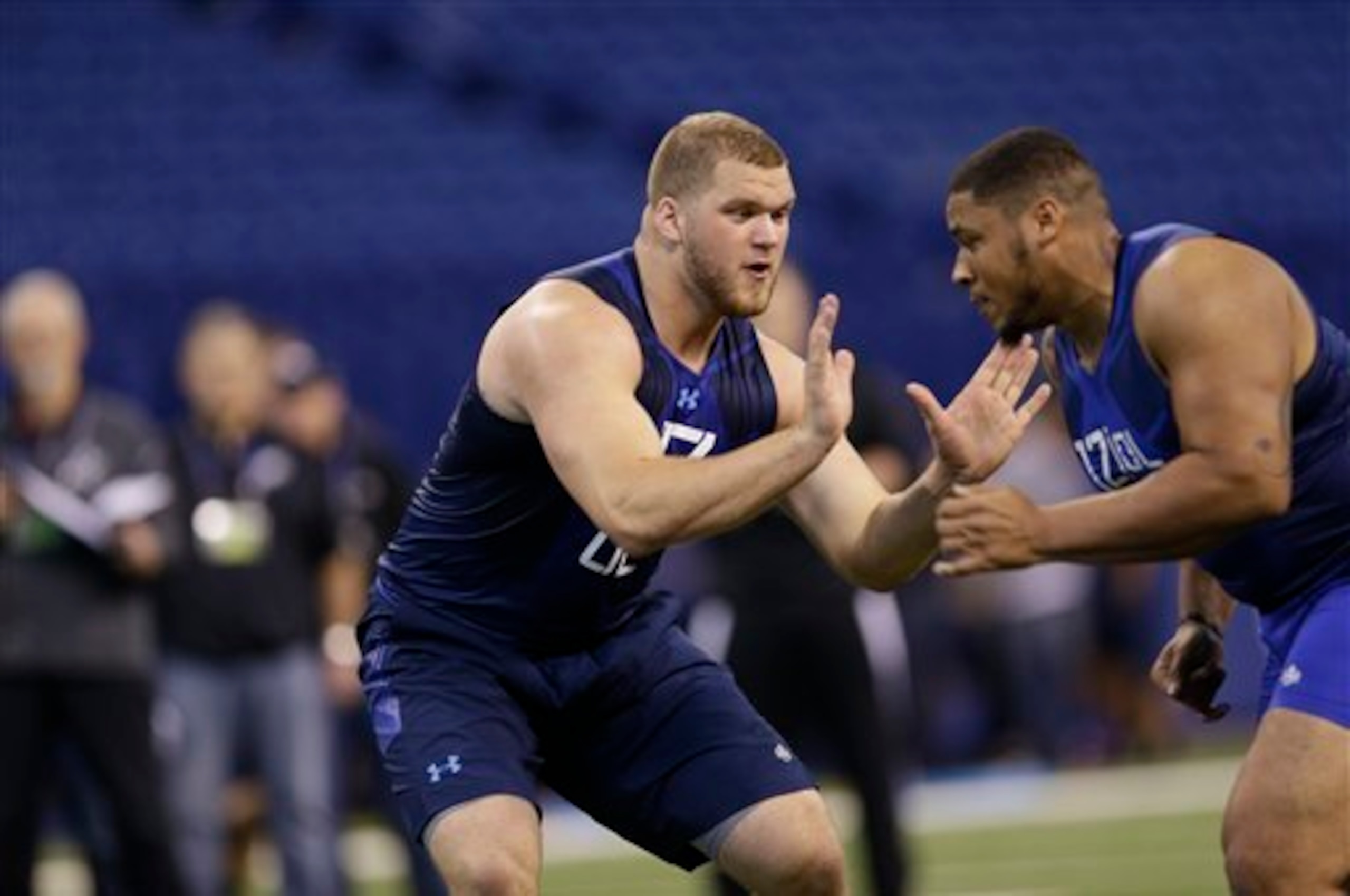
With the ever-impressive Ameer Abdullah on the board, it may have been easy to pick a running back as the situation seemingly worsens between the Minnesota Vikings and Adrian Peterson.
But the depth of the class at running back, as well as the exceedingly stellar showing by Jake Fisher at the combine, make Fisher a steal here as much as anywhere else.
As Oregon’s offensive line worsened, it would have been easy to ignore Fisher—perhaps hurt more than helped by the play of his teammates, along with the unusual system Oregon runs on offense.
That didn’t stop him from looking smooth in positional drills and standing out in the measured drills. His on-field play speaks to an impressive resume as well.
Running a 5.01 40-yard dash was nice, but more impressive were the measures of his explosion and quickness. His 10-yard split of 1.75 seconds was the fastest of the offensive linemen, and his vertical leap of 32.5 inches happened to be the highest.
Along with position-best scores in the three-cone drill (by a huge margin) and short shuttle, Fisher showed extraordinary physical talent.
And though the system is a concern with Oregon, it didn’t stop Kyle Long or Geoff Schwartz from playing dominantly in their stretches as offensive linemen in the NFL, and Max Unger was an elite center for years before injury set him back.
Fisher has the strength and lower-body explosion to play guard (he did for Oregon for a short period of time) and the quickness, balance and technique to play either tackle position in the NFL. He can play guard for some time while the Vikings evaluate Matt Kalil to see if he’s worth keeping.
Fisher would continue playing that position at a high level if Kalil turns out, or he'd play tackle if Kalil doesn’t.
His dominance as a run-blocker is a fit for the guard spot, though he will need to add a few more pounds (he weighed in at 306), and his ability to maul as a drive-blocker, wall off as a kickout blocker or get to the second level to take out linebackers is among the best in the draft.
He has opened up running plays for Oregon with both his strength and his speed, and he can either contribute as a combo blocker or as the lynchpin to the blocking game, even showing the balance, speed and footwork to play as a pulling blocker at either the guard or tackle position.
Though he looked good in positional drills and natural in pass-protection sets, his film at Oregon does indicate a need to improve, with his technique occasionally taking away from his physical skill set and fluidity.
His footwork is there, but his instincts and hand technique are not. He can develop those at guard like Greg Robinson in St. Louis did, while providing a big boost to the running game. Fisher can eventually take over left tackle if the Vikings need him to, given some seasoning.

.jpg?w=2560 "Rams Eagles Football")
.jpg?w=2560 "Falcons Saints Football")
Round 4: David Johnson, RB, Northern Iowa
4 of 7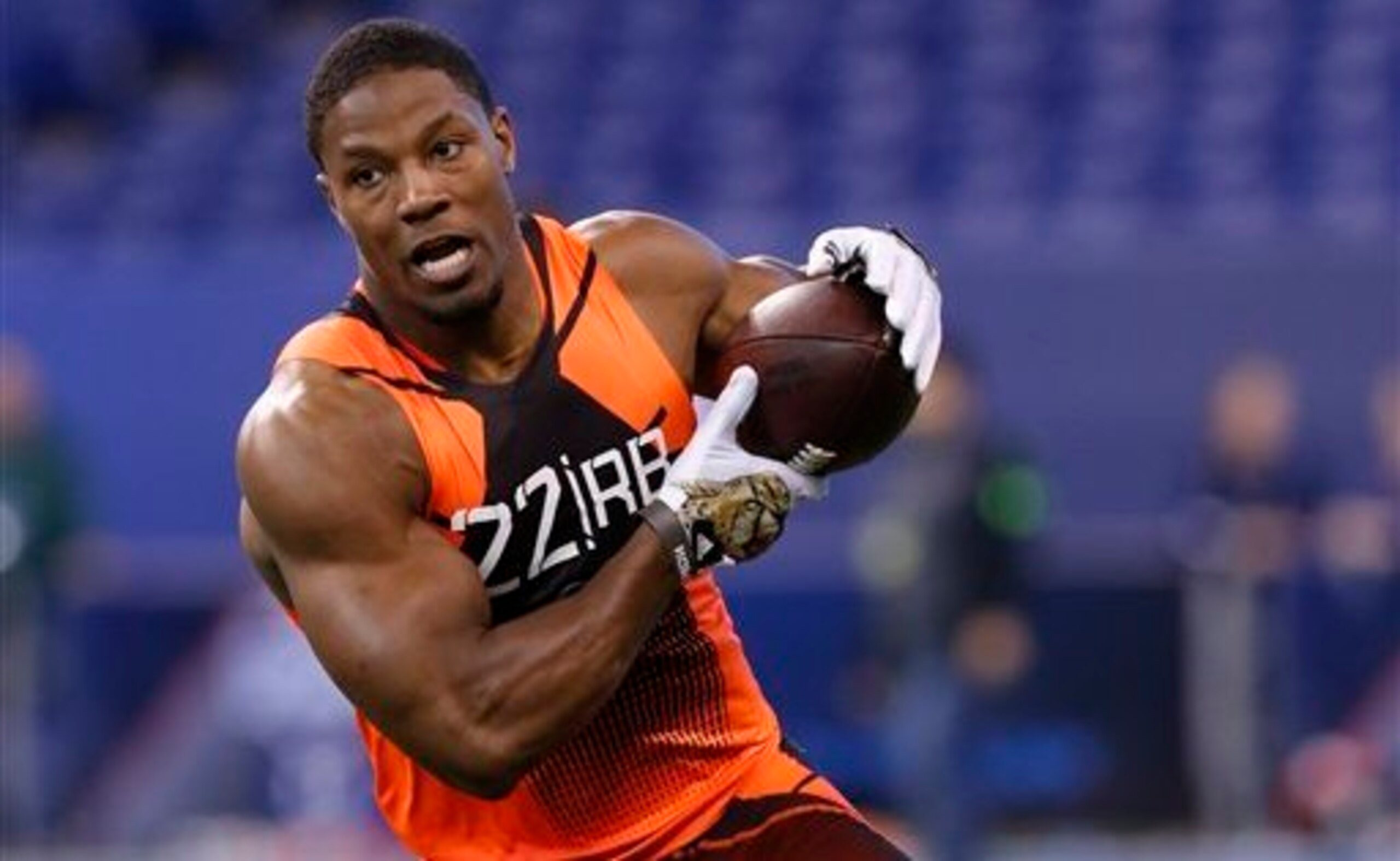
There aren’t a lot of physical specimens in this year’s running back group, and though the Vikings don’t need another Jerick McKinnon, it seems as if that’s been their preference.
Still, David Johnson from Northern Iowa may be the closest to a physical standout, and his combine was excellent, especially for a big running back.
His 4.50 40-yard dash is great, but his 1.58 10-yard split is excellent. With that 10-yard split comes a vertical of 41.5 inches, stunning and better than any vertical leap the Vikings have on their roster. More important as a measure of lower-body burst than it is actual leaping ability, it showcases something that Johnson has put together on film: drive.
Johnson is tough to bring down, and his balance and lower-body strength allow him to keep churning out yards as defenders hang on, especially in the open field.
He doesn’t display the leverage he needs to in order to really maximize this ability (and at 6’1” it’s a bit understandable), and he has instead adopted more of a “slasher” technique at running back despite his pure poundage.
Though not as talented as the former Jaguars running back, it’s hard not to think of Fred Taylor when seeing Johnson’s effective use of jump cuts at the line of scrimmage.
A natural fit as a zone runner, Johnson doesn’t just have patience and good vision, but he also has the ability to pick the right lane and gun through it at a moment’s notice.
It’s odd to think of a 224-pound running back with a 4.50 40 as more of a space player than a between-the-tackles kind of player, but that’s where Johnson excels. He’s not just a good pass-catcher—he's sophisticated in everything he does in the receiving game, from running a surprisingly diverse array of routes, to playing with precision and deception.
He also brings soft hands, good catching technique and the ability to win contested balls.
A good runner, Johnson may be an even better receiver. His route running is sometimes superb, and though he shouldn’t make the transition to receiver despite his size, his contributions in the passing game, before and after the catch, are tantalizing.
With room to grow both physically and as an inside runner, Johnson has the ability to be the most versatile running back in the draft.
Round 5: Quandre Diggs, CB, Texas
5 of 7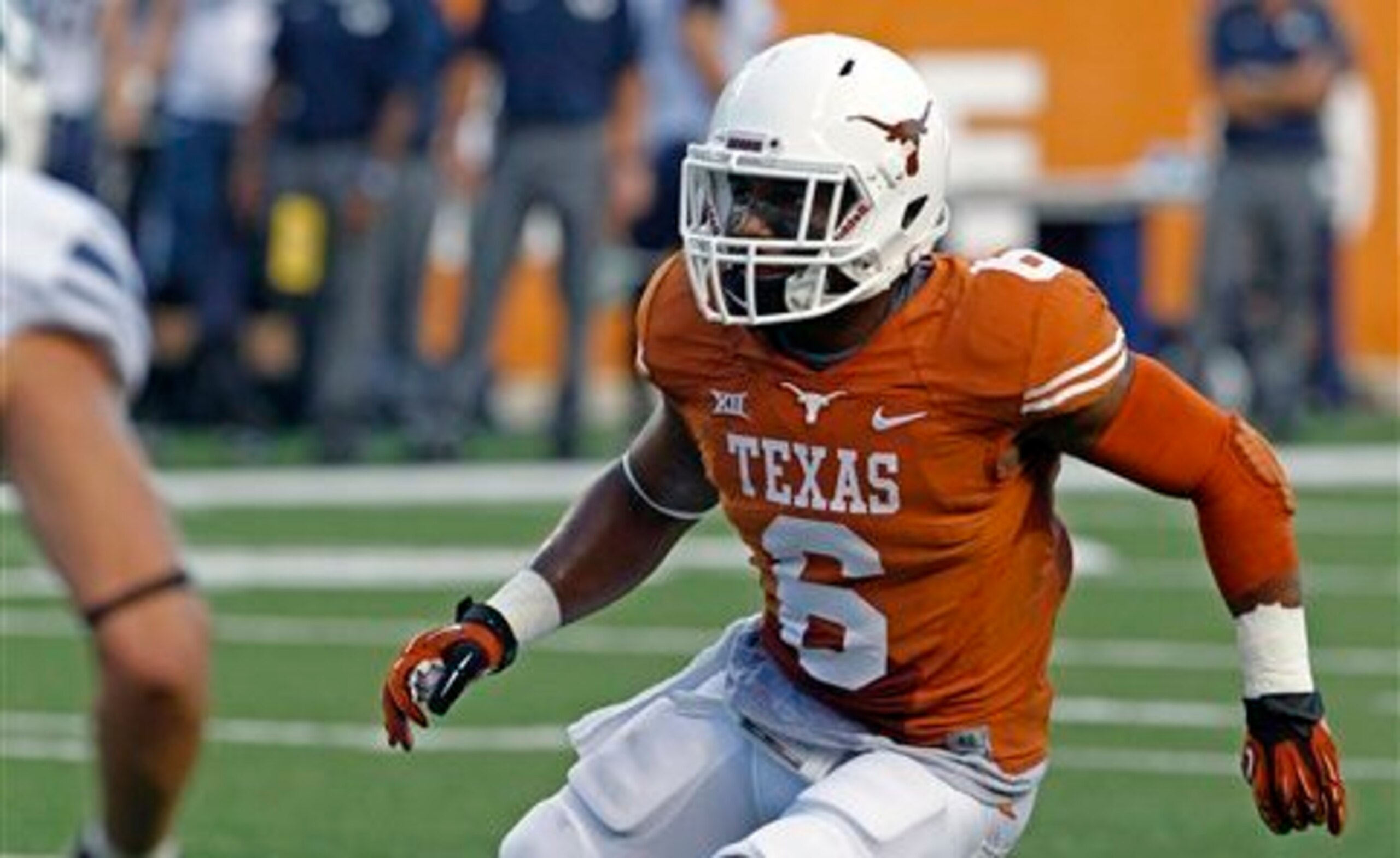
With both tantalizing physical talents in Lynden Trail and Jeff Heuerman available, it would have been justifiable to pick either in the fifth round.
But with a clear need at slot cornerback and with some need for a balanced draft given what the Vikings generally need on both sides of the ball, it was easier to pick a cornerback who can push to start in the nickel package if Captain Munnerlyn continues to struggle instead of a rotational defensive end who not only would need time to develop, but would be competing with either Brian Robison or Scott Crichton for a backup spot.
Though we don’t have the scores yet for defensive backs, don’t be surprised if Diggs passes both filters for what the Vikings look for in a CB—speed and jump ability.
His size may be a concern in general, but in the slot, he should be a little better with linebackers to bracket on top and generally shorter players there despite what the Chicago Bears and Detroit Lions have taken to doing with Brandon Marshall and Calvin Johnson.
Diggs plays far bigger than his size and can take it to larger receivers if he needs to.
There are waves being made of him potentially converting to safety in the pros, and that’s fine, too—Diggs still has the ability to cover slot receivers in man coverage, with the instincts to take on the majority of NFL players thrown his way.
His versatility may appeal to a guy like Mike Zimmer, too, because Diggs not only has shown an ability to play outside, inside or in a deep zone, but he does surprisingly well as a pass-rusher.
A solid tackler, Diggs occasionally needs to show more aggressiveness as a physical player. He does have some agility issues, though they’re not fatal—he wouldn’t be a good fit inside otherwise.
Still, it’s a concern he’ll have to overcome, and his long speed may not match his short-area burst. Regardless, he closes well on the ball and can be devastating in zone coverage.
Round 6: Tre McBride, WR, William & Mary
6 of 7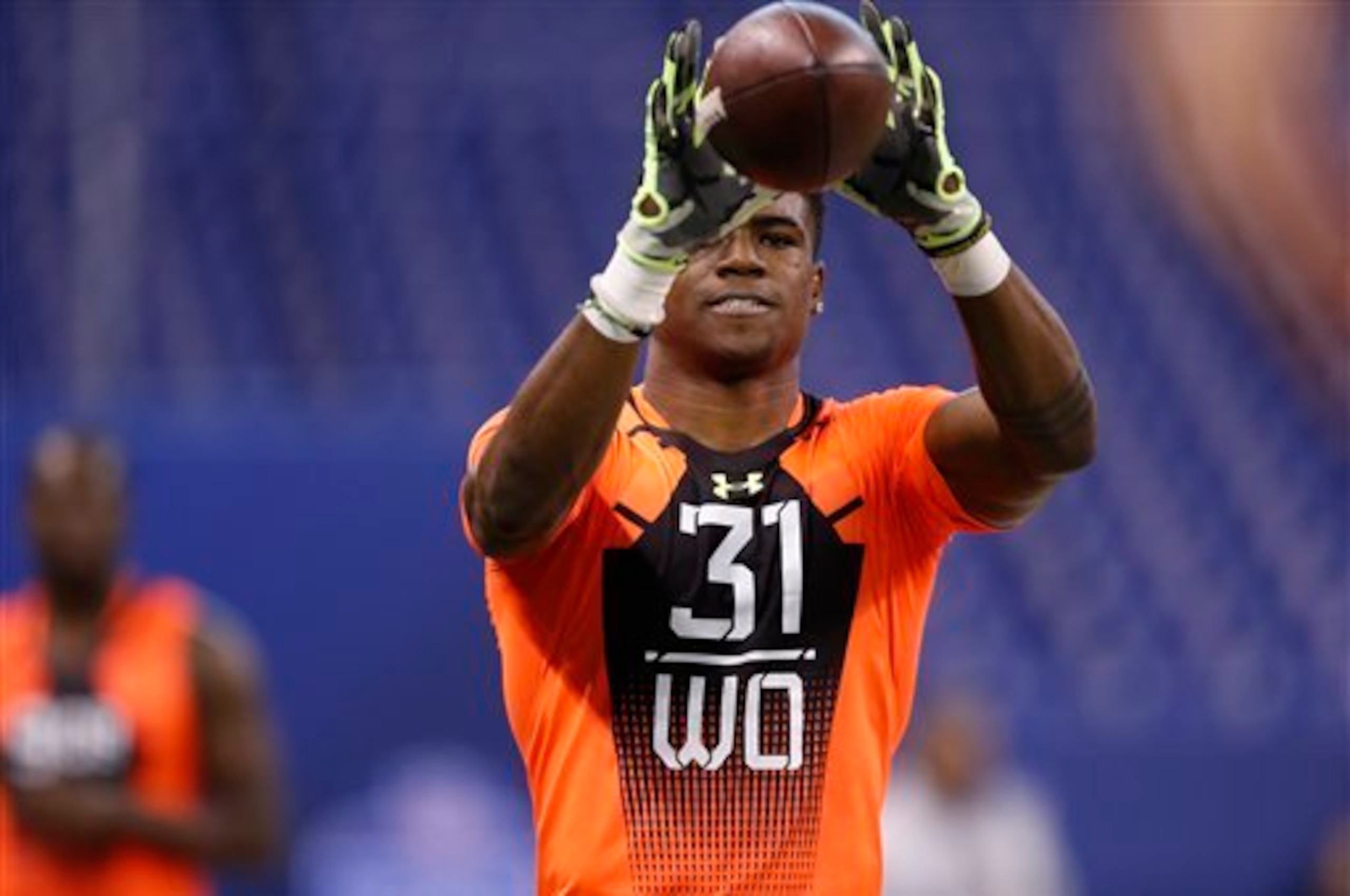
A high-character and intelligent player, Tre McBride fits the prototype of a Vikings receiver both off the field and on it. If Vikings WRs must be able to jump, McBride is an excellent fit.
He had one of the top performances at the combine at his position in the 20-yard shuttle, and a three-cone time of 6.96 seconds is not only within norms for a Vikings acquisition, but one of the better scores for a 200-plus-pound receiver at the combine.
More intriguing is his ability to explode. With a blistering 1.51-second 10-yard split (best out of all the wideouts at the combine), a 38” vertical and a 10'2" broad jump, McBride has the ability to explode from a standing start and can generate a lot of movement in a short amount of time.
A natural catcher, McBride’s film at William & Mary showcases a sure-handed receiver with some of the best high-pointing ability in the draft, and that includes DeVante Parker, Kevin White and Devin Funchess.
McBride reeled in his fair share of impossible-to-conceive highlight catches while in the FCS, and he operated at an extremely high level as a possession receiver who could win contested catches, box out defenders and make plays on the ball.
Were he to pair this with dazzling on-field speed, he would be in the conversation as a Day 2 pick despite his level of competition, but his 4.41 speed doesn’t show up on the field. That said, a smart coaching staff can unlock that speed.
Having a receiver with the physical tools to make big plays in the red zone is nice—the Vikings have a few of them. Having a receiver with the technical skills and experience making those plays is even better, and McBride offers that.
If he can unleash his speed and strength in the NFL, he’ll be a surprising pick and worth the late-round investment.
Round 7: Brandon Bridge, QB, South Alabama
7 of 7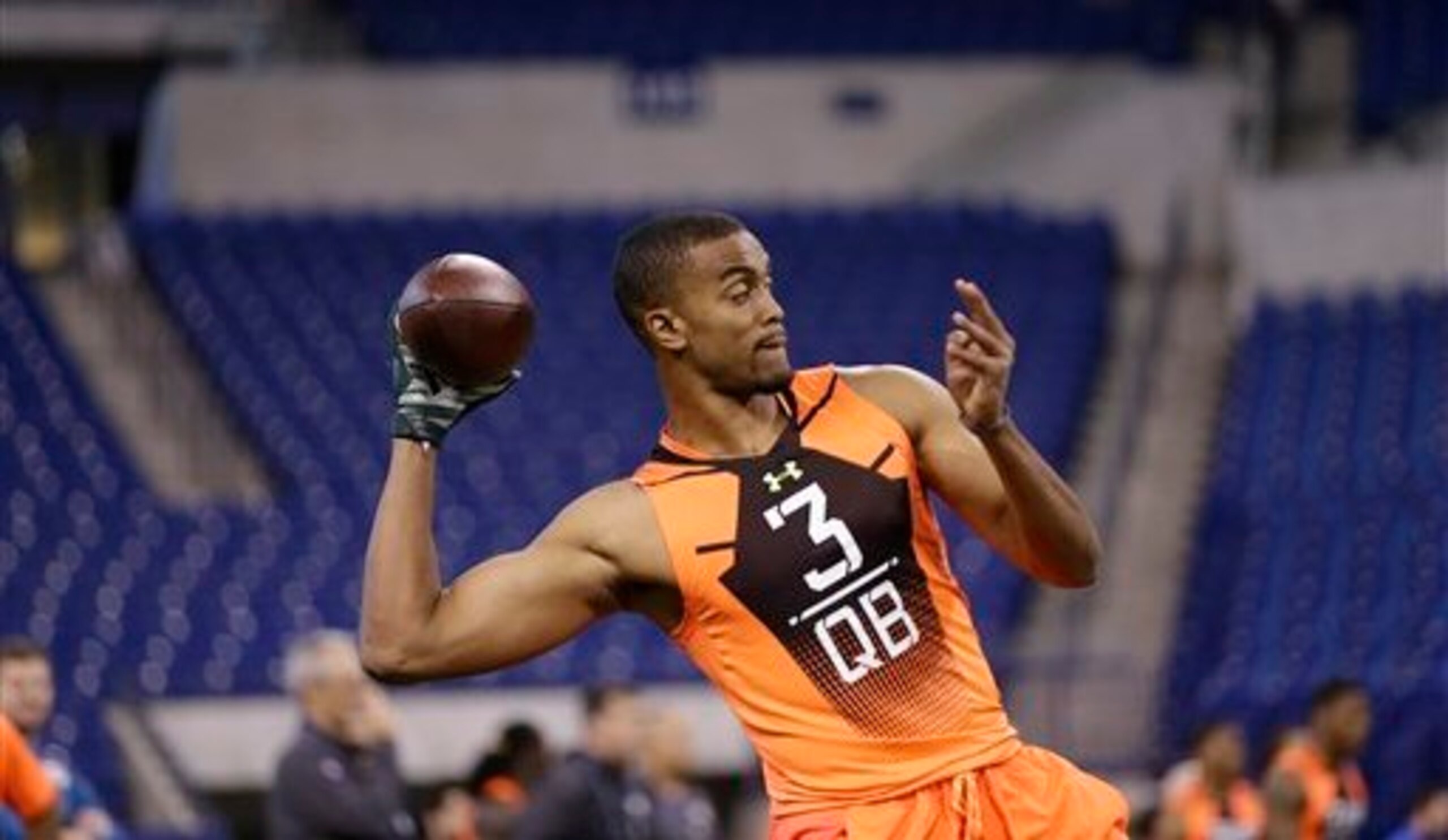
Choosing between defensive tackle Derrick Lott from Tennessee-Chattanooga, center Max Garcia from Florida, defensive end Ryan Russell from Purdue and quarterback Brandon Bridge from South Alabama wasn’t easy, but in the end, deferring to Mike Zimmer’s comments on KFAN that the Vikings were interested in a developmental quarterback was easiest.
A prototypical size for a quarterback, Bridge suffers from what looks like a lanky frame despite the weight and height that meet standards. Bridge shouldn't be available in the seventh round, but he was here.
In this case, Bridge's phenomenal arm and deep accuracy are tantalizing enough for NFL evaluators, though he has some issues with accuracy on the intermediate and short levels.
Bridge has flashed NFL-worthy skills between the ears, working progressions quickly and looking off of safeties. He uses his athleticism intelligently, pulling the ball and running as a last resort despite plus physical skills on the ground.
That said, his mechanics are so messy that his accuracy suffers on a consistent basis, and he puts his receivers out to dry. It's more than inconsistent ball placement; sometimes he's wildly off.
It is possible that fixing his mechanics (thankfully, they are lower-body mechanics for the most part—easier to fix) will resolve those issues, but because his decision-making doesn't seem as astounding as it could be, there's limited pocket-passing upside.
Still, an average decision-maker with decent accuracy is more than most backups, and pairing that with an elite arm and fantastic pocket skills—to go with good running skills—could mean exciting value from a late-round pick.
.jpg?w=2560 "Texans-Mixon Released Football")
.jpg?w=2560 "Commanders Eagles Football")
.jpg?w=2560 "Grading WWE Raw 🔠")



