

Osasuna-Espanyol Match-Fixing Allegations Indicative of Progress in La Liga
"There are outgoings, around €1.5 million, that are not properly justified."
Those were the words of new Osasuna president Luis Sabalza last week, per AS (h/t Dermot Corrigan of ESPN FC), as he addressed a news conference following reports that the club's draw with Espanyol last May was being investigated under the suspicion of match-fixing.
"There were significant and eye-catching withdrawals which were paid to companies that the club did not appear to be related to in any way," he was quoted as adding, per Barcelona-based daily, Sport.


.jpg?w=2560)
As Sabalza spoke, and as the news emerged, the European football community groaned. Spain groaned. UEFA groaned. Everyone groaned.
There it was, one of sport's ugliest issues, resurfacing. In one of Europe's major leagues. Again.
For the Liga de Futbol Profesional (LFP) and president Javier Tebas, emulating the Premier League and its £5.1 billion television rights deal announced a week earlier must, as the news broke, have felt light years away.
In such circumstances, it's easy to default to an overly negative stance. To adopt a bleak outlook.
It's the effect damaging allegations tend to have.
But there are positives to be drawn here. For this is an issue that many believe has long been neglected in Spain; the basic fact that it's now being reported and that authorities are increasing their efforts to address the issue is indicative of progress being made.
Of course, that progress might only be small at this stage. It's also likely to be slow.
But progress is progress. At the very least, that's encouraging.
In the case of Osasuna, the allegations, per Marca, centre on the previous president, Miguel Archanco, who was replaced by Sabalza last summer. The current board of directors isn't under investigation, and Sabalza has said, per Corrigan's translation of the AS report, that Tebas had told him that "if we cooperated, the club would not be punished, just individual persons responsible."
The allegation is the club, under Archanco, spent €1.5 million to ensure the side got something from the game at the Power8 Stadium during Osasuna's fight for La Liga survival last season.
Espanyol strongly denied the club's involvement on its official website, which was also translated by Corrigan:
"We want to be absolutely clear that RCD Espanyol de Barcelona had no participation in any match-fixing, nor in any irregularity.
We defend the purity and the sporting nature of the competition, now and always, and if the investigation shows that someone committed any irregularity they will have to face the consequences.
"
According to Sport, the allegations surrounding Osasuna also extend to offers made to players from Real Betis:
"Cadena Ser have now accused defenders Antonio Amaya and Jordi Figueras of meeting with Osasuna directors. It is then claimed they were offered €250,000 each to ensure Real Betis beat Real Valladolid.
It was further alleged that the duo were then offered even more money to throw the final game of the season against Osasuna, a game they eventually won 4-3, but both sides were relegated.
"
The latest investigation follows the news that emerged last September surrounding allegations of match-fixing involving a game between Levante and Real Zaragoza in 2011—one of nine matches that was being investigated, per ESPN FC.
The case is being dealt with by Spain's anti-corruption authorities, and on March 5, both Manchester United's Ander Herrera and Atletico Madrid's Gabi—both former Real Zaragoza players—are due to give evidence to judge Isabel Rodriguez in court in Valencia, per Dermot Corrigan of ESPN FC.
In total, 42 individuals have been charged, including players and team officials. And among others who will give evidence are former Zaragoza coach Javier Aguirre (who's been sacked from his position as coach of Japan due to his involvement in the investigation), former Zaragoza president Agapito Iglesias, Levante's Juanfran and ex-team-mate Sergio Ballesteros.

Of course, to some, many even, this recent push to expose match-fixing practices and rid Spanish football of this cancerous issue may appear to be too late—that it's too ingrained in the game to be purged completely.
Speaking on the matter last September, former Villarreal, Getafe and Real Sociedad player Gica Craioveanu told Onda Cero radio, per Sid Lowe of ESPN FC: "It happens and always has."
In May 2013, then-Deportivo La Coruna president Augusto Cesar Lendoiro claimed match-fixing was rife in Spain and that "almost all" games at the end of 2010-11 were "fixed," per BBC Sport.
Not long after his ascension to the LFP presidency in 2013, Tebas told the BBC's World Football Show, "Between the first and second divisions, around eight to 10 games have been manipulated [per season]."
He also added: "If we do not eradicate now, it will become like the Wild West with no laws, no control."
Such comments are a damning reflection of the state of the game in Spain. It's ugly stuff.
But now, there is a clear drive to eradicate match-fixing; the country's authorities and the LFP are undertaking a process to avoid the "Wild West" situation Tebas describes.
How successful the operation will be remains unclear at this stage. But its existence, the fact that allegations are being made and that evidence is being given in courts, is a positive. For the situation to be remedied, the details, no matter how messy, have to emerge.
The situation will have to appear to get worse before it gets better.

Interestingly, Barcelona-based journalist Samuel Marsden believes the Spanish media has a large role to play in Spain's push to eradicate match-fixing in football.
Writing for Soccer Gods, Marsden outlines that some of the country's major outlets, that still only seem to have a moderate interest in the issue, need to heighten awareness to drive public outcry:
"Given the expanding nature of this story, that there is not more outrage in Spain is bizarre. On Tuesday of this week Marca broke the Osasuna story, leading with it on its front page and calling it a “scandal.” The ensuing coverage has been slim. Considering Barcelona-based Espanyol were implicated, it’s odd the story hasn’t been on the cover of SPORT, while coverage hasn’t featured highly on the outlet’s website, either. Catalonia’s other sports paper, Mundo Deportivo, did carry it in a small box on its cover one day, but even its reporting has been easily missable.
AS and El Pais both dedicated limited space to the story, and on the whole, the seriousness of match-fixing does not seem to have been taken very seriously at all. Only in the papers which reside in Pamplona, like Diario de Navarra, have it carried much weight.
You can imagine in England, for example, newspapers like The Telegraph and the Guardian going big on such a story. Instead, Spain remains more interested in Real Madrid’s Champions League chase and Lionel Messi opening an Adidas store.
"
But, at the very top at least, measures are being taken.
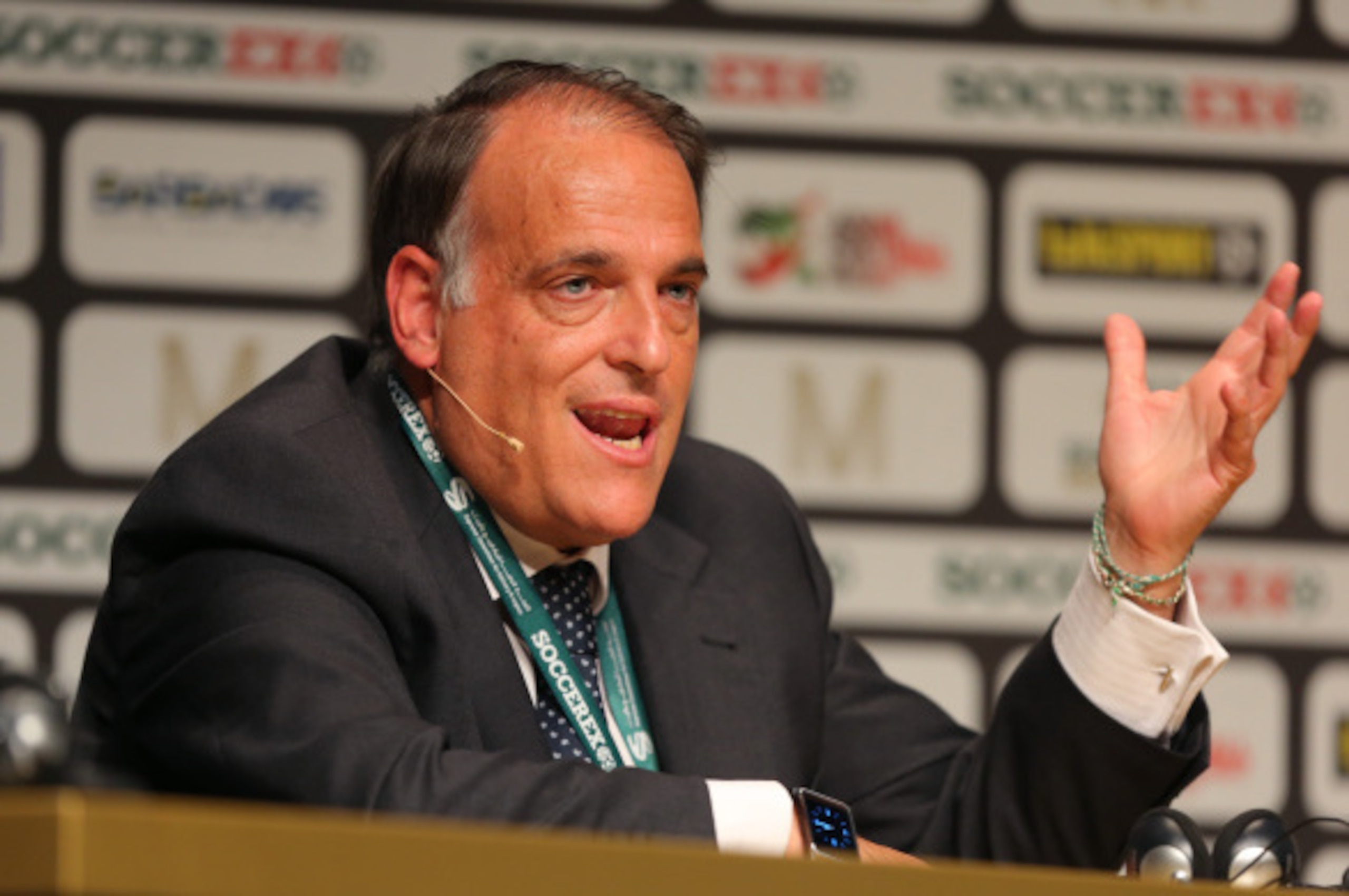
Under Tebas, the LFP has established an anti-corruption unit, held a Match Fixing, Gambling and Organised Crime Forum last January, and Tebas himself has outlined the need for more severe punishments that would include life bans for those found guilty and, under Spanish law, prison time.
The LFP, along with the National Sports Council (CSD) and the Spanish Football Association (RFEF), has also recently initiated plans, per Heath Chesters of Inside Spanish Football, to employ security directors, intelligence units and control commissions to tackle other issues such as matchday violence, unsavoury behaviour in stadiums and ultra groups.
Naturally, none of these measures will be perfect. There will almost inevitably be holes and offenders that are missed, while the processes will need to be consistently refined and targets re-evaluated.
But the fact these matters are being addressed is positive, indicative that the ugly side of the game in Spain might be changing. Suddenly, it seems those in charge are genuinely invested in purging Spanish football of its most cancerous issue, match-fixing.
Whether that progress is small or large, fast or slow, it's progress nonetheless.

.jpg?w=2560 "Viral Rams Coach Vid 🖕")


.jpg?w=2560 "Injury-stricken Seahawks signing veteran RB")
