

NFL Combine 2015: What to Watch for on Monday
In a league heavily slanted for passing offenses, trying to stop NFL QBs from putting up big numbers is becoming a huge priority for general managers (GMs). Doing this requires talented defensive backs.
The New England Patriots are a great example of what an upgrade to the position can do for you when they signed cornerbacks (CBs) Brandon Browner and Darrelle Revis this past offseason. Both players would go on to play key roles for the Super Bowl champs.
The NFL Scouting Combine offers a great stage for the year’s most impressive draft prospects to showcase their athleticism—this is the ultimate purpose of Monday’s field work with the defensive backs.
This is the area of focus for the last day at the combine—thus all things worth watching Monday will come from the activity of the defensive backs on the field.
Overview
1 of 6
A defensive back must match the athleticism of some of the most physically gifted men in the NFL. What’s more, they’re often required to handle these “freaks” all alone. Guys who can do this consistently are coveted at a premium. Therefore, cornerbacks must be able to match the speed, quickness and leaping ability of receivers, if not exceed it.
The 40-yard dash gets everyone excited, but few people get fired up about a three-cone or short-shuttle time. However, those drills along with others can show important traits and tools that contribute to prospect evaluations.
The work on the field should also feature drills which display critical skill sets for the defensive backs who can provide clarity on how these prospects will perform at the next level. Skills such as linear speed, lateral quickness and lower-body explosiveness are necessary.
3-Cone Drill
2 of 6
The three-cone drill consists of an L-shaped cone arrangement designed to measure acceleration, change of direction and agility. Players with fast times in this drill typically have the physical tools to thrive on the football field, even if their other combine numbers aren't as high/low as they'd like.
A solid time for a cornerback is anything under seven seconds. Patrick Peterson (6.58), Richard Sherman (6.82) and Charles Woodson (6.93) all ran under the seven-second mark, and this type of speed seems to translate well in football application.
A player to keep an eye on in this drill is NFL Network's Mike Mayock’s top-rated CB, Trae Waynes. Waynes will have no questions about his physicality and effort, but when looking at tape of the top-tier CBs in this draft, Waynes’ tape seems to conjure up the most questions about his fluidity. A good time in the three-cone drill should quell some concerns about that because of what the drill demands.
Personally, it would surprise me if he times out as one of the better prospects in this drill, but there are always surprises at the combine. It’s important that he breaks the seven-second mark if he’s going to be the first cornerback taken off the board.
Short Shuttle
3 of 6One of the best drills for demonstrating a defensive back’s ability to cover at the next level is the short-shuttle drill. This drill isolates change-of-direction, lateral movemen, and short-area speed. Some of the best performers at this drill in recent years are Desmond Trufant (3.85 seconds), Casey Hayward (3.90 seconds), Buster Skrine (3.90 seconds) and Kyle Fuller (4.19 seconds).
Some top performers for safeties include Ha Ha Clinton Dix (4.16 seconds), Harrison Smith (4.12 seconds), Kenny Vaccaro (4.06 seconds) and Eric Weddle 4.12 seconds).
CB Marcus Peters’ scrutiny has been widely reported throughout this draft process—however—Bleacher Report’s Mike Tanier believes his character concerns might be "overblown." Either way, Peters is playing catch-up when it comes to his reputation off the field.
Peters showed up at 6’0”, 197 pounds, which is a good size for a corner.
On the field I have major concerns about his desire to be a physical player. He seems to go out of his way to avoid being physical whenever possible. With this finesse play style that shows up on tape, he needs to excel with his speed and measurables because he is not a guy who can transition over to safety should he perform slower or stiffer than expected.
.jpg?w=2560 "Rams Raiders Football")

.jpg?w=2560 "Steelers Saints Football")
Vertical and Broad Jump
4 of 6
The standing broad jump and vertical jump are great drills for defensive backs because it can really test lower-body explosiveness.
When looking at a player's combine performance, it’s wise to factor all the elements together at these other areas as well as the 40 time. They can give you a just as good, if not better, understanding of a player's athleticism.
Quinten Rollins is a former basketball player who is a late-comer to the gridiron. So far he’s transitioned to the football field seamlessly and shined during his time at the Senior Bowl.
Senior Bowl director Phil Savage calls Rollins “one of the most interesting draft stories of 2015,” in his Senior Bowl review write-up. Savage mentions that we should keep an eye on how fast he is in the 40, but I’m also interested in seeing what type of vertical jump we can get from a former basketball player.
40-Yard Dash
5 of 6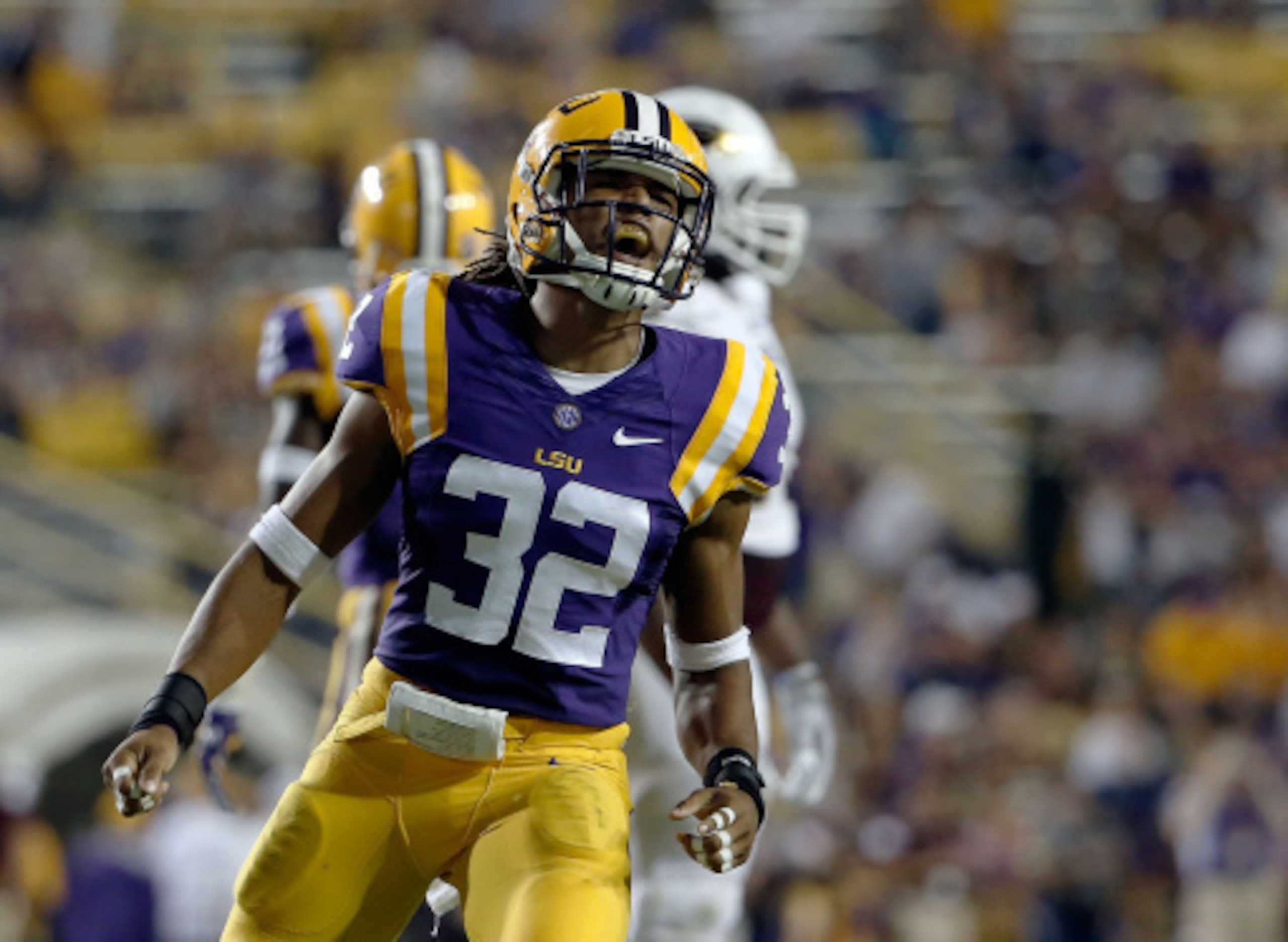
The 40-yard dash is the combine's marquee event. Every coach covets speed, and this is the drill that shows us who is truly the fastest prospects available (at least in shorts).
CB Jalen Collins from LSU is a guy many scouts are excited about when it comes to his size and speed combination. Collins is listed at 6’1”, 203 pounds and is fast enough to run down Wisconsin RB Melvin Gordon from behind. The talented CB has only started 10 games while at LSU, yet his athleticism is so intriguing that he could end up being a first-round draft pick.
His 40-yard dash is the drill to watch because this might determine whether or not he slides into Day 1 of the draft.
DB Backpedal Drill
6 of 6
Scouts and GMs are always on the lookout for defensive backs who can show fluidity and balance while transitioning from a backpedal. So, it only makes sense they created a drill to isolate this attribute.
The backpedal drill requires the prospect to backpedal as full speed down a straight line with their eyes on the scout/coach leading the drill. Then on command, the defensive back flips his hips and sprints diagonally toward a designated point where the quarterback throws the ball.
During the drill, scouts study closely how quickly and smoothly the defender can transition out of his backpedal. In addition, they also look to see if the player can track the ball and make the play.
How well he transitions from the backpedal into the run may determine how well he can cover in the pros.
Awkward backpedaling and stiffness should be revealed in this drill. The best cover guys will be able to flip their hips without losing speed or balance.
With the NFL becoming more and more of a passing league, safety prospects are required to demonstrate strong coverage abilities. Failing to show this trait could result in a career trajectory similar to a guy like Mark Barron.
Barron is a former Alabama safety drafted in the first round by the Tampa Bay Buccaneers who struggled to live up to the hype. His failure came primarily in the coverage department.
Landon Collins is another Alabama safety who is built similarly to Barron, and for this reason, he is a guy we should keep an eye on Monday. Like Barron, Collins is widely considered the best prospect in his draft class and was used primarily as a run defender and underneath zone defender at Alabama. In order to solidify this status, he must show impressive coverage skills during these drills.
Ryan Riddle is a former NFL player who writes for Bleacher Report.
.jpg?w=2560 "Cowboys Packers Football")




.jpg?w=2560 "🚨 Week 8 AP Top 25 Poll")
.jpg?w=2560 "Fantasy Waiver Wire Stars 🤩")