

NFL Scandals Bringing the League's Integrity into Question from Multiple Angles
The NFL calendar is structured in such a way that football is never far from your eyeballs, even when no actual games are being played. Each year the scouting combine starts about two weeks after the Super Bowl. Then it’s quickly the middle of March, when teams start realigning rosters through free agency.
The wheel of chatter turns, always looking to what’s ahead. Anything in the rearview is supposed to fade and become fuzzy fast.
But eventually that pace slows when our scandal tolerance reaches max volume. Eventually, the football-watching public is pried away from the games and roster shuffling to ask questions about its league and how much honesty is left.
Lately integrity has been in short supply as allegations of cheating and misconduct from multiple teams continue to mount, and we find new, inventive uses for the “gate” suffix.
The trendsetter was Deflategate, which has now been followed in recent days by Textgate and Noisegate, while the shadow of domestic violence ignorance continues to linger after the 2014 season.
Let’s explore how the league has arrived at a disregard for competitive balance and/or basic human decency.
New England Patriots Have Been Accused of Deflating, but They Weren’t Defeated
1 of 5
Your reaction to Deflategate is a statement in itself. If you shrug and can’t create any movement at all from the caring muscles in your body, there’s a good chance scandal-overload syndrome has taken its grip.
More importantly, you recognize the reality that during the game in question slightly squishy footballs had an impact that was, at best, minimal. The New England Patriots advanced to Super Bowl XLIX after defeating the Indianapolis Colts soundly, winning 45-7 in a game where much of their offensive yardage and scoring came on the ground (running back LeGarrette Blount ran for 148 yards with three touchdowns).
But people on Team Who Cares can’t just look at the scoreboard while waving their Patriots flags and listening to Bill Belichick’s science lesson.
There’s a middle ground to be located between a belief that some leaking footballs don’t matter at all and the opposite stance that the Patriots’ legacy is tarnished forever and Belichick should be expelled from the league.
Why it matters: The league’s investigation is ongoing, and even when it first began that included interviews with over 40 people, according to a Jan. 23 press release (h/t ProFootballTalk). The human resources and time required for a probe of that kind aren't wasted on something completely meaningless.
The meaning lies in a team potentially and allegedly altering shared equipment. It may seem like the bickering over pounds-per-square-inch levels (unnecessary reminder: 11 of the 12 Patriots balls were under the minimum 12.5 PSI during the AFC Championship Game) is an act of fine hairsplitting.
But regulations are in place to ensure uniformity in areas where competitive balance could be manipulated. And teams have to prepare within those rules long before kickoff, when the scoreboard shows two zeros.
Belichick has repeatedly denied any involvement, as has his quarterback Tom Brady. And according to a report from NFL Network’s Ian Rapoport, only one of the 11 footballs was significantly under the minimum threshold (it was two PSI under).
That still doesn’t explain how the Colts’ footballs were just fine in the same weather conditions.
What’s at stake: The Patriots could be fined and, most importantly, forced to forfeit draft picks.
What it says about the NFL: Every minor piece of minutiae has significance within the boundaries of fair play. And those same seemingly minuscule details that aren’t given much thought by a football audience are subject to tampering.
The Atlanta Falcons and Their Artificial Noise
2 of 5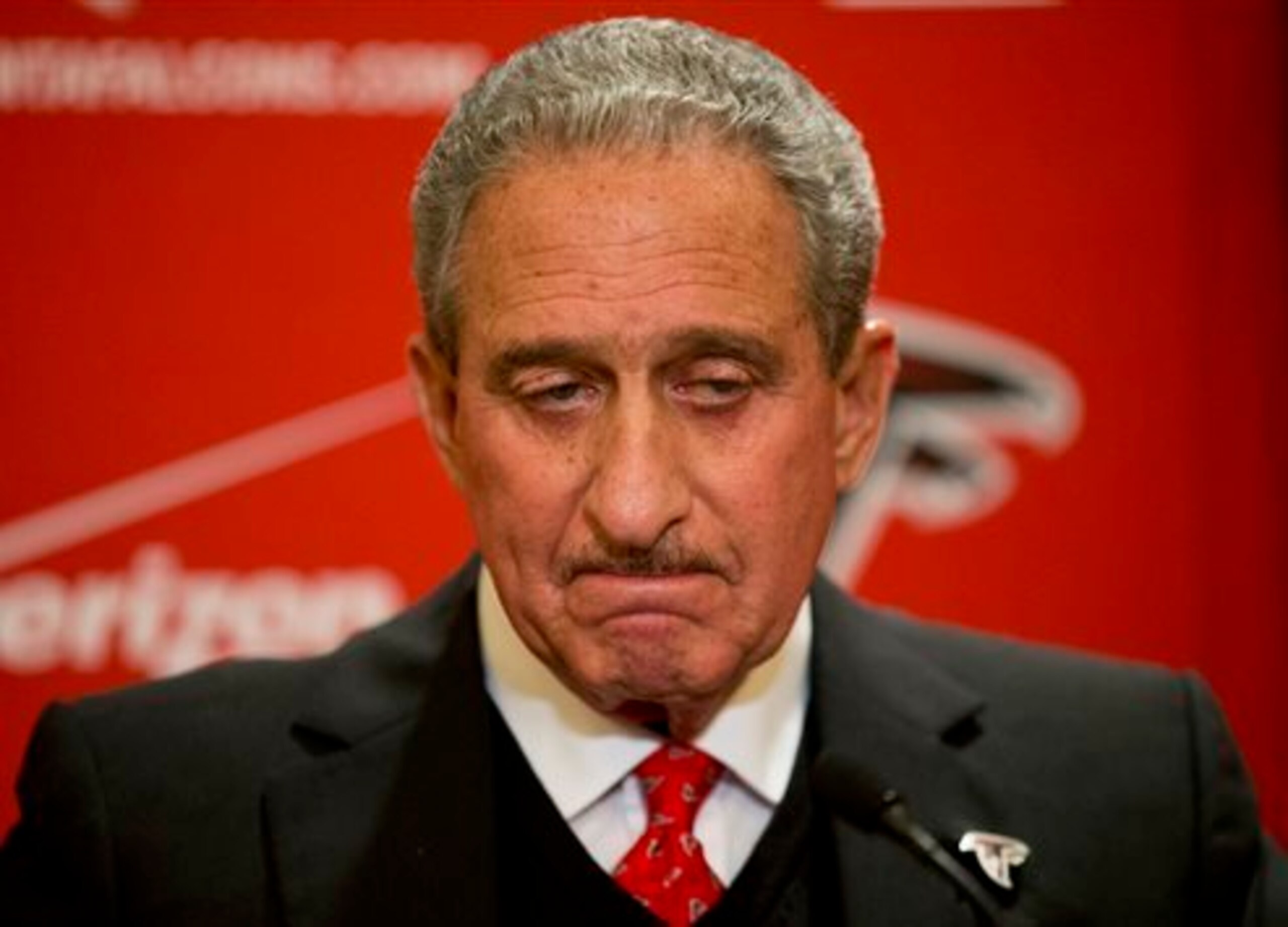
We can debate exactly how much of an advantage a leaky football does or doesn’t create. But as we sift through the league’s recent scandal slime dump, the advantage gained by what went down in Atlanta over the past two seasons isn’t debatable.
The league is investigating fake crowd noise at the Georgia Dome during Falcons home games, and owner Arthur Blank didn’t wait for the completion of that fact-finding mission to express regret.
“I think what we’ve done in 2013 and 2014 is wrong,” Blank said during a press conference (via ESPN.com). “Anything that affects the competitive balance and fairness on the field, we're opposed to, as a league, as a club and as an owner. It's obviously embarrassing but beyond embarrassing it doesn't represent our culture and what we're about."
Blank said the matter has been dealt with internally, and we’ll find out exactly what that means once the league’s investigation is complete.
Why it matters: It seems the Falcons are awful at both football and cheating. When the Georgia Dome was rocking with fake noise over the past two seasons they went 6-10 at home.
But just as we’re seeing with Deflategate, the results carry less meaning than the action. Crowd noise has a widespread impact on the opposing offense, restricting communication during high-pressure situations and potentially leading to false starts.
Certain fanbases take pride in creating that chaotic environment and do it naturally by yelling various obscenities. Sometimes the source of those words is wearing spiked armor and an animal skull. But it’s assumed that deafening noise is coming from a collection of individuals instead of prerecorded roars.
There’s also supposed to be an authenticity to the in-game stadium experience, especially for the players who are navigating that space and trying to communicate critical information.
What’s at stake: A team that won only six games in 2014 and currently holds the eighth overall slot in April’s draft could lose a valuable pick as it tries to rebuild under a new head coach.
What it says about the NFL: Very little is sacred, including the notion that crowd noise should come from real humans.
If you’re among those who believe deflating footballs can drastically alter the outcome of a game, know that the impact is limited by a dominant running back, and only two parties are affected regardless: the quarterback and his receivers. An entire offense can be restricted by crowd noise.
The Cleveland Browns Are Texting Too Much
3 of 5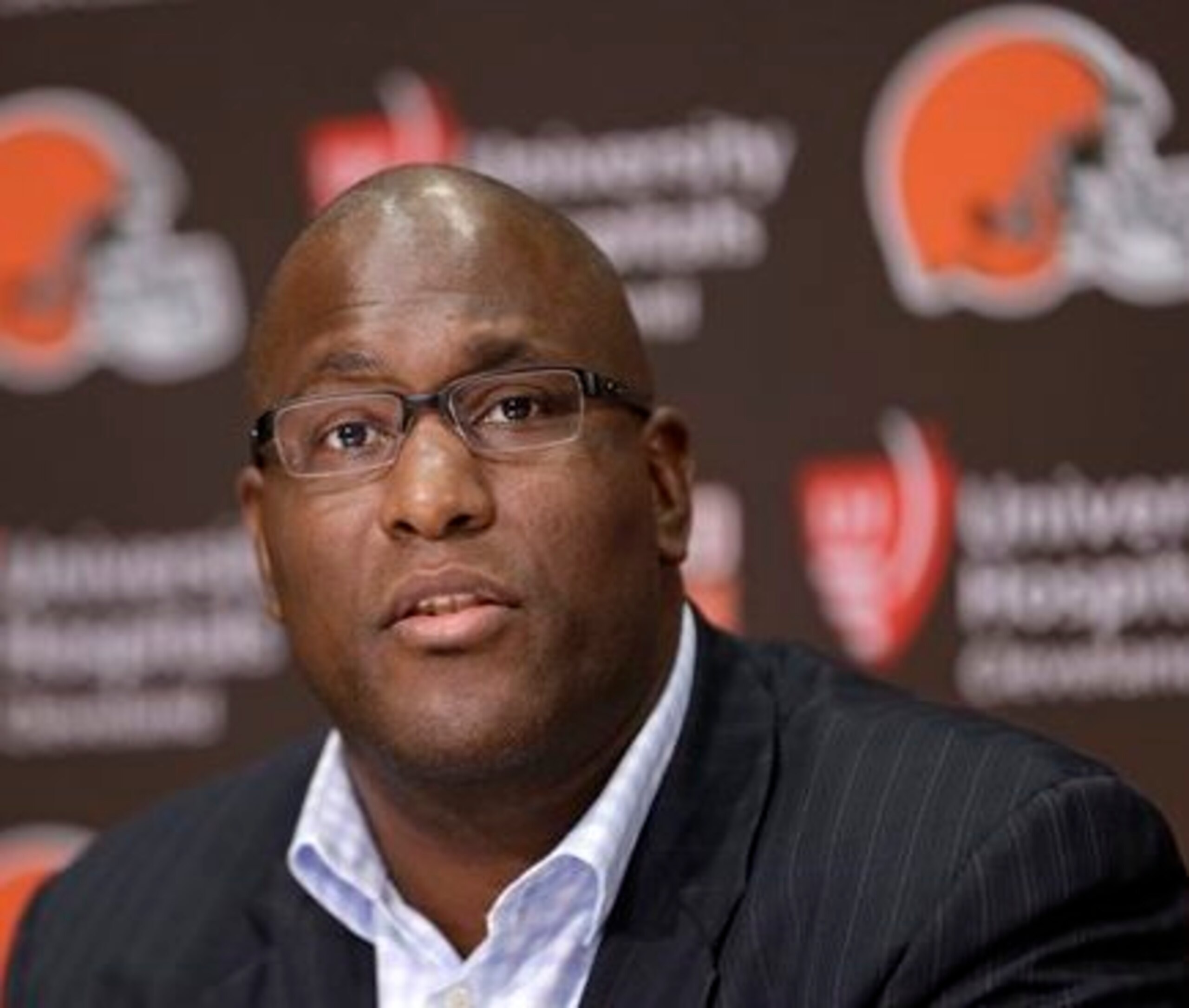
We arrive at the end of our journey through all three current “integrity of the game” investigations with easily the most confusing infraction.
Cleveland Browns general manager Ray Farmer certainly knows that texting his own sideline—even indirectly—is frowned upon by greater NFL powers. Yet according to Mary Kay Cabot of the Northeast Ohio Media Group, Farmer was the “high-ranking personnel member” caught firing off gentle play-calling suggestions to the sideline in 2014.
For the Browns this is yet another example of the meddling and general dysfunction that led to the exit of offensive coordinator Kyle Shanahan. For the NFL, it’s proof that even the simplest rules rooted in common sense will be ignored in the search for a win and, more importantly, job security.
Why it matters: Electronic communication during a game is restricted because both teams need to have the same opportunities to access information.
That means the same video available through tablets, the same end zone and sideline pictures of formations and, most importantly in this case, the same amount of voices contributing to the game plan.
Just as we’re seeing while the discussion of football air pressure continues, fair play means uniformity, both with the equipment and available resources.
What’s at stake: Once again, a fine and draft pick are in play here. Of the three ongoing investigations, the penalty given to the Browns could bring the most pain. They have a quarterback who’s in rehab and lacks maturity and a star young wide receiver in Josh Gordon who’s been suspended for another season. The Browns aren't in a position to sacrifice a draft pick.
What it says about the NFL: In an age when communication has been a few smartphone finger strokes away for quite some time, blatant ignorance of game-day decorum is even easier and more accessible.

.jpg?w=2560 "Rams Eagles Football")
.jpg?w=2560 "Falcons Saints Football")
Domestic Violence Mishandling Still Lingers
4 of 5
It’s unclear if domestic violence of any kind occurred Tuesday morning when Dallas Cowboys running back Joseph Randle was eventually arrested for drug possession. Randle told WFAA News 8 that no such incident happened, though Wichita police received a domestic violence call at 3 a.m and they’re still investigating.
The mere possibility of another domestic dispute hits a sensitive nerve for the NFL. A spiral of negligence began when Ray Rice struck his then-fiance in February of 2014. Only one security tape should have been needed to see the level of Rice’s disgusting behavior and assign an appropriate, precedent-setting punishment.
Yet Roger Goodell waited until the second even more violent security footage from inside the elevator surfaced to suspend the running back indefinitely (which was eventually overturned upon appeal).
Inexplicable violence against women unfortunately wasn’t limited to Rice during the 2014 season. The trial for Carolina Panthers defensive end Greg Hardy starts Monday, and the details of his alleged domestic abuse are gruesome. They include Hardy being accused of dragging his then-girlfriend across the floor and throwing her onto a couch covered in weapons, according to Michael Gordon of The Charlotte Observer.
Why it matters: Beyond the obvious lack of human decency tied to player conduct, the issue of domestic violence showed an unfortunate reality of the NFL. Despite what Goodell said publicly, at its core the NFL was a league that needed to see a video of a player backhanding his fiance to make the right decision.
That will always be true, and it won't change because of the new domestic violence policy Goodell eventually implemented. An elevator door couldn’t close because Janay Palmer was unconscious in its path, and that was deemed worthy of a two-game suspension.
What’s at stake: Ideally the new policy cleans a tarnished image, and the league’s respect for women is restored. For quite some time that was lacking and almost completely absent when Rice was allowed to attend training camp amid cheers.
What it says about the NFL: The handling of Rice’s abuse reflected an NFL that was completely tone-deaf on a significant societal issue. It was a version of the NFL we should all hope to never see again.
The Scandal Scorecard
5 of 5
It’s getting increasingly difficult to keep pace with the misconduct and bad decisions around the league, even if there's been no dent in the impenetrable NFL juggernaut (Super Bowl XLIX averaged a record 114.4 million viewers, according to USA Today's Gary Levin). So please, allow me to help.
The scandalous behavior getting the most attention right now is Deflategate because it’s tied to the Super Bowl champion Patriots. But the Falcons’ conduct tops them on the unofficial scandal grime scale.
Worst threat to authenticity: The Falcons piping in crowd noise, a deliberate and premeditated fabrication far worse than any air removed from footballs. It also occurred over a much longer period of time.
Worst threat to decency: The domestic violence mishandling that’s now hopefully and maybe over.
Most blatant rules violation: Not only is texting the sideline during the middle of a game so obviously wrong, but it’s also pretty creative micromanagement from Big Brother high above. So congrats on that double, Ray Farmer.
Most unnecessary rules violation: Let’s assume for a moment the ongoing investigation finds that someone from the Patriots sprung a leak in those balls. When that ruling comes down it will finalize the most unnecessary cheating in league history.
We can all begrudgingly accept that boundaries will always be bent and rules twisted in a league where head coaches only have 16 games to remain employed each season. But the Patriots beat Indianapolis by 38 points and were thoroughly dominant on both sides of the ball. They didn’t need even the slightest, tiniest advantage, yet the win may still cost Belichick a draft pick.
.jpg?w=2560 "Texans-Mixon Released Football")
.jpg?w=2560 "Commanders Eagles Football")
.jpg?w=2560 "Grading WWE Raw 🔠")



