
Pro Comparisons for 2015 NFL Draft Wide Receiver Prospects
The 2015 NFL draft class of wide receivers has a tough act to follow, but it's up for the challenge.
This group may lack the truly elite names at the top of the class that the 2014 class possessed, but it makes up for it with depth.
The following slideshow takes a look at eight of the top receivers in this class (in no particular order) and evaluates them in comparison to a current or recent NFL wide receiver.
Many of the comparisons will seem lofty in terms of the career the current receiver has put together, but the comparisons aren't necessarily meant to be predictions of future success. Instead, the comparisons focus on the physical attributes and the way in which these receivers can have success in the pros.
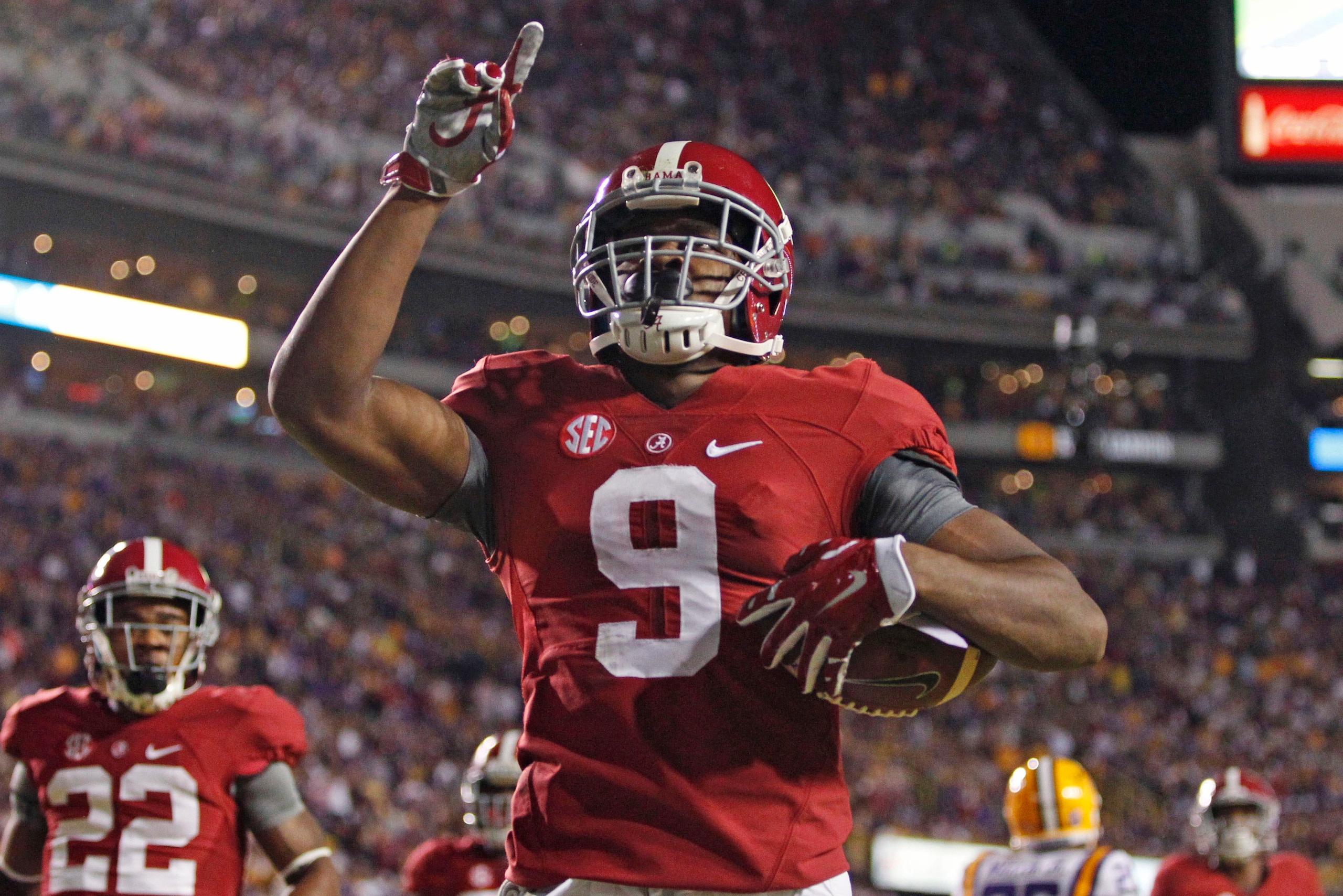
Amari Cooper, Alabama
1 of 8
Pro Comparison: Odell Beckham Jr.
There are some physical differences between Beckham and Amari Cooper (Beckham is a step faster; Cooper is slightly stronger), but the way they win is what makes them so similar.
Both players lack elite explosiveness to create separation off their speed alone and also lack the size to be a dominant receiver in tight coverage.
But what they lack in raw ability they more than make up for with their refined fundamentals.
Cooper (6'1", 210 lbs) and Beckham (5'11", 198 lbs) both run exceptionally crisp routes, and are explosive out of their breaks. They also do all the small things to create separation, such as varying their acceleration and using subtle fakes within the stem of their routes to force defensive backs into false steps.
Cooper lacks Beckham's elite hands, but his ability to create consistent separation should allow him to have a similar impact as a rookie.
Kevin White, West Virginia
2 of 8
Pro Comparison: Dez Bryant
Bryant and Kevin White are virtual clones in terms of their physical build, but their style of play also makes this a strong comparison.
The 6'2", 220-pound Bryant has the size to win the battle for 50-50 balls down the field, but much of his success comes on shorter routes, as his large hands allow him to pluck the ball from the air on the move.
Like Bryant, White (6'3", 210 lbs) seems to effortlessly snatch the ball out of the air on the move and quickly secure it to turn upfield.
In addition to their reliable hands, both White and Bryant do an excellent job using their size to shield defenders.
Due to these skills, White has the ability to excel in multiple areas on the field, making him a dangerous weapon at the next level. His combination of size and reliable hands should allow for immediate success, even as he refines other areas of his game.
DeVante Parker, Louisville
3 of 8
Pro Comparison: Randy Moss
Obviously this is a lofty comparison for DeVante Parker, and it's unrealistic to expect him to match Moss' NFL success. But in terms of their physical tools and the matchup issues they present, Parker compares favorably to one of the NFL's all-time greats.
Moss (6'4", 210 lbs) was so dangerous because of his combination of height and speed—a combination that few receivers present.
Parker (6'3", 208 lbs) is probably a step slower than Moss at his peak, but he has a similar blend of height and speed, and he does so with the same lanky build as Moss too.
Concerns about Parker's durability could hurt his stock, but if he stays healthy he can be a matchup nightmare in the NFL. There simply aren't many defensive backs capable of staying with a 6'3" receiver with the speed to take the top off the defense.

.jpg?w=2560 "Rams Eagles Football")
.jpg?w=2560 "Falcons Saints Football")
Dorial Green-Beckham, Oklahoma
4 of 8
Pro Comparison: A.J. Green
Due to well-documented off-field concerns, which resulted in Dorial Green-Beckham getting booted from the Missouri program and spending a year working out at Oklahoma, his place in the draft is impossible to predict.
Looking strictly at his on-field tools, however, it's easy to see why the man known as DGB is viewed as an elite talent.
Green-Beckham has a scary blend of size (6'5", 225 lbs) and speed that could make him one of the most dangerous deep threats at the next level.
While he isn't as refined as Green, the physical tools give Green-Beckham a similar ceiling.
In order to reach that ceiling he'll need to improve his playing strength. Green-Beckham doesn't separate from press coverage with the same consistency as Green, which may limit him early in his career. But if he commits to developing into a more well-rounded playmaker, the sky is the limit.
Sammie Coates, Auburn
5 of 8
Pro Comparison: Donte Moncrief
The 6'2", 201-pound Sammie Coates has a fascinating blend of size, speed and athleticism, but he's so far from a finished product that it's difficult to compare him to any established receiver.
Much like Moncrief when he entered the league out of Ole Miss a season ago, Coates' NFL draft stock is all about long-term potential.
Coates and Moncrief both demonstrated sloppy routes and inconsistent hands in college but clearly possessed all the tools that can't be taught.
Moncrief flashed some moments of greatness during his rookie year with the Indianapolis Colts, and Coates is capable of having a similar rookie impact in 2015. However, expectations for early success should be set modestly.
Jaelen Strong, Arizona State
6 of 8
Pro Comparison: Alshon Jeffery
Jaelen Strong's draft evaluation depends on how much you value separation.
He clearly lacks the speed to consistently break free over the top, but Strong, at 6'3", 215 pounds, has the size to make up for it.
Much like the 6'3", 216-pound Jeffery coming out of South Carolina, Strong's NFL projection is partially a guess based on size and athleticism.
Jeffery and Strong were both inconsistent collegiate receivers, but with rare size and the athleticism to make the difficult contested catches look easy, high expectations for NFL success were set early in their college careers.
While Strong has the size to win even without creating separation, he needs to refine his routes and the use of his body to shield defenders when battling for the ball. There's definitely work to be done, but Jeffery has proved that these limitations can be overcome.
Phillip Dorsett, Miami (Florida)
7 of 8
Pro Comparison: T.Y. Hilton
Like Hilton, Dorsett's pure speed is what initially stands out about his game. But there's much more to his game than just speed.
Miami used Dorsett (5'10", 195 lbs) almost exclusively on deep routes or quick screens, so his routes need development. When he was asked to run more complex routes, however, he demonstrated quick, efficient cuts and the explosive acceleration to create instant separation.
There's definitely room for growth in Dorsett's game, but he has shown the flashes of success necessary to set the expectations high.
Hilton was also viewed as a pure deep threat at Florida International but has refined his routes during his time with the Colts and is now one of the most dangerous all-around threats in the league.
Devin Smith, Ohio State
8 of 8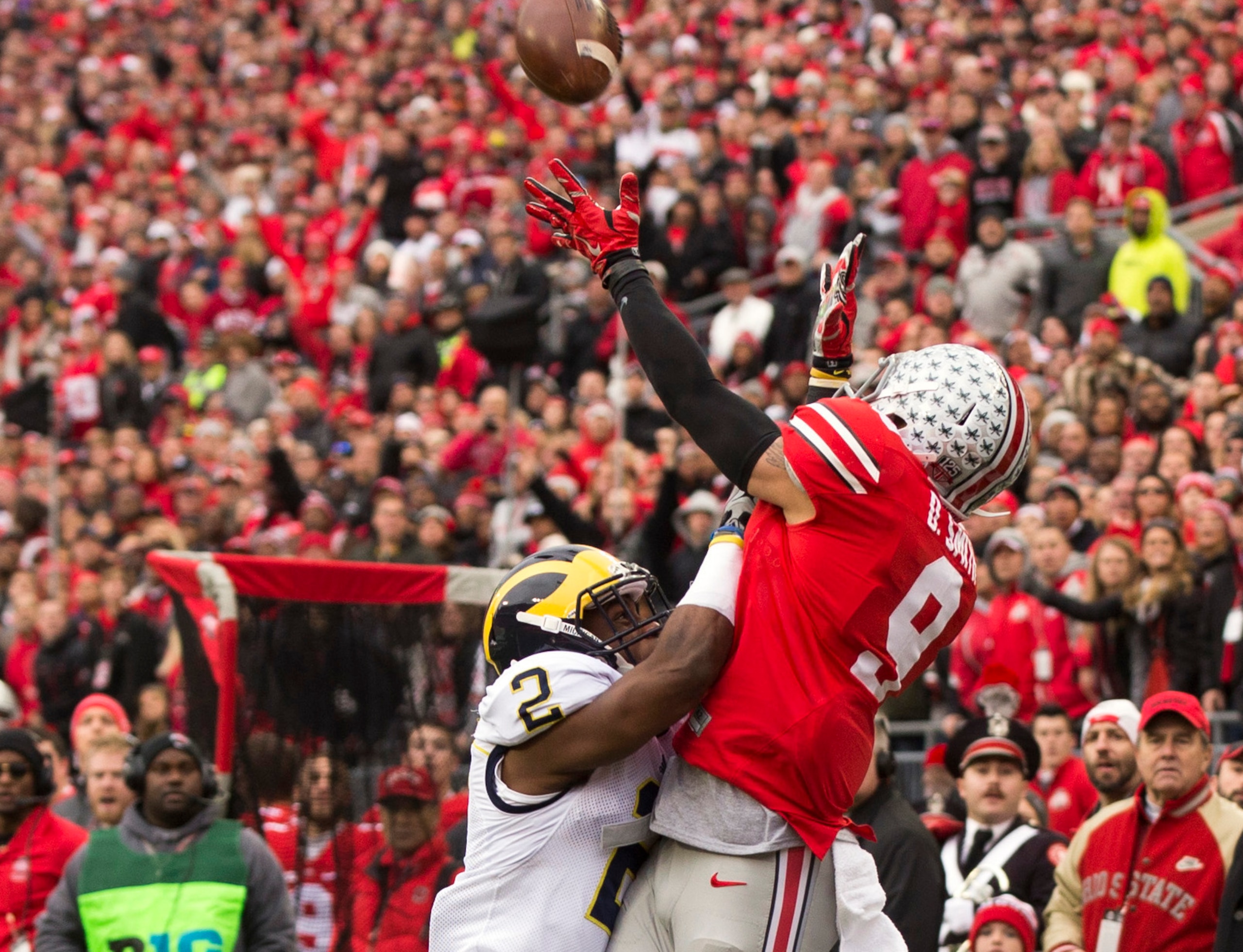
Pro Comparison: Torrey Smith
This comparison might be too generous, as Torrey Smith continues to develop into a more well-rounded receiver. In terms of where both prospects were upon entering the league, however, this comparison works well.
Devin Smith (6'1", 197 lbs) is strictly a deep threat at this stage of his career and will offer virtually nothing else to his future employer as a rookie.
The Buckeyes star made a name for himself during Ohio State's championship run due to his ability to get over the top of the defense, but he rarely makes plays on short and intermediate routes.
While his straight-line speed makes him dangerous, Smith lacks the elite agility to be a serious weapon after the catch on shorter routes, which limits his upside.
During Torrey Smith's rookie year, 40 percent of his targets were 20 yards beyond on the line of scrimmage, according to Pro Football Focus. Expect a similar rate for Devin Smith early in his career.
.jpg?w=2560 "Texans-Mixon Released Football")
.jpg?w=2560 "Commanders Eagles Football")
.jpg?w=2560 "Grading WWE Raw 🔠")



