

Fantasy Baseball 2015: 10 MLB Players Most Likely to Regress This Season
Steer clear of fantasy baseball players coming off career years.
That thinking appears to contradict the goal of detecting the most production possible on draft day, but chasing the previous year's stars rarely provides anyone with proper value. When paying for a player's peak, there's nowhere to go but down.
Chris Davis won myriad 2013 leagues with his 53 home runs, but he cost just as many gamers the following year by hitting .196 as a first-round selection. Last year's leader in homers won't attract the same price tag this spring, but he's also in line for a course correction.
Be careful, however, not to treat this as a "Do Not Draft" list. Everyone has his price, and it's possible all other drafters have adjusted their rankings for expected deflation. In that case, consider zigging as everyone else zags.
Just don't expect a repeat of 2014, which will motivate eager players to overpay for outlier seasons. The goal is not to snatch up last year's breakouts, but rather to identify the next batch.
Identifying Regression Candidates
1 of 12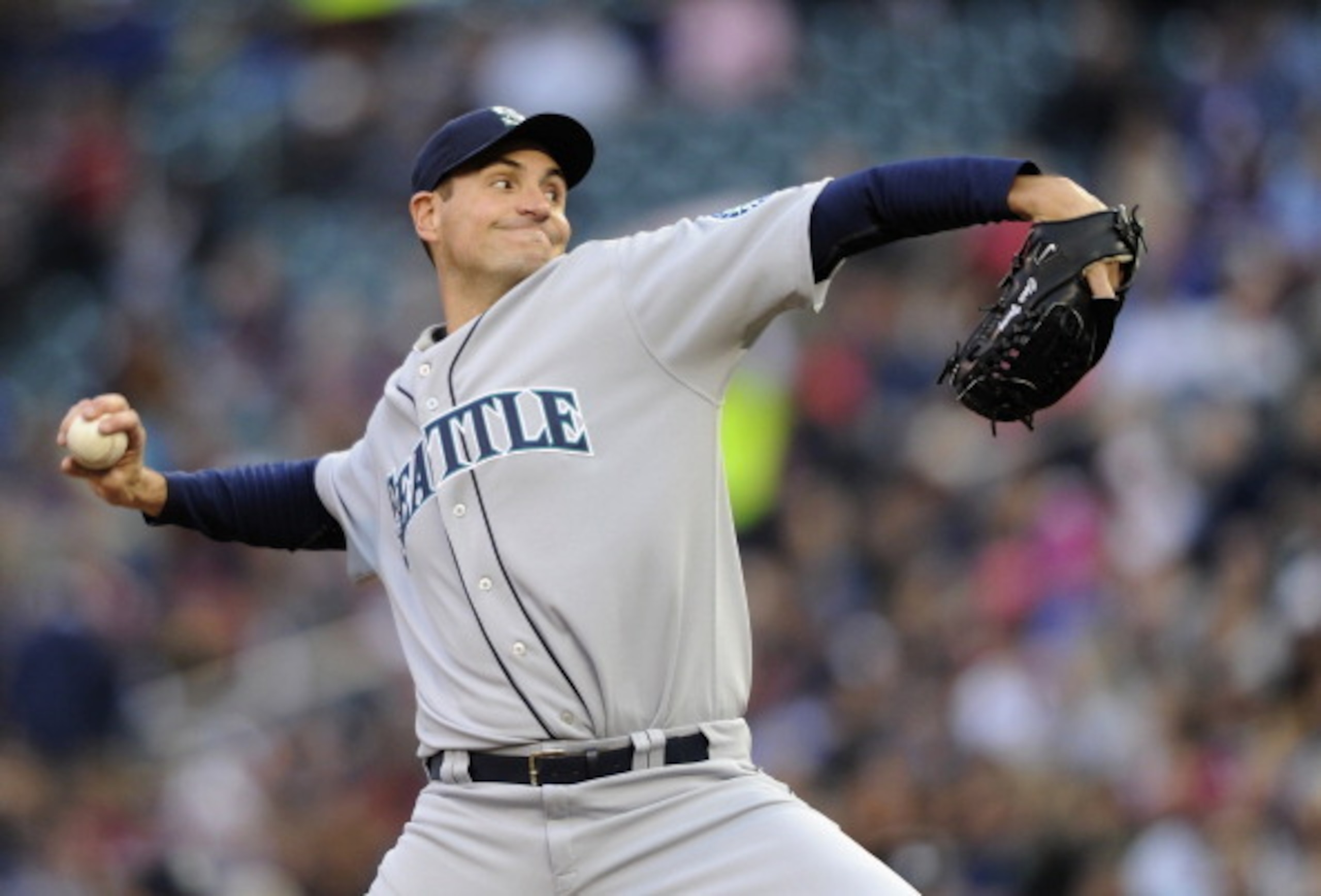
Certain sabermetric stats will frequently get referenced to predict a regression. That won't help readers without a working knowledge of these calculations.
Before diving into the analysis, here's a quick explanation for some of the most frequently cited metrics that are essential for sniffing out unsustainable play.
BABIP (Batting Average on Balls in Play)
BABIP eliminates strikeouts to calculate batting average solely on balls in play. Hits are more random than most think, so batters with abnormally high rates and pitchers with unusually low averages likely benefited from some good fortune.
For hitters, BABIP is best used when having previous data to reference. Line-drive hitters and speedsters will routinely post higher BABIPs than dead-pull sluggers, so it's a mistake to automatically assume a course correction in some instances.
But when a rate doesn't jive with that player's past tallies or his other batted-ball tendencies, it's time to call the regression police.
GB%, LD%, FB% (Ground Ball, Line Drive, Fly Ball Percentage)
When wanting more details on batted balls, look at the breakdown between ground balls, line drives and fly balls. Line drives are most conducive to hits, while ground balls produce the best chance of outs. Of course, a slugger needs a healthy amount of fly balls to hit home runs.
HR/FB% (Home Run/Fly Ball Percentage)
HR/FB percentage offers a rate of how many fly balls clear the fences. If someone enjoyed a spike in homers despite generating the same amount of fly balls, this metric will soar, creating worry of it normalizing next year.
For pitchers, a rate far below 10.0 percent (or career norms) is worth noting. Also factor in home ballparks.
FIP (Fielding Independent Pitching)
FIP is a measure of a pitcher's effectiveness that normalizes batted-ball rates while weighing strikeouts and walks, two outcomes a pitcher controls. FIP is scaled similarly to ERA, so expect regression from a pitcher with a 3.25 ERA and 3.75 FIP.
Honorable Mentions
2 of 12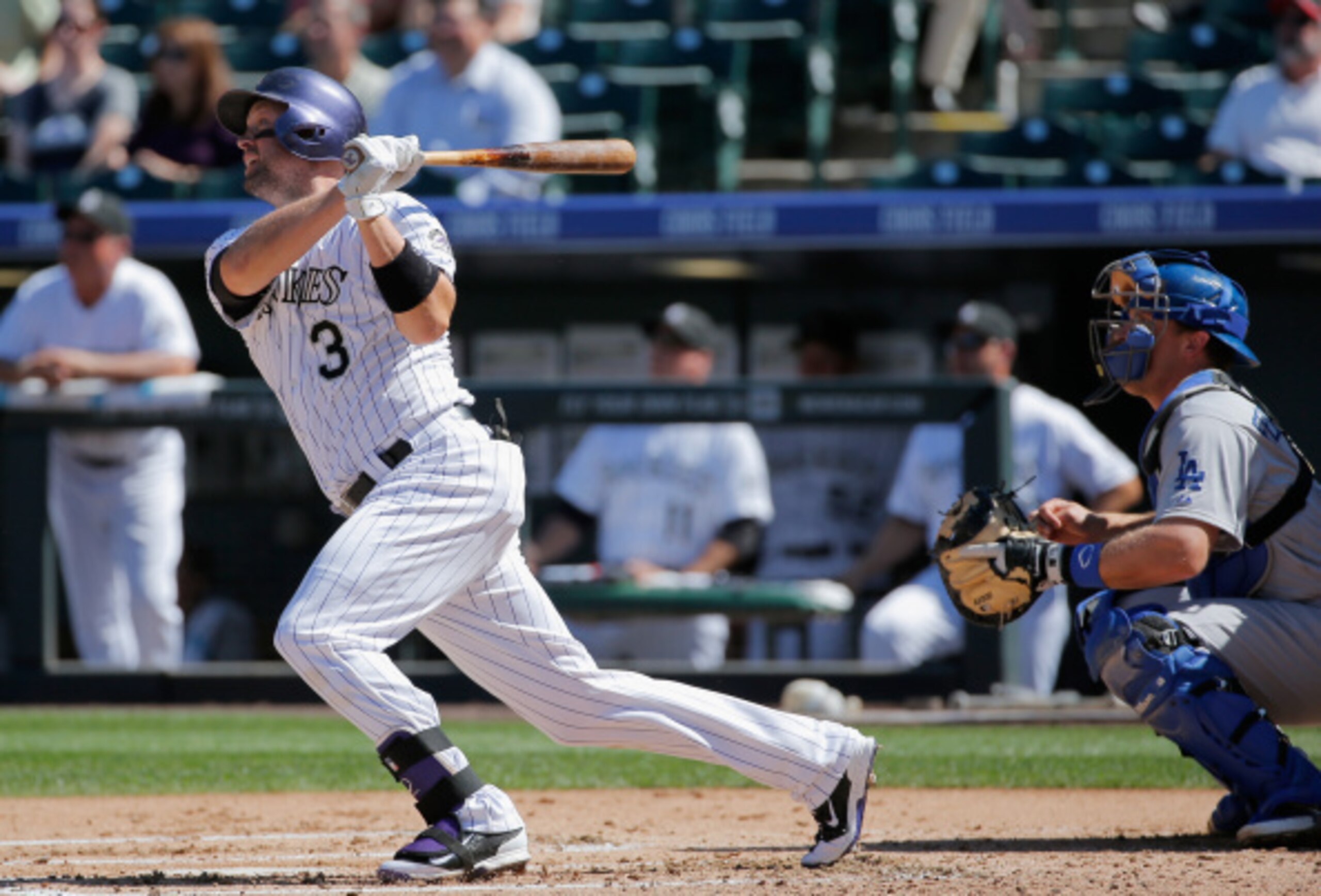
James Shields, SP, Free Agent
Let's wait to see where James Shields signs before committing to this pick. If the San Diego Padres decide to make one more major move, Petco Park will offset any other worries.
Just about anywhere else, the 33-year-old becomes a risk. He accumulated just 7.14 strikeouts per nine innings, his lowest rate since 2009. Nobody has pitched more frames over the past four seasons, and it's beginning to show.
Michael Cuddyer, 1B/OF, New York Mets
Some will wonder what Michael Cuddyer is regressing from after playing just 49 games last season. Others will note his departure from Coors Field with a gigantic "duh doy" for depreciated offense.
In three years with the Colorado Rockies, Cuddyer hit .329/.393/.591 at home and .286/.332/.463 on the road. Tack on health concerns, and he won't make many owners happy with the New York Mets.
Drew Stubbs, OF, Colorado Rockies
Drew Stubbs still gets to call Coors Field home after harvesting a quiet .289, 15/20 campaign. That power and speed makes him an intriguing deep option, but he's a career .246 hitter who struck out 32.1 percent of the time. His BABIP won't come close to last year's .404 tally.
There's also the matter of playing time, with a returning Carlos Gonzalez taking back an outfield slot alongside Corey Dickerson and Charlie Blackmon. At best, Stubbs will occupy the short end of a platoon with Blackmon, barring an injury or trade.
Jose Altuve, 2B, Houston Astros
3 of 12
If Jose Altuve could safely sustain his 2014 results, he'd easily be the top second baseman and a first-round mainstay. Projecting back-to-back batting titles, however, is a recipe for disaster.
A .360 BABIP, above his .331 career clip, helps explain how a .302 career hitter suddenly vaulted his batting average to .341. If he reverts to past norms, his career-high 56 stolen bases will also suffer, given he rarely received free passes to first base with a 5.1 walk percentage.
With blazing speed, a 91.1 contact percentage and 7.5 strikeout percentage, he certainly possesses the skills to hit for a high mark. Yet expecting another .341 season is the equivalent of expecting 45-50 home runs from Giancarlo Stanton.
It's possible, but highly unlikely.
Avoid average-depedent hitters, especially when you should be securing reliable power bats to start the draft. A .300 hitter with 35-40 steals is great, but not in the second round.



Danny Santana, SS/OF, Minnesota Twins
4 of 12
On the surface, everyone should be going bonkers for Danny Santana. In just 101 games, the 24-year-old hit .319/.353/.472 with seven homers and 20 steals. Extrapolate that juiciness over to a full season, and you got a top-five fantasy shortstop.
If only life were that simple. A crazy .405 BABIP bankrolled that fun, but expect it to cut the Minnesota Twins youngster off this season. Nobody with at least 400 plate appearances posted a higher mark, and only 20 surpassed .350.
Once the average falters, so will his stealing and run-scoring chances. He also walked in just 4.4 percent of his plate appearances while striking out 22.8 percent of the time. As he continues to swing at an alarming 40.3 percent of offerings outside the strike zone, those rates will remain bleak, and he'll get exposed because of it.
Having swiped 30 bags during his 2013 stint in Triple-A, at least his speed is legit. That's enough to keep him fantasy-relevant, but he's better reserved as a middle infielder for deeper formats.
Todd Frazier, 1B/3B, Cincinnati Reds
5 of 12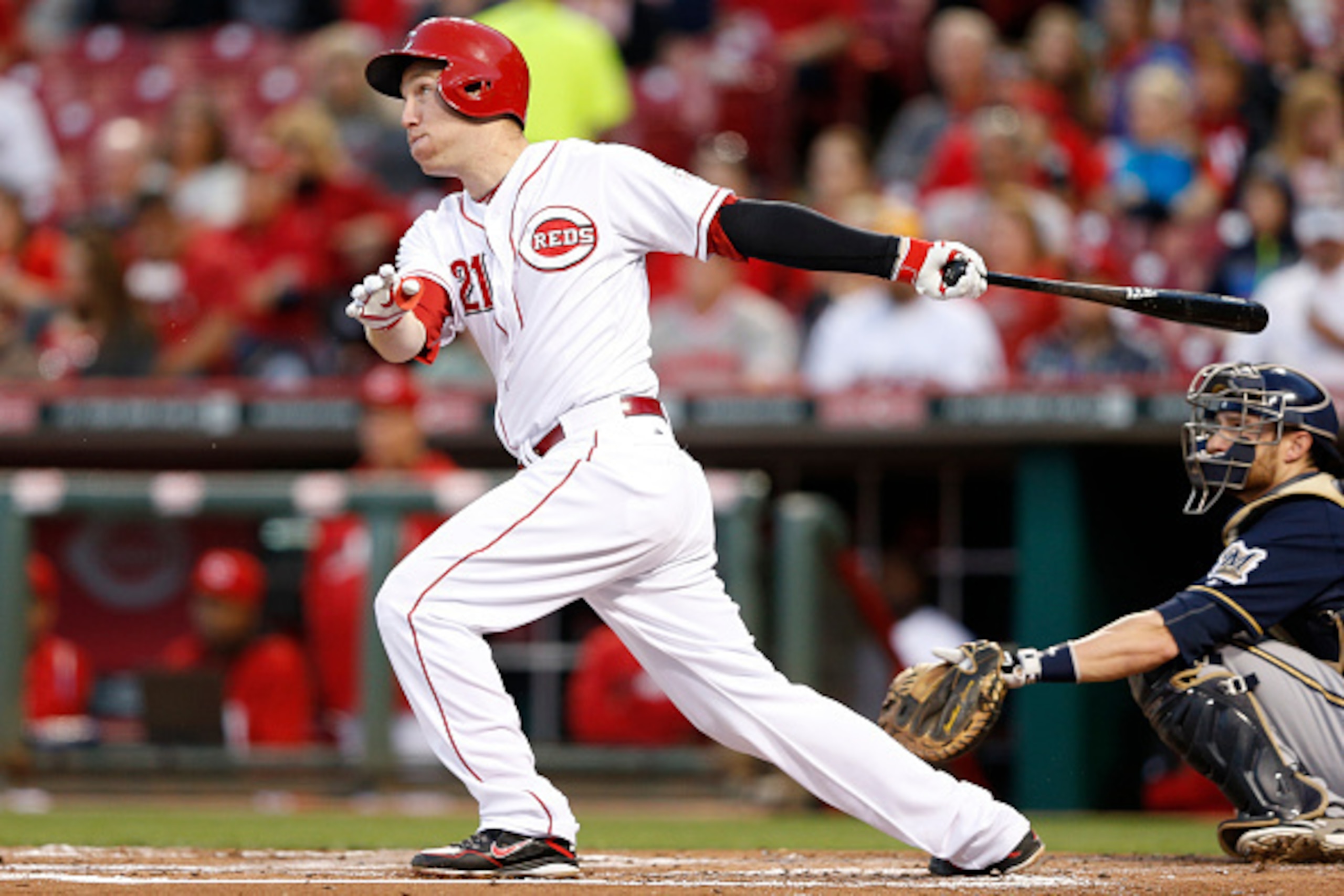
Common sense fuels Todd Frazier skepticism. He delighted drafters with 29 home runs and 20 stolen bases during a breakout 2014, but his track record doesn't support another 20/20 effort.
The third baseman belted 19 homers in each of the previous two seasons, and he weaved a lower fly-ball percentage (37.1) last year. ESPN.com credited a dozen of those deep flies as "just enough" long balls.
Depreciated power isn't even the biggest red flag, as he should still produce 20 homers. He stole 10 bases combined over his first three MLB seasons, never even swiping 20 bags in the minors. With a career 66.7 success rate (30-for-45), he's not doing the Cincinnati Reds any favors by running.
His .273 average is repeatable, as he brandished that exact number in 2012. Sandwiched between those .273 campaigns, however, resides a .234 mark to remind everyone of his downside. Anyone who drafts the corner infielder will simply hope he doesn't hurt them in the average department.
So instead of last year's superstar, everyone could instead receive a .260, 20-12 player. Yahoo! Sports' four experts gave him a No. 5 consensus rank at third, but Evan Longoria and Nolan Arenado are better choices, and you're not blamed for preferring Kyle Seager or David Wright.
Josh Harrison, 2B/3B/OF, Pittsburgh Pirates
6 of 12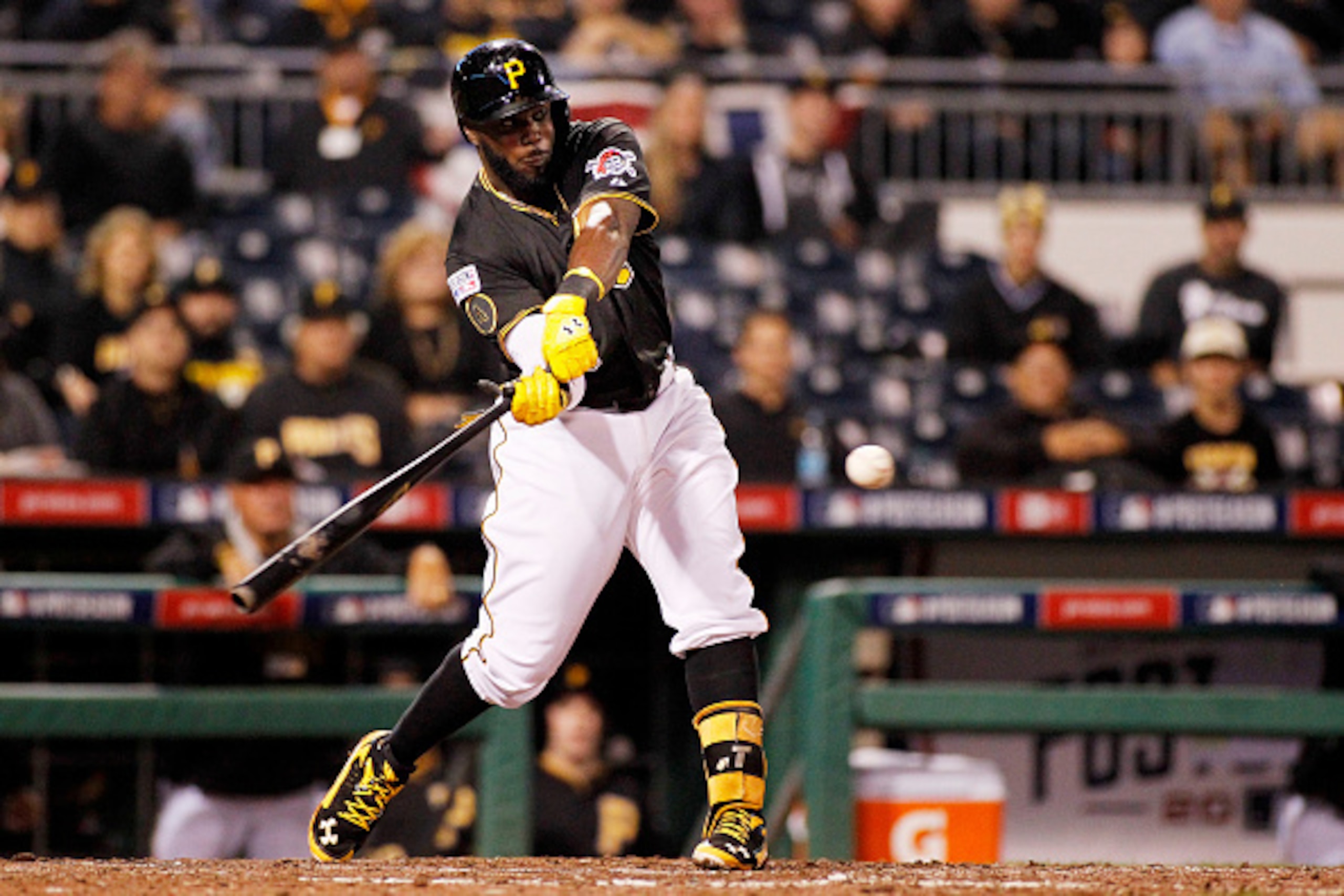
Despite entering the break with a .297/.333/.450 slash line and five homers, Josh Harrison earned a spot on the National League All-Star roster. The managers' stupidity, however, turned prophetic when he hit .332/.359/.528 with eight homers and nine steals after receiving the head-scratching honor.
What did they know that everyone else didn't? Most likely nothing. The breakout star enjoyed a .371 BABIP during the second half, and poor plate discipline (4.0 walk percentage) clouds his potential for prolific counting numbers.
Another 18 steals is attainable, so the question is whether he can duplicate last season's late power surge to remain a top fantasy asset. It's not probable, as he accumulated 22 homers through 2,078 career minor league appearances. Rather than hoping for more power during a full season, treat 13 homers as his ceiling.
No average and power regression, however, can strip Harrison of his multiple-position eligibility. He'll stay relevant as a second baseman or third baseman, and outfielder is there as a backup plan. He can contribute as a .275 hitter with roughly 8-10 homers and 15-20 steals, but FantasyPros' No. 100 overall consensus ranking remains uncomfortably high.
J.D. Martinez, OF, Detroit Tigers
7 of 12
An unassuming journeyman tossed to the curb by the Houston Astros, J.D. Martinez notched a higher slugging percentage (.553) than Miguel Cabrera (.524) during his first season with the Detroit Tigers.
It didn't happen overnight. Last year, Martinez revamped his swing before getting ditched by Houston. He described the instant improvement last summer to the Detroit Free Press' Jeff Seidel.
“I’ve always had power,” he said. “I have more momentum going to the ball. Now, I feel I’m getting all my weight, all my power into the ball. I was so much upper body last year and the years before. I was in and out of the ball. I was around the ball. Now, I’m hitting through it.”
Players are human beings capable of adapting and bettering themselves, yet it'd still be short-sighted to ignore other factors that worked in his favor. A career .272 hitter, he vaulted his average to a career-high .315 with help from a .389 BABIP.
Before crediting the new swing for the adjusted batted-ball rate, his line-drive percentage upticked just one percent (22.7) from 2013's clip. That year, he hit .250 with a .319 BABIP.
His fly-ball rate also saw modest improvements, rising from 34.1 percent to 36.8, but a staggering 19.5 percent of those balls cleared the fence for 23 home runs. According to ESPN.com, he did so with an average home run distance of 392.5 feet and eight "just enough" deep blasts.
Martinez's alteration at the plate earned him a regular gig, but expect more of a .270-.280 hitter who will struggle to top 23 homers during a full season.
Nelson Cruz, OF, Seattle Mariners
8 of 12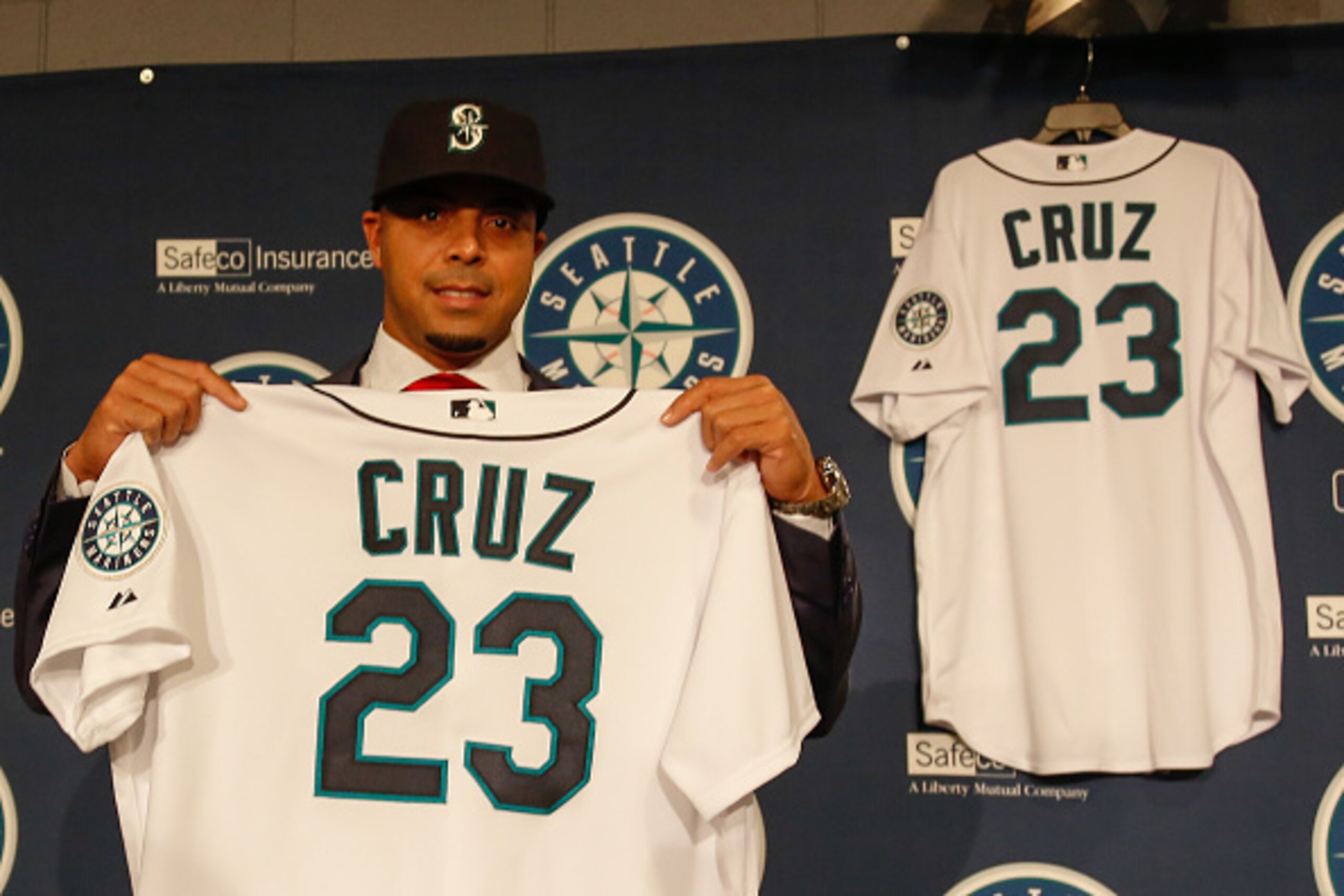
If Nelson Cruz stayed with the Baltimore Orioles, he still would have headlined this list after smashing a MLB-high 40 homers in 2014. Jumping to the Seattle Mariners makes the choice easier.
Always a power threat, Cruz averaged 27 long balls over the past five seasons. Great, but also significantly less than 40. Last year also constituted his second season without a pit stop to the disabled list. Some will argue he just needed health to rise to stardom, but the 34-year-old remains a risky play going forward.
To his credit, the slugger didn't exploit Camden Yards for his lofty total, hitting 25 of his dingers on the road. Again, his power won't banish, but it will dip enough to make a dent, especially inside Safeco Field.
Moving to a stadium crippling for righties hurts his chances to pull balls over the left-field fence. FanGraphs' Tony Blengino anticipates a steep decline in Cruz's new home.
"First of all, we must remember that we are looking at Cruz’ career year, at age 33, while performing this analysis. We’re taking those career year parameters, and at the end of the day, adjusting them to something along the lines of a .259-.320-.481 season if half of the games were played at Safeco Field. I would project those numbers as a near best-case scenario for Cruz in 2015; he has about a 5% chance of reaching them. Normal aging trends should negatively affect the vast majority of his rate statistics, and his batted ball authority should also be expected to gradually fade.
"
A 25-30 homer outfielder has his place on most fantasy squads, but drafters will have to overpay after a career year. Instead, turn to Lucas Duda or Brandon Moss for cheaper power.
Adam Wainwright, SP, St. Louis Cardinals
9 of 12
No starting pitcher dominates forever. Several aces have plunged from Cy Young contention to obscurity in minutes, and Adam Wainwright is the next candidate to suffer that descent.
His fantasy owners sure weren't complaining when he generated 20 wins and a career-best 2.38 ERA and 1.03 WHIP last season. Given those superb numbers, the righty's 179 strikeouts fared well enough to keep him in the upper tier of rotation anchors.
Yet his 7.10 K/9 rate is alarming heading into 2015. Pitchers can't fully control batted balls, but there's nothing a batter can do after getting wrung up at the plate. When 47 qualified starters collect strikeouts at a more efficient rate, that's a major problem for a perceived top-10 option.
The 33-year-old didn't quell any fears by configuring a 6.47 K/9 rate after the break. An elbow injury that required offseason surgery compounded those problems. Do you really want a veteran recovering from a significant injury?
It's better to jump off the bandwagon a year too early rather than stay aboard while it crashes. Wainwright's substantial workload caught up to him last year, and it'll show in 2015 without a .267 BABIP and 5.3 HR/FB percentage hiding those scars.
Doug Fister, SP, Washington Nationals
10 of 12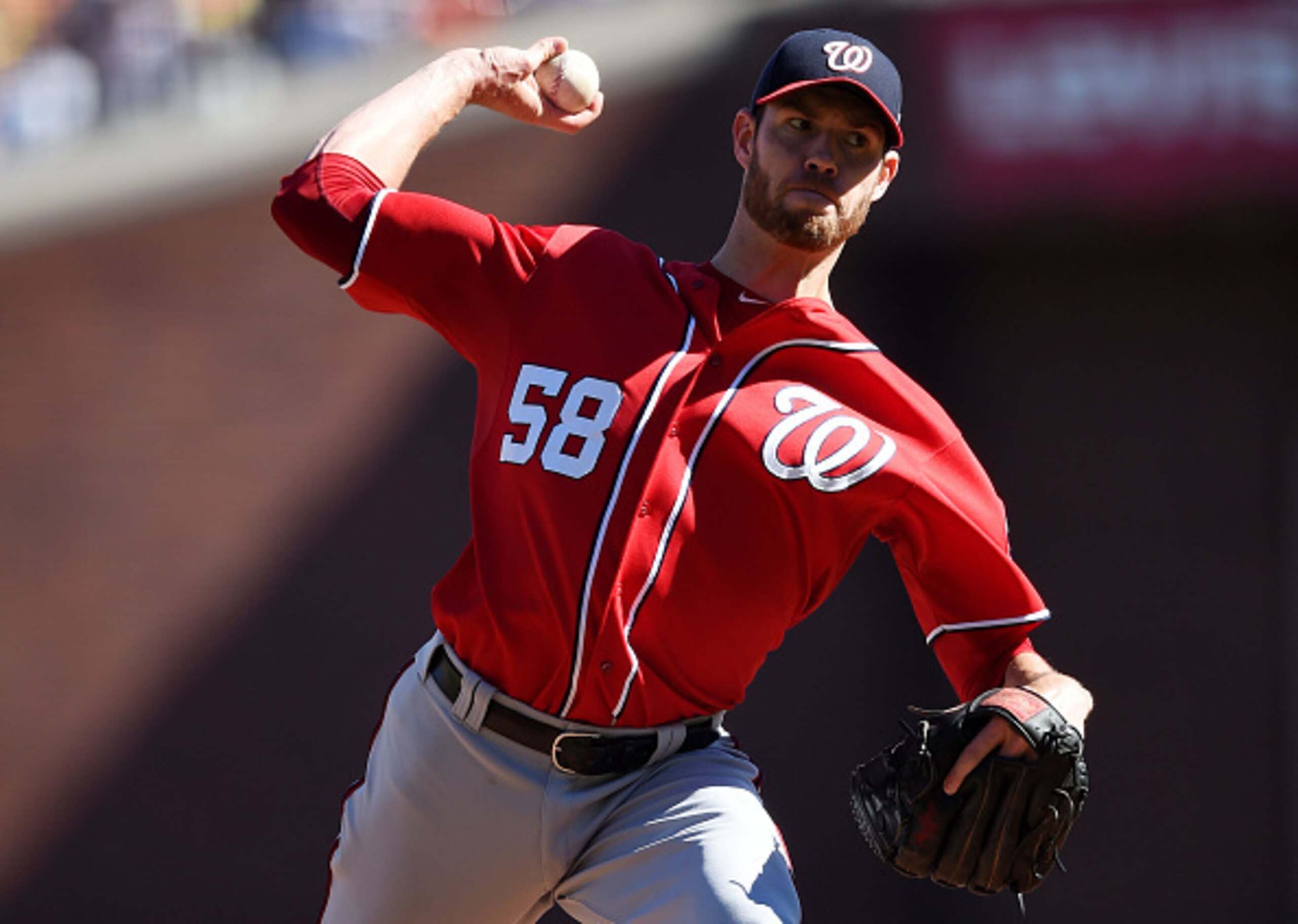
Doug Fister entered 2014 as a prime sleeper, boasting a 3.26 FIP and 54.3 ground-ball percentage hidden under a 3.67 ERA and 1.31 WHIP. The regression gods made amends, rewarding the veteran during a worse year.
Although never a strikeout artist, his K/9 rate plummeted from a passable 6.86 to ugly 5.38. His ground-ball rate dipped to 48.9 percent, and his FIP slipped down to 3.93. Yet he also authored a 2.41 ERA and 1.08 WHIP, with a .262 BABIP certainly helping.
Few starting pitchers stand more at the mercy of his defense making outs than Fister, whose 6.1 swinging-strike percentage signified the third-lowest mark among qualified starters. Ranked No. 14 in team Defensive Runs Saved, the Washington Nationals shouldn't be expected to bail him out so well again.
Fister commands the strike zone with aplomb, but fantasy gamers need strikeouts. The 30-year-old righty simply doesn't provide enough to occupy a standard mixed-league staff.
Wily Peralta, SP, Milwaukee Brewers
11 of 12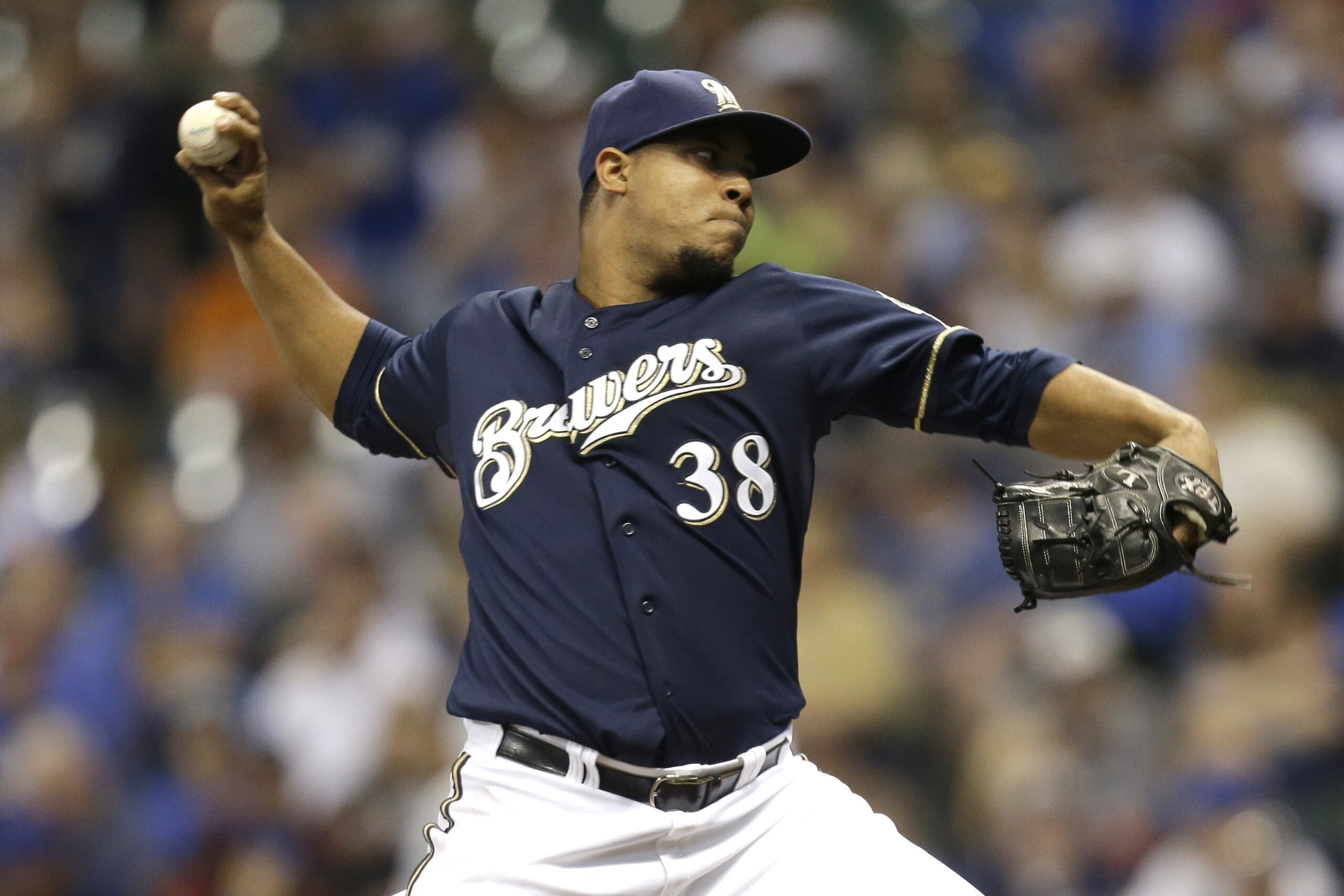
The casual fantasy player will look at Wily Peralta and see a quality mid-line starter. Dear readers, aim higher.
A decade ago, his 3.53 ERA and 6.98 K/9 rate would do the trick. In this over-saturated market of starters, neither served his owners any use. Forty qualified starters posted a better ERA, and 51 orchestrated more than seven punchouts per nine frames.
There's only one reason anybody would view the 25-year-old as anything but bland: wins. Last year, he won 17 games for the Milwaukee Brewers. Felix Hernandez earned the American League Cy Young Award with 15 victories.
That's fine and dandy, but it's useless for projecting this year's result. A pitcher with a career 4.09 FIP won't get so lucky twice in a row. Ask Chris Tillman, who reverted from 16 wins in 2013 to 13 last year despite slashing his ERA.
In a standard mixed league, Peralta isn't even worth drafting. There are too many sweeter high-upside targets—Danny Salazar, Jake Odorizzi, Kevin Gausman, Mike Fiers—more deserving of late-round recognition.
This should be obvious to anyone reading a fantasy baseball article early in February, but just in case, eliminate wins from any preseason research.
Zach Britton, RP, Baltimore Orioles
12 of 12
Zach Britton offers an odd case study, as he's due for regression and improvement this season.
Negativity is more fun, so let's cover that ground first. Despite generating a bland 7.31 K/9 rate, the first-year closer authored an outstanding 1.65 ERA and 0.90 WHIP. For that, he can thank a .215 BABIP that limited him to a minuscule 46 hits allowed through 76.1 innings.
That amounts to 5.4 hits allowed per nine innings. Greg Holland surrendered 5.3 H/9 with a 12.99 K/9 rate. Britton's good fortune will even out, normalizing his ERA closer to his 3.13 FIP while his WHIP rockets over 1.00.
But before banishing him from the ninth inning, a remarkable 75.3 ground-ball percentage had plenty to say about that limited hit rate. He could also legitimately earn solid marks with an improved strikeout rate, which is likely if he replicates his 13.1 swinging-strike percentage.
Dellin Betances, Trevor Rosenthal and David Robertson all procured a lower percentage of whiffs. A K/9 over 8.00 isn't too much to ask from the 27-year-old.
He's the type of guy you avoid this year and target next year when his stock evens out. If your leaguemates over-correct and ignore him completely, he'd make a fine No. 2 or No. 3 closer, but not someone worthy of top-12 consideration.

.jpg?w=2560 "Grading WWE Raw 🔠")


.jpg?w=2560 "Viral Rams Coach Vid 🖕")

.jpg?w=2560 "Injury-stricken Seahawks signing veteran RB")
