

Chelsea vs. Liverpool: Tactical Review of Capital One Cup Game
Chelsea booked their place at Wembley by beating Liverpool, 1-0 (2-1 on aggregate), at Stamford Bridge on Tuesday evening. A Branislav Ivanovic header in extra-time dashed the Reds' chances of forcing penalties after playing out 120 exhilarating minutes.
Formations and XIs
Chelsea played their usual 4-2-3-1 with Oscar in the No. 10 role, Cesc Fabregas in the pivot alongside Nemanja Matic and Filipe Luis at left-back ahead of Cesar Azpilicueta.


.jpg?w=2560 "Seahawks Chiefs Football")
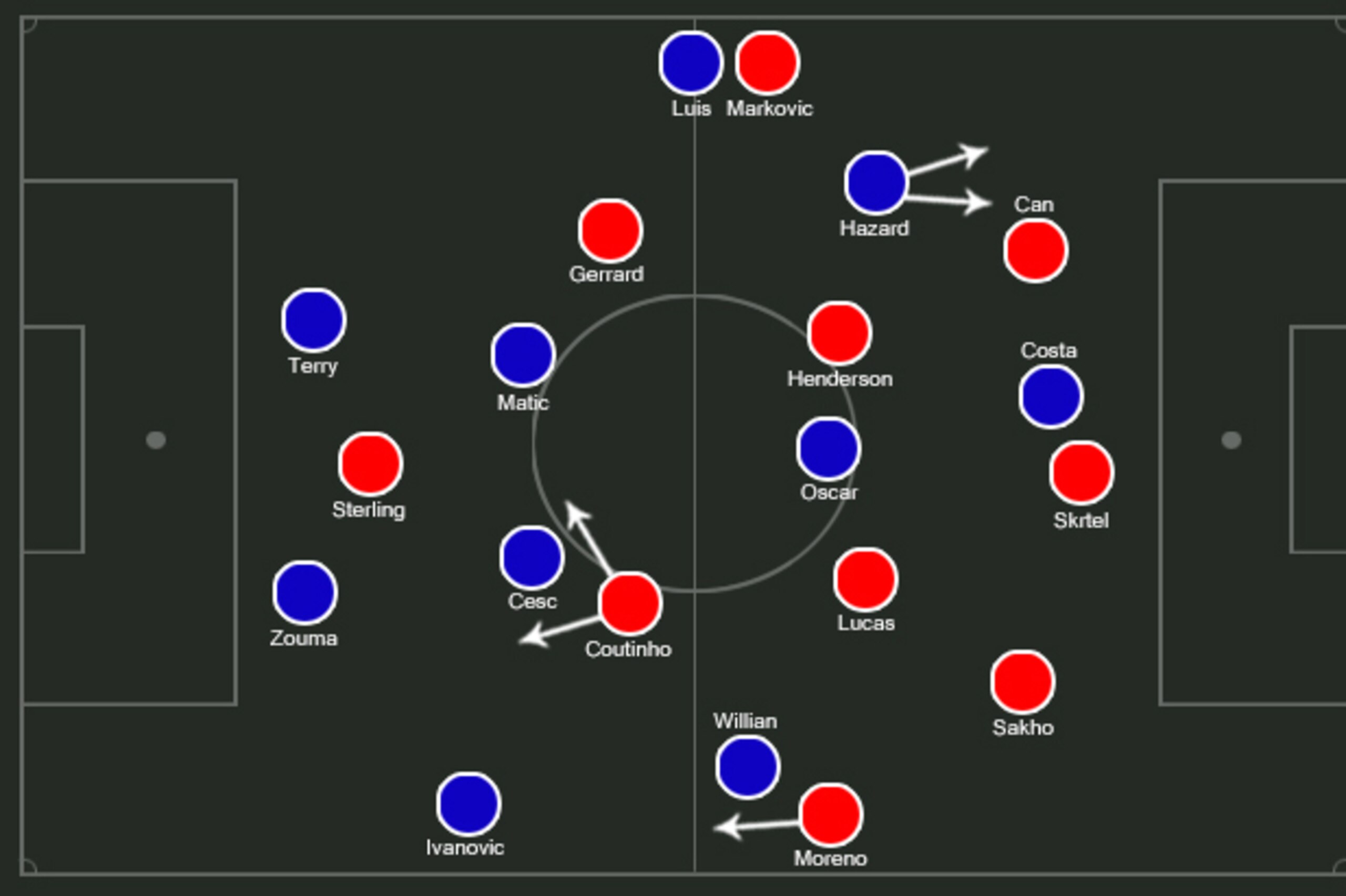
Liverpool's XI was as expected in a 3-4-2-1, with Raheem Sterling up front, Steven Gerrard as one of the No. 10s and Emre Can at centre-back once again.
1. Turnovers & Intensity
The first five minutes of this match were as frantic as you'll see in football, with both sides pressing high and trying to win the ball back quickly. Both also played fairly direct football (along the ground) to begin with, testing the opposition and moving the ball between the lines at pace.
The pace set early continued throughout the first half, and this led to a lot of turnovers in the middle of the park, with around eight central players getting stuck in and trying to win second balls. The match toed and froed, and the action was end-to-end—a delight to watch in a cup semi-final.
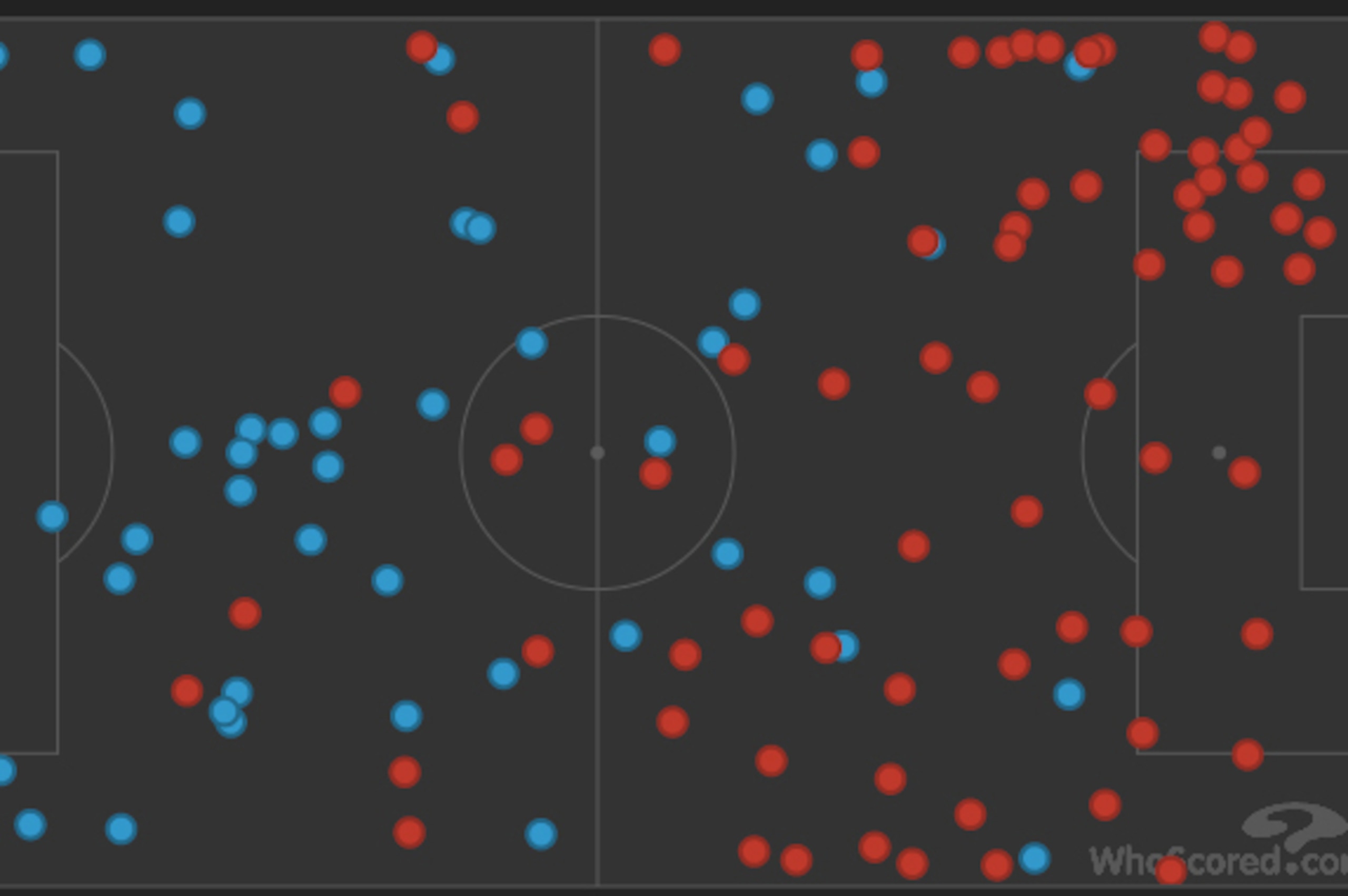
By half-time, both sides had attempted a combined 41 tackles, per WhoScored.com. By the end of 12 minutes, that figured leapt to an incredible 121.
2. Filipe Luis' Positioning
Liverpool were the more aesthetically pleasing of the two throughout, but Chelsea were aggressive and determined in their positioning.
They played quickly between the lines and tried to skip the short buildup phase at the back. Instead, they played balls in over the top of the wing-backs and tried to square off their wingers against the Reds' outside centre-backs whenever possible.
Can and Mamadou Sakho were immediately stressed, having to filter out to the widest point and meet Eden Hazard and Willian out by the touchlines. The wing-backs' aggressiveness early on had to be tamed somewhat to ensure it was they who the wingers met first in the defensive phase.
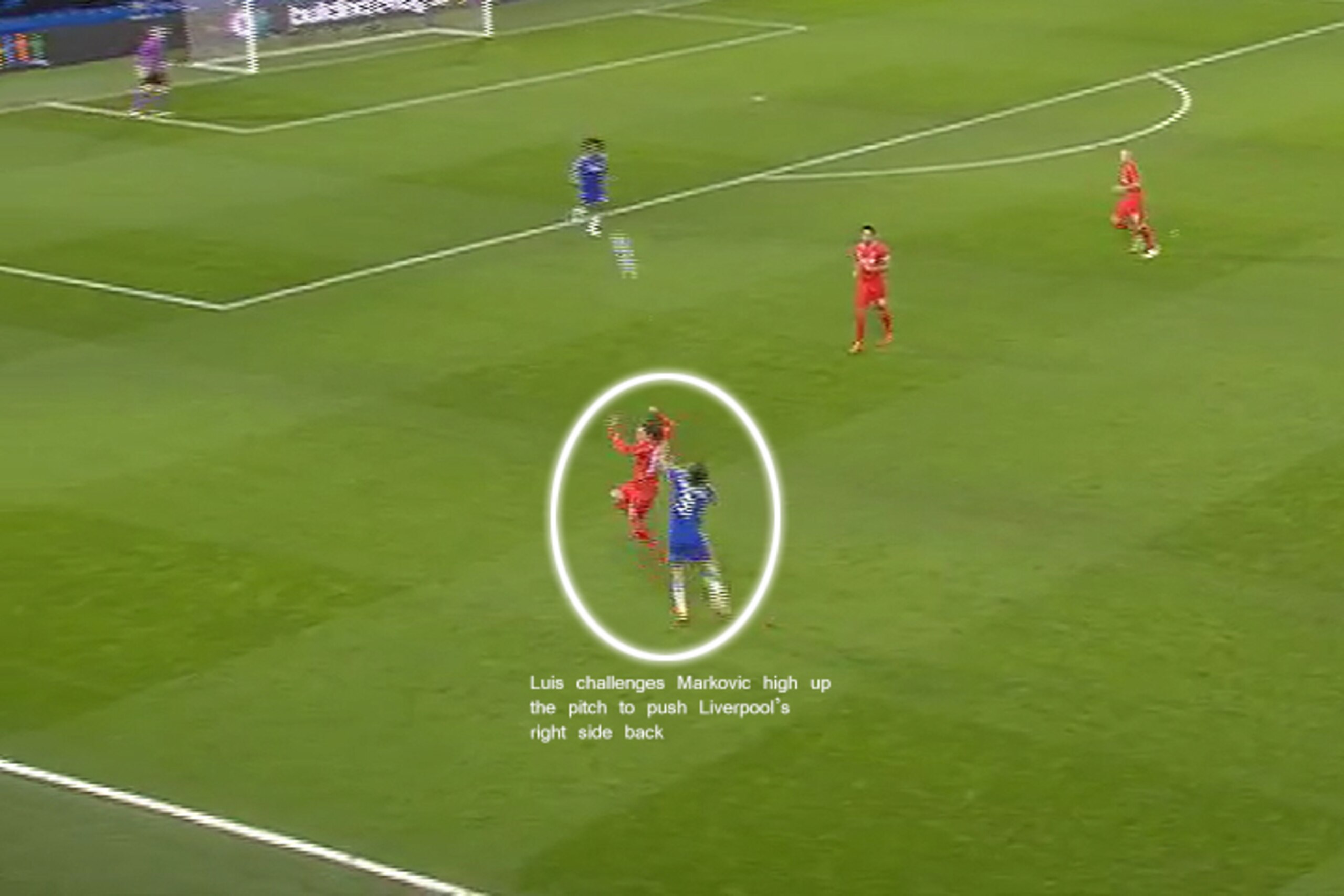
It forced Liverpool back a little—a punch in the mouth, if you will—and Filipe Luis took his chance to play tightly against Markovic and push high up on the left side of the pitch. Driving the Serbian back and winning headed duels against him started attacks higher up, and Hazard began receiving the ball within seconds of a Simon Mignolet goal-kick or clearance (which were nearly all dreadful).
It was a slight gamble on Luis' behalf, but he weighed up the facts: Liverpool play with no advanced wingers, and the man he had left with the chance to penetrate the space behind him was Steven Gerrard, who is hardly fast.
After a quick start by Liverpool, Chelsea were able to wrestle back the initiative. Luis' positioning set the tone.
3. Buildup Woes
Liverpool encountered a serious issue with their buildup play after the intensity had died down a little. While the right side was working perfectly and Philippe Coutinho was seeing plenty of the ball through the middle, the left became an area of concern.

It's not that chances weren't created from the left—in fact, two or three of the Reds' best opportunities came from that flank—but the Reds were forced to build down the right and then switch to the left, making use of Alberto Moreno's impressive runs.
The reasoning was simple: Mamadou Sakho, while playing pretty well of late, appeared too scared to pass forward on the night and sent all of his balls back to Mignolet to clear frantically. When he did try a forward pass in the second half, he teed up Willian on the edge of his own box and lucked out as Diego Costa misread the Brazilian's setup.

It meant the Reds lacked balance, and Chelsea were able to shift more resources over to try and stop Markovic buccaneering forward and crowd out Gerrard in tight spaces. Moreno on the switch was an absolute weapon, but he wasn't found nearly enough.
4. Inviting the Press
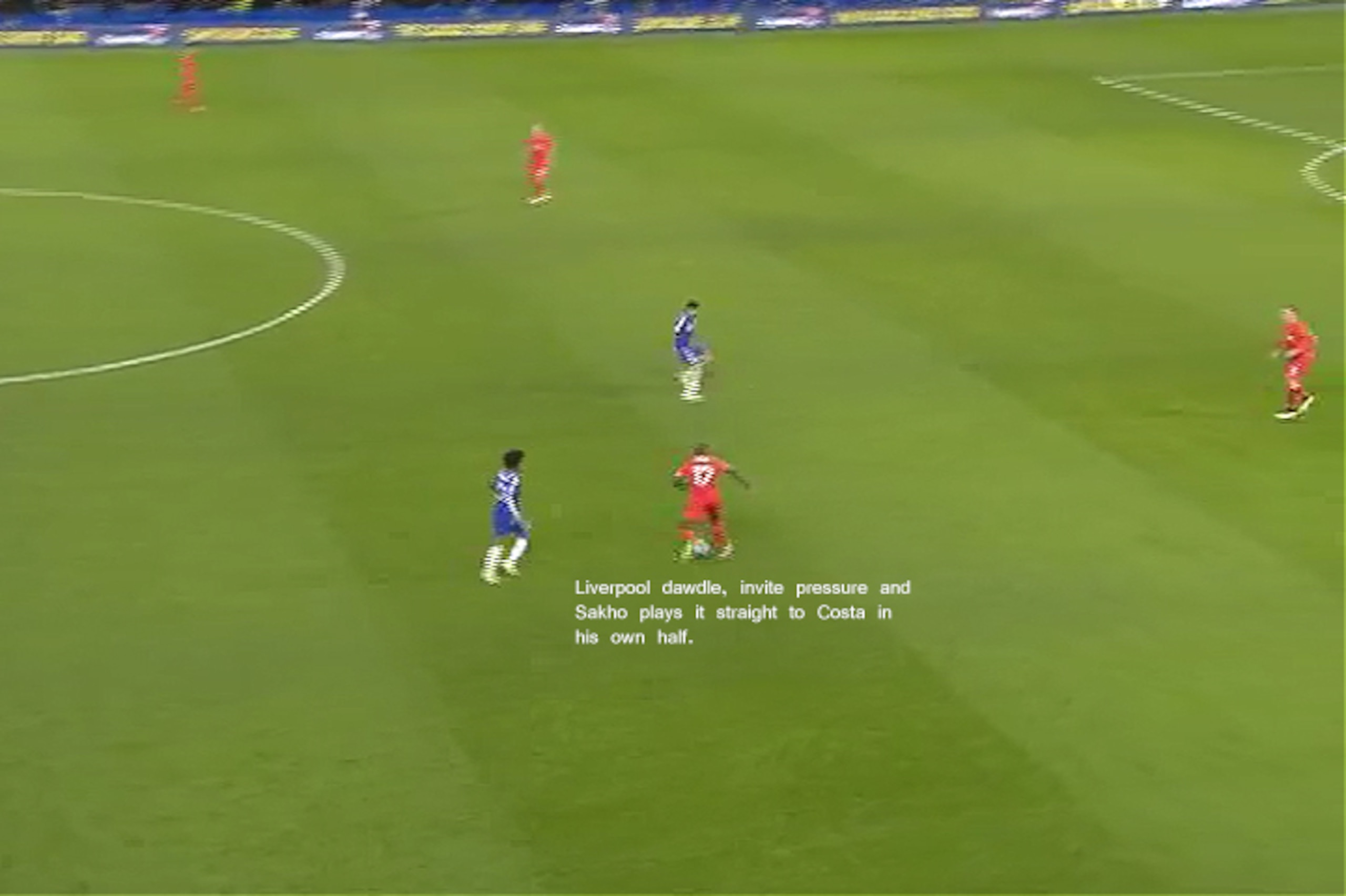
The second half started extremely slowly for Liverpool, with Chelsea getting on the front foot and applying severe pressure. the Reds made life hard for themselves in their own third; they invited pressure by playing poor hospital passes and allowing the hosts to seize on their mistakes.
It was shortly after a truly awful pass from Sakho—resulting in a Lucas Leiva professional foul and yellow card—that Brendan Rodgers flinched and sought to switch things up. He brought on Mario Balotelli to try and provide a focal point, dropped Sterling into one of the No. 10 roles and pulled Gerrard into holding midfield.
Liverpool had fallen into the dangerous pattern of pulling nine back, defending the box and seeking to release Sterling on the counter-attack with one pass. They found him a few times—both Moreno and Coutinho slid excellent balls into his path—but he was always confronted by three, including the pacy Kurt Zouma, and never managed to thrash out a legitimate chance on goal.
Balotelli was supposed to help hold the ball, allow his team to creep up the pitch and start attacks. It worked to a slight extent, but he never truly held onto it long enough to be considered a success in this "relief" role.
5. Organised Chaos
Both teams stretched for the win late on but had to settle for extra time. Despite the brilliance of Coutinho between the lines and Hazard on the counter, both Belgian goalkeepers were able to deny a peppering of shots in two fine individual performances.
An Ivanovic header from a set piece broke the deadlock and forced Rodgers to go all-out in the second half of extra-time, but his formation choice and team layout proved very, very odd.
The key point here is that he had to go for the win, so risks and gambles are necessary. But taking off Moreno for Rickie Lambert was a strange move, as rather than move someone else into the left-back spot, Liverpool essentially played without one.
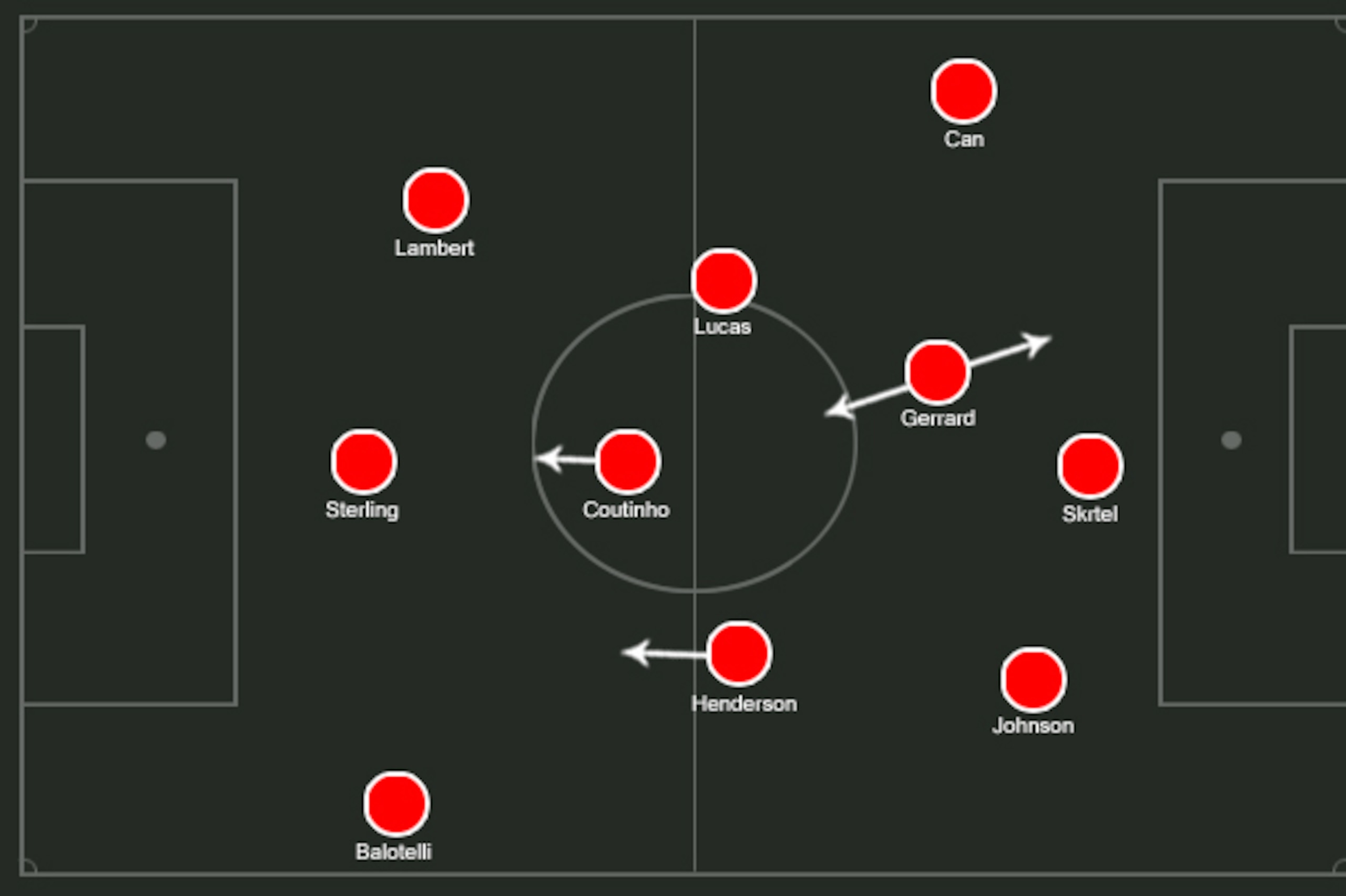
Lambert played wide right-ish, Balotelli went wide left and Sterling, for some reason, moved back to a more central role despite tormenting Chelsea from a left-sided No. 10 role following the introduction of his Italian colleague in the second half.
The Reds finished with Glen Johnson as a left-sided centre-back, Emre Can at right-back, Lambert and Balotelli on the wing and Gerrard sort of straddling a half-back role. Yes, times were desperate, but that setup screams of panic mode when it really was not necessary.
Meanwhile, Mourinho instructed his four defenders to never cross the halfway line and let his midfield runners keep the ball. With no left-back in place, Ramires, a replacement for Cesc Fabregas, ran through clear on goal in extra time, but a lack of composure stopped him from icing the game.






