

Ranking the Biggest Upsets at the 2015 Australian Open
Drama has defined the last two weeks Down Under.
Aussie crowds and spectators all over the world have enjoyed thrilling tennis and epic matches at the season's first major. But upsets have rocked both the men's and women's fields and changed the trajectory of the tournament.
The men's side saw its most illustrious champion fall early in a puzzling defeat to a journeyman Italian. Even the third-ranked player in the world was left to scratch his head after a comprehensive loss to a former punching bag in the quarterfinals.
Eight of the seeded women fell on just the opening day, including a former Grand Slam champion who was out for redemption and a fellow top-10 player. Later on, an American teenager earned her breakthrough win over a two-time Wimbledon champion.
From shocking victories by heavy underdogs to career-altering triumphs by embattled players, here are the five biggest upsets at the 2015 Australian Open. As the finish line approaches in Melbourne, there's sure to be plenty more intrigue left.
Honorable Mentions
1 of 6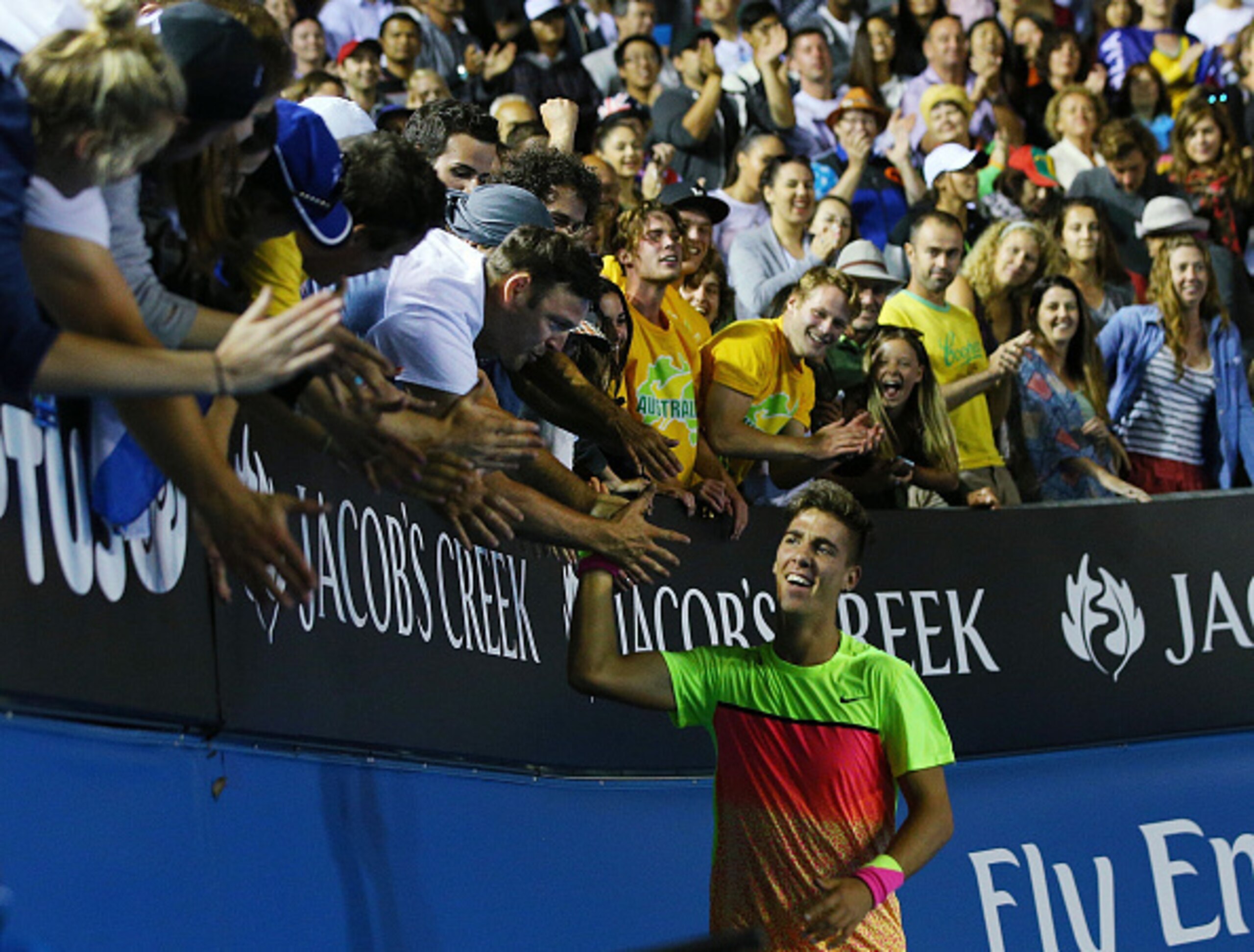
Thanasi Kokkinakis defeats Ernests Gulbis
Is there a more Jekyll-and-Hyde player than Ernests Gulbis?
The Latvian is capable of reaching extreme peaks—like his fourth-round takedown of Roger Federer at last year's French Open. But he's also prone to maddening defeats and sudden turns of his volatile temper.
Gulbis sunk into one of those valleys in Melbourne, dropping his opening-round match 7-5, 0-6, 6-1, 6-7 (2), 6-8 to Australian teenager Thanasi Kokkinakis.
Kokkinakis thwarted Gulbis after the first set, losing only seven points in the second stanza. As the intensity of the match amplified, the 13th-ranked Gulbis lost his temper and the match as the home crowd cheered on a native underdog.
Coco Vandeweghe defeats Samantha Stosur
Another Australian hopeful didn't find the same stirring result at home.
Samantha Stosur, the 2011 U.S. Open champion, continued her dismal history at the Australian Open with a 4-6, 4-6 second-round loss to 37th-ranked Coco Vandeweghe.
Vandeweghe had never won a main-draw match in Melbourne before this year, but she looked like the more-experienced woman in dispatching Stosur. The American played a clean match, serving 11 aces to just one double fault, and she hit 29 winners against 16 unforced errors.
For Stosur, the defeat continued her Grand Slam slump, as the Australian hasn't advanced past the fourth round of a major since the 2012 U.S. Open. Though Vandeweghe went on to lose in the next round, the win over Stosur is the most significant one of her young career.
Madison Brengle defeats Andrea Petkovic
The young American women had a knack for delivering upsets Down Under this year.
Madison Brengle, ranked 64th in the world, shocked 13th-seeded Andrea Petkovic in the first round during a tense 5-7, 7-6 (4), 6-3 win.
The result, just Brengle's second win at a major, sent Petkovic packing and opened up that quarter of the draw. Brengle entered the match with momentum after reaching the final in Hobart. She definitely looked like a confident player against Petkovic.
Brengle approached the net a whopping 67 times and took it to Petkovic, who suffered her second straight opening-round defeat at the Australian Open. In a first round full of upsets, Petkovic's dismissal only added to the surprises.
5. Tomas Berdych Defeats Rafael Nadal
2 of 6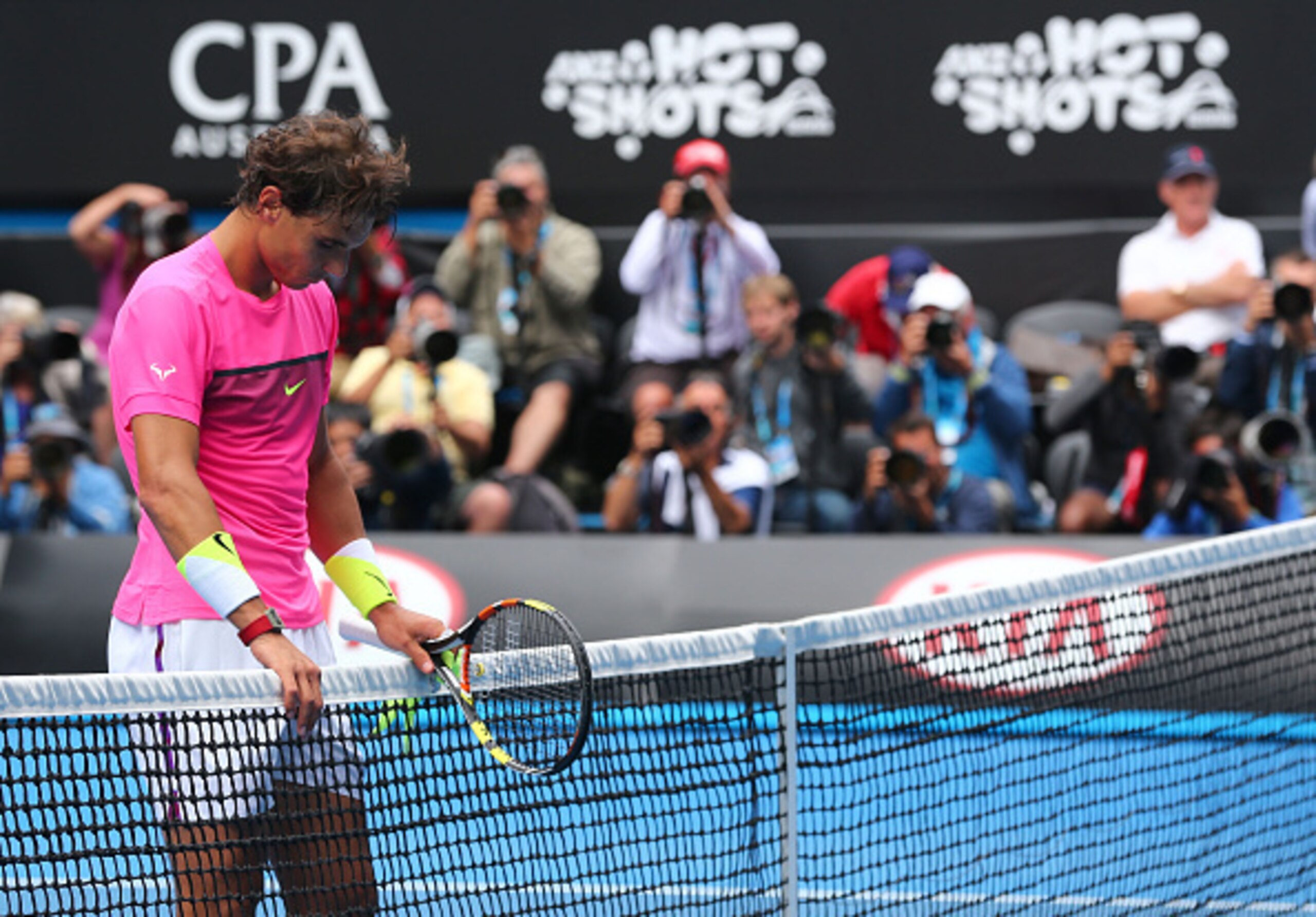
Nobody beats Tomas Berdych 18 times in a row.
Despite their close proximity to each other in the world rankings—Nadal at No. 3 and Berdych at No. 7—a wide gap existed between the two on the court. Before their meeting in the quarterfinals at this year's Australian Open, Nadal had won 18 of their previous 21 meetings, including the last 17 matches.
Berdych hadn't beaten Nadal since Madrid in 2006, a streak that included a loss in the 2010 Wimbledon final. During that eight-year-plus stretch, Berdych had only taken three sets off Nadal.
But the Czech completely turned the tables in Melbourne with a dominating 6-2, 6-0, 7-6 (5) win over Nadal.
Throw the world rankings aside. What made this match an upset was the way in which Berdych dominated Nadal.
Berdych fired 10 aces for the match and won 82 percent of his first serves against one of the all-time great returners. Nadal couldn't read his booming serve and looked flustered by his opponent's power.
On the ground, Berdych went after the Spaniard with hard cross-court backhands and monstrous forehands up the line. He kept Nadal on the defensive and kept his nerve during a tense third-set tiebreak.
Nadal, who was returning from an injury-plagued 2014 season, just seemed like a player who ran out fuel. His game was flat and lacked its normal voracity. He ceded a 0-6 set at a Grand Slam for the first time since the 2006 Wimbledon final, and Nadal couldn't find enough solutions to counter Berdych's masterful play.
After dropping the first two sets in one hour, Nadal raised his level of play in a 73-minute third set. But he failed to break Berdych even once for the match, and the Spaniard watched as his brief hopes of a comeback slipped away in that final-set tiebreak.
While Nadal left Australia with more questions about his form, Berdych earned one of the signature wins of his career and kept his hopes for a maiden Grand Slam alive.
4. Irina-Camelia Begu Defeats Angelique Kerber
3 of 6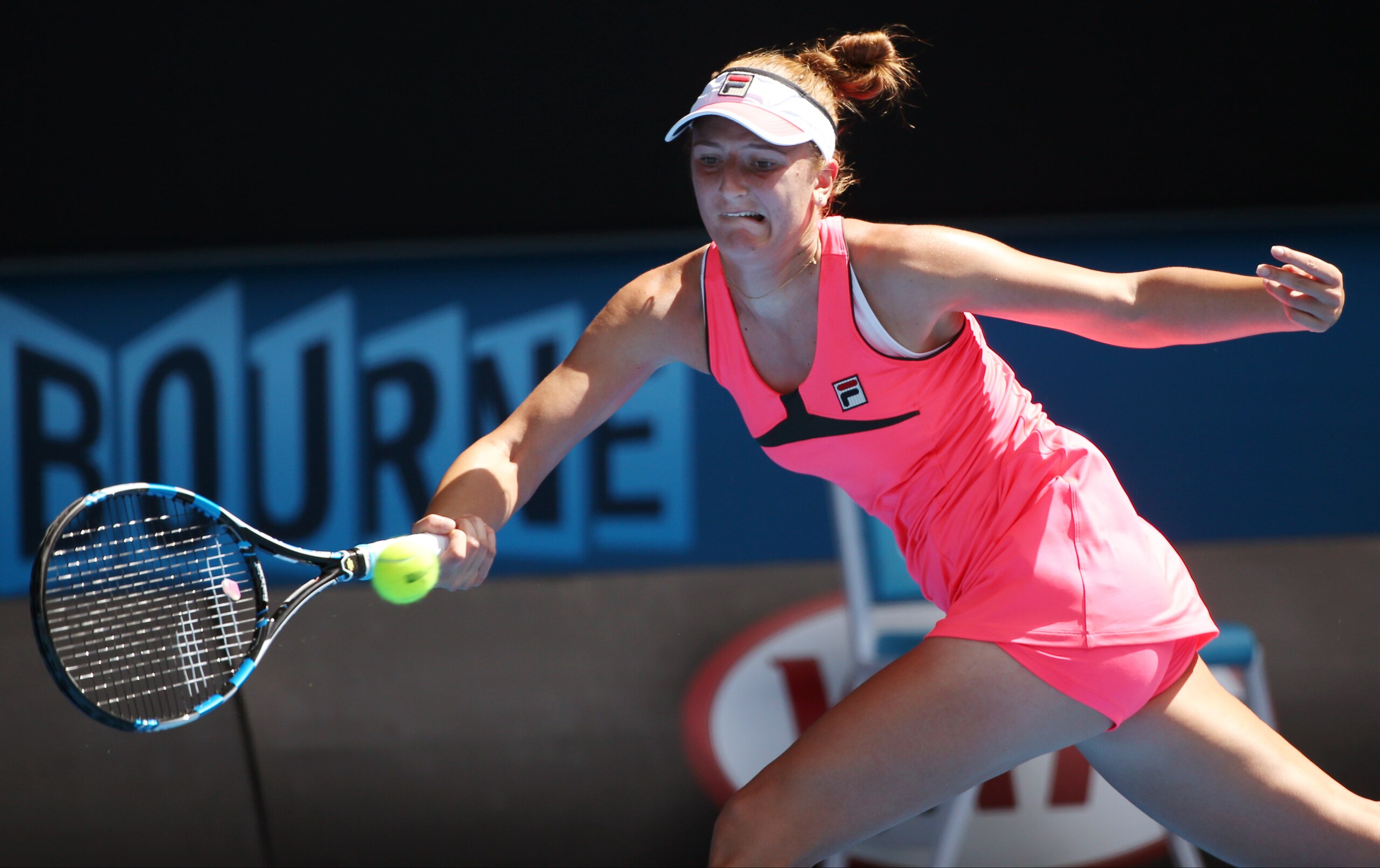
Angelique Kerber has yet to find much joy at the Happy Slam. In six previous tries Down Under, the ninth-ranked player had failed to advance past the fourth round. That theme continued this year.
Kerber ran into a Romanian buzz saw named Irina-Camelia Begu in the first round and lost 4-6, 6-0, 1-6. The match featured plenty of twists and turns.
Begu, the 42nd-ranked player in the world, stole the first set after a sloppy display from Kerber resulted in two winners and 17 unforced errors. But the German turned momentum around in the next set by bageling Begu in 32 minutes.
One final plot twist was in store when Begu rebounded to win the third set 6-1. She returned to the aggressive tennis that carried her in the first set and went after Kerber with reckless abandon.
For the match, Kerber committed 35 errors compared to just eight winners. Her helter-skelter play resulted in her earliest exit from a major since Wimbledon in 2011 and further highlighted an opening day full of upsets on the women's side.
.jpg?w=2560 "Seahawks Chiefs Football")

3. Madison Keys Defeats Petra Kvitova
4 of 6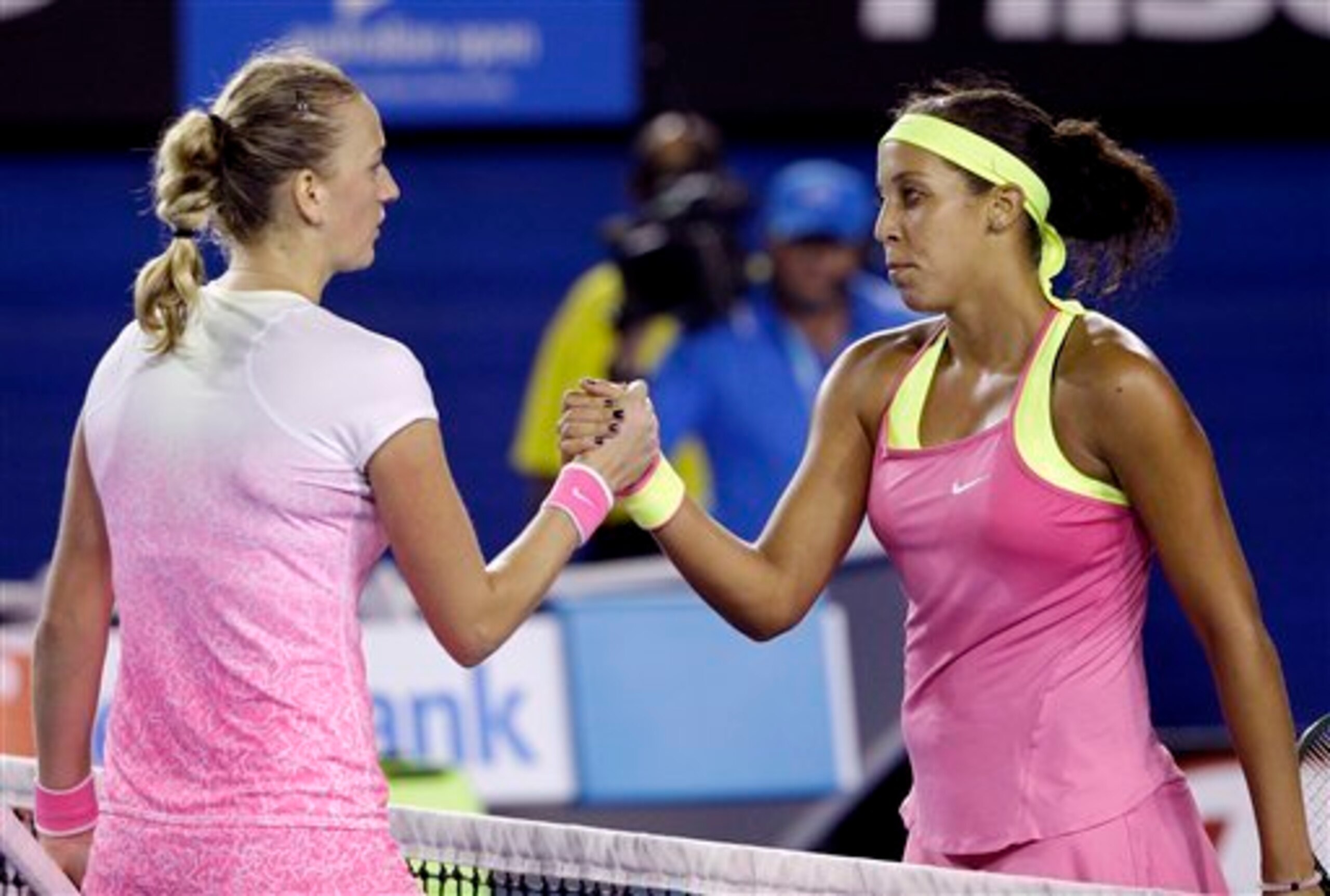
Based on talent, not much separates Petra Kvitova and Madison Keys. Their resumes, however, are far different.
Kvitova, a two-time Wimbledon champion and the fourth-ranked player, has found plenty of success in majors over the last few years. She dedicated herself in the offseason to improving her fitness and was poised to make a run at her first Australian Open title.
After making quick work of her first two opponents, Kvitova looked ready for a long stay in Melbourne. Standing in her way during the third round was 19-year-old Madison Keys.
Keys played with a sense of calm far beyond her years and wasn't overwhelmed by the moment. Her huge serve and even bigger forehand made Kvitova pay, and the American scored a 6-4, 7-5 win.
Not many players can withstand Kvitova's barrage of power. Keys not only stood up to her but gave the Czech a dose of her own medicine. Keys' baseline prowess put Kvitova on the constant defensive and earned her the opening set in just 36 minutes.
She went after Kvitova's serve in the first set with aggressive returns and continued that strategy in the second set. It took until the 11th game for Keys to earn the decisive break, and she held on to serve out the match.
As a frustrated Kvitova left the court, fans were left to congratulate Keys for her breakthrough performance. If Keys continues to play at this level, it won't be long before she becomes a household name and wins her own share of Grand Slams.
2. Lucie Hradecka Defeats Ana Ivanovic
5 of 6
At the start of the season, Ana Ivanovic laid out her intentions to return to No. 1 in the world. After a resurgent 2014 in which she won 58 matches and four titles, that goal didn't sound unrealistic.
But she suffered a major setback in Australia, losing 6-1, 3-6, 2-6 in the opening round to Lucie Hradecka.
Ivanovic opened the match in total control, capturing the first set in only 21 minutes with an efficient display. At that point, Hradecka looked totally overwhelmed, committing 13 unforced errors to just three winners.
In the second set, the complexion of the match changed completely. Ivanovic's game went haywire, and she drowned in a sea of off-target shots. Her serve also fell apart, as the double faults piled up.
Hradecka, a qualifier ranked No. 142, put constant pressure on her opponent in the final two sets and attacked the net with vigor. Ivanovic had no answer for her aggressive tactics and wilted under the pressure.
For Ivanovic, the loss continues her Grand Slam spiral. The Serbian hasn't advanced past the quarterfinals of a major since her win at the 2008 French Open. Based on her effort against the unheralded Hradecka, that streak may not end anytime soon.
1. Andreas Seppi Defeats Roger Federer
6 of 6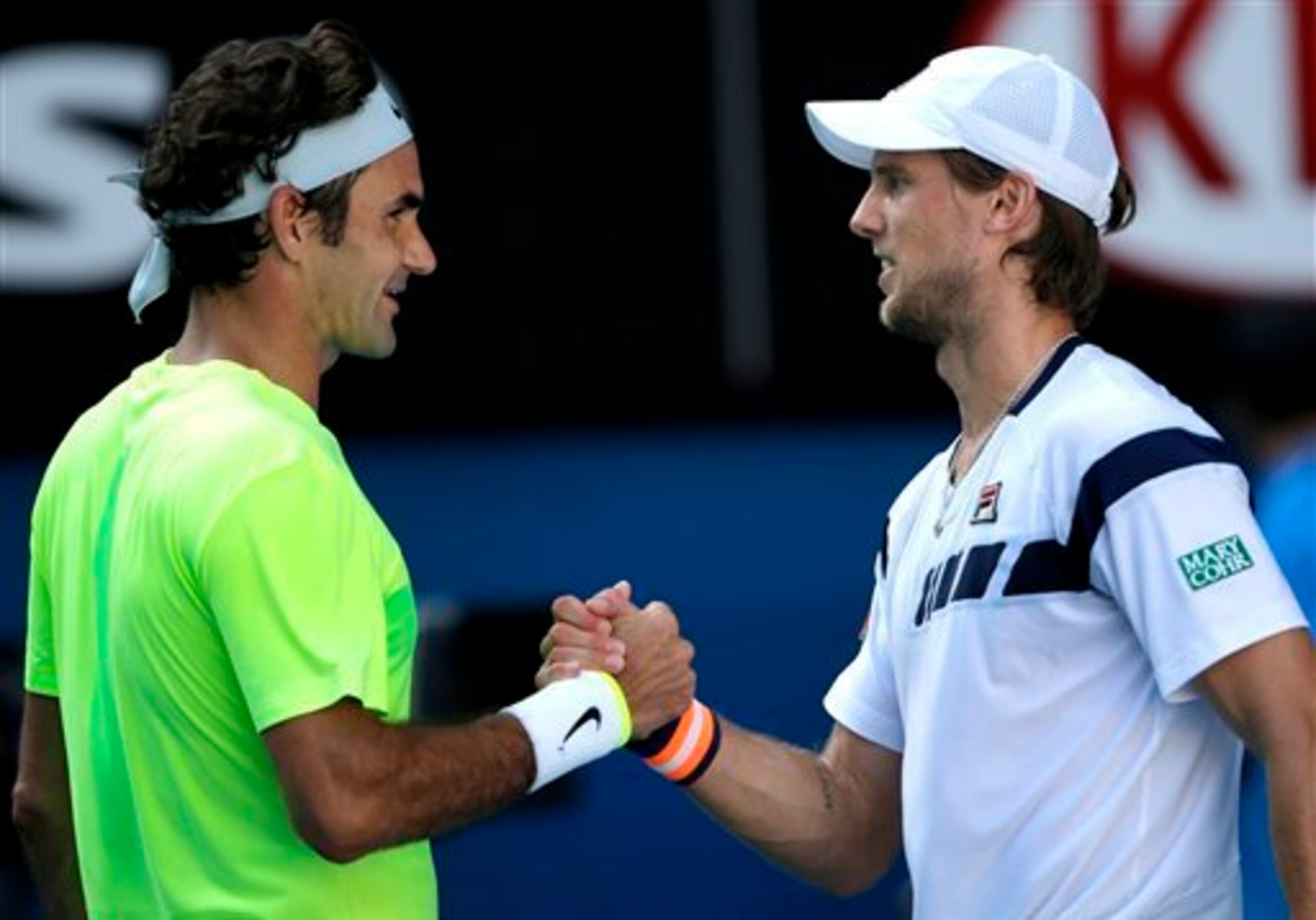
Roger Federer looked set to make another deep run in Melbourne and challenge for his fifth Australian Open title. And then he stumbled into Andreas Seppi.
Seppi, ranked No. 46 in the world, shocked Federer in a 6-4, 7-6 (5), 4-6, 7-6 (5) third-round victory and changed the course of the tournament.
The Italian pestered Federer all match from the baseline, leaving his Swiss foe scrambling helplessly. Federer too often seemed a step slow, and his shots lacked their usual depth and pace. Errors flowed like a geyser from his racket, while Seppi continued to hammer away with consistent shot-making and aggression.
Federer couldn't find much rhythm in the first two sets. He started to turn momentum around by winning the third set, but his play in the fourth-set tiebreak wasn't crisp enough to extend the match.
For Seppi, the result marks the most important win of his career and the first time in 11 tries he's been able to thwart Federer. He had only captured one set in their previous 10 meetings. On the other side of the net, the loss is one of Federer's most disappointing and his earliest exit from Melbourne since 2001.
With his victory, Seppi not only scored the biggest upset of the tournament but opened up the bottom half of the men's draw and further chipped away at the Big Four's once-invincible aura.
All statistics are courtesy of ATPWorldTour.com and WTATennis.com unless otherwise noted.
Joe Kennard is a Featured Columnist for Bleacher Report.





.jpg?w=2560 "Raiders Sticking with Cousins")