
1. Baseball Will Look Vastly Different Next Week
You can neither undersell nor underestimate the seismic power shift that occurs Monday when Rob Manfred officially succeeds Bud Selig as commissioner of baseball.
The last time someone other than Selig occupied the commissioner's chair, former Red Sox pitcher Sam Malone was hanging out in a place where everybody knew his name on Cheers each week while owners were trying to forget Fay Vincent's name. Selig replaced Vincent in a power play as interim commissioner and, 22 years later, at 80, he ranks second only to Judge Kenesaw Mountain Landis (24 years) as the game's longest-tenured commissioner.



Criticize Selig all you want, but he is departing as one of the most influential figures in baseball history, and his long list of accomplishments starts with luxury tax and revenue sharing. Which has made...
2. Baseball Postseason > NFL Postseason
So, as baseball payrolls skyrocketed over the past several seasons, it is the NFL that has the perfect system by having a salary cap?
Unless, of course, you prefer watching reruns.
In the NFL, Sunday's was the fourth consecutive conference title game for the Patriots. And for the 12th consecutive season (and, 14 of the past 15 years), the AFC representative in the Super Bowl comes from the pool of Patriots, Colts, Broncos, Steelers or Ravens.
Is anybody else in the AFC even allowed to play in a Super Bowl?
The Seahawks now have made the playoffs in nine of the past 12 years.
Meantime, updating some numbers from friend and colleague Jayson Stark of ESPN.com—he does this every year—19 of the NFL's 32 franchises have not won any of the past 25 Super Bowls.
During that same 25-year stretch, 16 of baseball's 30 franchises have won at least one World Series. And it nearly was 17 of 30 had the Kansas City Royals managed to win Game 7 in October.
We are a long way from the New York Yankees' dominance from 1996-2001.
Do you prefer a sport with true parity? Then you're a hypocrite if you prefer the NFL.
3. The Selig Legacy
Let's make this clear right away: Selig's, of course, was not a perfect commissioner-ship. Far from it. History, which is his favorite subject, will not allow for un-linking him with the Steroid Era.
That said, his list of accomplishments far outweighs the negatives.
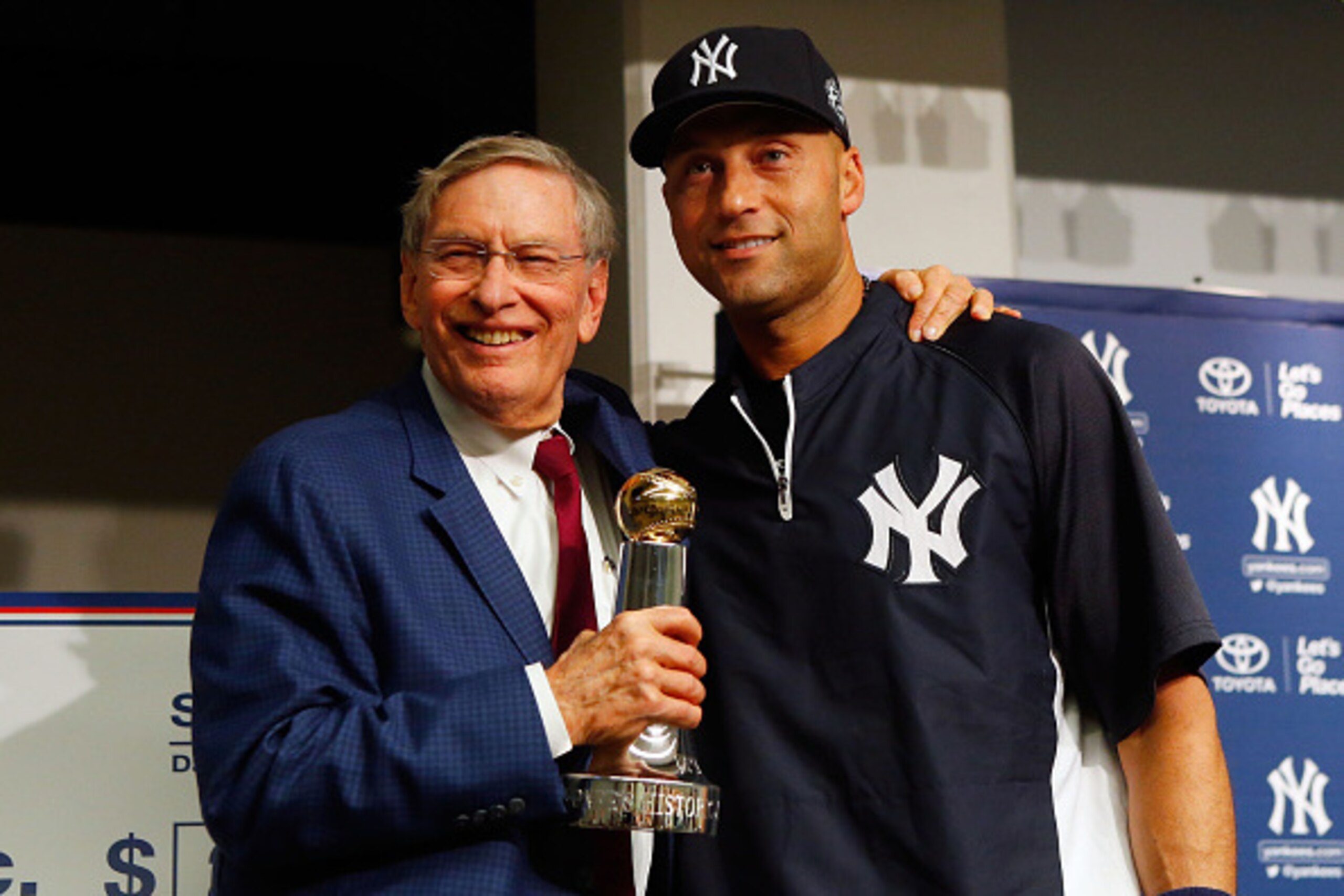
Start with the aforementioned revenue sharing and luxury tax, which was about as easy sell to the richest of the 30 owners as steak in a vegetarian restaurant. Expanded playoffs, which is a dicey subject in a tradition-laden sport such as baseball, have been terrific. Revenues, for which the owners are eternally grateful to Selig (and why he will remain commissioner emeritus for five more years at a salary of $6 million per), have ballooned to $9 billion annually.
When he replaced Vincent, they were $1.2 billion annually.
Out of the ashes of the canceled 1994 World Series and ugly strike of 1994-95 have come 21 consecutive years of labor peace. That is unprecedented in modern times. For those with short memories, go back to the days when there seemed to be a strike or a lockout every two or three years and check how disheartening, frustrating and downright silly those days were.
Realignment into three divisions in each league mostly has worked. Interleague play? I'm still not thrilled with it and think the World Series would be better if there were distinct American League and National League schedules. But a significant bloc of fans seem to enjoy it.
Two seasons ago, I spent much of a summer afternoon with Selig in his Milwaukee office, an expansive place with sweeping, panoramic views of Lake Michigan. And when I asked him about his legacy, this is what he said:
"My background, my training, my long history, I think, has served the sport well. And it has certainly served me well.
"The game will be here long after we're gone. We're lucky. We're the custodians of this generation. We should never forget that. I tell owners that all the time. So you have to do what's in the best interest of the sport. And I think for a long time baseball didn't do a lot of things because we'd never done it before."
He's right about that last part. But my favorite part, and that goes for commissioners, owners, managers, executives, players and, yes, even media: We're the custodians of this generation. We should never forget that.
4. Between-Innings break: What Do Selig and Vince Lombardi Have In Common?
You've probably heard all about how Selig, a Milwaukee homeboy and University of Wisconsin graduate, loves the Green Bay Packers.
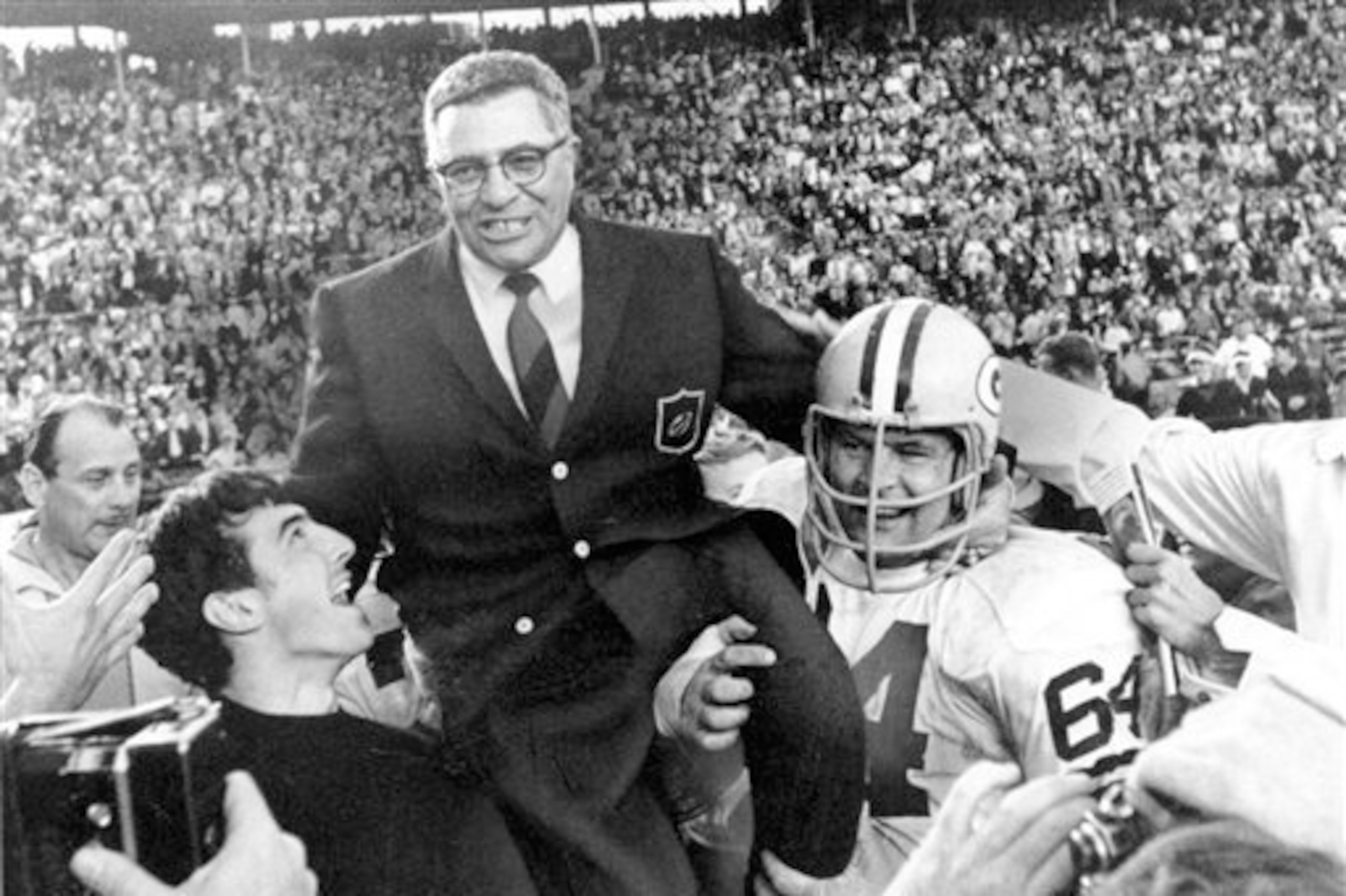
Well, how about this: When he brought the Brewers to Milwaukee in 1970, he hired Vince Lombardi's longtime secretary, Lori Keck, as his own. The two had never met before Keck's first day of work for the Brewers. Only thing she knew was that Selig had told her, "If you're good enough for Lombardi, then you're good enough for me."
"When the Brewers were losing, you didn't want to be in his path," Keck told me in 2012. "The first year I was there, the worst were the afternoon games when the team was on the road. Because he was in his office, and I was in my office.
"The first time that happened, he was impossible. I walked out of the office to the switchboard, and I sat there until the game was over."
Yet, on the flight home from St. Louis after the Brewers lost a crushing Game 7 to the St. Louis Cardinals in the 1982 World Series, Keck said, it was Selig who walked up and down the aisle making sure crying Brewers staffers were all right.
"He has the ability to know what each person needs," Keck said. "In that way, Vince Lombardi was the same. I always said that Lombardi was 75 percent psychologist and 25 percent coach. Selig has the ability to discern what the person needs and to see into the future. He's seen what baseball needs and he's very tenacious about it. And he follows through until it's done."
5. Jackie Robinson and Social Issues

Here we are in 2015, still unable to completely get over the racial divide in the United States of America. Trayvon Martin. I can't breathe. Ferguson, Missouri. Oscar nominations are announced for 2015 and not one single black actor, actress or director is named.
One of the best things baseball does is annually blow out Jackie Robinson Day. Under Selig's leadership, the anniversary of Robinson breaking the color barrier has become a national holiday within the game each April 15.

He speaks often of baseball as a social institution, and every word of that is true. When Robinson broke the game's color barrier in 1947, it was a full 17 years before the Civil Rights Act of 1964 and 18 years before the Voting Rights Act of 1965. Nearly two full decades! For a brief history lesson of how even in the early 1960s life was intolerable for blacks, go to your local theater and see the excellent movie Selma (which is nominated for Best Picture, yet David Oyelowo was passed over in the Best Actor category).
Baseball can and should carry the Jackie Robinson torch with pride. It was Selig who ordered that the No. 42 be retired by every team in 1997. From that emerged the modern ritual of every single player on every single team wearing the No. 42 each Jackie Robinson Day. We should never forget. And baseball, to its credit, is not going to let us anytime soon.
6. The Steroid Era
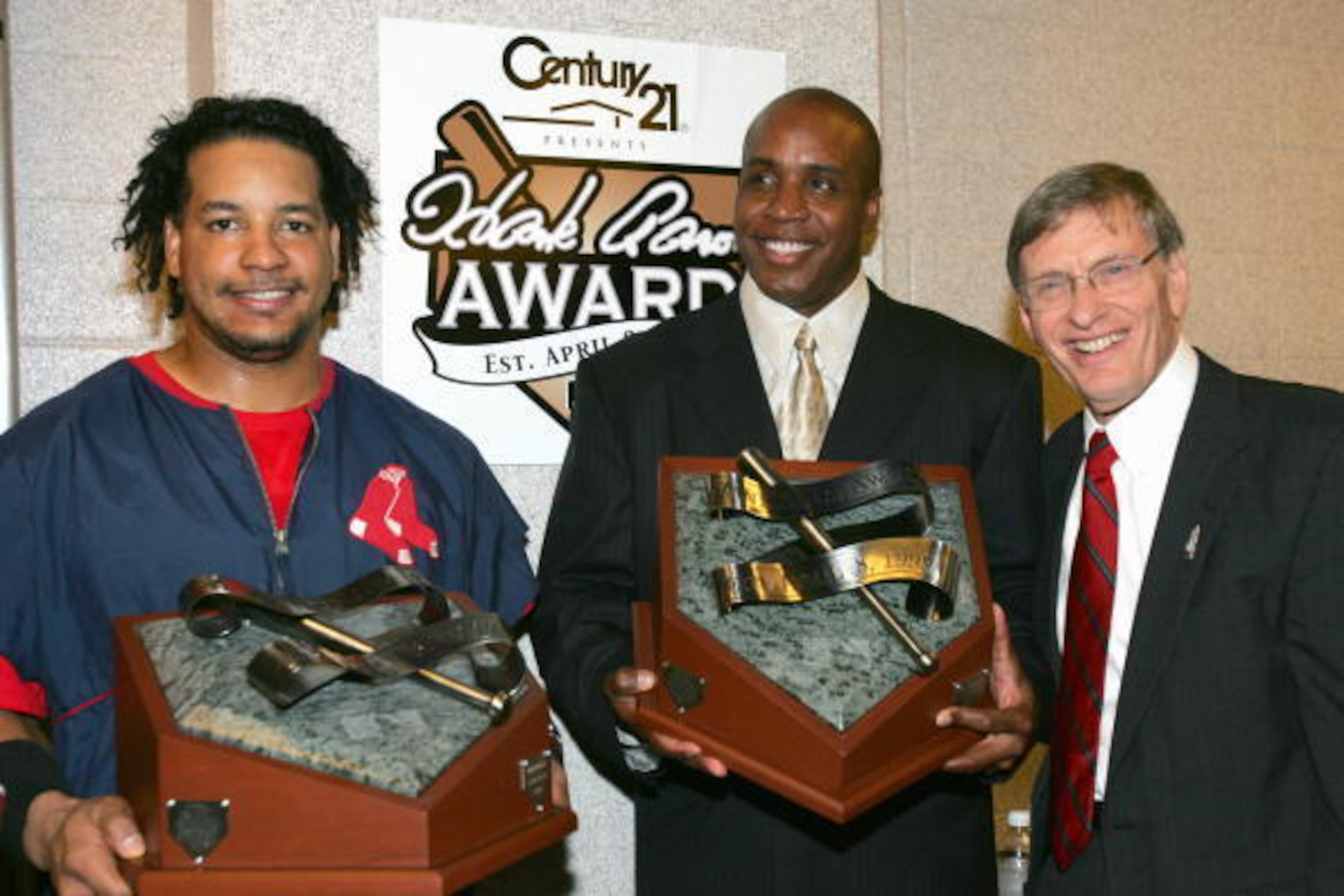
The permanent stain on Selig's permanent record. Those pesky history books will forever show, in the moments after Barry Bonds slammed record-breaking home run No. 756 to blow past Hank Aaron on the all-time home run chart, photos of a commissioner with a furrowed brow and his hands jammed into his pockets.
Yes, Selig was in San Francisco on that night. Yes, he did what a commissioner should do by appearing. And no, he was not happy about it.
It was one of the most awkward nights in baseball history. Selig and Aaron are longtime best friends dating back to their Milwaukee days. Bonds clearly had more 'roids inside of him than your favorite neighborhood black market performance-enhancing drug shop. Everyone by that point knew what they were watching was, to a large degree, as phony as looking into a fun-house mirror.
Yes, Selig and the game's owners should have moved more swiftly, perhaps taking the draconian step of shutting down the game again when the Don Fehr-led players' union stonewalled for many years every attempt to test for PEDs. In the aftermath of the '94-95 strike, would that have been a death blow to the game? Almost certainly not. But the post-strike bleeding had only recently stopped.
Today, baseball has by far the strongest PED-testing program of any major professional sport. Yes, it nearly took an act of Congress to send the game in that direction (it certainly took congressional hearings in 2005). And yes, by that point some of the game's most cherished records had become twisted to cartoon-like proportions.
But let's also remember that in attempting to make things right, Selig went against many of his closest advisors in ordering the Mitchell Report in an honest effort to do the right thing, establish a historical record and move toward transparency. Fair is fair.
7. Between-Innings Break: Bud Selig's Passion
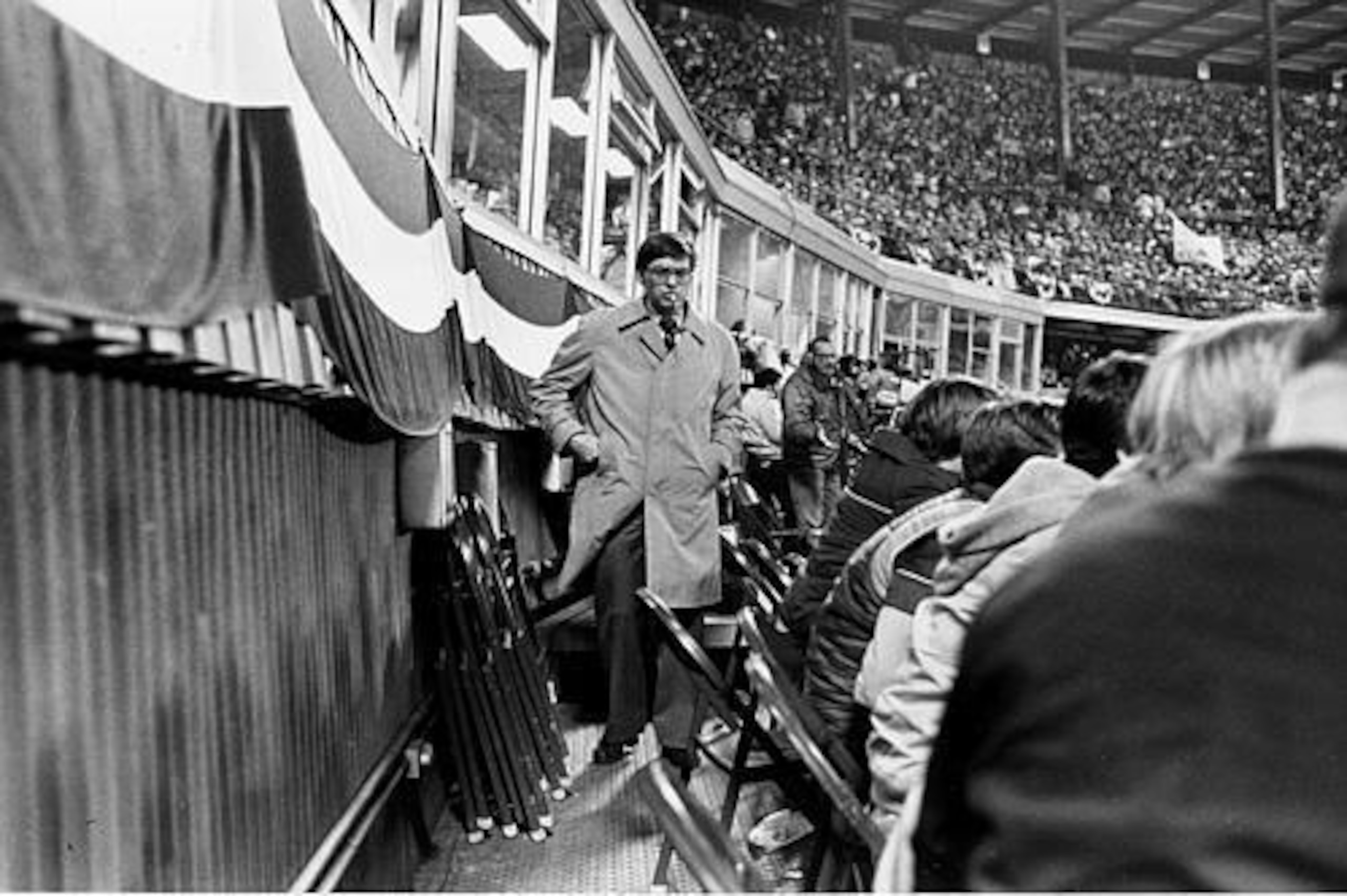
Whether he's made decisions you've loved or decisions you've hated, I submit this: No other commissioner has such an honest and genuine love for his sport as does Selig, and it is unlikely one will anytime soon.
This isn't a slick corporate executive more loyal to the suit than to the sport.

"When he owned the Brewers, he was absolutely nuts," White Sox owner Jerry Reinsdorf told me during a conversation in Chicago a couple of seasons ago. "Watching a game with him was really something. He was into every game. Every pitch.
"When a game was tense, he'd hide behind a pole because he couldn't bear to watch it live."
True story. And every so often, when he could no longer take it, Selig would emerge from behind one of those poles spewing dragon-like fire. Like the time owner George Steinbrenner was with Selig when the Yankees were crushing the Brewers.
"He was very quiet one day and I was brutal," Selig told me. "And he said, 'Selig, the world thinks you're a nice guy and I'm a terrible so-and-so. This isn't right. Listen to you. If I said half the stuff you've said, I'd get killed.'
"And he was right. I couldn't argue with him.
"But one thing I've always said: "If you don't have a passion for your sport, or your team, you shouldn't be in it. That's true for commissioners, too."
Said Reindsorf: "If you know Bud Selig, you have to like him. You cannot dislike him if you know him."
8. This Won't Make Cubs Fans Happy
In his final days, Selig is on a whirlwind tour, so I'm going to list a couple of recent notable stops:
In St. Louis at that city's Baseball Writers' Association of America dinner the other night, Selig told the audience that "you are the best baseball town in America, and there is no doubt about it."
And at the Professional Scouts' Foundation Dinner on Saturday night in Los Angeles, one of the highlights of baseball's Hot Stove circuit, several baseball luminaries offered these words to the outgoing commissioner:
9. Last Ups
Something else Selig gets credit for: Bob Uecker's broadcasting career (and c'mon now, even if you don't like Selig, you have to give him props for this).
Uecker had been retired for three seasons after finishing his career with the Atlanta Braves in 1967. Uecker wanted to go into broadcasting, but because there were no vacancies in the Milwaukee Brewers' broadcast booth upon their move from Seattle in 1970, Selig hired Uecker as a scout. It is a trait that has served Selig well through the years: Place good people in strategic spots so they will be around when he needs them.
Speaking at another testimonial dinner recently, here's Uecker, our closer on the subject:
Scott Miller covers Major League Baseball as a national columnist for Bleacher Report. He has over two decades of experience covering MLB, including 14 years as a national baseball columnist at CBSSports.com.
Follow Scott on Twitter and talk baseball @ScottMillerBbl.
.jpg?w=2560 "Chiefs, Steelers Eye WR Trades")