

Roger Federer's Keys to Win the 2015 Australian Open
Roger Federer has been on quite a roll the last few months.
He won Shanghai and Basel last fall before completing one of the signature victories of his career: Switzerland's first Davis Cup title.
That hot streak has carried over into the start of the 2015 season. Last week, Federer clinched the Brisbane championship after a demolition of Grigor Dimitrov in the semifinals and a tense win over Milos Raonic in the final.
He'll start the Australian Open with enough confidence to complete a main goal: end his Grand Slam slump.
Over two years have passed since Federer's last major triumph at the 2012 Wimbledon tournament. As speculation grows about whether he can win another one, his rival Rafael Nadal slowly creeps up on his Slam record.
But with Nadal coming back from a series of injuries and other rivals facing their own questions, now is the opportune time for Federer to win another major.
Here are some strategic and tactical keys for Federer. Success in these areas will give him a great chance to win the 2015 Australian Open and add to his collection of major titles.
Keep Matches in the First Week Short
1 of 5
At 33 years old, Roger Federer is considered ancient by tennis standards.
He sure doesn't play like an old man.
Despite being in his early 30s, Federer still glides around the court effortlessly and seems to enjoy the game more than ever. He plays a style of tennis that's less punishing on the body, allowing him to stay relatively healthy throughout the long season. Still, even Federer can't avoid the injury bug.
Federer's back has occasionally troubled him during his career, and it flared up during the World Tour Finals. He had to concede the title to Novak Djokovic and nearly missed Switzerland's Davis Cup Final matchup with France.
His title last week in Brisbane shows he's recovered, but he'll need to monitor his back in Australia. That's why it's crucial for him to advance though the first week efficiently.
If Federer can win his first few matches with a minimal amount of dropped sets, he won't have to expend as much energy and can reduce the strain on his back. Reducing his time on the court in the oppressive Melbourne heat during the first week will help him in the latter stages of the tournament.
Maintain High First-Serve Percentage
2 of 5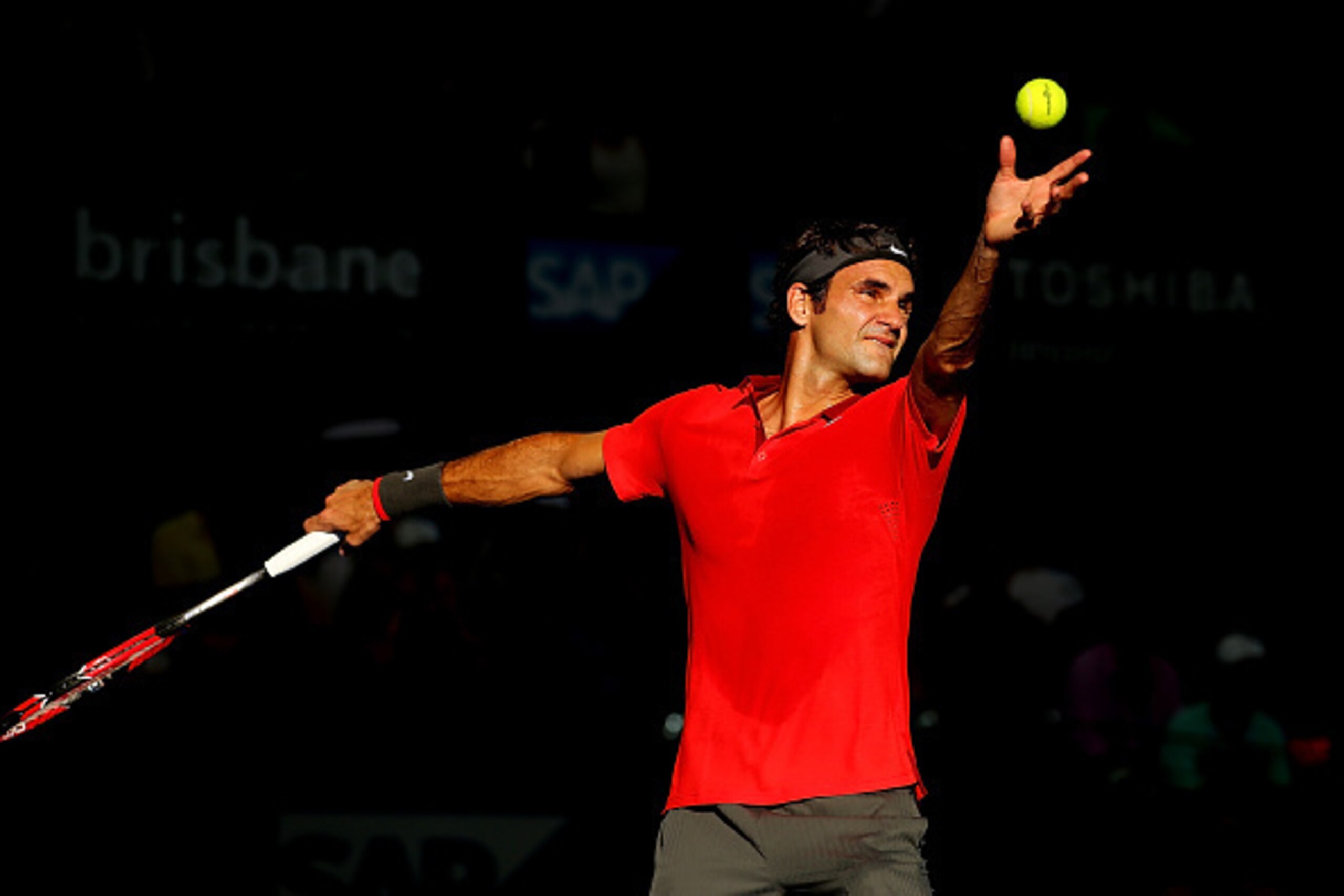
The Roger Federer serve is like a work of art when it's clicking.
He flusters opponents not with overpowering heat but rather with pinpoint accuracy and calm under pressure. Whether it's a kick serve out wide or an ace up the middle, Federer paints service lines like Monet painted canvasses.
The first serve is a critical shot for any tennis player. You have more margin for error and can go for more on the shot when not worrying about a double fault. For Federer, his ability to make first serves can carry him to the title—or be his undoing.
Federer ranked 17th last season in first-serve percentage (64 percent). While still a respectable number, just a few extra percentage points could've carried him to more titles.
In his wins over Novak Djokovic in Monte Carlo and Shanghai last year, Federer made 70 percent of his first serves each match. When he lost to Djokovic in the Wimbledon finals, he was at 69 percent.
That's his magic number for first serves: 70 percent. If he can stay near or above that mark, he'll be extremely tough to beat. The more first serves he successfully hits, the better position he'll be in to take control of rallies.
Defend Second Serve
3 of 5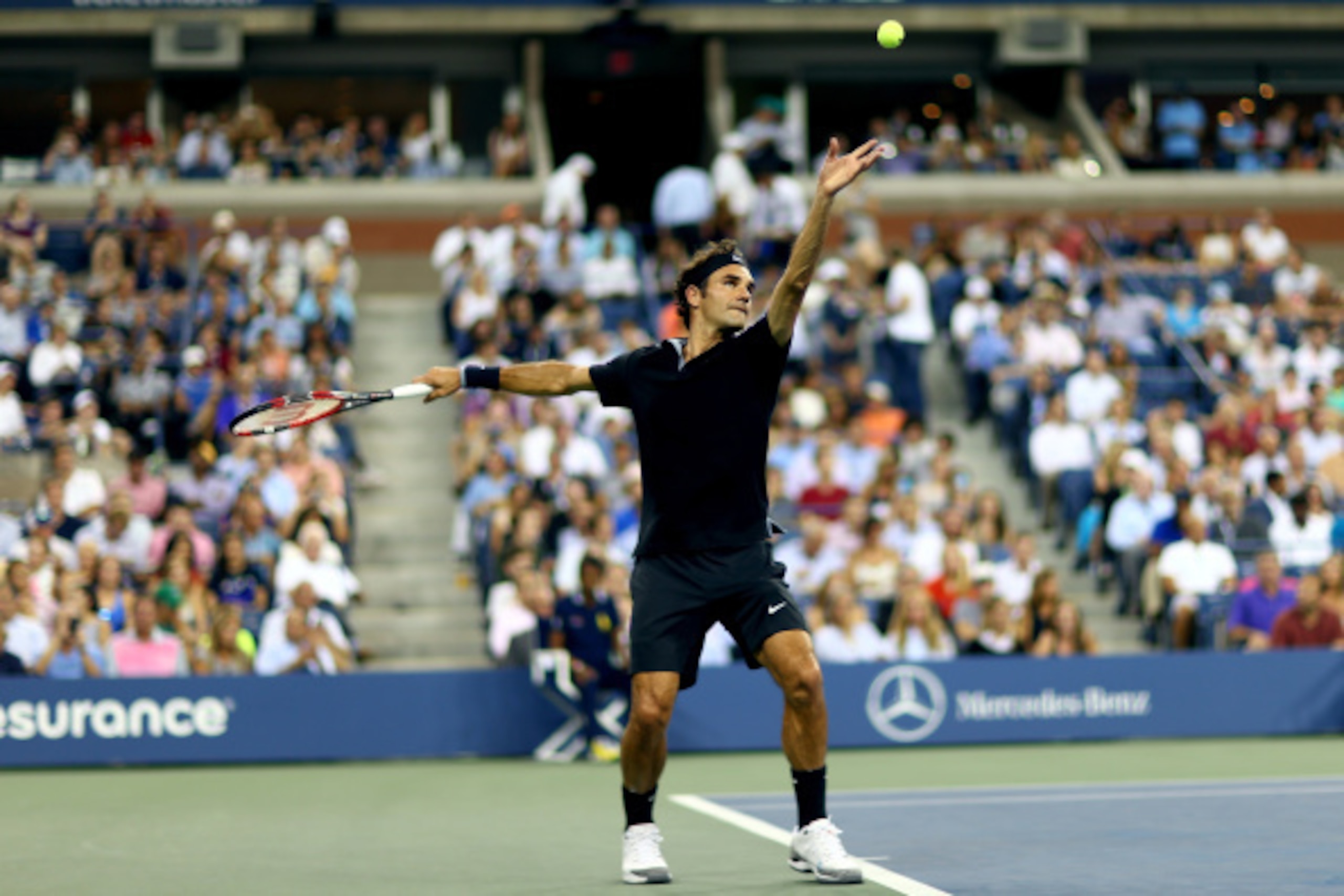
When Roger Federer's first-serve percentage does start to dip, it's crucial for him to back up his second serve.
Winning more than 55 percent of those shots is a good barometer for Federer. The Swiss led the ATP World Tour last year by defending an astounding 58 percent of his second serves. Even when his first serve was off, Federer was able to hang tough and win a high percentage of service points.
But when that number dropped during matches, he had trouble.
In the 2014 Australian Open semifinals, Federer only made 50 percent of his second serves in a straight-sets loss to Rafael Nadal. He again failed to surpass that mark in a fourth-round defeat at the French Open to Ernests Gulbis.
Not surprisingly, Federer successfully defended just half of his second serves in his U.S. Open semifinals loss to Marin Cilic.
Federer thrives when he converts above 55 percent of his second serves. He's obviously winning more points, which takes away break opportunities from his opponents.
If Federer struggles during the Australian Open to make first serves, knowing he can rely on his second serve will be a huge confidence boost.
.jpg?w=2560 "Seahawks Chiefs Football")

Convert Break Points
4 of 5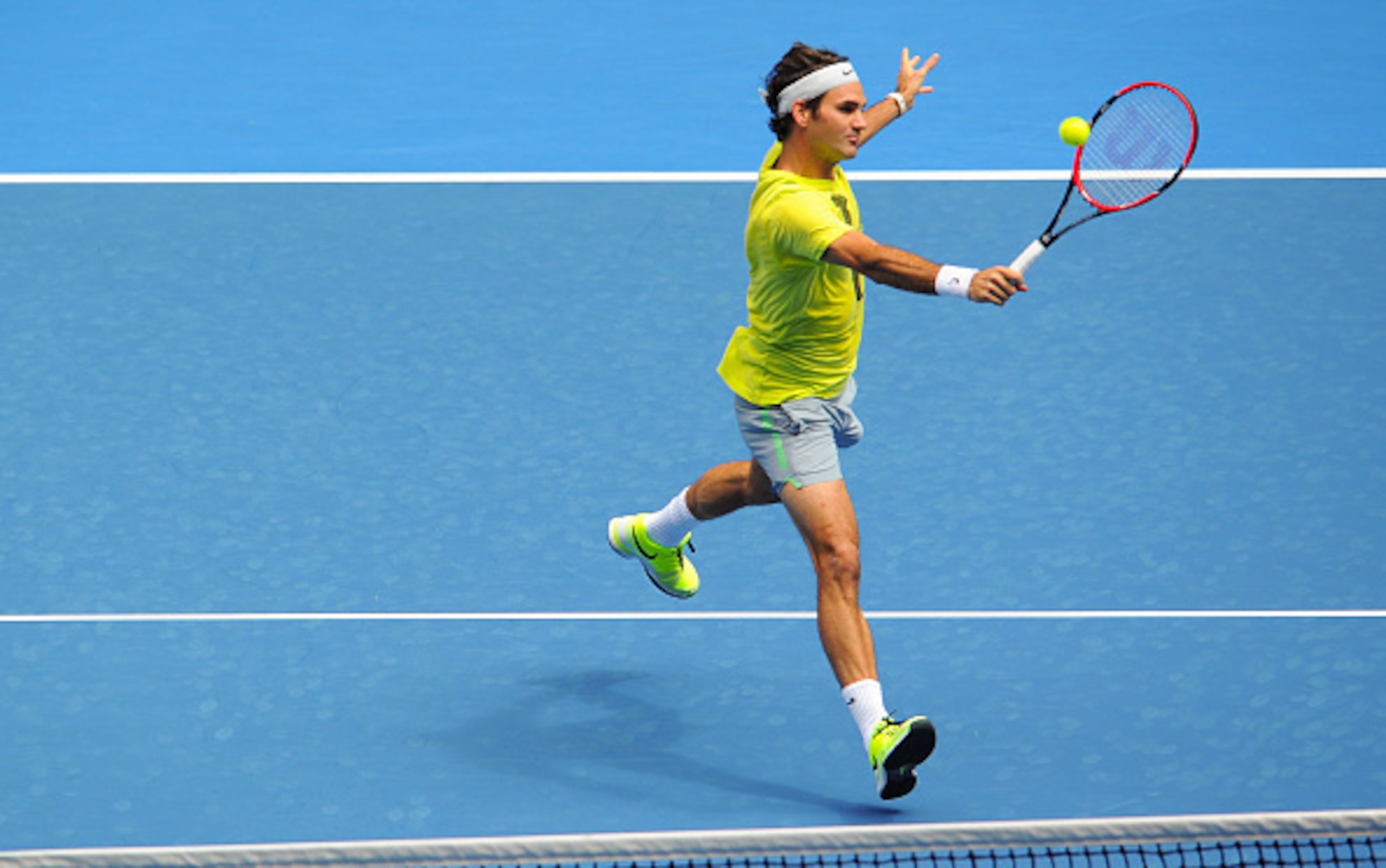
To keep pace with his rivals, it's imperative for Roger Federer to make the most of the break points he sees.
In 2014, Federer converted 39 percent of his break-point chances, which ranked 24th on the ATP World Tour. By comparison, Rafael Nadal (48 percent) and Novak Djokovic (45 percent) were the top players in the same category.
Too often in big matches, Federer wilts in break situations. Opponents usually pick on his one-handed backhand, which results in many netted returns and short balls.
Federer is at his best when's he's aggressive with the return. Hitting over backhands, running around them in the ad court to hit forehands or even performing a well-timed chip-and-charge should be his go-to options.
He can't get passive with break-point opportunities. Federer has to attack them and be more efficient. In turn, he'll be able to serve with much less pressure and turn it back on his opponents.
If Federer converts a high percentage of his break points, he'll put himself in excellent position to win the Australian Open.
Come to Net
5 of 5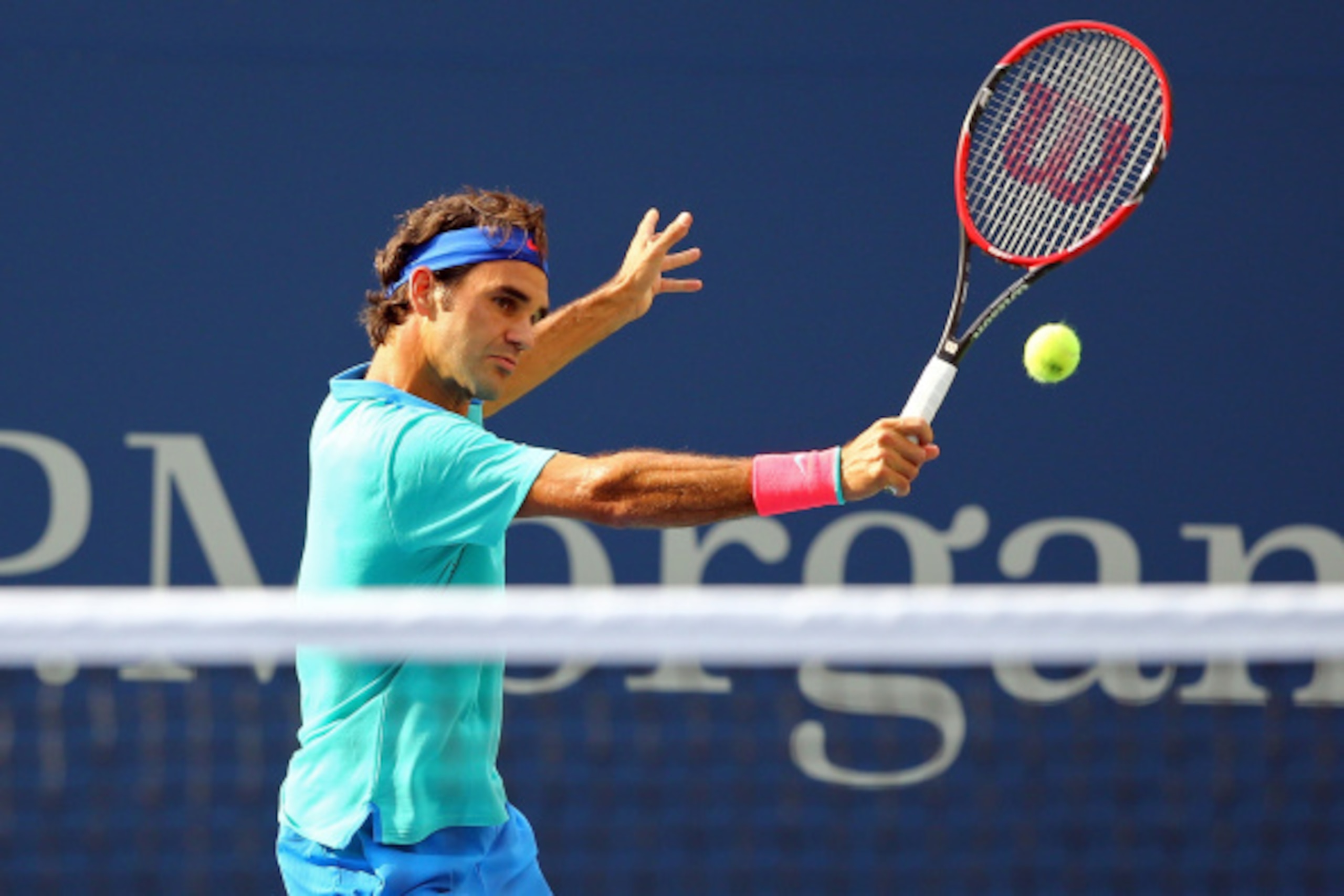
A return to attacking the net with regularity paid huge dividends in 2014 for Roger Federer.
It's no coincidence his resurgence on the court came with a renewed aggression. Under the aid of coach and former Grand Slam champion Stefan Edberg, Federer recommitted himself to the brand of tennis that carried him to so much success in his younger days.
As Peter Bodo wrote last year for ESPN: "Federer is a different, better player than he was at the start of this year, and a lot of the credit for that goes to that iconic exponent of the serve-and-volley game, Edberg."
With Edberg in tow, Federer not only made serving-and-volleying a primary tactic again, but he also started to chip-and-charge more during rallies. He took initiative and put pressure back on his opponents.
During a huge win over Novak Djokovic in Shanghai, Federer approached the net 48 times in two sets. That relentlessness kept the Serbian on his heels and carried Federer to an easy victory.
Coming to net serves many purposes for Federer. When he's aggressive with his court positioning, it ensures he won't be pushed too far back and lose control of points. He's not a baseline grinder like Djokovic or Rafael Nadal. Keeping points shorter is Federer's best strategy.
At net, Federer can showcase his soft touch and feel for the ball. Not many players can carve under shots like he can. But when he approaches, it also serves as a psychological weapon. Opponents will constantly have to account for the possibility that he'll rush forward.
His embrace of the net will likely dictate how far Federer goes at the Australian Open. If he comes forward often, he'll put matches on his racket and give himself a better chance to leave with his 18th major title.
Joe Kennard is a Featured Columnist for Bleacher Report.





.jpg?w=2560 "Raiders Sticking with Cousins")