
Down Year or Decline? Looking Deeper into MLB Stars Off Bad 2014 Seasons

Like in any other season, a lot of good players had good years in 2014. Good for them. Bravo.
But we're not here to talk about them. We're here for the guys who had bad years. Specifically the ones who were good players before, making their poor performances all the more puzzling. We have to ask:
Did they just have down years, or did they take the first step into their declining years?
Now, this is a game that can probably be played with dozens of players. To narrow my list down to a more digestible 10, I focused on veteran stars and eliminated guys who are more than old enough to be in their declining years and guys who couldn't stay on the field thanks to injuries.
My list consists of five hitters and five pitchers, and will proceed in alphabetical order...
Stats courtesy of Baseball-Reference.com and FanGraphs unless otherwise noted/linked.
Jay Bruce, RF, Cincinnati Reds
1 of 10
Jay Bruce was one of the league's top right fielders between 2010 and 2013. He posted an .826 OPS, averaged 30 homers per year and was a steady presence on defense to boot.
But in 2014, Bruce hit only .217 with a .654 OPS and 18 home runs. Add in what the metrics say was ugly defense, and you get a minus-1.1 FanGraphs WAR that ranked fourth-worst among qualified hitters.
What's most frightening about Bruce's 2014 season is how his power careened toward average. Feeding into that was a struggle to get the ball in the air at his usual rate, and BaseballHeatMaps.com's figures say Bruce's fly balls declined from an average of about 293 feet in 2012 and 2013 to 285 feet in 2014.
That's stuff that hints at a decline. But since Bruce isn't even 28 yet, one is compelled to search for other explanations. On that note, Reds fans will know where this is going.
Though Bruce played in 137 games in 2014, he wasn't fully healthy in many of them thanks to surgery on his left knee in early May. He indicated to C. Trent Rosecrans of the Cincinnati Enquirer that he mistakenly rushed his recovery, and none of his adjustments to accommodate his barking knee panned out.
Sounds like just the sort of thing that would sap a player's power, hurt his defense and generally make his life a living hell. And while it is possible Bruce is permanently damaged goods, his youth works as an assurance that he isn't.
Verdict: Down year
Allen Craig, OF/1B, Boston Red Sox
2 of 10
Between 2011 and 2013, Allen Craig was quietly among the best hitters in the game with a slash line of .312/.364/.500. Among hitters with at least 1,000 plate appearances, only 14 were better.
But in 2014, Craig's hit mode was turned to "off." He hit only .215 with a .594 OPS and finished as one of the five worst qualified hitters in baseball.
One team that doesn't think he's going to recover is the St. Louis Cardinals. After Craig was traded to the Boston Red Sox, Joe Strauss of the St. Louis Post-Dispatch reported Cardinals general manager John Mozeliak saw Craig as (in Strauss' words) a "depreciating asset who might become immovable."
There's enough ugliness to justify that perspective. Craig's strikeouts increased, while his ability to find the holes in the defense all but died. Jeff Sullivan of FanGraphs found that the book on Craig clearly told teams to pound him inside to exploit his lost ability to turn on the ball and use left field.
If there's a reason for optimism, it's a health-related one.
Though Gordon Edes of ESPNBoston.com noted that Craig refused to blame it, he may not have been fully recovered from the left-foot woes that derailed his 2013 season. Craig views it as a "huge positive" that he won't have to worry about rehabbing his foot this winter, and he could be right.
As such, it can be said Craig is in the same boat as Bruce. The main difference, however, is that it's a bit harder to bank on Craig turning things around. Whereas Bruce is only 27, Craig is 30.
Boston's move to load up on outfielders in recent months suggests they're not banking on Craig's getting back to being his old self. That's the right idea.
Verdict: Decline
Chris Davis, 1B, Baltimore Orioles
3 of 10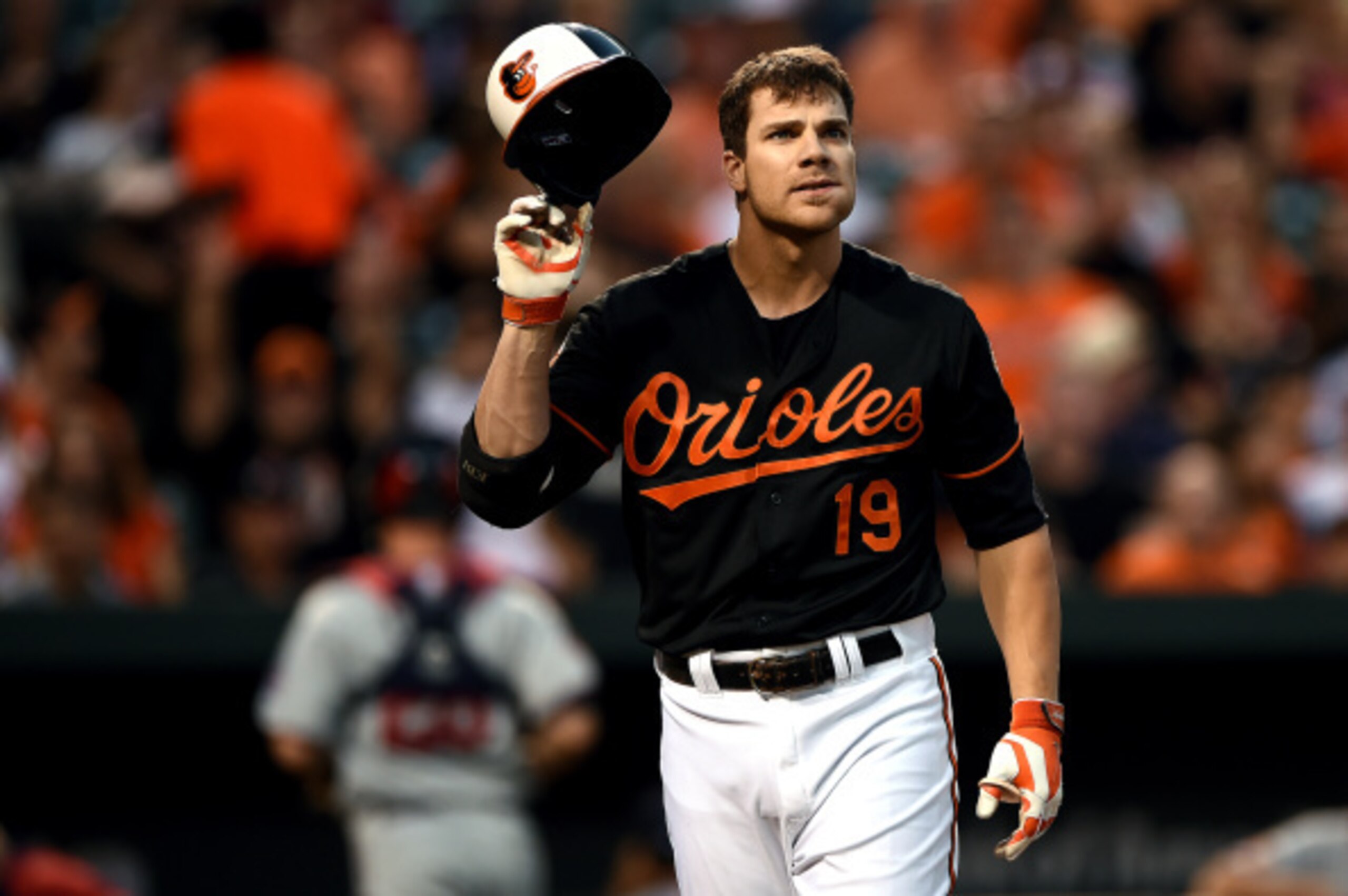
Chris Davis was a surprise superstar in 2013, hitting .286 with a 1.004 OPS and 53 home runs. But even before that, he was quietly good with a .270 average, .827 OPS and 33 home runs in 2012.
Then came the wall in 2014. Davis' average fell below the Mendoza Line, and his collection of walks and extra-base hits wasn't enough to push his hitting into above-average territory. After averaging 4.5 WAR between 2012 and 2013, FanGraphs put him at 0.5 WAR for 2014.
Davis' struggles had a lot to do with losing some key momentum established in 2013. BaseballSavant.com can show that he went from destroying breaking balls and off-speed pitches to being easily beaten by them. Since that performance is more in line with Davis' career norm, it's a red flag.
There are reasons to believe in a rebound, however.
For example, Davis did hit a bunch of line drives but didn't enjoy his usual luck with them (see the BABIP column). He also continued to put the ball in the air and was among the leaders in batted-ball distance. Come 2015, he should continue hitting for power while, hopefully, collecting on some good luck he's owed.
Davis is also safely under 30 and, as far as we know, healthy as well. And after his season-ending suspension, perhaps he'll benefit from having a therapeutic use exemption to use Adderall in 2015.
Anyone expecting Davis to get back to where he was in 2013 will probably be disappointed, but he should be able to put 2014 behind him.
Verdict: Down year


Jim Johnson, RP, Atlanta Braves
4 of 10
Jim Johnson was one of the most reliable closers around in 2012 and 2013, using one of baseball's best sinkers to save 101 games and post a 2.72 ERA for the Baltimore Orioles.
Next to that, what happened to him in 2014 is cringe-worthy. Johnson survived as a closer long enough to save only two games and ended the year with a 7.09 ERA.
Feeding into that were a lot of walks and home runs, which are the last two things you want relievers dabbling in. And at 31, Johnson is indeed in prime decline territory.
But other things don't look so bad. Johnson didn't lose any velocity off his sinker, which continued to generate a ton of ground balls. What changed is that the average against his grounders rose to about .300, which makes one sympathize with what he said at one point.
“I don’t know what to tell you,” he told Joe Stiglich of CSN Bay Area. “Balls are finding holes. I’m throwing pretty good pitches. I just feel like I’m getting a little bit of bad luck. I don’t think it’s as bad as it really seems, but I think everybody else thinks that way.”
Elsewhere, Johnson's walk rate ballooned despite the fact he hit the zone more often than he did in 2012 and 2013. He also kept his strikeout rate about where it was in 2013.
All told, Johnson's 2014 doesn't look like the start of a decline. It looks more like a random disaster.
Verdict: Down year
Justin Masterson, SP, Boston Red Sox
5 of 10
One version of WAR put Justin Masterson among the 20 best starters in the American League between 2011 and 2013. The middle year was a rough one, but he was an above-average pitcher in the other two.
But in 2014, Masterson pitched to a 5.88 ERA and failed to hit 130 innings, even though 25 of his 28 appearances were starts. That's an ugly season if there ever was one.
Advanced metrics that try to look past the luck involved with ERA don't think Masterson was much better. That tends to be the case when a guys struggles with command and home runs, and Masterson's significant velocity loss certainly didn't help in the latter department.
Of course, a thing like that also suggests a decline is underway. But like with Jay Bruce, it's a bit soon to put Masterson in decline territory. He's still only 29, after all.
Another thing Masterson has in common with Bruce is that he struggled with a bad knee in 2014, as he tried to pitch through a right-knee injury he says he suffered in his second start. That being his push-off knee, it looks like an excuse for his velocity decline and inconsistent mechanics.
Even if Masterson only gets his mechanics squared away, that could be good enough. Even despite his lesser velocity in 2014, his sinker still got ground balls, and his slider still got whiffs. What could help him even further is trading the Cleveland Indians' poor defense for a Boston defense that should be strong.
Verdict: Down year
Joe Mauer, 1B, Minnesota Twins
6 of 10
After a down year in 2011, Joe Mauer was Joe Mauer in 2012 and 2013. He slashed .321/.410/.460, putting himself among the game's top 15 qualified hitters.
Two things didn't get so bad in 2014. At .277 and .361, Mauer had a solid average and OBP. But he slugged only .371, a mark reminiscent of his .368 in 2011.
However, we have data that says Mauer hit the ball hard a lot. He made the cut for ESPN Stats & Information's Mark Simon's hard-contact leaders, hit a ton of line drives and only saw his average fly-ball distance decline from 287.7 feet in 2012 and 2013 to 283.4 feet in 2014.
The picture of bad luck that's forming may not be a mirage. B/R's Scott Miller noted midway through 2014 that outfield shifts were killing Mauer, and Minnesota broadcaster Dick Bremer noted the same in a KFAN interview.
“When we talk about the shifts in the booth, we automatically show the infield," he said, "and they are doing a lot of creative things in the infield, but Joe’s really been victimized by the outfield shifts."
According to Brooks Baseball, Mauer's hit plot reveals the truth behind these sentiments. But if there's a bright side, it's that his power outage didn't last. His power came around in the second half, in which he looked a lot more like himself.
At 31, Mauer is definitely in decline territory. But it looks like his skills aren't eroding as much as 2014 would suggest.
Verdict: Down year
Brian McCann, C, New York Yankees
7 of 10
Following a rough 2012, Brian McCann rebounded to hit .256 with a .796 OPS and 20 home runs in 2013. That's way above average for a catcher, and it helped earn McCann a huge contract.
His first season in pinstripes didn't go so well, however. McCann hit only .232 with a .692 OPS, a new career low that looks worse when adjusted for Yankee Stadium.
One popular narrative says that McCann's production was killed by defensive shifts, and there is something to that. He hit only .194 on pulled balls, a mark well below his career rate of .275. This despite the fact that many of his pulled balls were line drives.
But shifts aren't the only thing that killed McCann's production in 2014. At least as important is how much his power dried up.
It's not an accident that McCann basically couldn't hit for power away from Yankee Stadium. He hit plenty of fly balls in 2014, but they didn't travel very far. After averaging about 296 feet on his fly balls between 2008 and 2013, he managed only 280.4 feet in 2014. That's a gigantic drop-off.
But then, maybe this deep dive stuff is unnecessary in this case. Though McCann was solid in 2013, his performance featured a huge second-half decline. That makes him a soon-to-be 31-year-old catcher with one good half in three seasons.
Verdict: Decline
Wade Miley, SP, Boston Red Sox
8 of 10
The same version of WAR we viewed Justin Masterson with put Wade Miley among the 12 best hurlers in the National League between 2012 and 2013, in which he had a 3.44 ERA in nearly 400 innings.
In 2014, Miley's ERA skyrocketed to 4.34. That's a jump of nearly a full run from his 2012-2013 performance, and one that doesn't bode well for a transition to the American League.
Nor does the fact Miley's poor season had much to do with walks and dingers. Neither look accidental, as he missed the zone more often and paid dearly when he missed in the middle of the zone. That screams that Miley's stuff isn't overpowering.
What's weird, however, is that Miley is actually trending in that direction in other areas. The 28-year-old's velocity is steadily creeping upward. He also missed bats at a higher rate in 2014. He owes that to boosting his trust in his slider, which looks like a good partner in crime for his ground-ball-magnet sinker.
As for Miley's control, John Tomase of The Boston Herald noted that he fits with one of Boston's goals: "With research revealing that the strike zone has dropped by the diameter of a baseball over the last few years, the Red Sox have targeted pitchers and hitters who can control that area of the plate."
Miley practically lives low in the zone, so he could benefit if the strike zone continues to expand in that direction. That he'll be pitching to an excellent low-pitch framer in Christian Vazquez won't hurt.
Mind you, Miley may not be ticketed for ace status in 2015. But in some ways, 2014 was actually a year that pushed him forward rather than back.
Verdict: Down year
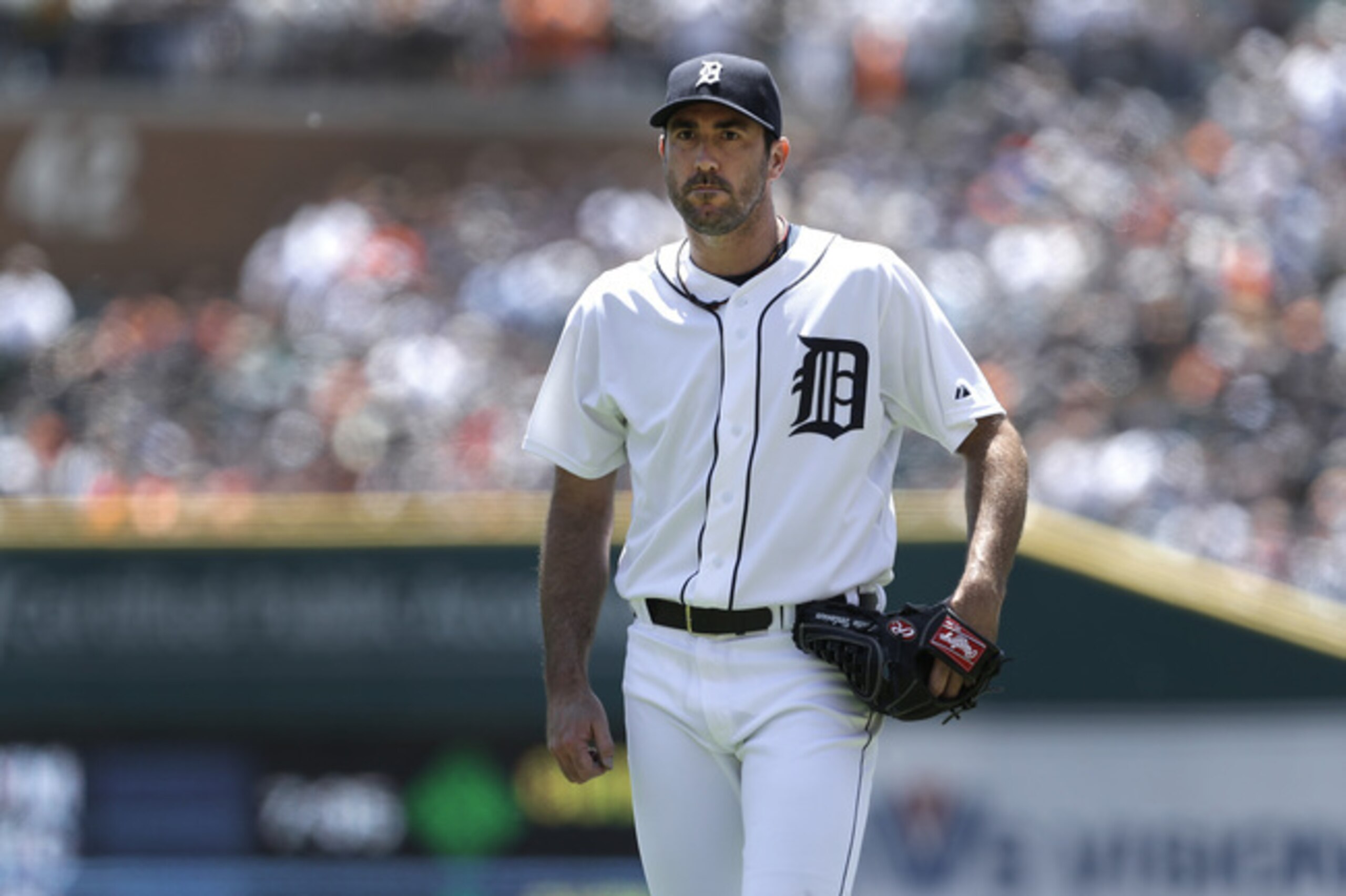
Justin Verlander, SP, Detroit Tigers
9 of 10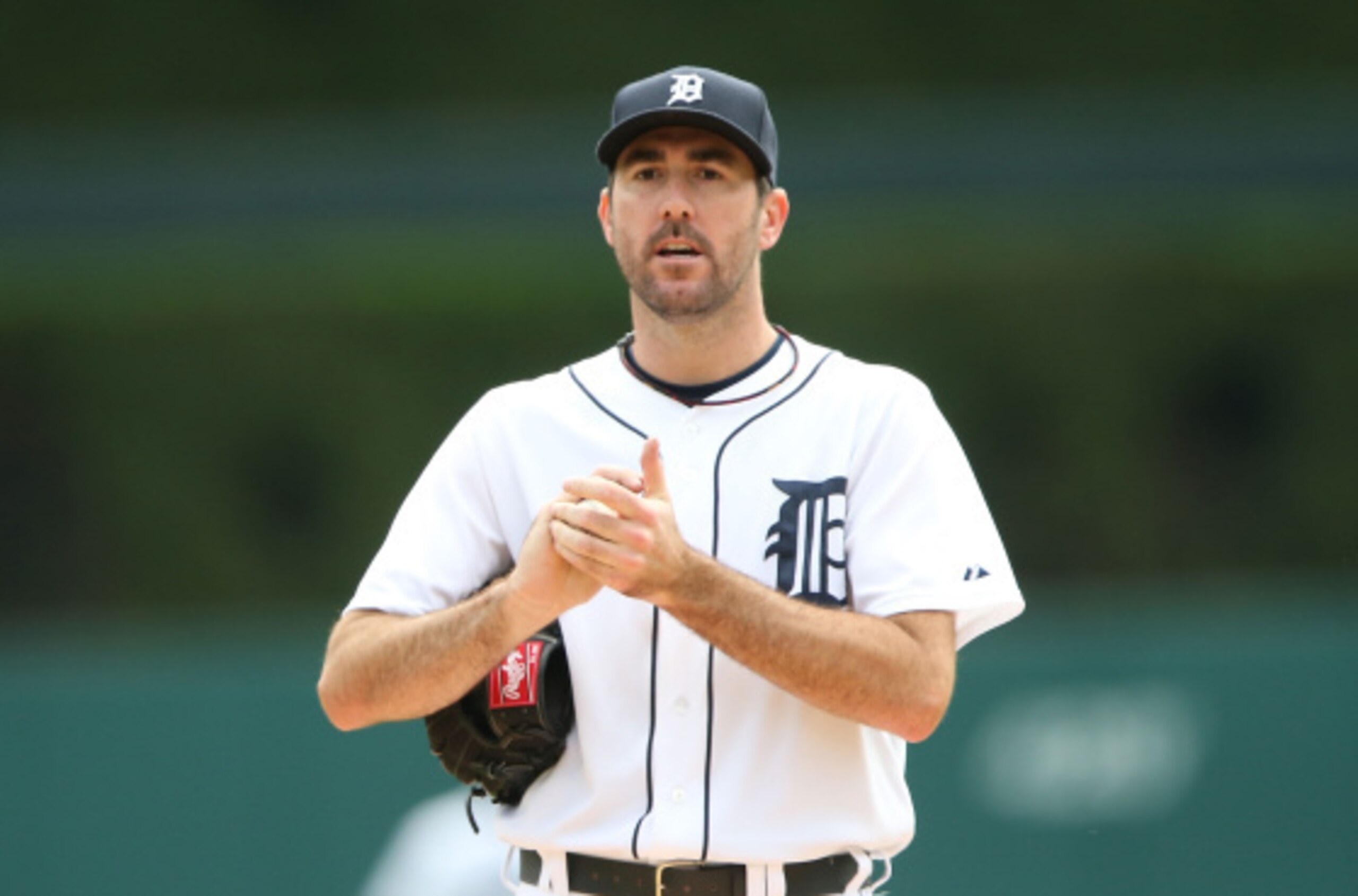
Justin Verlander was arguably the best pitcher in baseball in 2011 and 2012. And even in what was considered a "down" 2013 season, he still posted a 3.46 ERA in 218.1 innings.
Calling that a "down" season sounds even funnier in light of Verlander's 2014. He pitched to a 4.54 ERA, which finished as one of the 10 worst qualified ERAs of the year. That's a down season.
The good news is that there's one advanced metric (FIP) that thinks Verlander's ERA should have been in the 3.70-3.80 range. If that's where it had ended up, we're not having this conversation.
It's hard to take that metric's word for it, though. Verlander's strikeout rate shockingly dropped below league average, a decline underscored by a big drop-off in swinging strikes. Not helping was Verlander's velocity, which was the worst it's ever been.
One way to explain that is by pointing to Verlander's health, or lack thereof. He began the year off core muscle surgery and eventually developed a sore shoulder. If he can recover, perhaps his heat can too.
Don't count on it. Verlander's heat has been on a clear downward trend for a couple years, and that's unlikely to quit in what will be his age-32 season in 2015. His days as a premier power pitcher are over.
And if 2014 is any indication, that means his days as a premier pitcher of any kind are too.
Verdict: Decline
C.J. Wilson, SP, Los Angeles Angels
10 of 10
C.J. Wilson's first four years as a starter were quietly very good. He pitched to a 3.37 ERA and overall was one of the American League's 10 most productive pitchers.
This wasn't the case in 2014. Wilson's ERA ballooned to 4.51. Factor in how he got to pitch at an extremely pitcher-friendly park, and he was one of the three least-effective starters in the AL.
The easiest thing to notice is how bad Wilson's command was, as he finished with his worst walk rate as a starter on his way to leading the league in free passes. He also struggled with home runs, so it's no wonder the metrics don't think he deserved much better than his 4.51 ERA.
What's tricky is that Wilson's past inconsistency with his control makes it hard to project what's to come. He's bounced back from poor walk rates before. Perhaps he can do it again. Getting all the way past a hip issue that hurt his mechanics can only help.
Wilson's struggles with loud contact, however, may continue. He never threw very hard as a starter to begin with, but his velocity is slowly descending from its 2012 peak. He has below-average heat now, and it should sink further below average in his age-34 season.
You can get by with subpar heat if you have good command. But this being C.J. Wilson, don't take anything for granted there.
Verdict: Decline
.jpg?w=2560 "Chiefs, Steelers Eye WR Trades")





.jpg?w=2560 "Raiders Sticking with Cousins")