MLB Owners Must Adapt Their Game with New Rules at Annual Meetings
In a game steeped in tradition, change can be met with forceful opposition.
But as times and technology change, so too should Major League Baseball. Tweaking existing rules and implementing completely new ones are ways for the game to adapt to the 21st century, hopefully capturing a younger, more diverse audience while also making it safer and quicker.
That is why the 2015 edition of the MLB owners meetings, happening in Phoenix on Wednesday and Thursday, has to focus efforts on how to improve the game. Baseball has been more accepting of new ideas in recent years, implementing instant replay and a home plate collision rule, and has shown a willingness to admit errors by adjusting the rules, or even the language of them, on the fly.
TOP NEWS

Report: MLB Investigated Sonny Gray

Ranking MLB's Top 50 Rookies 🔢

Realistic Offseason Trade Ideas 💡
MLB, the Players Association and the umpires’ union must continue to grow the game in this era, but the serious discussion for changes must start this week with the owners and MLB Commissioner-elect Rob Manfred.
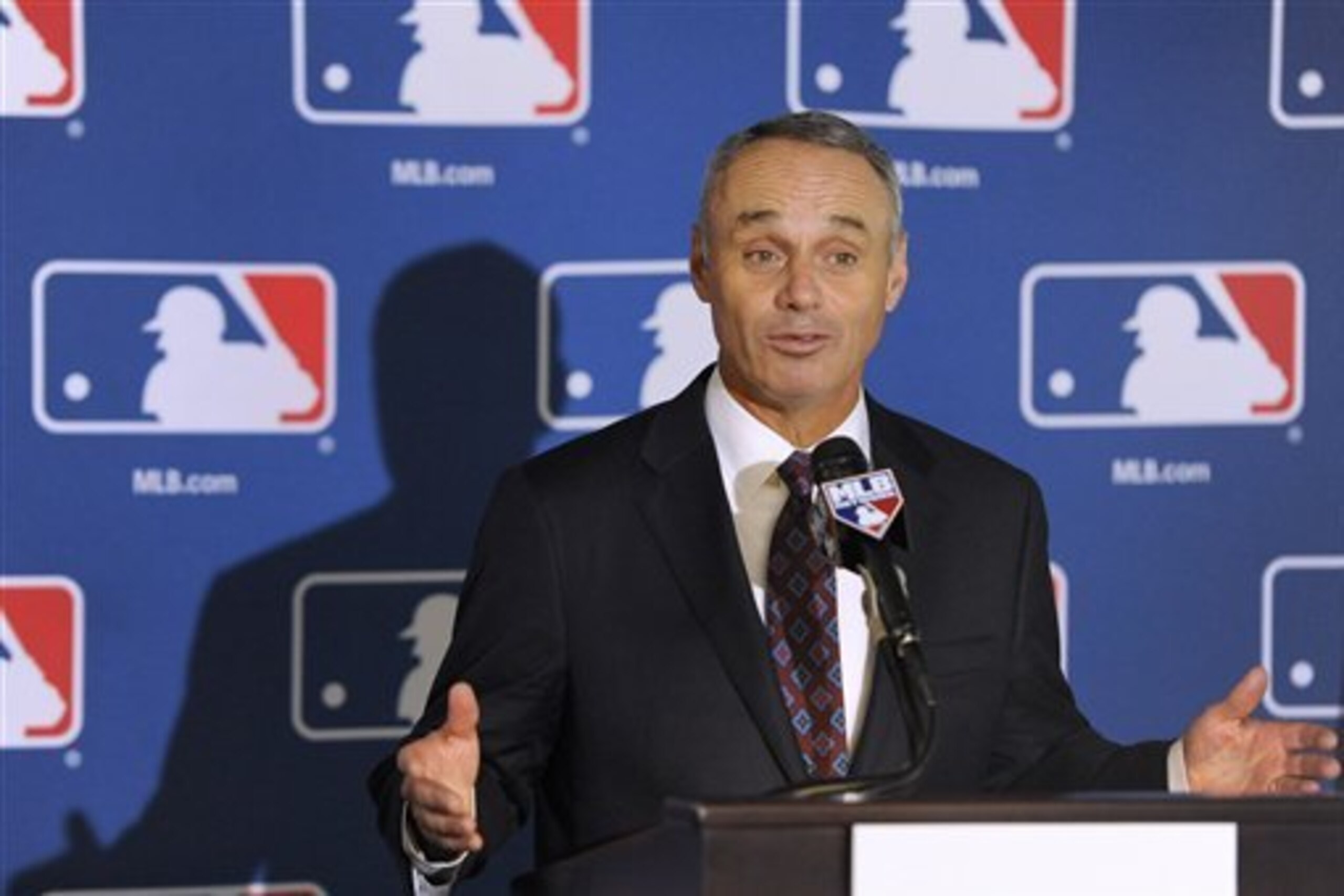
While MLB is not likely to institute a “pitch clock” this year, according to Fox Sports’ Jon Paul Morosi, there are other rules and adjustments up for discussion.
On the docket for existing rules is modifying instant replay so that managers have to alert umpires to a challenge in a timelier manner. As it stands, the replay rule is a bit of a farce. While it corrects mistakes, it is usually a relatively low-risk decision for managers since they are allowed to leisurely stroll up to the offending ump and look back into the dugout for a thumbs-up or thumbs-down from a coach who is on the phone with someone watching a replay. With this system, if a manager challenges a call, he is almost always correct because someone has already seen the replay and passed the message.
If managers are required to more quickly declare their intentions, then the gamble is put into play, thus making the entire ordeal more exciting for fans.
Aside from replay, the meetings are likely to take another pass at Rule 7.13, or the home plate collision rule. This one has been a particular headache for MLB because the interpretation was unclear, causing it to be clarified twice during the last season. The first was to reiterate that the rule does not apply to force plays at the plate and the second to say it should not apply to plays when the runner is clearly out.
Then there are the new rules up for discussion. Among them are ideas to speed up the pace of play. Baseball games averaged 3 hours, 8 minutes in 2014, 21 minutes longer than the average game in 2005. Realizing this trend needs to change, MLB experimented with pace-of-play rules in the Arizona Fall League in October and had positive feedback.
Among those rules was the 20-second pitch clock, but since that idea is being tabled for now, discussions can focus on the experimental rule that requires a hitter to keep one foot in the batter’s box at all times with exceptions for foul balls, wild pitches and timeouts. With no current major league rule to deter hitters from stepping out of the box, they are free to stroll away after every pitch. With this rule, if a player leaves the box completely, he can be penalized with a strike.
There were some flaws with the rule in the AFL, though. That is why tweaks would be needed before it is implemented permanently.
“I did like the batter keeping at least one foot in the box,” Cincinnati Reds outfield prospect Kyle Waldrop, who played in the AFL, told Morosi. “However, I saw two guys get called out on strikes for stepping out of the box with two strikes. I don’t ever think the bat should be taken out of someone’s hands. I don’t think the fans would want to see that [either].”
There are other ideas to quicken the pace of play, ones that may or may not be discussed at the meetings, though they should be.
One is to shrink the number of warm-up pitches allowed from eight to less than five. Part of this new idea would be to disallow warm-up pitches for relievers entering the game from the bullpen. The rule allowing a reliever as many pitches as necessary when he comes in for an injured pitcher would still exist.
Another way to speed things up is to actually enforce Rule 8.04, or the 12-second rule. This rule states that when no runners are on base, a pitcher has 12 seconds to deliver the ball to the plate. When the pitcher exceeds 12 seconds, a ball is to be called. The problem is this is never enforced.
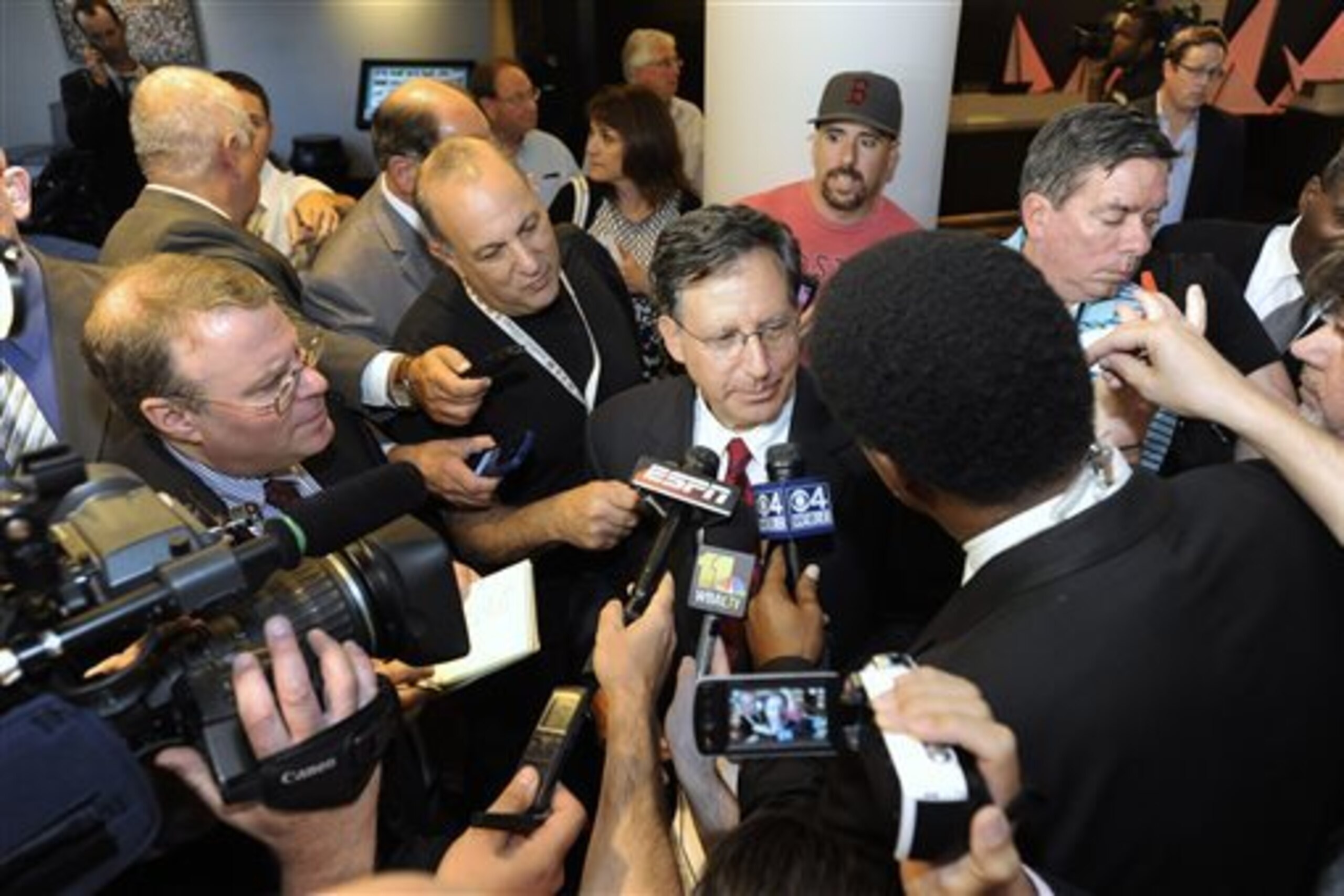
Before implementing something as radical as a 20-second pitch clock, regardless of the situation, umpires have to get players accustomed to the current, wildly unenforced 12-second rule.
“In 1954, the NBA introduced a shot clock, and while it was considered radical at the time, it’s something that stuck through the years,” Boston Red Sox Chairman Tom Werner told The Boston Globe’s Nick Cafardo last summer. Werner is part of an MLB committee charged with examining pace of play. “It would speed up play and it would give fans something to look at. Baseball is too slow and there’s a lot of inaction. If a pitcher is holding the ball for 40 seconds between pitches, you’re losing an audience.”
Another rule Morosi’s sources expect to be discussed at the meetings is one that forces runners to slide directly into second base on double plays. Currently, players can slide away from the bases to take out an infielder as long as he can reach the base with his outstretched arm. But again, this rule is not always enforced.
While they are at it, a discussion needs to be had on late takeout slides at second base. If an umpire deems a slide too late, or for the sole purpose of taking out an infielder, the double play should be awarded.
Also, for the good of the game, Manfred must urge owners, or maybe it’s the other way around, to do away with the All-Star Game determining home-field advantage in the World Series. This rule should need no explanation for why it is bad.
New rules, especially for such a traditional game, always seem nuts at first. How crazy did it first sound when baseball proposed a rule to create a position only for offense? Probably very, but now the designated hitter seems like a natural part of the game, and some people even want it implemented in the National League.
These pace-of-play rules are for the betterment of the sport, and quicker games could attract a larger audience.
“Too many people are leaving games in the sixth and seventh innings because they can’t watch three-and-a-half-hour games, so they’re leaving the game at the point where the game should be getting exciting,” Werner said to Cafardo. “You wouldn’t make a three-and-a-half-hour movie.
“I respect tradition, but I don’t revere it.”
It is time for the baseball owners, players and umpires to think the same way. That change has to continue this week at the owners meetings.
Anthony Witrado covers Major League Baseball for Bleacher Report. He spent the previous three seasons as the national baseball columnist at Sporting News and four years before that as the Brewers beat writer for the Milwaukee Journal Sentinel. Follow Anthony on Twitter @awitrado and talk baseball here.



.jpg?w=2560 "Terrell Owens Being Sued for Defamation")

.jpg?w=2560 "CJGJ Shares Cryptic Post 🤔")