
Manchester United vs. Southampton: Tactical Review of Premier League Game
Southampton stole a famous 1-0 victory at Old Trafford on Sunday, with supersub Dusan Tadic netting a late winner.
Louis van Gaal's star-studded lineup were out-thought by a pragmatic, tactically superior Saints outfit, so let's take a look at exactly how Ronald Koeman managed the masterclass.
Formations and XIs

Manchester United played a 3-5-2 but with a serious twist. Daley Blind played left centre-back, Angel Di Maria played upfront alongside Robin van Persie, and Wayne Rooney played in midfield.
Southampton played an exceptionally complex formation that cannot truly be defined by digits.

Koeman's Saints, known for their free-flowing, attacking football no matter the opposition so far this season, played with the sole purpose of nullifying Manchester United on Sunday.
Labelling formations with numerical formats can be crude, and this was certainly one of those times: in defence, Southampton bordered on a 4-2-3-1 with a deep No. 10; in attack, it was a weird, lopsided diamond in midfield with a target man and a "raumdeuter" in Eljero Elia.
1. Southampton in Defence
To focus on Southampton in defence first, they played a back four with defensive full-backs and stuck to a relative 4-2-3-1 shape. Morgan Schneiderlin and Victor Wanyama sat in front of the back line and shielded their defenders expertly, with the former gaining many votes for Man of the Match.
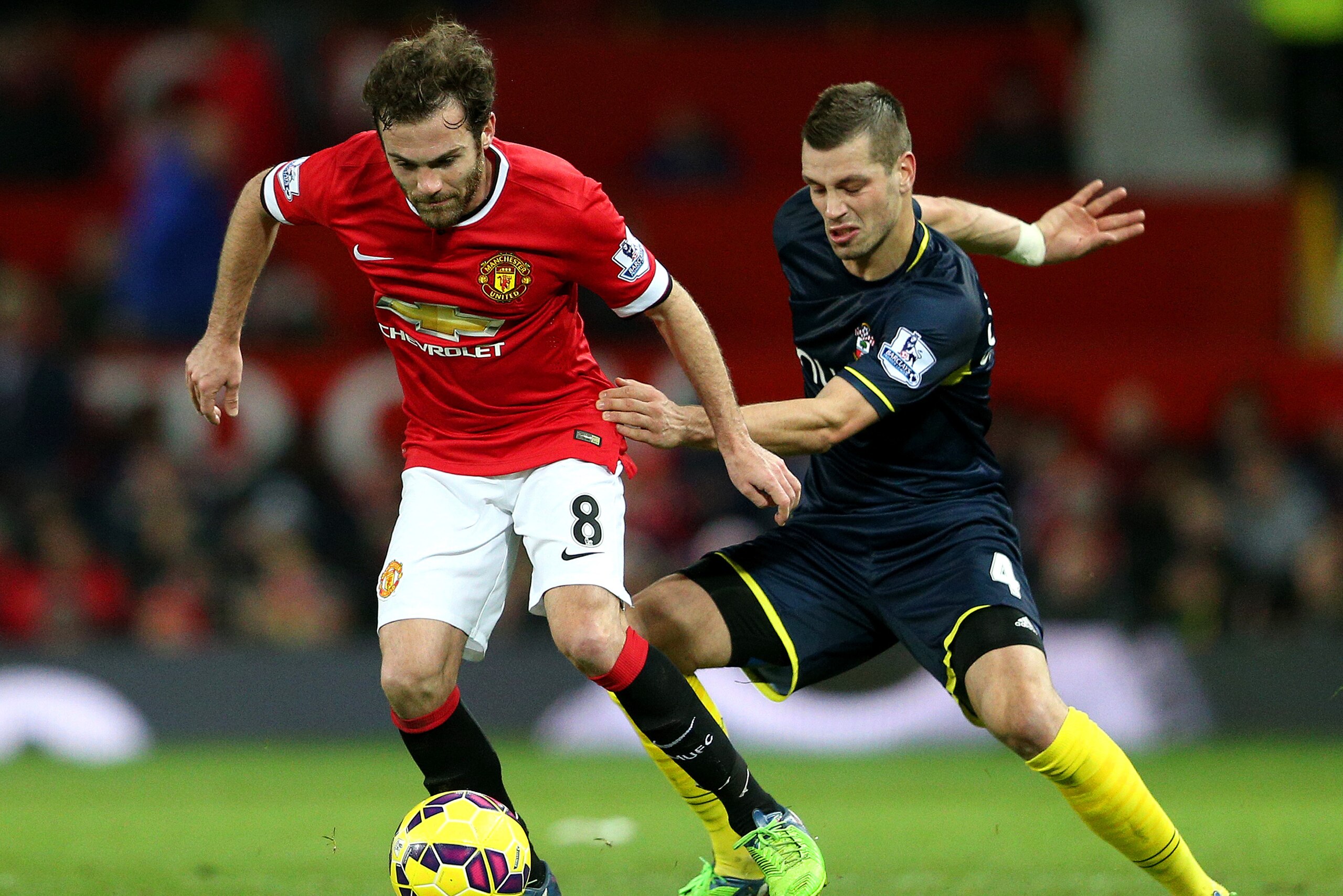
It was a simple case of hard work, spacial awareness and remarkable understanding of zonal defence; Schneiderlin, in particular, bossed his own section of the pitch and didn't let United into the areas just behind him. Wanyama would sometimes follow Juan Mata up the pitch as he dropped to receive, but he otherwise stayed parallel to his team-mate.
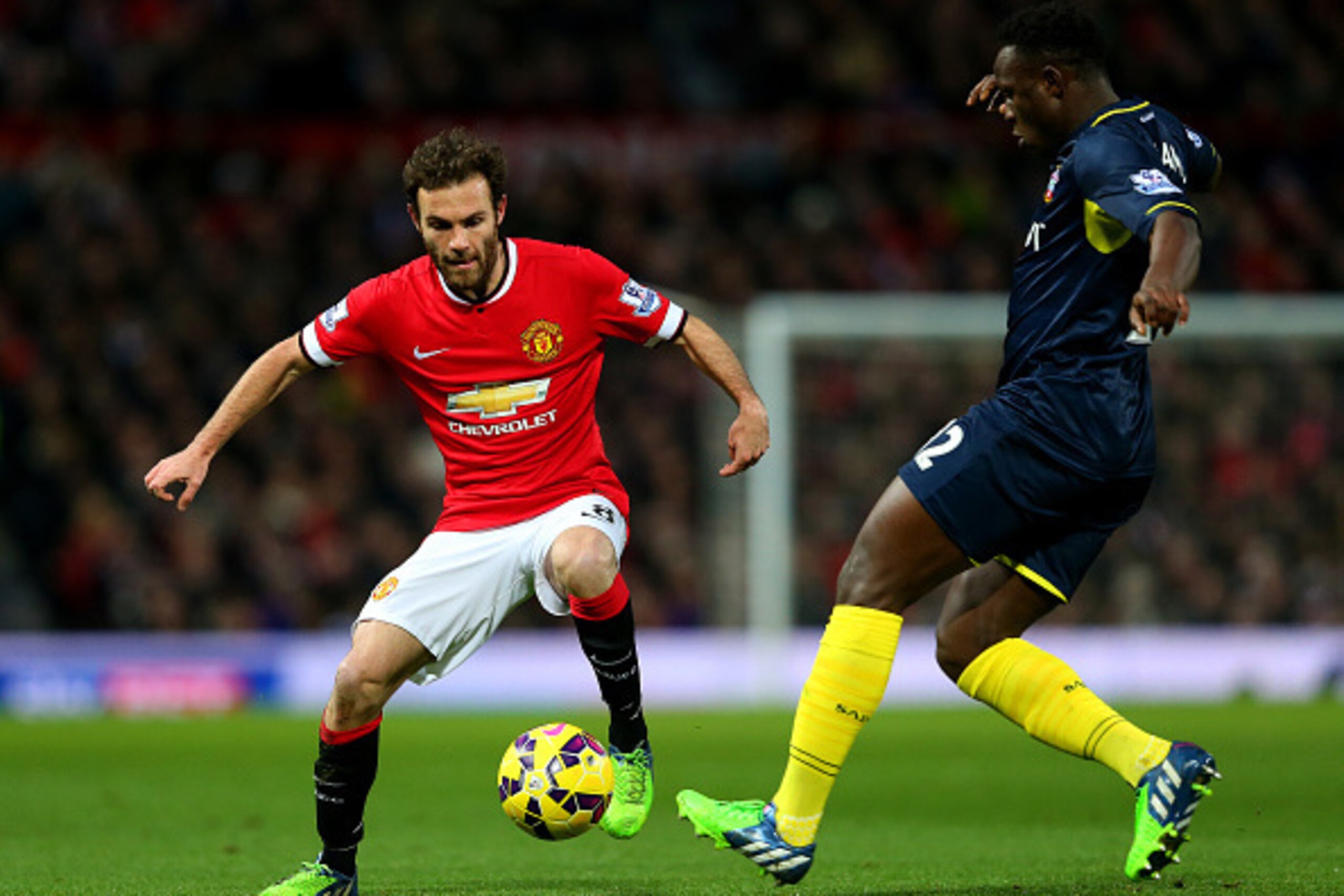
That formed the first key part of Saints' approach: no space between the lines and absolutely no runs in behind. Di Maria, Van Persie and Rooney were all proven ineffective over the course of the match. Fortunately for the Saints, the odd chances they did surrender were repeatedly missed by the dreadful Mata.
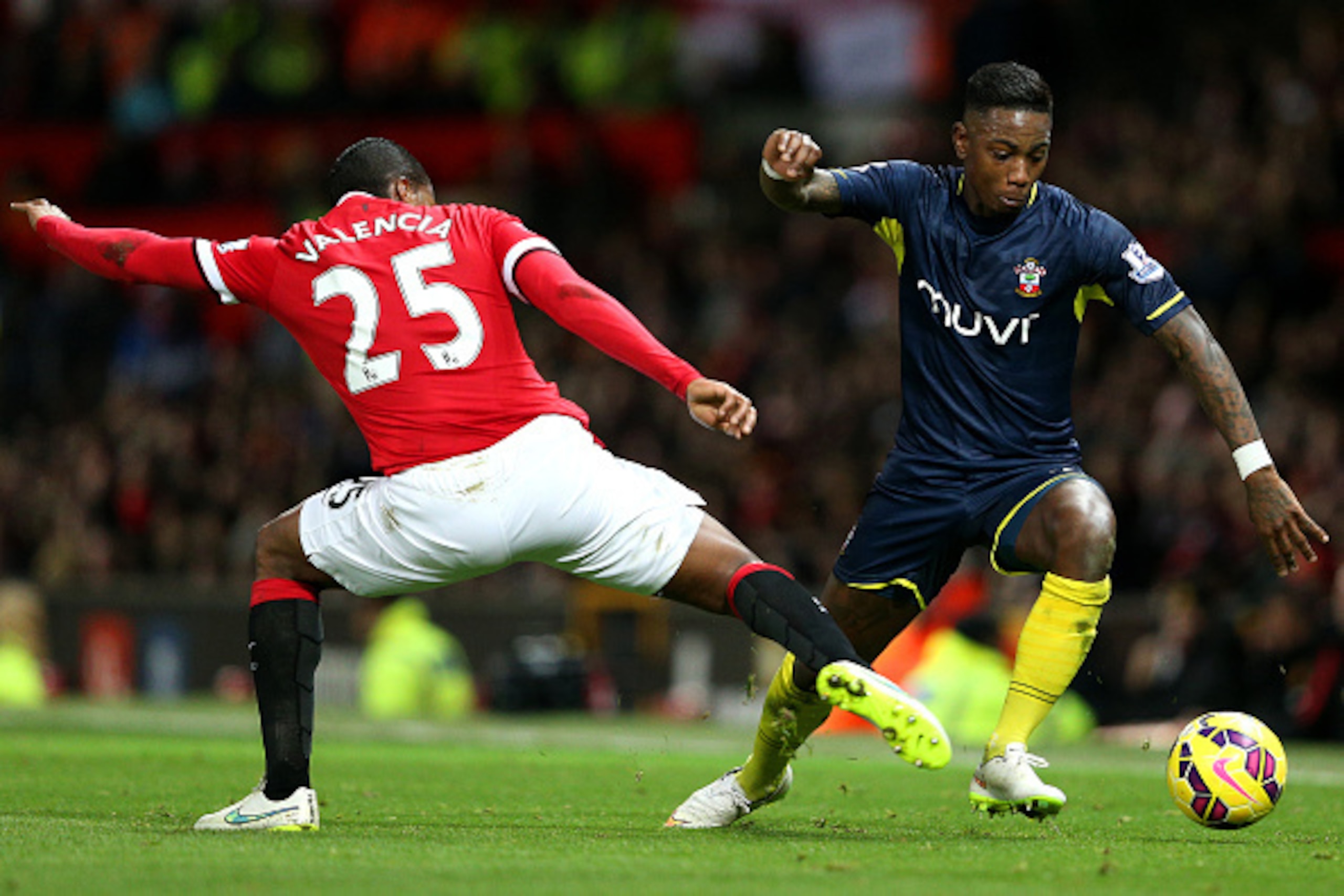
The second part involved engaging the wing-backs, Luke Shaw and Antonio Valencia, high up and early to stop them from gaining a head of steam and pushing on at pace. Ryan Bertrand and Nathaniel Clyne were bold, separating by 15 yards from the defensive line at times to confront and stymie their opponents; Schneiderlin and Wanyama dropped into the gaps to cover the space left behind, while Steven Davis dropped all the way back, and James Ward-Prowse, who played in the No. 10 position, dropped in goalside to cover.
Thirdly, Ward-Prowse pressured Michael Carrick in order to stop him from distributing at will from deep. Davis and Elia, nominally playing left and right, engaged the United outside centre-backs when they attempted to bring the ball out of defence.
In total, it was a beautifully balanced nullification system boasting hardworking, intuitive players. Koeman intimated post-match that he was aware of United's buildup issues from the back, and by placing three men in press positions, he managed to capitalise on it and make things even harder.
With Jones, Blind, Carrick and Smalling all unable to pass vertically, it should not be a surprise to hear the forwards received no service.
2. Southampton in Attack
The Saints' attacking strategy was far simpler: push forward with three, perhaps four, but never overcommit. The full-backs were very cautious in going forward, and at least two midfielders stayed back at all times.
They invited United forward, then looked for Graziano Pelle with an early ball out. If he hadn't been unfairly penalised by the referee for fouls on a constant basis (again), Saints may have carried a greater, more consistent threat.
Elia's role as a "raumdeuter" (translation: space interpreter) here meant he was always looking to exploit the space resulting from Pelle's flicks and passes. His role as the "left-winger" was incredibly loose, and aside from engaging Jones to stop him from coming forward, he didn't do too much from a wide role.
Tadic replaced him later on to change the approach ever so slightly: Koeman sent the Serbian on as a designated attacker with a role, rather than a runner to generate pressure and pick up on opportune moments.
Most of the buildup came on the right, with Ward-Prowse (34), Davis (36) and Clyne (28) managing a fair amount of passes, per WhoScored.com. Elia's seven and Bertrand's 11 passes were dwarfed by comparison; it lends to the idea that Elia was the spare man on the opposite flank, waiting for a stray ball or pass.
3. Lack of Adjustment
As Old Trafford bayed for a goal, United pushed on but never changed strategy. The lack of adjustment, or even attempted adjustment, from Van Gaal was somewhat astonishing.
Blind began surging forward with Carrick dropping in to cover, but none of his runs resulted in positive moves, and in fact, Saints kept dispossessing him and attacking Carrick with speed. Marouane Fellaini was sent on late as a hoof option, but even with Toby Alderweireld off injured, Saints ate him up with ease.

With no space between, around or behind the Schneiderlin-Wanyama combination, Ward-Prowse on Carrick, the outside centre-backs blocked from coming forward and the wing-backs engaged high up to stop them from advancing, United ran out of ideas. Fast.
Radamel Falcao likely wouldn't have changed things schematically—the problems were sourced far deeper than the squashed-out forward line—though if he'd have replaced Mata for the chances on goal, perhaps we'd be looking at a different scoreline.
Tadic's goal gave Southampton the lead, and United never looked like answering back. Van Gaal ran out of ideas and watched his team pass it around endlessly without direction or spark.
.jpg?w=2560 "FIFA Congo Player Eligibility")



.jpg?w=2560 "Weather Channel Trolls Texans-Titans 💀")