Where Stan Wawrinka's 2014 Australian Open Title Ranks Among Past Major Upsets
As tennis prepares for the 2015 Australian Open, Stanislas Wawrinka will look to defend his 2014 title Down Under. Last year’s championship road to the title included victories over three-time defending champion Novak Djokovic and No. 1-ranked Rafael Nadal.
Wawrinka’s performance seems to rank as one of the great upsets in grand slam competition, but just how high does it rank compared to past one-time major winners?
We are going to crunch a few numbers to determine how unlikely and impressive this upset was. We will choose all 25 players of the Open era who won only one major title. There is even a range within these players, some who were career contenders for majors and others who seized one great moment and perhaps proved to be flukes.
TOP NEWS
Rafa Playing Exhibition 🎾
.jpg?w=2560 "Seahawks Chiefs Football")
Chiefs, Steelers Eye WR Trades

J-Dub, Wallace May Miss Entire Season
So, we are not going to consider a future star’s first major, players like 1985 Boris Becker, 1997 Gustavo Kuerten and 2005 Rafael Nadal. They were young and largely unknown when they won their first majors, but more major wins and subsequent accomplishments merely proved that this was the beginning of their championship runs. It’s less of an upset in retrospect.
A player’s seeding also matters. It’s an indicator of how that player was playing for the calendar year leading up to that major. The lower the player’s seed, the less likely he was favored to win the title.
We also need to weigh the difficulty of the player’s journey to the final. Wawrinka defeated the top two players in the world last year on his way to the title. Our system will credit players for directly defeating the best players and not exclusively relying on bracket breaks or upsets to help them to a title.
Calculating the Champion’s Degree of Competition
It is more impressive to defeat top players on the road to a title. We will give points for each player the champion defeated that was seeded in the top 10 for the tournament. And we will weigh these victories on a descending 10-1 scale. Defeating the No. 1-seed is worth 10 points, defeating the No. 4 seed is seven points, and defeating the No. 10 seed is one point. No points are awarded for defeating seeds outside the top 10, even though some of these wins involved more than a few scrapes and bruises.
Wawrinka’s road to the 2014 Australian title saw him defeat No. 2 Djokovic (9 points), No. 7 Tomas Berdych (4 points), and No. 1 Nadal (10 points). This nets him 23 points for his victories.
We will list all 25 of the one-time major winners with their opponents’ seeds and list his total points. This ranks the order of who had the most difficult opponents to defeat, according to seeding (AO= Australian Open, FO=French Open, Wim=Wimbledon, USO=U.S. Open):
| Player/Year/Tournament | Seeds Defeated | Competition Points |
| 1. Michael Stich 91 Wim | 4, 1, 2 | 26 |
| 2. Stanislas Wawrinka 14 AO | 2, 7, 1 | 23 |
| 3. Manuel Orantes 75 USO | 8, 2, 1 | 22 |
| 4. Pat Cash 87 Wim | 3, 7, 2 | 21 |
| 5. Goran Ivanisevic 01 Wim | 4, 6, 3 | 20 |
| 6. Mark Edmondson 76 AO | 1, 2 | 19 |
| 6. Adriano Panatta 76 FO | 1, 6, 7 | 19 |
| 8. Michael Chang 89 FO | 1, 3 | 18 |
| 8. Juan Martin del Potro 09 USO | 3, 1 | 18 |
| 10. Marin Cilic 14 USO | 6, 2, 10 | 15 |
| 11. Yannick Noah 83 FO | 3, 5 | 14 |
| 12. Andres Gomez 90 FO | 7, 3 | 12 |
| 13. Andres Gimeno 72 FO | 3, 10, 9 | 11 |
| 13. Richard Krajicek 96 Wim | 10, 1 | 11 |
| 13. Gaston Gaudio 04 FO | 8, 3 | 11 |
| 16. Roscoe Tanner 77 AO (Jan.) | 1 | 10 |
| 17. Petr Korda 98 AO | 4, 9 | 9 |
| 18. Carlos Moya 98 FO | 3 | 8 |
| 18. Andy Roddick 03 USO | 3 | 8 |
| 20. Thomas Muster 95 FO | 9, 6 | 7 |
| 21. Vitas Gerulaitis 77 AO (Dec.) | 6 | 5 |
| 22. Albert Costa 02 AO | 7 | 4 |
| 23. Thomas Johansson 02 AO | 9 | 2 |
| 23. Juan Carlos Ferrero 03 FO | 9 | 2 |
| 25. Brian Teacher 80 AO | 0 | 0 |
A few notes about this data. The Australian Open did not seed more than the first two players until December 1977, seeding only eight players. Beginning in 1978, the tournament seeded 16 players. (Australia hosted their open in January and February. There are two listed champions for 1977.)
Furthermore, the Australian Open was rarely attended by most of the top players in the 1970s and into the early 1980s. All eight quarterfinalists in 1976 were from Australia and most of the draw sheets at that time were more like a who’s who in Australian tennis. The fields were clearly weaker. I’m leaving them in this list, in italics, to be complete, but keep in mind that it comes with more unusual caveats.
The French Open has traditionally been a more difficult field in evaluating seeds. Players who thrive on faster courts will often not hold up as well on clay. It was more common to see the top players eliminated earlier in the French Open. On the other hand, there were plenty of "lower-rated" clay-court specialists who were much more dangerous than the seed their ranking afforded them.

Michael Stich had the toughest road to winning a major in the Open era. He had to defeat No. 4-seeded Jim Courier (To be fair, grass was never Courier’s best surface, but if we pick at this we have to note this for every single one of our seeds and surfaces.), No. 1 Stefan Edberg and No. 2 Boris Becker. That’s an incredible feat.
After Stich, Wawrinka’s 2014 Australian run rates as the second toughest. Marin Cilic cracks the top 10 with his 2014 U.S. Open title, and Juan Martin del Potro’s 2009 title is tied for eighth.
Memorable upsets validated by these calculations include Pat Cash’s 1987 Wimbledon title, perhaps just as famous for denying Ivan Lendl and starting a tradition of climbing into the seating to greet supporters. Michael Chang’s highly touted victory comes in at the same degree of opponents as Del Potro’s 2009 U.S.Open, but of course numbers do not tell the complete story. Note how Chang’s run will be adjusted in our final calculation that follows.
Near the bottom of the list, Thomas Johansson stands out because he only had to face one top-10 player, Marat Safin, seeded No. 9. The road to a major title can receive a lot of help.
Thomas Muster won the 1995 French Open as the No. 5 seed, but he was also the favorite to win it as he was in the midst of one of the great clay-court runs in history. His road did not turn out to be so difficult, and his toughest match turned out to be young Albert Costa (who would win the 2002 French Open) in the quarterfinals.
Adding in the Champion’s Seeding
If an upset major title is more impressive when the winner defeats top-ranked opponents, it’s even more impressive when he is not supposed to seriously contend. Unranked Gaston Gaudio won the 2004 French Open and will be remembered not so much for navigating through less than the best competition, but because he was ranked No. 44 in the world. He was not supposed to survive deep into the second week.
So, we will take the player’s seed and add them to the totals from the previous section in order to add weight to lower-ranked players who had to overcome the odds. It’s a way to explain both the surprise in the eventual champion and how he accomplished it.
For example, Wawrinka was seeded No. 8 for the 2014 Australian Open. We add eight points to the 23 he earned for defeating Djokovic, Berdych and Nadal. He ends with 31 points. He was a surprise contender, but not as surprising as players like 1989 Chang and 1996 Richard Krajicek.
One other adjustment needs to be made. Unseeded players will get no more than 15 points for this simulation. We can’t assign too much weight to this or it will overpower the calculations from the previous section. Gaudio, ranked No. 44, or Mark Edmondson’s No. 212 ranking to win the 1976 Australian Open can only be given so much. The 15 points is still 150% compared with defeating the top player from our previous calculation.
Here is the final list to rank our upsets in majors by one-slam wonders:
| Player/Year/Tourn. | Seed | Competition Pts. | Total Pts. |
| 1. Goran Ivanisevic 01 Wim | 15 | 20 | 35 |
| 2. Mark Edmondson 76 AO | 15 | 19 | 34 |
| 3. Michael Chang 89 FO | 15 | 18 | 33 |
| 4. Pat Cash 87 Wim | 11 | 21 | 32 |
| 4. Michael Stich 91 Wim | 6 | 26 | 32 |
| 6. Stanislas Wawrinka 14 AO | 8 | 23 | 31 |
| 7. Marin Cilic 14 USO | 14 | 15 | 29 |
| 8. Adriano Panatta 76 FO | 8 | 19 | 27 |
| 9. Manuel Orantes 75 USO | 3 | 22 | 25 |
| 10. Gaston Gaudio 04 FO | 15 | 11 | 26 |
| 10. Richard Krajicek 96 Wim | 15 | 11 | 26 |
| 12. Del Potro 09 USO | 6 | 18 | 24 |
| 13. Carlos Moya 98 FO | 12 | 8 | 20 |
| 13. Yannick Noah 83 FO | 6 | 14 | 20 |
| 15. Albert Costa 02 AO | 15 | 4 | 19 |
| 16. Thomas Johansson 02 AO | 15 | 2 | 17 |
| 16. Andres Gimeno 72 FO | 6 | 11 | 17 |
| 18. Andres Gomez 90 FO | 4 | 12 | 16 |
| 19. Petr Korda 98 AO | 6 | 9 | 15 |
| 20. Thomas Muster 95 FO | 5 | 7 | 12 |
| 20. Andy Roddick 03 USO | 4 | 8 | 12 |
| 20. Roscoe Tanner 77 AO (Jan.) | 2 | 10 | 12 |
| 23. Brian Teacher 80 AO | 8 | 0 | 8 |
| 24. Vitas Gerulaitis 77 AO (Dec.) | 1 | 5 | 6 |
| 25. Juan Carlos Ferrero 03 FO | 3 | 2 | 5 |
OK, now we have a combination of unlikely champion and his road of competition in winning the title. Goran Ivanisevic, ranked No. 125 in 2001 and accepting a wild card after recent injury problems, became the surprise winner of the tournament.
Of course, to many tennis fans this was still not that large of an upset. Ivanisevic had been a contender at Wimbledon for over a decade, three-time finalist and denied in large part by losses to Pete Sampras. The timing of his win was more remarkable than the win itself, even late in his career.
If we throw out the Mark Edmondson anomaly with our caveats about the Australian Open, we see familiar upset stories like Michael Chang and Pat Cash. There were a lot of physical heroics to Chang’s victory, and Cash’s triumph has its own kind of fame at Wimbledon where Lendl fell short again. Stich now comes in tied for fourth, but he was at least a dark-horse contender anyway.
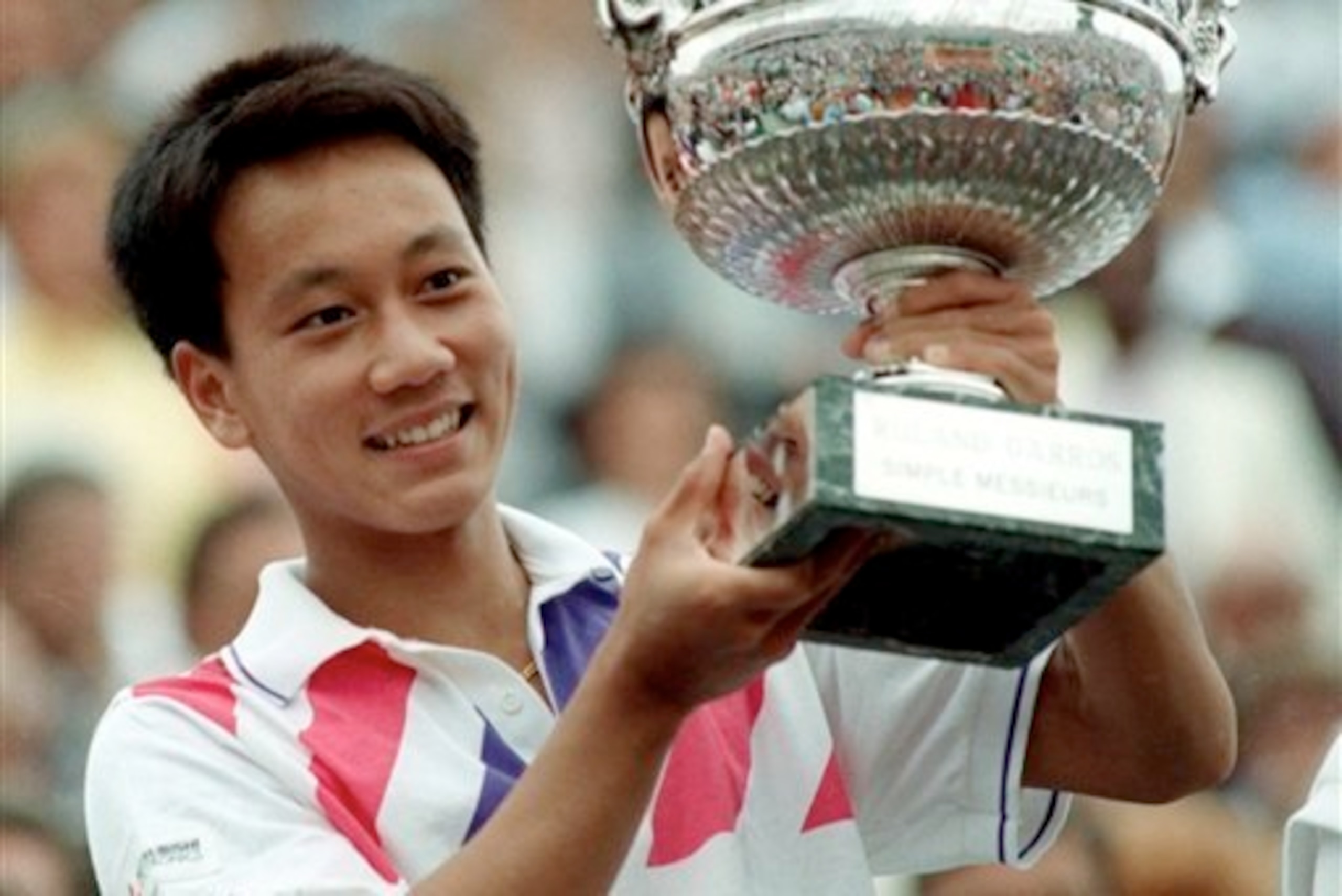
Next up we see that Wawrinka and Cilic made quite an impact last year. Wawrinka’s victory got a lot more attention in who he defeated and how it was done, but Cilic was more under the radar. He closed out his surprising title with the No. 14 seed and swept Berdych, Federer and Nishikori. Not bad at all.
Krajicek, Del Potro and Noah are less surprising despite the attention they received. The former defeated Pete Sampras at 1996 Wimbledon, but was able to close out against easier competition. Del Potro defeated Nadal and Federer at the 2009 U.S. Open, but was seeded No. 6. He was rising. Noah was also seeded No. 6, but he defeated Lendl and Wilander with enormous recognition from the French media. It was not as impressive as Wawrinka or Cilic, at least in some regards.
The least surprising title was No. 3 seed Juan Carlos Ferrero taking out a French Open field that self destructed. He defeated No. 9 seed Albert Costa, but otherwise had a smooth path to holding up the trophy.
Maybe 2015 will see another upset special join the list, or maybe Wawrinka, Cilic or Del Potro will win a second one to make a bid for the hall of fame.