
2015 NFL Draft: A Position-by-Position Guide to This Year's Class
As both the NFL and college football seasons wind down to the grand finale, the 2015 NFL draft becomes a huge focus for teams, players and fans alike. The draft offers unrivaled optimism for great success in coming seasons as franchises try to add talent who will help elevate or maintain current standards of play.
The deadline for underclassmen to declare for the 2015 NFL draft is on January 15, 2015, so we don’t know for sure which talented non-seniors will be in the pool unless they’ve previously made an announcement. If some of the bigger names end up declaring like expected, the 2015 class will be somewhat top-heavy but lacking the immense depth the 2014 class had.
There are some highly talented players who are expected to or have already declared, so teams picking in the top half of the first round will have their chance to land a quality piece to their puzzle. For teams that want to add a playmaker at running back or as an edge-rusher, this is the draft to get a great value because of the depth of the class.
Other positions are severely lacking depth, such as quarterback, tight end and cornerback. Missing on one of the top few prospects could lead to more developmental-type players selected on the second day of the draft. This is normal, as every draft class is different.
This list is an early look at my positional rankings for NFL prospects and is subject to change in the future as more information and film is watched. Raw statistics do not bear great value on these rankings because college statistics aren’t an effective predictor on NFL success.
Top 5 Quarterbacks
1 of 14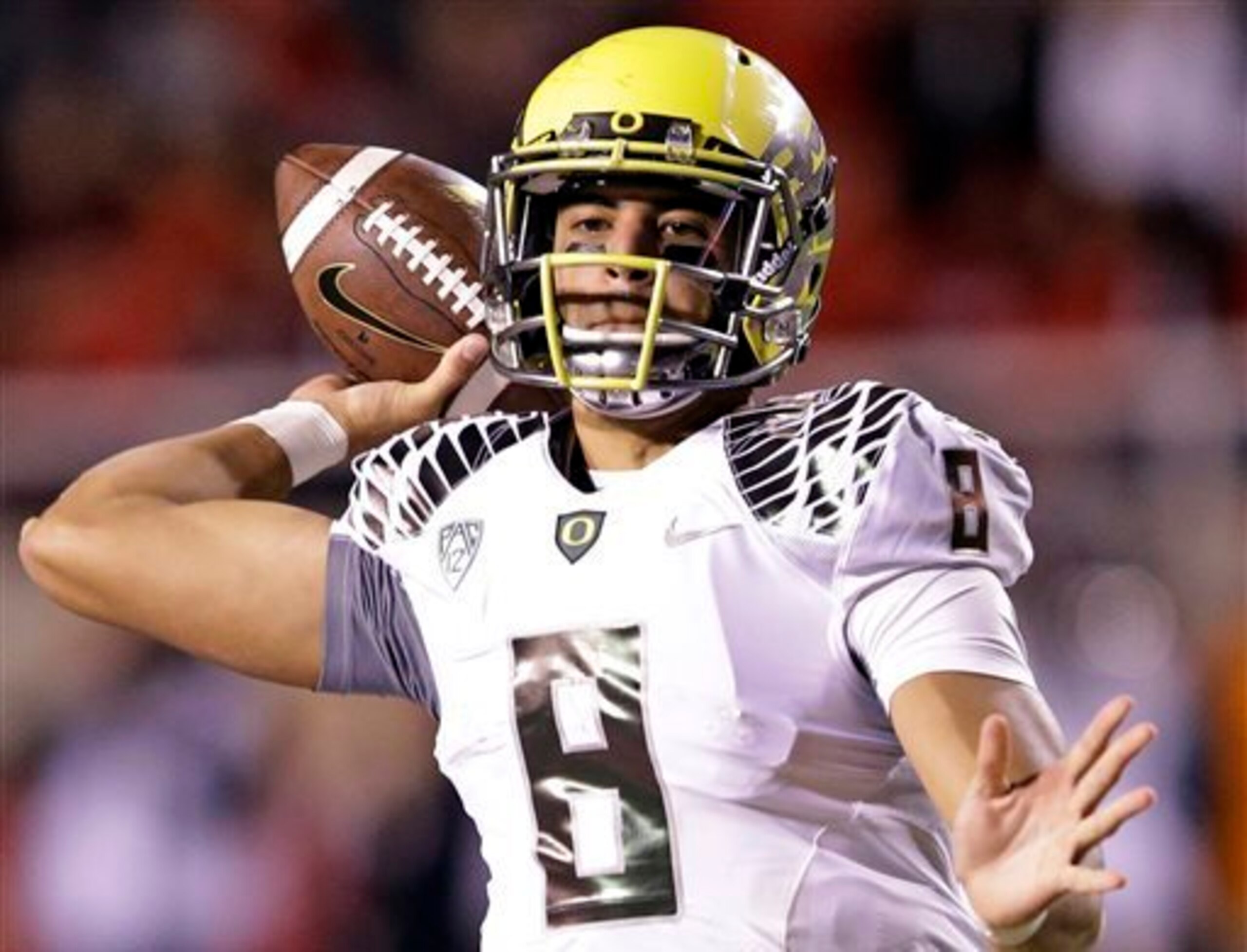
| 1 | Marcus Mariota | Oregon |
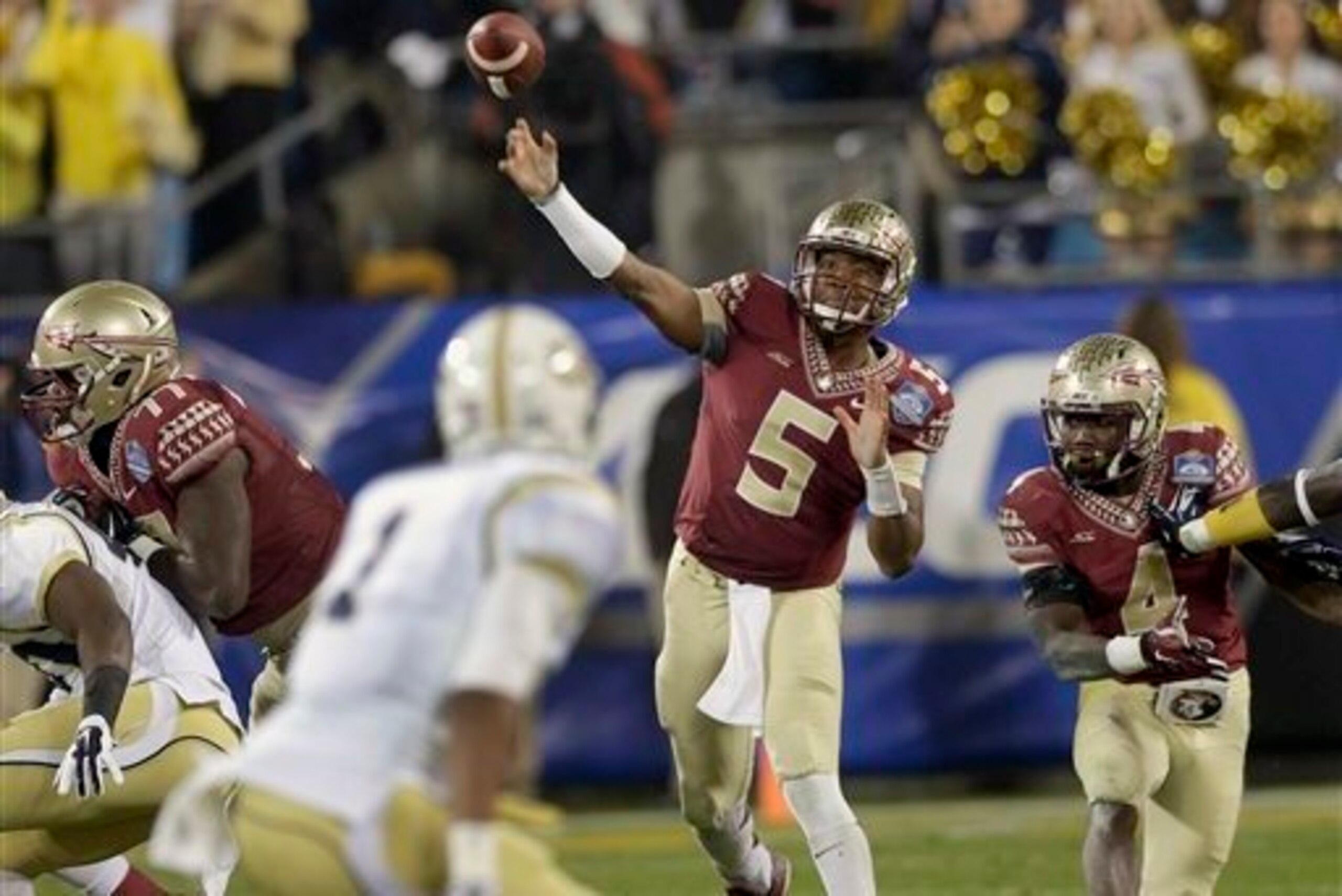
| 2 | Jameis Winston | Florida State |
| 3 | Brett Hundley | UCLA |
| 4 | Blake Sims | Alabama |
| 5 | Bryce Petty | Baylor |
Probably the most top-heavy position in the 2015 class, Oregon’s Heisman-winning quarterback, Marcus Mariota, is the clear top prospect. Mariota has the physical profile of an elite athlete for the position, but it’s really his mental acumen that sets him apart from the crowd.
It’s easy to look at his insane 38-2 touchdown-to-interception ratio and come to that conclusion, but seeing how Mariota is able to recognize defensive tendencies pre- and post-snap is something that’s rare in quarterback prospects. He takes good care of the ball, but he’s willing to take calculated risks when needed to, often leading to explosive plays for the Ducks offense.
Mariota isn’t a flawless prospect, as his ball placement and progression speed are off at times. He’s also very lean for his height, weighing 215 pounds. But with his combination of arm talent, mental processing and athletic prowess, Mariota projects to become an above-average quarterback or better.
After Mariota is Jameis Winston, who has won every game he’s started for the Florida State Seminoles. When Winston catches fire, he’s reminiscent of Philip Rivers. He’s smart on the field and has excellent arm talent. His ability to work within the pocket when pressured is fantastic and rare.
The issue for Winston is that when he’s not playing well, he is bad. For much of 2014, that’s been who Winston is. His 17 interceptions should actually be a higher total, as he routinely throws into double coverage over the middle and sails intermediate passes high. That cannot happen in the NFL.
That being said, Winston shows a lot of flashes that he can become a very good quarterback. He has an excellent body and has showed many times that he’s a great leader.
After Mariota and Winston, the quarterback position takes a nosedive. UCLA’s Brett Hundley hasn’t progressed at all throughout his college career and looks more like an athlete playing quarterback. He’s erratic far too often with his accuracy and decision-making. He does have elite physical tools to develop, however.
It’s actually difficult to rank the quarterbacks after Hundley because the class is so bad. Bryce Petty and Blake Sims have developmental value on Day 3 of the draft.
Class Strength: C-
Top 5 Running Backs
2 of 14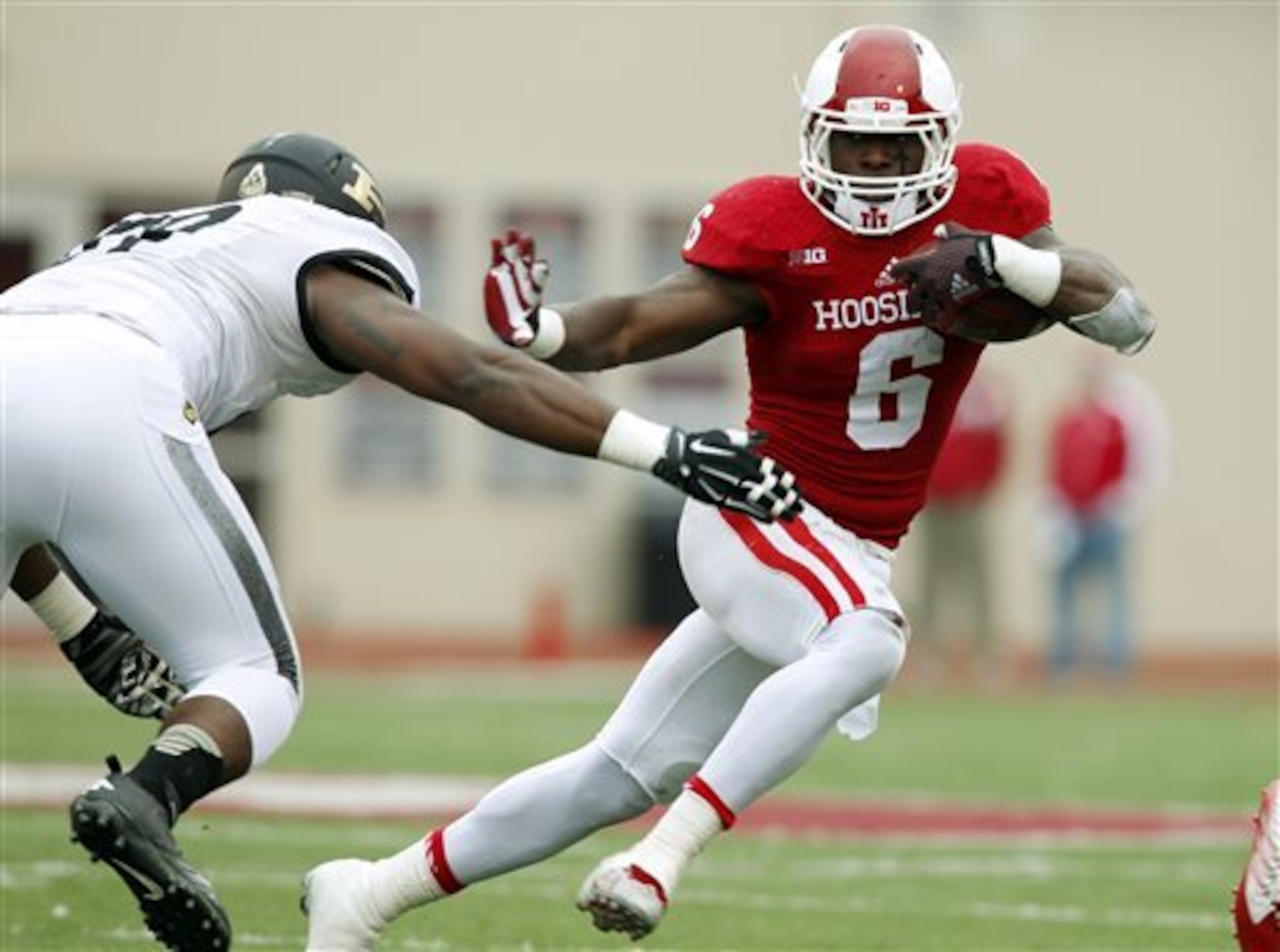
| 1 | Tevin Coleman | Indiana |
| 2 | Duke Johnson | Miami (Fla.) |
| 3 | Todd Gurley | Georgia |
| 4 | Melvin Gordon | Wisconsin |
| 5 | David Cobb | Minnesota |
Trying to rank the top running backs in the class is a somewhat impossible task because of how good these prospects are. The top four of Coleman, Johnson, Gurley and Gordon could be placed in any order without any hesitation. It’s really a matter of style preference between the bunch.
Coleman is my top back because he has the vision, power, speed, frame and instincts of a complete three-down back in any scheme. He’s a tremendous athlete with the ideal frame for a workhorse back. His 2,036 rushing yards and 15 touchdowns came at Indiana, which is severely lacking surrounding talent.
Duke Johnson is another junior who has declared for the draft early. At 5’9”, 206 pounds, Johnson is a compact back with excellent speed and great vision between the tackles. En route to his career-high 1,652 yards and 10 touchdowns, Duke really improved his physicality and ability to create in tight spaces.
Georgia star running back Todd Gurley is right with the above two in terms of talent, but he has durability concerns after tearing his ACL. Gurley would be an excellent fit in a zone-read system because of his ability to cut back upfield, but overall his vision is only average. He’s not laterally gifted, instead relying on his great power and acceleration. If he stays healthy, Gurley should be a solid back.
Coming in fourth is the country’s leading rusher, Melvin Gordon. Gordon tallied 2,336 rushing yards as a junior, which is insane. He isn’t your typical Wisconsin back because he’s shifty and way more athletic than past players from the Badgers' system. Gordon does have some major concerns, though.
When he approaches the line of scrimmage, he often stops his feet as he searches for a big running lane. Most of Gordon’s big gains came via outside runs, but that’s not going to be the case in the NFL. It’s nitpicky, but in a class this deep, those little things matter.
Rounding out the top five is David Cobb. Cobb is a tough inside runner who is relentless with his power and “grind-it-out” mentality. He’s a true workhorse who is able to take a beating and come back stronger. Compared to his counterparts, Cobb lacks the top-end athleticism, but he is a solid overall back.
Class Strength: A+
Top 5 Wide Receivers
3 of 14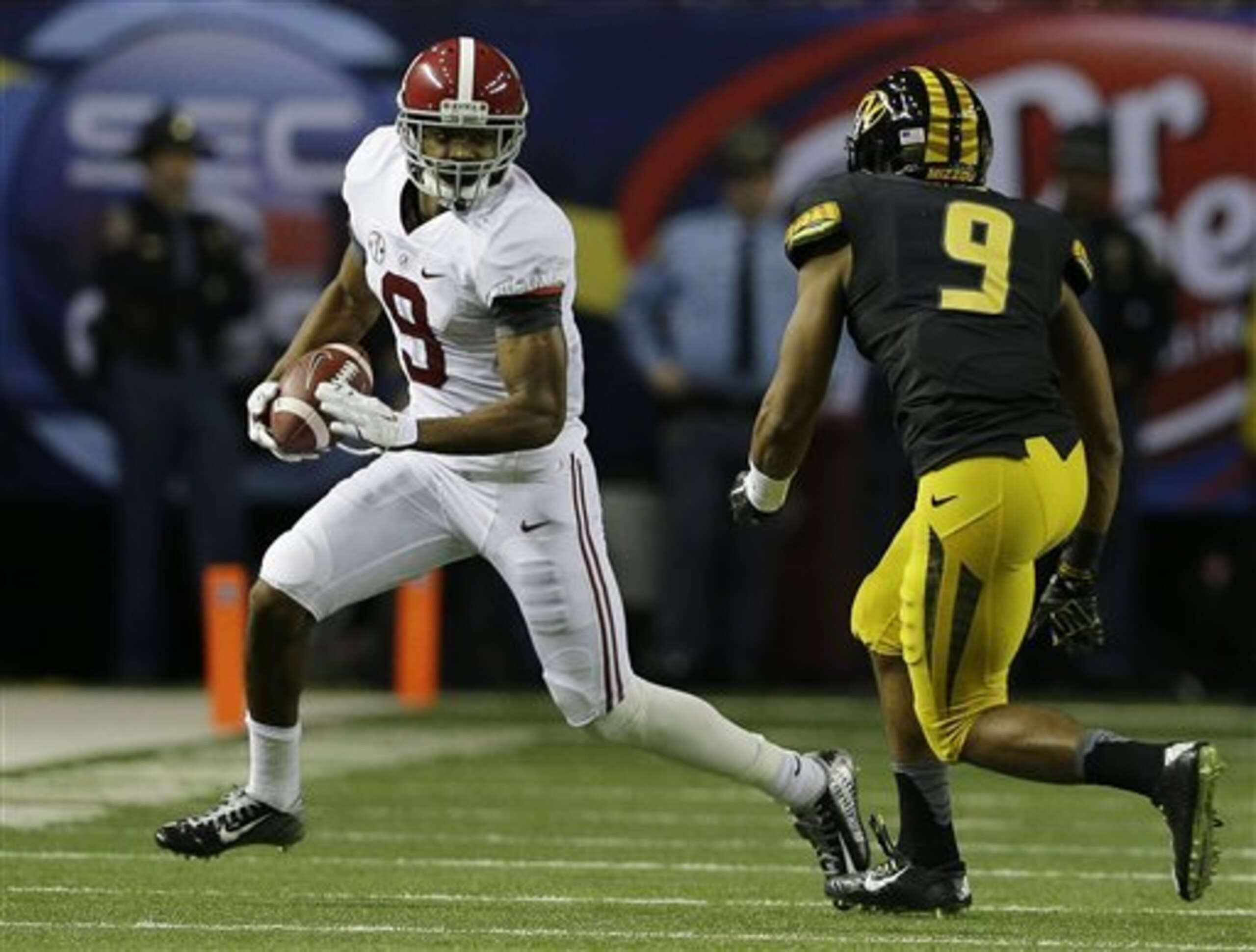
| 1 | Amari Cooper | Alabama |
| 2 | Kevin White | West Virginia |
| 3 | Jaelen Strong | Arizona State |
| 4 | DeVante Parker | Louisville |
| 5 | Devin Funchess | Michigan |
Similar to the running backs, teams picking in the first two rounds will have the opportunity to grab a highly talented player. The top five players at receiver all have a different style and area where they win, so this list would change when considering specific team needs.
The most explosive and dangerous receiver in the class is Alabama’s Amari Cooper. The junior is silky smooth throughout his routes and has very good speed and acceleration. He’s 6’1”, 210 pounds, giving him a good frame to compete for passes over the middle. Although Cooper isn’t a Sammy Watkins-level prospect, he still projects to be a low-end No. 1 worthy of a first-round pick.
The duo of Kevin White and Jaelen Strong is right after Cooper because both have excellent ability to high-point the football and win in traffic. Being able to go up and steal the ball away from the defender on a poor pass is a tremendously valuable trait, and each can do that.
White and Strong have similar height and weight, but White is more raw since he’s only played in Division I for two seasons. Each can grow into a much better player but still contribute from Day 1, so both could go in the top half of the first round.
DeVante Parker returned to school after his junior season and has had a big impact after coming back from injury. He’s nearly matched last season’s numbers in half the games played, a testament to his natural talent. Parker is another big receiver, but his play is more similar to a smaller guy. He’s a smooth and polished route-runner already, so he is what he likely will be in the NFL.
There are times when Parker isn’t physical throughout his routes, allowing the cornerback to move him away from the ball. He also produced on many off-coverages and blown assignments, so there should be concern of how he can perform when defenses give him more attention.
Rounding out the top five is Devin Funchess. Funchess sometimes gets plugged in as a tight end, but he would need to add at least 15 pounds to move there full time. He’s certainly athletic enough to play outside at receiver, showing good burst and shake in his hips throughout his routes. His issue is his hands. He drops way too many passes at this point, but maybe when he’s targeted more regularly this will improve.
Class Strength: B+
.jpg?w=2560 "Titans Giants Football")

Top 5 Tight Ends
4 of 14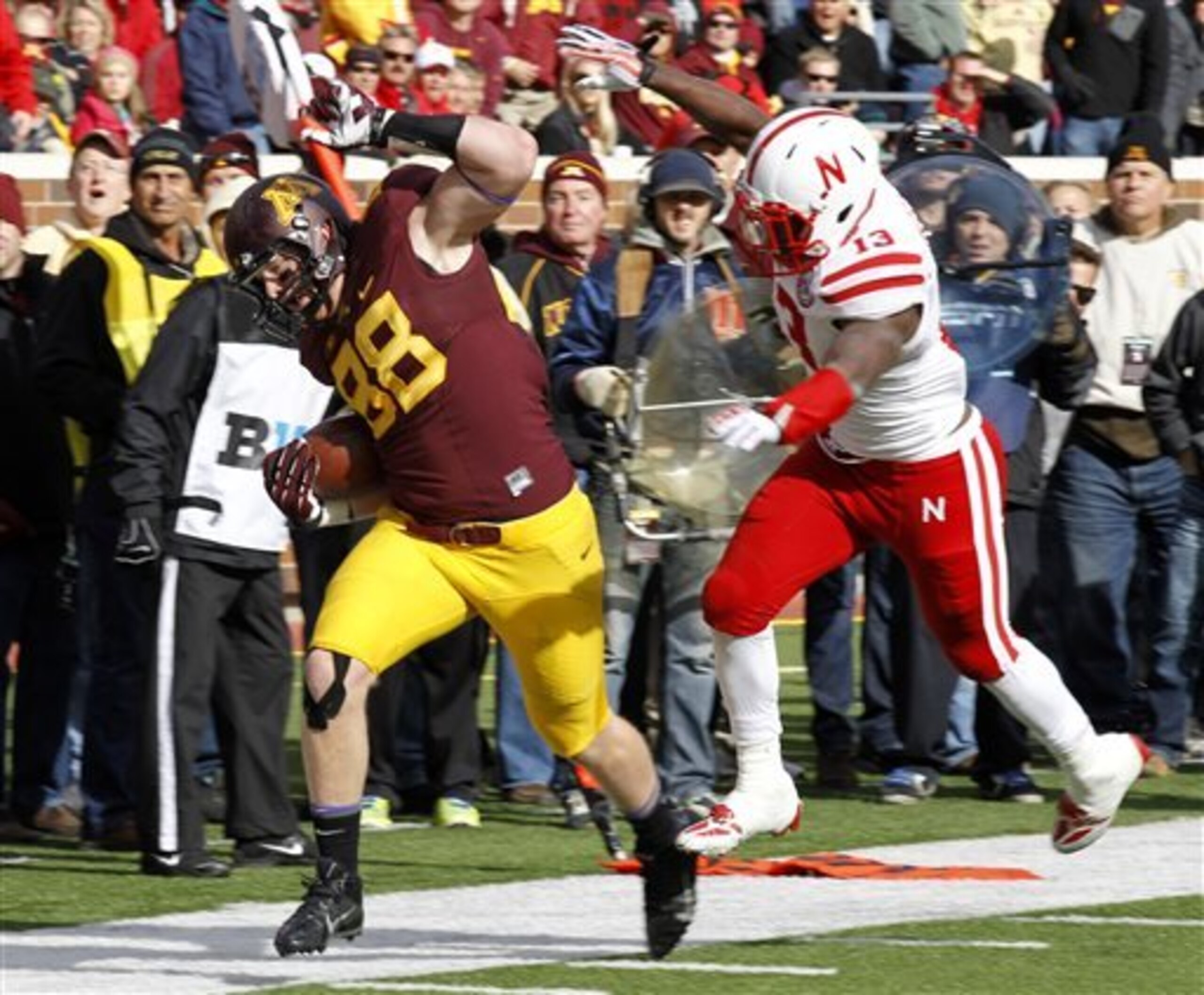
| 1 | Maxx Williams | Minnesota |
| 2 | Jeff Heuerman | Ohio State |
| 3 | Clive Walford | Miami (Fla.) |
| 4 | Tyler Kroft | Rutgers |
| 5 | Gerald Christian | Louisville |
Thankfully underclassmen Maxx Williams and Tyler Kroft have declared, because otherwise, this group is very underwhelming. Outside of Williams and Heuerman there isn’t a tight end worth taking before Day 3 of the draft.
Williams is a relative unknown because he plays at Minnesota, but he is a great athlete who can make difficult catches on the sideline or in the end zone. He has strong hands that benefit him receiving and blocking. Expect him to do well in the draft process and get first-round hype.
Ohio State tight end Jeff Heuerman has been underutilized for much of his career, but he has plus-athletic traits across the board. His 6’5” frame can withstand hits over the middle, and he’s shown he’s able to bring in difficult passes down the seam. He projects as a good starter in the NFL and should be taken in the second round.
The rest of the class are nice receiving options but not starter material in their first season. Clive Walford and Tyler Kroft can make a nice impact as secondary route-runners in the slot or as second tight ends on the field. Day 3 seems appropriate for the remaining class.
Class Strength: C
Top 5 Offensive Tackles
5 of 14
| 1 | Ronnie Stanley | Notre Dame |
| 2 | Jack Conklin | Michigan State |
| 3 | La'el Collins | LSU |
| 4 | Ereck Flowers | Miami (Fla.) |
| 5 | Ty Sambrailo | Colorado St |
The offensive tackle class hasn’t been fully decided yet, but if underclassmen Ronnie Stanley and Jack Conklin both declare, this class is really strong. If not, then the prognosis becomes much worse. There simply aren't enough instant-impact tackles available among the seniors.
La’el Collins is one heck of a player, and the fact he’d be my third tackle behind Stanley and Conklin is only a testament to those guys. Collins is a nasty, mean blocker and has the combination of length and strength needed to be a very good tackle. His technique can get sloppy, and he’s not incredibly agile in his kick slide. But he still is worthy of being a highly taken lineman.
Miami (Fla.) junior Ereck Flowers recently declared for the draft early, and he figures to be in the first- to second-round mix based off his tape. He’s 6’6” and 324 pounds and able to play either tackle position in the NFL. Flowers is a good athlete who flashed dominance throughout his junior season and now needs to put all of his physical gifts together.
Rounding out the top five is Ty Sambrailo from Colorado State. He’s another guy with great length, which is hugely important projecting forward. He’s more finesse than the guys listed above, so as a run-blocker he isn’t the impact player. But, Sambrailo should be able to hold his own as a pass-blocker quite well.
Class Strength: B+
Top 5 Offensive Guards
6 of 14
| 1 | Brandon Scherff | Iowa |
| 2 | A.J. Cann | South Carolina |
| 3 | Laken Tomlinson | Duke |
| 4 | Arie Kouandjio | Alabama |
| 5 | Jarvis Harrison | Texas A&M |
As far as interior linemen go, Brandon Scherff could be elite in the NFL, so I’m projecting him to kick inside from tackle. Scherff doesn’t have great lateral quickness, but he is speedy when moving downhill as a run-blocker in space. Imagining him in a lead-blocking role is downright scary with his mean streak. He deserves to be taken in the first as a guard or second round as a tackle.
The rest of the class is filled with mammoth, power-type blockers. A.J. Cann and Arie Kouandjio are road-graders with excellent strength. Their issue is that their pass protection is suspect, as they don’t have great balance and tend to bend at their waist to compensate. This leaves them highly vulnerable to speed countermoves.
Class Strength: C-
Top 5 Centers
7 of 14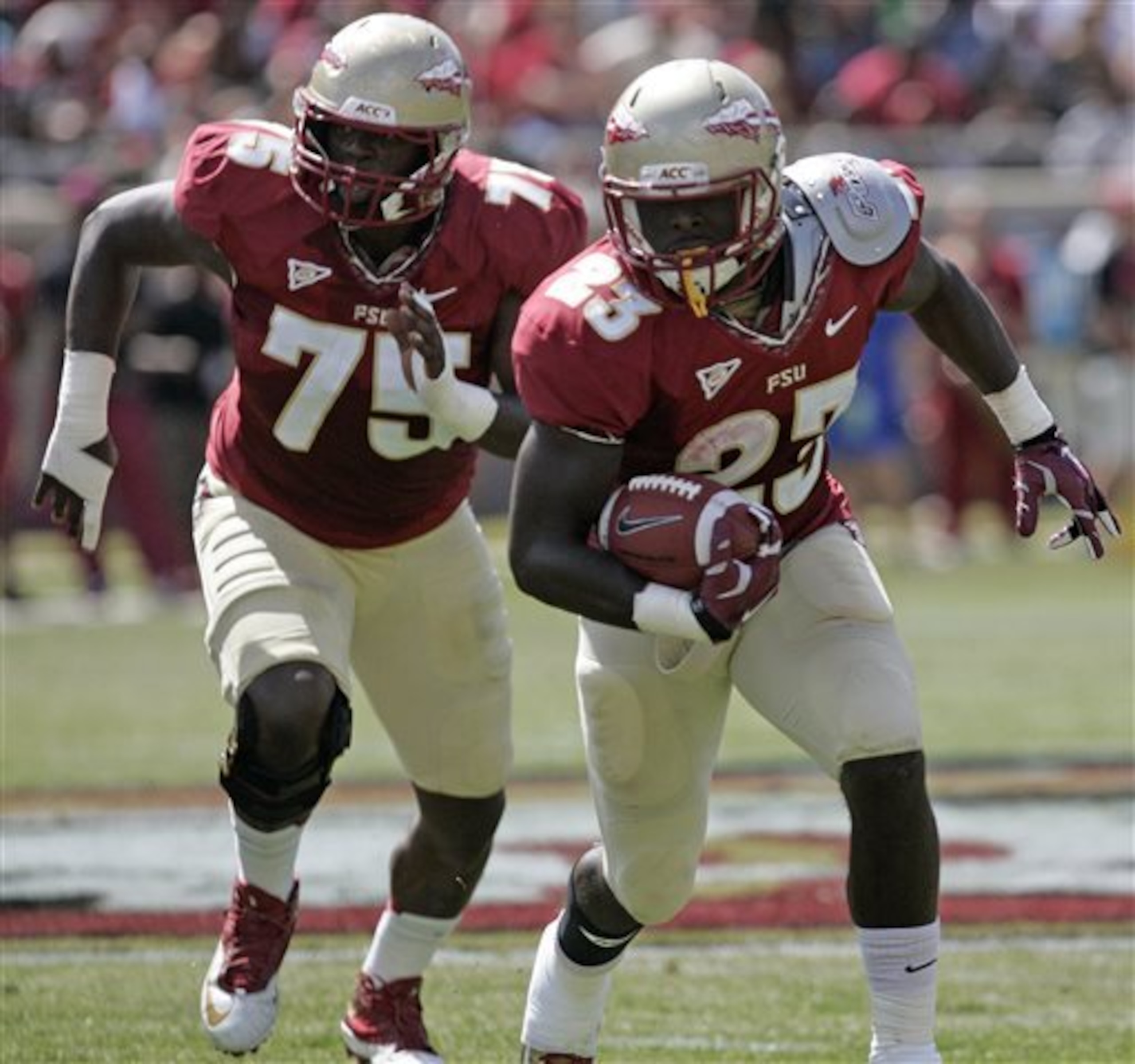
| 1 | Cameron Erving | Florida State |
| 2 | Hroniss Grasu | Oregon |
| 3 | Mike Matthews | Texas A&M |
| 4 | Reese Dismukes | Auburn |
| 5 | Brandon Vitabile | Northwestern |
Like the guard position, the best center prospect is a guy who should move from tackle. Florida State senior Cameron Erving is a very poor tackle currently, but he’s been fantastic since moving to center this season. His blend of athleticism and length is truly elite on the inside, and his footwork in pass protection is no longer a concern inside.
Outside of Erving, only Grasu projects as an early starter, and he’s more of a help-blocker than someone who handles big tackles well. He’s similar to Mike Pouncey, who struggles when there is a rusher directly over him, but he is smart and athletic enough to be a good run-blocker and help double-team.
Class Strength: C
Top 5 Defensive Ends
8 of 14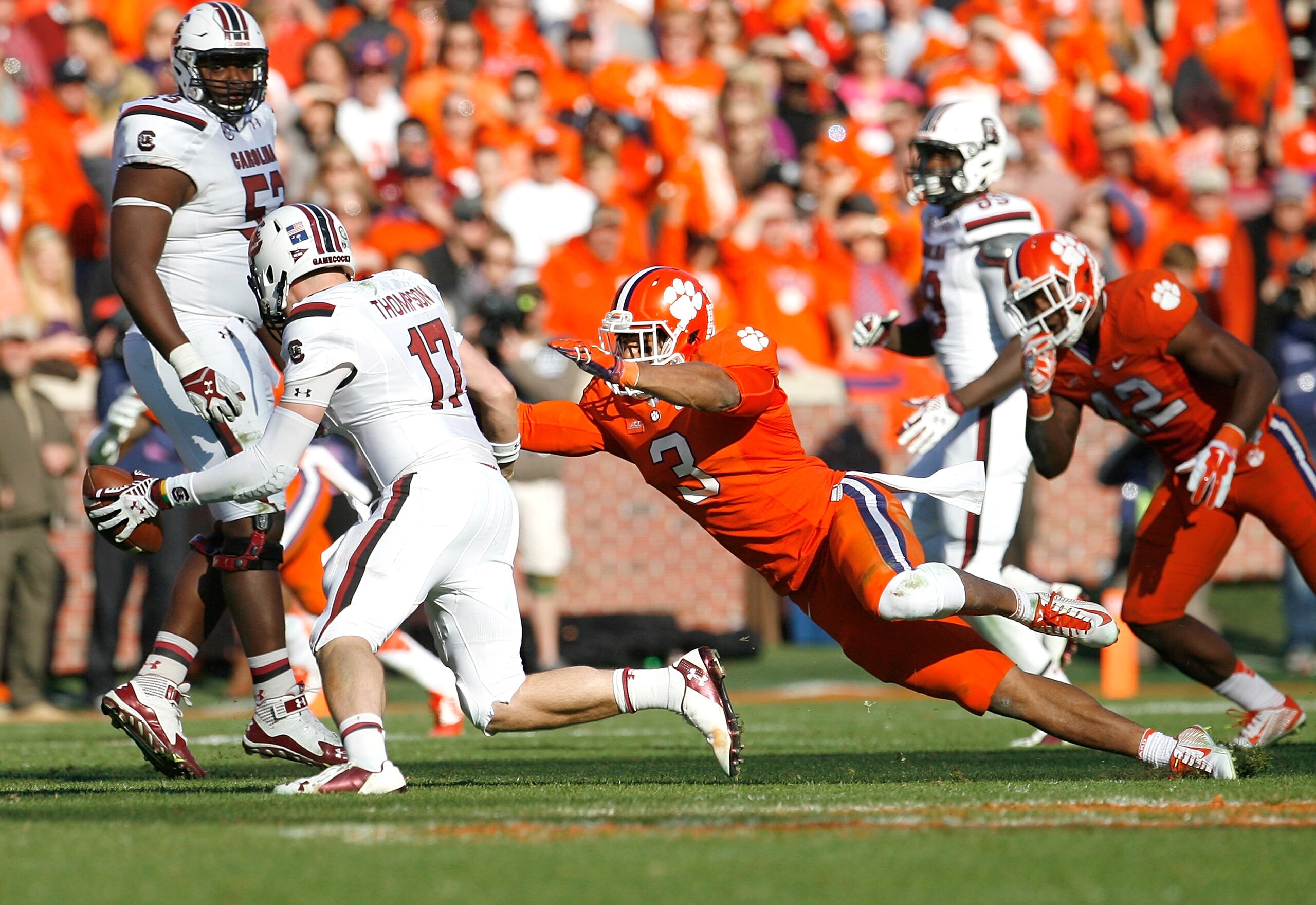
| 1 | Vic Beasley | Clemson |
| 2 | Randy Gregory | Nebraska |
| 3 | Eli Harold | Virginia |
| 4 | Dante Fowler | Florida |
| 5 | Bud Dupree | Kentucky |
This is where the class really shines. Not only is this edge-rusher class deep, but it’s a premium NFL position, and there are at least five legitimate first-round types in the group. I have these players listed as defensive ends, but really I am referring to players who rush the passer, so some could end up in a 3-4 as well.
The top rusher is Vic Beasley, who has incredible bend around the edge and quickness off the snap. Yes, he’s a bit small (6'2", 235 lbs), but his pass-rushing moves and quickness are so good that it really doesn’t matter. He doesn’t let tackles get into his chest with their punch because he’s elusive and creative.
On the opposite spectrum of Beasley is Randy Gregory. Gregory is long and lanky but very raw as well. His burst off the edge isn’t consistent, but when he’s playing well, he’s dominant. He’s an elite athlete, so he’s worth the risk even with a top pick because guys like Gregory are nearly impossible to find.
The guy who will rise up boards quickly is Eli Harold from Virginia. Again, look at speed and ability to bend around the edge, and Eli is terrific in that regard. He’s another guy lacking great anchor as a run defender, but he is strong and will be an instant impact player.
Dante Fowler is a power rusher who could play as a down lineman or as an off-ball linebacker. He’s got good speed and ability to bully opposing tackles right back into the pocket. Fowler could excel in multiple fronts if given the chance.
Fifth is Bud Dupree, a speedy edge guy who is bouncy off the snap and relies on that first step often. He’s a bit of a project but could pay off well as a secondary rusher.
Class Strength: A
Top 5 Defensive Tackles
9 of 14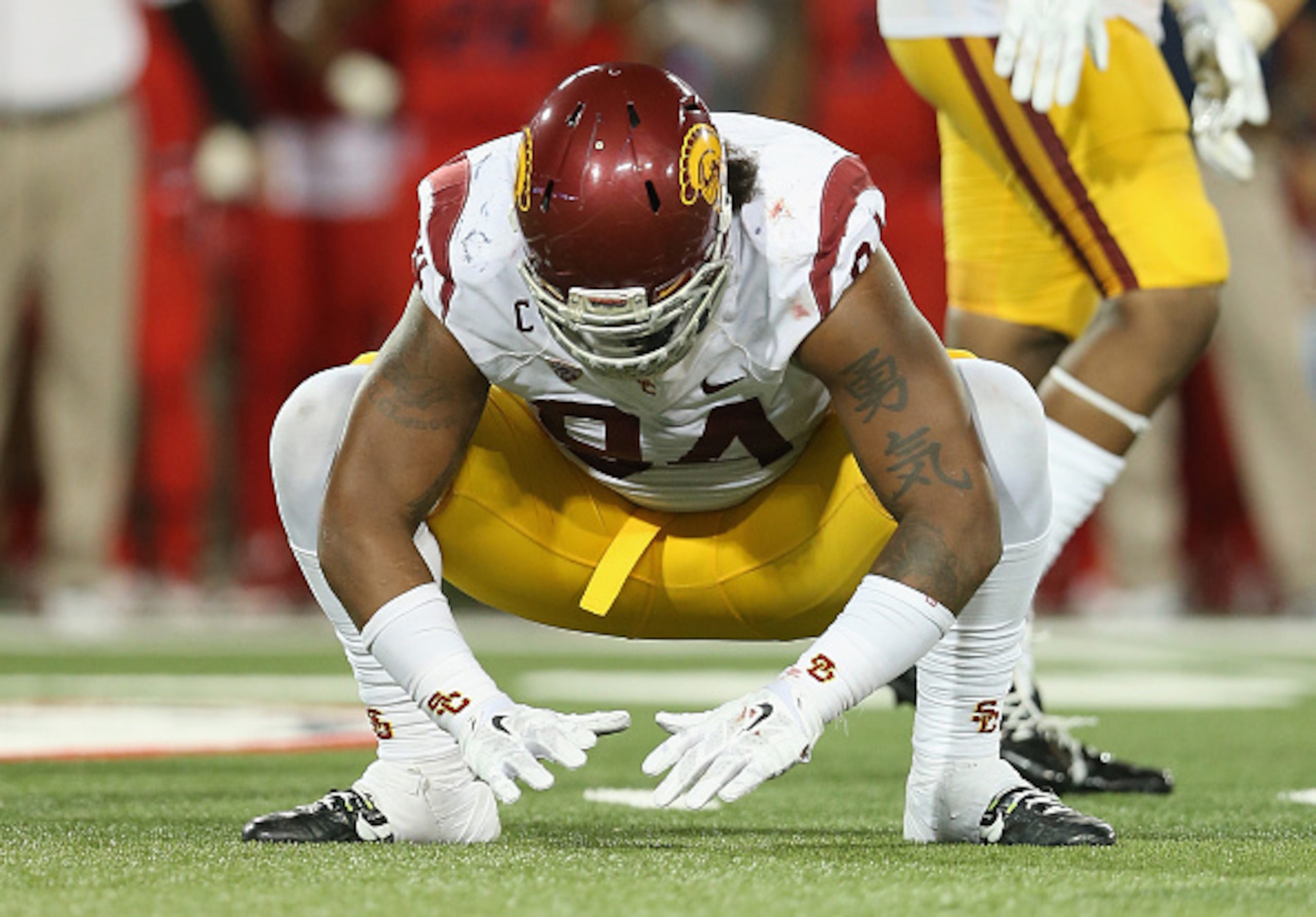
| 1 | Leonard Williams | USC |
| 2 | Jordan Phillips | Oklahoma |
| 3 | Eddie Goldman | Florida State |
| 4 | Michael Bennett | Ohio State |
| 5 | Danny Shelton | Washington |
One of the top overall players in the class has to be Leonard Williams. He’s a natural 5-technique in a 3-4 front similar to Richard Seymour. He’s powerful and moves very well for his size. His burst off the snap is what keeps him from being a Gerald McCoy-type prospect, but that’s OK. He’s going to be a very good player for a long time for whoever takes him.
Outside of Williams, the word you’ll hear most is “potential.” Oklahoma tackle Jordan Phillips embodies this. He just declared for the draft, per Ryan Gerbosi of The Dallas Morning News, and with his size and ability to get upfield, he’s a guy who will warrant first-round looks.
Phillips is similar to Danny Shelton, another potential nose tackle in a 3-4. The difference between the two is consistency and age. Shelton is older and has weight concerns.
Florida State tackle Eddie Goldman is another big man who needs more seasoning, but he’s uber-talented. He’s raw with his technique and relies on his immense physical traits to win, so he could fall to the second round.
Michael Bennett of Ohio State is a pass-rushing dynamo, using speed and an array of moves to get pressure on quarterbacks. He isn’t great against the run because of his ball awareness and struggles against double-teams. Bennett looks like a second-rounder right now.
Class Strength: B
Top 5 Outside Linebackers
10 of 14
| 1 | Shaq Thompson | Washington |
| 2 | Jordan Jenkins | Georgia |
| 3 | Paul Dawson | TCU |
| 4 | Jordan Hicks | Texas |
| 5 | Geneo Grissom | Oklahoma |
There is one true stud at outside linebacker at this point, and it’s Washington’s Shaq Thompson. Thompson is a pure weak-side talent because of his weight, but he is tremendous at chasing down plays with his safety-like speed and instincts. He’s a rare playmaker at the position and worthy of a first-round pick.
Separation between Jordan Jenkins, Paul Dawson and Jordan Hicks is nearly nonexistent, as each brings solid physical tools to the table and is productive. Jenkins is more of a pass-rusher, while Dawson and Hicks win in space and coverage more often. Jenkins and Hicks project as strong-side linebackers, while Dawson looks like a weak-side man with his speed and fluidity.
Class Strength: B-
Top 5 Inside Linebackers
11 of 14
| 1 | Benardrick McKinney | Mississippi State |
| 2 | Eric Kendricks | UCLA |
| 3 | Stephone Anthony | Clemson |
| 4 | Denzel Perryman | Miami (Fla.) |
| 5 | Kris Frost | Auburn |
It’s rare to get great first-round value with inside linebackers because many good ones tend to fall to middle rounds. Still, a guy with the length of Benardrick McKinney of Mississippi State is hard to find, and he’s a rangy guy with talent when dropping back in coverage. He’s the top guy in this positional group.
Depending on your flavor for size and speed, Eric Kendricks and Stephone Anthony don’t have much separating them except for their heights. Kendricks is extremely good in coverage, showing great fluidity and natural understanding of leverage and spacing. He’s just 5’11 though, and this could affect his durability.
Anthony is much bigger and can play inside or outside. He’s 6’3” and has great athleticism to develop into a bigger role than what he was used to at Clemson. He should rise throughout the draft process as well.
Denzel Perryman is a downhill thumper like Brandon Spikes. He’s a two-down linebacker because of his average athleticism and inability to cover effectively, but he is valuable because of his talent between the tackles. For teams that have good sub-package options, Perryman should be attractive on Day 2.
Class Strength: B+
Top 5 Cornerbacks
12 of 14
| 1 | Marcus Peters | Washington |
| 2 | Trae Waynes | Michigan State |
| 3 | Alex Carter | Stanford |
| 4 | Ifo Ekpre-Olomu | Oregon |
| 5 | P.J. Williams | Florida State |
In terms of on-field talent, Marcus Peters is rare. He is an excellent coverage cornerback with tremendous instincts to find the ball. Peters can cover anybody you line up against him and smother him throughout his route. The issue with Peters is that he was dismissed from the Washington program for reportedly attempting to choke a coach on the sidelines twice, and there are other off-field concerns as well.
The only other first-round caliber cornerback is Michigan State’s Trae Waynes. Waynes has good length and has experience playing in multiple coverage schemes for the Spartans. He’s a better athlete than his former teammate Darqueze Dennard and has more potential.
Stanford cornerback Alex Carter is one of the more underrated talents in the country and has great length and fluidity in his coverage. Carter is able to locate the ball early on most routes, giving him the ability to compete for a pass defense often. He can improve his overall footwork and consistency in breaking toward the ball more quickly.
A year ago, Ifo Ekpre-Olomu was a top cornerback prospect, but he has fallen after a series of bad games in a row where his lack of speed and size was obvious. He looks to be a nickel corner or free safety when he returns from his torn ACL.
Florida State cornerback P.J. Williams is long and fast, but he really has big technique issues. He doesn’t jam particularly well at the line, and he struggles to find the ball before he gets physical downfield. That’s a bad combination. If he improves there, the sky is the limit for Williams.
Class Strength: C+
Top 5 Safeties
13 of 14
| 1 | Landon Collins | Alabama |
| 2 | Cody Prewitt | Ole Miss |
| 3 | Jalen Mills | LSU |
| 4 | Gerod Holliman | Louisville |
| 5 | Clayton Geathers | UCF |
Despite the NFL desperately needing safety talent, college football just isn’t producing stars. Alabama’s Landon Collins is a good strong safety, but he doesn’t have great size or coverage instincts, so he may top out as an above-average player at the position. That’s worth a first-round pick but not a high one.
The other notable prospect worth mentioning is Gerod Holliman from Louisville. He has an amazing 14 interceptions in his one season of play, but is he a one-year wonder? There has to be concern with his awful tackling effort and technique as well. When the turnovers aren’t coming, he’s a major liability.
Cody Prewitt, Jalen Mills and Clayton Geathers all have potential to be nice starters in the league, but they need specific roles to achieve it. Most safeties in the NFL are average because they lack great instincts, and these three have the ability to be good in both coverage and against the run but likely will not become Pro Bowl-caliber.
Class Strength: B-
Top 5 Special Teamers
14 of 14
| 1 | Kyle Christy | Florida |
| 2 | Will Conant | Air Force |
| 3 | Hunter Mullins | UAB |
| 4 | Andre Heidari | USC |
| 5 | Wil Baumann | NC State |
There are only two special teamers who look to be draftable this season, and Florida’s Kyle Christy is the top punter of the group. Christy has punted 56 times this year for an average of 44.4 yards and a long of 67.
The other top senior punter is Will Conant from Air Force. He’s built like a safety at 6’2”, 215 pounds, and he used that frame to belt 61 punts for an average of 43.6 yards. His longest punt of the season was 64 yards.
All other senior place-kickers are more likely to go undrafted than to be selected in April or May.
Class Strength: D+



.jpg?w=2560 "Saquon Out for Game")