Serie A: The Diverging Destinies of Juventus and Internazionale
The 26th of July, 2006 is a day that will forever live in infamy in Italian football. It was the day on which, after all had been said and done in terms of various appeal processes, the punishments for the Calciopoli match-fixing scandal were handed down.
Five teams were implicated, none more so than reigning Serie A champions Juventus, who were stripped of their two most recent titles and relegated to the second tier for the first time in their 109-year history.
As well as the anticipated mass exodus of players not interested in playing in Serie B, the Old Lady also had the unenviable task of trying to overcome a deduction of nine points. At the beginning of the 2006/07 season, there was no guarantee that they would be returning to the top flight.


Meanwhile, in Serie A, a new power was already on the rise. Internazionale—who, prior to the scandal, hadn’t won the title since 1989—were awarded Juve’s abdicated title, and with their main championship rivals AC Milan faced with a points deduction of their own, little stood in their way. They eventually collected five consecutive scudetti, bolstered by the fact that they were now the undisputed powerhouse of Italian football and could attract top-tier players.
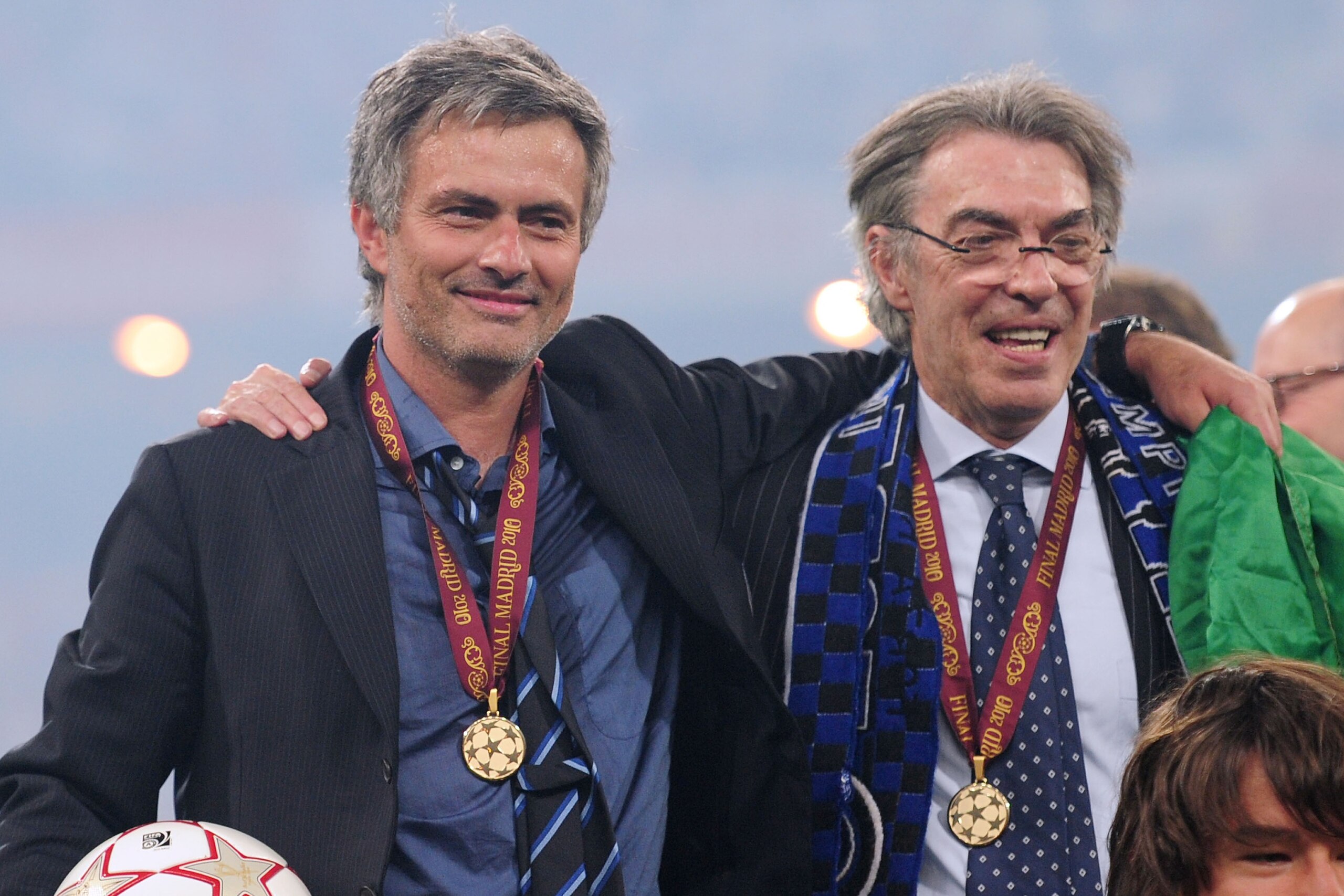
This status was cemented in 2010, when Jose Mourinho led the club to an unprecedented continental treble that included the Champions League, which Inter had last won in 1965.
Juventus had emerged from Serie B after one season, having held on to key players like Gianluigi Buffon, Alessandro Del Piero, Pavel Nedved and Giorgio Chiellini. They then briefly threatened to pick up where they had left off, but an aging squad and high turnover of managers saw them finish seventh in both 2009/10 and 2010/11.
Few would have expected the 2011/12 season to represent such a dramatic changing of the guard. Juventus returned to the summit, while Inter slumped to sixth, having never been higher than fifth all season.
Two hallmarks of Inter's halcyon period were managerial stability and financial clout. Between 2004 and 2010, the club had just two coaches—Mourinho and Roberto Mancini before him. This cohesion was critical given the amount of money that club owner Massimo Moratti was making available for transfers. Since 2010 and their last title win, the club has had seven head coaches.
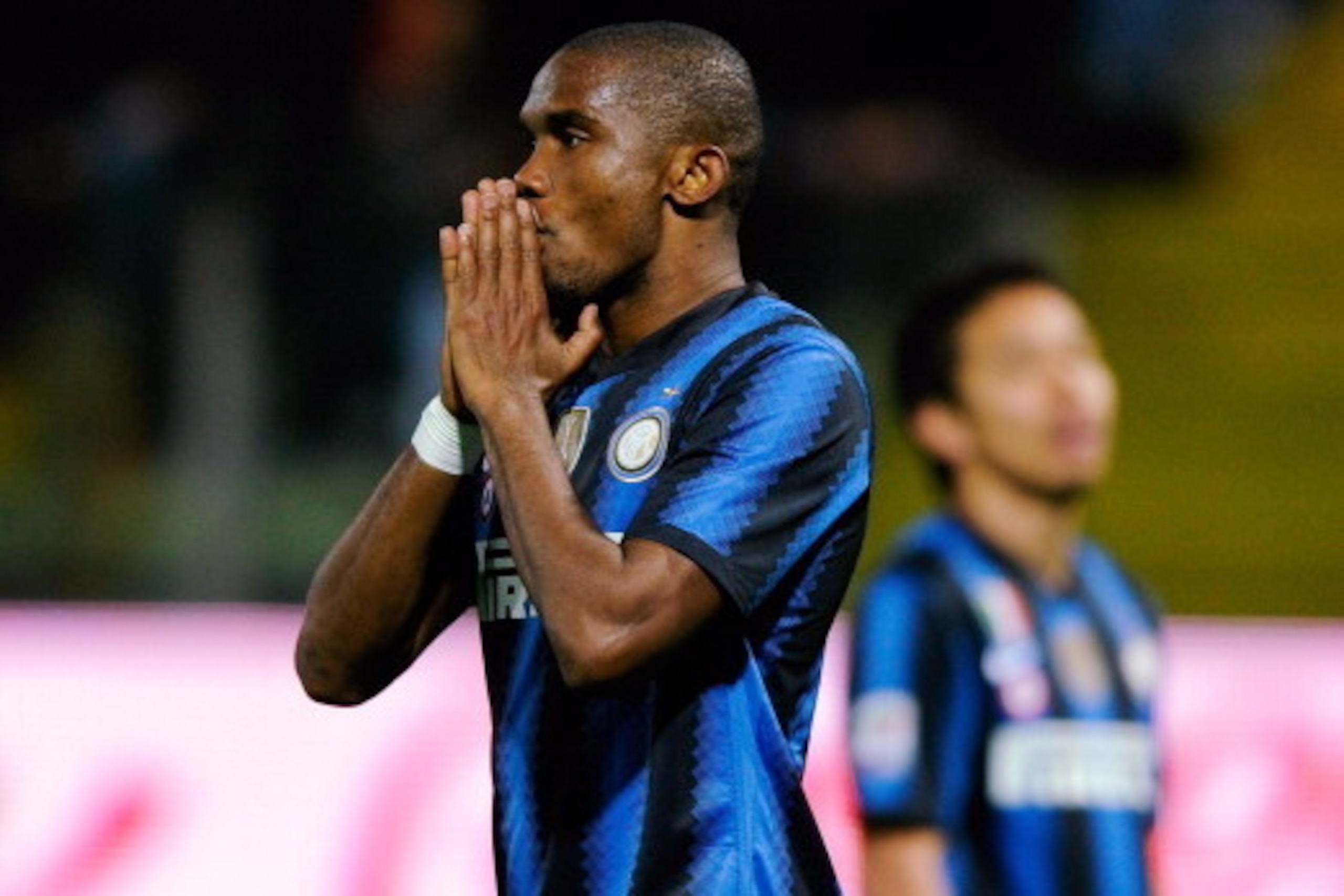
Moratti, now no longer the club’s owner, invested around €1.2 billion into the club over his 18 years in charge, much of which was post-2006, with signings such as Samuel Eto’o, Zlatan Ibrahimovic and Wesley Sneijder. However, as shown in Deloitte’s figures for the 2010/11 season, Inter’s overall revenue was just €211.4 million—Real Madrid raked in €479.5 million by comparison. This disparity was critical to the crumbling of Inter’s empire.
In an ironic twist, Inter actually may have suffered due to Juventus’s disappearance from Europe’s top table. Serie A’s popularity had been on the wane since its late '90s heyday, but Juve’s relegation undoubtedly signalled the death knell of the league’s golden period.
With attention turning to Spain as the new rival to the Premier League, Inter were forced to wage an unwinnable battle for international revenue streams. The fact that their income has been rapidly eclipsed by the top Bundesliga and La Liga sides meant that Moratti’s spending simply became unsustainable.
As Inter faltered, Juventus returned in style. Under Antonio Conte, the club went the entirety of the 2011/12 season undefeated, and have won the scudetto every season since. Their triumphs have of course been predicated by their status as Italy’s largest club, as well as their financial prowess, but there has been additional factors.
Like Inter, much of Juve's success is owed to the fact that Conte remained in charge for several seasons, moulding the squad to match his system.
Unlike Inter, however, Juventus decided to rebuild with a focus on pragmatism rather than the star-laden approach that created the long-term financial issues which Inter now face. The likes of Arturo Vidal, Kwadwo Asamoah, and Stephan Lichtsteiner may not have had the same cachet as Ibrahimovic—who left Bianconeri after their relegation—but they've arguably had a bigger impact in the long run.
Their new stadium is a perfect example of this forward-facing approach, and is one which the rest of Italy must look to follow if the country is to return to its pre-Calciopoli status. For Inter, the return of Mancini and the hopefully stable ownership Erick Thohir sets them up well to follow Juve’s example, but to what degree they will remains to be seen.
.jpg?w=2560 "NBA Gambling Charges")

.jpg?w=2560 "Jonathan Taylor Landing Spots")

.jpg?w=2560 "Aikman Blasts Cowboys WR 🫣")