


You might have noticed that Major League Baseball teams have been hot after bats this winter and that they've been spending a lot of money on said bats.
But not that much, really. It may seem nuts, but spending on hitting has been relatively subdued.
At ESPN.com, you can find a list of free agents who have signed or agreed to deals. Isolate the hitters and add in Nick Markakis' curiously absent four-year, $44 million contract, and you get 22 contracts for a little over $750 million. That's three Albert Pujols contracts, basically.


With the open market now devoid of quality hitting talent, however, that figure isn't going much higher. It might climb over $800 million, but maybe not by much.
That would mean quite the drop after what happened last winter. Courtesy of MLB Trade Rumors' transaction tracker, a little over $1.1 billion was spent on hitters. It's also noteworthy that the spending on hitters could only top the 2012-2013 offseason's final payout of $715-ish million by $100 million even despite two years of inflation and a boatload of extra revenue.
And another thing: There won't be a $100 million contract given to a free-agent hitter this winter. That's after at least two in three of the last four winters and at least one in each of the last eight winters.
Based on appearances, this wouldn't seem to make sense.
With an average of 4.07 runs per game, the 2014 season was the worst season for offense in decades. In light of that and how, as Maury Brown of Forbes reported, baseball's revenue jumped from $8 billion in 2013 to $9 billion in 2014, you'd expect spending on hitting to be utterly bonkers.
So...what's going on here?
A couple things, really. Though it may not seem like it, the drop-off in spending on hitting actually does make sense.
This Year's Crop of Hitters Just Isn't That Good
Teams may be desperate for offense, but that doesn't mean they have to spend more than they're comfortable spending on a group of hitters that practically embodies the word "meh."
Ben Lindbergh, then of Baseball Prospectus (subscription required), warned this would be the case back in March:
"When we ignore playing time...next winter's free agent pitchers are projected to be pretty good. The shortfall comes from the position players, who are projected to be terrible even per plate appearance. The average projection for a 2015 top 50 free agent position player is 1.76 WARP/600 PA; from 2006-2014, the average was 2.46, 40 percent higher.
"
The 2014 season did little to change this outlook, and you don't need to take too close of a look at this winter's hitting market to see why.
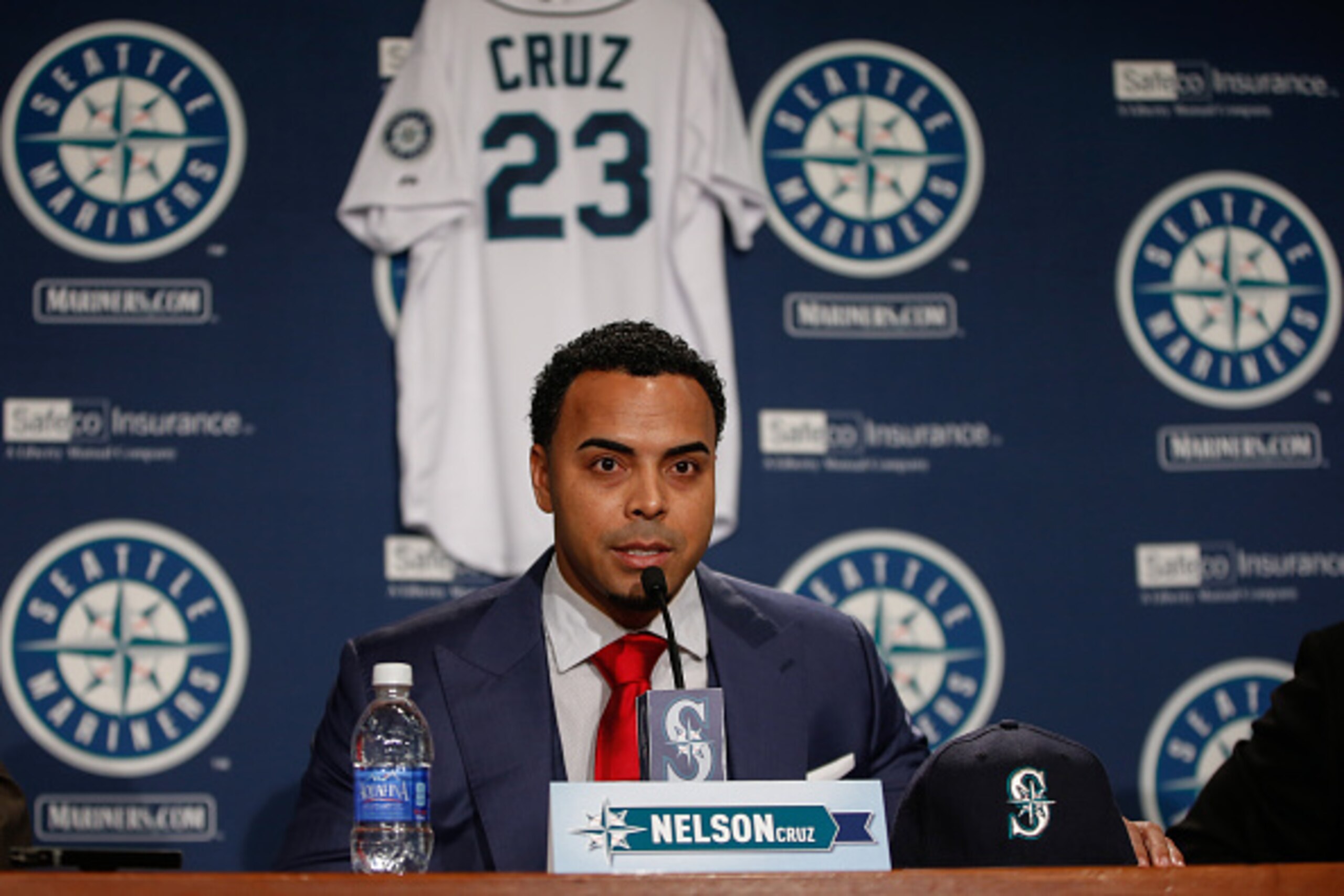
Of the top hitters available, several were bat-only players. Victor Martinez, Nelson Cruz and Billy Butler are designated hitters, and the slow-running, poor-fielding Michael Cuddyer really should be a DH.
Of the top legit position players on the market, meanwhile, nobody came without legit question marks.
Russell Martin is a strong two-way catcher but will soon be 32. Chase Headley is a strong two-way third baseman, but his bat has a low ceiling, and he'll soon be 31. Cuban slugger Yasmany Tomas is young (24) and very powerful but also a questionable defender who may have holes in his swing.
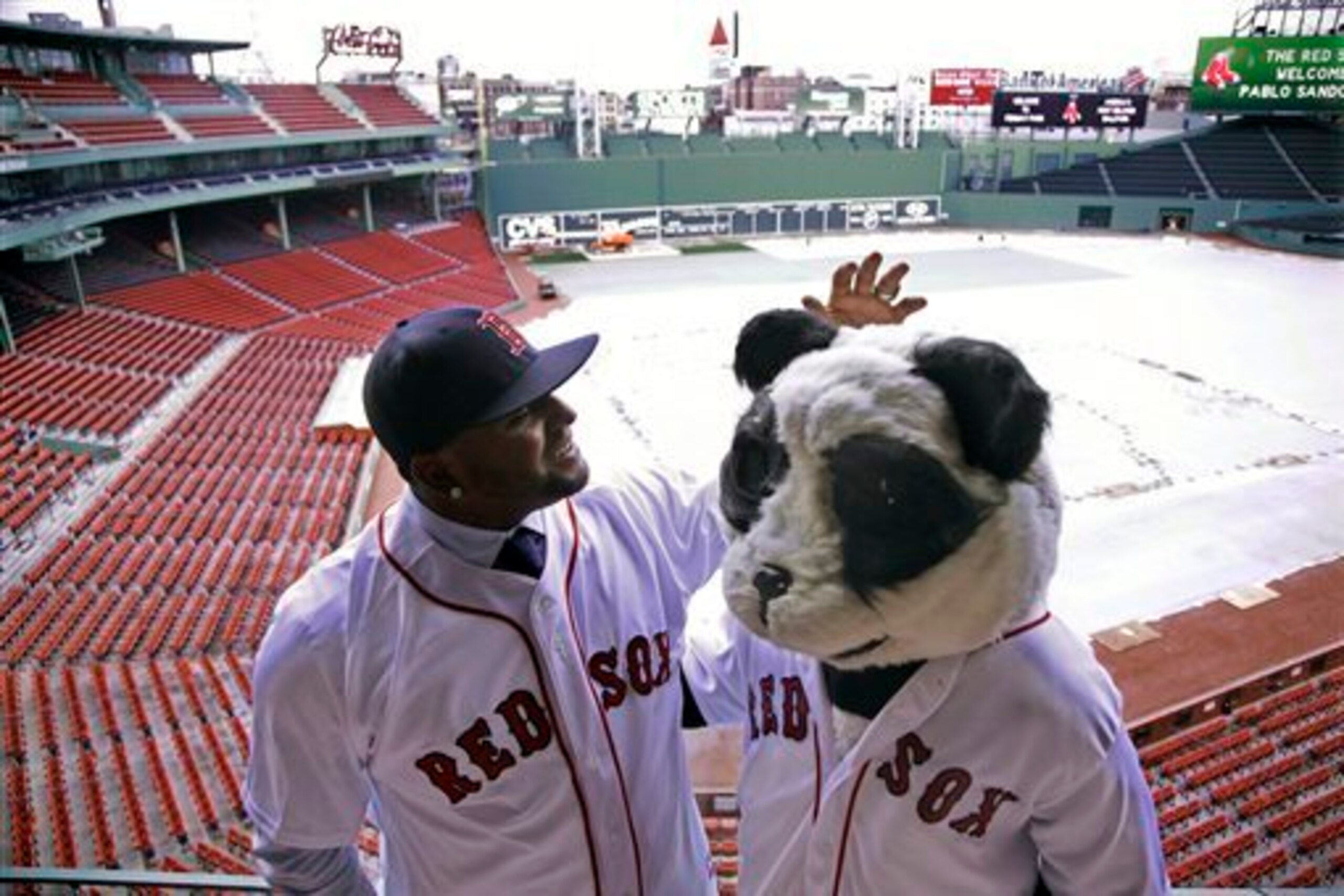
Really, the only two players who had legit chances at making $100 million were Pablo Sandoval and Hanley Ramirez, but it's not shocking that both failed to do so.
As awesome as Sandoval has looked in the last two postseasons, his offensive production has been trending toward league average since peaking in 2011. And though he's young for a free agent at 28, he already comes with conditioning concerns.
As for Ramirez, it says a lot about his bat that his .817 OPS in 2014 constituted a "down" season. However, he'll soon be 31, is a poor defender and has had only one healthy season in the last four.
So of the top hitters available this winter, none really stood out as a potential game-changer. Not along the lines of recent offseason prizes Robinson Cano, Jacoby Ellsbury, Josh Hamilton, Prince Fielder, Albert Pujols or Carl Crawford, anyway.
More than anything, this would appear to be the big reason for the lack of a $100 million deal and subdued spending in general. But there are other factors worth discussing as well.
The National League's DH Disadvantage
I've already written an entire article about this, but the point is worth bringing up again: The lack of the designated hitter in the National League has been an issue.
Though the idea of free agency should be for teams to pay guys what they're worth, overpays happen. Bidding wars can escalate players' price tags beyond what their talent says they're worth. The more heated the bidding war, the higher the price can go.

But when you look at guys like Martinez, Cruz and Butler, you're looking at guys who were essentially unavailable to half the league. All three are DHs, so only American League clubs were going to be bidding on them. That equals limited bidding wars and, in turn, subdued spending.
That's not the only issue the DH poses, however.
With the DH, American League teams can be more aggressive with years and dollars for position players, with the idea being that the DH can help justify the investment by keeping them on the field as they age.
Since National League teams don't have that luxury, it's no wonder they lost out on players like Sandoval, Ramirez, Martin and Headley. If the DH was in the National League, perhaps we would have seen NL clubs willing to match AL offers for those players—and back-and-forth escalation as a result.
Between this and the overall lack of impact hitting talent on the market, we have two solid reasons for why spending on hitting has taken a downturn this winter.
Another thing that might be going on, however, is that clubs may simply be more wary of free-agent hitters than ever before.
The Possibly Changing Aging Curve for Hitters

A short while ago, I mentioned how the idea of free agency should be to pay players what they're worth based on their talent. Though the process can be muddied by bidding wars, make no mistake that this is indeed how most, if not all, teams operate these days.
Here, take it from St. Louis Cardinals general manager John Mozeliak, who said the following in an interview with Anna McDonald of ESPN.com in 2013:
"When you start thinking about things like the aging curve—that is something I think 20, 30 years ago when players were signing contracts, they were signing contracts for what they accomplished—now people are signing contracts for what you expect them to do."
The key phrase here is "the aging curve." If that's something you're just now hearing for the first time, it's more or less just what it sounds like: an attempt to use data to project how players age.
Since aging curves are based on what happens on the field, they're liable to change. And when it comes to the aging curve for hitters, well, that's the thing:
It's changing. And not in a good way.
When Jeff Zimmerman of FanGraphs dove into the data last winter, he found that contemporary hitters are no longer peaking in their late 20s. They're now peaking in their early 20s and declining from there, and the decline is especially bad after the age-30 threshold.
This really shouldn't be that surprising. There are a lot of good, young hitters in the game today and really not that many good veteran hitters. Not so coincidentally, hitters have had trouble remaining effective in their 30s ever since baseball took performance-enhancing drugs away a decade (!) ago.
What makes this relevant to free agency is that most hitters reach the market right around the age of 30. If teams are aware of how the aging curve has changed, then they're aware that free-agent hitters now have nothing but decline years to offer. And decline years, of course, are only worth so much.
So while we know that teams entered the winter with a big-time need for bats and a lot of money to spend on them, the fact that spending has been subdued is no accident. We're in an age where spending big on free-agent hitters is riskier, and the available bats weren't worth bidding wars or fussing over.
With Justin Upton, Jason Heyward and Ian Desmond set to hit the market, maybe things will go back to normal next winter. But for now, we can chalk this offseason up as one to forget for the hitting market.
Note: Stats courtesy of Baseball-Reference.com unless otherwise noted/linked.
If you want to talk baseball, hit me up on Twitter.
_0.jpg?w=2560 "MLB playoffs")
.jpg?w=2560 "Chiefs, Steelers Eye WR Trades")





.jpg?w=2560 "Raiders Sticking with Cousins")