Ivan Rakitic: A Problem or a Solution to Barcelona's Midfield Malaise?
Croatian midfielder Ivan Rakitic has had some ups and downs since joining Barcelona this summer. Both he and the team look slightly out of sorts right now, but is it fair to say that he disappointed or the problem lies within the system?
Back in late September, one month into the new season, everything looked quite rosy for Barcelona and their new signing from the Europa League-winning Sevilla side. They were topping the league with five wins and one draw, having scored 17 goals and conceding none.
It looked like new coach Luis Enrique had tightened them up defensively, both Lionel Messi and Neymar were on song and Ivan Rakitic started to win new admirers among the Camp Nou crowd. He was showing remarkable adaptability and tactical intelligence, leading the charge from midfield with the highest number of passes per game in La Liga—87, a 44 per cent increase from last season—while also in the top 10 in pass success.
TOP NEWS

Sullivan, Hall Lead USMNT to Big Win 💥
.jpg?w=2560 "Titans Giants Football")
OBJ Calls Out Giants After Release
Lamar Jackson Day-to-Day
He seemed fully integrated into Barca’s playing philosophy and excelling within it. The new lord of tiki-taka, he was. Or at least he appeared to be.
Then came the Champions League game against Paris Saint-Germain, which Barcelona lost 2-3: A painful failure, but hardly a cause for alarm just yet. Rakitic played well below his level and was substituted by Xavi after 69 minutes. By the time of the Clasico, Barca’s first league defeat three weeks later, he was demoted to the bench.
It was never quite the same for him or his team after that 1-3 defeat at the hands of their arch rivals, Real Madrid.
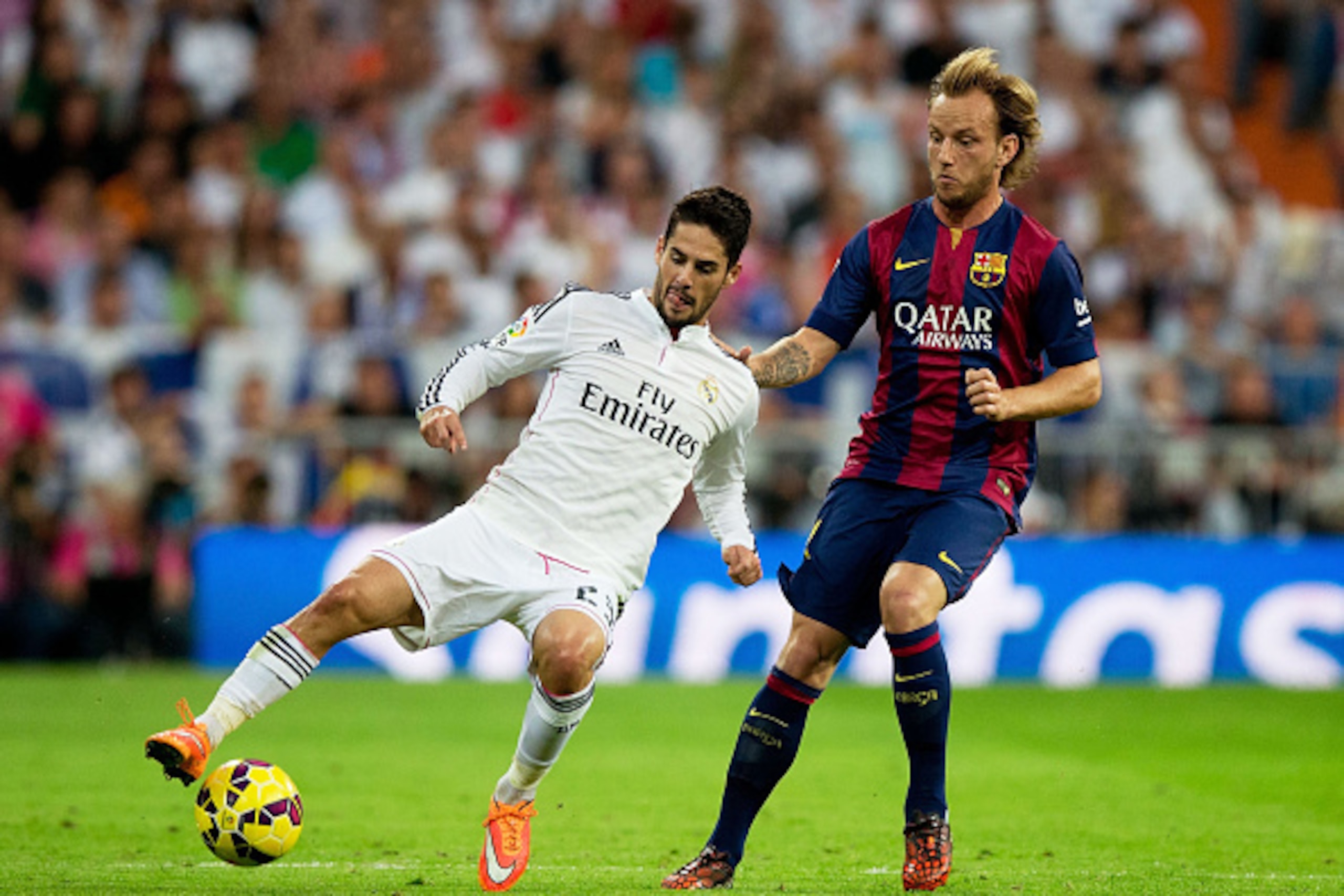
Rakitic stayed on the pitch for 90 minutes in only three of the subsequent 10 matches and struggled to maintain consistency of his form. He was very good in some of them, barely contributing in others.
Barcelona walked through the rest of the Champions League group stage unscathed, and they produced some memorable displays in the league as well (such as wins against Rakitic’s former club, Sevilla, and in the city derby against Espanyol, both 5-1). But a shocking home defeat to Celta Vigo and a goalless draw last weekend at Getafe means they are now trailing four points behind Madrid.
They also look far less convincing and without a clear idea of how and who they should play. Manager Luis Enrique, now already feeling the pressure and uncertainty over his future at the club, has fielded a different lineup in each of the 22 games so far in the season.
“We have to fight for what’s left, and there’s a lot left, because the evolution of this team has been a positive one,” Rakitic said in a post-match interview after Getafe, via Inside Spanish Football.
In that particular game, perhaps the worst Barcelona display this season, Luis Enrique decided to play both Xavi and Rakitic in front of Sergio Busquets, leaving Andres Iniesta on the bench (he only came on after 65 minutes, replacing Rakitic). But that only served to exacerbate the inherent flaw in the system—the fact that Dani Alves, for all the good work he does down the flank, doesn’t really play defence.
That means someone has to cover for him.
Xavi is still a midfield maestro, but now also a veteran who is only put into optimal use if allowed to play to his (creative) strengths. When Luis Enrique plays both him and Rakitic, neither is used in an optimal manner: Xavi can’t play on his natural right side and the Croat is too far from the box, his defensive duties and restricted movement limiting his creative and attacking contribution.
It also means Xavi is more easily isolated and targeted by the opposition players, and things aren’t really better without Rakitic. Given that the manager has insisted on speeding up play, Barca’s classic triangle Busquets-Xavi-Iniesta may no longer be stable enough, at least not in the most demanding of games.
Trying to find a remedy for this malaise surely was one of the reasons why Rakitic was bought—certainly not a better playmaker than Xavi was in his prime, but a more complete midfielder. If Barca persist on the midfield triangle and Dani Alves on the right, then they should probably persist in playing Rakitic and not Xavi as first choice, like they did at the start of the season.
However, the most interesting solution to this midfield conundrum came in the 3-1 win against PSG last week.

The lineup in that game included neither Xavi nor Rakitic. Dani Alves wasn’t there, either.
Instead, Barca started in 3-5-1-1 (Messi playing off Luis Suarez in attack), with Pedro and Neymar covering the flanks and both Busquets and Javier Mascherano screening the defence. The remaining midfielder was Iniesta, later substituted by Xavi. It was radical—but it worked.
But was that a one-off or it could be a long-term solution? Luis Enrique is surely reluctant to change the club’s ways and switch to a double pivot system, just like any Barca coach would be. We could see him employ three at the back more regularly in the Champions League final stages, though.
One of the ways to build on that idea could be to include Rakitic and return Mascherano to the defence. Maybe that’s the “evolution” the player was talking about. But would that work any better than Barca’s classic 4-3-3?
Luis Enrique spent much of the season so far tinkering with the system, particularly after Luis Suarez had served his ban and became available for the team. There may be an evolution in progress, but it’s almost impossible to tell where it is heading.
Stats courtesy of WhoScored.com.




.jpg?w=2560 "Saquon Out for Game")