Complete Analysis of Angel Di Maria's Manchester United Role
Manchester United's winning streak continued on Sunday without the assistance of Angel Di Maria, but the Argentinian will be crucial should this good form be turned into a genuine title challenge.
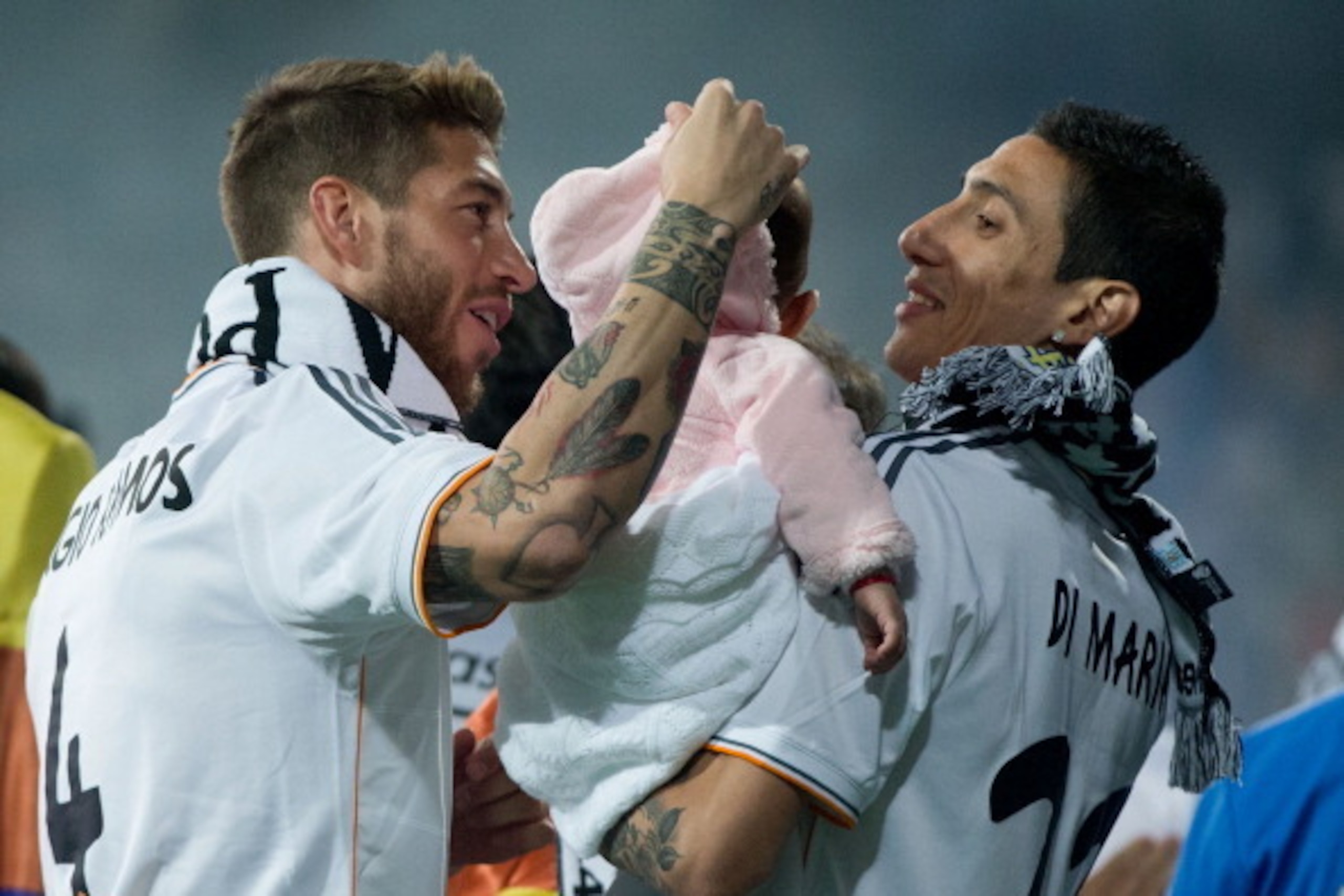
Di Maria is a flexible forward, as comfortable with an attacking brief from midfield as he is playing as a winger or second striker. In his final, Champions League-winning, season with Real Madrid he was often deployed in a three-man midfield behind Cristiano Ronaldo, Karim Benzema and Gareth Bale.
His Man-of-the-Match performance in the final of the Champions League came from that position, and it is probably fair to say that his best performances for United so far have also done.
.jpg?w=2560 "Titans Giants Football")

Because he is so flexible, it is a slightly inexact science to precisely identify his position in any given game. However, my working assumption is that from his debut against Burnley in August through to the Everton game at Old Trafford at the beginning of October, Di Maria started each game in midfield.
Then, against West Bromwich Albion on 20 October, Van Gaal switched his system from a midfield diamond to a more recognisable 4-3-3, with Adnan Januzaj and Di Maria flanking Robin van Persie up front.
From then on, Di Maria played in a front three (or wide in a five-man midfield) against Chelsea, Manchester City and Crystal Palace. He and Januzaj alternated flanks in the Chelsea game meaning he has played both wide-left and wide-right roles.

In United's backs-to-the-wall win over Arsenal at the Emirates, he played in the "Robben role," named for the part Arjen Robben played in Van Gaal's World Cup campaign with the Netherlands.
With "El Fideo" acting as a second striker in a 5-3-2, it appeared that Van Gaal was looking for United to benefit from Di Maria's pace on the break, something which indeed proved crucial to the victory.
It is interesting to note that each of Di Maria's three United goals came in games in which he started in midfield. This is not to suggest that he does not provide a goal threat elsewhere on the pitch though—indeed, he should have added to his tally against Arsenal from a one-on-one with the 'keeper late in the game.

However, it is worth considering that Di Maria benefits from being able to play with space in front of him. The game against Crystal Palace at home in November was a frustrating one for him. His space was restricted as Palace defended deep and Di Maria played as one of an attacking three.
He had six shots, only one of which was on target and attempted eight take-ons, of which only half were successful, per Squwka.com.
Van Gaal drew attention to this in his post-match press conference, saying, per David McDonnell in the Mirror:
"Sometimes you cannot dribble, so you have to make it a passing game, and Di Maria is not a player who wants to give a pass every time he gets the ball.
But in this case we needed that and not dribbles. Therefore he lost the ball a lot and that was not good for the balance of the team.
"
McDonnell described Di Maria as "strangely subdued" in that game, which seems an apt description. Even the best players have off days, and he still managed an assist, albeit with a simple pass for Juan Mata's goal.
Indeed, unlike his goals, his provision of assists is not much diminished since the switch in position. He provided three assists before the change and three since. He should also probably be credited with at least half an assist for the free-kick in the dying moments of the game against Chelsea which led directly to Van Persie's goal.
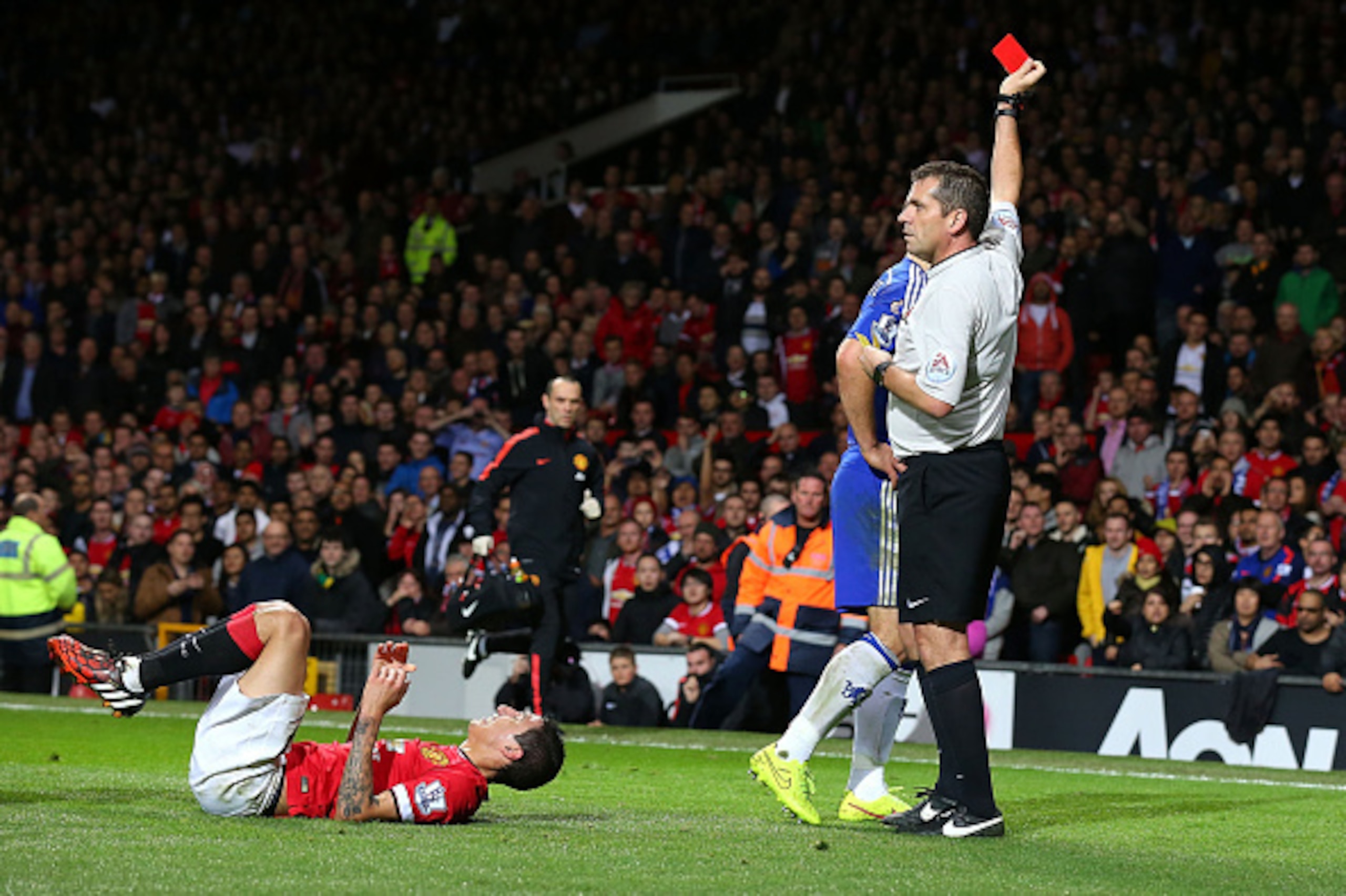
So, we can see that his role in the team, in a positional sense, is varied. However whichever physical space he occupies, his function will always be predominantly related to United's attacking play. His job is to create and score goals.
Although making Di Maria focus on his defensive duties would be a waste of his talent, he is making some contribution in that area. He currently averages just under a tackle and an interception per game, per WhoScored.
That is very much an aside, though. His contributions to the attack are much more notable. His 2.8 key passes per game is double the average of his closest competitor in the United side—Juan Mata on 1.4—per WhoScored.

He has created 31 chances, with Mata again in second place, with 18 chances created, per Squawka. Of those 31 chances, 45.1 percent of them have come from the left wing, 45.2 percent from central areas and 9.7 percent from the right. He gives defenders a great deal to contend with, considering how much threat he adds wherever he is on the pitch.
Di Maria's impact has already been hugely significant in terms of United's improvement from last year. However, the best should most certainly is yet to come. His three best performances, arguably, came against Queens Park Rangers, during the first half against Leicester City and against Everton.
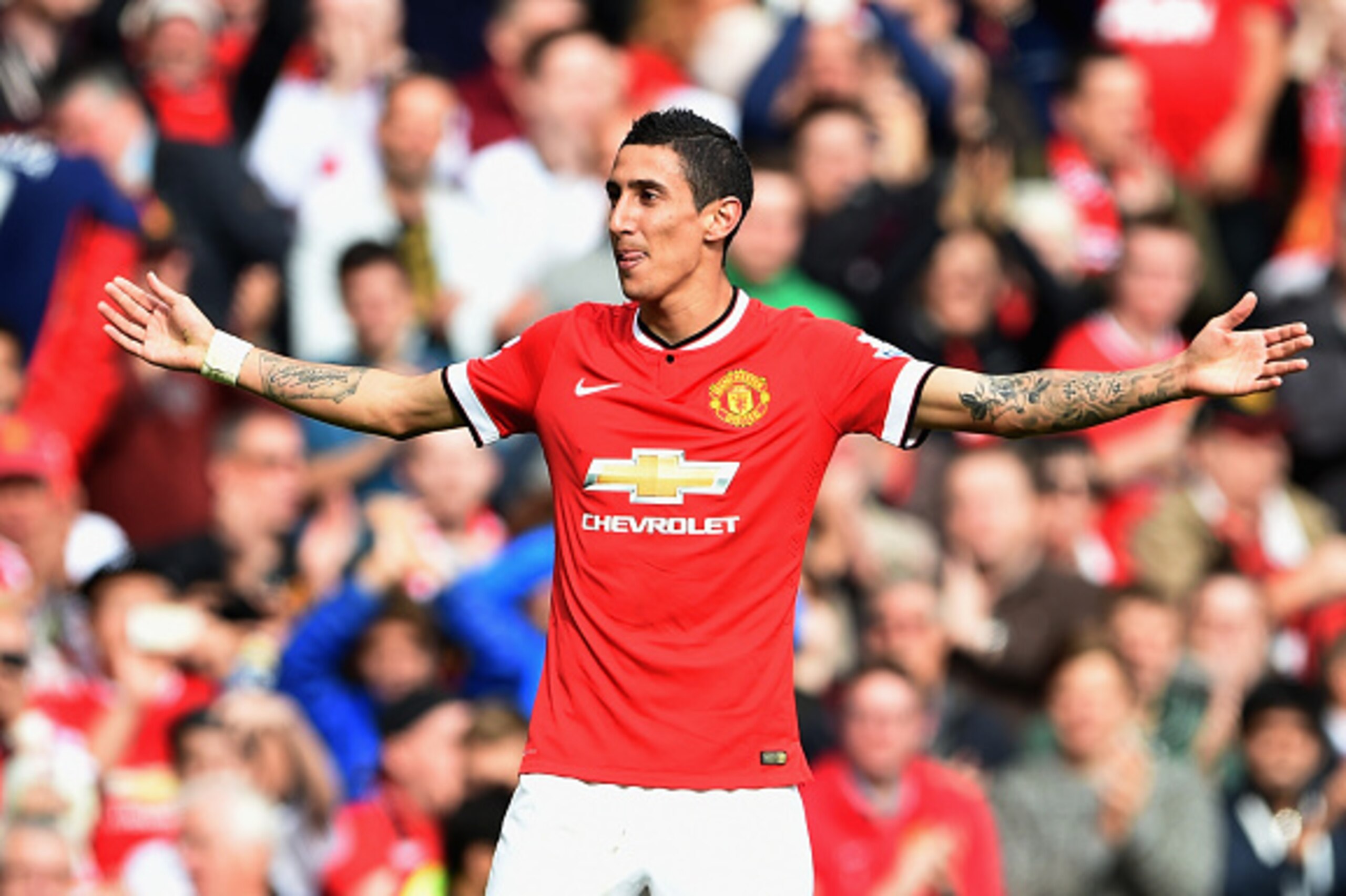
Against QPR he was incredibly dynamic and purposeful, picking up the ball and driving into opposition territory. Those runs caused havoc in QPR's defence, and made a big contribution to at least two of United's goals. Against Leicester he scored a magnificent goal as United looked rampant.
Against Everton his contribution was grittier, as United struggled to dominate the game, but it was no less important, as he provided a goal and an assist.
The most notable thing about the first two of those is how incredibly functional United were as an attacking unit. The football was fluent and exciting.
It offered glimpses of what could be to come when Van Gaal finally has the chance to make the best use of his squad without dealing with the weight of a seemingly endless injury crisis.
Something Di Maria will benefit from enormously is playing with strikers who are in form. Van Persie has struggled for much of the first part of the season, and, speaking to Geoff Shreeves of Sky Sports, admitted as much, saying:
"I’ve played five tournaments now – three European Championships and two World Cups – and based on those tournaments and the period after, it’s always been difficult to get straight back into the flow and into form.
It’s tough. You are trying absolutely everything, but it’s not coming off. You don’t have that kind of luck you normally have. It was a tough start for me and the team.
"
Radamel Falcao's injury problems have been well documented, and indeed, two of the three performances I have cited as Di Maria's best came when he had Falcao as a foil. Dealing with in-form front men means defenders can not afford to concentrate their attentions on Di Maria, as they could against, for example, Crystal Palace.
Van Persie's performances against Southampton and Liverpool, Wayne Rooney's against Hull City and Arsenal, Falcao's impending return to fitness and the emergence of James Wilson all point to the potential for Di Maria's role within the side to be one which is less relied upon.

That freedom should allow him to flourish, whether in midfield, in a front three or wherever else Van Gaal chooses to use him as he finds the best implementation of his philosophy.
Di Maria's signing brought tremendous excitement. His name adorns the backs of many shirts around Old Trafford on matchdays. His role in the team will continue to vary in its specifics.
However, whatever the role, getting the ball, running at players and getting the crown on the edge of their seats will always be a very valuable function. It is one of the reasons United are already so much more fun to watch than they were last season.

And, all being well, it is only just getting started.