Has A.L.'s Flurry of Offseason Activity Made It the Clearly Superior MLB League?

When we talk about who's "winning" the Major League Baseball offseason, we tend to think small. Players. Teams. Executives. Agents. You know, things like that.
It's less often that we talk about which league is winning the offseason, but this particular offseason is giving us a good excuse to do so. For while the winter arms race has featured action in both leagues, the action in the American League in particular has resembled that of a peak Arnold Schwarzenegger movie.
And in this case, it's the sight of the rich getting richer. But we'll get into that later.
TOP NEWS

MLB Commissioner Defends Salary Cap
Miz Trades Cards With Kid 🥹
Live Rays vs. Brewers Game 2 🎬
If we first focus on offseason comings and goings, you may have noticed that AL clubs have been significantly more aggressive than National League clubs in free agency. Per Hardball Talk's handy tracker, 29 major league free-agent contracts have either been signed or agreed to. The AL has handed out 18 of those.
Of course, quantity doesn't necessarily equal quality. And to this end, well, time will tell.
But for now, we have projections for the 2015 season to give us a rough idea of what kind of quality the AL and NL have bought on the free-agent market. If we use Wins Above Replacement as a measuring stick and get an assist from FanGraphs' free-agent tracker, we get the following breakdown:
| AL | 18 | 47 | $574.6 | 28.2 |
| NL | 11 | 28 | $365.1 | 15.6 |
Note: Since no projection is available for Yasmany Tomas, I took FanGraphs' Jeff Sullivan's word for it and projected him for 2.6 WAR.
Now, here's where we grant that WAR isn't perfect. For that matter, offseason projections are hardly gospel. Thus, the system we have in our hands is imperfect from two different perspectives.
However, the gap between the 2015 value the AL has bought and the 2015 value the NL has bought is big enough to overrule those concerns. And, really, it's a gap that shouldn't come as a shock to anyone.

A big reason why the American League has bought more value is simply because its teams have spent more money. The Junior Circuit is responsible for 12 of 18 contracts worth at least $10 million, and six of the eight most expensive contracts overall.
Joel Sherman of the New York Post isn't wrong in noting that the AL's big spending "exemplifies how many AL teams think they can contend for the playoffs." But there's another, more fundamental reason the AL is leading the spending charge.
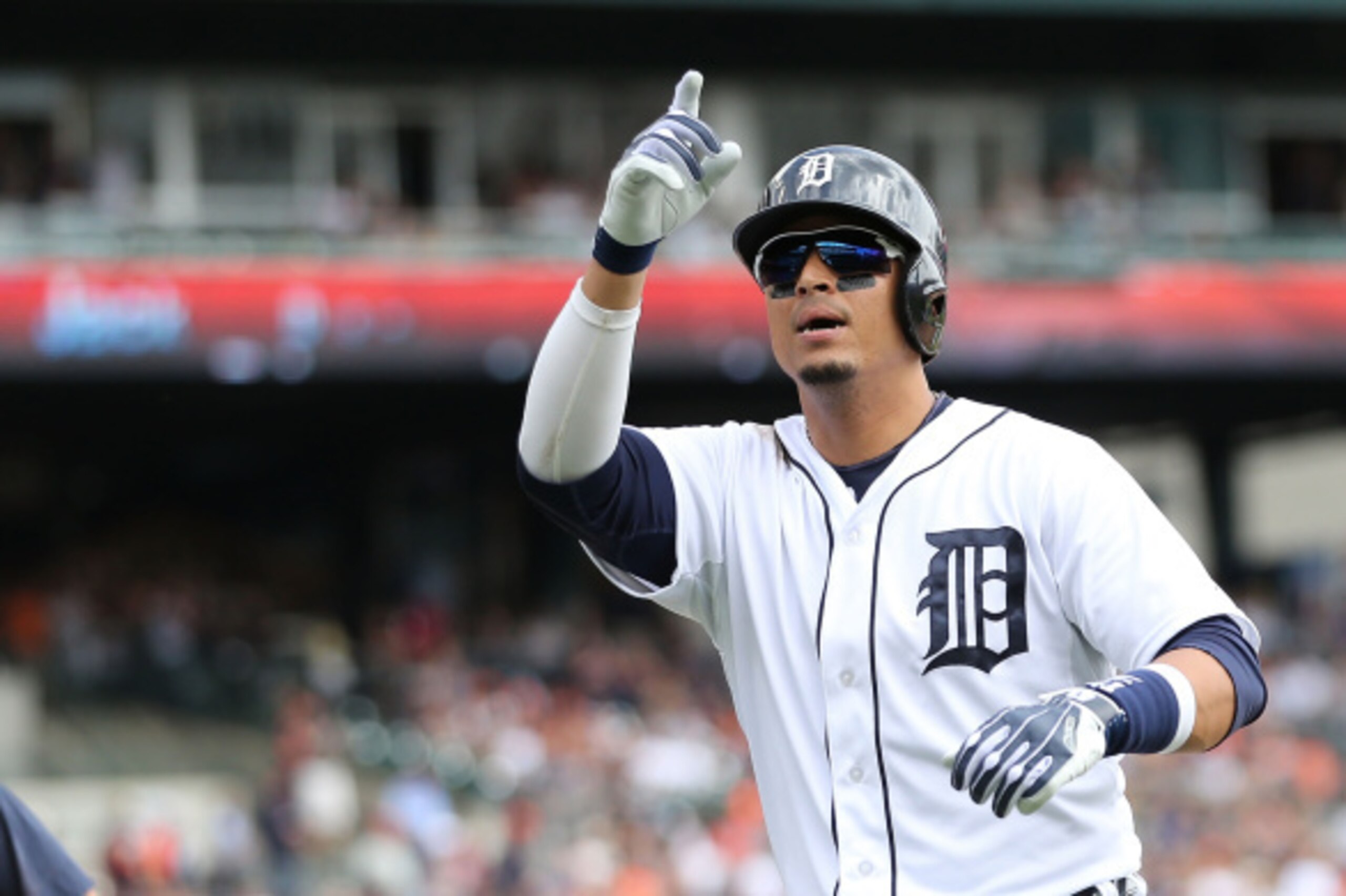
Of the AL's six most expensive contracts, five have gone to hitters: Pablo Sandoval, Hanley Ramirez, Russell Martin, Victor Martinez and Nelson Cruz. You'll recognize that the first three jumped ship from the National League. Same goes for the slightly less expensive Adam LaRoche.
It was clear from the very start this winter that offense was going to be in demand after the worst offensive season in decades. That the AL has landed the bulk of the big ones is a big reason why it's doing so well on the offseason market, and it also speaks to a notable advantage the AL has.
No, not spending power. That's an argument that holds less water these days, as figures compiled by The Associated Press (h/t Deadspin) reveal that the average NL payroll on Opening Day in 2014 was actually about $2 million higher than the average AL payroll.
The advantage is something else: the designated hitter.
As Milwaukee Brewers general manager Doug Melvin put it to ESPN.com's Jayson Stark in 2013: "Just having the DH gives a definite advantage to an American League club in signing one of those guys. If you're in the American League and you're signing him past age 35, you say, 'He can DH in a couple of those years.' But you can't do that in the National League."
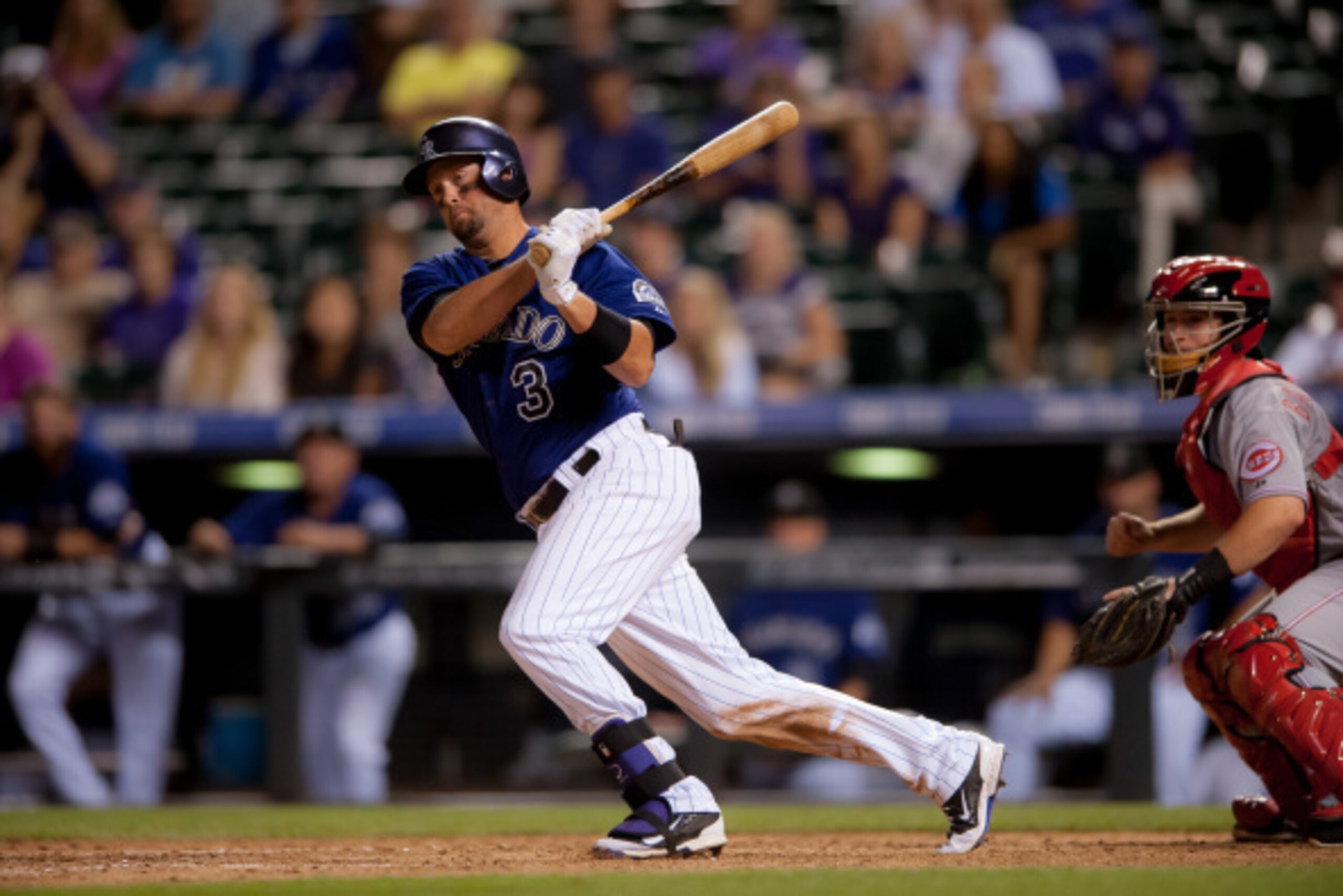
In light of how there's no clear spending gap between the two leagues and how NL clubs have so far signed only two older impact hitters—Michael Cuddyer and Nick Markakis—the presence of the DH in the American League is arguably the reason the Senior Circuit is getting beat in free agency.
And if you're thinking it, no, the NL isn't making up the difference with trades.
There's been a lot of trade activity in the National League, to be sure. But since it doesn't do us any good to focus on trades between teams in the same league, our focus needs to be on cross-league trades. And there's frankly not a whole lot to speak of there.
I have the AL players moving to the NL accounting for 3.8 WAR in 2015, and NL players moving to the AL accounting for 2.0 WAR in 2015. That's life when the trades involving really big names (i.e. Jason Heyward and Jeff Samardzija) are going down between teams in the same league.
If that keeps up, there's really only one way the National League can catch up with the American League in the offseason arms race. With few impact bats left on the market and no DH to lure them anyway, the National League is going to have to make up the difference by signing top arms.
Fortunately, that's doable.
The lack of the DH puts the NL at a disadvantage with attracting hitters, but it puts it at an advantage with attracting pitchers. Though he obviously got a tremendous offer, that could be a reason why Jon Lester chose to sign with the Chicago Cubs, per MLB.com's Carrie Muskat, over the Boston Red Sox. Maybe Max Scherzer and James Shields will follow his lead and help give the NL an offseason haul to match the AL's.
But for now, there's obviously no arguing that the American League has spent more money. It's hard to argue, meanwhile, that the AL hasn't added more value for 2015 in the process.
Thanks to that, the projections are convinced that the American League is currently the superior league.
Per FanGraphs, American League clubs are projected for 516.1 WAR in 2015. The National League is projected for 452.7 WAR. It's worth reiterating that projections and WAR aren't gospel, but a more than 60-point gap shouldn't be disregarded as neither here nor there.
Besides which, it's not like the idea of the American League being the superior league should surprise anyone at this point. Going off the absolute best measure we have, that's par for the course.
The absolute best measure we have for the quality of MLB's two leagues certainly isn't the All-Star Game. An argument like that can't be solved by one game, much less a game with rosters distorted by fan votes, injury drop-outs and constant in-game substitutions.
The World Series is a better measure but still not perfect. It's supposed to crown the best team, not the best league. If you think the two are mutually inclusive, take a moment to ponder how silly you would sound arguing that the Eastern Conference was better than the Western Conference the two years the Miami Heat won the NBA Finals.
So then, let's turn to what's really the absolute best measure we have for the quality of the American League and National League: interleague play.
Interleague play produces hundreds of games every year and is obviously nothing new at this point. It's been going on since 1997, so the sample size we have from which to draw conclusions is quite big.
To this end, one thing that jumps off the page is that the AL has been the overall winner in interleague play every year since 2004. Another thing is that the NL isn't closing the gap in terms of run differential. The AL's run differential in interleague play has been over 100 runs in two of the last three seasons.
As such, what's going on so far this offseason is not the American League trying to close a gap between itself in the National League. It's the American League trying to widen a gap between itself and the National League that's been in place for some time now.
Depending on the moves the National League might still have up its sleeve, the big picture could look decidedly different weeks from now. I'll also note that the NL likely isn't doomed to perpetual inferiority. The National League getting the DH is inevitable, and that'll definitely help things even out in free agency.
But as things stand right now at this point in time only, it's looking like the American League will have the upper hand once again in 2015.
Note: Stats courtesy of Baseball-Reference.com unless otherwise noted/linked.
If you want to talk baseball, hit me up on Twitter.



.jpg?w=2560 "Malik Beasley Negotiating Plea Deal (AP)")
.jpg?w=2560 "Aikman Blasts Cowboys WR 🫣")

.jpg?w=2560 "Jonathan Taylor Landing Spots")