Tale of the Tape for NFL Week 13
Throughout the 2014 regular season, former NFL defensive back Matt Bowen will bring you an X's-and-O's look at the pro game. Here are his key plays from the Week 13 Sunday schedule.
Jordy Nelson Beats Darrelle Revis
The Patriots-Packers matchup on Sunday at Lambeau Field was one of the best games I’ve watched this season. Look at the high level of play (and execution) at the quarterback position from Aaron Rodgers and Tom Brady, the technique in the secondary or the game plans that were on display in crucial situations.
.jpg?w=2560 "Titans Giants Football")
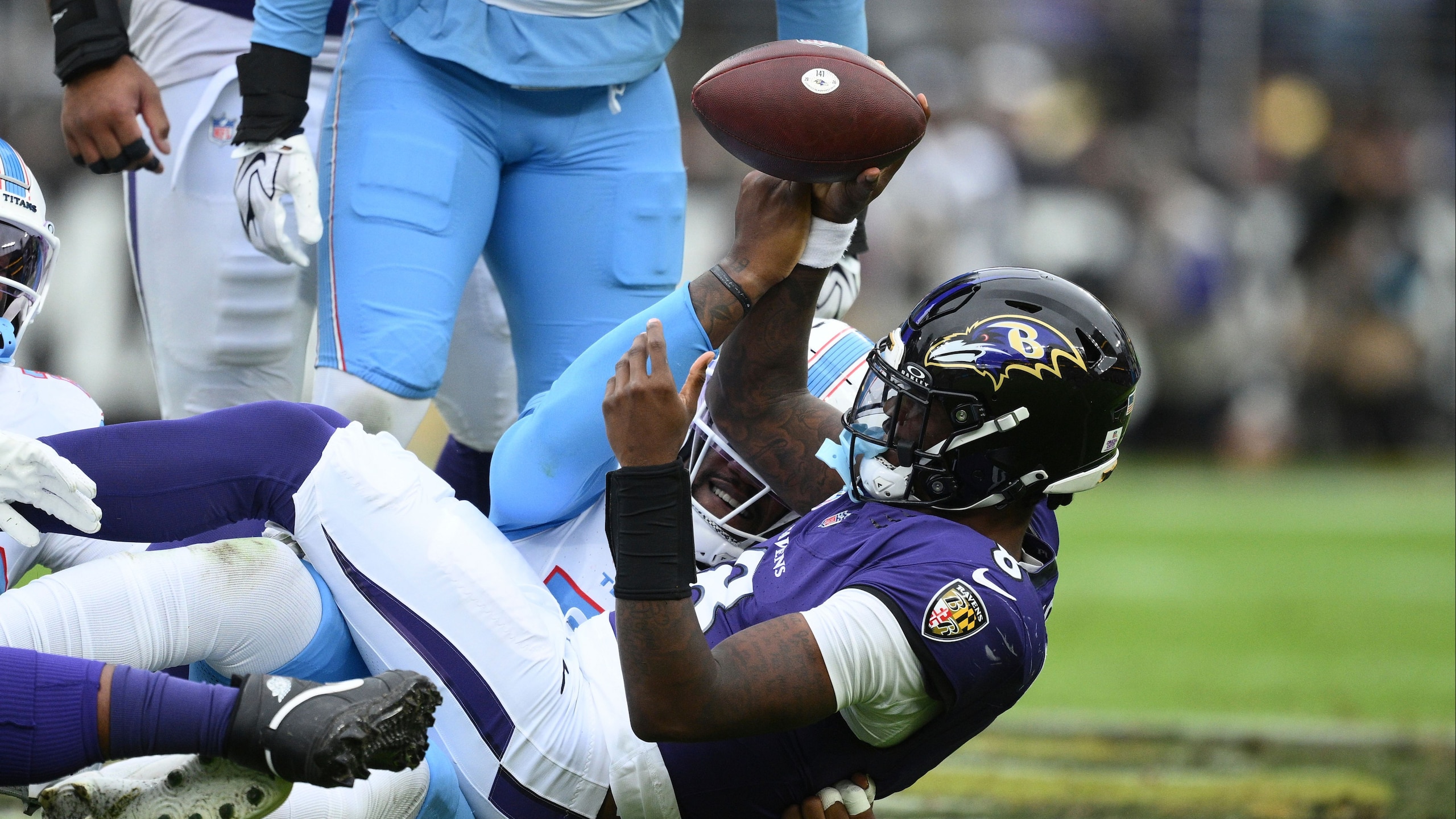

Revis is back in the discussion as the top cornerback in the game based on the tape I’ve studied. Just focus on his technique in press-man, the hip flexibility or the footwork that allows the cornerback to stay square and challenge opposing receivers. Top-tier stuff at the position.
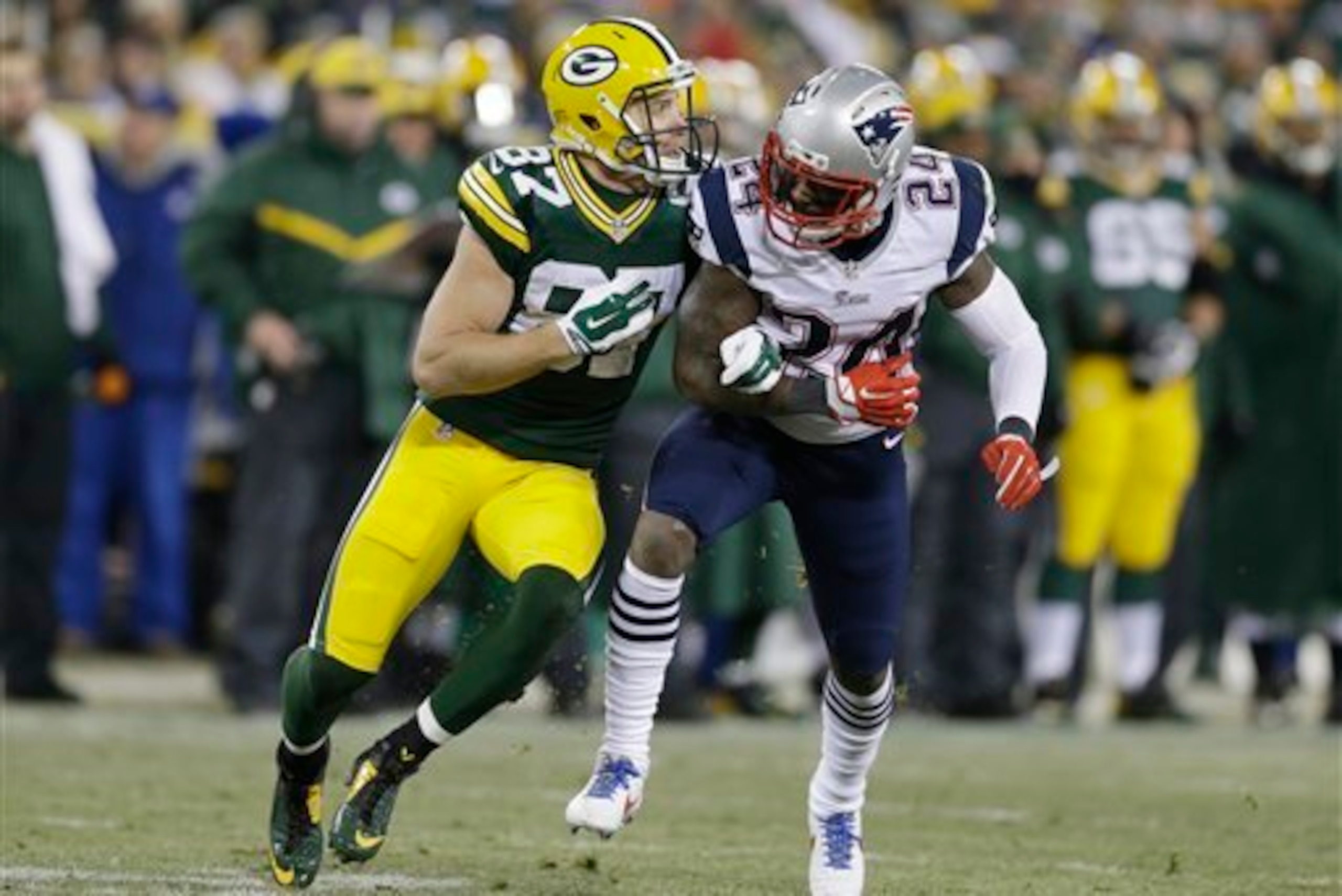
You could see that for the majority of the first half in the Green Bay Packers' 26-21 win with Bill Belichick matching up Revis versus Randall Cobb and Jordy Nelson. That’s why Rodgers (24-of-38, 368 yards, two touchdowns) had to work the ball to rookie Davante Adams (six receptions, 121 yards) early in this game.
However, during a critical two-minute drill for the Packers at the end of the half, Nelson created some separation versus Revis on a basic slant-flat combination.
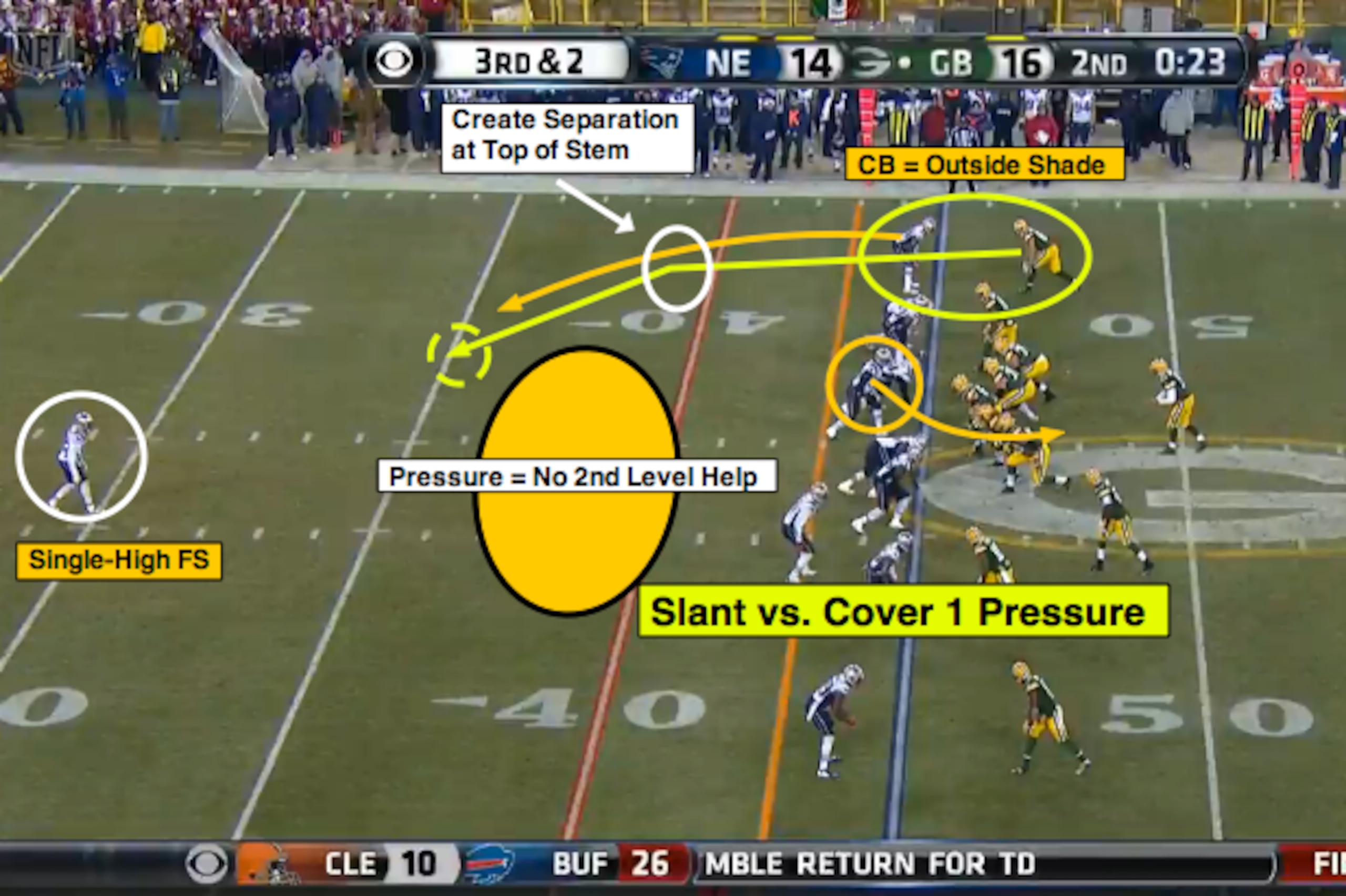
With the Patriots sending Cover 1 pressure (five-man pressure), there is no second-level help (linebackers) in the short-to-intermediate route tree. That creates an opportunity for the Nelson to run an inside-breaking route (slant) versus outside leverage (Cover 1 technique).
Revis did an excellent job of staying square in multiple one-on-one matchups Sunday, but he opens his hips in this situation at the top of the stem (break point). That allows Nelson to separate versus that initial leverage position and stem this route inside with no immediate help for the defense.
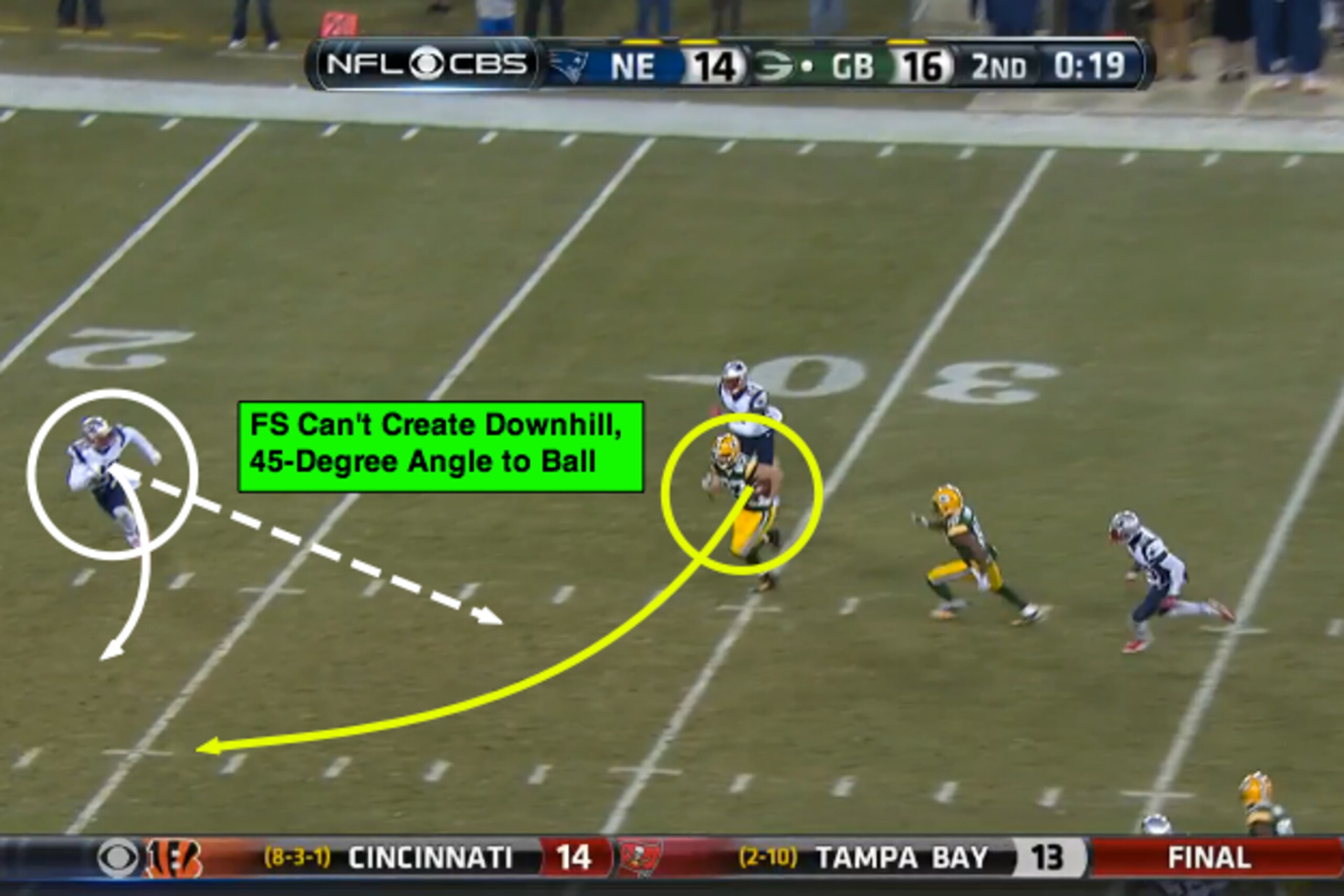
Free safety Devin McCourty is too deep (15 yards) in his pre-snap alignment given the pressure call and the game situation (3rd-and-short). You have to play for the three-step route concepts here. Because of that, the Patriots' free safety rounds his break from the deep middle of the field and can’t produce the downhill, 45-degree angle you want to see versus the slant. This gives Nelson the opportunity to eliminate the angle with his speed and eventually take this ball across the goal line for six points.
This is exactly how you identify the pressure, get the ball out and win in the three-step game. Revis doesn’t get beat often, but Rodgers, Nelson and the Packers got him here on the slant route. Was that an early look at the Super Bowl matchup? Too early to say. But I have no problem calling the Patriots and Packers the best squads in the league at this point of the season.
C.J. Anderson’s Impact on Broncos’ Game Plan
Peyton Manning is going to throw his intermediate cuts, the seam, the fade and also work the ball underneath in the Broncos' top route concepts. That’s what you’re going to see when you line up versus this Denver offense.
However, the game plan Sunday night in the 29-16 win over the Kansas City Chiefs featured Anderson at the running back position. Think of the zone schemes and one-back power runs with an extra offensive lineman in the game and the guard pulling up through the hole.

Anderson carried the ball 32 times for 168 yards, and the Broncos rushed for over 200 yards as a team for the second week in row. Does that mean the Broncos are looking to change their offensive identify to prep for another Super Bowl run? I wouldn’t say that as Manning is still the key to any postseason success for this ballclub. But we also can’t discount how the production at the running back position impacts opposing defensive game plans.
Here’s a quick example in the passing game with the Chiefs sending five-man pressure and playing 2-Man (two-deep, man-under) over the top.
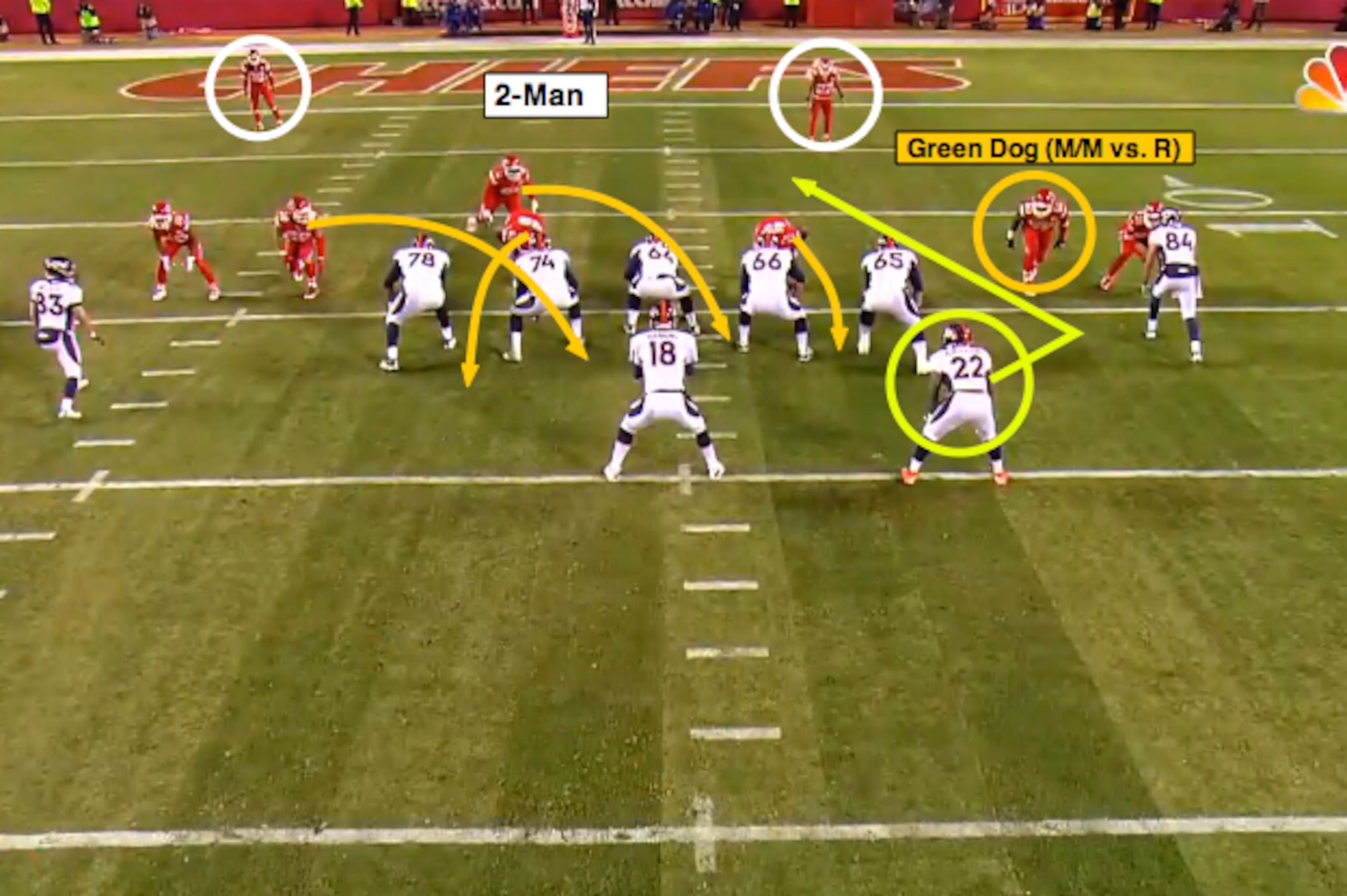
This was just a simple “angle” route (or “dodge” route) from Anderson. However, it forced Justin Houston to match to the running back instead of using a “green dog” technique as an edge-blitzer (rush to coverage). Anderson stems outside (forcing Houston to overplay the stem) and works back on the angle route to make the catch, run through contact and put this ball in the end zone.
I’ve said before that the Broncos system could be a “plug and play” situation at running back because of Manning and the talent outside. However, I have to admit I was wrong there after watching Anderson. This guy isn’t afraid to drop his pad level on contact, he runs extremely hard and his lateral movement is underrated. Anderson is an impressive back who fits the zone/power schemes in the Broncos' playbook.
More importantly, he makes this offense much more physical when it can line up and run the ball based on the opponent and game situation. Defenses won’t be able to sit back in two-deep coverage with a soft run front if Anderson continues to produce on the ground.
Chargers Finish the Fourth-Quarter Comeback
The San Diego Chargers have a tough stretch coming up on the schedule to close out the regular season (starting with the Patriots next Sunday night), but that’s why this club needed to get the win Sunday versus a good Ravens team out in Baltimore.
Look, I would play hard for Philip Rivers if he was my quarterback. There’s no question about it. This guy is a leader, he plays hurt and he competes. That’s what you want out of the quarterback position (at any level of the game).
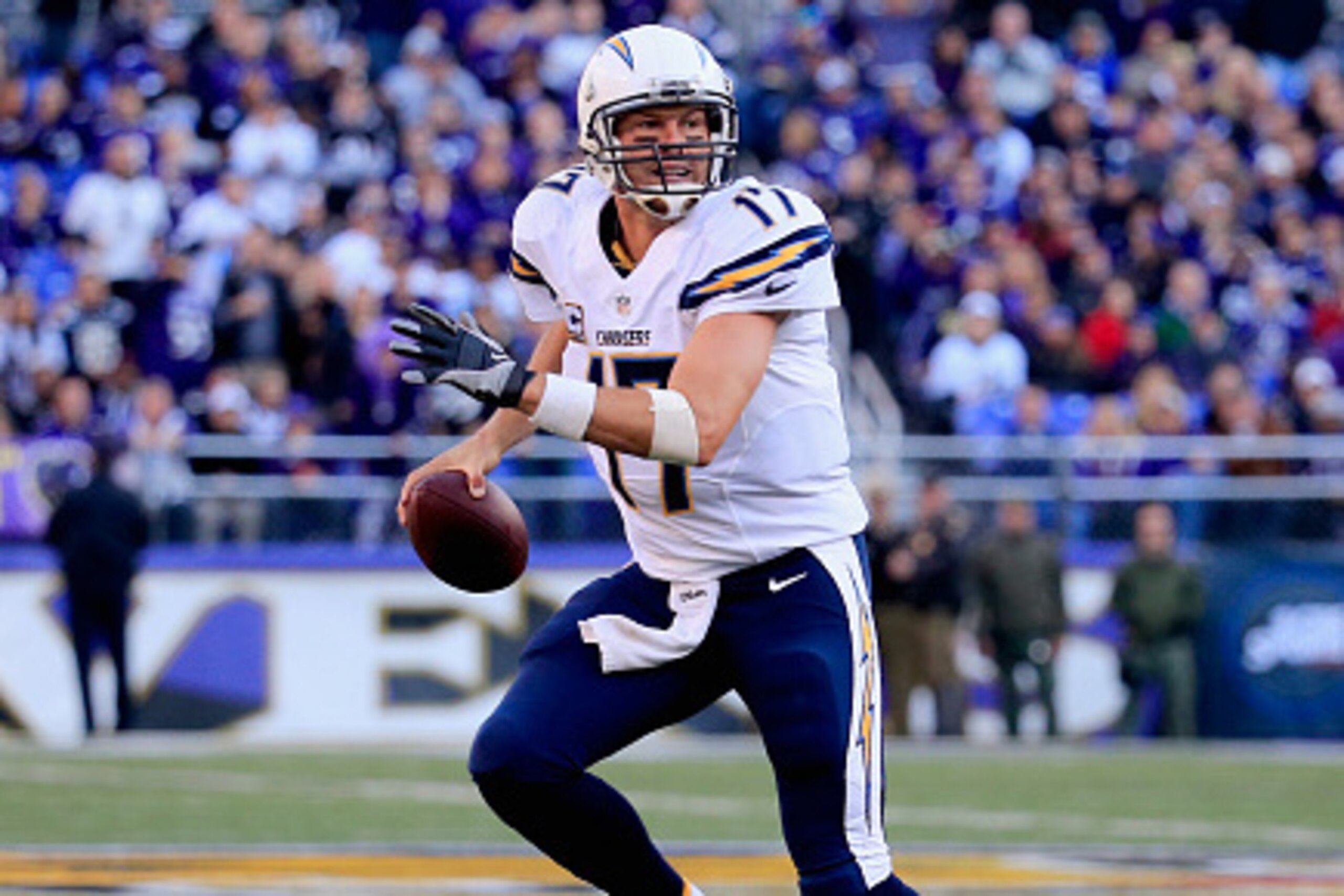
On Sunday, the Chargers put 21 points on the board in the final frame. That’s not easy to do on the road in this league (especially on an East Coast trip), but Rivers made the throws to put his team in a position to come back and win the ballgame.
Now, there are questions about the pass-interference (PI) call on the “fade” route in the final minute that set up the Chargers in the deep red zone. However, we all know how that’s going to be called. Even with Malcolm Floyd extending his arms to make contact with the corner, you can’t wrap an arm around the back of a wide receiver.
That’s always going to be called. Remember, this is an offensive league. And that applies to every deep ball thrown on Sundays. Throw it up and hope for a flag.
However, with the ball now just outside of the goal line, the Chargers leaned on their advanced scouting and film work to run the wide receiver “tunnel screen” (No. 1 receiver runs the screen). Why would I say “advanced scouting” here? Because the tape tells you that the Ravens are going to bring “zero” pressure in this situation.
That’s why the Chargers ran a man-coverage beater that allowed Rivers to get the ball out before the pressure got home.
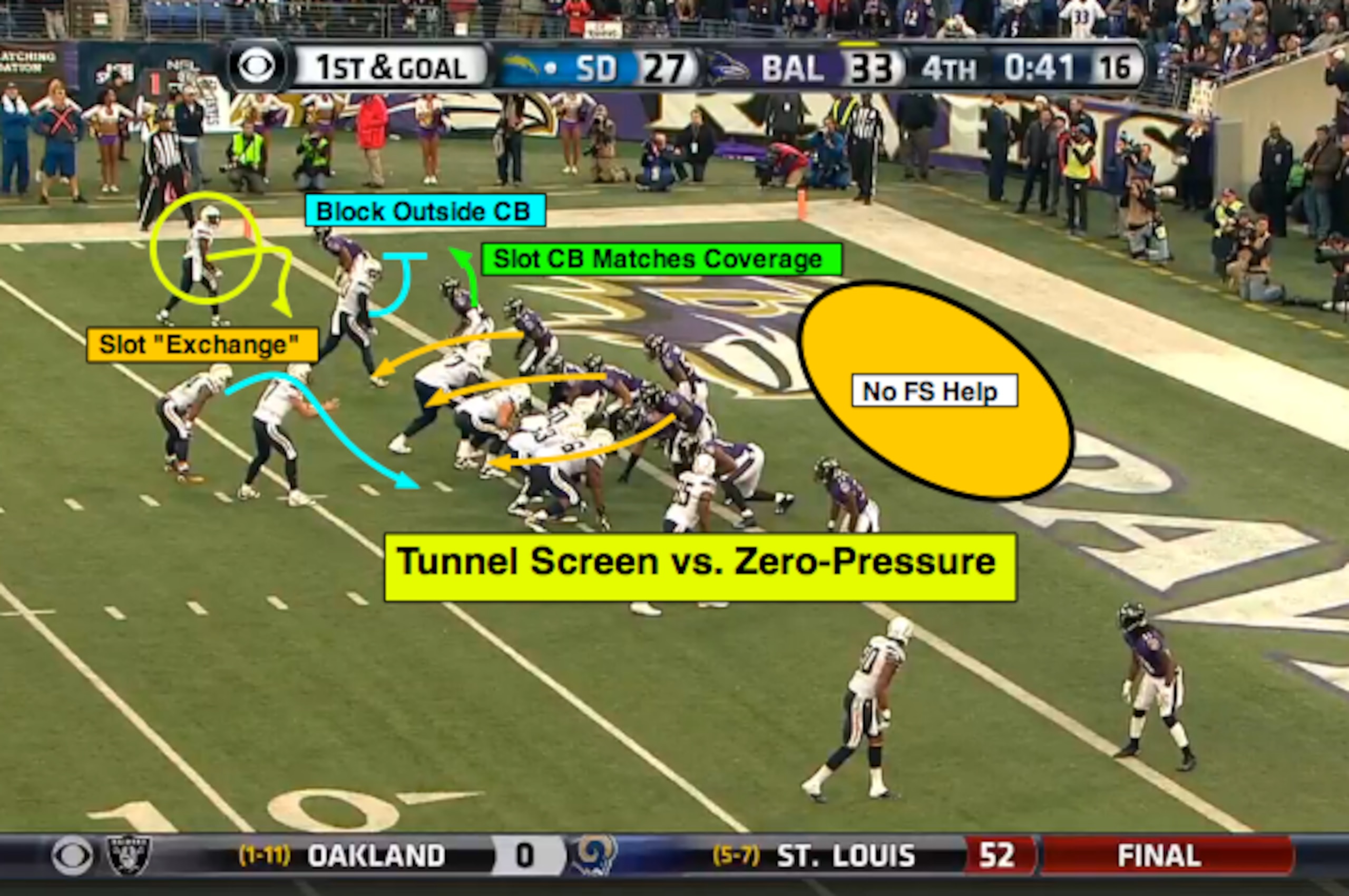
Look at the pre-snap alignment. This is called a “slot exchange” formation with the No. 1 receiver (Eddie Royal) off the ball and the No. 2 receiver (Keenan Allen) on the ball. That’s an automatic alert to the screen from a defensive perspective.
But with no free safety to run the inside alley, and the Ravens sending pressure off the edge, Allen can block the outside cornerback to create a running lane for Royal off the screen action.
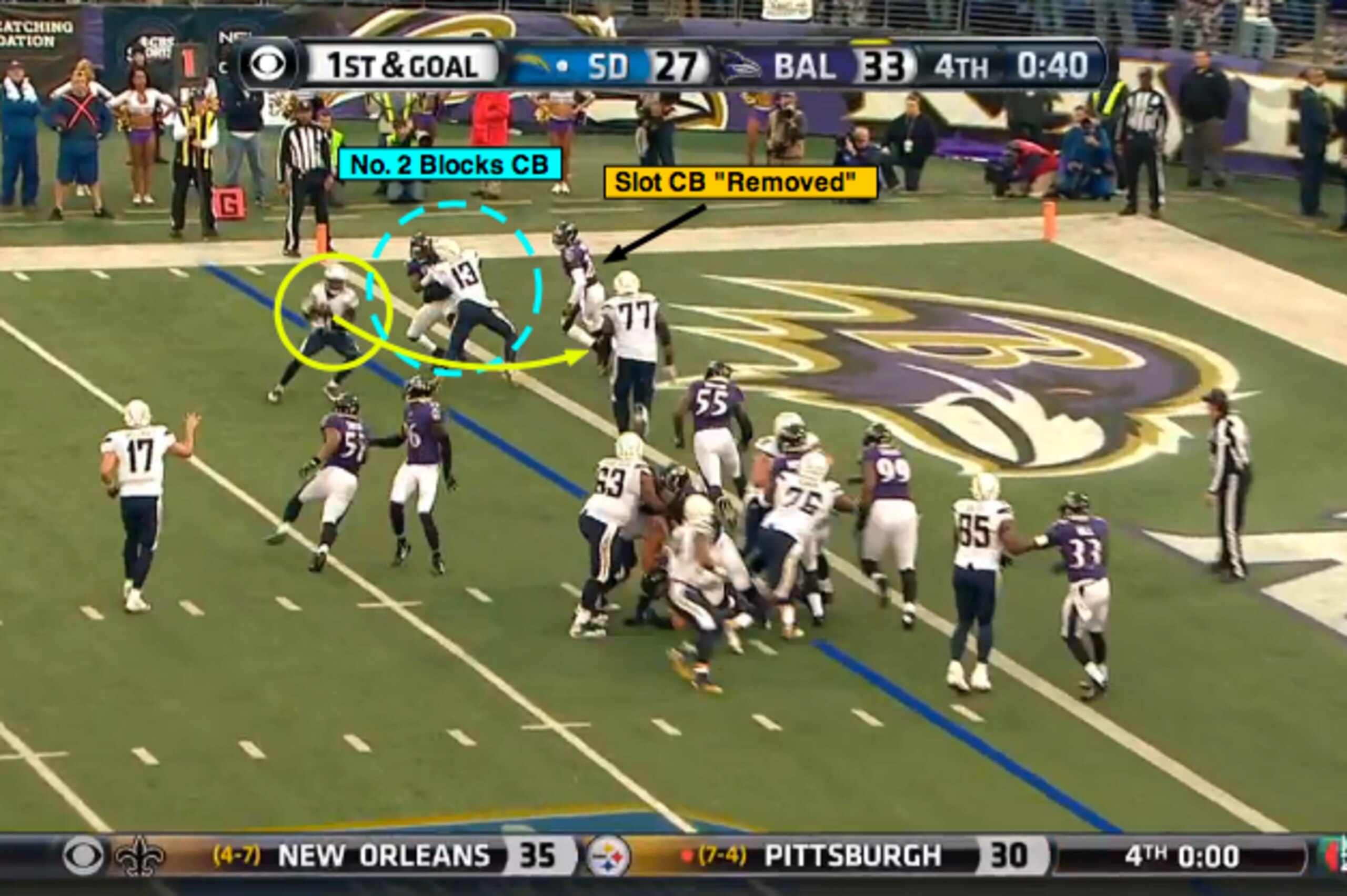
With the slot cornerback in “zero” coverage (“man” coverage), he must slide over the top of Allen on the release. That opens up the inside lane for Royal to make the catch and essentially walk this ball across the goal line for the game-winning score. That’s perfect execution of the “tunnel screen” and a great example of scouting from the Chargers to take advantage of the pressure look from the Ravens in a game they had to get on the road.
The New England Patriots are next, followed by the Denver Broncos, San Francisco 49ers (road game) and Kansas City Chiefs (road game). It won’t be easy for the Chargers, but that win Sunday put them in a position to make a run to the postseason.
Johnny Manziel Makes a Case for the No. 1 Job in Cleveland
The Buffalo Bills defense was nasty Sunday when we look at the pressure created up front, the ability to limit the run game and the turnovers this unit forced versus the Cleveland Browns during their 26-10 win.
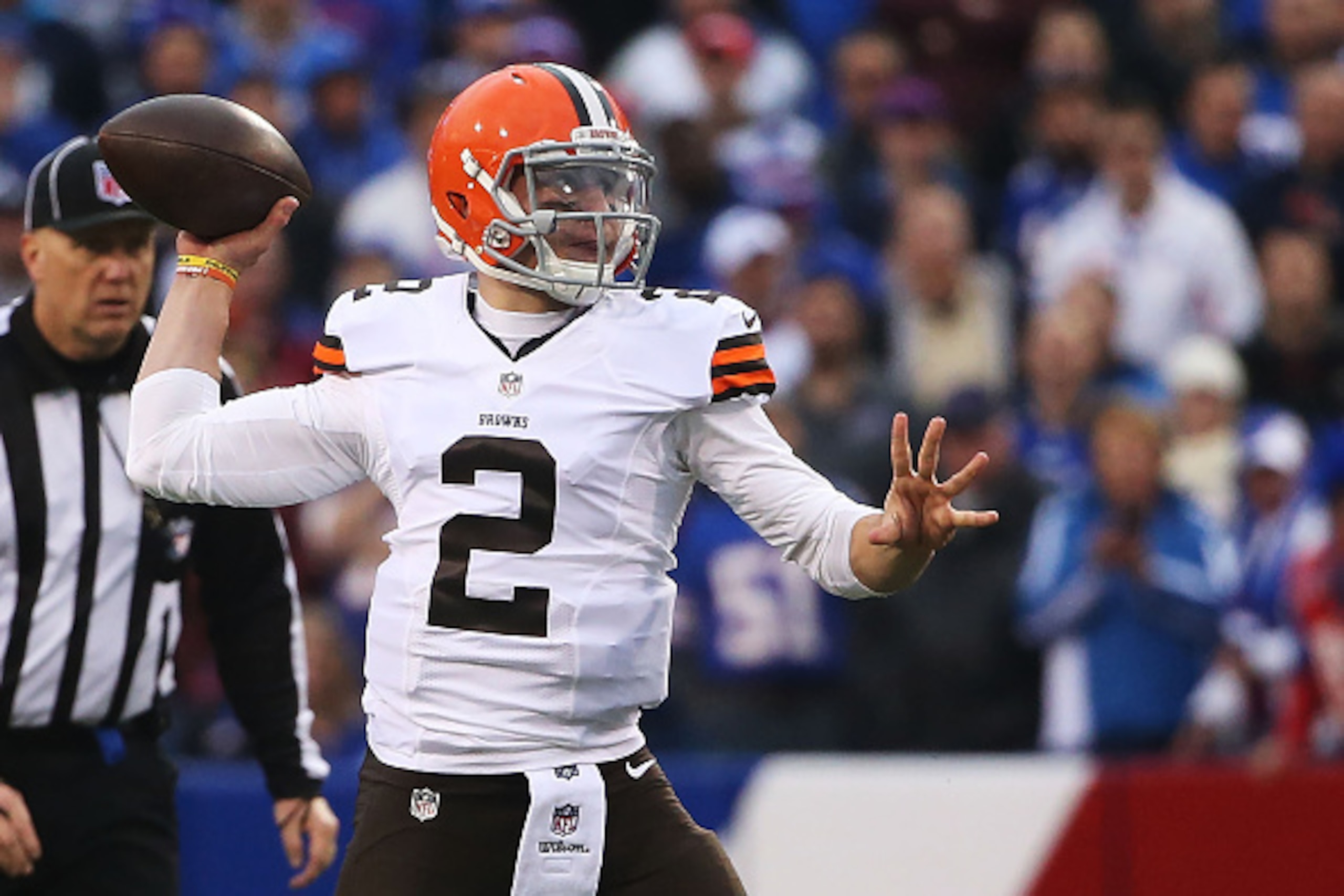
This defense basically ran quarterback Brian Hoyer out of the game because of his inability to protect the football or put points on the board. And it might have cost Hoyer his No. 1 job in Cleveland after Manziel took the ball in the fourth quarter to produce a touchdown drive.
Here’s an example of why the Browns pulled Hoyer as the quarterback failed to identify the inside defender (Da’Norris Searcy) on the deep “dig” route (square-in).
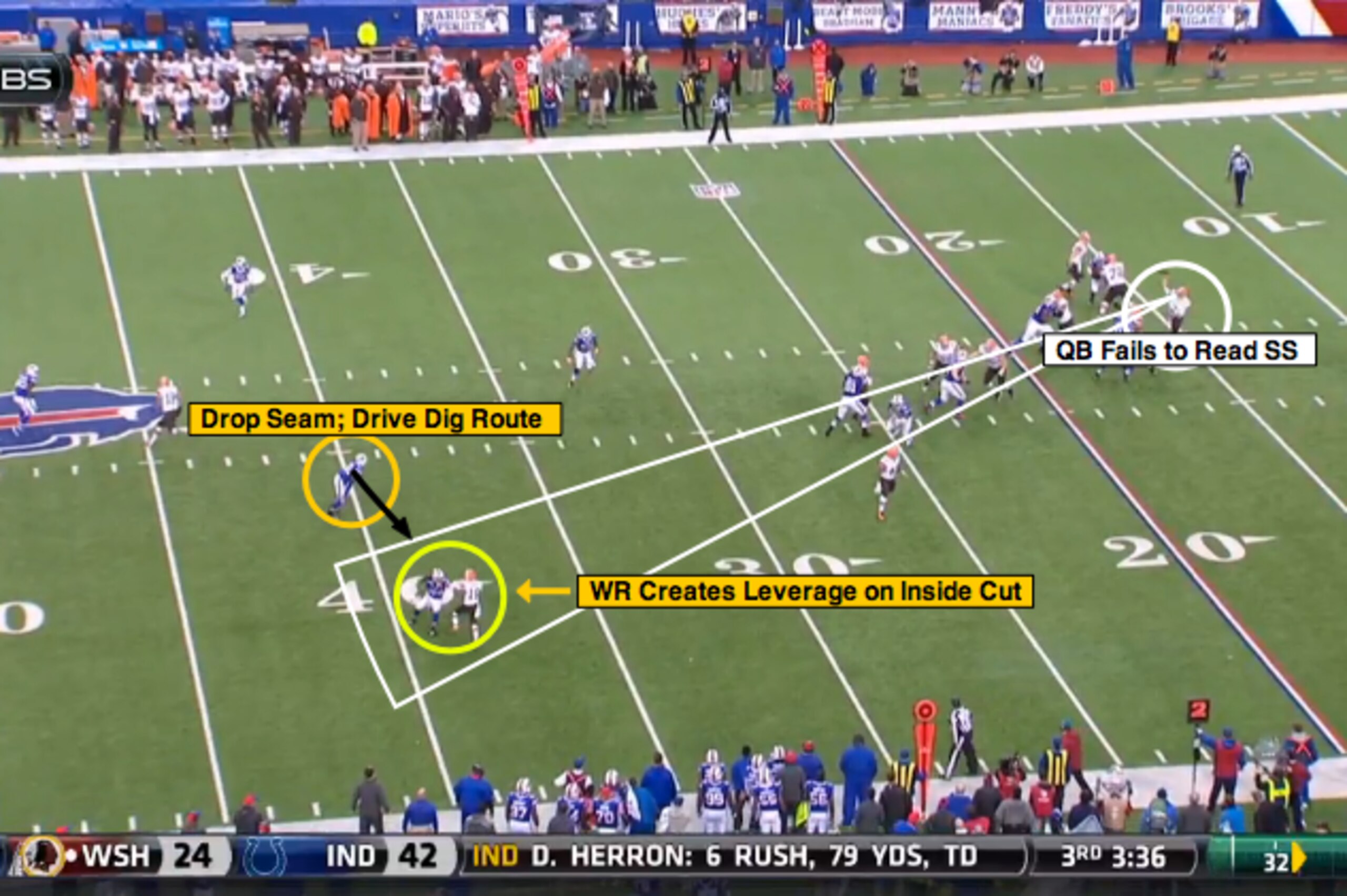
This is a “dagger” concept off play action with the Browns clearing out the middle of the defense on the inside seam and bringing the dig route underneath. However, check out Searcy here. The Bills' strong safety drops the seam to the free safety over the top, squares his shoulders and gets his eyes on the quarterback. Hoyer never reads inside and throws the deep dig route. That allows Searcy to drive downhill and make this play.
Given the way Manziel played in his limited reps, there has to be a discussion this week about the No. 1 job in Cleveland. Kyle Shanahan utilized the boot game with Manziel, and the rookie did make some throws in the middle of the field on the dig and “seam” routes. Plus, we saw his playmaking ability when he pulled the ball down in the red zone off the double-post/X-shallow combination to run for a touchdown.
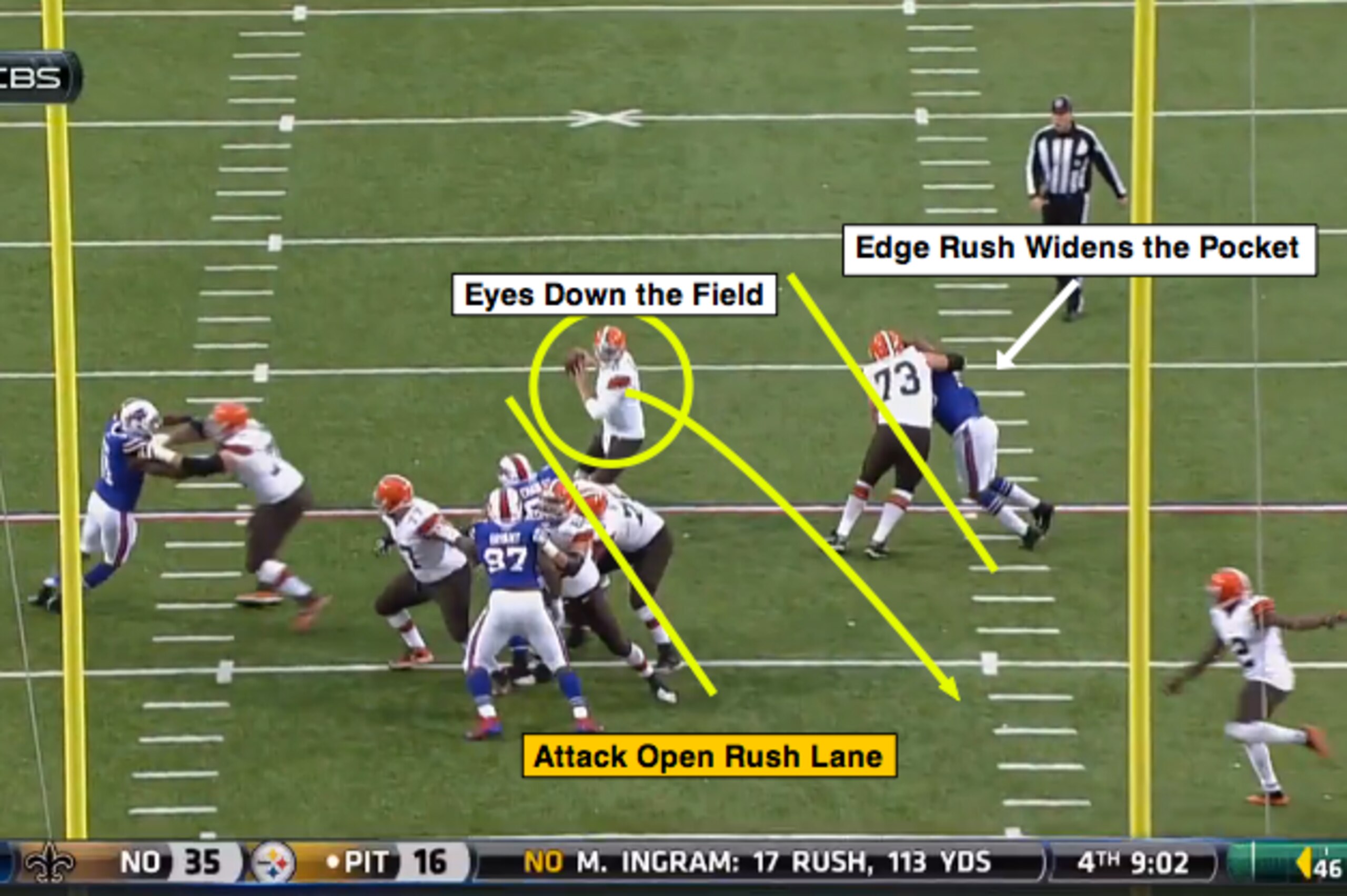
With Jerry Hughes rushing hard up the field versus Joe Thomas, there is a wide lane in the pocket for Manziel to attack. However, take a look at the rookie quarterback here as his eyes are up the field. This isn’t a designed run like the zone-read or some gadget play. Instead, this is a situation where Manziel identified the coverage, found the open lane and displayed his acceleration to get up the field for a touchdown.
Again, we are talking about a small sample size for Manziel, but with the recent struggles from Hoyer, maybe it is time to give the ball to the first-round pick. This Browns team is 7-5. It needs production on offense to make a late-season run in the AFC North.
Is Manziel the guy to do it?
Drew Brees Lights Up the Steelers
The reports on Sunday morning about Drew Brees were all negative. There was talk that he was too old, the arm strength wasn’t there and that the New Orleans Saints needed to draft a quarterback (or an eventual replacement).

And while Brees has missed some throws this season in an offense that has generally lacked big-play ability in the passing game, the veteran quarterback lit up the Pittsburgh Steelers on Sunday afternoon in Pittsburgh.
Brees threw five touchdown passes in the Saints' 35-32 win with wide receiver Kenny Stills making plays down the field. Look at the deep seam route or the double-move that Stills ran versus cornerback Ike Taylor. That allowed Brees to challenge the top of the Steelers secondary and produce explosive gains.
Here’s a quick breakdown of the double-move from Stills with Taylor and the Steelers playing Cover 4 (or “Quarters”) in the secondary.

What’s the first rule for defensive backs? Don’t look in the backfield unless you are in-phase (on the hip) versus the wide receiver. That’s poor eye discipline. And it gets you beat.
That’s what we see here from Taylor. It’s only a quick look (or glance) into the backfield, but that's all it takes. Plus, check out the depth of the break from Stills. He’s at about eight or nine yards. That’s too shallow as routes in the NFL break at a depth of 12-15 yards. This is a double-move all the way from Stills, with the receiver selling the out cut at that depth.

As a defensive back, you are taught to drive to the upfield shoulder of the receiver (outside shoulder in this situation). However, with Taylor looking into the backfield, he fails to maintain his cushion, takes a flat angle to the receiver and loses leverage once Stills works back up the field.
Taylor slips at the break, but this all started because of the eye discipline and technique versus the double-move.
With the Atlanta Falcons beating the Arizona Cardinals on a day where Julio Jones rolled up numbers versus Patrick Peterson, the Saints still have some work to do in the NFC South at 5-7. But I like seeing the explosive plays from Brees and this offense. That creates multiple opportunities for Sean Payton to install a balanced game plan when Brees can test the top of the defense.
Seven-year NFL veteran Matt Bowen is an NFL National Lead Writer for Bleacher Report.