B/R CFB 250: Top 25 Running Backs
Bleacher Report's CFB 250 is an annual ranking of the best players in college football, regardless of NFL potential. Brian Leigh and Kynon Codrington have studied, ranked and graded the top athletes in the country, narrowed that list to 250 and sorted by position. Today, we present the Top 25 Running Backs.
Other CFB 250 Positions
The NFL has devalued running backs, declaring that the position is fungible. No running back was selected in the first round of last year's draft, and contracts at the position have dwindled.
Here in college, however, running backs are just as strong as ever.
Maybe even stronger.
More than just strong, college running backs are well-stocked for the future. Five of the top 18 players on this list were true freshmen in 2014, and so was No. 22. As good as this year was for running backs, it only stands to get better in 2015 and 2016.
Before we start, please take note that these players were graded as college running backs, not on how they project as NFL running backs.
Targeted skills such as agility are important at both levels, but there is a difference between college agility and professional agility. If a running back can make people miss in the SEC or the Big 12, it doesn't matter that he can't make people miss in the NFC North. At least here it doesn't.
This is all about college performance.
Note: If two players finished with the same grade, a subjective call was made based on whom we would rather have on our team right now.
25-20. Booker, Cobb, Breida, Conner, Davis, Langford
1 of 17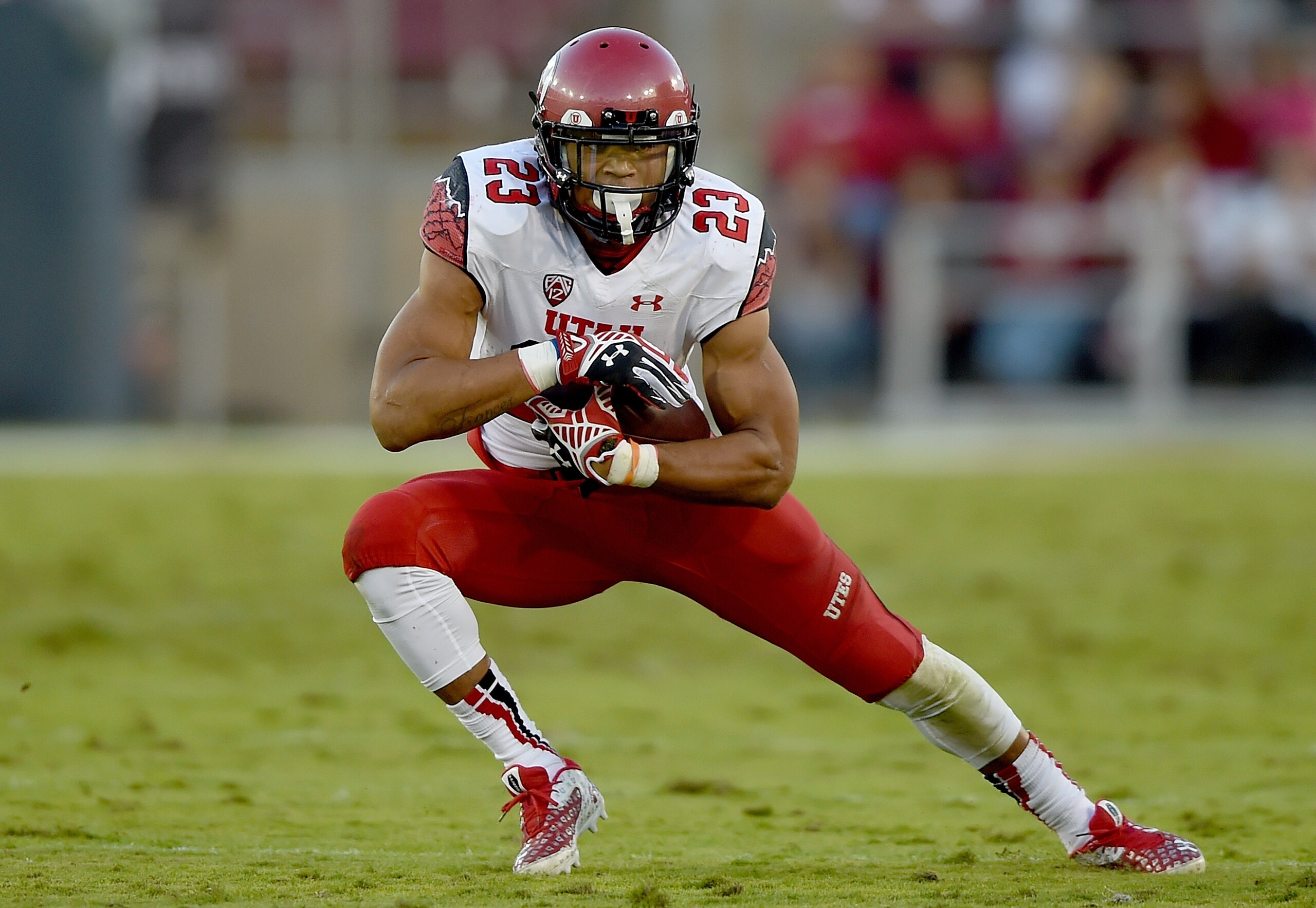
25. Devontae Booker, Utah
Ball Security: 7/10; Power: 17/20; Vision: 16/20; Hands: 13/15; Speed: 16/20; Agility: 11/15
Devontae Booker came to Utah from junior college and gave the Utes precisely what their offense needed: a tough, physical, downhill runner who eats up solid chunks of yardage, moves the chains and keeps their defense resting on the sideline.
24. David Cobb, Minnesota
Ball Security: 8/10; Power: 17/20; Vision: 16/20; Hands: 12/15; Speed: 16/20; Agility: 11/15
David Cobb does not do anything exceptionally well, but neither does he struggle to do anything. He is a reliable back with a sturdy frame (5’11”, 220 lbs) and a proven ability to carry an offense to a win, running just as hard in the fourth quarter as he does in the first.
23. James Conner, Pittsburgh
Ball Security: 8/10; Power: 19/20; Vision: 16/20; Hands: 11/15; Speed: 16/20; Agility: 11/15
James Conner is an old-school running back: a 6’2”, 250-pound bruiser who lowers his head and dives between the tackles, daring safeties and undersized linebackers to tackle him. There is no deception to his or Pittsburgh’s running game, which makes it all the more impressive when it works (which is often).
22. Dalvin Cook, Florida State
Ball Security: 7/10; Power: 16/20; Vision: 17/20; Hands: 12/15; Speed: 18/20; Agility: 12/15
Dalvin Cook broke out in the second half of the season and at times looked like the go-to guy in Florida State's offense. It is rare for a true freshman to become the primary option in an offense so talented, but Cook is a rare type of talent. The Seminoles would not have made the playoff without him.
21. Mike Davis, South Carolina
Ball Security: 8/10; Power: 18/20; Vision: 16/20; Hands: 13/15; Speed: 16/20; Agility: 11/15
Injuries hobbled Mike Davis during the early part of the season, but he still had enough big moments to carry South Carolina (and its historically bad defense) to a bowl game. Despite his height (5’9”), he breaks copious tackles and flashes strong hands to make an impact in the passing game.
20. Jeremy Langford, Michigan State
Ball Security: 9/10; Power: 17/20; Vision: 16/20; Hands: 12/15; Speed: 16/20; Agility: 12/15
Jeremy Langford is as steady as they come, continuing the long tradition of workhorse running backs in East Lansing. He doesn’t have the power of a Le’Veon Bell, but the converted defensive back is a decisive runner with long strides who gets better as the game wears on.
19-16. Robinson, Franklin, Collins, Perine
2 of 17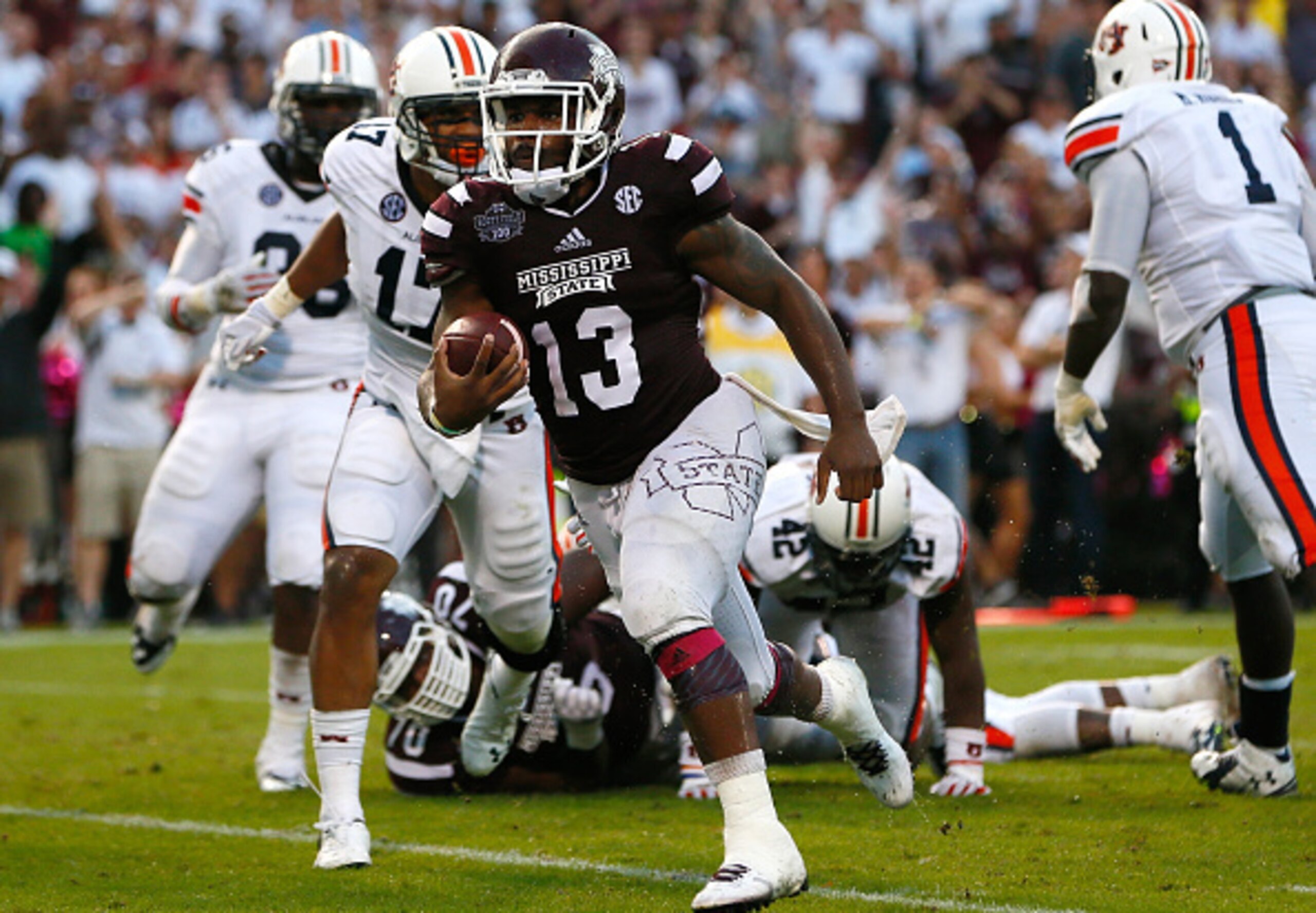
19. Josh Robinson, Mississippi State
Ball Security: 9/10; Power: 17/20; Vision: 16/20; Hands: 13/15; Speed: 16/20; Agility: 11/15
Josh Robinson has been described as a bowling ball, and there is no more apt way to describe him. The stocky tailback with the round backside became a fan favorite—and an opponent’s worst nightmare—with his low center of gravity and his never-ending leg drive. He refuses to give up on a play until it is officially whistled dead.
18. Jarvion Franklin, Western Michigan
Ball Security: 8/10; Power: 17/20; Vision: 17/20; Hands: 12/15; Speed: 16/20; Agility: 12/15
Jarvion Franklin made a lot of high school scouts look foolish with his breakout freshman season at Western Michigan. The 6’0”, 220-pound workhorse was ranked outside the top 1,900 players in the 2014 recruiting class, according to 247Sports, but established himself as a dangerous weapon with a knack for eating yardage in big, consistent chunks.
17. Alex Collins, Arkansas
Ball Security: 8/10; Power: 17/20; Vision: 17/20; Hands: 12/15; Speed: 17/20; Agility: 12/15
Alex Collins knew since he was in high school that he wanted to play for Bret Bielema, no matter what school that meant he would attend. Two years into his college career, it is not hard to see why. Splitting carries with Jonathan Williams has deflated his overall numbers, but it has not stopped Collins from making an impact with his shifty, slashing, low-to-the-ground running style and his toughness in the hole.
16. Samaje Perine, Oklahoma
Ball Security: 9/10; Power: 18/20; Vision: 16/20; Hands: 12/15; Speed: 16/20; Agility: 12/15
Samaje Perine did his best Adrian Peterson impression as a true freshman at Oklahoma, barreling through Big 12 defenses with his vicious running style. The 5’11”, 243-pound tailback set an FBS record with 427 rushing yards in one game against Kansas and rushed for 200-plus yards in two other conference games.
15. Donnel Pumphrey, San Diego State
3 of 17
Ball Security
Donnel Pumphrey put the ball on the ground a few times this season, typically after a missed blocking assignment. He does not preserve his mechanics in the face of the unexpected, but when everything goes according to plan, he does a good job pinning the ball against his chest.
Power
If you put a solid hand on Pumphrey, you are likely to bring him down. He is only 5’9”, 170 pounds and doesn’t have the beef to break through contact, no matter how hard he tries. Despite this, he does a commendable job running between the tackles and doesn’t shy away from contact. But sometimes, biology wins.
Vision
There are plenty of fast running backs in college football, but few break off more long plays than Pumphrey. The difference between raw speed and effective speed is the ability to see and exploit holes. Pumphrey is as good at this as anyone. The ability to get small and slither through creases is one of the best aspects of his game.
Hands
Pumphrey is a functional receiver who doesn’t post the numbers one expects from—for lack of a better term—a scatback. He doesn’t fight the ball into his hands when the Aztecs throw it his way, but it would be nice to see him add some routes to his playbook.
Speed
If Pumphrey splits the linebackers and gets a clean run into the secondary, good luck trying to catch him from behind. He is one of the best home-run threats in college football, and he’s just as dangerous turning the corner as he is darting up the middle. He reportedly ran a 4.43 40-yard dash in high school, and he might play even faster than that number.
Agility
Pumphrey is a quick-twitch athlete who reacts to what he sees on instinct and wiggles out of would-be tackles. Despite his lack of power, he almost always finds a way to gain some yards after contact.
Overall
Pumphrey is the perfect fit for San Diego State’s offense—one of the most consistent producers of running-back talent in the country. Whatever he lacks in size, he makes up for with quickness, speed and home-run ability.


14. Royce Freeman, Oregon
4 of 17
Ball Security
Royce Freeman is a grinder who understands that his role—to pick up yards in chunks, move the chains and protect the lead—entails an emphasis on ball security. He performs that role to perfection, gripping the ball tight as he lowers his shoulder and maintaining control as he barrels into the ground.
Power
Freeman is a 6’0”, 229-pound workhorse with tree-trunk legs and rare natural power. He is compact enough that he can lower his pads and win at the point of contact. His power doesn’t wane throughout the game, either, which enables him to ram through tired defenses in the fourth quarter.
Vision
For a freshman with limited speed, Freeman does a good job getting where he needs to go. He diagnoses blocks as soon as he gets the ball and understands when he needs to bounce outside. But he also tends to run into contact, sensing that a hole will stay open longer than it will instead of anticipating the movement of the defense.
Hands
Byron Marshall and Thomas Tyner are better receiving backs than Freeman, which limits Freeman’s chances on passing downs for Oregon. But when he has been thrown the ball, he hasn’t let his hands become a liability. He is good enough to keep defenses honest, even though this is clearly something that doesn't come naturally.
Speed
This is where Freeman struggles. He has solid burst, but his overall speed is not something teams have to worry about. He ran a 4.58 40-yard dash at The Opening two summers ago, which is roughly how fast he plays on tape.
Agility
Lateral agility is one of Freeman’s keystone traits. He is nimble for a player his size and makes moving side to side look effortless. He plants his feet with purpose and has an excellent jump cut, especially when he breaks inside.
Overall
Freeman has given Oregon a true downhill power back for the first time since LeGarrette Blount. He was supposed to back up Marshall and Tyner but played so well as a true freshman that Marshall moved to receiver and Tyner moved into a supporting role.
13. Leonard Fournette, LSU
5 of 17
Ball Security
Les Miles is obsessed with ball security. He would not have let Leonard Fournette see the field if he didn’t trust the freshman to secure possession. For the most part, Fournette has rewarded that trust, although his lone lost fumble of the season came when LSU was at the goal line against Ole Miss.
Power
Once he found his bearings, Fournette started running the way we all expected: like a tank. He is a 6’1”, 230-pound freight train who plows headfirst through the line and dares linebackers to drive him backward. He rushed for 332 yards on 71 carries against Florida, Ole Miss and Alabama—the three most physical defenses on LSU’s schedule.
Vision
Fournette struggled with his vision at the start of the season, perhaps because he was trying to do too much. During the meat of LSU’s schedule, however, he started to run with conviction, trusting his instincts (which are great) and slicing through holes as they opened.
Hands
The weakest part of Fournette’s game is his hands. Frankly, it's not even close. He fights the ball instead of catching it, which renders him a non-factor in the passing game.
Speed
Miles called Fournette "either the fastest or the second-fastest guy on our team" this offseason, per Trey Labat of NOLA.com. But it hasn’t always translated to the field. He returns kicks for the Tigers and shows great initial burst but hasn’t broken many big plays.
Agility
Fournette has rare agility for a player his size and solid agility in general. He is light on his feet and changes directions without losing balance. His slashing running style is mostly a product of his power but also of his ability to maintain speed through cuts.
Overall
Fournette came to LSU with impossible-to-meet expectations, including comparisons to Adrian Peterson. He wasn’t the best freshman running back in a decade, but the No. 1 overall recruit from 2014 has held his own (and then some) against the strongest division in the country.
12. Nick Chubb, Georgia
6 of 17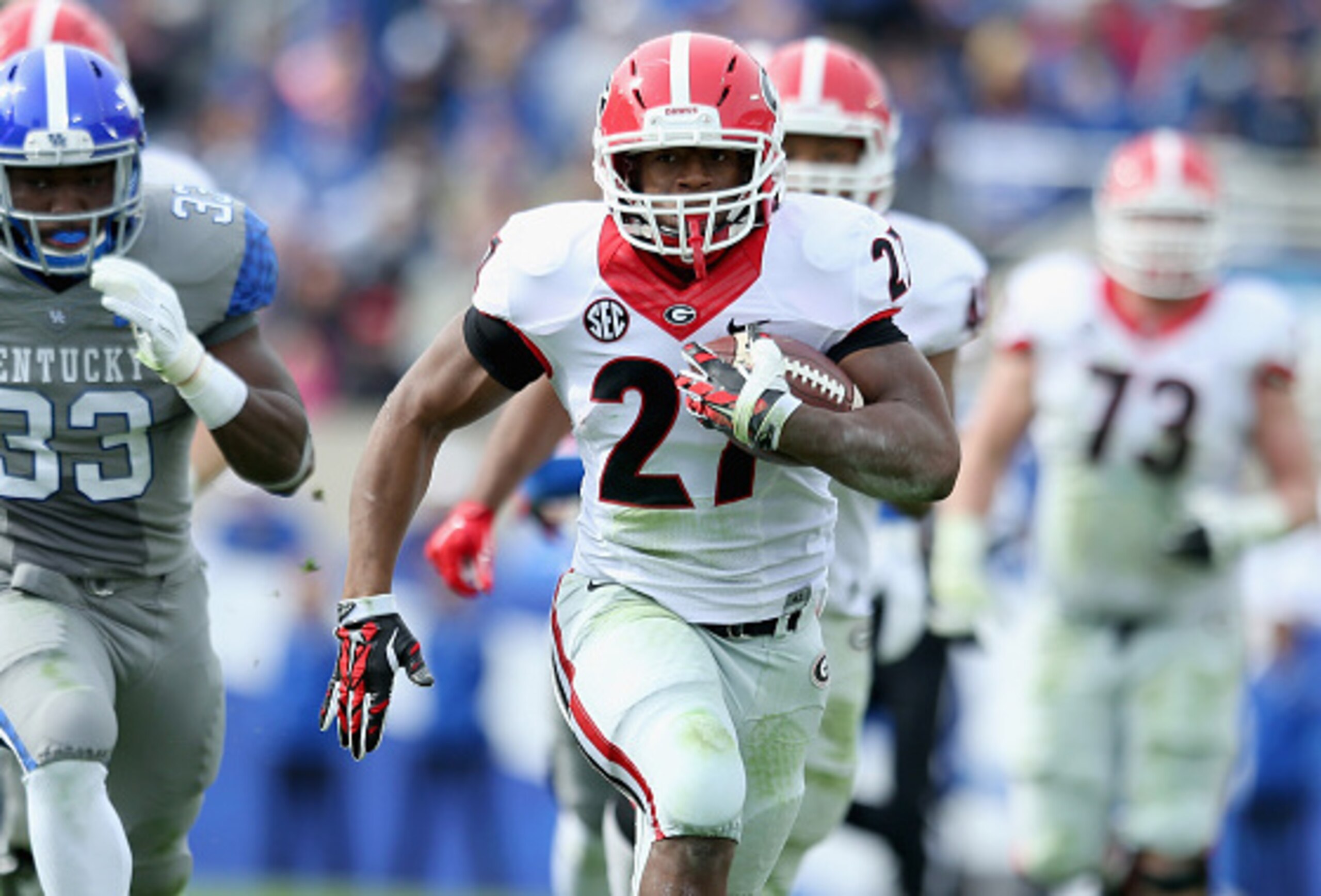
Ball Security
Nick Chubb has strong hands, a compact frame and keeps the ball high and tight on the perimeter, which makes it hard to jar loose a fumble. He did, however, cough it up twice during Georgia’s loss to Florida. One of those fumbles was recovered by the Gators in a crucial moment.
Power
It’s hard to believe that Chubb is a freshman. He looks, acts and runs like a fully grown man. At 5’10”, 228 pounds, he has an ideal frame for breaking tackles. He has strong legs to churn through the pile and stays low to the ground to initiate contact with leverage.
Vision
Again, it is hard to believe that Chubb is a freshman. His vision would be advanced for a player three years his senior. Whereas most young runners hit the first hole they see willy-nilly, Chubb has the patience to let his blocks develop. When his first read isn’t there, he doesn’t panic.
Hands
Chubb does not look natural catching passes, but it’s hard to argue with the results. He is limited as a route-runner, but he sees the ball into his hands on screen passes and adjusts his weight quickly to get upfield.
Speed
Chubb has what scouts will call “deceptive speed.” He looks slower than he actually is. But deceptive speed is the result of an optical illusion: Even though he’s stocky, Chubb almost never fails to win the corner or get through the hole. He clocked a 4.47 in the 40-yard dash at The Opening two summers ago, which is great for a player his size.
Agility
Chubb is more fast than quick. He’s a one-cut runner who likes to get downhill and roll through defenders, not unlike a bowling ball. His cutback is decent, but agility is not the way in which he breaks most of his tackles.
Overall
Chubb was asked to replace early Heisman candidate Todd Gurley in the middle of his true freshman season. Almost anything he did would have felt like a drop-off in comparison. Somehow, he played well enough that no one seemed to mention a letdown of any sort. If he’s this good now, how good might he be in two years?
11. D.J. Foster, Arizona State
7 of 17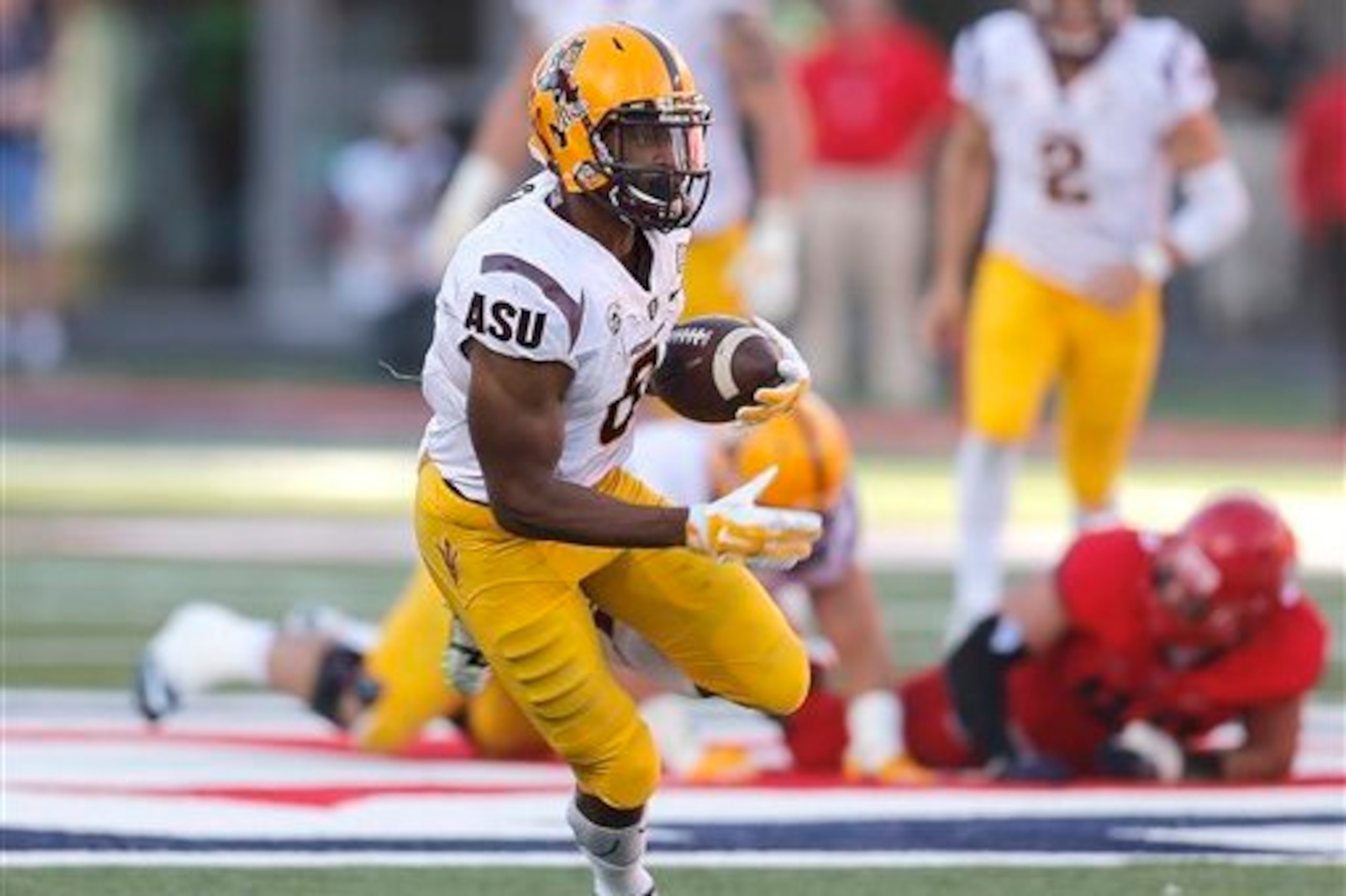
Ball Security
D.J. Foster is as sure-handed carrying the football as he is catching the football. He lost one costly fumble in a scrum against UCLA but was otherwise turnover-proof between the tackles and didn't let his grip loosen on the perimeter.
Power
Foster has more power than one might expect from a 5’11”, 205-pounder who moonlights as a slot receiver, but this is still the weakest part of his game. In addition to his smaller stature, he sometimes lets his pads run high, which allows defenders to beat him with leverage.
Vision
In the open field, Foster sees the play as well as any back on this list. He is patient when he needs to be and aggressive when he needs to attack. However, he is still learning how to read holes at the line of scrimmage and does not always maximize his blocking. He takes far too many tackles for loss when a negative play could have been avoided.
Hands
No running back in the country does a better job out of the backfield than Foster. He has soft hands and understands the nuance of route-running. Defenses that don’t commit a safety or nickelback to Foster on passing plays will get burned by an assortment of angle routes, circle routes and wheel routes.
Speed
Foster has straight-line speed to turn the corner on stretch plays or bounce it outside on a cutback. When he gets through the hole, his acceleration makes him harder to tackle than his raw power. He does not, however, have the long speed required to outrun defensive backs and break huge gains.
Agility
That Foster can play multiple positions is a credit to his footwork and agility. He is smooth in the short area and makes decisive slide cuts and jump cuts. He is more fluid than explosive as an athlete, but he’s slippery enough to make people miss.
Overall
Foster was a running-back/receiver hybrid in 2013, catching 63 passes to go with 93 carries. Even after a full-time move to the backfield in 2014, he remained an essential part of Arizona State’s passing game despite double the rushing workload, tormenting defenses with his unique versatility.
10. Paul Perkins, UCLA
8 of 17
Ball Security
Paul Perkins rarely puts the ball on the ground, which emboldened UCLA to trust him more and more throughout the season. He carries straight handoffs, pitches and zone reads and catches passes out of the backfield, always securing the ball through contact.
Power
Perkins gains yardage in dependable chunks, a testament to his underrated power. At 5’11”, 198 pounds, he is big enough to finish runs, tough enough to stick his head into contact and sound enough to lower his pad level and bounce off tacklers.
Vision
UCLA has a soft offensive line, but Perkins maximizes his production with superior vision. He is patient despite his speed, willing to stretch until the last second before breaking through the hole. In the open field, he reads and sets up blocks to turn medium gains into long ones.
Hands
Running backs catching passes are a staple of Noel Mazzone’s offense, and Perkins fits the scheme like a glove. He caught 24 passes in a change-of-pace role as a freshman in 2013 and 26 in a full-time role this season. He has strong hands and is capable of running angles and circles on top of simplistic routes such as flares.
Speed
Perkins is a quick-strider with the speed to attack gaps and break long runs. He wouldn't make the top of the list as straight-line runner—defenses have caught him from behind in the open field—but his explosion off the line makes him dangerous.
Agility
Agility is not a problem for Perkins, but he does not have the wiggle one expects from a big-play all-purpose back. He is a one-cut-and-go downhill runner, not the type who dances through tacklers and creates his own yards.
Overall
Perkins is not a household name, but he should be. After a year in which UCLA failed to replace Johnathan Franklin, the big-play sophomore has paired with Brett Hundley to give the Bruins one of the best backfields in the country.
9. Cameron Artis-Payne, Auburn
9 of 17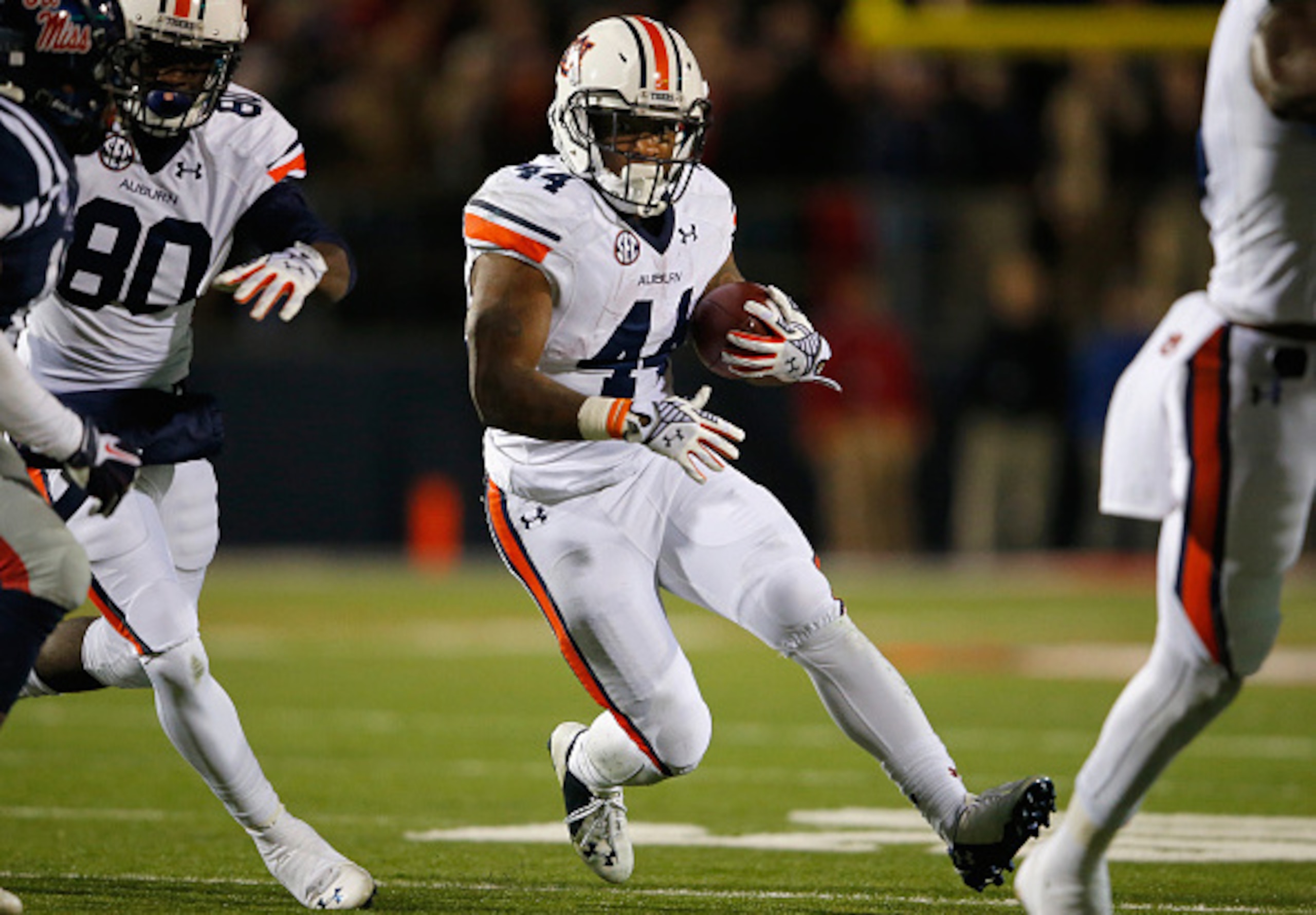
Ball Security
Cameron Artis-Payne has vise-grip hands and knows the importance of ball security. He keeps the ball tight in the open field and protects it when he plows up the middle. He and quarterback Nick Marshall have botched some read-option exchanges, but it’s unclear which player is at fault. (More likely than not, it’s Marshall.)
Power
Artis-Payne is built like a small truck (5’11”, 210 lbs) and loves to get big. His toughness through the hole is taxing to defend, wearing defenders out over the course of a game. Because his inside running demands so much respect, Auburn is able to burn teams around the corner with the read-option.
Vision
This is where Artis-Payne excels. He has a natural feel for the position and makes hard runs look easier than they are. He picks his holes, understands how to set up blockers and sees the field well enough to create when his first option is plugged.
Hands
Artis-Payne has short, stout arms that limit his catch radius, but he remains a decent weapon in the passing game. He has natural hands and is able to shift his weight and get upfield after catching a screen or a checkdown.
Speed
Speed is the weakest part of Artis-Payne’s game, although he has looked faster in 2014 than he did the year prior. He is not a threat to run past safeties at the second level or break many long runs.
Agility
Despite his lack of straight-line speed, Artis-Payne is as shifty as they come. For a player his size, his agility is off the charts. He slides through the hole and has a deadly jump cut, the latter of which makes him a dangerous cutback runner.
Overall
In 2013, Artis-Payne was the power complement to Tre Mason. With Mason gone, he emerged as an every-down back capable of carrying Auburn’s offense. More than just a "system" runner, Artis-Payne proved his worth on frequent occasions and will be missed in 2015.
8. T.J. Yeldon, Alabama
10 of 17
Ball Security
Fumbling was T.J. Yeldon’s biggest issue in 2013, when he put the ball on the rug five times and lost four of them. He was better this season but still holds the ball away from his body when it should be tucked high and tight.
Power
Yeldon doesn’t have the pure power of his forerunners (Eddie Lacy, Trent Richardson, Mark Ingram, Glen Coffee), but he knows how to finish runs. He is 6’2”, 221 pounds and makes assured downhill cuts in Alabama’s zone-blocking offense. He sizes up smaller defenders in the open field and is willing to take them on physically.
Vision
The ability to see the field allows for everything Yeldon does as a running back. At the line, he reads the frontside and the backside, perceiving the hole and the cutback lane. In the open field, he attacks off-balance defenders in a way that enables extra yardage.
Hands
Yeldon is a threat in the passing game whom Alabama leans on often. His size, hands and fluid running style make him a tailback in a receiver’s body. He runs smooth routes out of the backfield and even moonlights in the slot and on the perimeter.
Speed
Yeldon has better acceleration than long speed, which is not necessarily a bad thing. He goes from zero to 60 in a blur, surging through the hole before it swallows him. His initial speed is enough to blow past linebackers and slow-footed safeties, although he does not have the breakaway speed of similar-style running backs (e.g. former Arkansas star Darren McFadden).
Agility
Yeldon has deceptive agility. His stutter moves and jump cuts look awkward because of his upright running style, but they are effective. When defenders break through the line, he is slippery enough to turn a negative play into small, positive gain.
Overall
Yeldon is a proven commodity who makes difficult plays look easy. He never took off and became the super-duper megastar it looked like he’d become after his freshman season (2012), but he’s always been a versatile running back who plays his best in the biggest games.
7. Javorius Allen, USC
11 of 17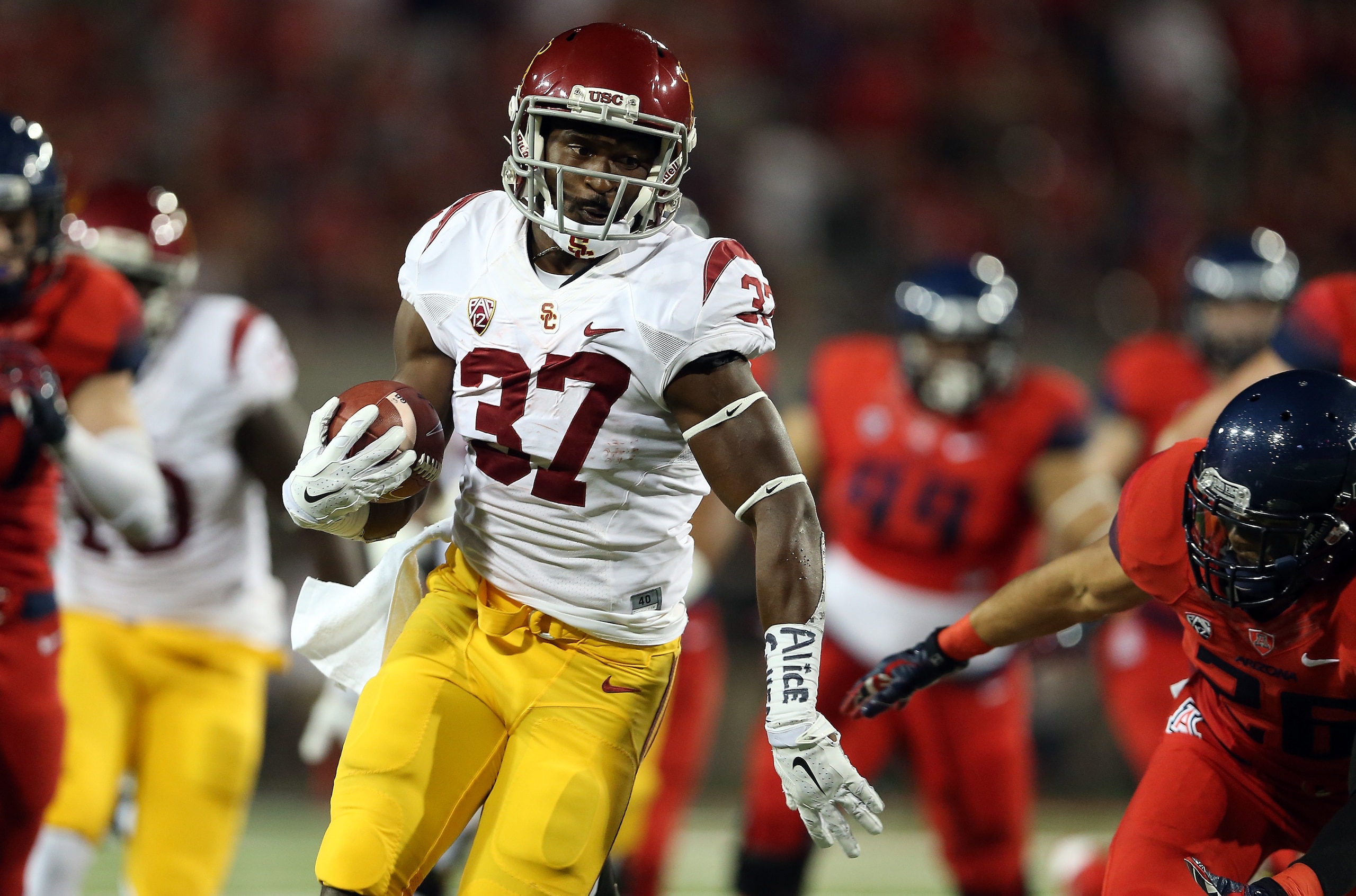
Ball Security
Javorius “Buck” Allen is a tactful runner who keeps the ball tight and shields it through contact. He lost a garbage-time fumble inside USC’s 10-yard line against Washington State but has otherwise been reliable.
Power
Even though he isn’t a vicious runner, Allen uses his size (6’1”, 220 lbs) to break tackles in the open field. His legs—the main source of his power—never stop churning, even when a group of defenders is trying to bring him down. If he ran with more fire and/or a lower pad level, he would finish even higher in this category.
Vision
Allen strings out runs with patience, reading his blockers and letting the play develop. When the cutback lane appears, he finds it—every time. In 2014, he posted big numbers with a pair of true freshmen on the offensive line. Even though those youngsters played well, Allen's vision made them look even better than they were.
Hands
USC’s offense relies—and has always relied—on a running back who can slip out of the backfield and make a play. Allen is no Reggie Bush in terms of route-running and explosiveness, but he’s a reliable safety valve with strong hands on screens and checkdowns.
Speed
Allen has good burst for a 220-pounder, firing out of the backfield at the first and second level. He doesn’t maintain that speed in the open field, where defensive backs are able to track him down from behind, but his acceleration makes him a wellspring for chunk yardage.
Agility
Allen is more fluid than agile, which is a subtle but important distinction. He has good balance and makes smooth cuts but doesn’t have the short-area quickness to dance around defenders. He runs through defenders more than he makes them miss.
Overall
Playing running back at USC is hallowed ground, like playing linebacker at Penn State. After a few rough years without a star, the Trojans found a gem in Allen, whose well-rounded game has made him precisely that.
6. Tevin Coleman, Indiana
12 of 17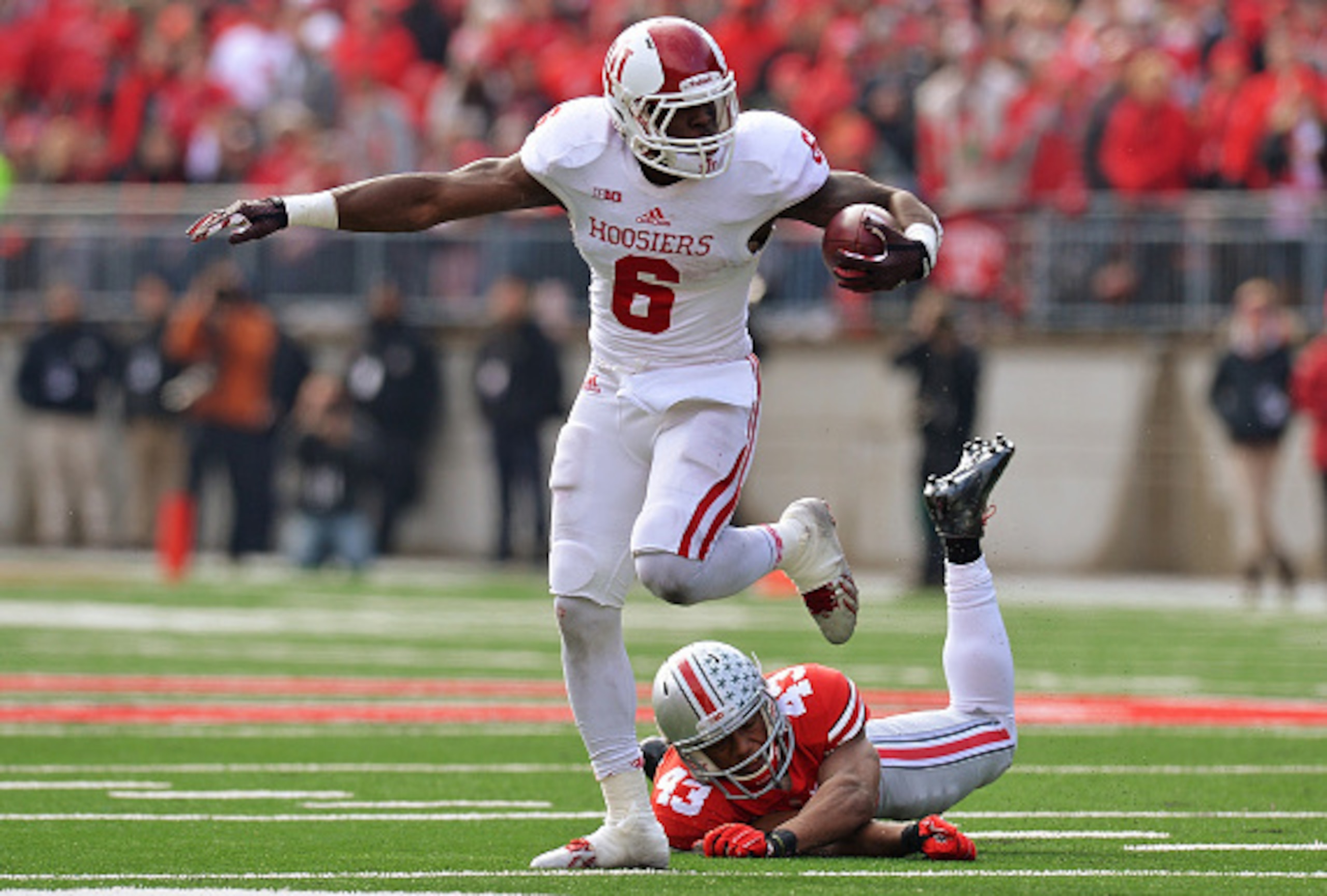
Ball Security
Tevin Coleman does not have chronic fumbling problems like some of the other big names on this list, but he could stand to be a little more protective of the ball. He was infamously benched for three series after fumbling twice in the first quarter against Michigan.
Power
You wouldn’t know it looking at his explosiveness numbers, but Coleman is built like a power back. He is 6’1”, 210 pounds and has a thick lower body that allows him to grind out extra yards. His upright running style prevents him from becoming a between-the-tackles workhorse, but he’s strong enough to fall forward on most runs.
Vision
Coleman has boom-or-bust vision. He creates big plays out of holes that many running backs might have missed but sometimes tries to force the issue and sacrifices positive yards. Still, his ability to hit the home run makes this much more of a strength than a weakness. He's like a really good power hitter with a mediocre batting average. Think Ryan Howard, circa 2008.
Hands
Coleman does not have an advanced route tree, typically only catching checkdowns and screens. But he has performed well in those situations, flashing a soft pair of hands and the ability to turn and get upfield.
Speed
When Coleman finds a crease, he’s gone. Long gone. His straight-line speed can rival that of any running back in the country. It’s impressive how he hits the hole, too, with his unique blend of size and speed combining for a powerful gush of momentum.
Agility
Coleman doesn’t have a ton of wiggle. He is more prone to running past defenders than around them. But he does have an abnormally quick first cut, which speaks to his agility despite his lack of secondary moves in space.
Overall
Coleman was a beast in 2013, but because he missed the last three games of the year with an injury, nobody seemed to notice. After 2014, he could no longer be ignored. Even though he plays for Indiana, the nation got on board with Coleman this season, accepting him as an All-America candidate despite the sad state of his team.
5. Jay Ajayi, Boise State
13 of 17
Ball Security
Jay Ajayi holds the ball away from the body with little regard for its safety. He fumbled five times in the first 10 games this season, losing three of them. This is the area of his game that demands the most improvement.
Power
Ajayi is a solid downhill runner who seeks contact between the tackles. He bounces off smaller defenders and holds his own against bigger ones. At 6’0”, 216 pounds, he has the beef to grind out positive yards on each carry, although his lower body needs to catch up with his upper body in terms of strength.
Vision
This might be the best (and is definitely the most underrated) part of Ajayi's game. He sees the field and squeezes through small holes better than almost any other running back his size. He keeps his head on a swivel when he gets to the second level, assessing the layout of his blockers to decide on the optimal route.
Hands
Fine, I take it back. This is the best part of Ajayi’s game. After mostly running checkdowns in 2013, he expanded his repertoire with flares and angle routes this season, displaying natural hands and a feel for how to get open. He caught 12 passes for 93 yards and a touchdown against Ole Miss.
Speed
Ajayi is faster than people give him credit for, although he’s not what one would call a “burner.” On inside runs, he accelerates through the hole and is often too quick for the linebackers. On outside runs, he can typically win the corner. But don’t expect him to gash you with 40- or 50-yard runs.
Agility
Whatever Ajayi lacks in breakaway speed, he makes up for with lateral agility. He has the legs of a smaller, nimbler player, which allows him to cut on a dime and make defenders miss in space. He also has a pretty killer juke move.
Overall
Ajayi is the latest—and probably the best—in a long line of great Boise State running backs. One look at him in street clothes says he’s a power back, but the more you watch him play, the more you realize he’s a nuanced, shifty runner who does a little bit of everything well.
4. Ameer Abdullah, Nebraska
14 of 17
Ball Security
The weakest component of Ameer Abdullah’s game is ball security. For a player with so many reps under his belt, he puts the ball on the ground…a lot. He fumbled 20 times in his first three seasons and appeared to fix the problem in 2014 but relapsed in the biggest game of the season at Wisconsin.
Power
Abdullah has functional power. He is a high-motor runner who gains occasional yards after contact, but he is tougher than he is strong. He won’t move the pile in a goal-line setting, but he’s forceful enough to gain yards after contact between the 20s.
Vision
Abdullah is a smart runner who sees holes before they open up and hits them at just the right moment. Cynics will say he’s “running to his scheme,” which he is, but it takes a back with good vision to run to his (or any) scheme this well. Plus, when the initial assignment is not there, he has shown the ability to identify the optimal cutback lane.
Hands
Nebraska doesn’t overuse Abdullah out of the backfield, saving him for the biggest possible moments. When he has been targeted, though, he has proved to be a serviceable pass-catcher who snatches the ball away from his body and doesn’t let the reception break his stride.
Speed
Abdullah is a bullet with strong legs and breakaway speed. He turns the corner on stretch plays, finishes long runs with touchdowns and consistently gains yardage on kick returns. The most impressive part of his speed might be his stamina, which essentially allows him to "hold the turbo button" throughout the duration of the play.
Agility
No college running back has better agility than Abdullah. He sets up would-be tacklers with his balance on side-to-side cuts, changing direction on a dime. He also has a deep arsenal of open-field moves that constantly stump defenders trying to figure out how to stop him during tape study.
Overall
Abdullah capped a long, fruitful career with an outstanding senior season in which he carried Nebraska’s offense. The 5’9” I-back is a potent ball of energy and one of the best non-quarterback leaders in the country.
3. Duke Johnson, Miami (Fla.)
15 of 17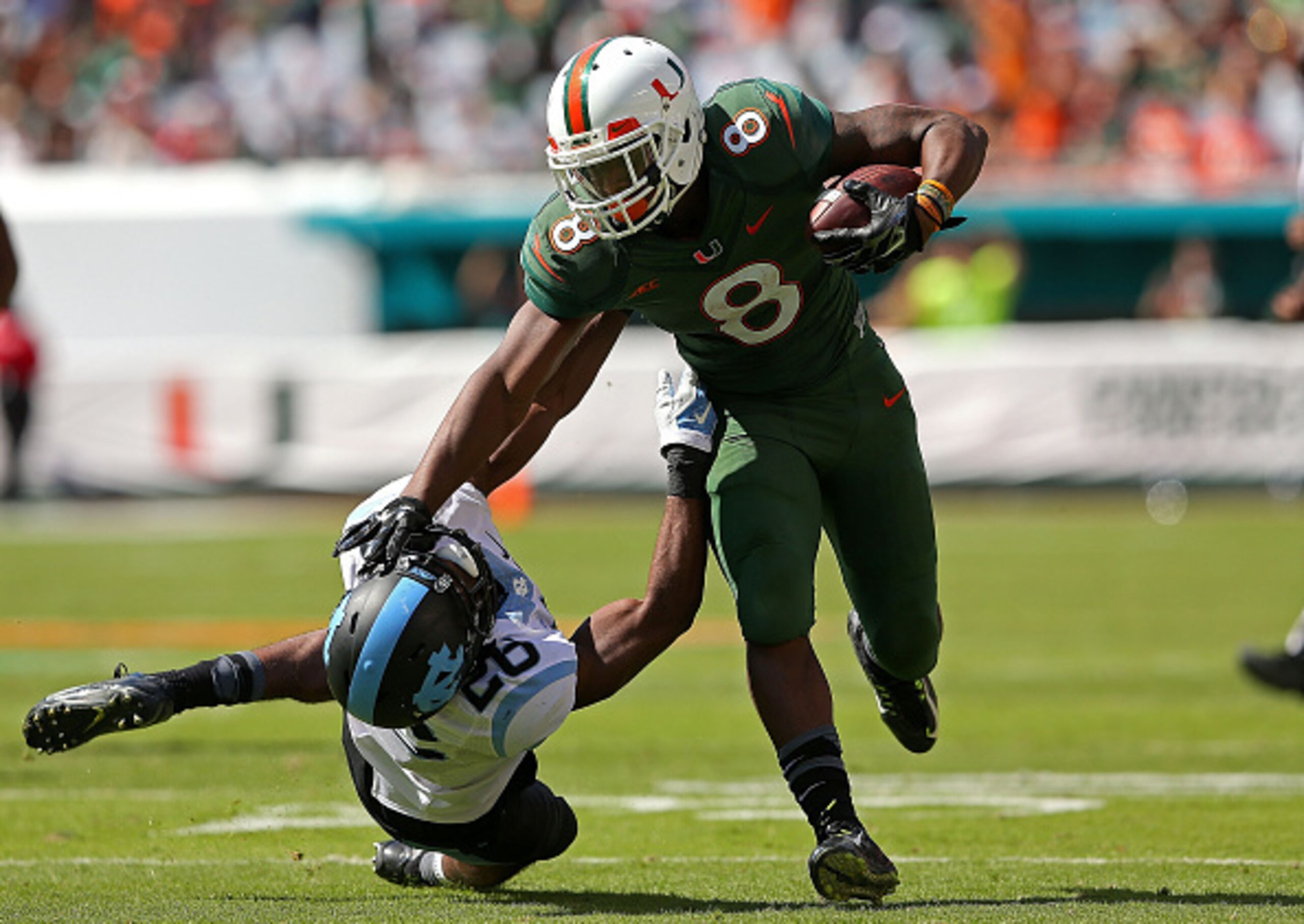
Ball Security
The biggest knock on Duke Johnson is the way he carries the football. He is surprisingly good between the tackles but does not maintain proper form in the open field. Specifically, he loosens his grip on the ball when he attempts to make people miss, focusing too hard on the defender and not enough on himself.
Power
Johnson is short (5’9”) but compact (206 lbs) and does an effective job running between the tackles. He runs with a low pad level to absorb contact and bounce off defenders and has a powerful stiff-arm. Despite this, he has a penchant for getting tripped up at his ankles, which is something he needs to work on.
Vision
Johnson is a patient runner with preternatural vision that allows him to gain maximum yardage. He strings out stretch plays until he sees a lane to shoot through, but he knows to take the sure yardage when the defense has defended him well. He turns around defenders in the secondary and does a smart job reading downfield blocks.
Hands
Miami throws to Johnson as an extension of the running game, utilizing his speed with quick flares and screens. He is also a capable route-runner who can deke linebackers with angles and wheels. Most underrated of all, he is a strong pass-blocker who punches defenders with his hands to keep the quarterback upright on passing downs.
Speed
Johnson’s second gear was a bone of contention before the season, but he proved critics wrong with long gain after long gain after long gain. He is lightning at the second level, separating from defensive backs with a short-legged, powerful stride.
Agility
This is the money-maker. Johnson has a quick, natural jump cut and is able to change direction without breaking stride or losing speed. He puts defenders on their heels and explodes past them as they attempt to regain their balance.
Overall
After a breakout freshman season and an injury-shortened sophomore season, Johnson fully realized his potential in 2014. His low-to-the-ground running style and ability to help in all phases of the game make him the best scatback in the country.
2. Melvin Gordon, Wisconsin
16 of 17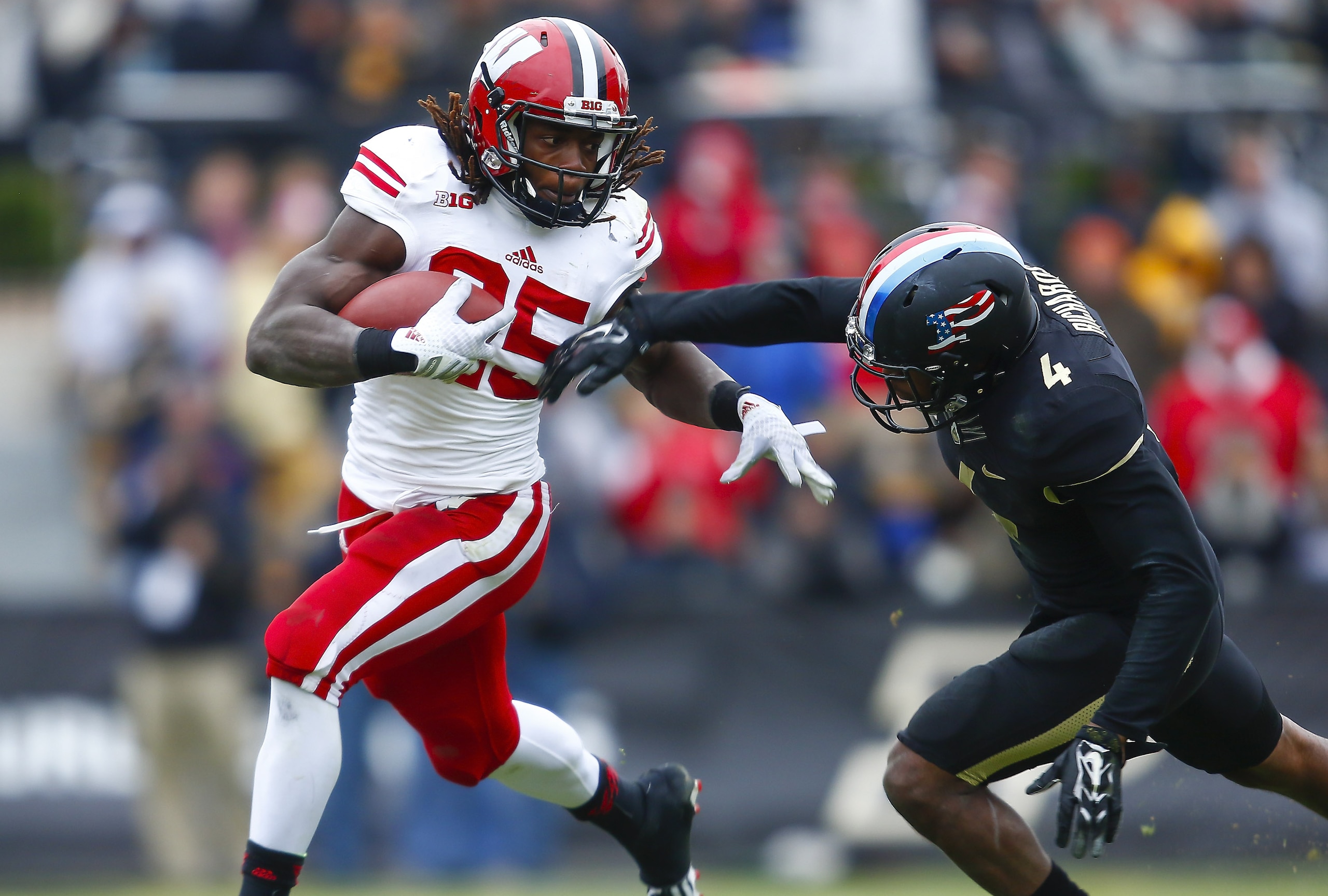
Ball Security
Once considered a strength of Melvin Gordon’s game, ball security has quickly become an issue. He went 322 carries without a fumble at the start of his career but coughed one up against Bowling Green in September and two in his record-setting game against Nebraska.
Power
Gordon does not receive enough notoriety for his power. He is 6’1”, 213 pounds, doesn’t appear to have a single ounce of fat on his body and never stops pumping his legs. He lowers his pads to pick up extra yards in the hole and shrugs off arm tackles in the open field.
Vision
Gordon is a decisive runner with great in-line vision. He spots small, negligible creases and gets there with a single cut. Once he gets to the second level, he either sees and exploits off-balance defenders or calculates the pursuit angle and beats them to the edge.
Hands
Wisconsin does not ask Gordon to do much in the passing game, leading to obvious questions about his hands. Whenever it has thrown him the football, though, he has not shown an obvious deficiency. But he’s so unproven that it’s hard to grade him any higher.
Speed
Gordon has better acceleration than long speed, but penalizing him for his long speed would be nitpicking. He is a long, forceful strider who can sprint through the linebackers and peel out from safeties for huge gains.
Agility
Gordon moves from side to side as easily as he stops and starts. It is one thing for a player to identify small creases in a defense; it’s another for him to cut and slide his way through said creases. Gordon is a master at contorting his body without losing balance.
Overall
Gordon did not inherit the role of a lead back until his junior season in 2014, even though it was clear what kind of talent he possessed. However, even with the bigger workload, he maintained one of the highest per-carry averages in FBS history, gashing defenses for chunk plays on a consistent basis.
1. Todd Gurley, Georgia
17 of 17
Ball Security
Todd Gurley keeps the ball high and tight, no matter the situation. Even when he makes sharp cuts, the ball stays glued to his chest. A high-volume runner with a violent downhill style is required to hold on to the football, and Gurley does it better than anyone.
Power
Gurley is built like a safety (6’1”, 226 lbs) and runs like a small locomotive. He drops his head to absorb contact and almost never gets tackled by one player. If he breaks into the second level of a defense, the best a defensive back can hope for is to grab him, hold him, slow him down and wait for help to arrive.
Vision
At his best, Gurley is making one cut and getting upfield as fast as possible—something that does not require great vision. When that first hole is not available, however, he identifies the cutback lane and attacks it with conviction. Defenses that over-pursue against Gurley will be hoisted by their own petard.
Hands
It is hard to find a “power back” with better hands than Gurley. He catches the ball cleanly and turns up the field in one fluid motion, as if he just accepted a handoff. His ability to contribute in the passing game makes him a true three-down running back.
Speed
Speed is the source of Gurley’s power. He reaches top gear in a heartbeat, bursting through the line like he was just shot out of a cannon. If you think this grade seems high, see if you can track down footage of Gurley getting caught from behind. Whether it’s a handoff, a catch or a kick return, he is gone as soon as he hits the open field.
Agility
Gurley has good agility and is able to circumvent defenders (even though he prefers to go through or past them). His footwork and balance are rare for a player his size, separating him from NFL tales of caution such as former Alabama running back Trent Richardson.
Overall
A four-game suspension and a torn ACL limited Gurley to six games in 2014. But when he was on the field, he was exactly as good as advertised. Maybe even better. He is the best college running back since Adrian Peterson.
.jpg?w=2560 "Jaguars Colts Football")
.jpg?w=2560 "Malik Beasley Negotiating Plea Deal (AP)")
.jpg?w=2560 "Aikman Blasts Cowboys WR 🫣")

.jpg?w=2560 "Jonathan Taylor Landing Spots")