Daniel Levy Is to Blame for Spurs' Failings This Season
Over the years, Daniel Levy's stock has risen and fallen in line with that of Tottenham Hotspur.
Since becoming the club's chairman in 2001, Levy has presided over a gradual improvement in the club's fortunes.
Prior to his arrival, Spurs had finished in the top half of the Premier League just three times. Since he's been in charge, they have finished outside of it just twice and have breached the top four on two occasions.
TOP NEWS

Adams Named USMNT Captain 🫡
.jpg?w=2560 "Chargers Mack")
Every Trade's Best Trade Asset 🔁
.jpg?w=2560 "Green Bay Steelers Football")
Insiders: Cowboys Overpaid for Porter
However, despite not having finished lower than sixth for the last five years, all is not well at White Hart Lane.
Levy's reputation has never been in worse shape, and while the season is still young, Spurs look to have taken several steps backwards under new manager Mauricio Pochettino.
Until around 2012 and the replacement of Harry Redknapp with Andre Villas-Boas, Levy's reputation was iron clad. He was famed for being one of football's toughest negotiators, adamantly refusing to pay any fee he deemed over the odds. He also had a penchant for signing players that he perceived to be bargains—whether his manager wanted them or not.
However, while the dismissal of Martin Jol in 2007 drew some criticism from fans, it wasn't until recently that Levy has truly begun to be scrutinised.
He has been spared the ignominy of becoming the poster boy for managerial chopping and changing by the likes of Massimo Cellino at Leeds and Giampaolo Pozzo at Watford. That said, it has been his proclivity for swapping head coaches that has halted Spurs' progress.
It is a time-proven truism that consistency is conducive to success in football—provided, of course, you've picked the right person to be consistent with. Sir Alex Ferguson, Arsene Wenger, Brian Clough—it's a mantra that has been borne out time and time again.
Repeatedly, he's given managers massive financial backing and then pulled the rug out from under them. Jol was sacked despite securing consecutive fifth-placed finishes.
His replacement, Juande Ramos, won so far the only silverware of the Levy era with the 2008 League Cup. However, he, like Jol, was sacked shortly into the season after a poor start.
The shortsighted timing of these moves—just after the closure of the main transfer window—is indicative of Levy's impatience for results and his unwillingness to allow for short-term failings in the name of long-term progress.
In a recent interview, Ramos described how rapidly Levy's belief in his abilities evaporated: "When we won the Carling Cup I understood and then I don't understand any more! They sacked a manager they'd given a four-year contract to."
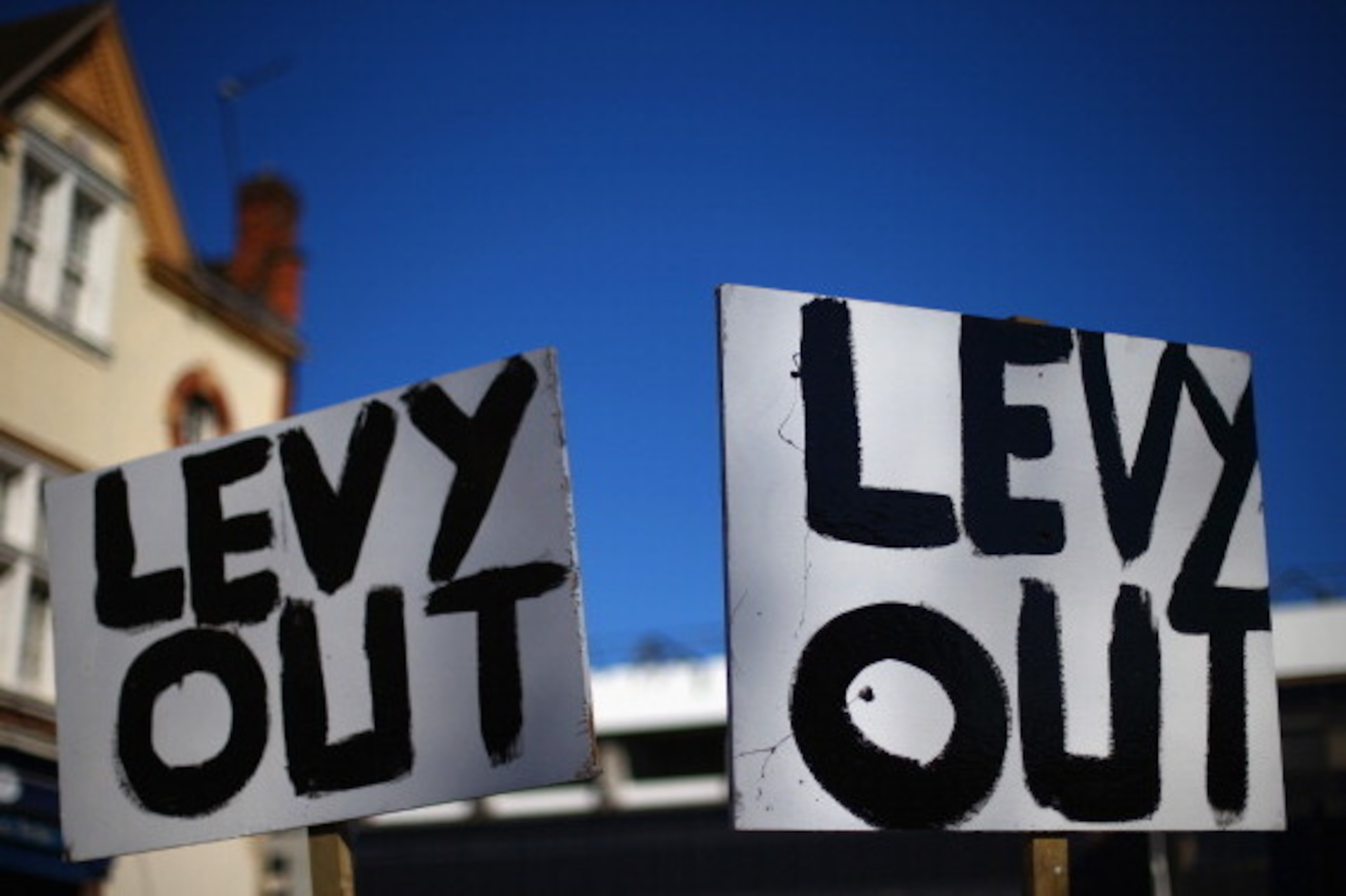
Redknapp's removal was arguably justified by his courting of the England job and Spurs' dramatic collapse in the second half of the 2011/12 season.
However, a more forgiving chairman would have surely given him more time, given his achievements in the previous seasons. Indeed, even after that slump, Spurs only failed to qualify for the Champions League due to Chelsea's victory in the competition.
Compounding all of this is Levy's lack of consistency in his managerial choices. His tendency has been to alternate between pragmatic man-managers—Jol, Redknapp and, last season, Tim Sherwood—and those with loftier ambitions for their projects—Ramos, Villas-Boas and now Pochettino.
It's a pattern that is so entrenched that it's become a source of ridicule for Levy:
The huge contrasts between each manager have made for a muddled, unbalanced squad of players with hugely varying qualities. This disastrous sequence reached its nadir last summer, where Levy and Villas-Boas set about reinvesting the funds from Gareth Bale's sale.
Just over 12 months on, the club has very little to show for it. Under Pochettino, youth-team graduate Harry Kane has had more of an impact than either Roberto Soldado and Erik Lamela—who cost a combined £51.7 million last year.
A club that has gone about their business in almost completely the opposite manner has been Southampton, from whom Pochettino joined in the summer. Their famous youth academy, coupled with consistency in their scouting and managerial philosophies, continues to pay dividends.
Levy has recently poached Southampton's head of recruitment Paul Mitchell, presumably in the belief that he alone is responsible for Saints' cohesion and can be the remedy for Spurs' lack thereof.
While there is no doubt that Mitchell has worked wonders on the south coast, it would be miraculous if he has any chance to do the same in London. He has been successful because he has been allowed time to establish a framework for the club, something it's hard to imagine Levy having the patience for.
If Pochettino's reign carries on in a similar fashion, he won't be long for White Hart Lane. He signed six players in the summer, and rumours of a January raid on his former club abound.
However, even with a restructured recruitment system, unless he convinces Levy that he is the man for the job, then Spurs will be quickly left with another group of players who have no place in a new manager's plans.
Levy should be looking more closely at himself and less at his managers and the club's backroom staff if he wants to guide Spurs to the next level.
.jpg?w=2560 "MHJ's Potential Trade Value 📉")