Despite Early Injuries, San Antonio Spurs' Roster Is Just Fine
The San Antonio Spurs seem to have the perfect roster. Few analysts question it, there aren't any particularly glaring holes and the Spurs keep winning.
Gregg Popovich's team limped through a 2-3 start but has since adapted to the setbacks, capitalizing on a weak schedule and earning seven victories in its last eight games.
Still, Marco Belinelli's recovery, Matt Bonner's mediocrity and Tiago Splitter's prolonged absence raise minor red flags. Belinelli is being eased back into game action, Bonner is dealing with a stomach virus and Splitter's official return date remains unknown, according to Jeff McDonald of the San Antonio Express-News.
TOP NEWS
Giannis' Warning to NBA ⚠️

NBA Power Rankings Entering Preseason 🔢
Wizards Guard Admits Tanking 😨
With the trio ailing, should San Antonio be pursuing some sort of acquisition in an attempt to boost the roster just in case the injuries become a long-term mess?
The most important question, in this case, is how much a top playoff seed means to the team. Making a move would mean the Spurs are gunning for a top position, because they'll almost certainly earn a postseason spot regardless.
Boris Diaw probably won't log 35-plus minutes all season in Splitter's absence, and the Spurs shouldn't be opposed to limiting significant playing time for Jeff Ayres and Austin Daye—both of whom are unspectacular.
San Antonio could try utilizing smaller lineups, something opponents have used as a counter to five-man units with Tim Duncan and a center. This idea would entail a three-man combination of Tony Parker, Cory Joseph, Danny Green, Manu Ginobili or Belinelli alongside Kawhi Leonard and a center.
Per 82games, though, none of the Spurs' top 20 lineups last season employed "The Claw" at the 4. What's more, San Antonio couldn't use Diaw at center in the preceding example, because that would shatter Pop's rotations. And if the veteran was used at the 4, well, it's no different than a normal unit.
Consequently, a small lineup would necessitate another shooting guard or small forward to make the option feasible. There aren't many viable free agents, but Ray Allen is a popular name likely to gain traction—especially given a recent update from ESPN's Chris Broussard.
Allen shattered the hearts of Spurs fans in Game 6 of the 2013 NBA Finals, yet the sharpshooter shouldn't be ruled out because of that distant emotional pain.
Considering the injuries and overall three-point struggles San Antonio has encountered to date, Allen represents a decent addition. Though his defense is a turnoff, he'd provide long-distance shooting support during any Belinelli- or Patty Mills-less outings.
In order to sign Allen, however, the Spurs would be required to waive someone, because they currently have 15 players under contract. The side-eye would slowly begin scanning for Ayres and Daye, which doesn't conceptually seem terrible.
| Allen | 13.0 | 3.8 | 2.7 | 1.0 | 44.2 | 37.5 |
| Daye | 14.2 | 7.1 | 2.0 | 1.2 | 31.3 | 29.4 |
| Ayres | 9.0 | 9.9 | 2.3 | 0.5 | 56.0 | --- |
But as fantastically mediocre as those backups are, the Spurs are already ridiculously thin in the frontcourt. Dropping either forward would mean San Antonio could not afford a major injury to any one of Duncan, Splitter, Aron Baynes or Bonner, and that is simply not worth the risk.
While Ayres and Daye are expendable, neither is necessarily release-able in favor of a guard—which is equally hilarious and confusing. Their rebounding ability, as inconsequential as it may seem, is actually needed in small doses.
Ultimately, Allen does not provide a sufficient upgrade but would actually create a small but meaningful void, so he shouldn't be pursued.
Seeking a trade is the obvious alternative, but the Spurs realistically have no pieces to send other than draft picks or exceptions. Unless San Antonio targets a specific defensive upgrade to replace Ayres or Daye, the Spurs shouldn't seriously consider waiving either forward.
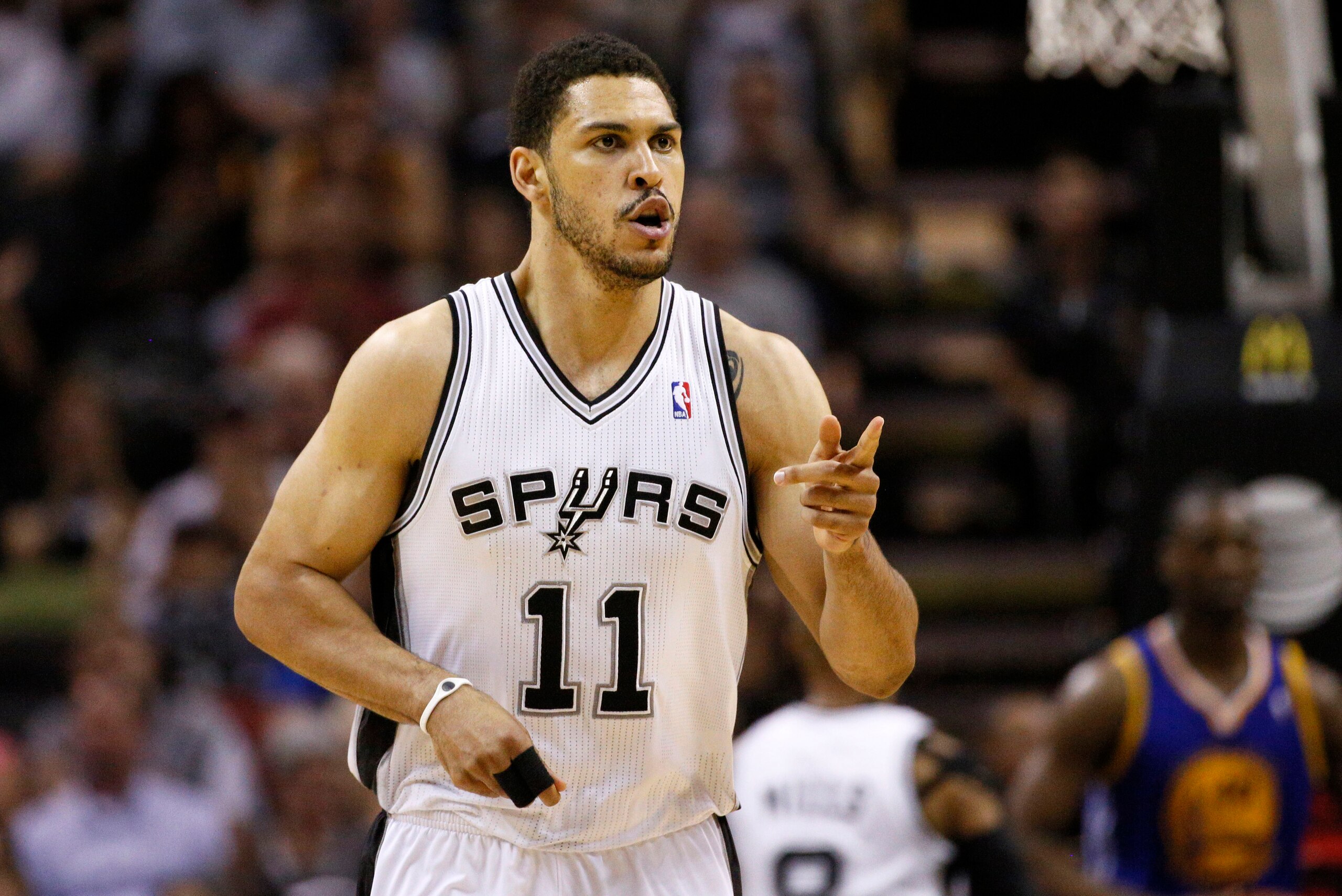
Additionally, Kyle Anderson might seem like a wild card on the surface, considering he'll probably split time with San Antonio and the Austin Spurs of the NBA Developmental League.
The franchise did something similar with Joseph a couple seasons back, giving the guard extra burn in the D-League while sporadically using him in the NBA. That time has certainly proved beneficial in the long run now that Joseph has stepped into a backup role and performed efficiently.
However, while sending Anderson to Austin for portions of his rookie campaign will help him record semi-consistent playing time, a change of scenery doesn't alter the number of contracts. (i.e. He still counts towards their full roster of 15.)
Even if San Antonio wanted to pursue another option for its roster, the lack of available talent and full sheet of contracts, combined with Ayres and Daye understanding their respective roles, should not be discounted. Though neither is an under-the-radar stud, they both occupy a specific role that isn't in dire need of an upgrade.
The Spurs' best option is to stay the course and wait for a fully healthy team. Once that happens, nearly every question surrounding San Antonio's roster will fade away.
Note: Unless otherwise noted, all stats courtesy of Basketball-Reference and accurate as of Nov. 24.
Follow Bleacher Report NBA writer David Kenyon on Twitter @Kenyon19_BR.
.jpg?w=2560 "Every Trade's Best Trade Asset 🔁")
.jpg?w=2560 "Insiders: Cowboys Overpaid for Porter")
.jpg?w=2560 "Top NFL Trade Targets")