Chris Copeland Talks Increased Role, New Expectations and Rise to National Stage

Indiana Pacers forward Chris Copeland felt like this was going to be a big season.
After mostly studying from the sidelines during Indiana's 56-win 2013-14 campaign, the 30-year-old prepared himself to take on a much larger role.
But neither he nor the Pacers could have foreseen how dramatically different the two years would be. With Lance Stephenson departing in free agency and Paul George going down with a broken leg, Indiana needed someone to help plug the sizable gap on its perimeter.
TOP NEWS
Jaylen Brown Calls Out Tatum 🧢
LeBron on President Trump's Criticism
Report: Knicks to Sign Knecht
Copeland has done everything he can to fill that void. After averaging only 3.7 points in 6.5 minutes per game last season, he ranks second in scoring (13.5 points) and third in minutes (31.7) for the resilient Pacers.
Indiana is 5-7 on the season but 4-3 since inserting Copeland into the starting lineup Nov. 7. The Pacers have outscored their opponents by 1.9 points per 100 possessions with him on the floor and have been outscored by 11.9 points per 100 possessions when he sits.
Technically, Copeland still wears the same uniform and reports to the same office he did last season. But seemingly everything else about him, his role and his team is different now.
The sweet-shooting forward spoke with Bleacher Report about those changes and a number of other elements from the latest chapter of his NBA story.

Bleacher Report: Minutes weren’t easy to come by last season. What are some things you took away from that year to help you develop?
Chris Copeland: Situational things, watching guys and how they function depending on time and score. I learned different moves on the sideline; [Luis] Scola and David West are very polished in the post area. I learned patience. I learned a lot of stuff, I mean, it’s a laundry list of things. I could go on for days.
In a year’s time, if you really want to learn, and I tried to learn something new every day, even though I wasn’t playing as much.
B/R: A lot of things happened this summer, including Lance Stephenson leaving in free agency. He’s been pretty heavily scrutinized from the outside. How would you describe him as a player and a teammate?
CC: I think he’s misunderstood. He does some things people won’t agree with, everybody knows that, but I think he’s a hard-nosed competitor, played his heart out every night when I was around him. I think that’s something you respect.
He’s a young guy still figuring things out, so sometimes, like the rest of us, he makes mistakes. But I think at the end of the day his intentions are always to help his team win. I always respected him as a player, and I was glad to see him get a pretty good deal in Charlotte.
B/R: After Stephenson’s exit, you guys lost Paul George to injury. Do you remember what your initial reaction was to that news?
CC: The first thing [I thought was], "Not Paul, please no."
My text messages were blowing up when it happened. I wasn’t watching the game. My phone just started going off the hook; text messages and the phone ringing. Like, "Did you see what happened?" I turned on ESPN as soon as I got back home, they were replaying it. I saw it once, and that’s all I could watch.
B/R: When one of your teammates experiences something like that, how much are you able to do to help them out?
CC: It depends on your relationship with that individual. I was really cool with Paul, so I reached out. I was in Indy, and I knew he was coming back soon. I knew he had a lot of visitors in the hospital when it happened. He had enough on his plate, so I waited until he got back to Indy.
I saw him as soon as I could. We met up in Indy, I hung out with him and just tried to be there. My injury wasn’t as bad, but I broke my foot before. I told him about the waiting process, just tried to tell him it’s all mental at the end of the day, and he’ll be back fine. I just tried to be as encouraging as possible.
B/R: At what point do your thoughts shift from that feeling of loss to the realization you might need to take on a bigger role in his absence?
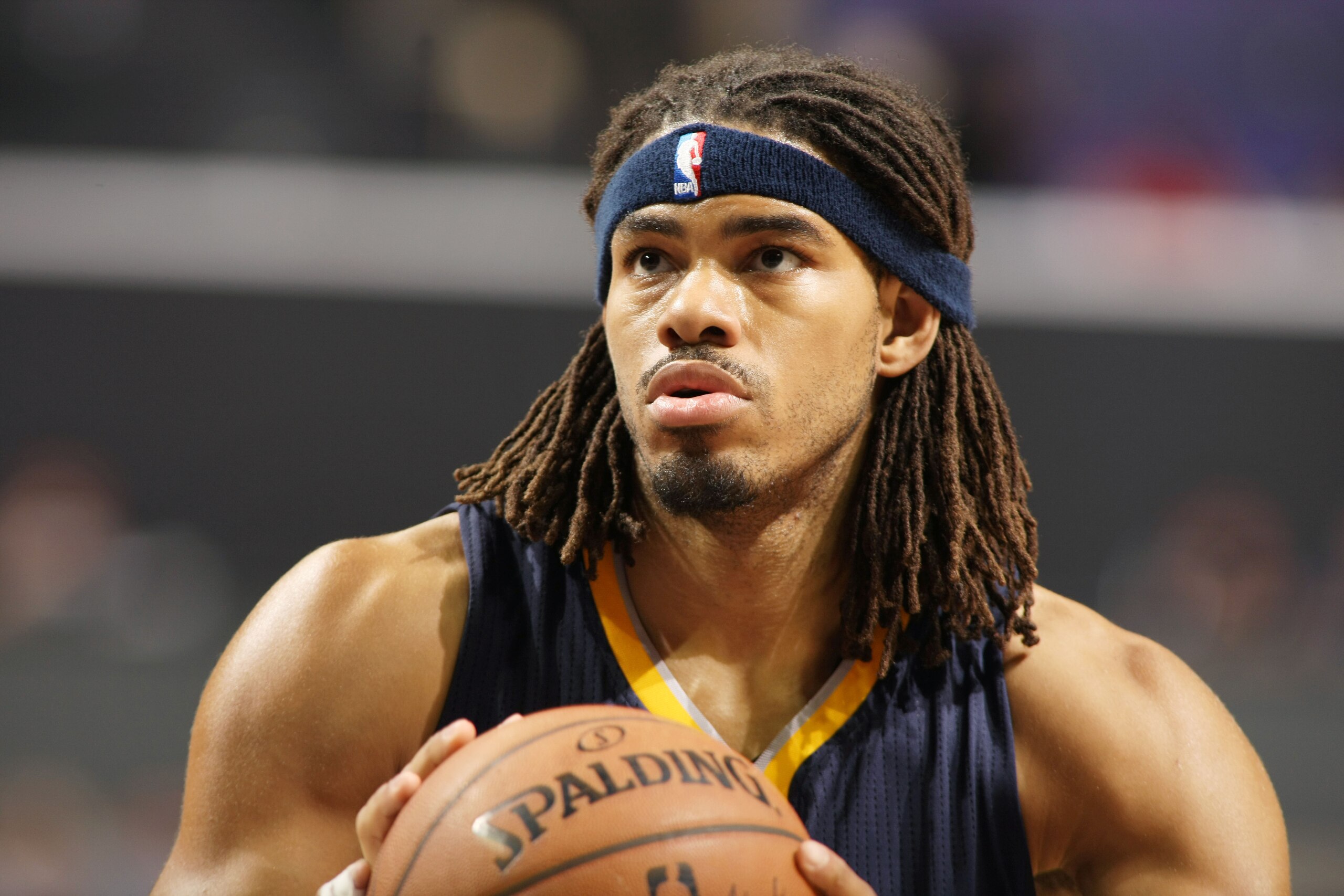
CC: I try not to even think about that even to this point. I try to just be ready for whatever. The way basketball works is a game-to-game thing. Especially on a team like ours, last year, some days it was Paul. A lot of days it was Paul. Some days it would be West that needed to step up, so on and so forth.
I just want to be prepared for whatever. That was my goal before the injury. It wasn’t something like, "OK, Paul’s out, now it’s time for me to play." I wanted to come in better regardless and just try to be ready.
B/R: Were there any changes in your preparation this year compared to last?
CC: Well, last summer I was dealing with the surgery. It wasn’t a major surgery, but I wasn’t as active that summer. My body wasn’t right.
This summer I was healthy, so I was able to take full advantage of the weight room and the coaching staff as far as doing drills and whatnot. So, that was a big change from last year.
B/R: You’re getting more minutes at small forward now than ever (59 percent). What does having someone like George around do to help you make that transition?
CC: It’s big. He’s always in my ear. He’s the guy that I can, if I don’t understand something, I can always run to him and be like, "Hey, what do you see out there?" or "What am I doing wrong in this particular situation?"
He’s definitely been big in my corner this year, helping me adjust to the position. It’s not anything I haven’t done before, but the style of play is brand-new for me.
B/R: How does playing the 3 instead of the 4 change your approach and your responsibilities?
CC: The 3 is a more athletic position. It’s quicker—it depends on what you call athletic—but it’s a quicker position. Agility is more of a factor. At the 4 position, it’s more about strength and power, a little bit of speed. It’s not as much banging, so I guess that makes it a little easier, but a lot more cardio involved.
B/R: You have an obvious gift for shooting the basketball. What’s one part of your game that people overlook?
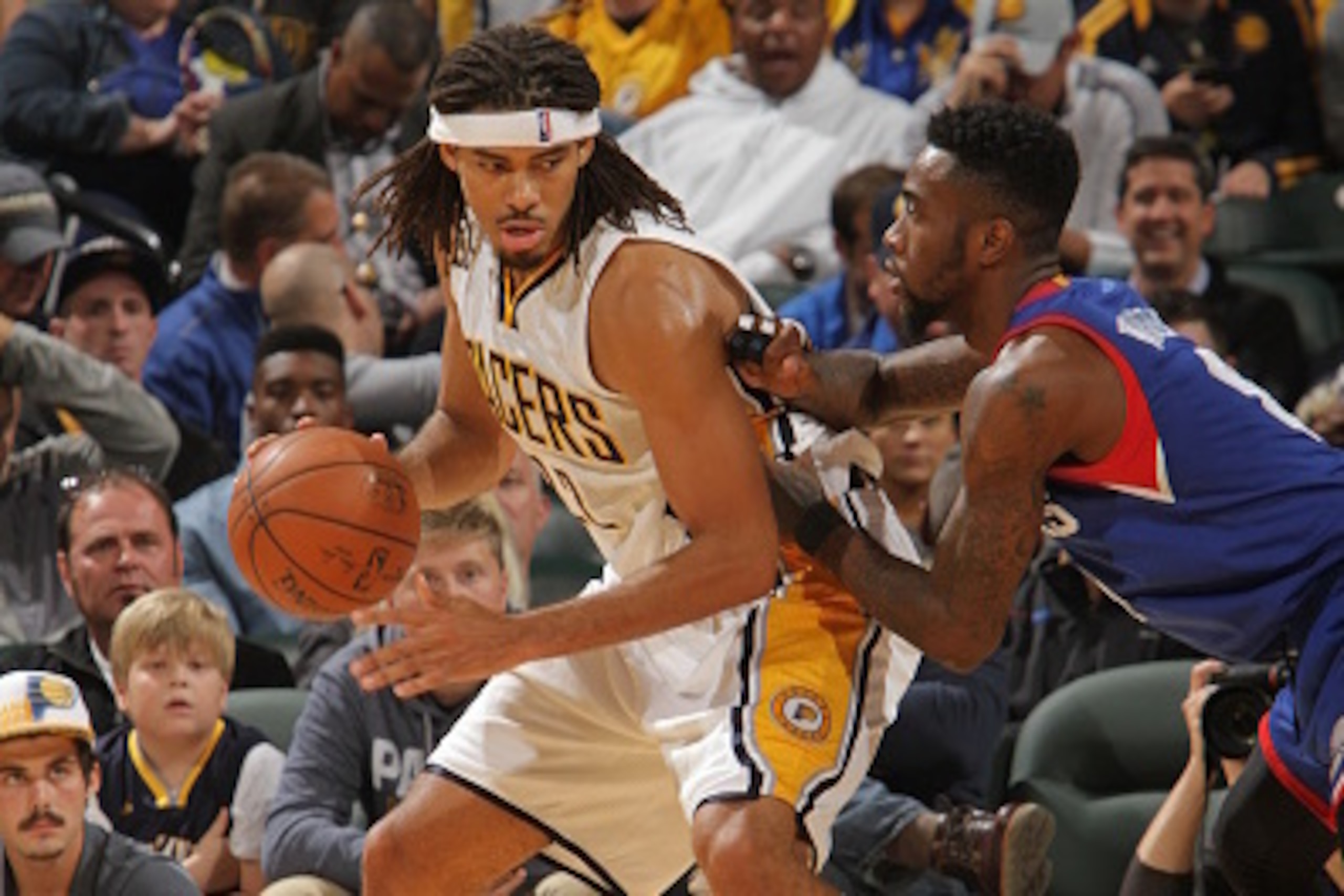
CC: I’m an underrated post player, I think. We take advantage of that with switches when we can. I post up a lot more than people recognize (38.4 percent of his field-goal attempts have come from within 10 feet of the basket, shots he's converting at a 45.9 percent clip).
Everybody knows me for shooting the long ball, but I actually prefer to play post. A lot of people wouldn’t believe that, but that’s the truth.
B/R: What do you like better about playing the post?
CC: It’s easier (laughing). The three-ball is an easy shot if you’re uncontested, but when they know you can shoot, it’s a lot harder to get off. For me, I feel like I have enough moves in the post to get the shots that I want. It’s closer to the basket. It’s just all-around easier to me.
B/R: You’ve had some big scoring nights this season (six with 16-plus, high of 21). What’s going through your mind when it seems like everything you’re putting up is finding the bottom of the net?
CC: Keep being aggressive, that’s what my teammates and my coaches ask me to do. If I see things are going well, I know there’s more of a comfort level for me to continue to do that.
B/R: And what about those nights when your shot isn’t falling? Are you looking for other ways to help your team, or are you just erasing those misses out of your mind?
CC: Both, honestly. You definitely have to do other things when you know your shot isn’t falling. You can’t just depend on knocking down the three-ball. I think I’ve done a decent job of mixing in drives and whatnot.

But you can’t be afraid to take that next shot just because the shots aren’t falling early. I believe in my ability; that’s why I work hard in the offseason. I keep shooting. If I’m open, I’m going to let it fly.
B/R: How does it help you as a defender knowing you have Roy Hibbert behind you protecting the basket?
CC: It’s huge. Roy, Lavoy Allen and Ian Mahinmi, those guys really do a great job protecting the paint. Roy is obviously one of the best at defending the rim in the game. And with Ian and Lavoy, who I’m also out there with, we have a great foundation for rim protection. It definitely helps you pressure up on guys.
B/R: Is there any specific part of your game that you’re looking to improve?
CC: I’m still learning how to be a better wing defender. I do a decent job right now (he's holding small forwards to a 10.4 player efficiency rating, per 82games.com), but I’m getting better every day. That’s probably the area I’m trying to improve the most.
B/R: Your role has been different this season. What are the Pacers looking for you to do on the court?
CC: I would say they’re looking for me to be aggressive, whatever that means. It doesn’t mean shoot the ball, it just means make something happen. That might mean score some nights, sometimes it means create double-teams and find open guys.
B/R: Are you a better player than you were last year, or is this more about having a larger opportunity to show your skills?
CC: It’s a little bit of both, but for sure I’m a better player. I’m not who I was last year.
B/R: Do you feel any pressure to take on a bigger leadership role this season?
CC: I think it’s important on a team like ours that everybody offers a bit of leadership here and there. We still have our guy; D. West is our leader. But I’m a very experienced player, and whenever I see things I feel like I need to step up and say things from time to time, I’ll do that.
When I see things, I speak my mind. But I’m a quiet leader, if anything.
B/R: This team’s rotation has really been hit hard by injury. What does it say about this group of players that you guys are still fighting and still finding some quality wins?
CC: It’s tough. We’re missing all those guys; it’s been really tough. We can’t wait to get them back.

But it shows that we have a lot of talent on this team. We have what it takes to win. We have great coaches, and we have great players. I think at the end of the day if we continue to play together and following the coach's plans, we’ll be fine.
B/R: What do you think is the ceiling for this team?
CC: I would say sky’s the limit. I believe in these guys.
I know the rest of the basketball world probably doesn’t believe in us as much as I do, but I think we can win it all. I know it’s not the general public opinion, but I believe in this group. I think we just have to take things game to game. If our team is at full force, if we get Paul back whenever he’s ready, I think we can do anything.
B/R: You had an incredible journey to get to the NBA. This is your third season here now. Are you able to sit back and appreciate the ride you’ve been on, or is that hard to do in the moment?
CC: I thank God every day to be here. It’s a blessing. I sit back sometimes and pinch myself, because to me, it’s still a dream come true. I always wanted to be here, I didn’t know if it was going to happen, but I’m still here. It’s still a blessing. I’m still happy.
Happy that I made it.
Statistics used courtesy of Basketball-Reference.com and NBA.com.


.jpg?w=2560 "Reported Details of Seahawks-K9 Split ⛓️💥")
.jpg?w=2560 "Buzz: Bears TE Likely Out for Season")