


Sometimes even the greatest of NBA disputes are terminated in an instant, bringing an end to warring parallels that tirelessly hoard headlines and dominate discussions for years.
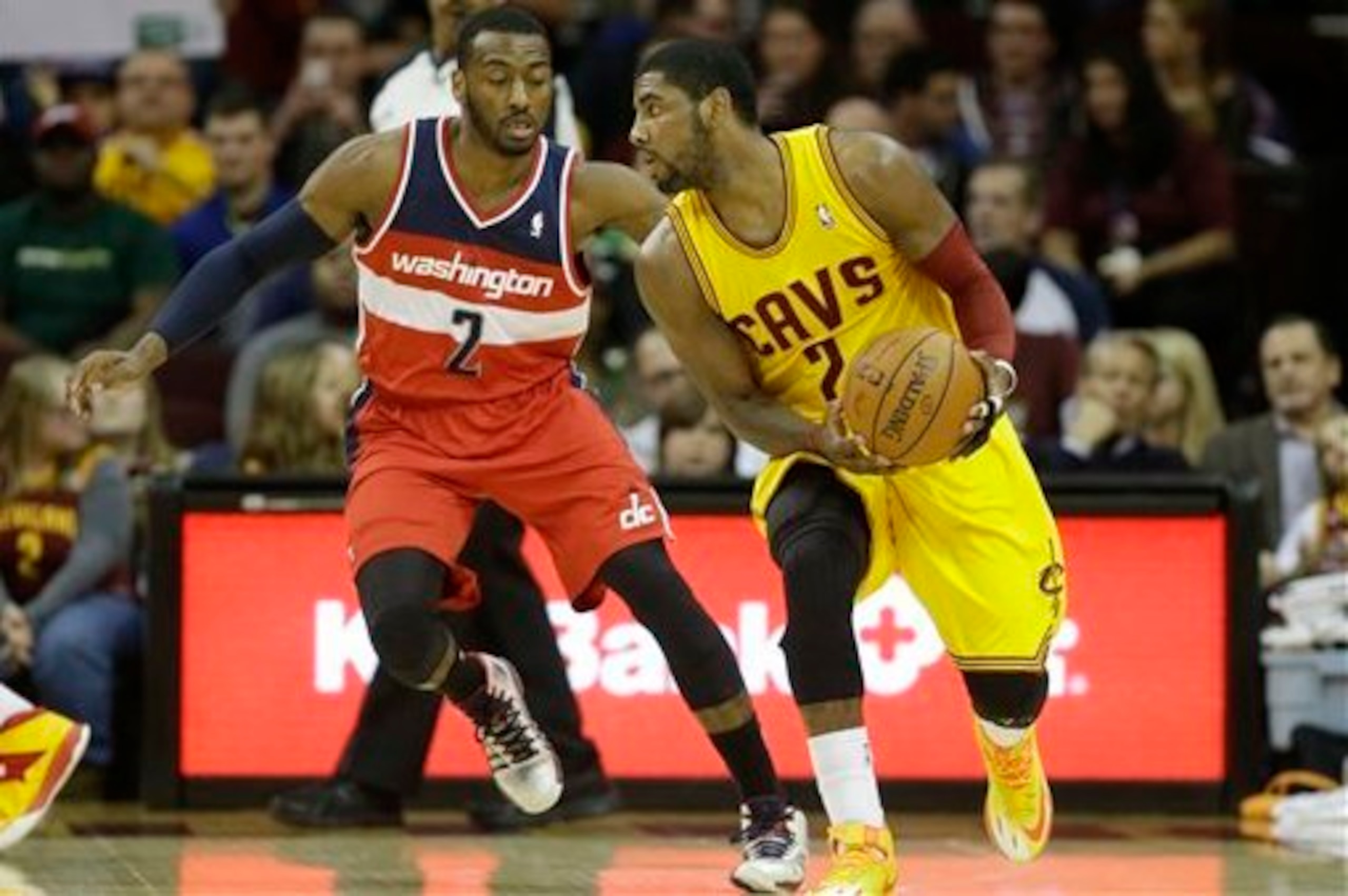
Kyrie Irving versus John Wall, long a source of comparing and contrasting, is now a member of this dead debate club.
When Wall's Washington Wizards play host to Irving's Cleveland Cavaliers on Friday night, it will mark the seventh time these two transcendent talents have gone head-to-head in their young careers. Never before, though, has this individual matchup meant less.
TOP NEWS
Lakers HC: Bronny Hasn't Played Well
Porzingis' Statement on Health Issue
Ranking Best Shooters 📊
Forged Ties
Last season it was fair to compare these two. Mandatory, even.
Both came into the NBA as No. 1 picks—within a year of one another, no less. Both were also tasked with reviving forsaken franchises.
Wall joined the Wizards amid a two-year playoff absence that spiraled into a five-year drought entering 2013-14. Irving, meanwhile, was drafted by a Cavaliers team less than a year after they lost the game's best player, LeBron James, to free agency.
Out of necessity that was only heightened by their draft-day statuses, Wall and Irving were viewed as saviors—bridges to better days for two teams stuck in the throes of losing. And because of how much stock Washington and Cleveland placed in their point guards, both were also considered fringe failures for so long.
"I think the difference is, his first three years, he didn't ever make the Playoffs, but you didn't ever hear anybody talk about it," Wall told SLAM's Abe Schwadron of Irving. "My first three years, I don't make the Playoffs, it's, ‘Oh, he's not a Top 10 point guard, he's not a Top 25 point guard, he's not living up to the hype.' But we both were No. 1 picks. Both guys have to live up to some type of hype."
The Wizards handed Wall a max extension in 2013, even though he had yet to rescue them from lottery limbo. Irving himself was tracking toward a similar payday, despite the Cavaliers tying the Sacramento Kings for the league's second-worst winning percentage (33.9) between 2011 and the end of last season.
It was Wall who used 2013-14 as his coming-out party. His Wizards gritted their way to the Eastern Conference's fifth-best record and a second-round playoff appearance for just the second time since 1982.
At the same time Wall was establishing himself as a superstar, Irving, already a recurring All-Star, was failing to save his Cavaliers. They were projected as a playoff contender to start 2013-14, but flamed out amid closed-door controversy and botched free-agency acquisitions like Andrew Bynum.
Statistics also began favoring Wall.
| Kyrie Irving | 35.2 | 20.8 | 43.0 | 35.8 | 3.6 | 6.1 | 1.5 | 28.2 | 20.1 | 6.7 |
| John Wall | 36.3 | 19.3 | 43.3 | 35.1 | 4.1 | 8.8 | 1.8 | 27.4 | 19.5 | 7.9 |
Though the numbers, by all appearances, were close—nigh carbon copies—Wall became just the sixth player, aged 23 or younger, in NBA history to average at least 19.0 points, 4.0 rebounds, 8.5 assists and 1.5 steals per game, and did so for a top-seven defensive team. Irving, when healthy, was filling the box score for a bottom-15 defense and bottom-10 offense while rumors of discord persisted.
With Irving's future in Cleveland seemingly up in the air and Wall's Wizards thriving, the better building block became obvious.
"Right now, it's not particularly close," Bleacher Report's Adam Fromal wrote last season. "Irving may have gotten the nod as the All-Star starter, but it's the Washington floor general who has become the best point guard in the East."
Time remained on Irving's side, though. He was lagging behind Wall, but 2013-14 was one season of many to come. The debate remained fluid. It wasn't over.
Then, quite suddenly, it ended.
Severed Ties
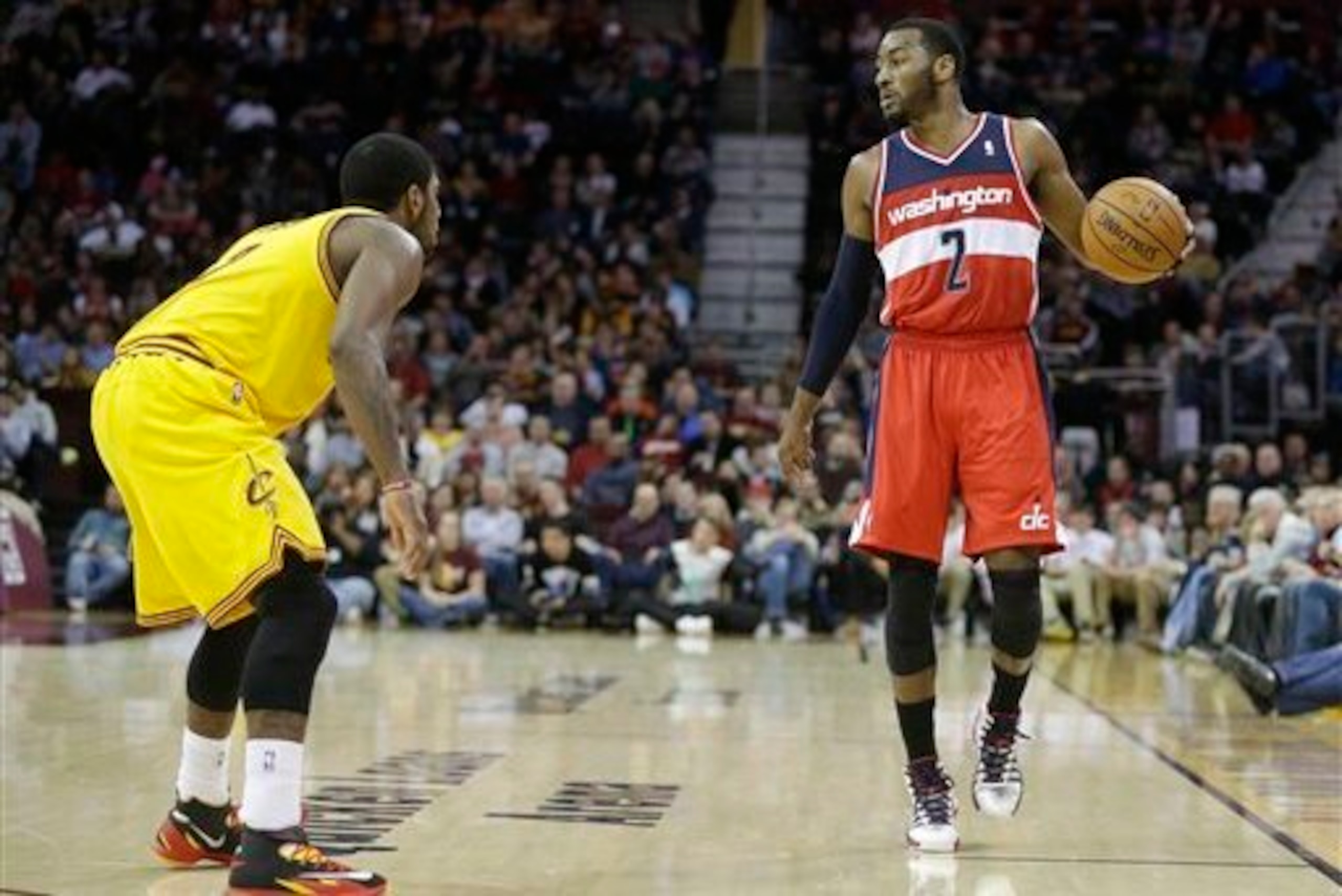
Summer 2014 changed everything.
For a short time, it looked like this debate would only intensify once Irving's max extension was hammered out.
"I'm here for the long haul Cleveland!!!" he tweeted. "And I'm ecstatic!! Super excited and blessed to be here and apart of something special."
Remaining with Cleveland meant the comparisons would live on. He and Wall were still their team's primary building block.
But then James came home. He was followed by Kevin Love and veteran glue guys Mike Miller, James Jones and Shawn Marion. The Cavaliers became a championship contender overnight and, equally quickly, Irving was relegated to starry-complement duty. Nothing James said or sacrificed could change this.
"I'll probably handle the ball a little bit, but this is Kyrie's show," he said in September, per ESPN.com's Dave McMenamin.
If the Cavaliers offense was ever "Kyrie's show," it was back in September, before it actually took shape.
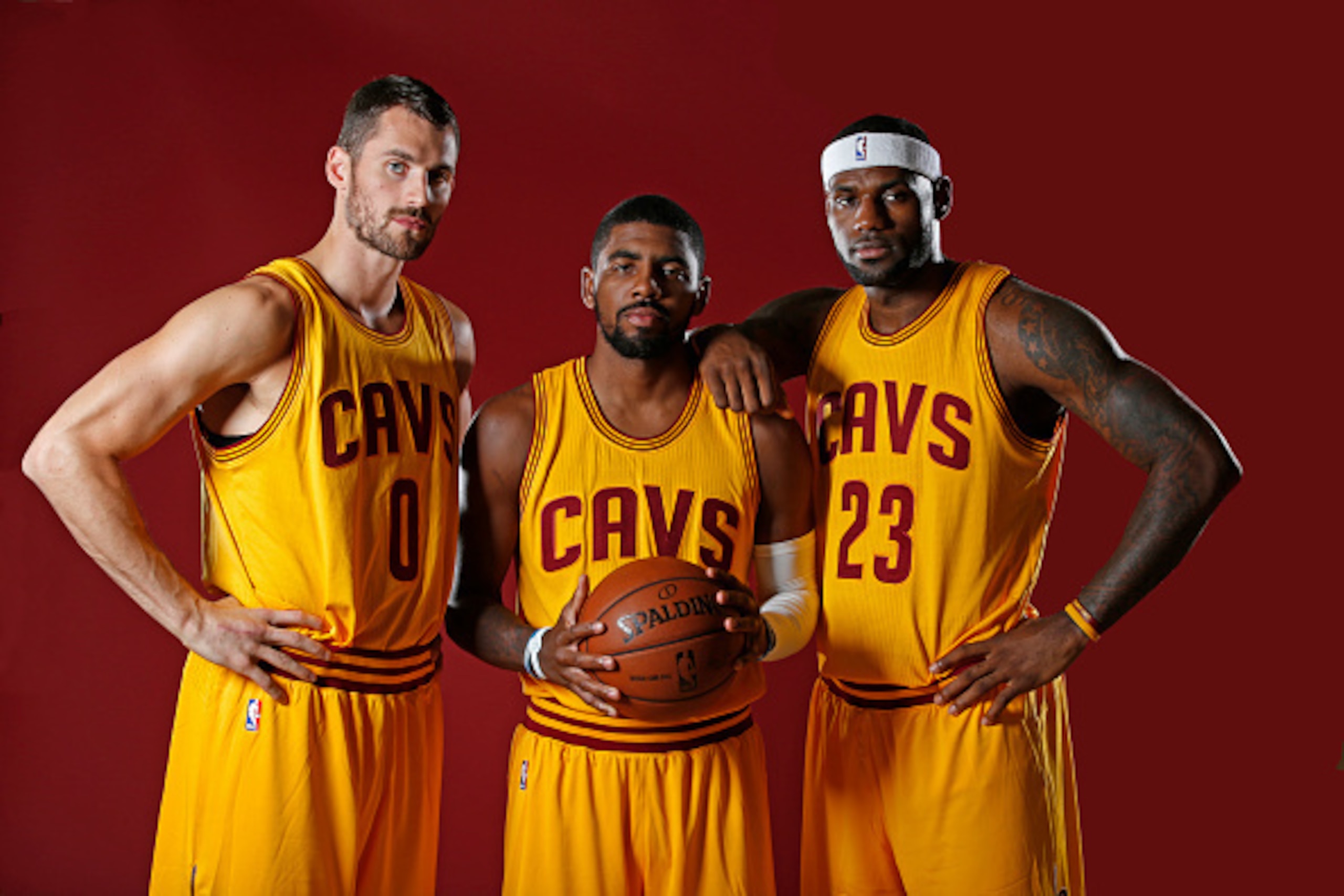
James is the offensive headliner. Teammates cede control of the ball and status to him. Dwyane Wade and Chris Bosh did it in Miami, Irving and Love are doing it in Cleveland.
Wall is making no such role-conscious concessions in Washington. Where Irving's usage rate—the number of team plays run for a specific player—is at 23.5 percent, down from 28.2 last season, Wall's is at 28.5, up from 27.4 in 2013-14. While Wall ranks third among qualified players in assist percentage (44.5)—behind only Chris Paul (46.4) and Rajon Rondo (48.0)—Irving doesn't even rank in the top 50 (22.1).
Even the way Irving is shooting and scoring has changed. More than 32 percent of his made shots are assisted, up from 31 last season.
That number will only grow as the season progresses and the Cavaliers familiarize themselves with head coach David Blatt's offense. The frequency with which the ball is moving now—they rank 12th in passes per game—won't compare to the team's passing in March and April.
| Kyrie Irving | 38.3 | 21.9 | 45.5 | 46.3 | 3.2 | 5.0 | 1.6 | 22.1 | 23.5 | 22.2 |
| John Wall | 35.5 | 18.6 | 41.5 | 22.7 | 4.1 | 9.3 | 2.3 | 44.5 | 28.5 | 20.6 |
Kirk Goldsberry touched on this transition for Grantland before the season, at which time he outlined the 22-year-old's new role:
"In his first three years in the league, Irving managed to convert his shots relatively efficiently despite having to generate many of them from scratch. He has grown accustomed to scoring off the dribble, and he has developed a knack for using his freakish handle to create shooting space.
However, it’s not unreasonable to expect big gains in Irving’s shooting efficiency, for two reasons. First, given the arrival of James and Love, his usage will certainly diminish, and he’ll have to take fewer tough, self-created jumpers than last season. Second, he will have more higher efficiency, catch-and-shoot chances. Open looks are one of the main perks of being in (or on) the King’s court.
"
Basically, Irving and Wall are no longer similar players. The latter is a floor general and offensive lifeline tasked with creating for his teammates first and foremost; the former is now one of James' sidekicks, who will gradually morph into more of an off-ball scorer and secondary playmaker.
Diverging Paths

There is no comparison to be made here. Not anymore. When Irving and Wall face off on Friday, and from now on, it means more to their teams and collective pursuits. The individual debate died with James' return to Cleveland.
"He was an All-Star earlier, won the All-Star Game MVP," Wall told Schwadron of Irving. "I'm happy for him having that type of success, but being a young point guard, that's who they're going to compare me to, especially in the East."
So long as they're both actually point guards.
Comparing Irving and Wall is now an exercise in futility that attempts to draw corollaries between players who, for the first time ever, are chasing the same exact things—titles—as two very different players.

Irving, by listing, remains a point guard. By craft, he's the offensive complement to a superstar floor general much bigger than himself.
Washington, even with Bradley Beal and Paul Pierce, remains Wall's team.
Cleveland is no longer Irving's to pilot, headline or, most notably, save.
Mitigating circumstances and conflicting career trajectories have displaced the once-strong comparison between both players. Their respective teams enter Friday night pursuing similar things, chasing identical distinctions, jockeying for the exact same hardware. And for Irving and Wall, that's where the significance of this regular-season tilt ends.
*Stats courtesy of Basketball-Reference and NBA.com unless otherwise cited.

.jpg?w=2560 "Top Trade Targets Entering Week 6")


.png?w=2560 "Muncy Sums Up NLCS Offense 💩")

.jpg?w=2560 "4 Arrested in February Shooting of 49ers' Keion White")