Keys for Germany to Enjoy Lasting Success and Silverware as Spain Did
On Tuesday Joachim Low’s Germany will hope to finish a most impressive year on a high with a win against none other than former world champions Spain at the Estadio de Balaidos in Vigo.
Yet when these two sides meet, the comparisons between the legacy of each country will be completely unavoidable. Can Germany match Spain as they did in Brazil this year and go on to win consecutive trophies like Vicente del Bosque’s formidable side?
The first and most notable factor we should consider when asked if Germany can enjoy lasting success at the top of international football is whether or not this current squad is good enough.
TOP NEWS

Alex Morgan Announces Birth of 3rd Child 👶

Final Men's Ballon d'Or Rankings 📊
Most to Blame at Man Utd? 😡
The simple answer to that is "yes, of course they are!"
Although Low has had to adapt to losing senior players such as Philipp Lahm and Miroslav Klose, he or his potential successor in the years to come will be able to call upon established players such as Thomas Muller, Marco Reus and Toni Kroos for at least the next five or six years.
Of the squad that will line up against Spain in Vigo, only Roman Weidenfeller currently resides over the age of 30, with the average age of the squad sitting at a very healthy 25 years of age.
Another aspect of the success that has continued to stick around the Spain national team is the manner in which the country’s top clubs continue to stay true to a largely localised spine to each squad.
La Roja indeed have a lot to thank both Real Madrid and Barcelona for, yet no factor has affected Spain’s continued success quite like the domination of both clubs in the national team roster.
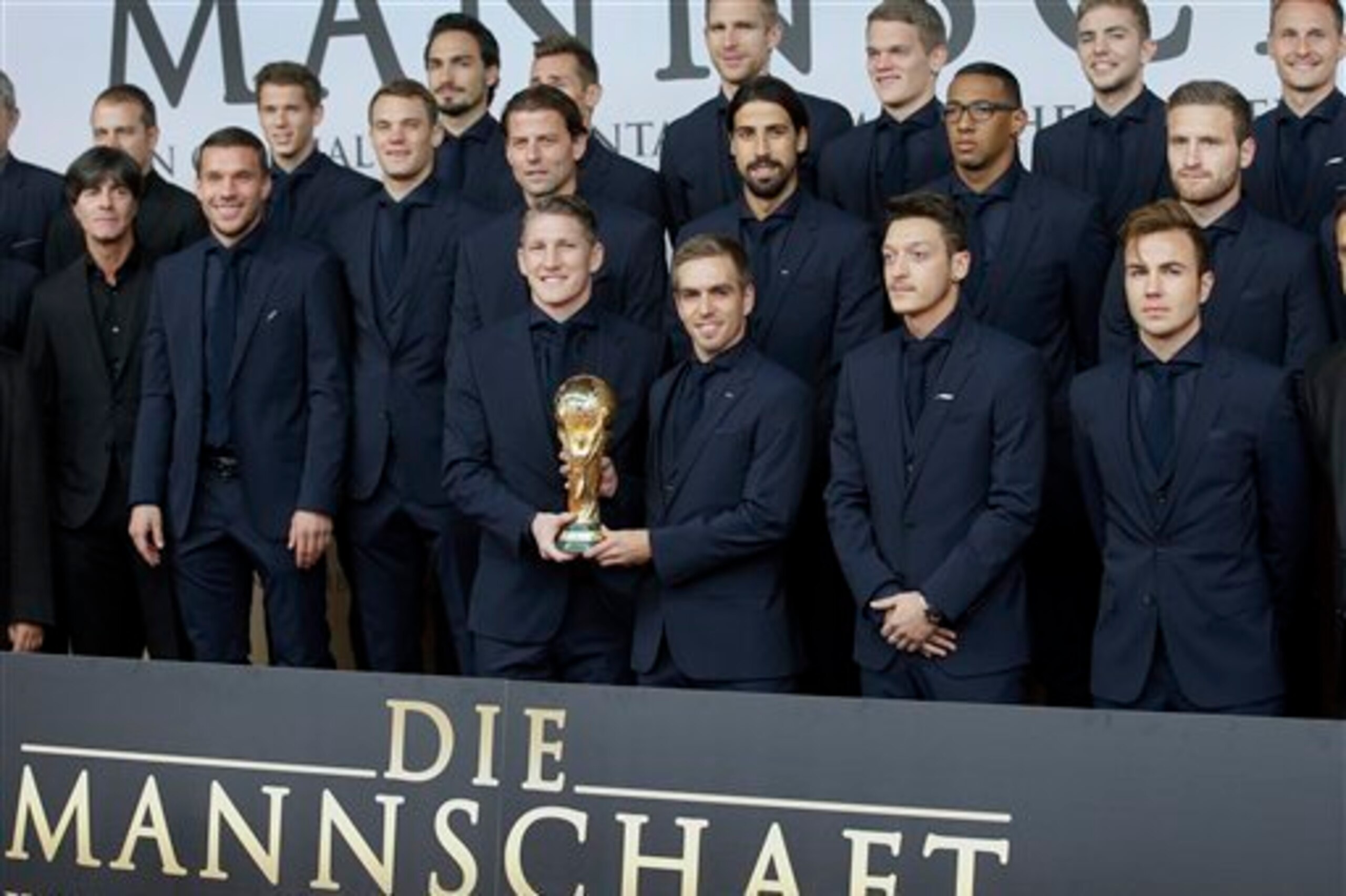
It may seem like a somewhat exaggerated point, but there is plenty of truth to the theory; Spain benefit from a squad that is largely made up of teammates from Madrid and Barca.
Germany have and will continue to benefit from a similar setup with both Dortmund and Bayern, who continue to dominate each of Low’s squads for any given friendly or international qualifying match.
That leads to strong cohesion between the squad, better chemistry between the attacking and defending players, all through the strength of the league’s top clubs and their active decision to turn to homegrown players.
This then leads to the next point, regarding the continued conveyor belt of talent that Germany has to match Spain if they hope to forge a similar dynasty within the modern game.
Spain’s talent lies not in Andres Iniesta and Xavi alone but in their ability to continuously bring through young players and allow them to climb up their own domestic pyramid.
When Juan Mata isn’t up to the task, they have David Silva; when they don’t have Sergio Busquets on call, they can turn to Cesc Fabregas; such is the depth of their talent, rather than just a strong starting XI that can beat any side on their day.
Such depth comes from the strength of the domestic league and the teams within that league continuously playing young, national players from an impressionable age. Yet Germany already do this, somewhat to a better degree.
If one aspect of German football is already prepared and ready to match the ambitions of the national team, and indeed the dreams of the country to win further competitions, it is the Bundesliga and its rich reservoir of young talent.
This was perfectly shown this very week when Bayern defender Jerome Boateng and shot-stopper Manuel Neuer pulled out with injury and were replaced by younger alternatives from other Bundesliga clubs.
Although Weidenfeller is likely to start in goals, Low can call upon brilliant, young talent Ron-Robert Ziegler of Hannover as well as Robin Knoche of Wolfsburg. Along with other young stars such as Antonio Rudiger, Kevin Volland and Karim Bellarabi, all of whom play for other clubs outside the top two.
As long as the Bundesliga continues catering to the clubs and allowing them to produce their own youth prospects, bigger German clubs will always snap them up and make stars of them, which in turn then leads to a stronger national team in each international competition.
Germany can and probably will match Spain’s domination in international football as long as the Bundesliga continues to go from strength to strength.