

Has Daniel Levy's Transfer Policy Doomed Tottenham?
In the past decade, few Premier League clubs have re-engineered their transfer policy as frequently and drastically as Tottenham Hotspur.
Chairman Daniel Levy's implementation of a sporting director-helmed continental system in 2004 gave way to a more traditional way of doing things with Harry Redknapp's appointment as manager in 2008. His sacking saw a retitled move back to the other way with the hiring of technical director Franco Baldini. Now comes the apparent latest amendment—the hiring of Southampton's head of recruitment Paul Mitchell, as reported by the BBC.
TOP NEWS

Alex Morgan Announces Birth of 3rd Child 👶

Final Men's Ballon d'Or Rankings 📊
Most to Blame at Man Utd? 😡
The previous major transfer activity at Tottenham came around Baldini's arrival in 2013 when the club spent around £100 million on new signings (albeit the expenditure was offset by player sales that summer). The decidedly mixed return on that recruitment drive has seen Levy's decision-making come under unprecedented scrutiny. As flawed and impetuous as it has appeared at points in his reign, it has not doomed Spurs in the way some might think in these testing times for the club.
Levy might have gotten in his and Spurs' own way in regards to individual transfer deals. It is arguable that digging his heels in over the fees he wanted for players like Dimitar Berbatov and Luka Modric had inadvertent repercussions in compensating for the departures of such key players.
Yet, when it has come to big-picture moments, he has made decisions that have set Spurs on the right path in the short-to-medium term. The chairman's move, shifting the north London club to a more European way of handling transfer affairs 10 years ago, especially should be given due credit.
It was not entirely revolutionary—Frank Arnesen's hiring as sporting director saw him replace the similarly-tasked director of football David Pleat—while there would be hiccups in the following few years, too.
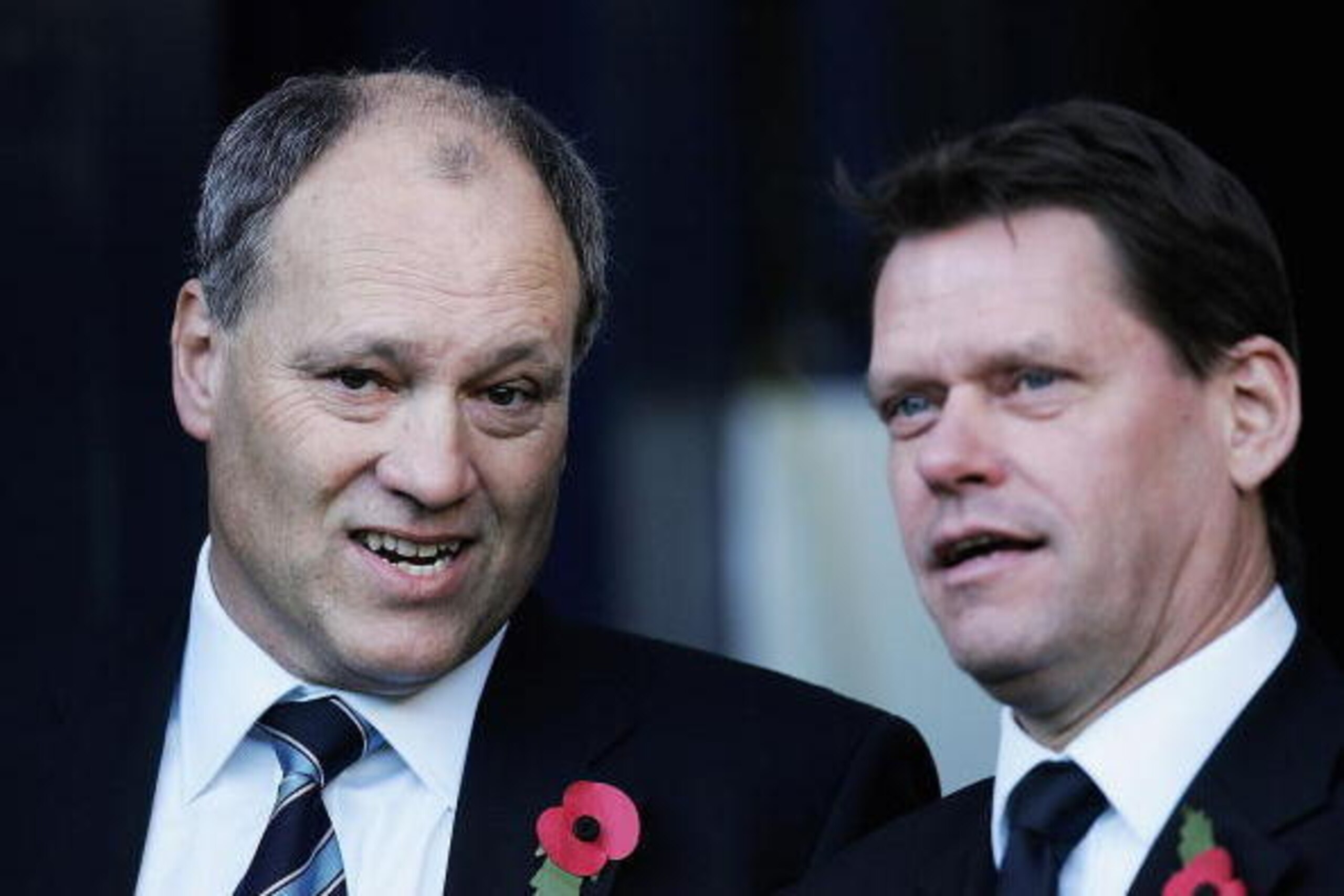
The early exit of Levy and Arnesen's first manager Jacques Santini was followed within a year by the Dane's premature departure to Chelsea. His replacement Damien Comolli never established quite the same working relationship with Santini's successor Martin Jol.
The result of the latter disconnect was the aforementioned changes to policy which followed. Jol made way for Juande Ramos, he and Comolli for Redknapp. The more old-school ideal worked to an extent in building on the momentum of previous years. But once it ran its course in Levy's eyes, he went continental again with Andre Villas Boas and then Baldini.
What the initial shift did, however, was re-focus Spurs' recruitment policy in a way that saw a greater return on their investments. The result was qualification for Europe again and genuine competitiveness at the higher end of the Premier League. The relative success of Redknapp's reign was possible because of the first steps taken in 2004.
In a statement back then on his club's official website about the Arnesen appointment, Levy detailed the new direction. Looking back, it is remarkable how his comments could similarly be applied to what Mitchell's reported impending appointment is likely to be designed to do now:
"For many years now, not just for the time I have been here, this Club has failed to achieve a League position commensurate with the financial investment that has been made in the team.
Quite clearly we are operating in an international market and it is vital that we put in place an appropriate management infrastructure and expertise to achieve our aspirations. It is important that we have stability and a consistent strategy for First Team and youth development. I firmly believe that this can be best served under a new continental structure and that Frank Arnesen is immensely qualified to oversee this for us.
"
The Tottenham hierarchy wants more for its investment again. Based on the team's performances this season, Levy is clearly concerned recent entries into the international market—i.e. the signings of players like Paulinho and Roberto Soldado—are not paying off as was hoped.
With that in mind, the latest change is arguably an appropriate response to the situation. Albeit in the process a frustrating indictment of certain previous decisions.
The above piece by The Telegraph's Jeremy Wilson makes a reasonable argument for why reuniting current head coach Mauricio Pochettino with his former colleague Mitchell could come to be regarded on par with Levy's better-judged changes (and certainly why it might have tempted him into making this change). "The entire ethos at Southampton is of a club dependent on their structure and culture rather than any one individual for success," wrote Wilson—a logic which sounds similar to what the Spurs chairman aspired to back in 2004 but from which the club have moved away from since (at least in regards to the first-team).
Wilson believes Mitchell's work would complement technical director Baldini's, rather than obscure him. "He is not being brought in for his worldwide network of contacts among agents and club executives but rather for his ability to analyse football players."

That methodology is described in fascinating detail. From the assembled staff of analysts and scouts evaluating players' ability, to the work done judging their personal suitability for Southampton. The comprehensive approach is extended to getting the best out of those players brought in.
Should Mitchell join the White Hart Lane staff, there is no guarantee he would be able to initiate the same level of success. Terming what has gone on at Southampton this year as successful has to be tempered.
Wilson's piece compares the relatively smooth transition undergone following Saints' summer of upheaval—Pochettino's replacement Ronald Koeman has taken his restructured squad to second in the league—to the more chaotic results of Tottenham's similar player turnover in 2013.
It is early days in the season, though, with plenty of time for things to change for both teams. It should not be forgotten, either, that Spurs beat Southampton 1-0 in October with three of their class of '13—Nacer Chadli, Christian Eriksen and Erik Lamela—leading the way in arguably their side's best performance of the season.

Contrary to what Wilson wrote, The Mirror's Dave Kidd believes "Mitchell will ask for assurances that he will not have to work under Italian Baldini for any length of time if he is to take the role." If both are required to work together, along with Pochettino, disagreements would not be unprecedented with different voices aiming to be heard.
That is not to mention Levy getting involved as well.
The decision to back Pochettino by building a setup the Argentinian evidently held in high regard at Southampton suggests the chairman could be about to make one of his better big-picture decisions again, however.
He understood the need for a change of direction in 2004 and 2008—the latter required acceptance of his mistake in the Ramos-Comolli team. On neither occasion did things turn out perfectly, but the team was better off for them.
That could prove to be the case again with a replication of the encouraging work done at Southampton. For it to fully pay off, though, Levy will also have to show an unprecedented degree of patience.




.jpg?w=2560 "B/R's Expert Week 7 NFL Picks 🔮")