Jenson Button Again Proves Worth but McLaren Are Still Making the Right Call
Jenson Button looks to be heading for the Formula One exit door.
The 2009 world champion has been in excellent form in recent months. His qualifying performances have been good and race results even better.
In the last six races, he has outscored team-mate Kevin Magnussen by 38 points to 18, putting in particularly impressive performances in Japan and Russia.
TOP NEWS
.jpg?w=2560 "Chargers Mack")
Every Trade's Best Trade Asset 🔁
.jpg?w=2560 "Green Bay Steelers Football")
Insiders: Cowboys Overpaid for Porter

Houston's Space Helmets 🧑🚀
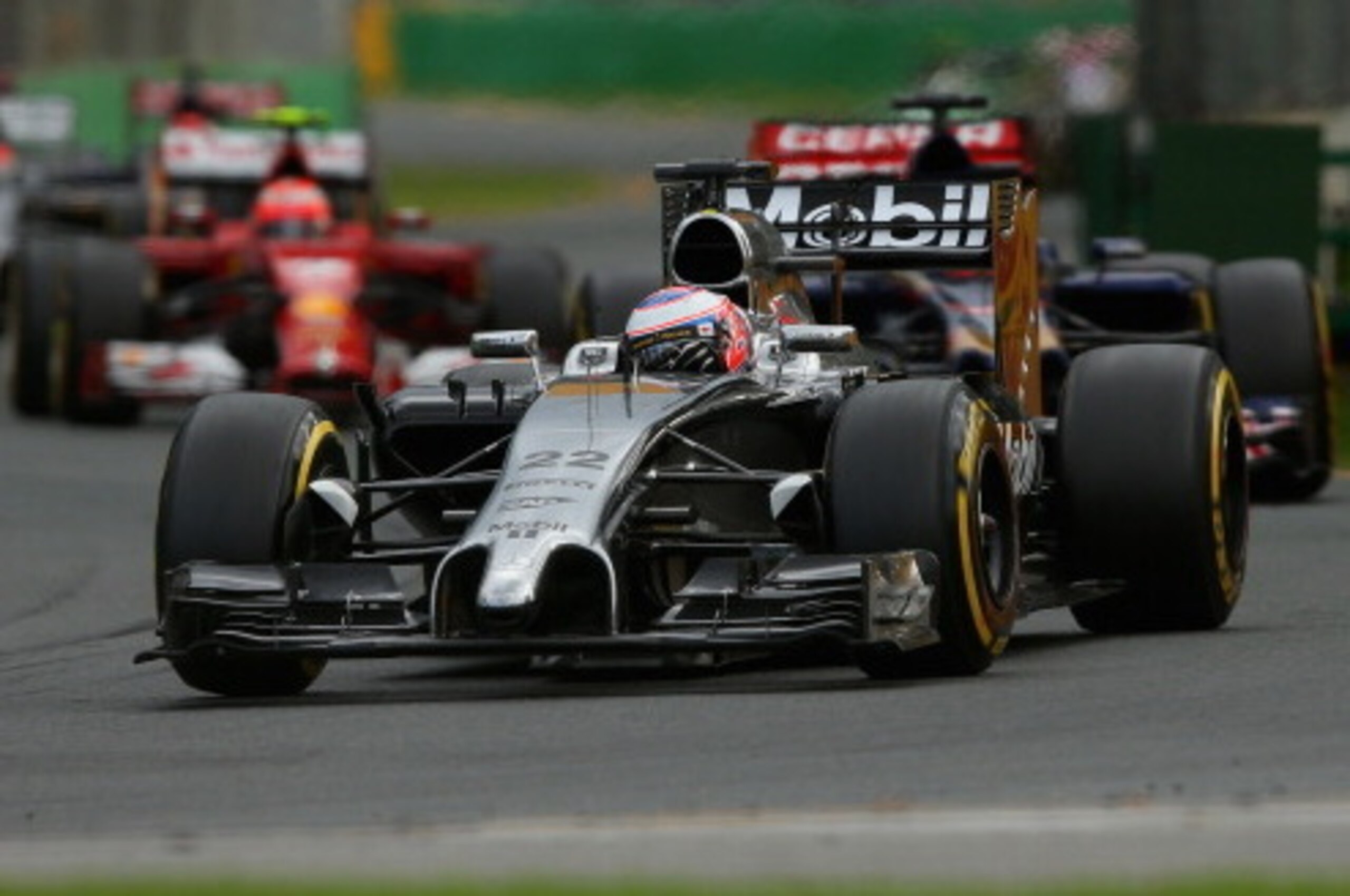
At this weekend's Brazilian Grand Prix, he once again got the job done. Button showed no sign of being ready to depart as he battled fellow former champion Kimi Raikkonen and finished a fine fourth.
But his time appears to be running out.
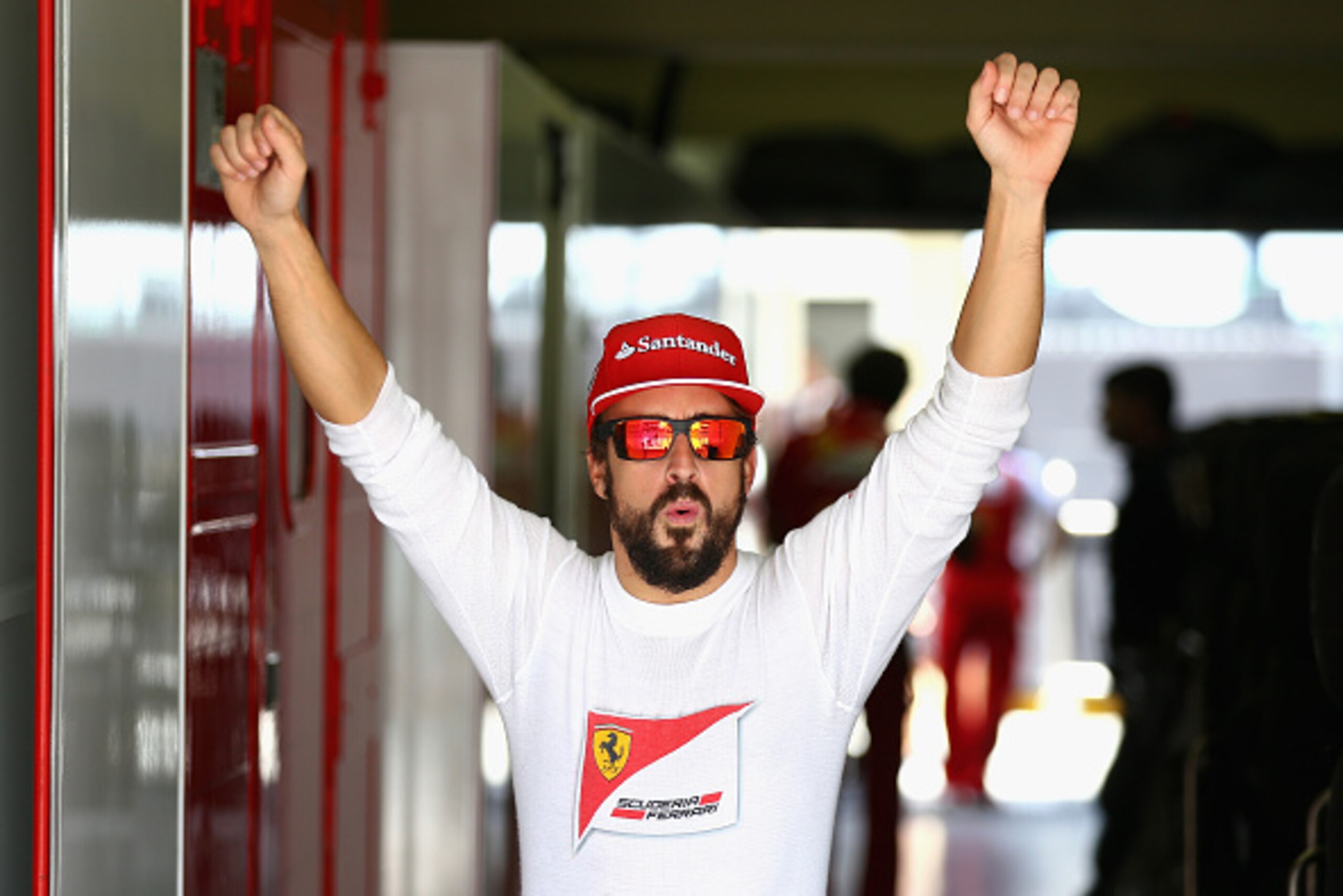
His McLaren team appear to have secured the signature of Fernando Alonso for 2015. Sky Sports reports the Spaniard has signed the biggest contract in F1 history and will be paid a staggering £25 million per year.
His arrival means one of the team's two current drivers must make way. It seems almost certain at this stage that the Brit will be the one to go.
And despite him outscoring Magnussen by 106 points to 55 so far this year—as well as remaining a first-class driver—McLaren are making the right decision.

Button is coming toward the end of his 15th full season at the pinnacle of motorsport. At 34, he is the second-oldest driver on the grid, 12 years the senior of Magnussen.
He will be 35 when the 2015 season kicks off in Australia. In the real world, that's still relatively young—but in F1, it's positively ancient.
Button aside, only three current drivers are over the age of 30—Alonso (33), Kimi Raikkonen (35) and Adrian Sutil (31).
Sutil looks set for the boot after seven average seasons; Raikkonen, among the most naturally gifted drivers of the last 20 years, is clearly no longer the force he once was.
Only Alonso remains close to his peak. Like Michael Schumacher, who continued at the top level until the age of 37, he is an exceptional talent worthy of a place among the all-time greats.
Like Schumacher, he can also afford to lose a tenth or two.
Button cannot.
Though the Englishman has exceptional fitness levels, age catches up with everyone. A decline in ability from the mid-30s on can be seen across the entire sporting spectrum.

In football, players are considered past their peak once they arrive in their early 30s. Gary Neville makes this point in The Telegraph, describing the current Manchester City squad as "ageing." Their average age is just 28.9; few outfield players continue at the top level beyond the age of around 33.
The oldest male winner of a Grand Slam tennis tournament in the last 40 years was Andre Agassi, who was 32 when he won the Australian Open in 2003. The oldest female winner was 33-year-old Martina Navratilova in 1990.
Even the more sedate sports—golf for example—fit this rule. Joe Posnanski of the Golf Channel argues that players have a mid-30s decline, backing it up with the fact that 75 per cent of majors since 1960 have been won by players under 35.
And in the most relevant sport, F1, few drivers continue beyond their mid-30s. Those who have in recent years, such as Jarno Trulli and Rubens Barrichello, showed a marked decline from their peak.
If McLaren continue with Button, they know he has a maximum of one, perhaps two seasons left.
Whereas with Magnussen, they have a potential future star with more than a decade ahead of him.
Is it worth effectively ending the Dane's career before it has even begun to eke a couple more seasons out of Button on the basis that the Brit has performed at a slightly higher level in 2014?
Some may say yes, pointing to the positives Button brings to the team. He has a vast wealth of experience from a career that has seen him start 265 races, win a world championship and stand on the podium 50 times.
This is hugely important alongside a rookie like Magnussen.
But alongside Alonso, that importance fades. The Spaniard has started only 31 fewer races and won two championships. He has almost twice as many podiums as Button, more than double the number of wins and is rightly considered to be the most complete driver on the current grid.
While it could be argued that two drivers with a combined total of 599 starts would be better for the evolution of the car, having two men pulling for development in different directions could actually prove detrimental.
Magnussen is more likely to go with the flow, offering occasional fresh insight but largely watching and learning. This seems likely to be a better option.
Experience isn't the only thing Button brings—far from it. As evidenced by the 2014 season, he is a quick driver, a solid and reliable points-scorer who will more often than not get the maximum out of whatever he is given to drive.
Alongside a rookie, that's as important as his experience.
But alongside Alonso, it loses its importance. McLaren are getting a new super-reliable driver, one who will push the car to places Button cannot.
The need for a man who will finish fifth in the third-best car is no longer pressing if you have a man who will take the same car and finish third or fourth.
Especially when Magnussen looks capable of developing into a driver every bit as reliable as Button. For a rookie in his first season on the difficult Pirelli tyres, the Dane has done a respectable job.

Even if we accept those things are less important alongside Alonso, there's still an argument for keeping Button. Maybe he and Alonso would pull in the same direction for upgrades, and two confirmed reliable points-scorers are better than a definite and a maybe.
But there are downsides to keeping the Brit in the car, and they're not inconsiderable.
The Englishman's experience, success and ability has made him a team leader. He can unite the team around him, motivate them and earn their trust and support. On the face of it, that sounds like a positive. But in a team with Alonso, it's poison.
The Spaniard does not like sharing, something McLaren discovered with disastrous consequences in 2007. They're not going to spend £25 million a year on Alonso and make him fight for dominance of the garage. He's coming in as number one.
And mention of that incredible salary figures brings us to the final nail in the coffin: cost.
Though one of the more financially stable teams on the grid, McLaren do not have unlimited funds. French publication Business Book GP (h/t tomorrownewsf1.com) lists Button's 2014 salary at €16 million (£12.5 million), while Magnussen is on €1 million (£780,000).
They could most likely have knocked Button down somewhat, but even at a realistic minimum of £7 million, McLaren would be paying out £32 million in basic salary alone. That's too much.
Were McLaren bringing in an inexperienced driver, the choice between Button and Magnussen would be simple.
But with Alonso joining, all of the positives to keeping Button around become less important, while the negatives mount up.
He remains a highly capable driver, better than most of the current grid. He'd make many peoples' top sixes, especially in wet or changeable conditions, and he is currently a better driver than Magnussen.
But despite the huge points gap, the performance gap is smaller. Button's potential has been reached, and there's every chance Magnussen could end up exceeding the British veteran's achievements.
Even if he doesn't, McLaren's other hot prospect, Stoffel Vandoorne, probably will.

The nagging sentimental feeling in the back of my head is kicking me for writing this because I absolutely do not think Button is ready to hang up his helmet. He deserves to stick around at the top level.
But from a cold, detached, perhaps McLaren point of view, he just doesn't fit alongside Alonso at Woking next term, and there are no alternative seats available.
It's sad and disappointing to lose a driver of Button's calibre, but it's happening—and F1 will be diminished by his absence.


.jpg?w=2560 "Top NFL Trade Targets")