Sebastian Vettel Has Departed Red Bull Psychologically After United States GP
The United States Grand Prix was always bound to be one of the most difficult weekends of the year, in this year of difficult weekends, for Sebastian Vettel.
At most other races in 2014, the four-time world champion has arrived at a track with at least a degree of hope.
A hope that this will be the weekend that he turns his season around. A hope that this will be the weekend that he gives Daniel Ricciardo, his Red Bull team-mate and Formula One's latest golden boy, something to think about. A hope that this will be the weekend that sees him stop the slide of his reputation.
TOP NEWS

Jaylen Brown Calls Out Tatum 🧢

🚨Blockbuster NHL Goalie Trade
LeBron on President Trump's Criticism
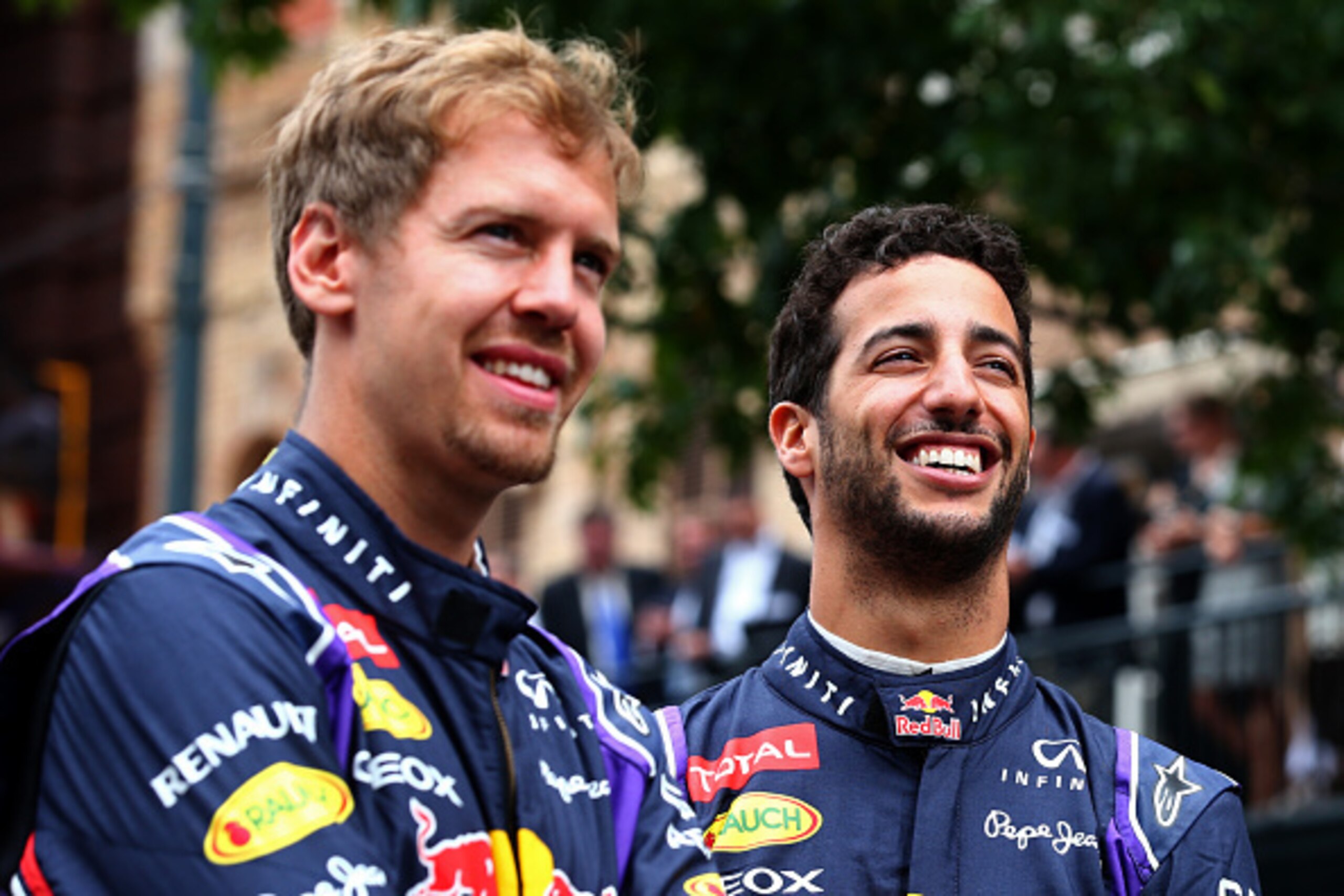
When there has been little else for Vettel, there has always been hope—but even that was absent ahead of the United States Grand Prix, an event that he must have been dreading for the best part of a month.
He has known since the Russian Grand Prix on October 12 that it would be a weekend of misery, with Vettel forced to use his sixth power unit of the season at the Circuit of the Americas, incurring a penalty which would see him start from the pit lane.
This made qualifying—a session that has resulted in him securing 45 pole positions since 2008—an irrelevance, with Vettel revealing his plans to miss qualifying as a means of protecting his latest power train, telling F1 journalist James Allen:
"The rule is of course completely stupid. So the people turn on the television and see a driver who just stands around and has nothing to do. What does that mean?
There is no point in going out for qualifying when you have to start from the pit lane anyway.
"
In the event, however, he did appear in Q1 to, as Red Bull team principal Christian Horner explained to F1 writer Adam Cooper, eliminate the threat of the 107 per cent rule—which gives race stewards the power to prevent any car that fails to qualify within 107 per cent of the fastest time in Q1—and, presumably, to appease the American spectators and F1 officials, who were at that point dealing with threats of a race boycott.
The flip-side of a pit lane start, though, is that it allows teams to tweak the setup of their car to suit the situation as well as the track.
Red Bull, as a result, primed Vettel's car for overtaking with a low-downforce configuration, just as they did almost two years to the day in the 2012 Abu Dhabi Grand Prix, where he recovered to third after being excluded from qualifying.
This year's RB10, however—which Vettel dragged to a best finish of second in Singapore—is no RB8, which took the German to his third consecutive crown with five wins in 2012.
And after making two pit stops under safety car conditions, he struggled to make progress to the point where, while running in 10th on Lap 20, Vettel was heard over the FIA television feed as telling Red Bull over team radio: "Okay, I mean, we are slow. The whole weekend we are doing (laps in the region of one minute) 45s, blind, 44s—and now I'm struggling to do 46s."
Like Lewis Hamilton, the man most likely to inherit the German's crown, in August's Belgian Grand Prix—where the Mercedes driver, despite his numerous pleas to the team to retire, continued to circulate despite being hindered by damage—Vettel was effectively hinting for his colleagues to put him out of his misery and call it a day.
Although, like Hamilton at Spa-Francorchamps, Vettel's apparent eagerness to retire would have been mostly due to the need to guard against future reliability issues, there would also have been an element of frustration behind his message.
It provided a revealing insight into the current state of mind of the German as his career at Red Bull, the organisation that has provided him with so much—his departure from the team at the end of the season was announced exactly a month ago—winds to a close.

That Vettel was seemingly willing to withdraw on lap 20 of a 56-lap race—a grand prix, let's recall, that saw two-thirds of the 15 finishers score points—was pitiful and perhaps for the first time highlighted just how much the 27-year-old is in need of a change of scenery, a fresh start and a new challenge.
Like in May's Spanish Grand Prix—where all seemed lost early on—Vettel, as he put it to Red Bull's official website, "came more alive" in the second half of the race, passing Kimi Raikkonen, Romain Grosjean, Jenson Button, Pastor Maldonado, Jean-Eric Vergne and Kevin Magnussen over the final four laps to finish seventh, just half a second away from sixth-placed Fernando Alonso, as per Formula1.com.
Although spectacular in its latter stages, Vettel's performance was a standard recovery drive for someone behind the wheel of the joint-second fastest car on the day.
His demeanour when things were not going his way early on was understandable given his fall from the summit of the sport this season, yet concerning against the backdrop of his imminent move to Ferrari, according to BBC Sport's Andrew Benson, who have not won a grand prix since May 2013.
If the Italian team once again fail to produce a race and championship-winning car in 2015, Vettel will find himself—as he did at the Circuit of the Americas—with nothing to play for on a much more regular basis.
And how he deals with an even greater drop from the front, whether he has the patience to play the long game, could be key to his success at Ferrari.


.jpg?w=2560 "Reported Details of Seahawks-K9 Split ⛓️💥")