We're a mere four games into the 2014-15 season, but the Los Angeles Lakers need to make a switch at power forward.
In dire straits on both ends of the floor, the Lakers have received tremendously underwhelming efforts from Carlos Boozer, who's been outplayed in all phases by Ed Davis.
When Boozer was brought aboard this summer via amnesty waivers, it was widely assumed that he would be able to lend a steady hand in an offense that was desperate to add complementary scorers alongside Kobe Bryant.
TOP NEWS
Jaylen Brown Calls Out Tatum 🧢
LeBron on President Trump's Criticism
Report: Knicks to Sign Knecht
And at $3.2 million, according to ShamSports.com, it was hard to argue with that value for a perceived stopgap solution.
Unfortunately, Boozer has stumbled out of the gates in epic fashion, posting numbers that pale in comparison to Davis'.
| Player | MPG | PPG | RPG | BPG | FG% |
| Carlos Boozer | 25.8 | 9.8 | 5.5 | 0.3 | 43.2 |
| Ed Davis | 23.8 | 12.0 | 6.8 | 1.0 | 70.0 |
A 52.2 percent shooter for his career, Boozer has generally been a dependable catch-and-shoot weapon on the baseline and from mid-range.
However, those shots haven't been falling with the regularity the Lakers need in the early going.
According to NBA.com, Boozer is shooting 44.4 percent on catch-and-shoot attempts, shots that account for 23.4 percent of his total production this season.
Additionally, Boozer hasn't been effective when operating against tight defense. Specifically, Boozer is shooting just 20 percent when a defender is within two feet, which NBA.com defines as "very tight" defense.
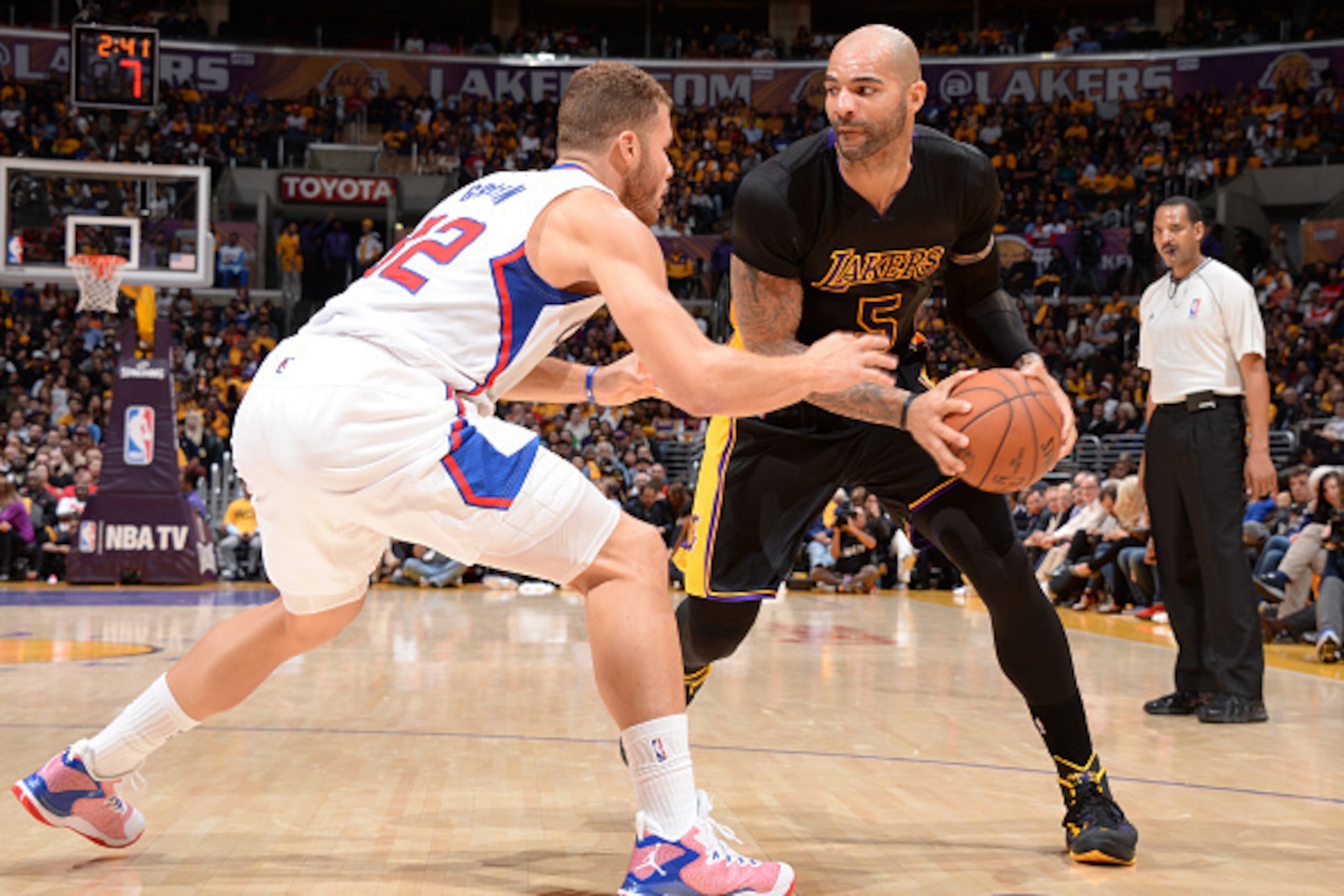
When those shots aren't falling at a steady clip, trouble is going to abound.
Unlike Davis, Boozer isn't going to make opponents pay in the pick-and-roll when he slips toward the basket with a head of steam. Instead, jump shots and lethargic post moves comprise the majority of Boozer's production.
Conversely, Davis' game is tailored around efficiency below the free-throw line, evidenced by the fact that 100 percent of his attempts through four games have come within 10 feet, according to NBA.com.
In fact, Davis has arguably been the Lakers' second-best offensive player to date, according to the Lakers' Calder Hynes:
What's more enlightening for a Lakers offense that ranks 18th in offensive efficiency is that Davis doesn't need the ball in his hands for long to be effective.
And as starting center Jordan Hill continues to hone his mid-range jump shot (hitting 50 percent of his catch-and-shoot jumpers, per NBA.com) Davis could operate as a nice frontcourt complement, as NBA.com's Mike Trudell noted following Saturday night's loss:
Thus far, 60 percent of Davis' field-goal attempts have required zero dribbles, and he's shooting an astounding 77.8 percent in such situations, according to NBA.com.
Operating as a more physical presence in the paint, Davis has also thrived with defenders in close proximity. Unlike Boozer, who requires more space and time to generate offense, Davis has faced very tight defense (defender within two feet) on 66.7 percent of his touches and shot 65 percent in spite of the pressure.
With those figures in mind, it shouldn't come as a surprise that Davis leads the Lakers with a player efficiency rating of 25.6, according to Basketball-Reference.com. And if you want to know what Boozer's PER is for comparative purposes, just check his scoring average. They're the same.
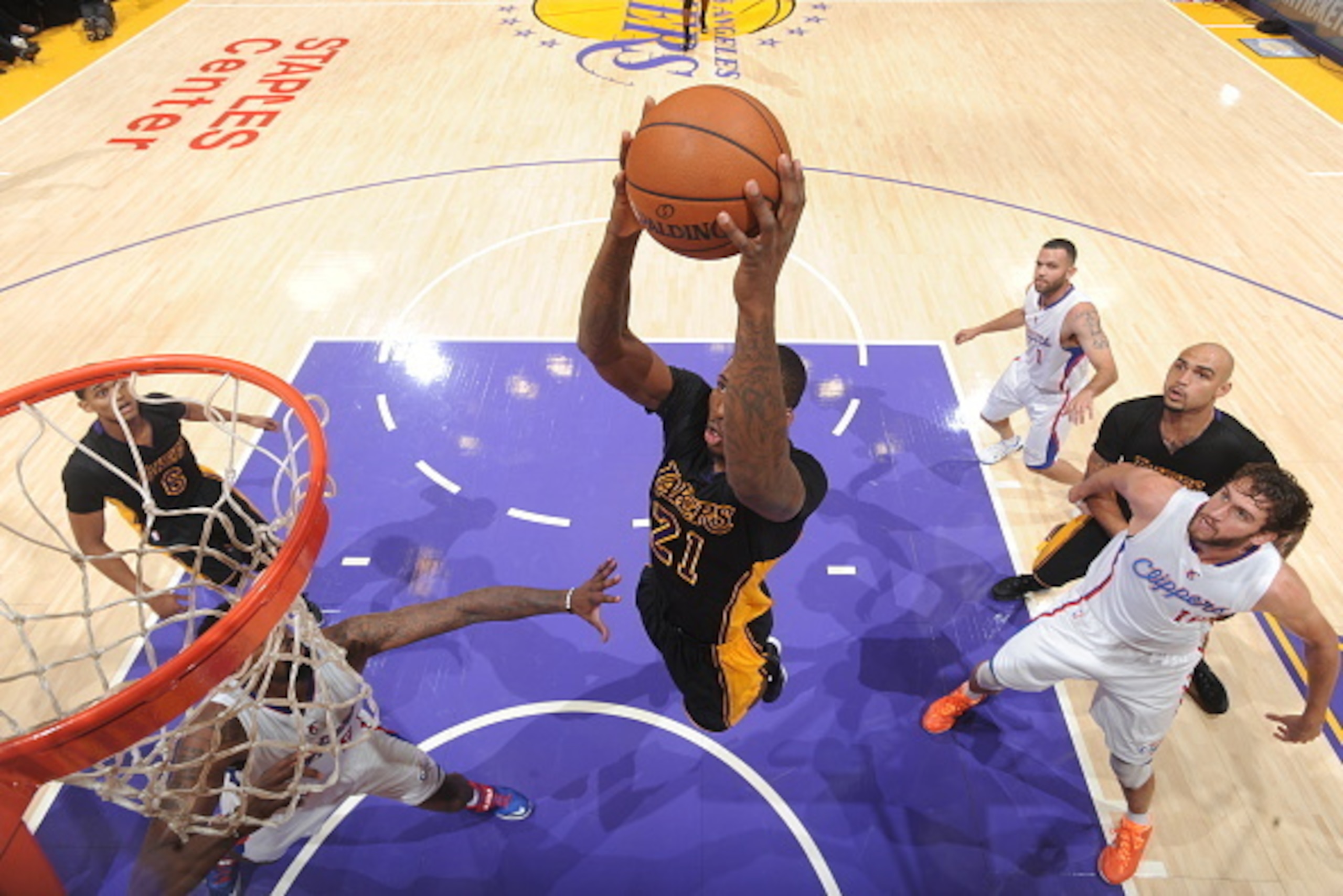
The disparity in effectiveness is illuminated further when you consider what each player has contributed to a defense that's ranked as the league's worst through the regular season's first week.
According to NBA.com, the Lakers' defensive rating (points allowed per 100 possessions) sits at 120.2. With Boozer on the floor that number skyrockets to 126.8.
With Davis on the floor, the Lakers allow 119.7 points per 100 possessions. And while that number would still rank as the league's worst, the fact that Davis is having a positive effect speaks volumes about his status as a steadier and more explosive defender.
All told, the Lakers have posted a net efficiency rating of minus-30 points per 100 possessions with Boozer on the floor, a mark that's 15.8 points worse than Davis'.
As the Los Angeles Times' Eric Pincus wrote following L.A.'s loss to Phoenix, "Davis' combination of athleticism, mobility and overall court awareness might be valuable enough to eventually promote the 25-year-old to the starting lineup -- especially if the Lakers continue to struggle."
Given his hot start, it's hard to disagree.
Davis provides a semblance of rim protection (1.0 block per game and 1.6 per 36 minutes), and considering the Lakers rank dead-last in opponents' field-goal percentage at the rim (66.1), according to SportVU player tracking data, saddling him with starter's minutes can't hurt.
“The thing he gives us is protect the rim,” Lakers head coach Byron Scott said just before the start of the regular season, according to the Los Angeles Daily News' Mark Medina. “He’s a good shot-blocker, defender and scores around the basket enough. He gets the shots and rebounds the ball as well. He gives us a different dimension.”
Essentially, Davis does everything Boozer can't at this late stage in his career.
“I just play hard every time out there, whether it be 10 minutes or 20 minutes out there," Davis said, per Medina. "I bring the energy on defense and hustle. I think the coaching staff knows what I can do, bring to the table and help the team.”
While the 32-year-old Boozer may be able to pressure defenses in spurts by threatening to stretch them out beyond 15 feet, Davis' versatile skill set deserves an extended run with the starters.
And with the Lakers searching for immediate relief on both ends of the floor after an 0-4 start, it's time for Scott to take the lead and make the switch sooner rather than later.
All statistics courtesy of NBA.com and current as of Sunday, November 2, unless noted otherwise.


.jpg?w=2560 "Reported Details of Seahawks-K9 Split ⛓️💥")