Pac-12 Basketball: Preview and Predictions for 2014-15 Season
A year after sending six teams to the NCAA tournament, including three to the Sweet 16 and one just short of the Final Four, the Pac-12 Conference faces an uncertain season in 2014-15.
There's no uncertainty at the top, with defending regular-season champ Arizona somehow reloading despite losing two key starters early to the NBA draft. Beyond the Wildcats, though, question marks abound.
Read on for our preview of how the Pac-12 looks for the 2014-15 season.
Top Storylines
1 of 11
Who can challenge Arizona?
Arizona was nearly a unanimous pick to win the conference in the eyes of the media, with 31 of 32 voters choosing the Wildcats to claim a second straight regular-season title. But does that mean Arizona is expected to run the table, something that's never happened in Pac-12 history since the conference went to an 18-game schedule?
The Wildcats' 15-3 mark last season was the best since 2007-08 when UCLA went 16-2 and finished three games ahead of second-place Stanford.
The (tough) state of Oregon
It wasn't the easiest of offseasons for Oregon and Oregon State, both of which went through major turnover on their rosters. Oregon State's changes extended to the staff, with Craig Robinson getting let go in May and replaced by Montana coach Wayne Tinkle.
Tinkle inherits a team that lost four starters and its top five scorers. And that was from a team that only went 16-15 and lost in the first round of the CBI tournament.
Oregon's roster is even more depleted, with only four players who were in the program during last year's third-round NCAA tournament run still around. That limited group of returners does include leading scorer Joseph Young, though.
How many bids?
The Pac-12's six NCAA tournament invitations last season were tied for the second-most in the country. Two years earlier the league only earned two bids, as mediocrity set in following a huge NBA purge.
With nine players drafted in June, the most for the conference since 2009, the Pac-12 could be in for another dip in NCAA tourney teams. Bleacher Report's Kerry Miller projects between three and five bids.
The Favorite
2 of 11
Arizona Wildcats
The defending regular-season champs reached the Elite Eight last season, falling in overtime to Wisconsin in the West Region final. Gone from that team are playmakers Aaron Gordon and Nick Johnson, but the Wildcats bring back a formidable front line in juniors Brandon Ashley and Kaleb Tarczewski, sophomore sixth man Rondae Hollis-Jefferson and senior point guard T.J. McConnell.
Arizona also had the Pac-12's top recruiting class, led by 5-star wing Stanley Johnson and junior college scoring machine Kadeem Allen.
The lineup includes many impressive offensive weapons, but as John Marshall of the Associated Press writes, Arizona will again be a defense-first team:
"Miller has stressed the defensive side of the ball since arriving in the desert...and the Wildcats have become one of the stingiest teams in the country. Arizona was fourth nationally in shooting defense, holding opponents to 38 percent, and was sixth in scoring, allowing 58.6 points per game. With the roster Miller has assembled, the Wildcats could be even better this season.
"
All signs point to the biggest question regarding Arizona in the Pac-12 being by how many games it wins the regular-season title.
The Challengers
3 of 11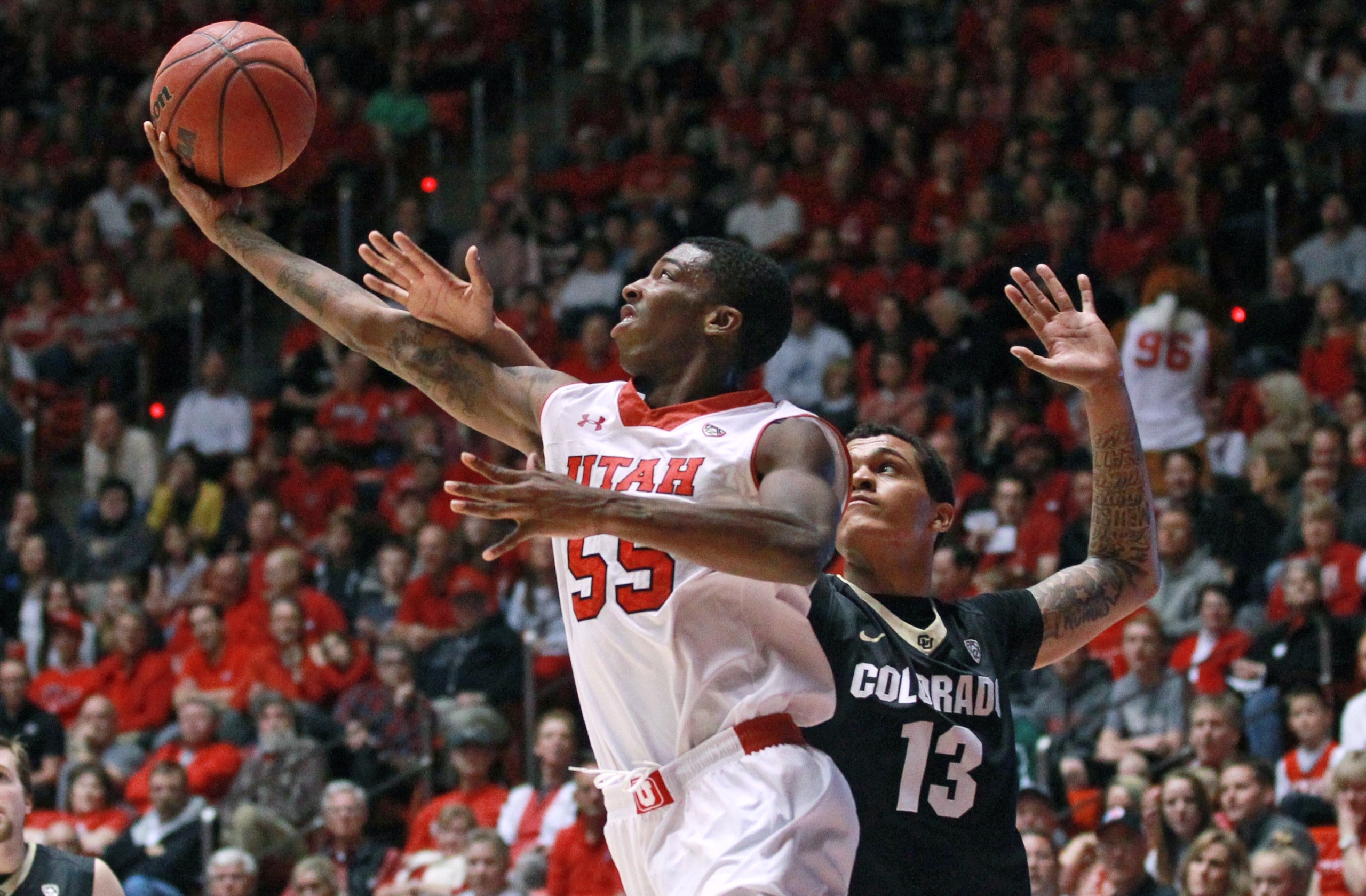
Colorado Buffaloes
The Buffaloes were part of the five-team logjam for third place at 10-8 last season, but their year ended with a pair of blowout losses to Arizona (by 20) in the conference tournament and then Pittsburgh (by 29) in the NCAA tourney.
Colorado came on strong in the second half of last year after star Spencer Dinwiddie was lost to a knee injury, and the core of that team is back this season. The top four full-season scorers are back led by 6'10" junior forward Josh Scott.
Stanford Cardinal
A surprise Sweet 16 team last year after upsetting Kansas in the third round, the Cardinal had their best year in coach Johnny Dawkins' six seasons (if you don't count winning the 2012 NIT title as a major success).
Three starters are back from that team, including leading scorer Chasson Randle and NCAA tourney standout Stefan Nastic.
UCLA Bruins
UCLA, last season's Pac-12 tourney winners who were second-best in the conference in the regular season, lost a huge chunk of its Sweet 16 team to the NBA draft. Jordan Adams, Kyle Anderson and Zach LaVine accounted for 51 percent of the Bruins' scoring, but now the production falls to senior Norman Powell and a cast of mostly newcomers.
Second-year coach Steve Alford brought in a solid recruiting class, highlighted by 5-star power forward Kevon Looney, and he'll also have the service of highly touted 2013 recruit Isaac Hamilton for the first time. Hamilton, a 6'4" guard, was ruled ineligible by the NCAA after originally signing with UTEP but then backing out of that national letter of intent.
Utah Utes
A narrow choice for second place in the preseason media poll, Utah brings back four starters from last year's 21-win team. That includes do-everything senior guard Delon Wright, who led the Utes in scoring and assists and was second in rebounding while shooting an astounding 56.1 percent.
Larry Krystkowiak has methodically rebuilt this program, going from six wins in his first season in 2011-12 to 15 the next year before last season's big leap. The Utes last made the NCAA tournament in 2009 and will get several nonconference tests in the form of games against BYU, Kansas, San Diego State and UNLV.
The Bottom Dwellers
4 of 11
Oregon State Beavers
It's ironic that Wayne Tinkle takes over for Craig Robinson, the brother of First Lady Michelle Obama, because he's inheriting a nearly bare cabinet similar to what a new President finds when he takes office.
Junior guard Langston Morris-Walker is Oregon State's only returning starter, and that was a part-time gig for a player who only averaged 4.0 points and shot 41.6 percent from the field. The Beavers' roster features no seniors but does have seven juniors, including junior college transfer Gary Payton II, son of the former NBA star and one of the program's all-time greats.
USC Trojans
Andy Enfield wasn't able to immediately transform USC into Dunk City—what his former team Florida Gulf Coast became known as after its magical NCAA tournament run in 2013—and now he heads into his second year minus his top four scorers from last year's 11-21 team that finished last in the Pac-12.
Nikola Jovanovic, a 6'11" sophomore, will be a focal point of the offense for a team that has only three upperclassmen.
Washington State Cougars
Former Oregon coach Ernie Kent returns to the sideline, taking over for the fired Ken Bone after last season's Washington State team went 10-21 and 3-15 in conference play. The Cougars return three starters, most notably senior guard DaVonte Lacy.
Lacy averaged 19.4 points per game last season to lead the Cougars, but he missed eight games midway through the year because of injury.
Best Rivalry
5 of 11
Arizona-UCLA
They met for the Pac-12 tournament title last season, with UCLA taking a thrilling 75-71 victory in Las Vegas after Arizona won in Los Angeles in January.
Sadly, the Wildcats and Bruins are only scheduled to play each other once this season on Feb. 21 in Tucson. It's an unfortunate casualty of the Pac-12's unbalanced schedule and the conference's preference to ensure the four California schools always play each other twice.
We'll just have to hope they meet again in the conference tourney in March at the MGM Grand in Las Vegas.
Coaches Under the Most Pressure
6 of 11
Steve Alford, UCLA
He got the Bruins into the Sweet 16 in his first season in Westwood, but how much of that was his doing and how much was because of the players he inherited from Ben Howland? We'll see what Alford can do with his own team after mass roster turnover, including three early departures to the NBA draft and the graduation of the Wear twins inside.
Lorenzo Romar, Washington
The longest-tenured coach in the Pac-12 as he heads into his 13th season, Romar hasn't gotten Washington into the NCAA tournament since 2011. He's won two regular-season titles, most recently in 2011-12, but Romar's last two teams have finished in the bottom half of the league.
Herb Sendek, Arizona State
Coming off just his second NCAA tournament appearance in eight seasons with the Sun Devils, Sendek's latest team is a mystery with only two starters back and only three players returning who averaged more than four points per game. He's won 20-plus in five different years in Tempe, but with a roster that features four transfers and six freshmen and a significantly upgraded nonconference schedule, it could be a lean season if playmakers don't step up.
Best Frontcourt
7 of 11
Arizona
Junior center Kaleb Tarczewski has improved his offense on almost a monthly basis since starting as a true freshmen, and with junior forward Brandon Ashley returning from a foot injury that knocked him out in February, Arizona's front line will again be the most imposing in the conference.
The Wildcats' defense was stellar last season, and the frontcourt was a big part of that success. Opponents only shot 38 percent last season, which ranked fourth in Division I and tops among power-conference teams.
That duo also shot 55.7 percent, benefiting from a backcourt (see next slide) that helped create offense with solid passing and great ball movement.
Best Backcourt
8 of 11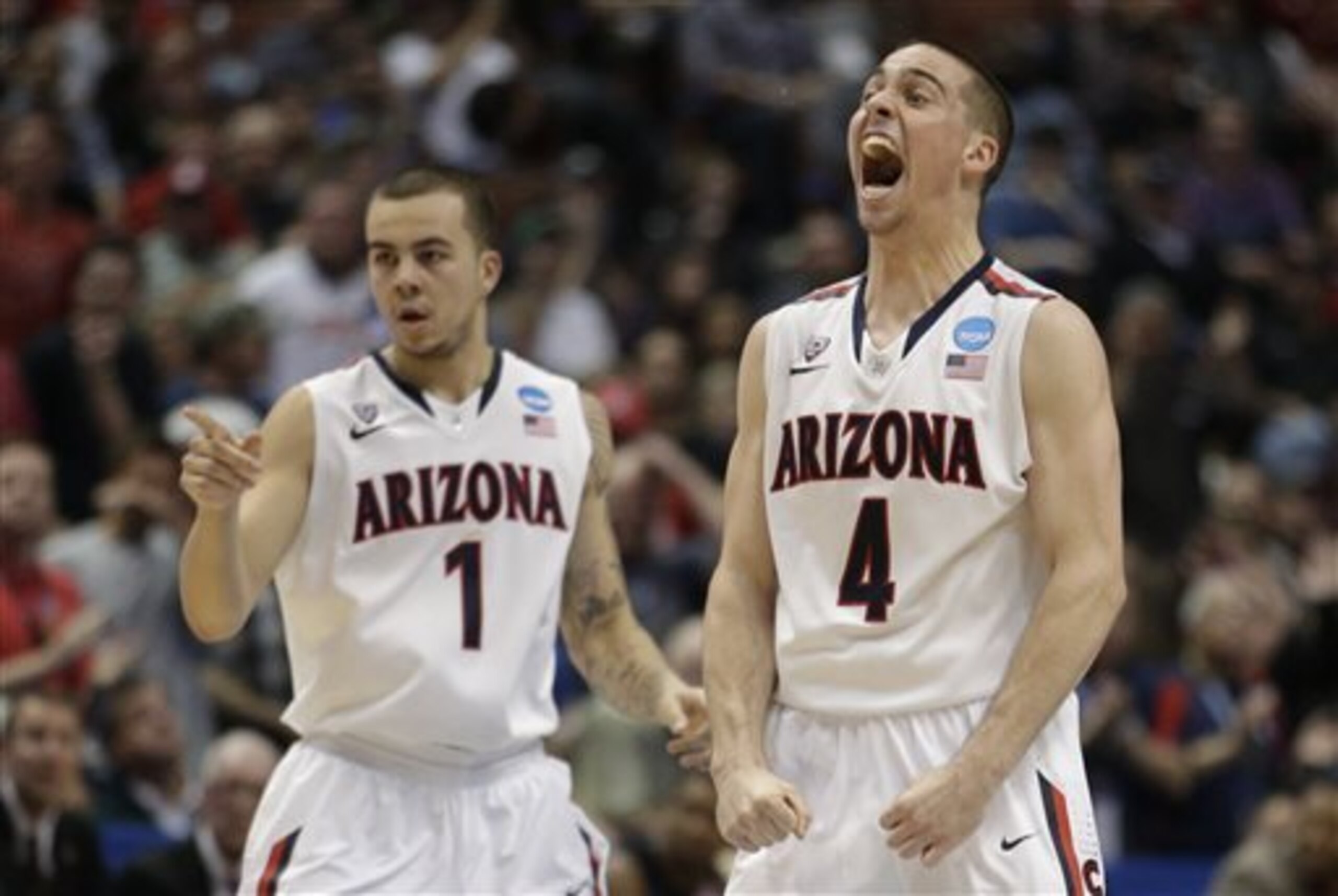
Arizona
He didn't lead the conference in assists—that went to UCLA's Kyle Anderson—but T.J. McConnell was by far the most efficient and dependable point guard in the Pac-12 last season. A transfer from Duquesne, he gave the Wildcats a much-needed pass-first player who could score when needed but was more in there to run the offense and not make mistakes, as evidenced by his conference-leading 3.01 assist-to-turnover ratio.
Arizona's other backcourt spots feature a pair of physical specimens who are among the most athletic wing players in the country. Sophomore Rondae Hollis-Jefferson was a do-everything player last season, while freshman Stanley Johnson is basically a slightly smaller version of Aaron Gordon with more of a knack for playing on the perimeter.
Freshmen to Watch
9 of 11Stanley Johnson, Arizona
The No. 3 overall player in the 2014 recruiting class, he's the latest California-bred superstar that Arizona coach Sean Miller has brought to the desert. At 6'7"and 245 pounds, Johnson is "probably the most offensively ready freshman in the NCAA this season," according to Sam Vecenie of CBSSports.com.
Kevon Looney, UCLA
A bruiser at 6'9" and 220 pounds, the power forward from Milwaukee should make an instant impact for a UCLA team that is thin in the frontcourt. He's got a good chance to be a double-double guy, with the Bruins likely to struggle at shooting from the field early in the season.
Reid Travis, Stanford
Stanford will be a veteran team this year with three senior starters returning, but the Cardinal lack experience on the blocks alongside center Stefan Nastic. Enter Travis, a 6'8", 240-pound post player who will quickly develop a reputation for being a physical presence inside.
All-Conference Teams
10 of 11
FIRST TEAM
Chasson Randle, G, Stanford
A first-team all-conference selection a year ago, Randle was Stanford's top scorer and is a contender to lead the Pac-12 in scoring this season.
Delon Wright, G, Utah
With Kyle Anderson in the NBA, Wright takes over the role of the conference's most complete player—a rebounding guard who shoots with the efficiency of a big man and also dishes it out well.
Rondae Hollis-Jefferson, F, Arizona
A whirling ball of energy and arguably the most athletic player in the Pac-12, Hollis-Jefferson never takes a second off when on the court.
Josh Scott, F, Colorado
His play after the Buffaloes lost Spencer Dinwiddie last season drove an NCAA tournament run. Now as the unquestioned leader, he's gunning to get Colorado into contention for its Pac-12 title.
Kaleb Tarczewski, C, Arizona
Entering his third year as a starter, Tarczewski defends better than any big man in the league while his offense keeps improving.
SECOND TEAM
DaVonte Lacy, G, Washington State
Norman Powell, G, UCLA
Joseph Young, G, Oregon
Stanley Johnson, F, Arizona
Nikola Jovanovic, F, USC
Regular Season Standings
11 of 11
- Arizona
- Utah
- Colorado
- UCLA
- Stanford
- California
- Arizona State
- Washington
- Oregon
- USC
- Washington State
- Oregon State
Follow Brian J. Pedersen on Twitter at @realBJP.
.jpg?w=2560 "NFL Paris Football")

.jpg?w=2560 "Trevon Diggs Cut by Seahawks")