
Trust Ratings for Every 2014 World Series Late-Inning Pitcher
The trust that a player builds with his teammates and manager over the course of baseball's regular season is, unquestionably, a vital part of any team's success.
If there's no trust, there's no success—and there's certainly no deep playoff run.
Trust is especially vital when it comes to a team's bullpen, with managers needing to believe that the pitcher they call upon can step into a pressure situation and get the job done, regardless of whether it's a role that a reliever has gotten accustomed to or not.
"The only way this works is they have to be unselfish about this…and hopefully do what's best for the club," San Francisco Giants manager Bruce Bochy, who knows a thing or two about how to handle a bullpen in the World Series, told USA Today's Jorge L. Ortiz. "I've used Jeremy [Affeldt] early. I've used him late. Same with [Javier] Lopez. They're all in on this, and hopefully they trust me and I trust them, and that's how it works."
Yet all it takes is a poor postseason performance or two to completely erode that trust.
With the Kansas City Royals leading the 2014 Fall Classic two games to one and both the San Francisco and Kansas City bullpens likely to see an increased workload as we get into the middle and back end of the two teams' rotations, now's as good a time as any to take a look at just how much each manager can trust his late-inning relievers.
We'll rate them on a scale of one to five, with one being a player you wouldn't trust with a 10-run lead and five being a player you'd bring in if your team was one pitch away from winning it all. For our purposes, only this year's postseason performance will be taken into account.
Additionally, while our focus will be on each team's Big Three late-inning relievers, we'll take a look at the complete bullpen picture for both Kansas City and San Francisco.
Which manager, Bochy or Ned Yost, can trust his relievers more?
Let's take a look.
Other Key Relievers
1 of 7
As noted on the first slide, we are going to take a look at the entire bullpen of both World Series participants. While we could see any of these pitchers step on the mound in the seventh, eighth or ninth inning of a game, it'd be a stretch to call any of them a "late-inning reliever."
Kansas City Royals
- LHP Tim Collins: The little-used southpaw has been supplanted by Brandon Finnegan as Kansas City's go-to southpaw out of the bullpen. Trust Factor: 2
- LHP Danny Duffy: He's been called upon only once since winning Game 1 of the American League Championship Series, allowing two earned runs and walking three in three innings of work against San Francisco in the opening game of the World Series. Trust Factor: 2
- LHP Brandon Finnegan: The 17th overall pick in the 2014 MLB draft, Finnegan has become Yost's go-to left-hander, with three scoreless outings in five postseason appearances. Trust Factor: 3.5
- RHP Jason Frasor: The veteran reliever has allowed only two batters to reach base safely in four scoreless innings. Trust Factor: 4
San Francisco Giants
- LHP Jeremy Affeldt: The former Royal has been Bruce Bochy's go-to southpaw out of the bullpen since 2009. Few relievers in the World Series are as trusted as he is. Trust Factor: 5
- RHP Tim Lincecum: The former ace has become afterthought as a postseason reliever, and he injured his lower back in his only appearance. He should be available for Game 4. Trust Factor: 1
- RHP Jean Machi: A key part of the bullpen mix, Machi has allowed a run in three of his five postseason appearances and failed to record an out in his last two. Trust Factor: 1
- RHP Yusmeiro Petit: Has been as valuable as any member of the bullpen, allowing only six baserunners in nine scoreless innings of relief while striking out 11. Trust Factor: 5
- RHP Hunter Strickland: The rookie has surrendered five home runs in 5.1 innings of relief and let his emotions get the better of him after Omar Infante took him deep in Game 2 of the World Series. Trust Factor: 1
Wade Davis, Kansas City Royals
2 of 7
2014 Postseason Stats: 9 G, 2-0, 0.87 ERA, 0.68 WHIP, 10.1 IP, 5 H, 2 BB, 12 K
2014 World Series Stats: 1 G, 0-0, 0.00 ERA, 0.00 WHIP, 1 IP, 2 K
It's not often that a non-closer can claim the title of best reliever in baseball, but Wade Davis has proved that he's no ordinary reliever.
While it's true that he's the only member of Kansas City's Big Three to allow an earned run in the divisional series, that run came in the eighth inning of Game 3 against the Los Angeles Angels, with the Royals sitting on a six-run lead.
Kansas City never even looked toward home plate, gladly giving up a meaningless run in exchange for the second out of the inning.
Yet his postseason numbers don't show just how dominant Davis has been. Shortly before the World Series began, Bob Lutz of The Wichita Eagle wrote the following:
"In the six months since April, including the postseason, the Kansas City Royals’ eighth-inning specialist has made 67 appearances covering 67.2 innings. In those games, he has allowed 34 hits and five runs, striking out 86 and walking 14.
"
Consider this: Including his lone World Series appearance, Davis has faced 259 batters since the beginning of May. Only 49 of those batters have managed to reach base. That works out to more than 80 percent of the batters Davis faces never getting on base.
Trust Factor: 5
Kelvin Herrera, Kansas City Royals
3 of 7
2014 Postseason Stats: 8 G, 1-0, 0.90 ERA, 1.00 WHIP, 10 IP, 6 H, 4 BB, 11 K
2014 World Series Stats: 1 G, 0-0, 0.00 ERA, 1.20 WHIP, 1.2 IP, 2 BB, K
After Kelvin Herrera picked up the win in Game 2 of the World Series for Kansas City, MLB.com's Alden Gonzalez noted that 14 of the reliever's 32 pitches registered triple digits, a figure that shocked even Herrera himself.
"Fourteen times?! Today?! I didn't count them. Oh, wow. Now I feel even stronger."
While much has been made of his velocity, there's good reason for it—opposing batters can't hit his fastball, whether it be of the four-seam or two-seam variety. Per Brooks Baseball, the opposition has mustered only a .208 batting average against his heater in October, down from a .226 regular-season mark.
Overall, Herrera has held opposing batters to a .167 batting average and .417 OPS in the playoffs, the latter of which, according to ESPN, trails only Davis among qualified pitchers still playing.
Not only has Herrera kept the opposition at bay, he's done so in high-pressure situations. Take his latest outing, for example. Herrera made his World Series debut in the top of the sixth inning during Game 2, with two Giants on base, one out and the score tied at two.
Nine pitches later, he had dispatched Brandon Belt and Michael Morse, and Kansas City exploded in the bottom half of the inning to take control of the game. As manager Ned Yost explained to reporters after the game, he couldn't afford to let San Francisco score a third run.
"I felt very strongly going into the sixth inning that the next run scored was probably going to win the game. I made the defensive change and then when those two runners got on, I brought on Kel to get those outs.
"
If inserting Herrera into that situation doesn't show the immense level of trust that Yost has in his young reliever, I don't know what does.
Trust Factor: 5

Greg Holland, Kansas City Royals
4 of 7
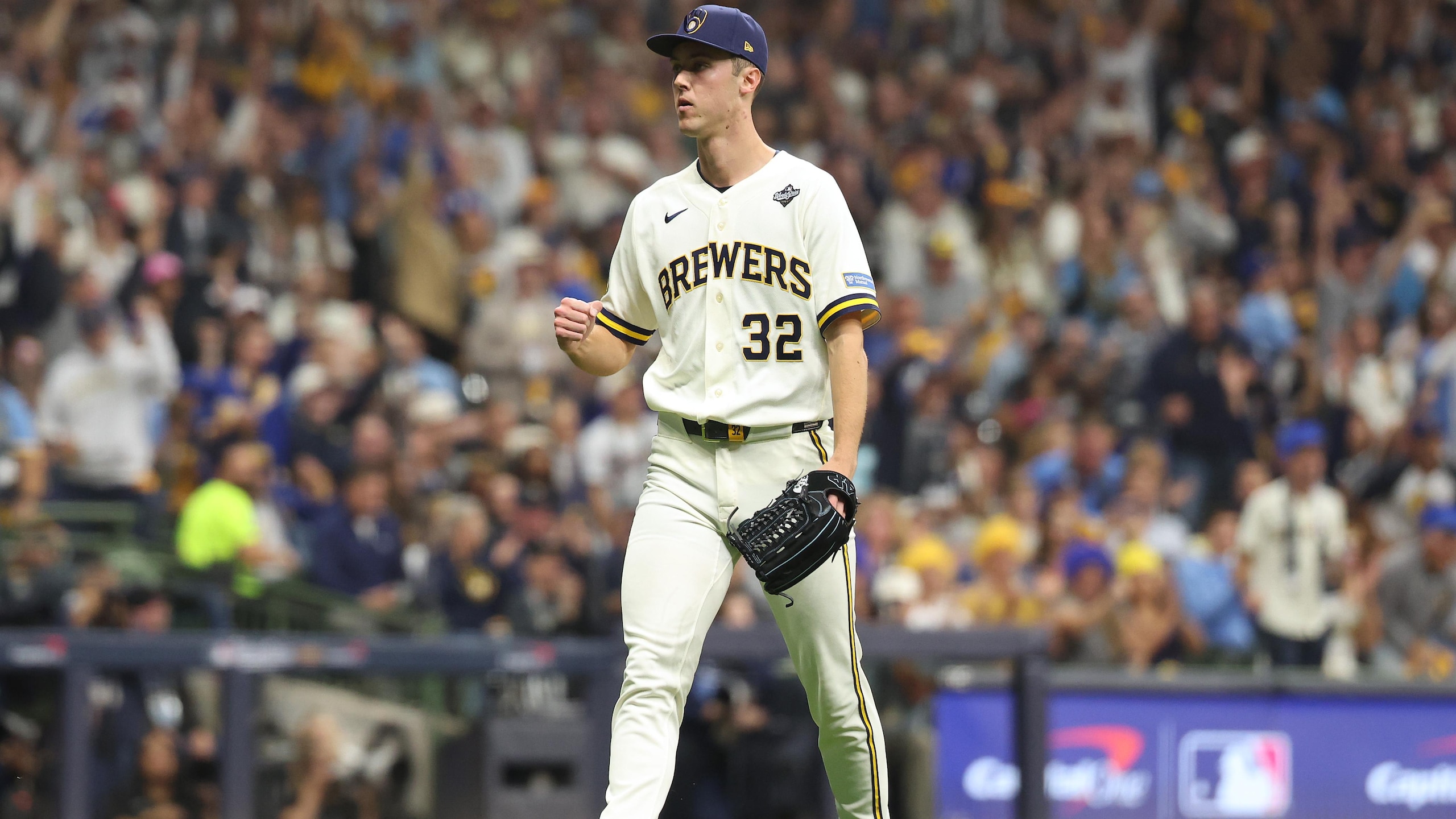
2014 Postseason Stats: 9 G, 0-0, 1.00 ERA, 1.00 WHIP, 9 IP, 4 H, 5 BB, 13 K, 6-for-6 SV
2014 World Series Stats: 1 G, 0-0, 0.00 ERA, 1.00 WHIP, 1 IP, H, 3 K
It's fitting that Greg Holland became the first-ever recipient of the Mariano Rivera Award, given to the American League's top reliever.
For the six saves that Holland has recorded in October puts him in a tie with Rivera (and three others) for the second-highest single-season total in playoff history, one away from becoming the sixth pitcher to record seven postseason saves in one season, last accomplished by the Boston Red Sox's Koji Uehara in 2013.
His four saves in the American League Championship Series against the Baltimore Orioles also put Holland in rarefied air—he jointed Hall of Famer Dennis Eckersley as the only pitchers to save all four games of a postseason series sweep. Eckersley accomplished the feat in 1988 as a member of the Oakland Athletics, shutting down Boston in the ALCS.
Trust Factor: 5
Santiago Casilla, San Francisco Giants
5 of 7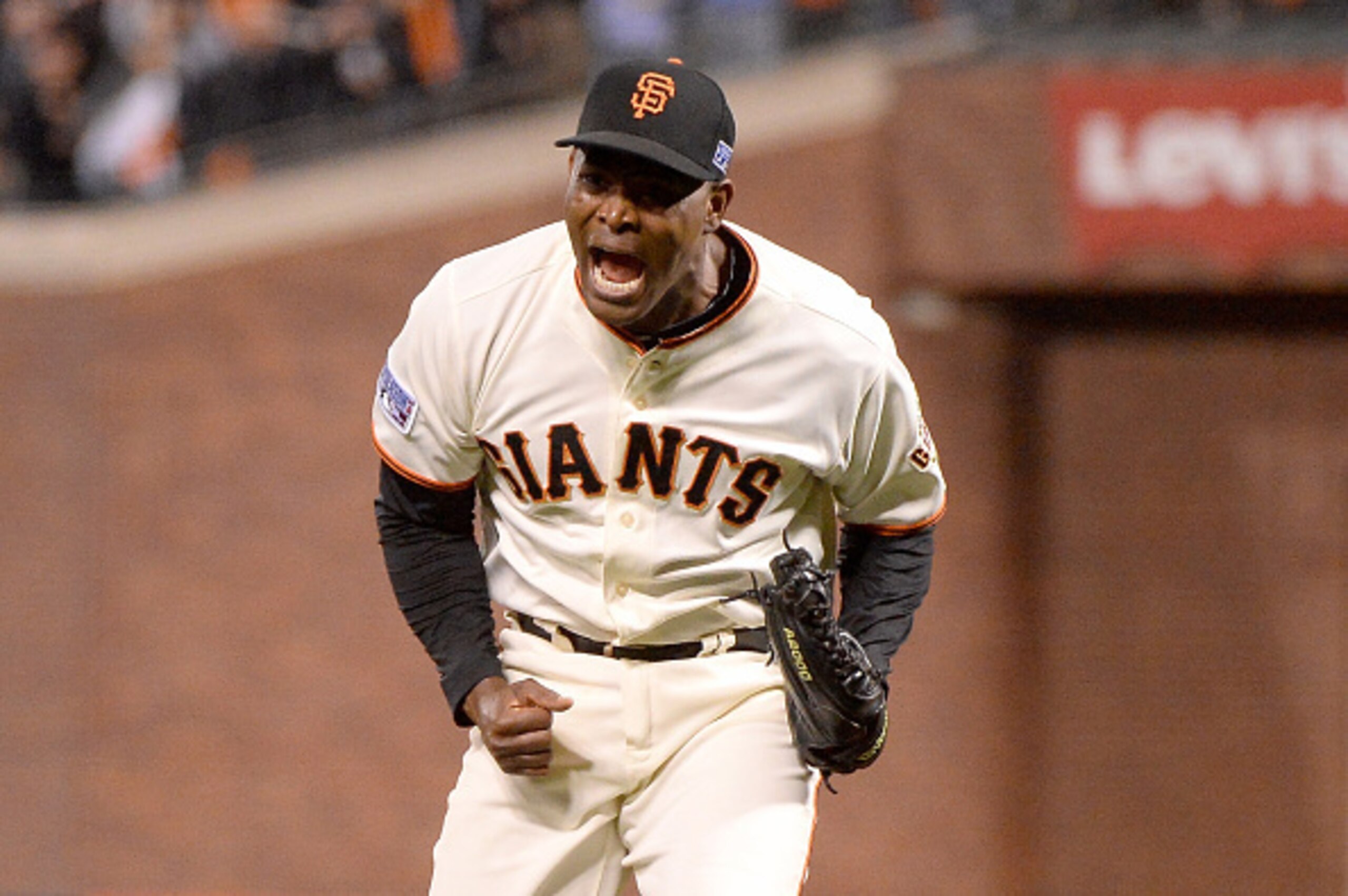
2014 Postseason Stats: 8 G, 0-0, 0.00 ERA, 0.71 WHIP, 7 IP, 2 H, 3 BB, 6 K, 4-for-4 SV
2014 World Series Stats: 1 G, 0-0, 0.00 ERA, 0.00 WHIP, 0.1 IP, K
Perhaps the most unheralded closer in baseball, Santiago Casilla is, as teammate George Kontos told MLB.com's Chris Haft, "a starter in the bullpen."
He's more of a finesse pitcher than a flame-thrower, calling upon a deep arsenal of pitches that he developed when he was a struggling starter in Oakland's system to keep batters honest. As the numbers show (per Brooks Baseball), he's been incredibly effective with all of his offerings in the playoffs.
| Fastball | 23 | .250 | 0/3 |
| Sinker | 40 | .000 | 1/1 |
| Slider | 3 | .000 | 0/0 |
| Curve | 24 | .000 | 2/2 |
For as must trust as San Francisco manager Bruce Bochy has in his veteran closer, Casilla explained to Jorge L. Ortiz of USA Today that he trusts his skipper implicitly.
"That's one of the things about our manager, that he knows when you have your best stuff and when you might be a little shaky. I thought that was the perfect decision,'' Casilla said of Bochy's call to pull him in the bottom of the ninth inning in Game 5 of the National League Championship Series against the St. Louis Cardinals, with two outs and the bases loaded.
"It's like a puzzle. He knows where every piece goes and puts them in at the right time.''
Trust Factor: 5
Javier Lopez, San Francisco Giants
6 of 7
2014 Postseason Stats: 8 G, 0-0, 0.00 ERA, 1.20 WHIP, 3.1 IP, 3 H, BB, 3 K
2014 World Series Stats: 2 G, 0-0, 0.00 ERA, 0.75 WHIP, 1.1 IP, H
Javier Lopez entered the 2014 playoffs with two rather impressive streaks going—he'd not allowed a hit or an earned run in nine consecutive postseason appearances, dating back to Game 5 of the 2010 NLCS against the Philadelphia Phillies.
While his hitless streak has since come to an end—St. Louis' Jon Jay stroked a single to center field against him in the bottom of the seventh inning during Game 2 of the NLCS—Lopez's scoreless streak remains alive and well at 17 consecutive appearances spanning 8.2 innings of work.
Lopez chalks his postseason success up to his preparation, as he explained to the San Jose Mercury News' Carl Steward:
"I make sure I do my due diligence going into any series, especially since I know I'm going to be used situationally facing lefties. The tasks just seem to get tougher as they go along, but that's the nature of the beast. Obviously, you try to formulate a gameplan against every hitter you expect you might face.
"
Whether he's called upon to face only one left-handed batter or asked to handle a full inning against hitters from both sides of the plate, as he was in Game 1 of the World Series when he faced two lefties (Nori Aoki and Mike Moustakas) and a righty (Alcides Escobar), the results have been the same.
The Giants get out of the inning unscathed.
Trust Factor: 5
Sergio Romo, San Francisco Giants
7 of 7
2014 Postseason Stats: 7 G, 1-1, 1.93 ERA, 0.86 WHIP, 4.2 IP, 4 H, 3 K
2014 World Series Stats: Yet to appear
It was anything but a banner year for Sergio Romo, who lost his job as San Francisco's closer at the end of June and finished the regular season with his highest ERA (3.72) since 2009, when he pitched to a 3.97 mark.
To his credit, Romo turned what could have been a negative into a positive, as he told USA Today's Jorge L. Ortiz: "I realized that what Bochy did was change the inning, but not my job. My job is to throw strikes and get outs. So my mind-set is that I will save the game in the eighth.''
While he failed to do just that in Game 2 of the NLCS against St. Louis, serving up Kolten Wong's walk-off home run, the veteran has otherwise been solid, scattering three hits over 4.2 scoreless innings of relief.
Yet between his regular-season struggles and Wong's bomb, you couldn't fault Bochy for having some trepidation when he calls upon Romo in a key situation late in the game. He'd never admit to having second thoughts, of course, but it's hard to imagine that he doesn't when it comes to Romo.
Trust Factor: 4
Unless otherwise linked/noted, all statistics courtesy of Baseball-Reference and are current through Game 2 of the World Series.
.png?w=2560)


.jpg?w=2560 "NFL House in Paris Closes for Protests")
.jpg?w=2560 "Trevon Diggs Cut by Seahawks")