Real Madrid vs. Barcelona: Picking a Clasico All-Star Team of This Millennium
Clasico rivals Real Madrid and Barcelona have between them accumulated 11 Primera Division titles and six Champions League trophies since the turn of the millennium.
A number of fantastic players have turned out for both clubs during this period—including numerous winners of coveted individual and international honours.
What follows is a Clasico all-star team made up of the best players to have represented Barcelona and Real Madrid since the year 2000.
Methodology
1 of 13
This selection is based entirely on performances and achievements in a Barcelona or Real Madrid shirt from 2000 to 2014.
For instance, if we had considered Fernando Redondo’s entire Madrid career then he would have been in serious contention to make the XI. He captained the club to the Champions League trophy in 2000 but was only at Madrid for half a year during the period in question.
The quantitative element of the selection process concentrated on La Liga and Champions League successes accumulated by each of the players. Goalscoring rates have been factored into the equation for forwards, while individual awards have been taken into account for all players.
It was also necessary to add a qualitative aspect to the analysis. Based on trophies alone, the team would have been made up almost entirely of Barcelona players who straddled the Frank Rijkaard and Pep Guardiola eras. It was therefore necessary to try and separate team achievements from individual contributions.
Both teams have played host to a number of high-quality attacking players since the turn of the millennium, but an attempt has been made to put together a team with at least a modicum of balance between attack and defence. The team has been set out in a 4-2-3-1 formation.
There will clearly be disagreements over certain inclusions and exclusions. There is still a large subjective element at play. Therefore, please feel free to suggest your own selections in the comments section.
Substitutes Bench
2 of 13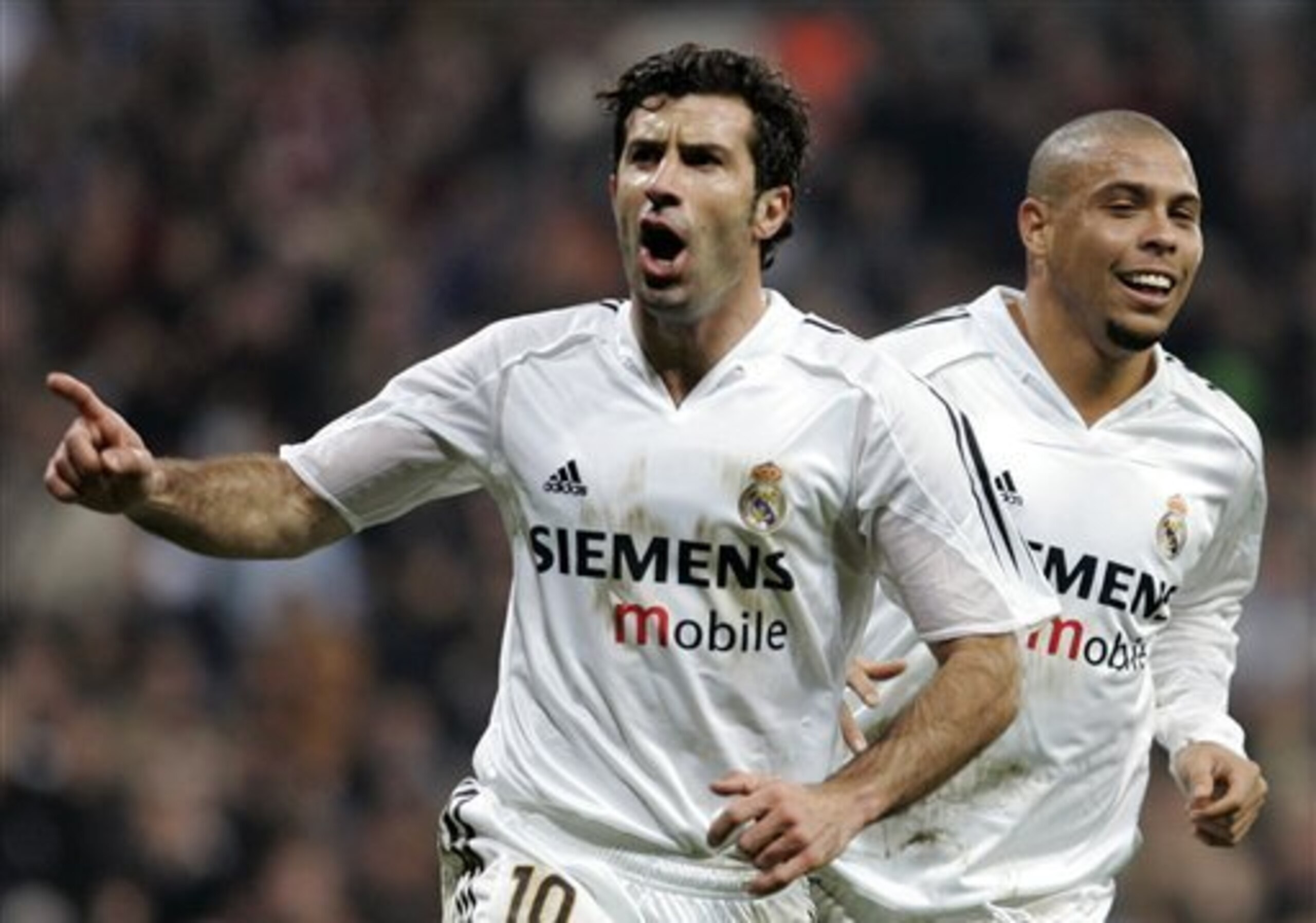
Here are seven players who just missed out on the starting XI and will have to be content with a place on the substitutes bench.
Goalkeeper: Victor Valdes
It was touch and go between Valdes and Iker Casillas for the goalkeeper spot and his record of six league titles and three Champions League triumphs is certainly high enviable.
Defender: Sergio Ramos
A regular in the Real Madrid side since joining from Sevilla in 2005, Ramos has won three league titles at the Bernabeu and also scored the late equalising goal in their Champions League final triumph over Atletico Madrid in May. His ability to play at right-back or in the centre of defence makes him a good bench choice.
Midfielder: Sergio Busquets
Pep Guardiola promoted Busquets to the first team following his appointment as coach. He soon showed himself worthy of Pep's faith. He reads the game superbly, tackles cleanly and gets the nod over Real Madrid's Claude Makelele due to his better on-ball ability.
Midfielder: Zinedine Zidane
Zidane scored a truly beautiful winning goal in Madrid's Champions League final win over Bayer Leverkusen in 2002 and was part of the side who won the league title a year later. Undoubtedly one of the best players of his generation, he faded somewhat in his latter years at the club, handicapped by an unbalanced team.
Midfielder: Luis Figo
One of the few players to turn out successfully for both Barcelona and Real Madrid, Figo was a truly fantastic player. He won two league titles and one Champions League trophy during his time in the capital, but has just lost out to some of the more explosive attacking talents available to this particular team.
Forward: Raul
With four league titles and two Champions League triumphs during the period in question, Raul can perhaps think himself a little unfortunate not to be included in the starting XI. He was a key part of the Madrid side for the majority of his 16 years at the club.
Forward: Ronaldo
The original Ronaldo scored an impressive 0.65 league goals per match for Madrid and did produce some hugely memorable performances—most notably his hat-trick in a Champions League quarter-final victory over Manchester United in 2003. He did, though, win just one league title at the Bernabeu, and the large majority of his major individual and international honours came before his time in Madrid.
Goalkeeper: Iker Casillas
3 of 13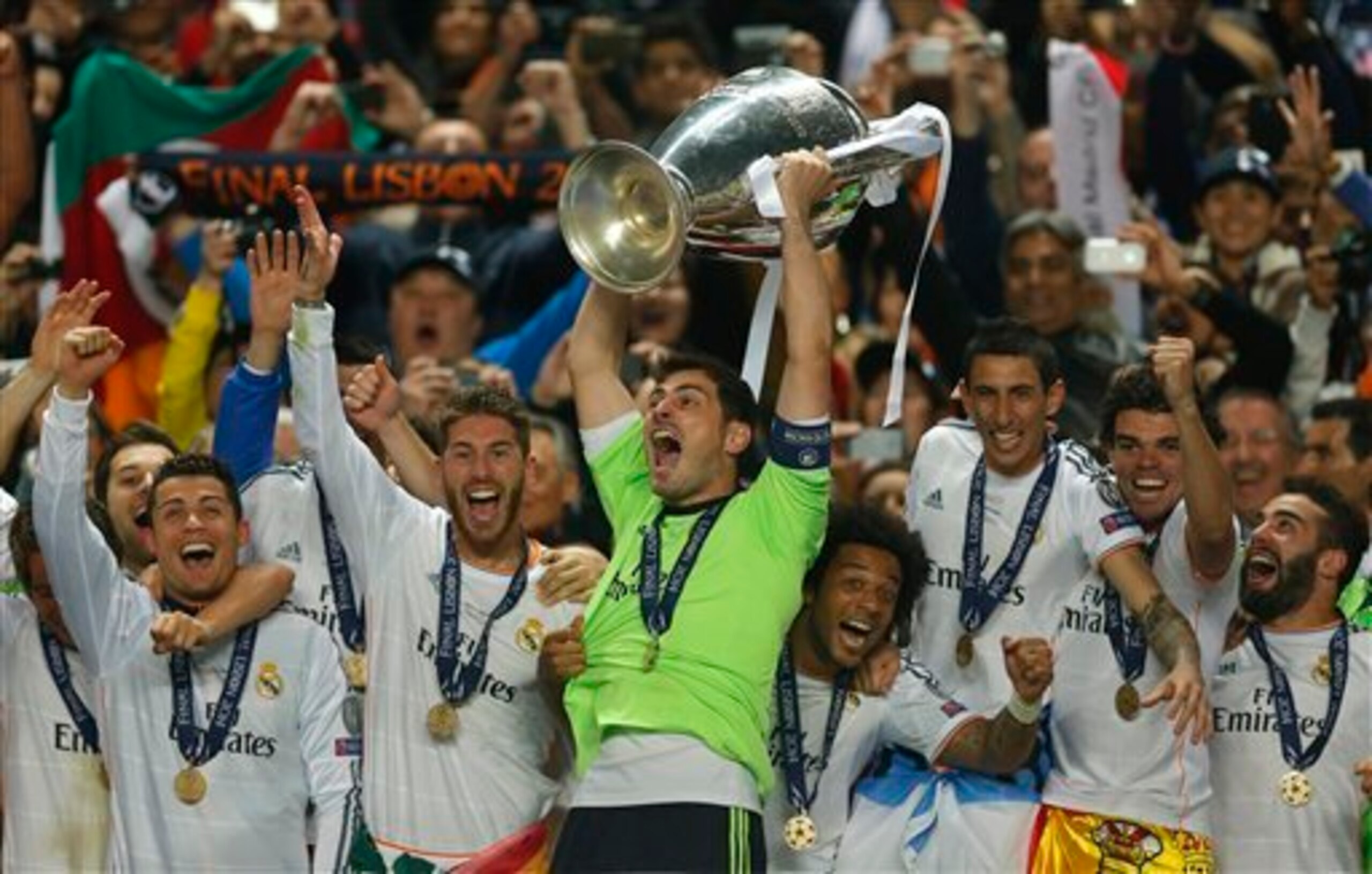
The recent questionable form of Iker Casillas should not overshadow his contribution to Real Madrid’s achievements since the turn of the millennium. A near mainstay in the Bernabeu goal since making his debut at the age of 18 in 1999, Casillas has accumulated five league titles and three Champions League trophies during his time in the capital.
San Iker was also Spain’s goalkeeper for the European Championship triumphs of 2008 and 2012 and the country’s first World Cup success in 2010. He was named the best goalkeeper in the world by the IFFHS for five consecutive years between 2008 and 2012.
Per UEFA.com, Casillas overtook Paco Buyo's appearances record for a Madrid goalkeeper in 2009. His impressive agility, stunning reflexes and forceful personality have seen him enter the pantheon of the greatest-ever Spanish goalkeepers.

.jpg?w=2560 "NFL Paris Football")
Right-Back: Michel Salgado
4 of 13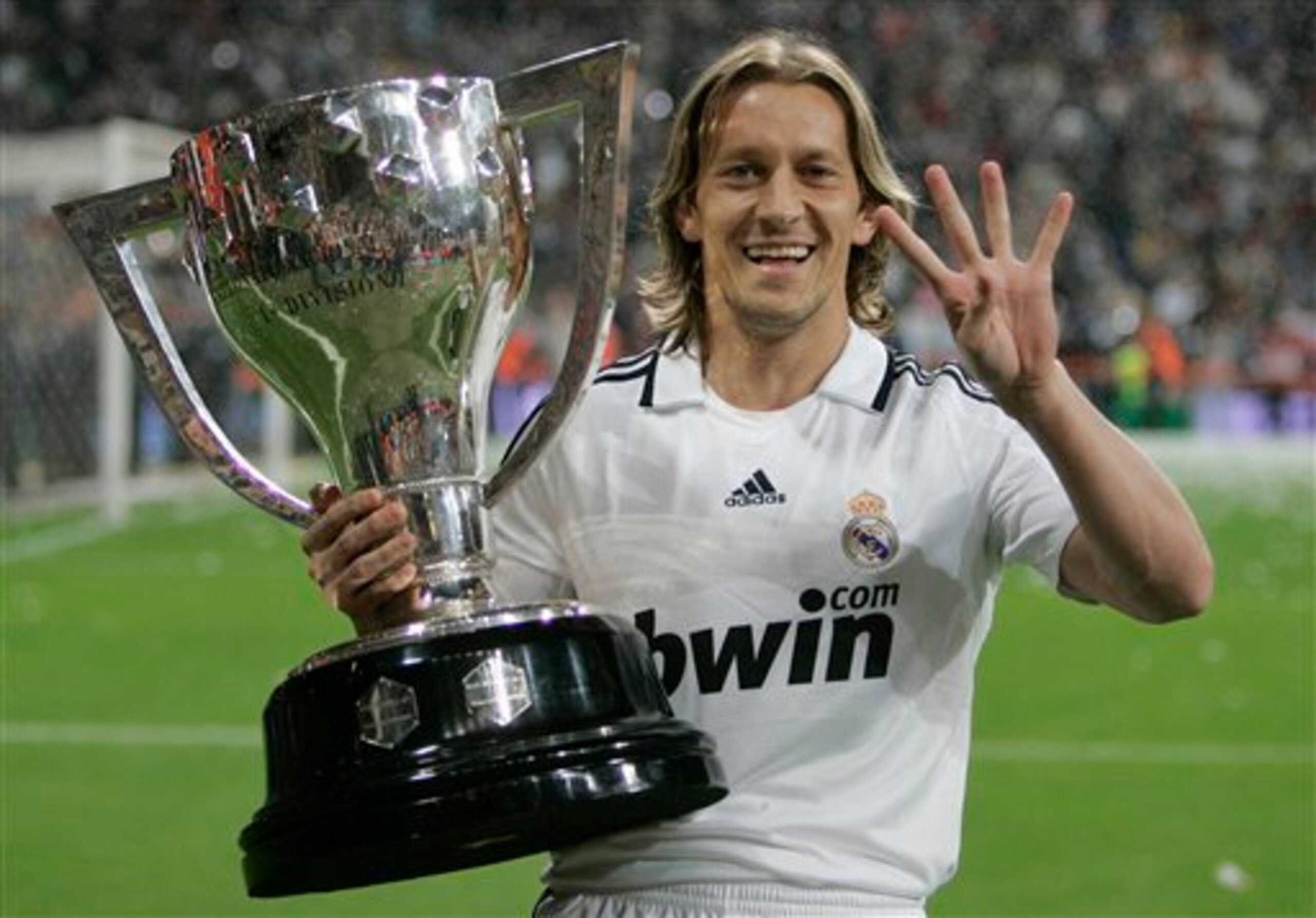
Michel Salgado has been included at right-back ahead of Daniel Alves in order to provide a little more defensive solidity in what is otherwise an attacking line-up.
Salgado joined Real Madrid from his first club Celta Vigo in 1999 and went on to win four league titles and two Champions League trophies before departing in 2009.
The Galicia native was a tough and industrious full-back, as unrelenting in training as on a match day.
His professionalism rubbed off on his teammates. In an interview with France Football (h/t AS) after winning the 2013 Ballon d’Or, Cristiano Ronaldo named Salgado as an important influence on his career.
Defender: Fernando Hierro
5 of 13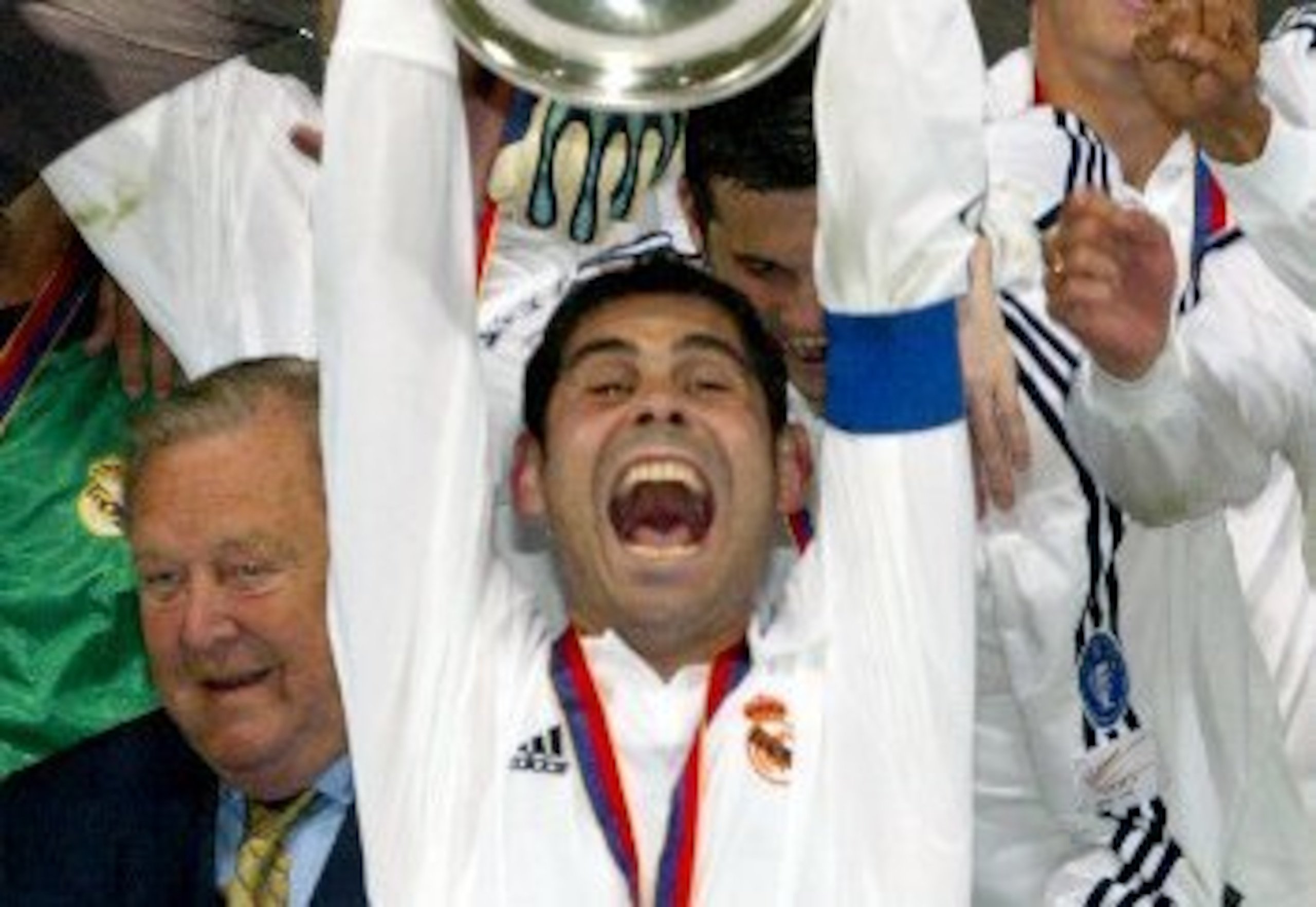
As the new millennium came into view, Fernando Hierro was reaching the end of his 14-year career at Real Madrid. But he was still able to make key contributions to the Champions League successes of 2000 and 2002 and the Primera Division titles of 2000-01 and 2002-03.
Hierro was never a player who was heavily reliant on his pace and its inevitable erosion with age did not, therefore, have a significant impact on his ability to perform. His astute reading of the game and superb passing range still remained.
Steve McManaman described his former teammate as “a leader and a fantastic ball-playing defender,” when he picked Hierro at centre-back in his XI of the best footballers he played with or against for FourFourTwo in 2011. It is a description very few would take umbrage with.
Defender: Carles Puyol
6 of 13
It is Carles Puyol who lines up alongside Hierro in the centre of the defence. They would form a classic centre-back partnership, with Hierro the slick ball-player and Puyol his rough and rugged partner.
Puyol is one of modern football's few one-club men. He came up through the youth ranks at Barcelona and made his first team debut in 1999. A full 392 appearances later, he announced his retirement at the back end of last season.
The Catalan native was ever-present through Barcelona's three Champions League triumphs during this millennium and also secured a total of six Primera Division titles along the way. He was named in the ESM Team of the Year on four occasions and also won a European Championship and World Cup with Spain.
Pep Guardiola, who coached Puyol to the latter two of his three Champions League trophies, speaks very highly of his former player. At a press conference ahead of Bayern Munich's match against Wolfsburg in March 2014, he said the following, as per Inside Spanish Football:
"His track record speaks for itself. He’s been the captain and an example for the rest. He was always the first to run and get to training, first in everything.
Undoubtedly, he was one of the greatest players. He looked like he enjoyed defending. He was a very intelligent player, one of the greatest in the history of Barcelona.
"
Left-Back: Roberto Carlos
7 of 13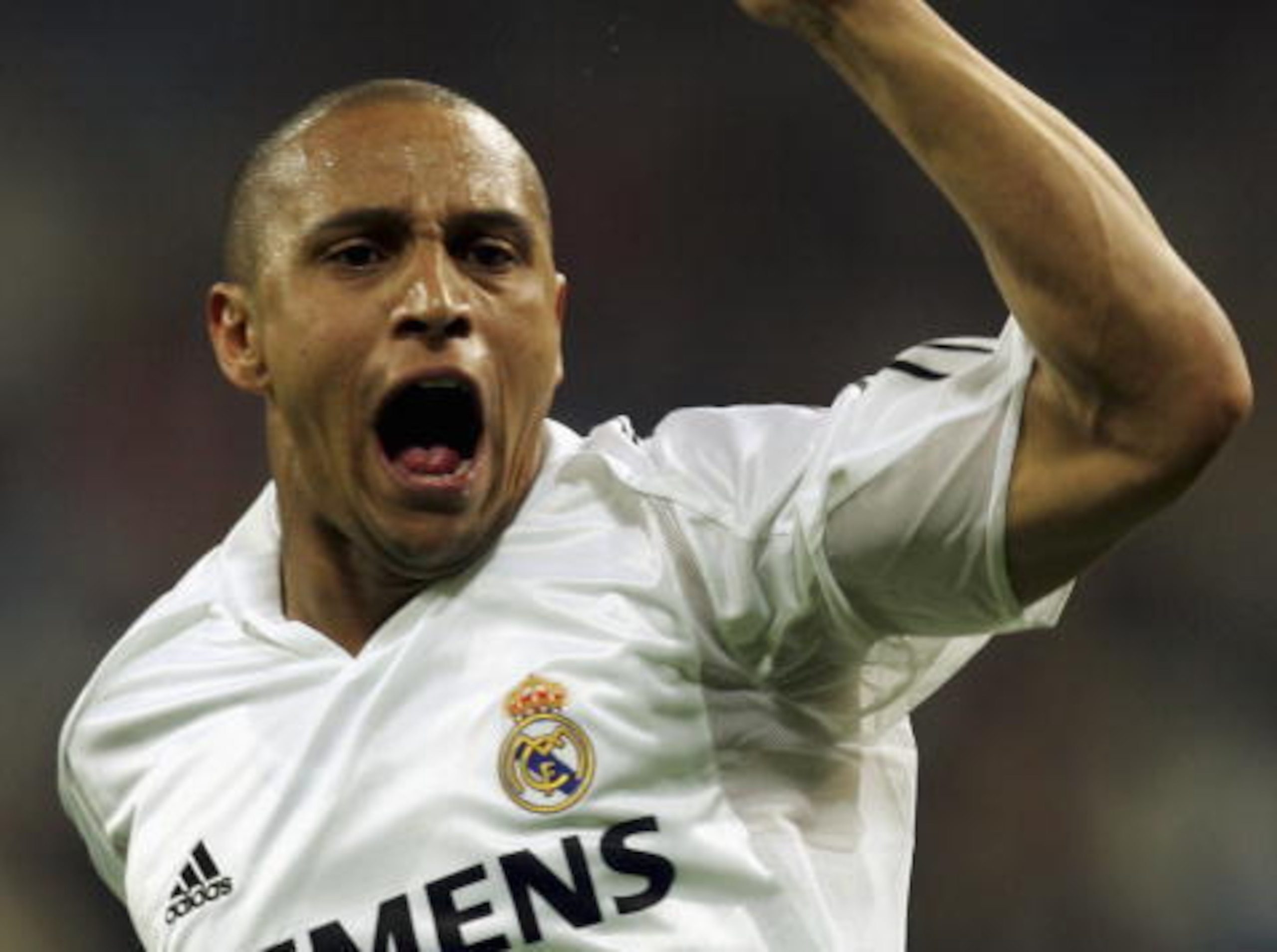
He was not the most defensively secure full-back in the world, but powerful forward running, quality deliveries into the box and the odd wonder-strike made Roberto Carlos a vital cog in the two-time Champions-League-winning Real Madrid side of the early 2000s.
Carlos also won two league titles in that period, and another one in his final season at Madrid in 2007. He was named in the ESM Team of the Year on four occasions during the first five years of the new millennium.
Central Midfielder: Xavi
8 of 13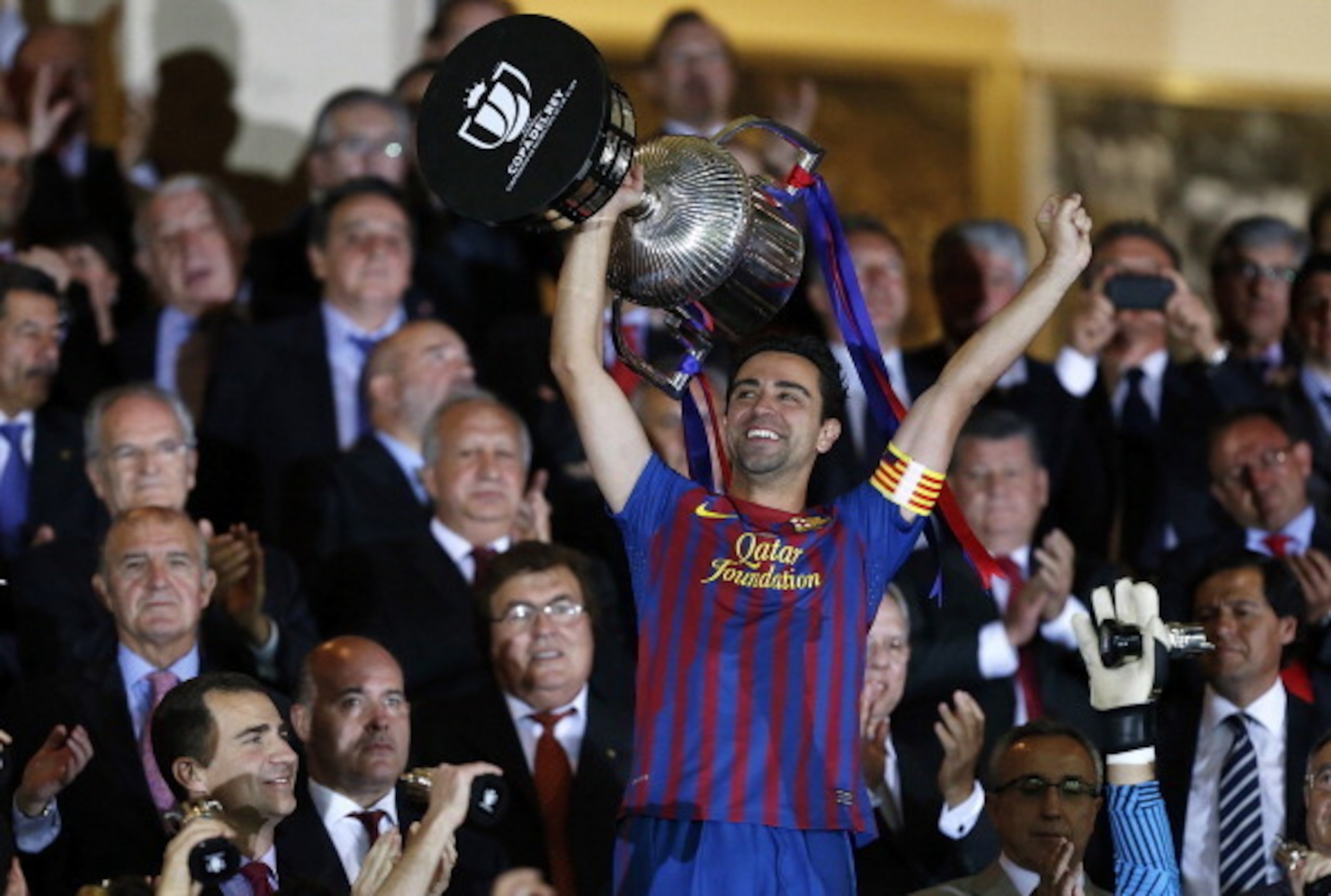
The metronome of numerous highly successful Barcelona sides, Xavi has won more trophies than any other Spanish player in history and is fully deserving of a place in midfield.
The Terrassa native has been part of six league titles and three Champions League triumphs since the turn of the millennium, alongside two European Championships and a World Cup with Spain.
Xavi is blessed with excellent touch, awareness and vision. Per Fox Sports, Pep Guardiola called him “the brain behind Barcelona,” while his national team coach Vicente del Bosque described him as “very important, more so than the coach,” when speaking to Marca in 2012.
He has thrice finished in third place in the Ballon d’Or voting and has been named in the ESM Team of the Year on three occasions. He will be this team’s tempo-setter in the centre of the park.
Central Midfielder: Andres Iniesta
9 of 13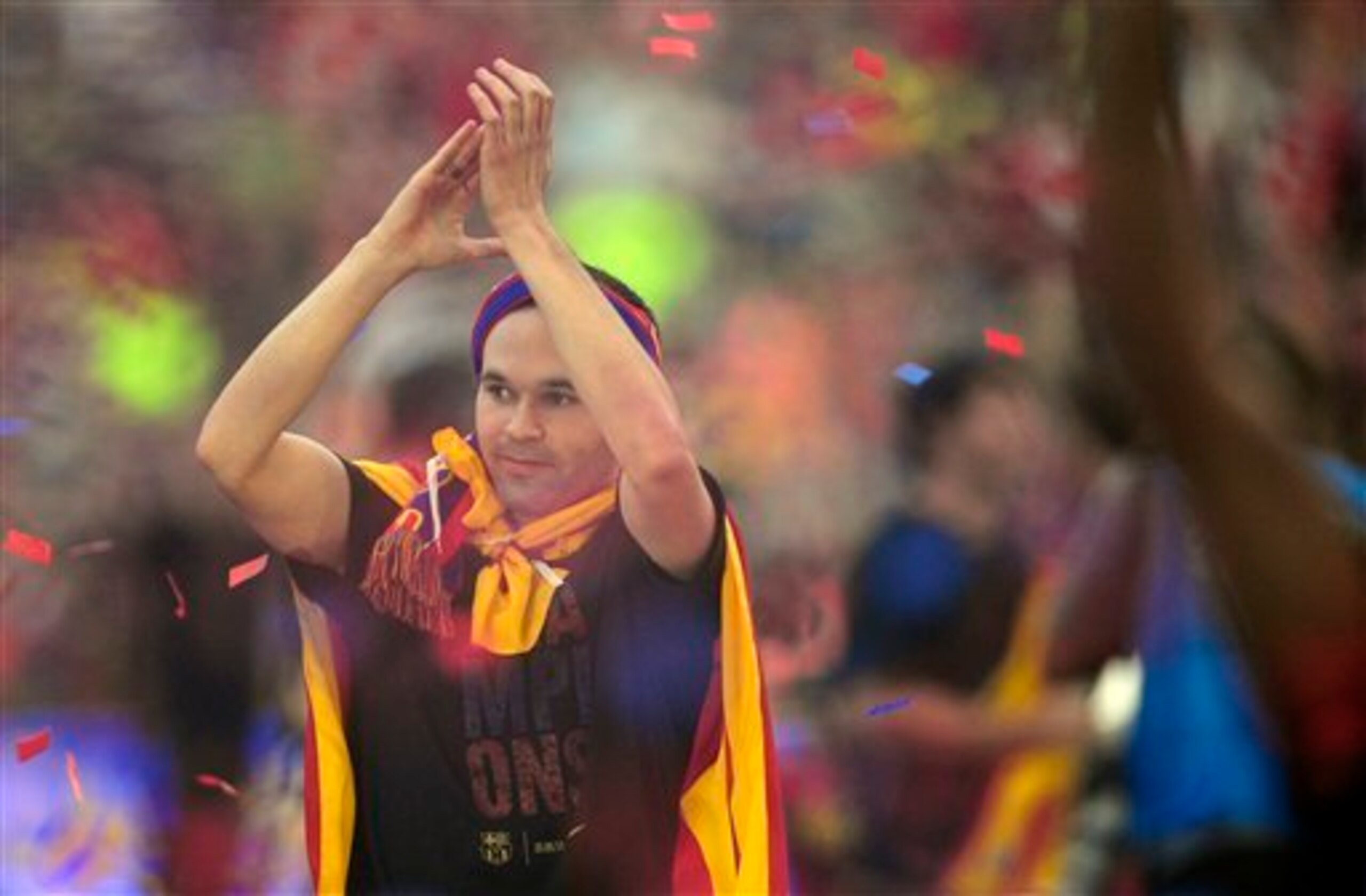
One of most naturally talented midfielders of his generation, Andres Iniesta put his incredible ball skills to excellent use as an integral part of the Pep Guardiola-led side who won three league titles and two Champions League trophies between 2008 and 2011.
Iniesta is able to extricate himself from pretty much any situation with a quick shuffle of his feet. He is an excellent passer, and although he perhaps doesn’t score as often as a player with his talent should, he would nevertheless form a key part of any side.
He will line up alongside his Barcelona teammate Xavi as part of an admittedly lightweight midfield duo. In the spirit of the post-Claude Makelele Galacticos, we will assume that the attacking talent ahead of them will make up for any defensive weaknesses.
Right Forward: Lionel Messi
10 of 13
Lionel Messi has a better claim than most to the title of the world’s best player. Four consecutive Ballon d’Or trophies between 2009 and 2012, a 0.88 goals per match average since making his debut for Barcelona in 2004, and numerous other individual awards provide compelling evidence in his favour.
Messi was already one of the most highly rated youngsters in world football before Pep Guardiola arrived at Barcelona in 2008. But under Guardiola’s stewardship he became the central figure in a side that enjoyed unprecedented success, winning three consecutive Primera Division titles and two Champions League trophies.
The little Argentinian wizard had demonstrated a knack for scoring on the biggest occasions. He netted in both of Barcelona’s Champions League finals and scored in both legs of their semi-final success over Real Madrid in 2011.
With wonderful close control, superb balance, an eye for a pass and coolness in front of goal, Messi was always a shoo-in to make this XI.
Attacking Midfielder: Ronaldinho
11 of 13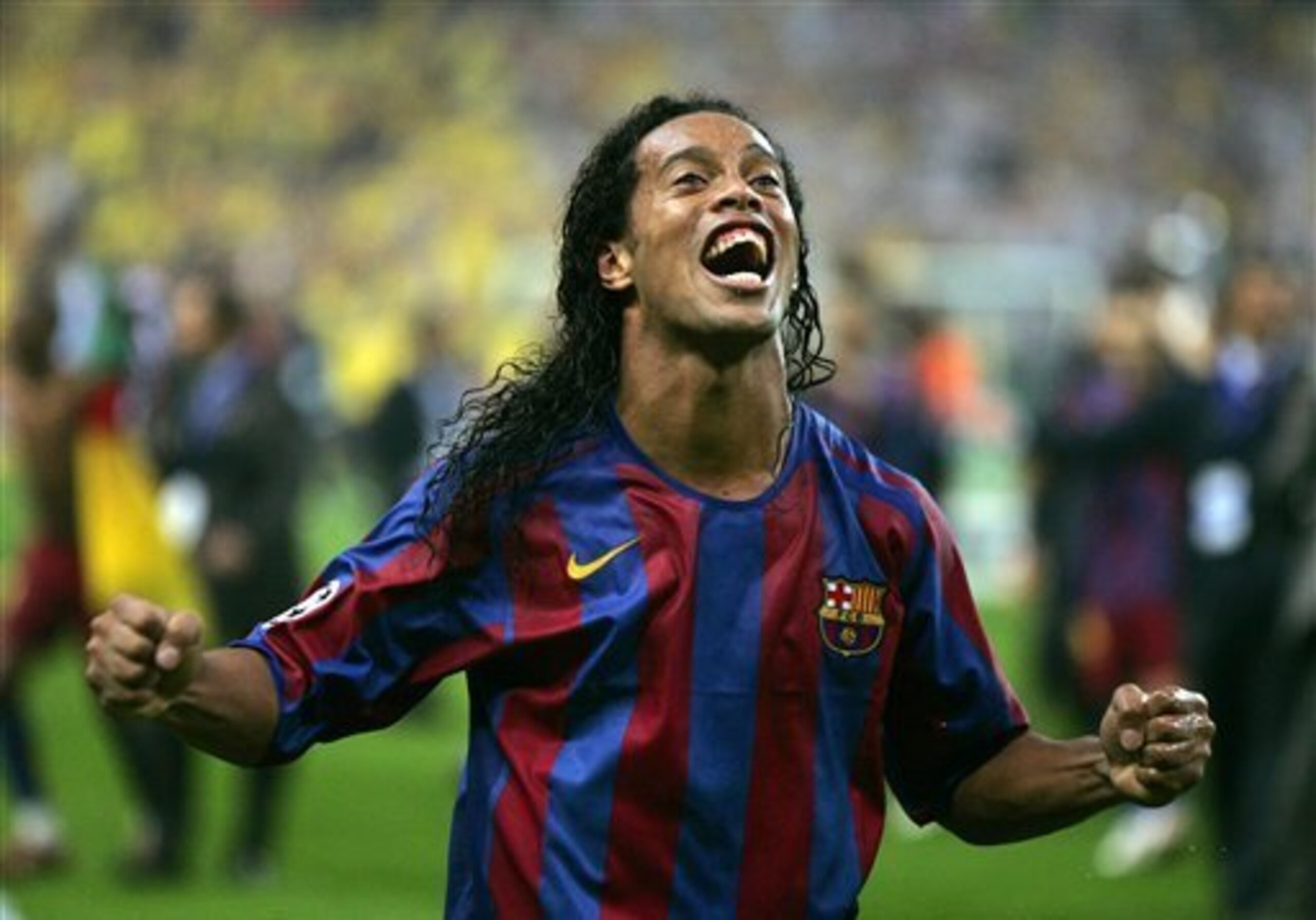
Missing out on the signature of David Beckham in the summer of 2003 turned out to be one of the best things that ever happened to Barcelona. Instead they got Ronaldinho, who inspired them to two league titles and a Champions League triumph in his first three years at the club.
The 2005-06 season was his zenith. In the league, he scored 17 goals and laid on a further 15; in the Champions League he scored seven and assisted six. Barcelona won both trophies, while Ronaldinho also received a standing ovation from the Bernabeu crowd after leading Barcelona to a 3-0 victory over Real Madrid.
In his pomp, Ronaldinho was a wonderfully inventive footballer. His quick feet, good acceleration and stocky build made him a nightmare for defenders to deal with. He could usually be trusted to provide a calm finishing touch when through on goal.
He won the Ballon d’Or in 2005 and was named in the ESM Team of the Year on three occasions during his time at Barcelona.
Left Forward: Cristiano Ronaldo
12 of 13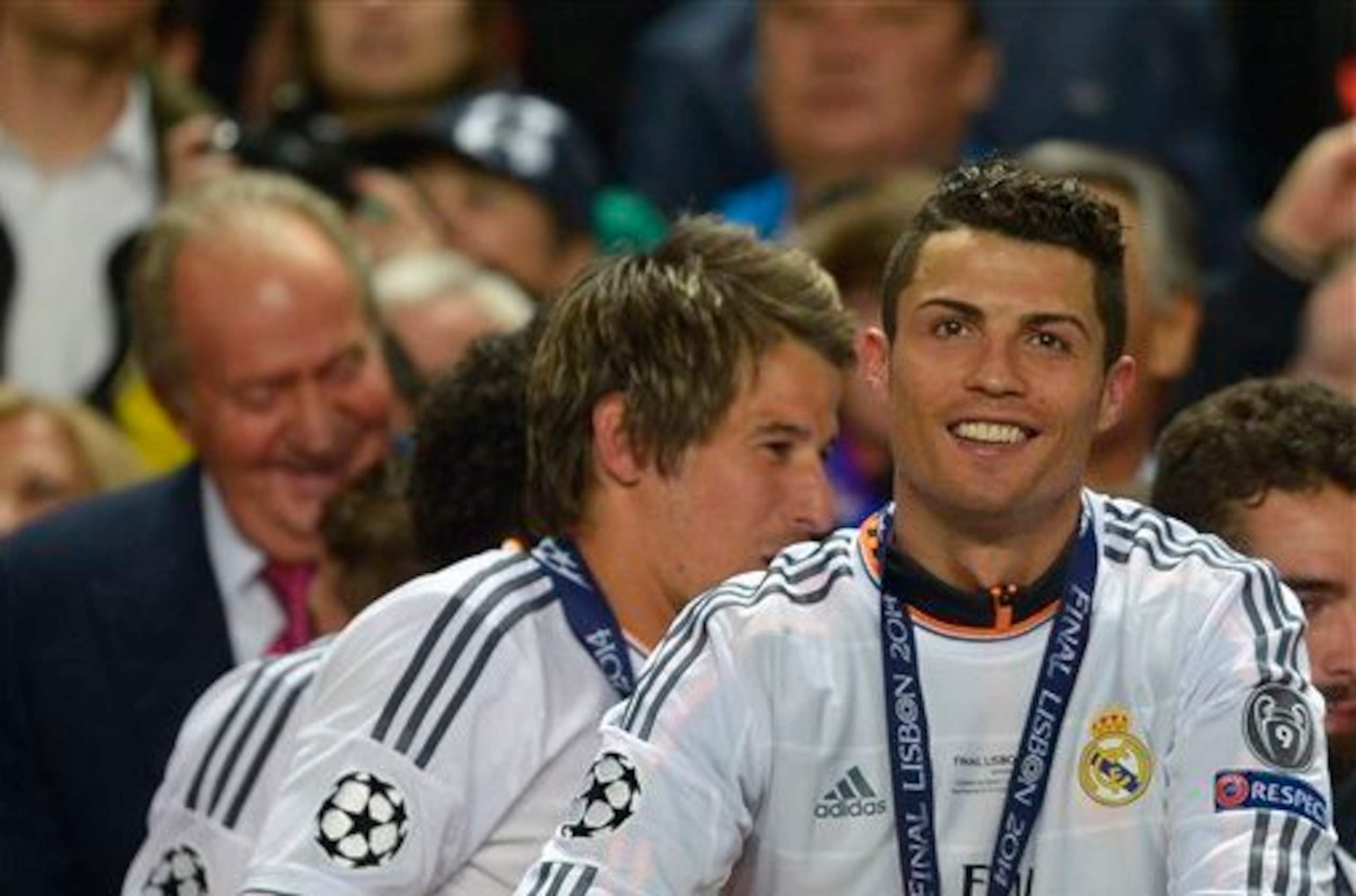
A relatively meagre trophy haul of one league title and one Champions League triumph in five years at Real Madrid perhaps suggests that Cristiano Ronaldo’s individual achievements have come at the expense of the team dynamic.
It was, however, almost impossible to leave out a player who has averaged 1.12 goals per match in league play since joining Madrid in 2009, who is, per Sky Sports, just three goals away from beating Raul’s all-time Champions League scoring record and who has a number of the club’s other individual milestones firmly within his sights.
Ronaldo won the Ballon d'Or last year and has been named in the ESM Team of the Year in each of the last four seasons.
Quick and powerful, a good striker of the ball off of either foot and strong in the air, Ronaldo is the sort of all-round goal-getting threat that no coach could ever, by choice, leave out of their starting XI.
Striker: Samuel Eto'o
13 of 13
Samuel Eto’o is often overlooked when discussing Barcelona’s best players of the modern era. But his scoring rate of 0.76 goals per match was better than that of the Brazilian Ronaldo (0.65) at Real Madrid and he played a crucial role in the Champions League successes of 2006 and 2009, scoring in both finals.
Eto’o was quick, strong and an explosive finisher during his time with Barcelona. He was equally as comfortable running in behind as he was facing up to link with his teammates. He also showed good adaptability by performing well as a wide forward when Pep Guardiola began to experiment with Lionel Messi in a False 9 role.
Those attributes make the four-time African Player of the Year the ideal choice as the focal point for this XI.

.jpg?w=2560 "Seahawks Chiefs Football")