Tale of the Tape for NFL Week 7
Throughout the 2014 regular season, former NFL defensive back Matt Bowen will bring you an X's-and-O's look at the pro game. Here are his five key plays from the Week 7 Sunday NFL schedule.
Peyton Manning’s Record-Setting Touchdown Pass
Peyton Manning’s 509th career touchdown pass that broke Brett Favre’s all-time NFL record came on a basic outside breaking cut in the deep red zone to wide receiver Demaryius Thomas. However, the pass was classic Manning when we talk about the anticipation to make the throw (top of the stem) and the ball placement (upfield shoulder) to beat the coverage for six points.
TOP NEWS
.jpg?w=2560 "NFL Paris Football")
NFL House in Paris Closes for Protests
.jpg?w=2560 "Seahawks Chiefs Football")
Trevon Diggs Cut by Seahawks
.jpg?w=2560)
B/R's Expert Week 7 NFL Picks 🔮
Let’s take a look at the route, talk about the technique in the secondary at the cornerback position and focus on Manning’s record-breaking throw in the Broncos' 42-17 win over the 49ers on Sunday night.
Personnel: Posse/11 (3WR-1TE-1RB)
Formation: Empty
Offensive Concept: Out/Stick
Defensive Scheme: Red 4
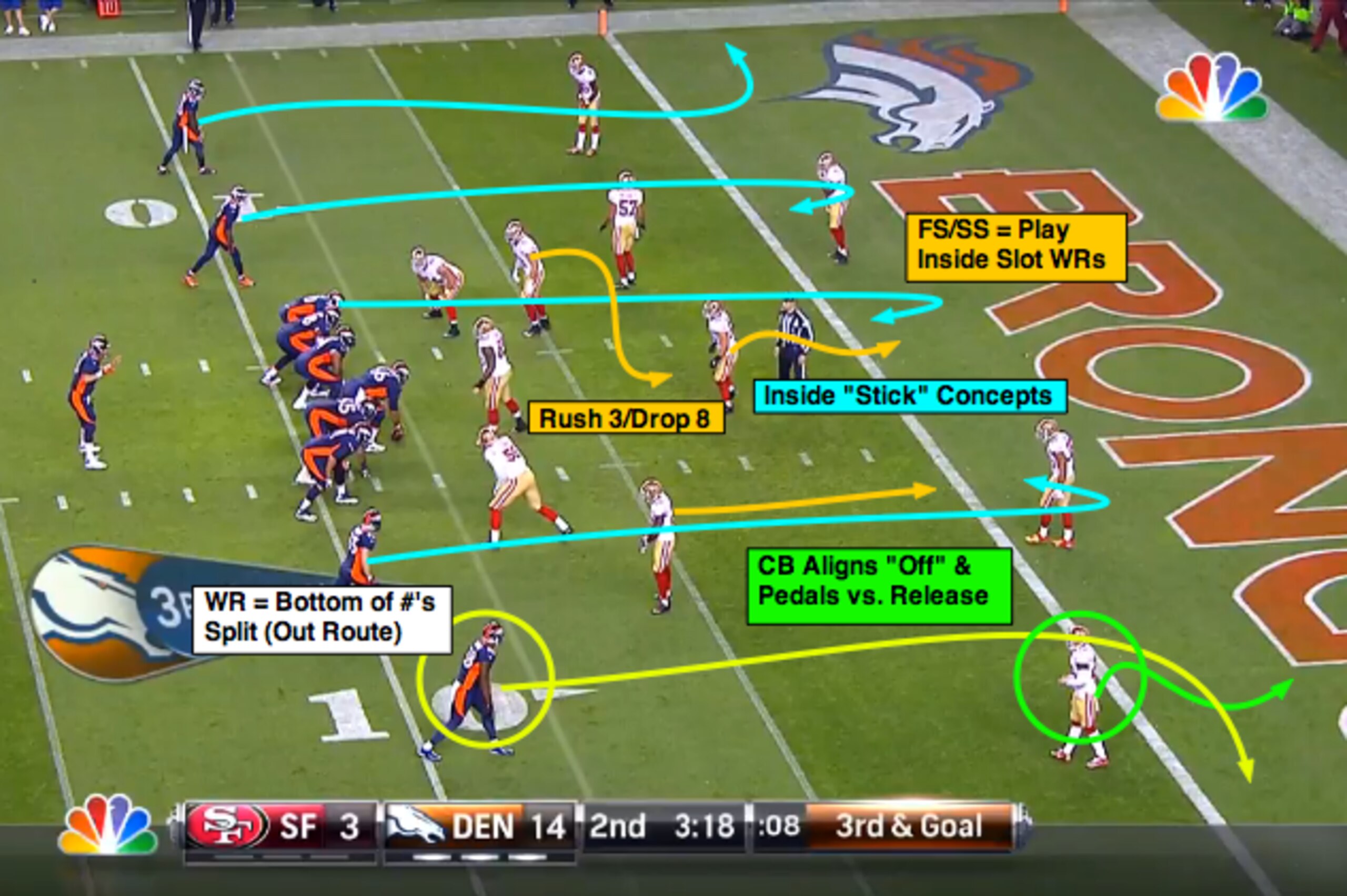
This isn’t a complex route scheme from the Denver Broncos (empty alignment) with the inside stick concepts (quick curl routes) paired with two out routes versus a “Red” 4 coverage look (Quarters).
One thing to focus on before the snap is the depth of 49ers cornerback Tramaine Brock from an “off” position. Brock has enough cushion (distance between defensive back and wide receiver) in his pre-snap alignment to use a flat-foot read technique (no pedal) and challenge Thomas on the release.
However, Brock gets into his pedal at the snap with Thomas in a top-of-the-numbers split (alert for the out cut). This allows Thomas to release vertically off the line of scrimmage (with the cornerback increasing his depth) before breaking off the route at the top of the stem just across the goal line.

Because of Brock's initial depth, and the cushion versus Thomas, the Broncos wide receiver can establish leverage at the break point to run the out cut. This forces Brock to recover downhill—close the cushion—with the wide receiver now generating separation. And with Manning throwing this ball at the top of the route, Brock is stuck trailing the play from an inside-leverage position.
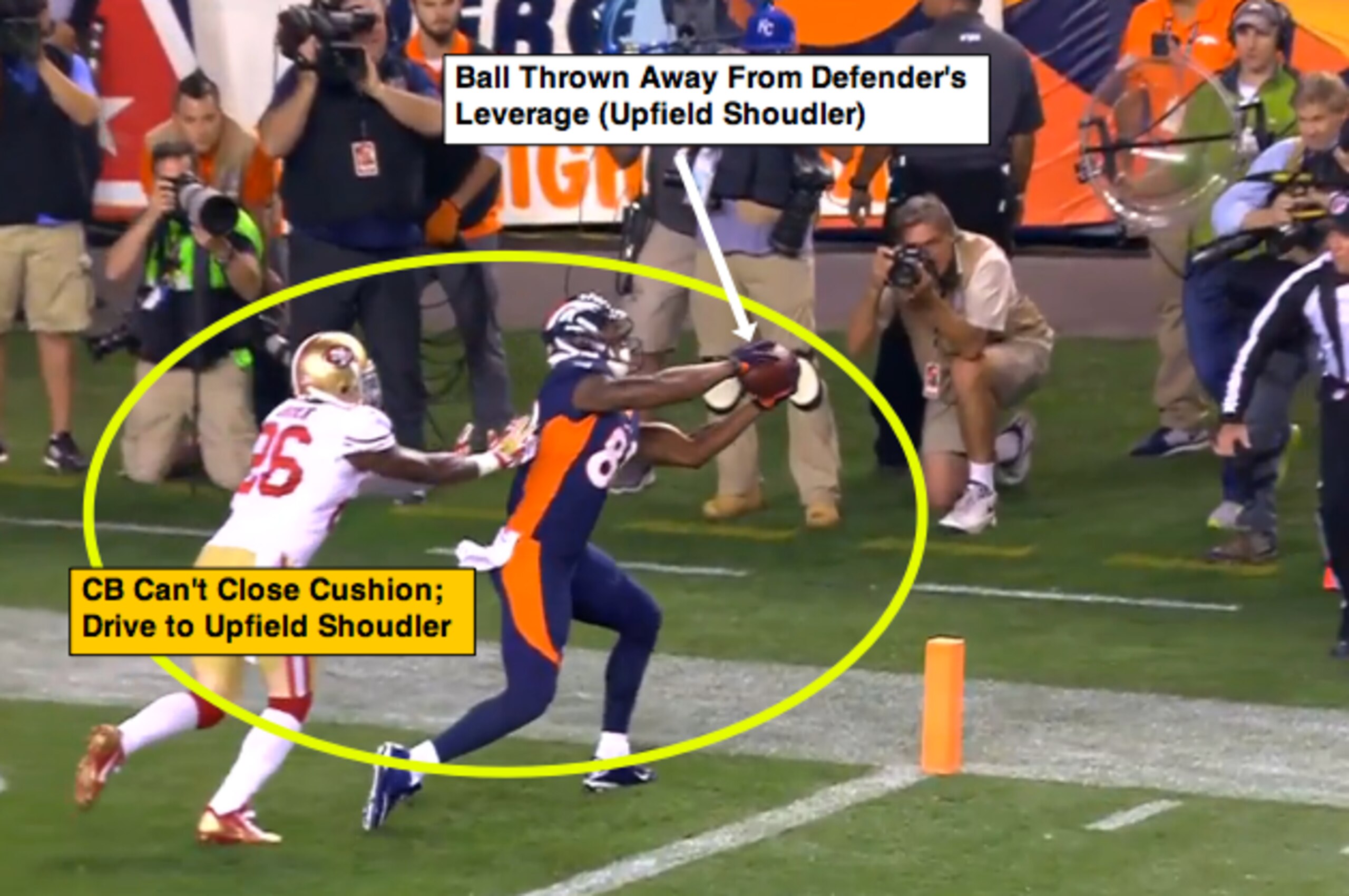
Look at this throw from Manning with Thomas now in a position to work away from the defender’s leverage on the out cut. The Broncos quarterback puts this ball on the upfield shoulder and gives his wide receiver the chance to make a play, with Thomas dragging the back foot to secure touchdown pass No. 509 to break the record.
That’s a perfect ball given the coverage look from the 49ers and the technique from Brock to play off-man (and pedal) inside the deep red zone.
Rams Execute the Fake Punt vs. Seahawks
The St. Louis Rams used creativity in the kicking game to knock off the defending champs, with Jeff Fisher’s team setting up a punt return for a score and making a bold call late in the game to execute the fake punt on a key drive.
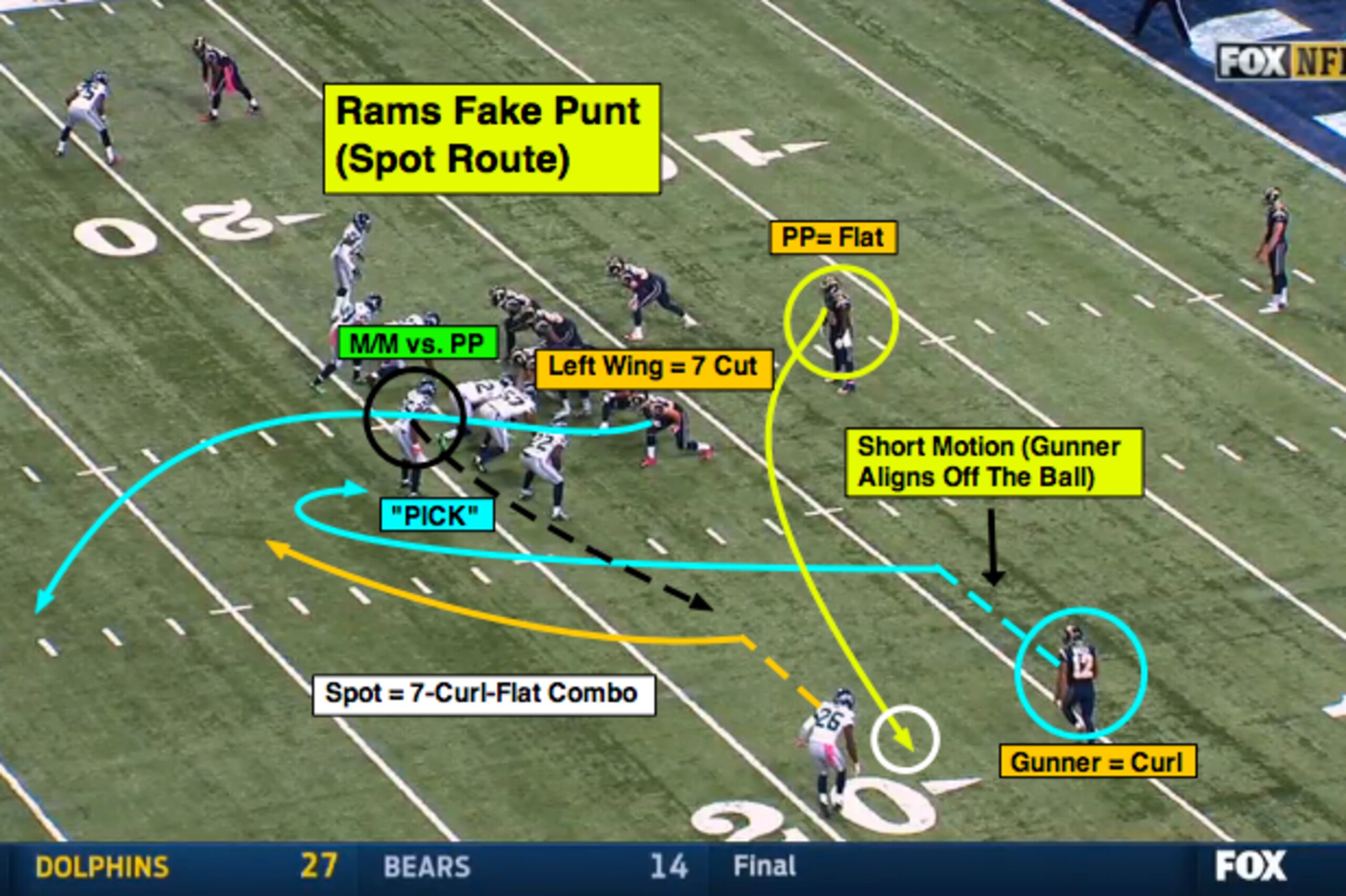
Here’s a look at the fake punt with the Rams utilizing alignment and pre-snap motion to run a core West Coast concept (spot route) that allowed punter Johnny Hekker to target the flat route for a first down.
Rams' Fake Punt vs. “8-Up”
Every NFL team drills a fake punt in their game prep, but the return look has to be perfect for the coach/coverage unit to make the call and execute the play.
Here, the Seahawks are showing an “8-Up” (eight men in the return front; single “jammers” on the outside). That allows the “PP” (personnel protector) to make the call with the Rams shifting the wing up on the line of scrimmage while moving the “gunner” off the ball to show a legal formation.
The Rams send the gunner in short motion to the core of the formation, snap the ball to Hekker and run the “spot” concept with the wing on the 7-cut (corner route), the gunner on the inside curl and the personnel protector, Benny Cunningham, working to the flat.
With the Seattle Seahawks showing a “man return,” the gunner works inside to create traffic (“pick”), while Cunningham runs the quick flat route (primary target in fake).
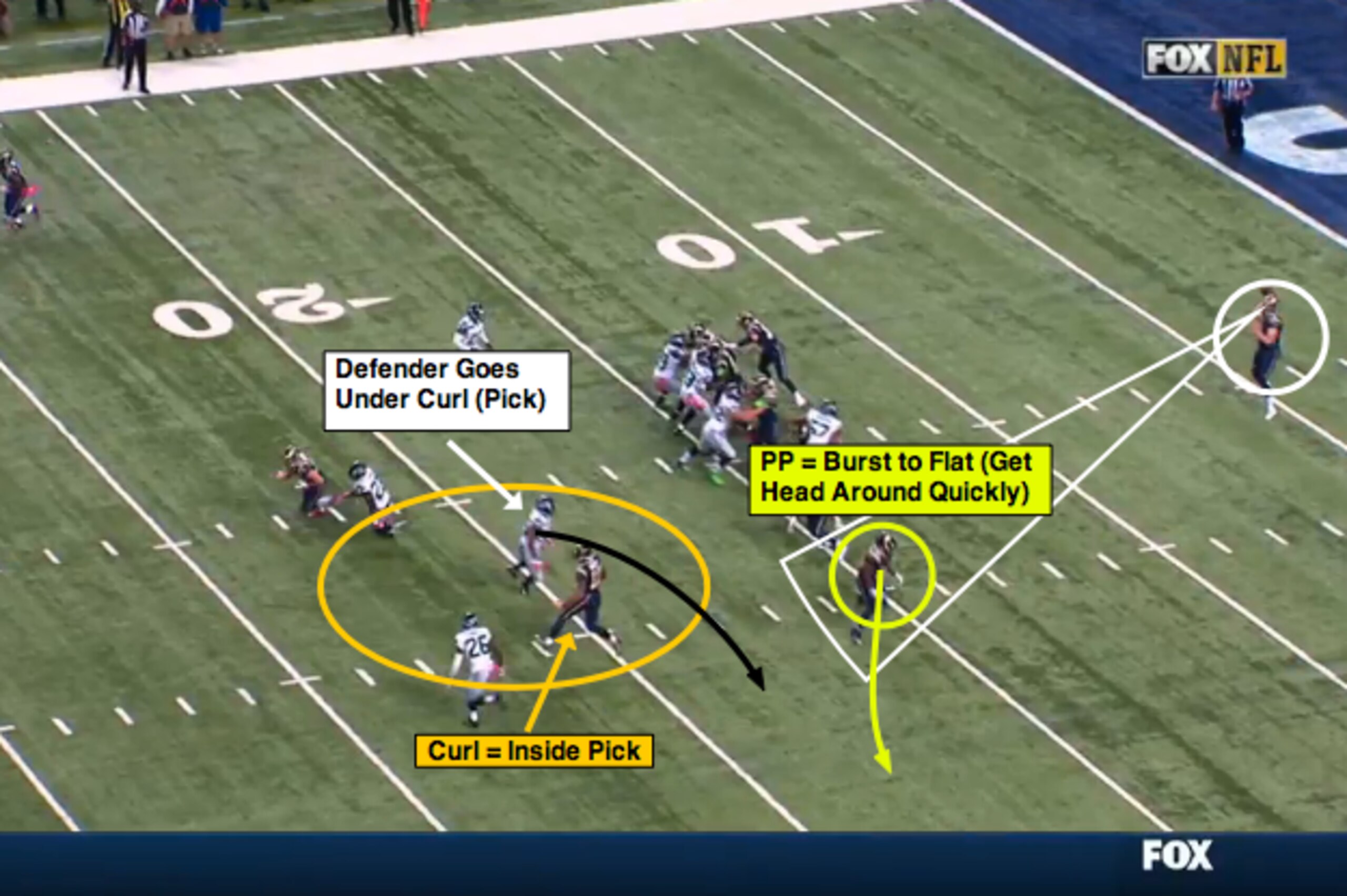
Hekker takes a step forward after securing the snap and gets his eyes to Cunningham bursting to the flat.
With the Seahawks slow to react to the fake, the gunner can stem inside and force DeShawn Shead (coverage versus Cunningham) to go under the pick. That puts the defender in a trail position and allows Cunningham to get his head around for the throw quickly (PP is taught to get the head around immediately if the return team brings an eight-man rush).
The Rams have this fake set up with Cunningham on the flat and the “jammer” now removed versus the inside curl route.
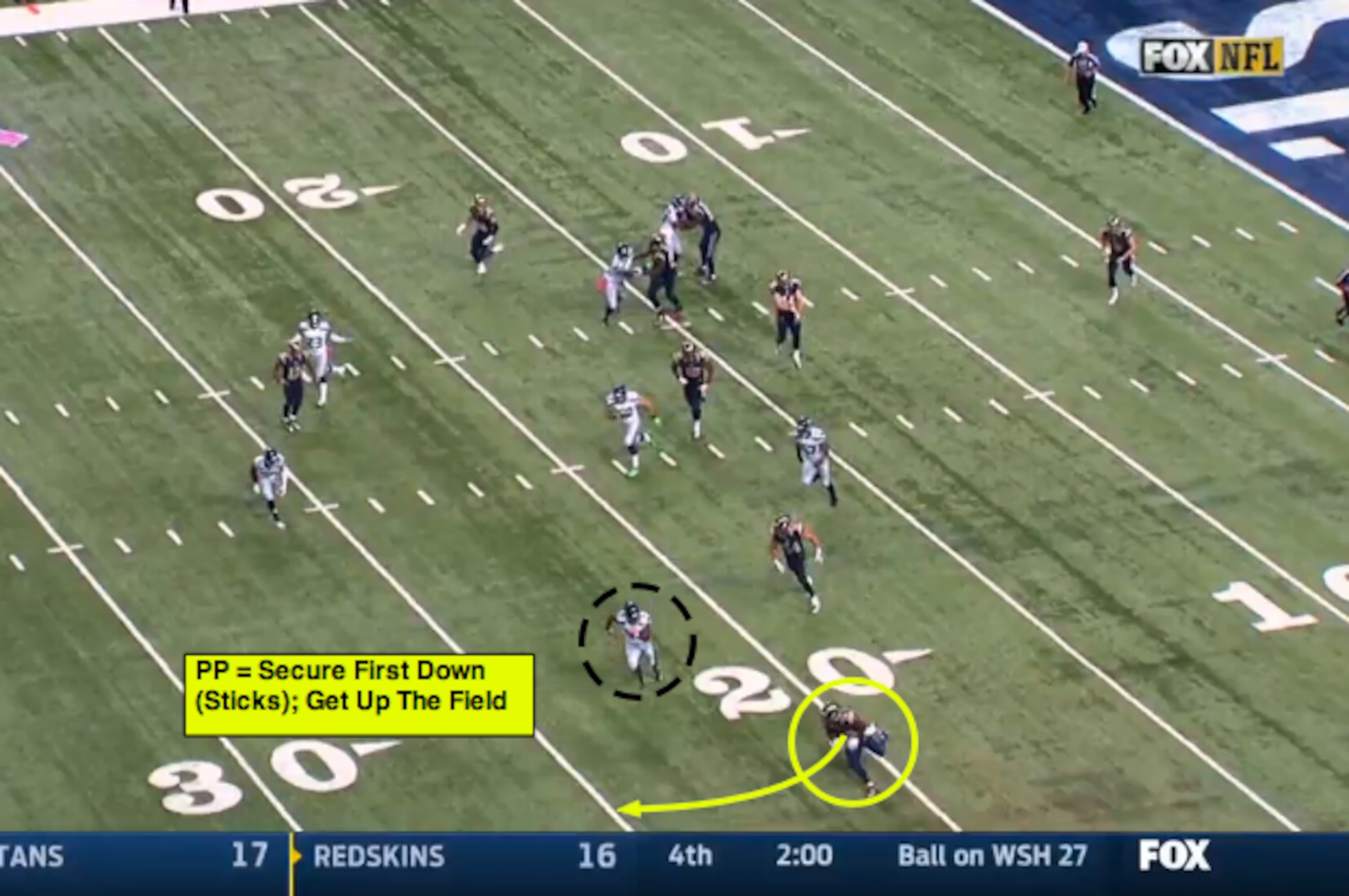
Hekker is cool and calm in this situation as he delivers the ball to Cunningham with the Rams' PP in a position to make the catch, secure the sticks (first key) and push the ball up the field. This call took some guts from Fisher’s team given the game situation late in the fourth quarter and the field position (ball on own 18-yard line) to set up another key drive to close out the Seahawks at home.
Tony Romo Targets the Giants Secondary on the Seam Route
Romo threw three touchdown passes as the 6-1 Dallas Cowboys continued to roll with a 31-21 win over the Giants down in Dallas.
Let’s go back to Gavin Escobar’s second touchdown catch to break down how the Cowboys used personnel, alignment and play action to create a one-on-one situation for the tight end versus the Giants' Cover 1 scheme.
Personnel: Heavy/13 (1WR-3TE-1RB)
Formation: Unit Big Wing
Offensive Concept: TE Seam (Play Pass/Max Protect)
Defensive Scheme: Cover 1
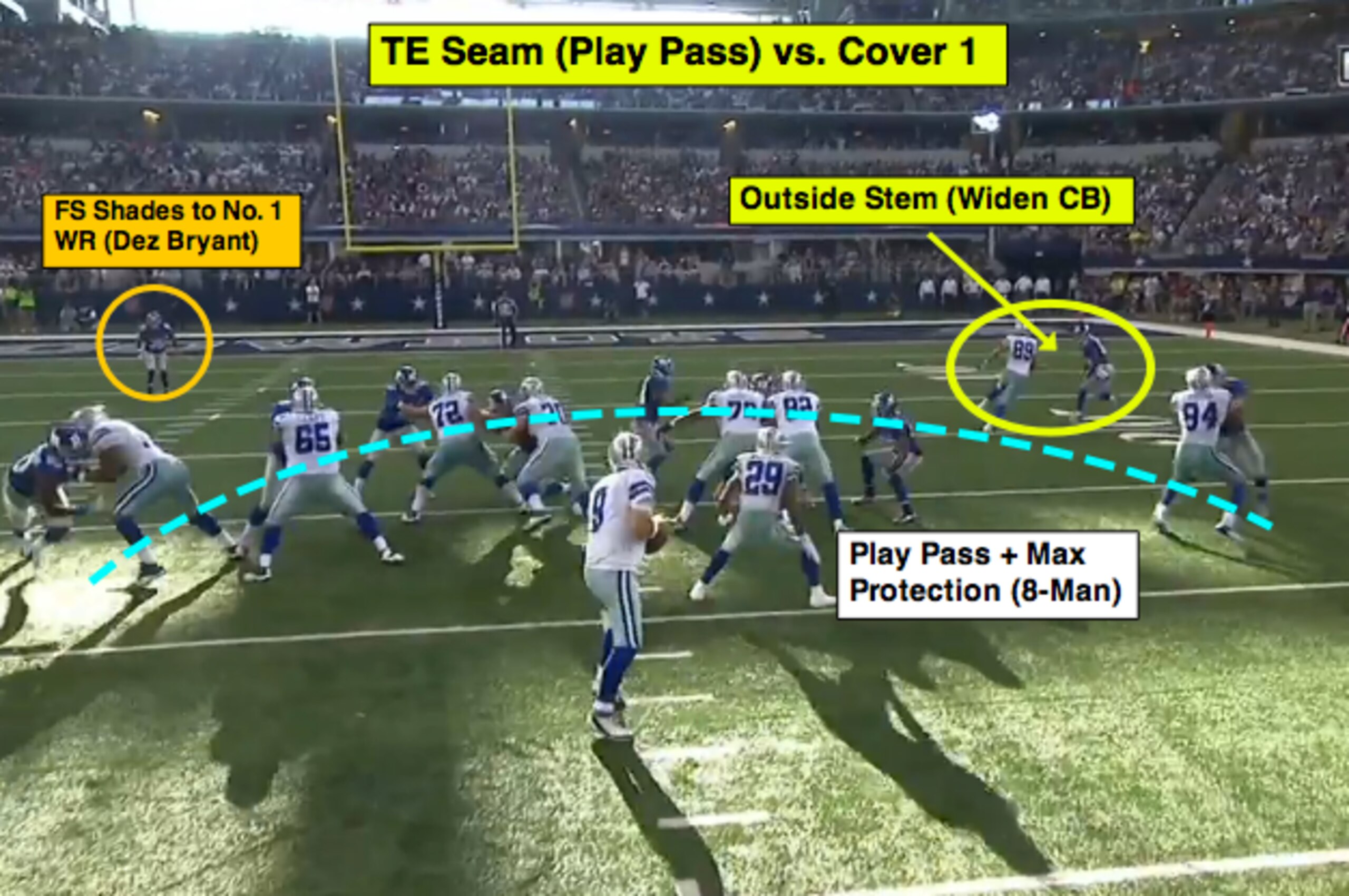
With Heavy/13 personnel on the field, the Cowboys use closed- (strong-) side play action to create a max-protection look (eight-man protection). This gives Romo time to show the ball and get to the top of the drop with Escobar matched up versus cornerback Zack Bowman.
Take a look at the route here from Escobar as he widens Bowman on the outside stem. This is a classic seam route (and stem) from the tight end position that is designed to create separation in the route versus Cover 1 and Cover 4 with the ball in the red zone or strike zone (20- to 35-yard line).
At the top of the secondary, free safety Will Demps shades his initial alignment to the one wide receiver side (Dez Bryant) versus a "Big Wing" formation (safety is taught to split the formation). This opens up the deep middle of the field for Romo to target Escobar, as there is now no immediate help over the top versus the seam route.
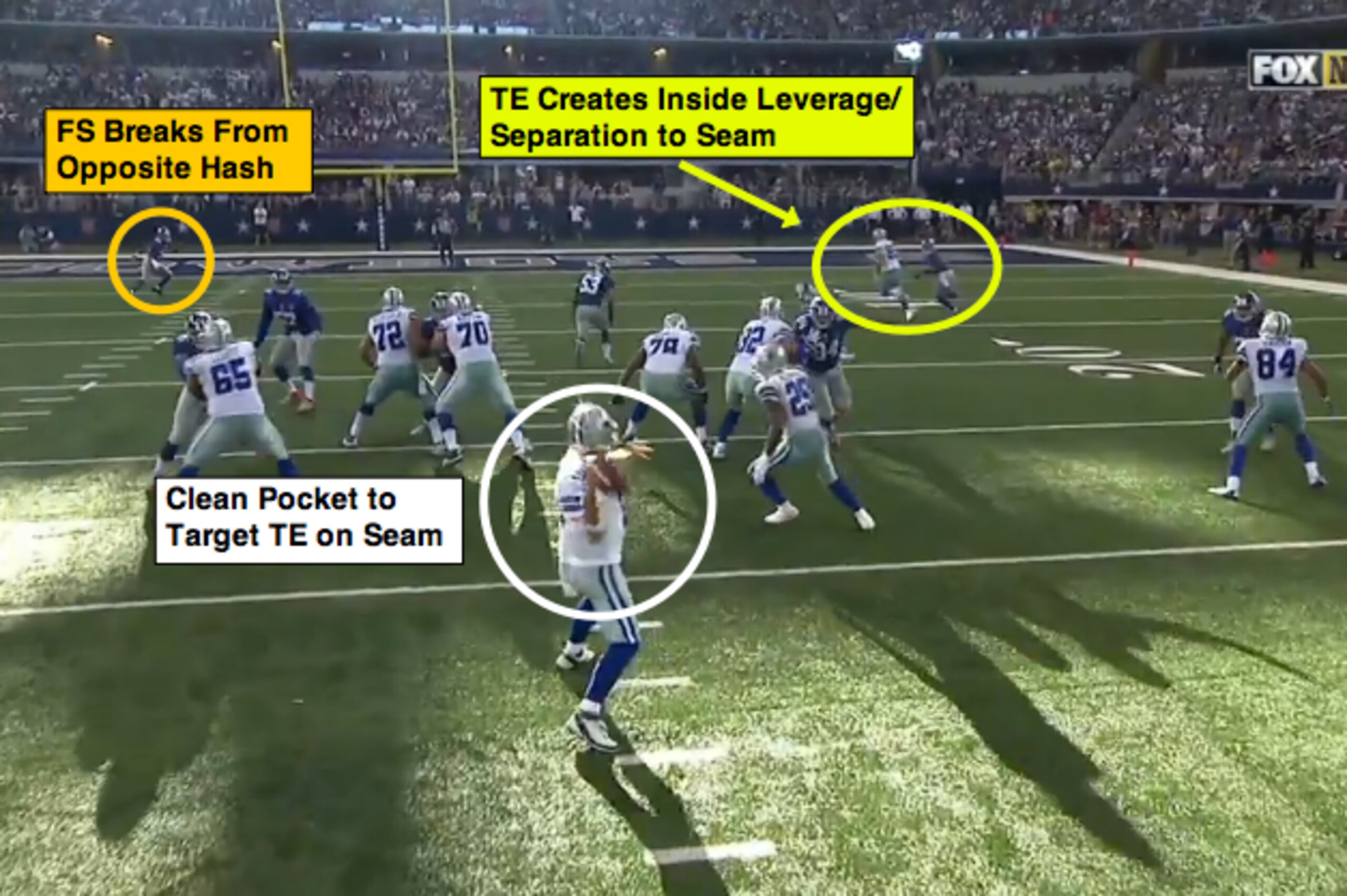
Romo has a clean pocket to work from (max protection) with Escobar creating inside leverage/separation versus Bowman on the stem. That prevents the cornerback from climbing to the upfield shoulder and stacking on top of the seam route.
Plus, with Demps breaking on the throw from the opposite hash mark, the free safety has to cover a lot of ground (versus a reduced field in the strike zone) as Bowman trails the route underneath.
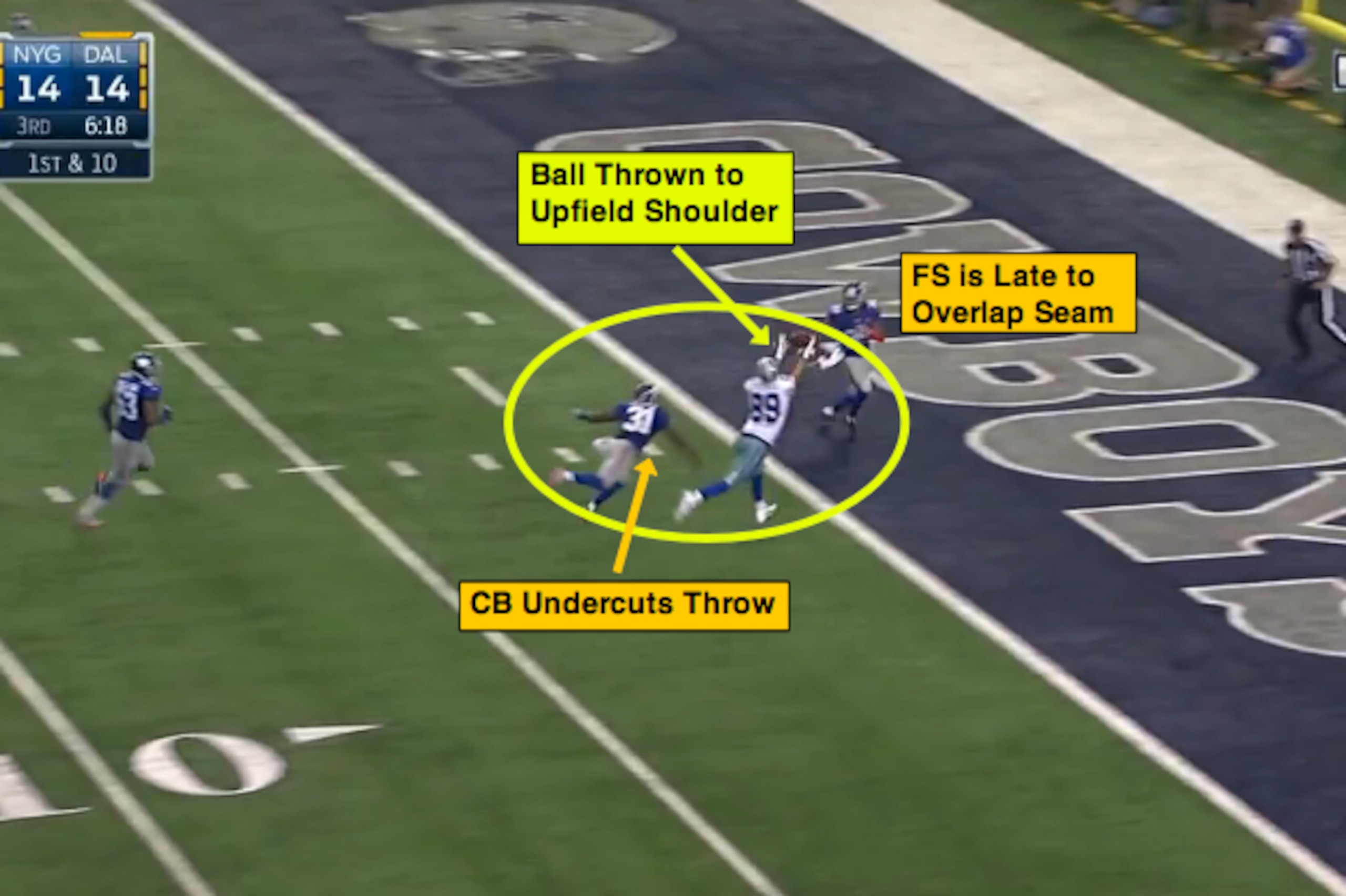
We talked about placement above on Manning’s record-breaking throw, but check out the ball from Romo.
With Bowman in a trail position, the cornerback has to undercut this route to make the play. However, Romo puts this ball on the upfield shoulder of Escobar and allows the tight end to finish before Demps can overlap from the deep middle of the field.
This is a great example of using personnel and alignment to dress up a play-action concept while generating a matchup to take advantage of Escobar’s size on the seam route.
Ryan Tannehill, Dolphins Pick Up a Key Fourth Down on the Zone Read
Tannehill gashed the Chicago Bears secondary (25-of-32, 277 yards, two touchdowns) in the Miami Dolphins' 27-14 win at Soldier Field, but I want to focus on his fourth-down run off the zone read in a crucial situation during the second half.
Here’s a look at the option scheme that allowed Tannehill to read the edge defender (defensive end) with the tight end/H-Back on an arc block to seal the linebacker scraping to the ball.
Personnel: Ace/12 (2WR-2TE-1RB)
Formation: Unit Wing "Trump" Gun Far
Offensive Concept: Zone-Read (Arc)
Defensive Scheme: Cover 1
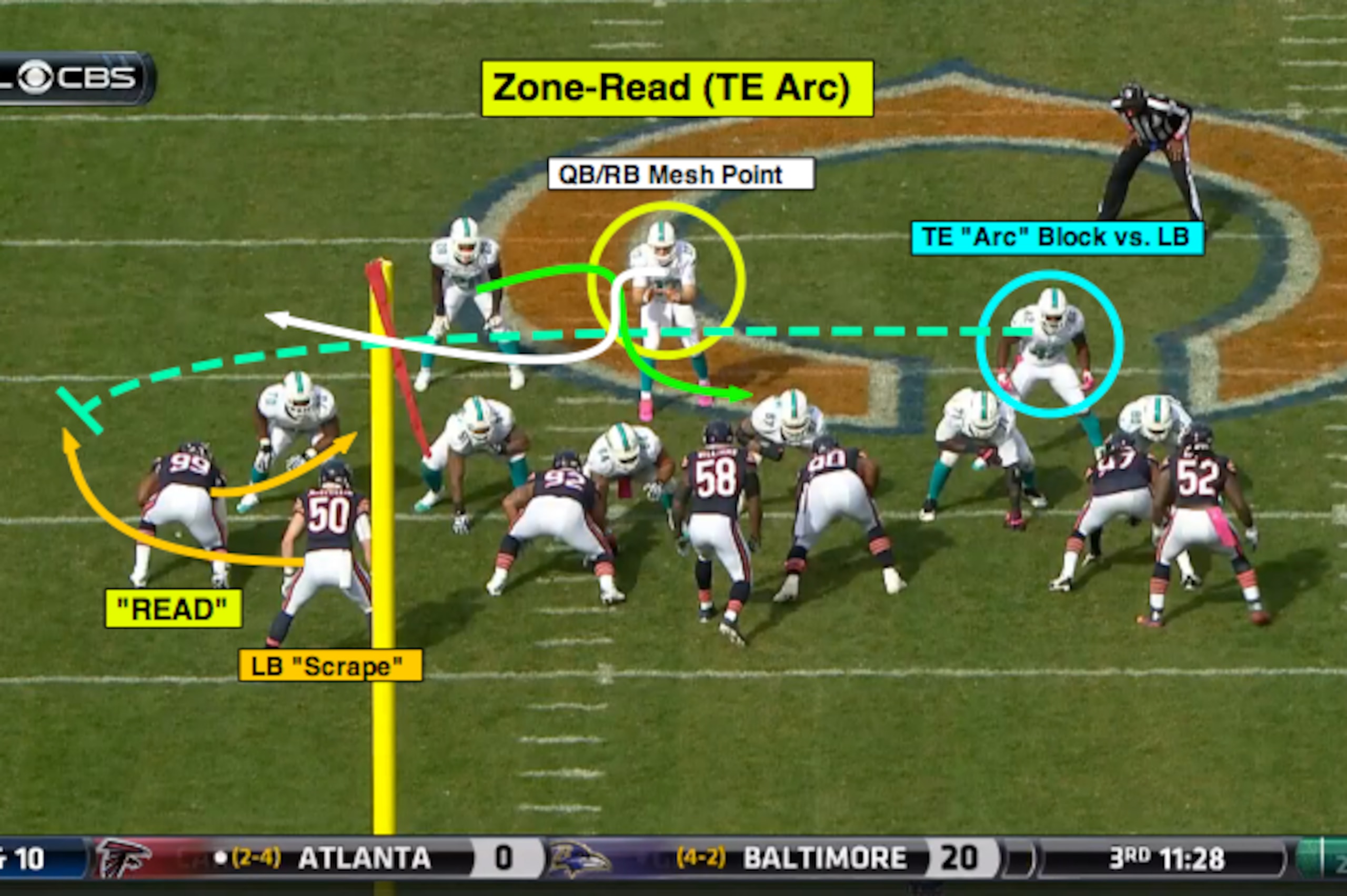
With a 14-7 lead in the third quarter, the Dolphins brought Ace/12 personnel on the field in a 4th-and-1 situation and aligned tight end Charles Clay off the ball to create an angle on the arc block.
This is the same zone-read scheme we see every Sunday in the NFL with the quarterback reading the initial path of the edge defender and the tight end (or H-Back) pulling to the play side to block the "Sam" linebacker.
If the edge defender (defensive end) crashes inside (dive) off the mesh-point action (quarterback-running back exchange), Tannehill can pull the ball with a lead blocker out in front.
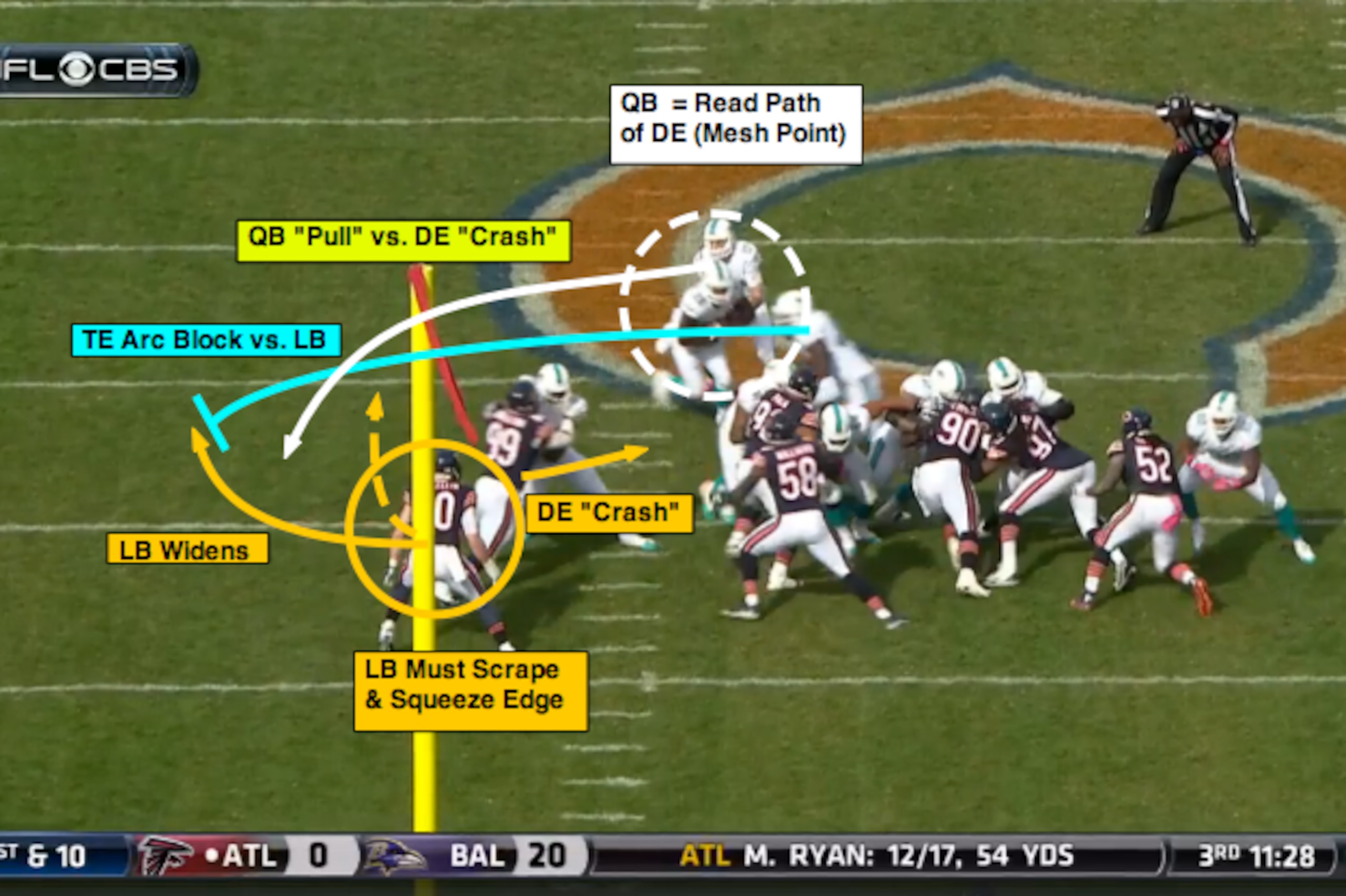
With defensive end Lamarr Houston slanting inside at the snap, Tannehill pulls this ball, as Clay works to the edge to account for linebacker Shea McClellin. The Bears linebacker has to scrape inside and squeeze the edge to contain (or close) the running lane with the free safety filling the alley.
However, with McClellin widening his entry into the front versus the arc block, Clay can adjust his blocking path and essentially kick out the linebacker to create an inside running lane for Tannehill after the quarterback pulls the ball.

Look at the open lane here on a fourth-down play for the Dolphins.
With Houston stuck inside, and McClellin widening the edge of the defense, Tannehill can push this ball up the field, create a one-on-one in the open field versus the free safety filling (late) to the ball and produce a 30-yard gain.
This was a big play in this football game on a scheme the Bears defense should have been prepared for based on the Dolphins tape.
Matthew Stafford’s Game-Winning Touchdown Pass vs. Saints
After a Glover Quin interception versus Drew Brees (Cover 1 “Robber”), Stafford put the Lions in a position to take the lead late in the fourth quarter with the ball in the deep red zone.
Working out of Posse/11 personnel in a "2x2 Doubles" formation, the Lions ran the "Pin" combination to set some bait underneath with wide receiver Corey Fuller working the back line to give Stafford an end-zone target.
Let’s break down this route concept, talk about the coverage issues in the New Orleans Saints secondary and look at the finish from Fuller that produced a comeback win for the Lions at Ford Field.
Personnel: Posse/11 (3WR-1TE-1RB)
Formation: Doubles Gun Near
Offensive Concept: "Pin" Route
Defensive Scheme: 2 Combo
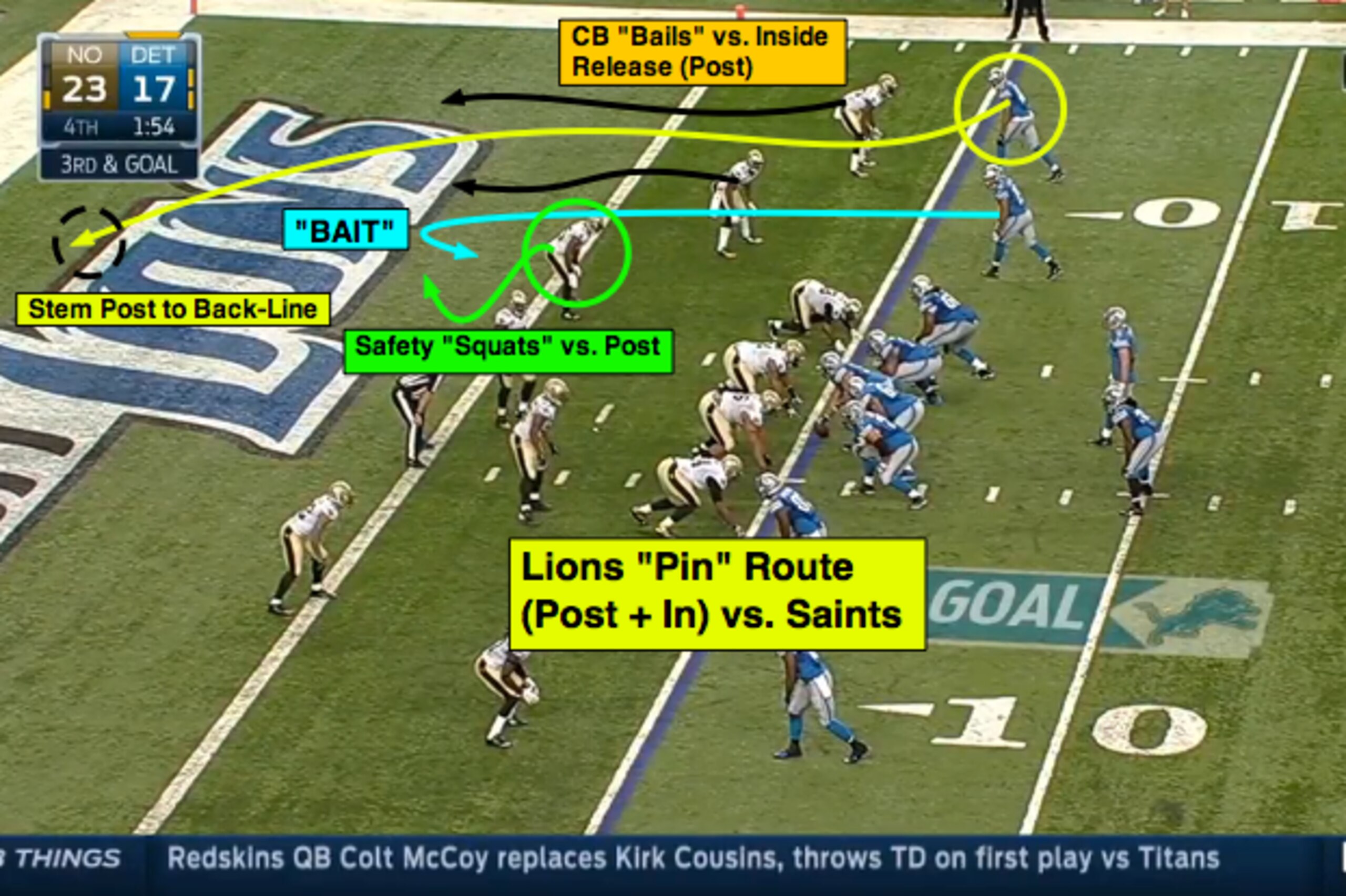
The “Pin” route (post + in) is one of the top red-zone concepts versus Cover 2 and Cover 4. It sets the bait for the safety and underneath defenders on the curl/dig with the post working over the top. Here, the Detroit Lions run Golden Tate (No. 2 to the open side of the formation) on the inside curl, with Fuller stemming to the post.
Outside at the cornerback position, rookie Stanley Jean-Baptiste shows a “bail” or “soft squat” technique (no jam, sink at the snap) and drops Fuller once the receiver works inside to the post. However, safety Rafael Bush squats on the inside curl with the nickelback sinking to an outside-leverage position versus Tate.
That will open up a throwing lane for Stafford to target Fuller with no deep-half or quarters defender protecting the post.

As you can see, Bush sits underneath on Tate to create a “bracket” look in the secondary versus the short, inside curl. But with the cornerback dropping Fuller and sinking outside (Cover 2 technique in the red zone), the receiver can continue on the vertical steam to work behind the underneath defenders.
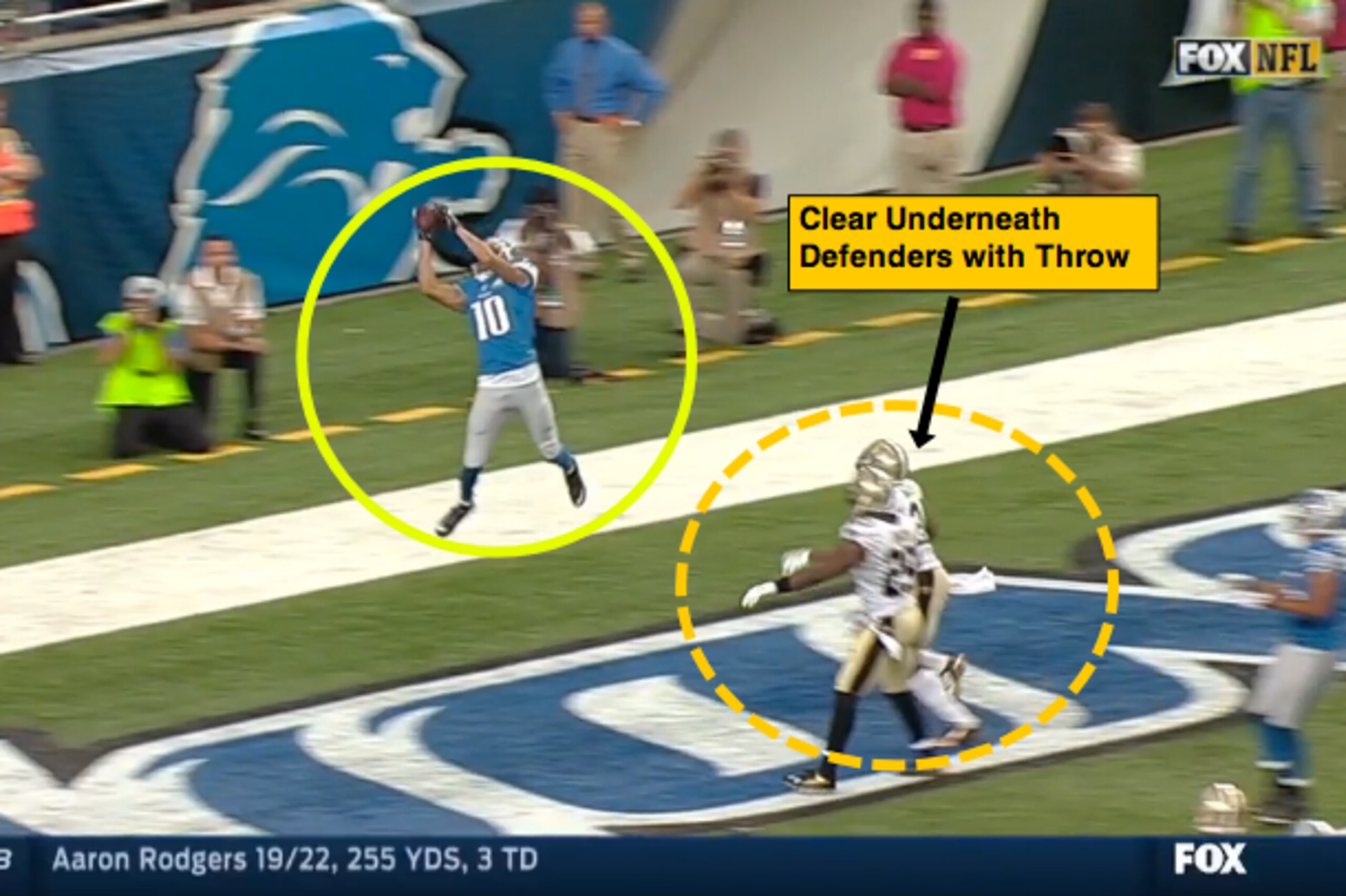
Remember, the field dramatically shrinks in the deep red zone, and that impacts throwing lanes to the middle of the field. Even with Bush sitting on the curl, and the cornerback sinking outside, Stafford has to get this ball over the top of the two inside defenders.
That forces the Lions quarterback to put this throw up high in the back of the end zone. However, check out the finish from Fuller as the wide receiver climbs the ladder to secure this catch while showing the body control to get two feet down for the game-winning score.
Seven-year NFL veteran Matt Bowen is an NFL National Lead Writer for Bleacher Report.
.jpg?w=2560 "Titans Colts Football")