The Alabama Effect on the SEC
Paul Finebaum noticed something peculiar when he was in Fayetteville, Arkansas, two weeks ago to see Arkansas take on Alabama.
There was no fear or anxiety in the air from anyone the SEC prognosticator talked to—from Razorbacks coach Bret Bielema down to the fans grilling hot dogs before the game. The usual intimidation that comes with playing Alabama was not as present.
Alabama ended up winning an ugly 14-13 game. But Arkansas—the team and fans—believed it could win all the way until the final whistle.
.jpg?w=2560)
The Crimson Tide have become the standard to which teams are measured, and nowhere is that more apparent than their own division, which top to bottom is unquestionably the best in college football.
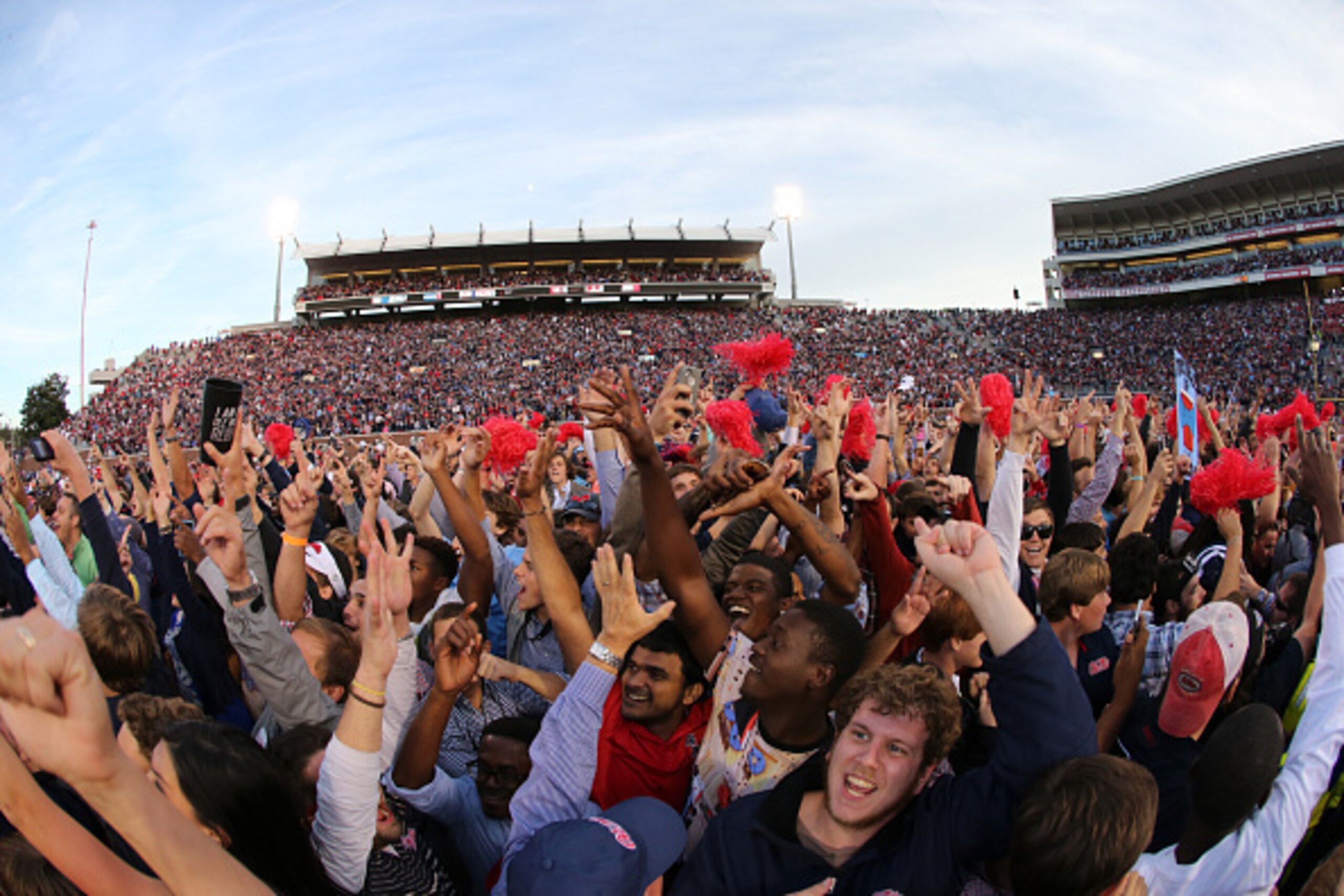
When Ole Miss took down Alabama two weeks ago, fans immediately poured onto the field, tore down the goalposts and launched a celebration that will be remembered in Oxford for a long time. In fact, two of Alabama’s last three losses have elicited field stormings from the victorious in attendance.
“Just to see them and see how big it is for them to just beat Alabama—they make it a big deal,” Alabama senior fullback Jalston Fowler said. “When we win, we just keep it simple and keep going.”
The SEC West is a combined 38-11 to start the season. Ten of those 11 losses were to teams within the division. The only loss? Last-place Arkansas fell this past weekend 45-32 to Georgia—the top team in the East.
It speaks volumes when the division’s worst team by a wide margin is Arkansas, which chewed up Texas Tech’s front seven and spat it back out, then handled a good MAC team in Northern Illinois.
This year’s dominance is a culmination of the profound effect that Nick Saban and Alabama have had on the rest of the league since joining forces in 2007, especially within their own division. Three BCS championships over a four-year span created an astronomical convention for teams to play to.
In 2008, SEC West teams won an average of 7.2 games. Last year that number was up to 8.6.
“Alabama is the measuring stick,” Finebaum said. “Ole Miss—it wasn’t about, 'Well are we going to beat State or LSU?' It’s, 'How are we going to beat Alabama?' At LSU it’s the same thing. At Mississippi State, they’re not successful until they beat Alabama. Auburn obsesses over Alabama.”
Just about every team in the division (save for LSU) has seemingly overhauled its football department to get close to Alabama or be prepared to compete at that level from the get-go (Texas A&M).
| Year hired | Coach | School |
| 2008 | Bobby Petrino | Arkansas |
| 2008 | Houston Nutt | Ole Miss |
| 2009 | Dan Mullen | Mississippi State |
| 2009 | Gene Chizik | Auburn |
| 2012 | John L. Smith | Arkansas |
| 2012 | Hugh Freeze | Ole Miss |
| 2012 | Kevin Sumlin | Texas A&M |
| 2013 | Bret Bielema | Arkansas |
| 2013 | Gus Malzahn | Auburn |
These changes have come on and off the field in the form of style of play, recruiting and increased resources.
It’s gotten to the point where all six other teams feel they can play at that level. Even Arkansas, way down at the bottom.
“Everybody in our division has a really good team, and we all have to play each other,” Saban said. “I don’t ever remember it ever being like that.”
Style of Play
Alabama was winning with defense.
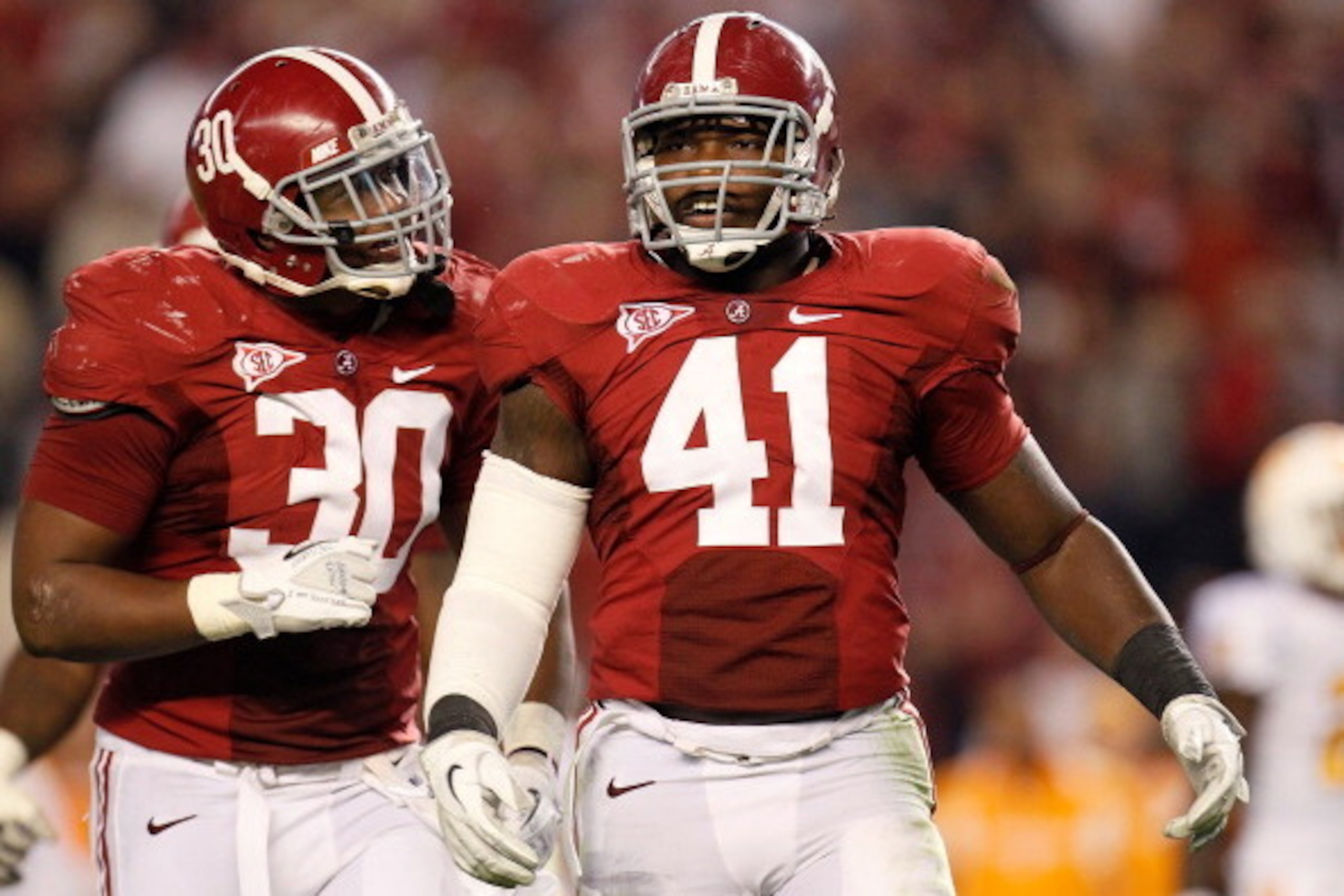
It led the country in yards per game in two of its three of its championship seasons, the outlier being 2009, when it finished second to TCU, which then played in the Mountain West.
But surely there had to be an effective counter. Teams found that success with the hurry-up offense.
By getting back to the line faster, running more plays and creating confusion for defenses, teams were able to level the playing field of sorts.
Outside of LSU, which has been the only school able to match Alabama pound-for-pound talent-wise (more on that in a moment), teams that have beaten the Crimson Tide lately have used some version of that style of play.
Alabama defenses under Saban rely on being disciplined. Players could read keys pre-snap, make calls depending on formations and personnel and adjust accordingly. Fastball teams take precious time away from that process and cause confusion as the ball is being snapped.
It started in 2010, when Gus Malzahn was Auburn’s offensive coordinator. Led by quarterback Cam Newton, the Tigers hit several big plays, mounting one of the most memorable comebacks in college football history to take down the Crimson Tide in Tuscaloosa.
After head coach Gene Chizik’s firing after the 2012 season, Malzahn was hired as his replacement. He beat Alabama in his first game as head coach in 2013 using a similar style of play.
"That hurry-up, no-huddle is what high school kids really enjoy these days," Auburn athletics director Jay Jacobs told Bleacher Report's Barrett Sallee in the spring. "Even though we're both recruiting the best athletes and go head-to-head on a lot of recruits, our style is totally different. It's what Gus has always run since he was a high school coach, and has made the games really fun. It's a totally different style than the pro style, and it gives the prospects a choice."
Now, every other SEC West school except for LSU and Arkansas run some form of that hurry-up, no-huddle.
Texas A&M laid the best blueprint for beating Alabama in 2012. It came into Bryant-Denny Stadium and shocked the world, topping the Crimson Tide 29-24 and putting up 418 yards of total offense in the process. A year later it ran up 628 yards against Alabama in a loss.
It’s still unclear whether that style of play is specifically responsible for Alabama’s defensive struggles. Whether it plays out over the course of the game could be argued either way. But teams have been able to hit timely big plays, like Ole Miss just two weeks ago. And it helps to have the right quarterback.
“Johnny Manziel is a blueprint,” Finebaum said. “There was no way to defend him.”
Still, hurry-up offenses are here to stay. They’ve caused a lot of headaches for Saban, who is used to winning with defense.
“I never thought that I would be here as a coach, in my lifetime as a coach," Saban said. "That running regular, I-formation plays and running the ball out of regular two wide receivers, two backs out of the backfield, would be the anomaly of football.”
Recruiting
Of course, these styles of play don’t mean much without talented players to run the system.
“None of us are great coaches without players who can make plays,” Ole Miss coach Hugh Freeze said.
Alabama has signed Rivals’ No. 1 class every year since 2008, Saban’s first full year to pull in a recruiting class. That’s given the Crimson Tide the players necessary to play that physically dominating style on offense and defense that defined their dynasty.
And as their talent level has gone up, just like with style of play, schools have adapted. While there have been ups and downs for the league as a whole, over time, the recruiting has trended in a positive direction in terms of class ranking since Saban has been at Alabama.

Malzahn, Freeze and Sumlin were hired not just for their schematic acumen, but their persuasive ability with high school recruits. Notably, Ole Miss signed a top-10 class—unheard of in Oxford before Freeze’s arrival—with players like Antonio Conner, Evan Engram, Robert Nkemdiche, Laquon Treadwell and Laremy Tunsil, among others from that class, playing key roles in the Rebels’ upset over Alabama.
“Alabama has as many 5-star recruits as they ever have, it’s just a matter of if they all pan out,” Finebaum said. “Meanwhile, Ole Miss just happened to come up with the stars of that class a year ago. If Alabama had taken one or two of those players—it’s so hard to figure that out.”
And it’s worked both ways.

As teams recruit to match that talent level of Alabama, the Crimson Tide too have had to adjust their style to match the offenses teams have brought in.
Those included players like outside linebacker Rashaan Evans and defensive end Da’Shawn Hand, both smaller players than Saban would normally recruit at their position but faster and more apt to counter spread teams.
“One of the goals we have was to get a little more fast-twitch, quicker-body-type guys to play on the edges for us,” Saban said this past signing day. “We're playing against a lot more spread. I feel between the outside backer types we got as well as some of the more athletic kind of defensive ends we got that maybe we satisfied that need as well. “
Resources
Players not only need somewhere to practice, but also to have meetings, watch film and just hang out. Alabama has similarly been at the forefront of facilities and stadium upgrades—key factors in recruiting and player development—and other schools have followed suit to keep up.
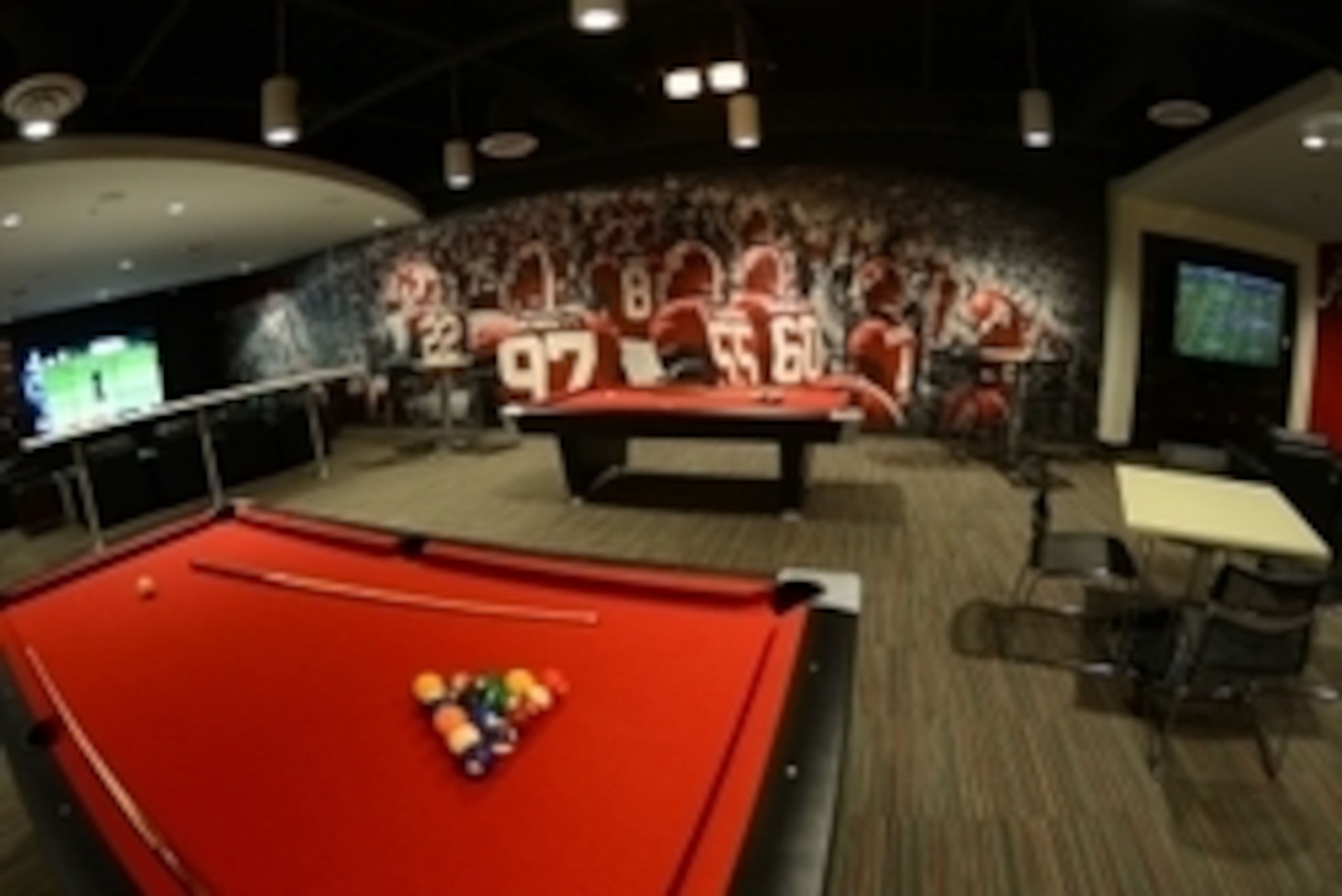
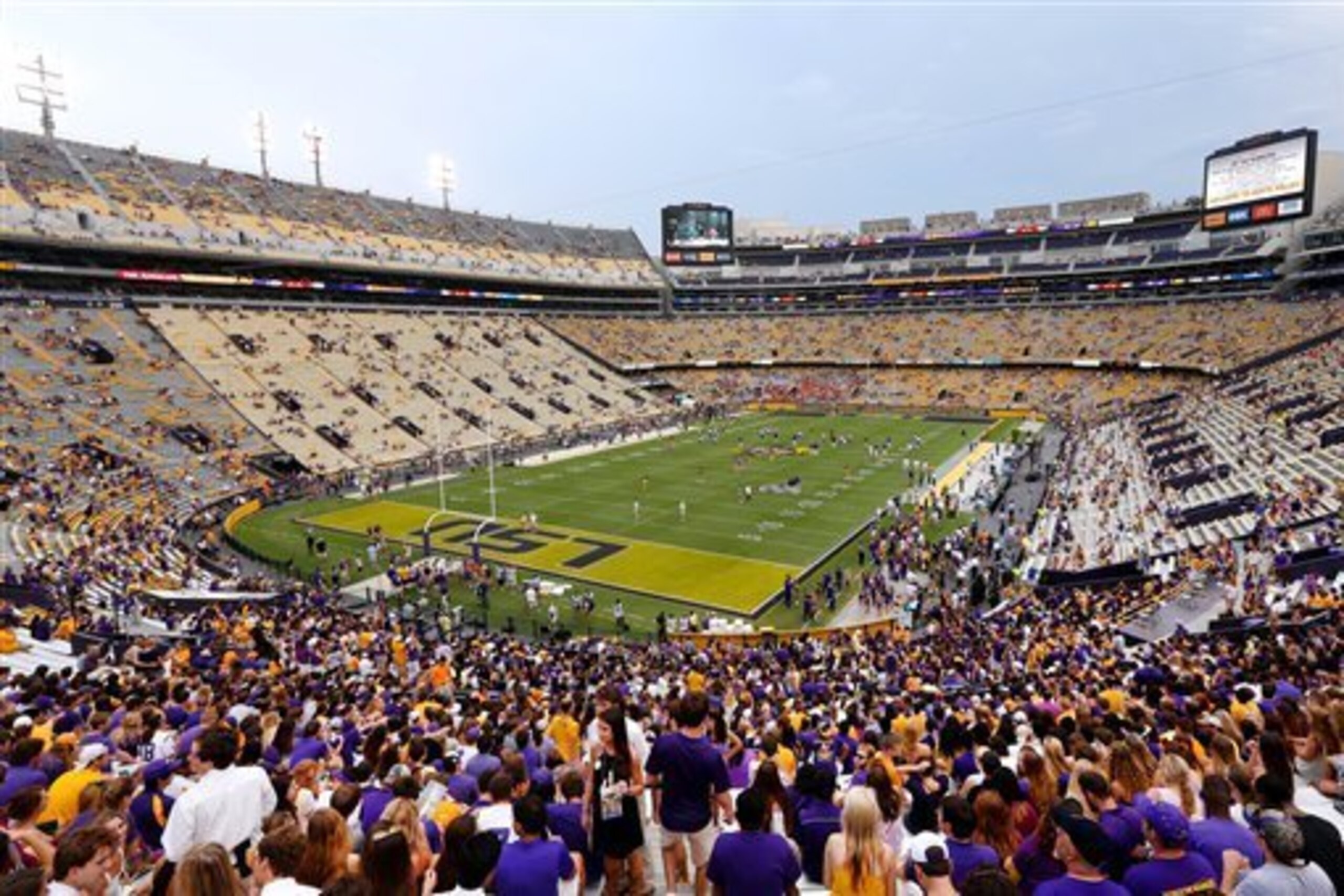
Since Saban came to Alabama, every SEC West school has made significant upgrades to either its stadium, practice facility or both.
The Crimson Tide notably upgraded their stadium to hold over 100,000 fans opening in 2010 and last year unveiled a $9 million weight room/player lounge/team facility that could pass for a 5-star hotel if need be.
“All that does is create an atmosphere where you look over there, depending on which direction, and you go to your AD and say, ‘Hey, Alabama has a brand new workout room with 25 plasma TVs in there, how come we only have three?’” Finebaum said.
For other schools whose resources are competitive nationally but put them in the bottom half of the West, the challenge becomes allocating those resources efficiently.
“We’ve invested $100 million in facilities in the last couple of years,” Mississippi State athletics director Scott Strickland said in an interview with Bleacher Report. “The Leo Seal, Jr. Football Complex is as nice a football complex as you’ll find. It doesn’t have gold-plated toilets, you don’t walk into the lobby and see a waterfall. But it’s very nice. Again, we try to put our money where we think it’s going to make the biggest impact and not things that may be as showy or flashy as what other people spend their money on.
"That’s not a criticism of other people, that’s just what works for us, the kind of kids we attract. That’s the way we do it.”
Alabama too has set the precedent in the salary game.
When Nick Saban was originally hired in 2007, he made a then-unheard-of $4 million.
In 2013, the average SEC coach made an average of $3.3 million, per USA Today’s database of coaches' salaries. That’s a number sure to go up once full 2014 numbers are out, as both Saban and Malzahn received lucrative extensions.
Saban’s most recent raise and extension over the summer has him making $6.9 million per year, while Malzahn will make $3.85 million. Saban’s staff as a whole will make $5.2 million.
“(Saban) elevated the salary game to such a high number,” Finebaum said. “He was at one level—if you paid him $4 million when he started out, they paid the Auburn coach $1.3 (million). Everyone started paying more. Doesn’t always mean you always get better coaches, but what it does mean is you can probably get better assistant coaches, because there’s so much money allocated across the board.”
End in Sight?
The question now becomes, with a league so utterly dominant, when will it end?
For Alabama, the hot debate after a loss so early in the 2014 season has been whether its college football dynasty is over. The jury is still very much out there—the Crimson Tide still have a very real chance to win the SEC, make the College Football Playoff and add to their trophy case.
But if Alabama is undone, it will be as a byproduct of its own success. Whether it loses another game to Texas A&M, Mississippi State, Auburn or someone else, it will be a team that has studied the Crimson Tide blueprint and worked tirelessly to defeat it.

And the division could become a victim of its own success, with so many good teams beating up on each other and thus taking each other out of the national picture.
These things come and go, ebb and flow. The SEC West’s supremacy won’t last forever.
“Everybody in the East wants to win just as badly as everybody in the West,” Strickland said.
For now, though, the division can enjoy having five of its seven teams ranked in the AP Top 25, including four in the Top Five.
And no matter where it ends, there will be no question where it started. At a school in Tuscaloosa with a coach who changed the game.
“There’s no question,” Finebaum said. “Nick Saban has influenced everything.”
Marc Torrence is the Alabama lead writer for Bleacher Report. All quotes were obtained firsthand unless otherwise noted.
Follow on Twitter @marctorrence.

.jpg?w=2560 "NFL House in Paris Closes for Protests")

.jpg?w=2560 "Trevon Diggs Cut by Seahawks")