Latest Price of Football Statistics Underline Premier League's Need to Act Soon
It’s not just the price of gas that keeps on rising. For football fans, the cost of attending games continues to get more and more expensive.
The BBC’s annual Price of Football was released on Wednesday, detailing the ever-increasing cost attached to watching football at grounds around England and Scotland.
There are a number of eye-catching figures to come from the report, but the main one is perhaps this: Since 2011 the cost of watching teams in the four top divisions of English football has risen by 13 percent, almost double inflation over that same period (6.8 percent).
TOP NEWS

Live World Football Moments 🍿

Final Men's Ballon d'Or Rankings 📊
.jpg?w=2560 "NFL Paris Football")
NFL House in Paris Closes for Protests
Watching football, for most fans, has never been more expensive. Partly that is due to the standard economic principle of supply and demand—despite the rising prices, Premier League grounds continue to be at almost full capacity every week—but partly it seems to be about clubs looking at their supporters as yet another revenue stream to be milked for as much as possible.
Just because clubs can charge vast amounts for tickets, does not necessarily mean they should. There should be other, longer term considerations in play.
"Any business that thinks it can simply rely upon the loyalty of its customers, regardless of how they treat them, in the end will fail. It's an absolute fact,” as Justin King, the former chief executive of the supermarket Sainsbury’s, told the BBC. “I would be asking clubs, are your fans happier today than they were five years ago with the experience that they get, the value for money that they feel they're getting?"
It would seem hard to believe many fans are. The most expensive season ticket this season in the Premier League is at Arsenal, where the cheapest annual ticket is £1,014 and the most expensive is £2,013. It is perhaps no coincidence that the Gunners, based in wealthy London, also have the newest stadium of the big Premier League sides—the big prices both a result of the comfort of the experience and the need to help recoup the Emirates Stadium’s vast building costs.
As a note of comparison, season tickets on the continent are invariably far, far cheaper than in England. Portuguese champions Benfica charge just £70.36 for a season ticket, for example, while Real Madrid’s cheapest option is £174.65 and AC Milan’s £162.69. The low price of season tickets in Germany (where all clubs are majority supporter-owned) is well documented, but the cheapest season ticket in the Premier League is at Manchester City, where some are sold for £299.
Not everything is necessarily about price, however. Championship side Charlton, for example, have the cheapest season ticket in the top four divisions (£150), yet they languish 17th in their league’s fledgling average attendance standings this term (per Football365). They are trying to turn that around by lowering prices—an experiment other sides might be watching with interest.
“It's part of our new strategy. Charlton faces the challenge that we don't have enough people in our stadium,” club chief executive Katrien Meire told BBC London. "One of the philosophies of the new club owner [Roland Duchatelet] is to make football affordable for everybody, especially because we are in London and competing against other clubs. We think this is our edge.”
The Addicks currently average just under 14,000 fans at the 27,000-capacity Valley—indicating that perhaps it is not just cheap prices that draw in fans, but the quality of the football, too.

Nevertheless, it is perhaps the issue of attendance that is at the long-term heart of the matter. It will be interesting to see whether Charlton’s experiment will see them lure back fans over time, or whether the years of higher prices (and the club’s current stint in England’s second tier, a world away from their Premier League heyday) has scared away their more casual supporters on a more permanent basis.
With the rise and rise of televised football, it is not enough simply to keep pushing up prices at the grounds until fans stop showing up. Steps need to be taken in advance to foster the next generation of supporters—those who might well be being priced out of games at the moment but will be needed when older fans stop coming to games. If those fans, particularly younger ones, become too accustomed to simply watching games on television—in the same way previous generations grew up on the terraces—then no amount of price-slashing will win them back.
That would be a long-term problem for the sport. Televised games were originally a way to allow fans who had no hope of going to the game to share in the atmosphere and the spectacle but now there can be no doubt that balance has changed completely in the other direction—the Premier League and its clubs build fixture lists and other logistics around television schedules, rather than what is good for the home fan.
The problem with that, of course, is that the atmosphere inside the ground is a key part of any televised spectacle. If the fans stop actually turning up for games, it will have a noticeable effect on the broadcast experience—diluting the occasion and, over time, probably affecting living room audiences as well.
That would soon have a knock-on effect on those multi-billion pound television deals. Publicly at least, the powers-that-be seem to recognise this issue.
The Premier League’s head of supporter services, Cathy Long, told the Daily Mail:
"For the Premier League and our clubs keeping the grounds as full as possible is our top priority. The attendances so far this season are very encouraging, with more than 95 per cent of seats sold and average crowds tracking with last season’s which were the highest in English top flight football since 1949-50.
This only happens because of the commitment of attending fans and the hard work put in by our clubs to fill their stadiums with a variety of offers, both of which led to a 3 per cent increase in season ticket sales and a 2.8 per cent rise in away attendance last season.
We recognise that certain matches can be more challenging to attend than others but are encouraged to see clubs, through their commitment to the Away Supporter Initiative, make everything from ticket price reductions to special travel offers and reciprocal pricing deals available to their travelling fans.
"
That may be true, but that is not adequately reflected in Wednesday’s report. Keeping all prices down as much as possible would seem an even more effective strategy than specific promotions and one-off offers.
“At the top of the game there is no excuse for prices to be rising higher than inflation,” Michael Clarke, chairman of the Football Supporters’ Federation, responded, again per the Daily Mail. “The prices should really be going down.”
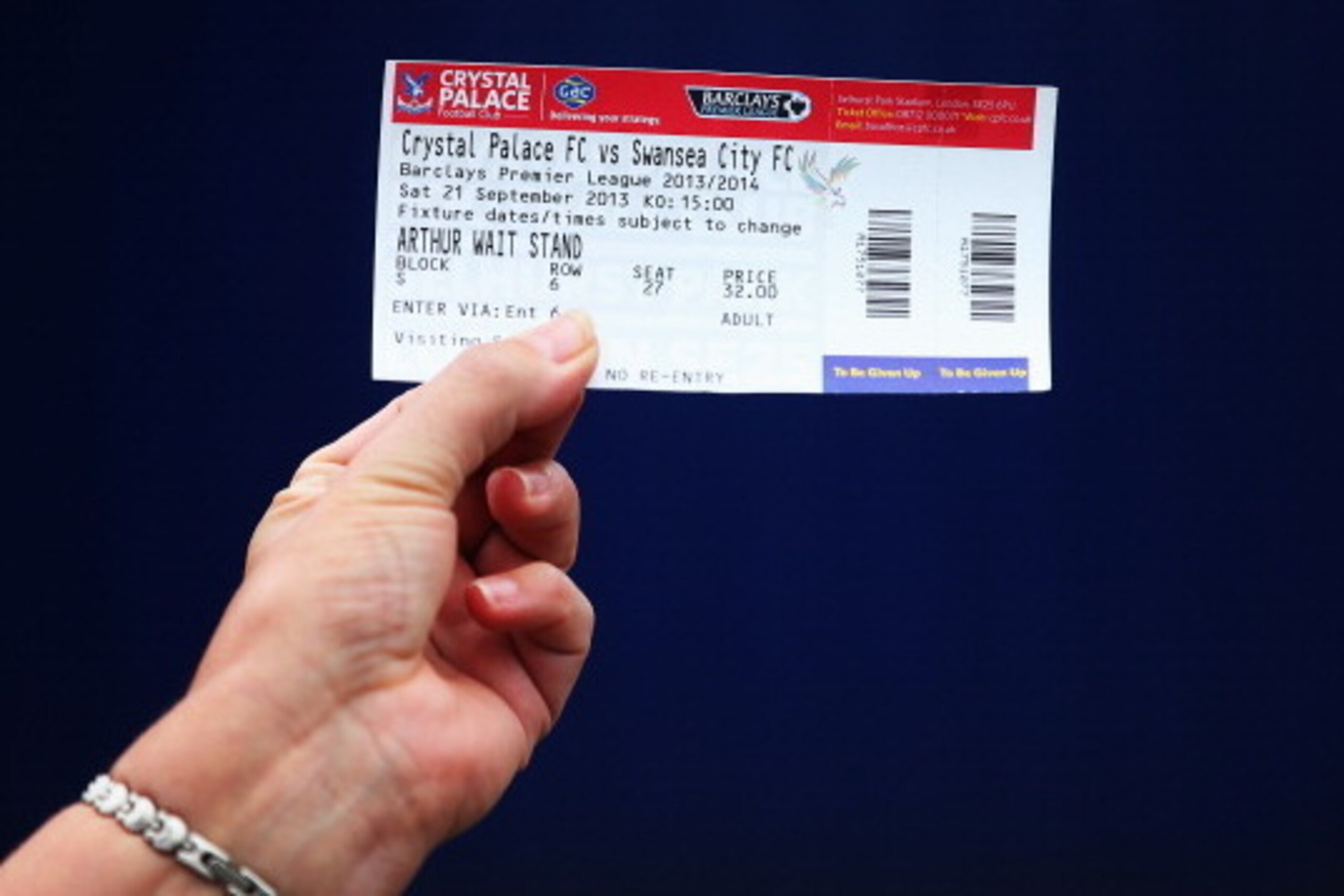
Wednesday’s report does not even factor in the additional costs involved for travelling supporters, who in recent years seem to be charged even more for their passion.
Many have already made their opinions known about this troubling practice—surely there will come a point where things will have to turn around.
For now, however, more and more fans are getting priced out of the game, or find themselves being extorted for their love of it, a sorry state of affairs that needs to be changed sooner rather than later.

.jpg?w=2560 "Seahawks Chiefs Football")