Are We Witnessing the Devaluing of the Big-Game Postseason Ace Blueprint?

True or false: You need at least one ace starting pitcher to succeed in the postseason.
Past Octobers have conditioned us to immediately think "true." But this October is weird.
Weird enough, even, to force us to give that true or false some second thoughts. Because if what we're seeing is any indication, the notion that the postseason is best conquered with big-game starting pitchers might soon be outdated.
TOP NEWS

MLB Commissioner Defends Salary Cap
Miz Sets WS Record Already ⛽
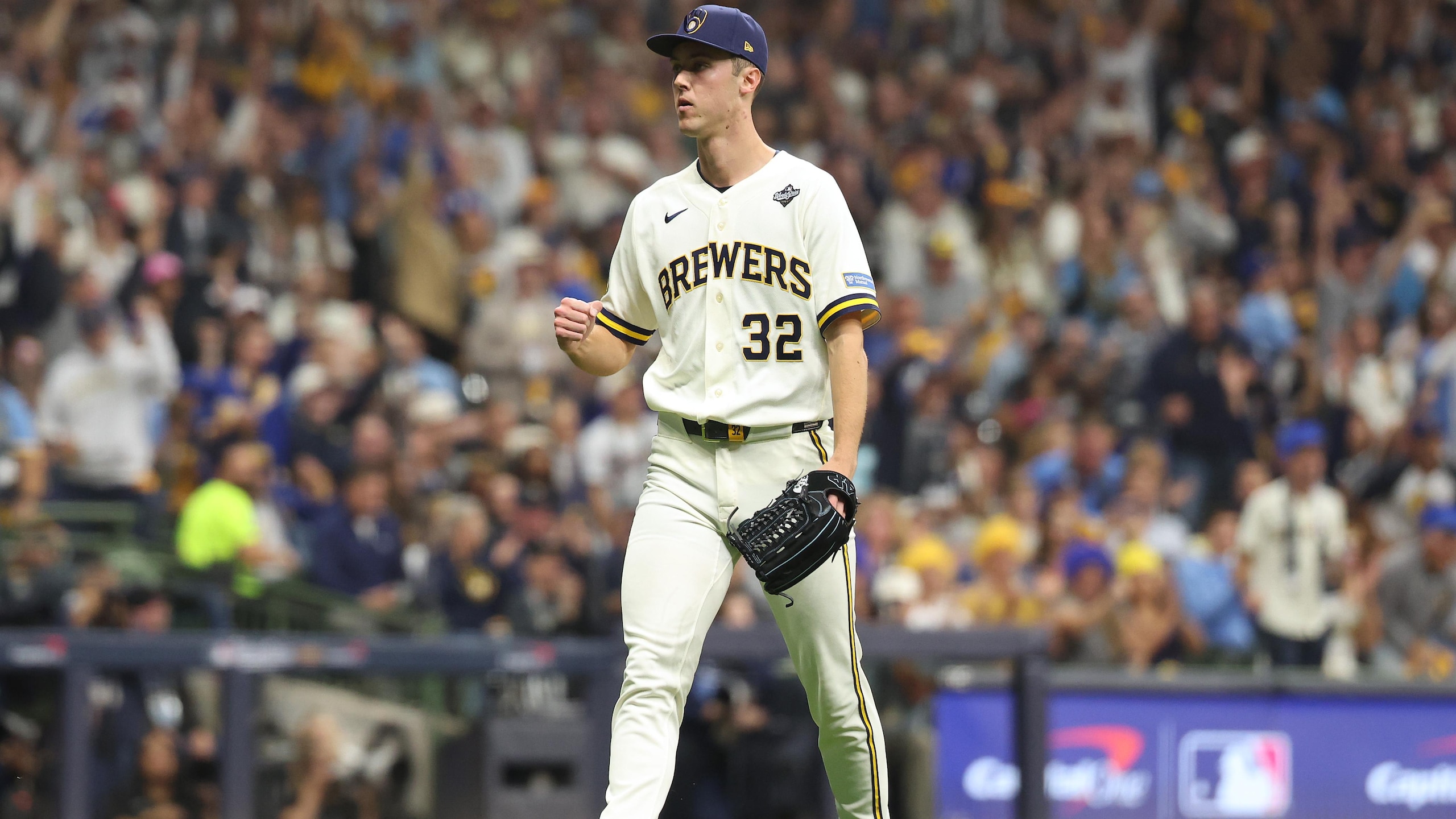
Brewers Get 1st WS Win Since 1982 💪
The American League Wild Card Game set the tone. When the Oakland A's tabbed Jon Lester to get them past the Kansas City Royals, they were using him as they wanted to after acquiring him in a July trade. If he lived up to his big-game track record, the A's would be on their way.
Instead, the Royals torched Lester for six earned runs and knocked the A's out of the postseason. And with that, open season on teams with big-name starters began.
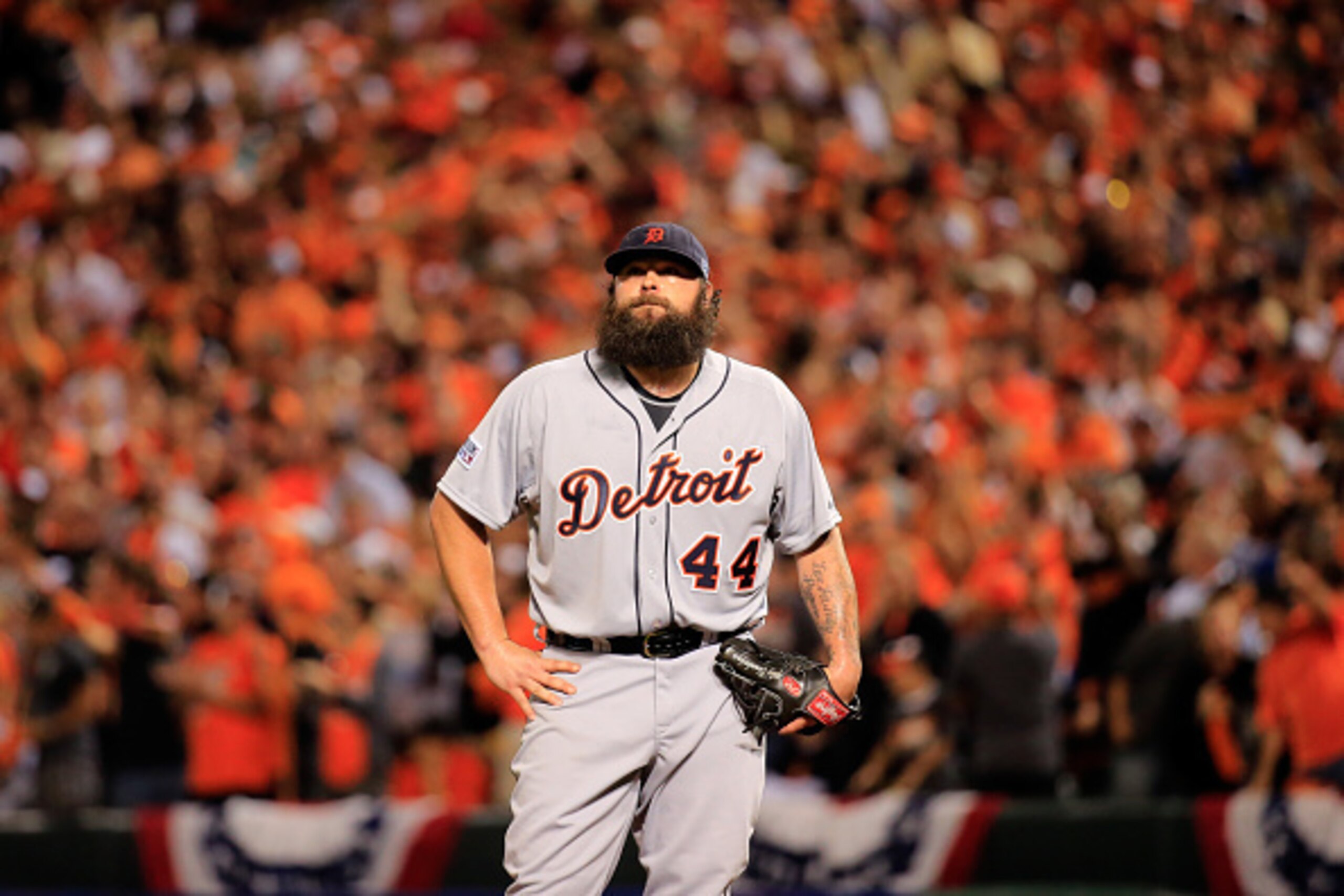
The Detroit Tigers brought Max Scherzer, Justin Verlander and David Price to the postseason party. They're home now after being swept by the Baltimore Orioles in the American League Division Series.
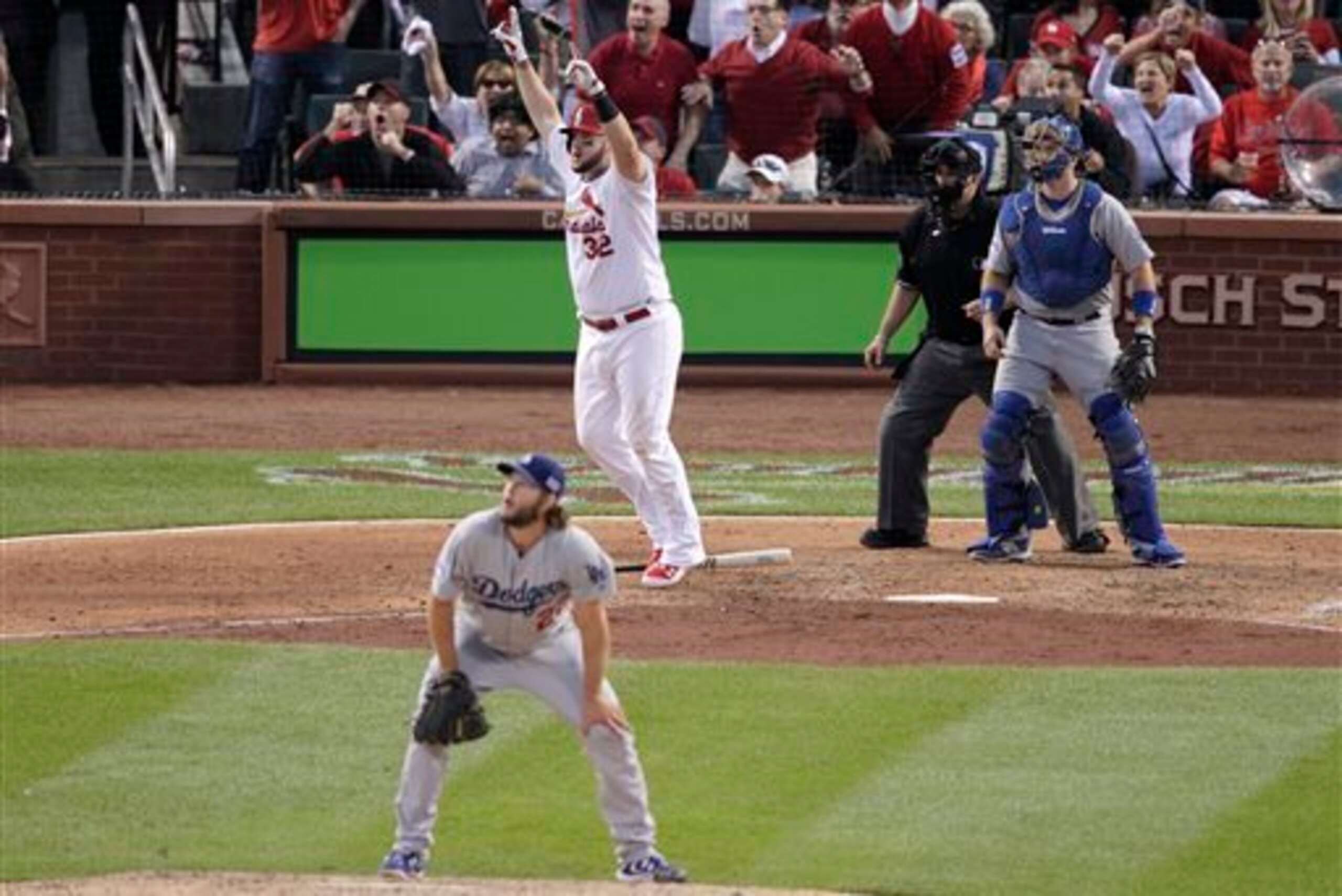
The Los Angeles Dodgers brought Clayton Kershaw and Zack Greinke to the party. They're also home, as they lost in four games in the National League Division Series to the St. Louis Cardinals.
In Stephen Strasburg, Jordan Zimmermann, Doug Fister and Gio Gonzalez, the Washington Nationals brought the best starting foursome of any team to the party. They, too, are home. The San Francisco Giants took care of them in four games in the NLDS.
There are plenty of reasons these clubs couldn't hack it once the calendar turned to October, but there's one thing that they all have in common: Their bullpens let them down.
The Orioles completely took apart the Tigers bullpen. The shallow Dodgers bullpen had a hand in Kershaw getting overwhelmed by the Cardinals late in two games. The Nationals bullpen was solid but let a win slip away in Game 2 and then suffered a manager-aided meltdown in Game 4.
Meanwhile, here's how the bullpens of the four remaining clubs stood entering Tuesday's action (via ESPN.com):
| Royals | 6 | 27.1 | 10.3 | 4.0 | .204 | 2.30 |
| Giants | 6 | 24.2 | 7.8 | 2.6 | .155 | 2.55 |
| Orioles | 5 | 22.1 | 9.0 | 4.5 | .237 | 3.22 |
| Cardinals | 6 | 19.2 | 8.0 | 4.2 | .230 | 2.75 |
Those walk rates aren't so great, but everything else is solid. And even though the Orioles boasted the only ERA over 3.00 of the bunch, their bullpen was outstanding with a 2.25 ERA against the Tigers.
And with all four clubs, it hasn't all been the work of a couple guys. The Royals' amazing trio of Kelvin Herrera, Wade Davis and Greg Holland is surrounded by a solid supporting cast. Likewise, the Cardinals have a good support system for Trevor Rosenthal. The Orioles and Giants, meanwhile, have about a half-dozen capable relievers apiece.
And of these four teams, only the Giants have gotten standout work from their starting pitchers. Even after Tim Hudson's mediocre showing in Game 3 of the NLCS, their starters have a 1.71 ERA this postseason. The others? None entered Tuesday's action with a rotation ERA below 4.00.
So behold the forming of a narrative, one best summed up in the headline of a recent piece by Jorge L. Ortiz of USA Today: "Who Needs Elite Starters? Look to the Bullpen."
Now, OK. Virtually every narrative makes things out to be simpler than they really are. This one's no different, so let's do some quick narrative damage control.
Take the two Missouri teams, for example. It's easy to give the St. Louis and Kansas City bullpens credit, but both clubs have been propelled through the postseason at least as much by surprising power as dominant relief pitching.
Then there are the Giants. While everyone else's aces—including Cardinals ace Adam Wainwright and Royals ace James Shields—have been disappointing stories, theirs has been a huge story.
Madison Bumgarner started his postseason by shutting out the Pittsburgh Pirates in the National League Wild Card Game. He's since allowed two earned runs in 14.2 innings, and his next act might be putting the Giants in the World Series with a win Thursday in Game 5 of the NLCS.
So don't give up on the idea of ace starters being big keys to advancing in October just yet. After so many postseason-conquering aces before him, Bumgarner's carrying the torch.
Which brings us back to that true-or-false question. While this postseason has indeed challenged just how true it is that you need big-game starters to advance in October, the needle hasn't tipped entirely in favor of false. Not just yet, anyway.
This is not, however, to say that absolutely nothing can be gleaned from the prominent roles bullpens have played in this postseason. A stacked bullpen isn't enough to get a team through October on its own, but what's going on now is a fine demonstration of the logic of seeking such a bullpen.
If you think about the state of starting pitchers today, two thoughts should come to mind:
- They're better than they've been in years.
- Their workloads are smaller than they've ever been.
On that second point, there were only 629 instances of a starter throwing more than 110 pitches in 2014. That's the lowest since there's been reliable pitch count data (since 1988). Elsewhere, there were only 1,528 instances of starters lasting at least seven innings. There were over 1,700 as recently as 2005.
These increasingly small workloads starters are handling is enough of an incentive to carry a deep bullpen, as there's more slack to pick up than there's ever been.
Said incentive is doubled when it comes to October. There are enough weak teams out there for a team with a thin bullpen to avoid being hurt too bad—see the Tigers and Dodgers—but not in the postseason. Only good teams make it to October. Good teams are best handled with good relievers.
But why stop at just a deep bullpen when you can have...drum roll...a deeper bullpen?
In light of the gaudy numbers they're putting up these days, lesser workloads certainly haven't robbed starters of their ability to be effective. But one thing they haven't gotten better at is keeping hitters equally overmatched with each trip through the lineup.
For some perspective, here is the average OPS for hitters' first, second and third looks at starters:
- 1st PA: .677
- 2nd PA: .708
- 3rd PA: .755
Given that the league-average OPS this year was an even .700, that third trip through the order is still the same thing it's always been: the danger zone.
Which brings us to the average OPS of hitters in their first plate appearance against relievers. It's .678, a mirror image of the OPS hitters have in their first plate appearance against starters. Every time a manager puts in a fresh reliever, he's hitting the reset button and putting hitters at a disadvantage.
There's your incentive to have a bullpen that's deeper than deep for October. The more quality relievers a team has, the more aggressive it can be in avoiding the danger zone with their starters and throwing reset buttons at the opposition instead. That means a higher likelihood of goose eggs in the mid-to-late innings.
And thanks to how every short series comes with built-in off-days, there's little standing in the way of teams throwing their best relievers at the opposition as much as possible. Whereas a team with a deep rotation can only use its top starters in one or two games in a short series, a team with a deep bullpen can hypothetically use its top relievers in every game.
The short version: The way things are going now, it's really never been a better idea to have a deep bullpen for the postseason.
And to hear one executive say it, clubs are coming around to this idea.
"You don't necessarily have to have four knockout starters if you've got the bullpen pieces," Scott Servais, assistant general manager of the Los Angeles Angels, told Ortiz. "I think a lot of teams are taking that approach, because it's so hard to acquire starting pitching."
That last part is true. It is hard to acquire starting pitching. While starting pitching is in something of a golden age, the true No. 1 types haven't become any easier to find.
Ace relievers, meanwhile, are only becoming more plentiful.
The golden age for qualified starters with ERAs under 3.00 was back in 1914 and 1915. On the flip side, the last two seasons have been the two best seasons ever for qualified relievers (minimum 40 appearances) with ERAs under 3.00. If FIP is more your thing, don't worry. It's the same story.
Before we end this thing, I want to remind you about Madison Bumgarner. It hasn't been a banner postseason for ace pitchers, but his dominant pitching is going to show that a legit No. 1 starting pitcher can indeed make a big difference come October.
At the same time, it's worth watching the rest of the 2014 postseason with the mindset that it could prove be something of a first step.
Because dominant relievers are more plentiful than they've ever been and there are incentives for teams to make like the Orioles, Royals, Cardinals and Dodgers and gather as many of them for October as possible, killer relief work occupying such a large portion of the postseason spotlight may not be a one-time thing.
It may not be long before we change our tune to say, "True or false: You need a dominant bullpen to succeed in October."
Note: Stats courtesy of Baseball-Reference.com unless otherwise noted/linked.
If you want to talk baseball, hit me up on Twitter.
.png?w=2560)

.jpg?w=2560 "NFL House in Paris Closes for Protests")

.jpg?w=2560 "Trevon Diggs Cut by Seahawks")