

Ranking the Top 50 Rookies of the 2014 NFL Season
The NFL’s 2014 regular season was a successful one for rookies. From skill-position playmakers like New York Giants wide receiver Odell Beckham Jr. to stars in the trenches like Cleveland Browns guard Joel Bitonio and St. Louis Rams defensive tackle Aaron Donald, many newcomers made big impacts on the league this year.
All season here at Bleacher Report, we have highlighted the best players in the 2014 class with our weekly rookie rankings. Players from the 2014 draft class have been ranked all year based upon their cumulative production for the regular season, from the first week of the year through the most recent.
Now that 17 weeks have passed and the regular season is complete, we can take a final look back at who the best rookies were this year. We have taken into account both positive and negative performances from the beginning of the season through the end, as well as how much total playing time each draft pick or undrafted free-agent signing received.
As nearly every team had multiple rookies playing in significant capacities by the end of the year, the toughest part of this ranking was narrowing the list down to just 50 players. Many rookies who made noticeable impacts for their teams in 2014 didn’t make the cut simply because of the depth of quality players within the rookie class.
With that being said, the following 50 players all earned their way into recognition. While all but a few rookies had some noticeable struggles, as to be expected for anyone in his debut season, all of these players received large amounts of playing time and/or were difference-makers on the field.
50. Jonathan Newsome, OLB, Indianapolis Colts
1 of 50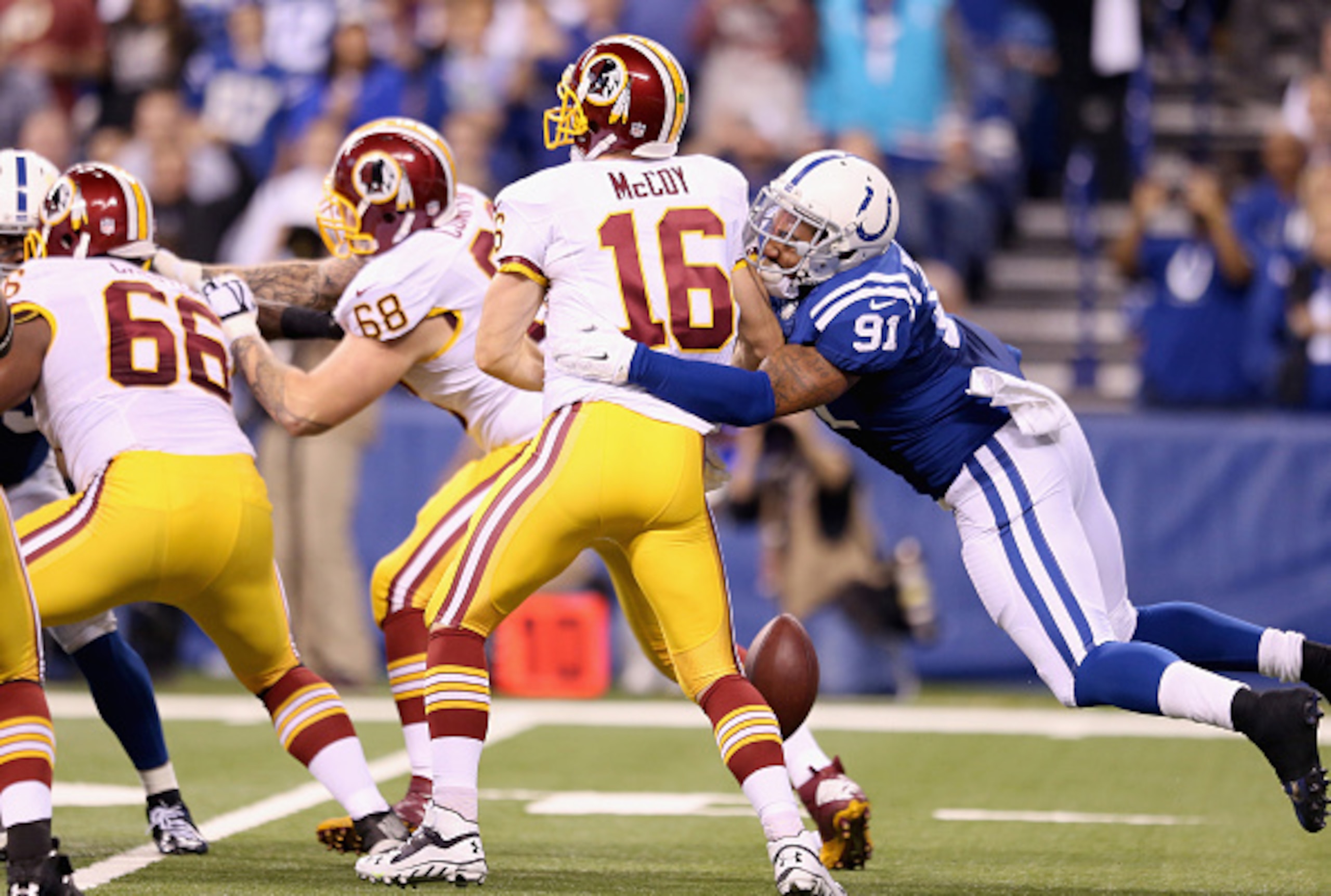
An unheralded fifth-round pick who was a backup for every Indianapolis Colts game this season but the last, Jonathan Newsome still showed his pass-rushing ability, as he ended up his leading his team with 6.5 sacks this season.
The Ball State product didn’t receive a great deal of playing time this season, but he took advantage of his opportunities. He had three multi-sack games and the 10th-best pass-rushing productivity, with 25 total pressures in 188 pass-rushing snaps, among 3-4 outside linebackers who played at least 25 percent of their teams’ snaps, according to Pro Football Focus (subscription required).
A converted defensive end, Newsome still must improve as a run defender if he is going to eventually emerge as an every-down regular for the Colts defense, but his ability to win around the edge has made him valuable as a situational pass-rusher.
Newsome recorded 28 total tackles this season and also forced three fumbles.
49. Andrew Norwell, LG, Carolina Panthers
2 of 50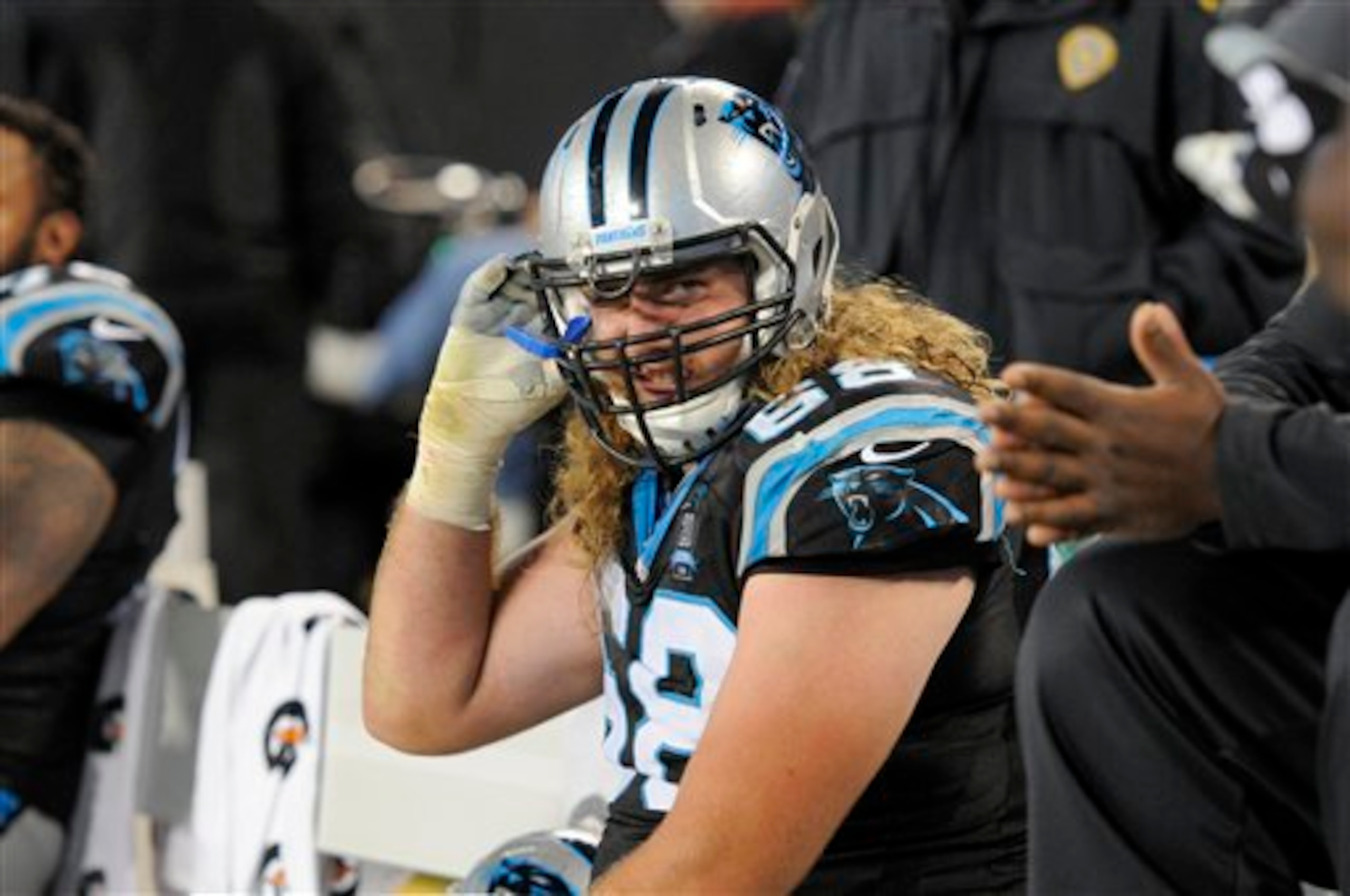
Thrust into the Carolina lineup when Amini Silatolu went down with a knee injury, Andrew Norwell established himself as an upgrade for the Panthers at left guard, despite being an undrafted rookie.
One of three productive rookie offensive linemen this year from Ohio State, Norwell played in each of Carolina’s last 10 games and started the last nine (eight at left guard, one at right guard).
The 6’6”, 310-pound blocker proved that he can move defenders off the line of scrimmage as a run-blocker, while he allowed just one sack and 15 total quarterback pressures in 369 pass-blocking snaps, according to Pro Football Focus.
With Norwell and third-round pick Trai Turner, the Panthers have two guards from the 2014 draft class who look as though they could be solid starters up front for years to come.
48. Bene Benwikere, CB, Carolina Panthers
3 of 50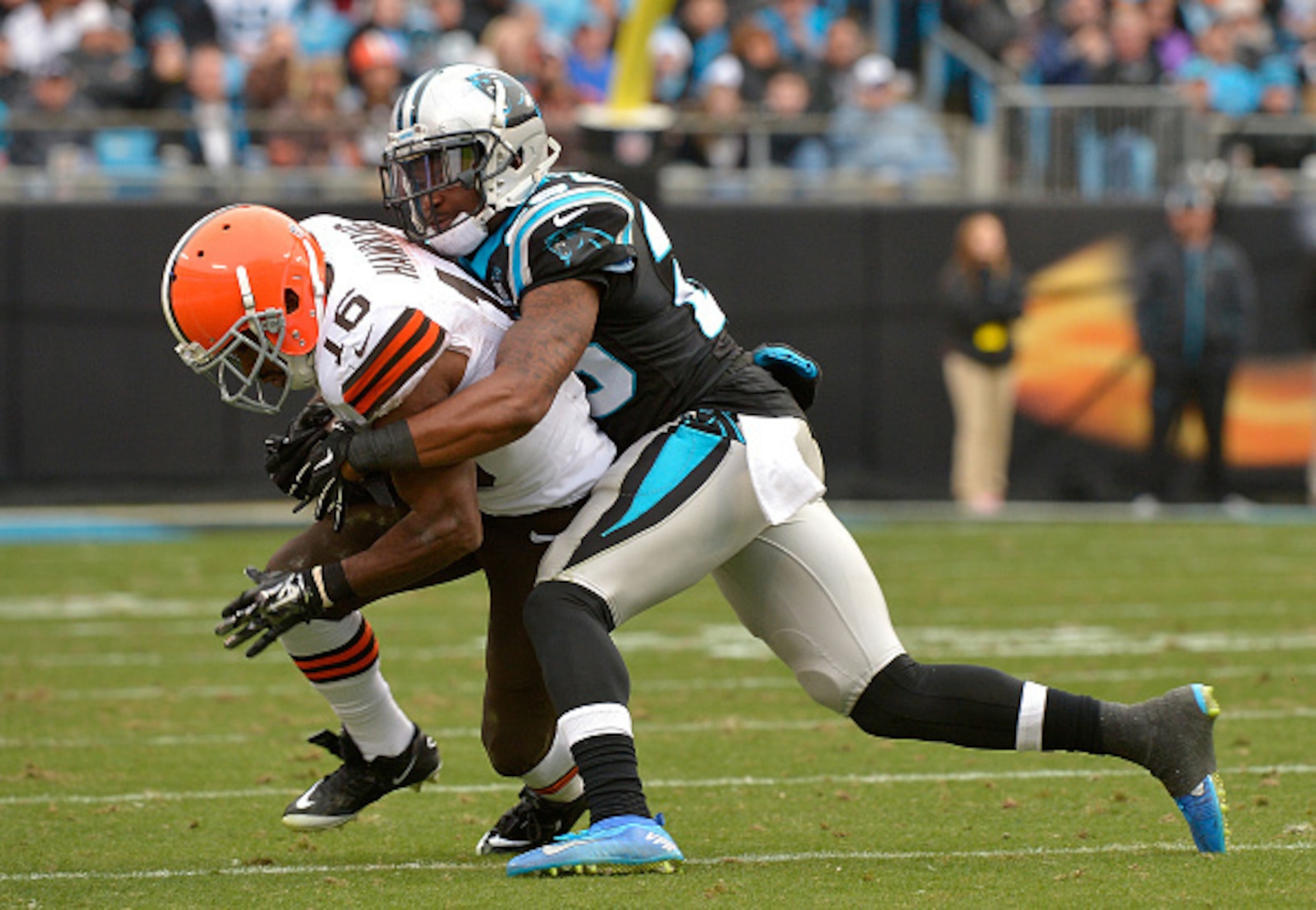
As a slot cornerback early in the season and then as a starting cornerback on the outside late in the season, Bene Benwikere provided strong coverage for a Carolina Panthers secondary that needed it in his rookie season.
The fifth-round pick out of San Jose State projected best to playing inside, and he played well there early in the season. However, he ended up playing even better in Carolina’s final four games of the year when he started outside.
Benwikere allowed just 0.98 yards per coverage snap this season, the second-lowest among rookie cornerbacks who played 25 percent or more of their teams’ coverage snaps, according to Pro Football Focus. He did not allow a single touchdown reception in 306 coverage snaps, per PFF.
Despite missing six games with a high-ankle sprain, Benwikere finished the year with 33 tackles and seven passes defensed, including an interception. He should continue to be a key player in Carolina’s secondary, either as a starter or as the nickel cornerback, going forward.

.jpg?w=2560 "Rams Raiders Football")

47. Devon Kennard, OLB, New York Giants
4 of 50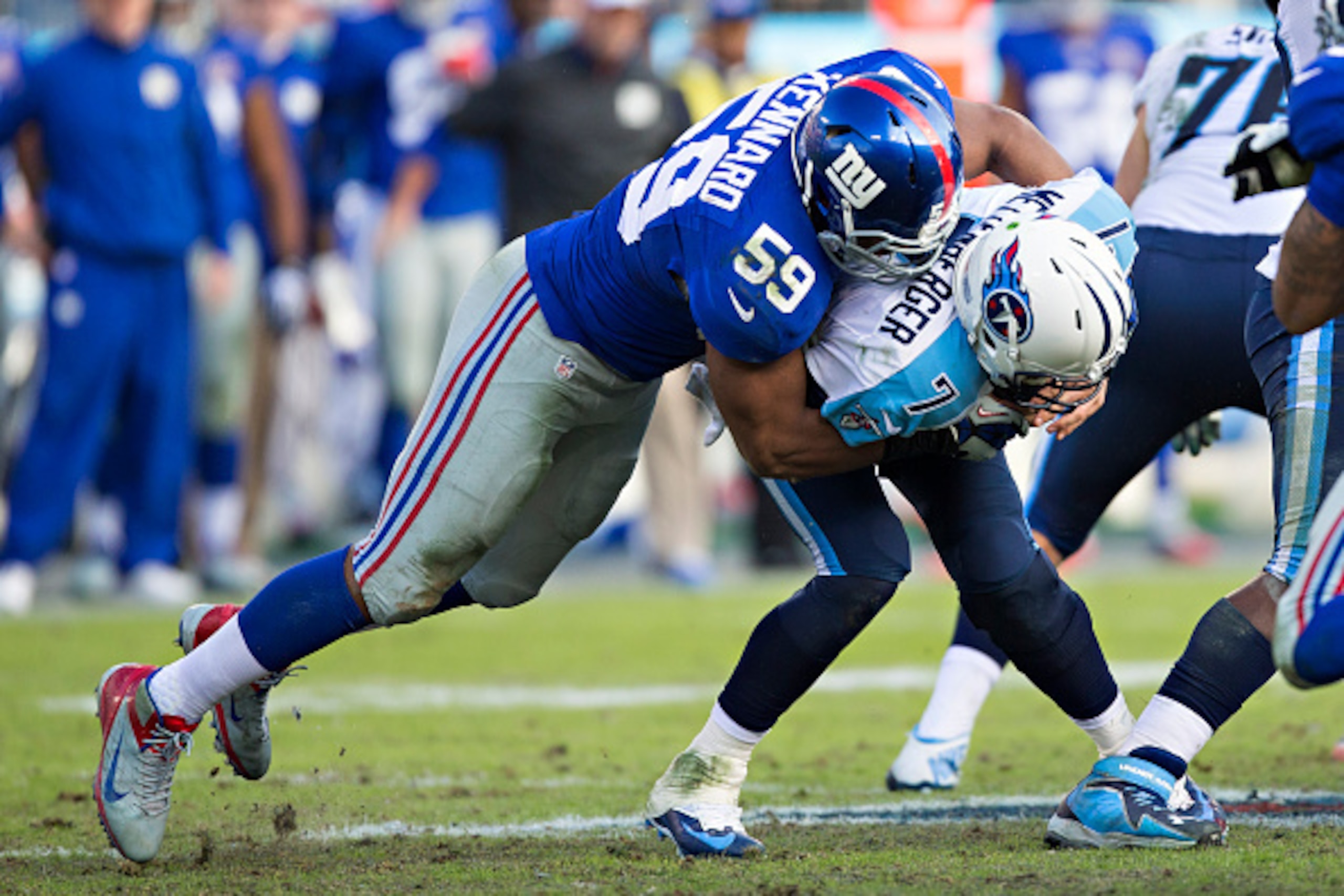
Devon Kennard only played two total defensive snaps in the first six games of the New York Giants’ season and did not become a starter at linebacker until Week 11, but he emerged as an impact player on the defense upon becoming a regular.
From Week 11 through Week 16, the outside linebacker recorded 34 total tackles, 4.5 sacks, two forced fumbles and one pass deflection.
Playing both weak-side and strong-side linebacker, the fifth-round pick from USC put his speed and playmaking ability on display. He disrupted games as a run-stopper, pass-rusher and cover man.
Kennard missed the season finale with a toe injury and only played 338 total defensive snaps this year, but he performed well enough during his six weeks as a starter that he should be in position to earn a starting role for the 2015 season.
46. Tre Mason, RB, St. Louis Rams
5 of 50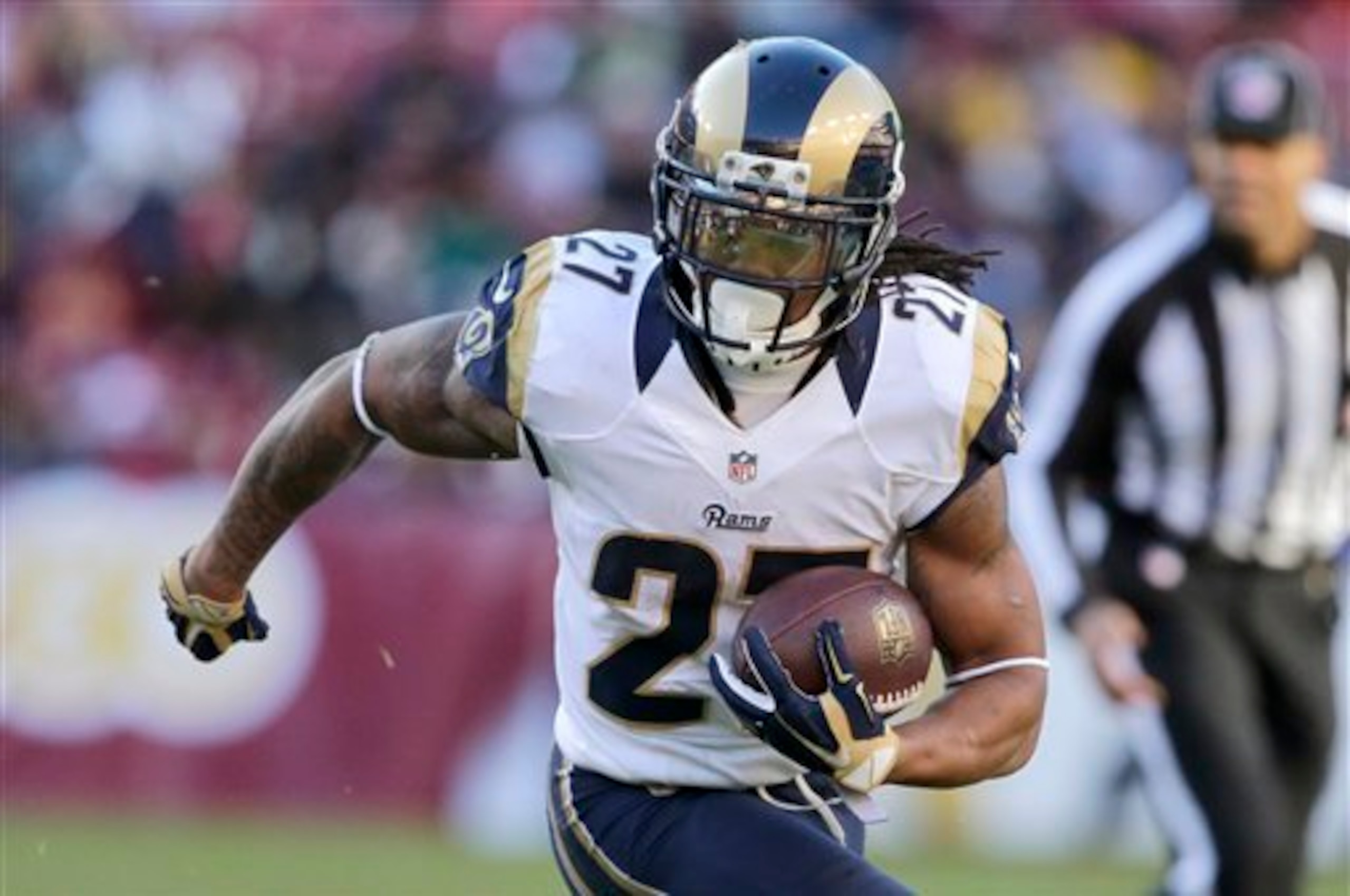
Not unlike Zac Stacy in 2013, Tre Mason quickly ascended to the top of the St. Louis Rams’ running back depth chart as a rookie this year. He finished second among all first-year players with 765 rushing yards on 179 attempts.
A third-round pick from Auburn, Mason did not play at all in St. Louis’ first four games but started the last nine contests. The 5’8”, 207-pound back averaged 4.3 yards per carry. He scored four rushing touchdowns, only fumbled twice and caught 16 passes for 148 yards and another score.
Mason’s 913 total yards from scrimmage were the sixth-most among NFL rookies this season, while his 63.8 rushing yards per game was the 15th-best clip among all running backs in the league.
Given that Stacy accumulated 1,114 yards from scrimmage in his rookie year and then lost his job as the Rams’ feature back after five games this year, there’s no guarantee that Mason will continue to lead St. Louis’ backfield in 2015, but his career is off to a solid start.
45. Blake Bortles, QB, Jacksonville Jaguars
6 of 50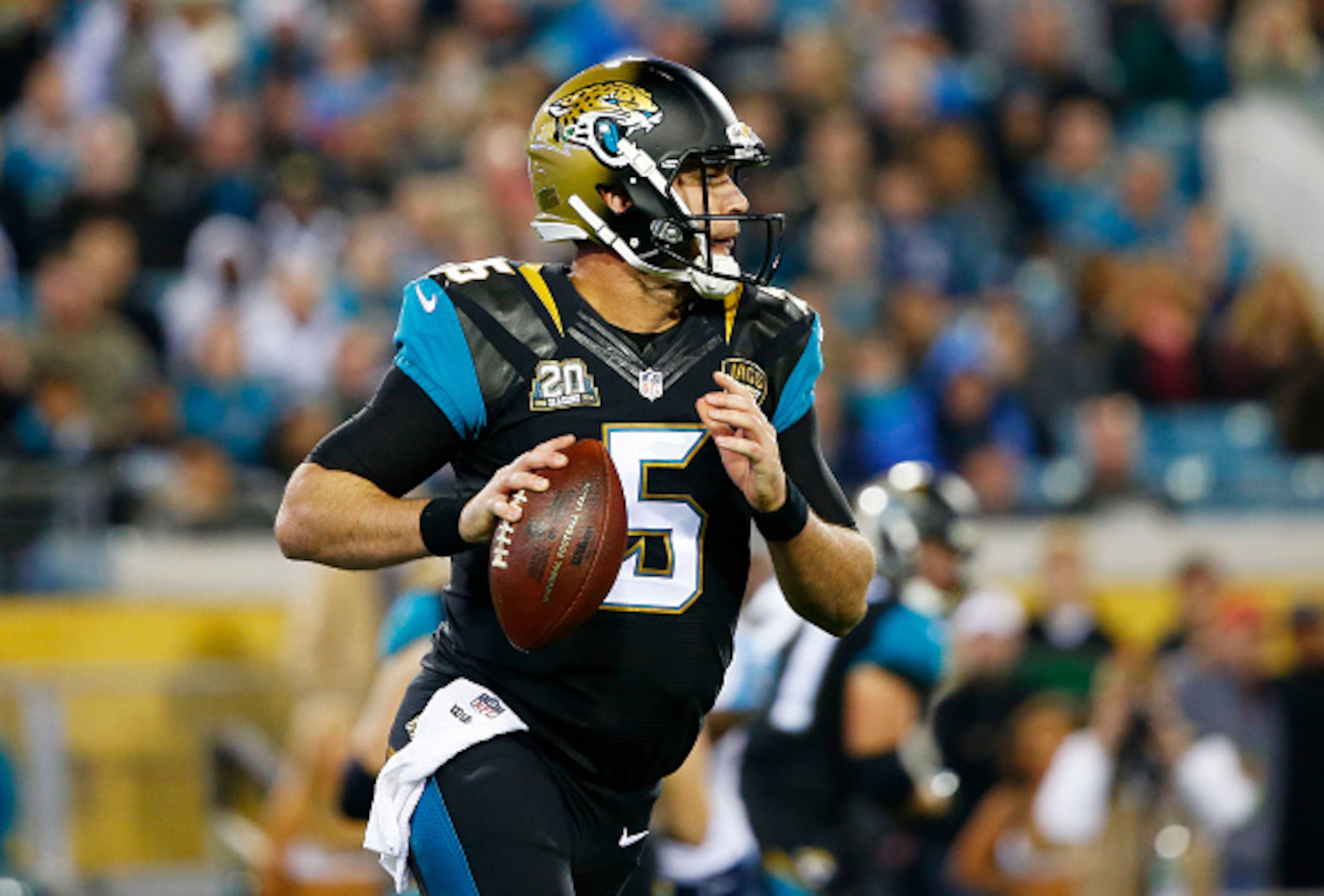
The No. 3 overall pick in the 2014 draft, Blake Bortles did not play up to expectations as a rookie. Completing just 58.9 percent of his passes for 6.12 yards per attempt and throwing 17 interceptions to just 11 touchdowns, he had the worst quarterback rating (69.5) among NFL starters this year.
Still, Bortles makes this top 50 because of how difficult it is to succeed as a rookie quarterback. He brought more playmaking ability to the field than Chad Henne (the incumbent starter he replaced in Week 4) and showed his potential to make plays with both his arm and his legs, as he gained 419 yards on 56 rushing attempts.
Going forward, Bortles needs to become more fundamentally sound—with his accuracy, footwork and decision-making—to improve his completion percentage and cut down on turnovers. His inconsistent, mistake-prone play kept the Jaguars offense from ever getting into a consistent rhythm this year.
Bortles demonstrated promising tools and enough upside this year that he’ll return as Jacksonville’s starting quarterback in 2015. Realistically, he came out of Central Florida as a project who needed multiple years of development to succeed in the NFL, but he will be expected to make significant progress in his sophomore campaign.
44. Cairo Santos, K, Kansas City Chiefs
7 of 50
Cairo Santos had a solid first year as the Kansas City Chiefs’ place-kicker, in which he made 25 of 30 field-goal attempts and all 38 extra points he attempted.
Santos’ field-goal accuracy was consistent for the most part, but he doesn’t have a great leg. The undrafted rookie from Tulane only made one field goal beyond 50 yards this season, while he graded out as the NFL’s second-worst kicker on kickoffs this year, according to Pro Football Focus.
In total, Santos missed just one field-goal attempt of 39 yards or less, but was 8-of-12 on kicks of 40 yards or more.
His field-goal percentage of 83.3 tied him for 19th among NFL kickers in 2014.
43. Allen Hurns, WR, Jacksonville Jaguars
8 of 50
Although the Jacksonville Jaguars used two second-round picks on wide receivers in the 2014 draft, their leading receiver this year, with 677 receiving yards and six touchdowns on 51 catches, was undrafted rookie Allen Hurns.
A skilled receiver with good size and speed who evidently should have been drafted, Hurns showed some big-play ability, tallying 11 receiving plays of 20 yards or more.
His production was inconsistent—he had two receptions or less in seven games. That was in part because of the struggles of quarterback Blake Bortles, but Hurns also had seven drops.
Overall, he finished the season eighth among rookies in receptions and receiving yards and tied for sixth among rookies in receiving touchdowns. He looks to have a bright future ahead of him in the NFL, despite going unselected after his collegiate career at Miami.
42. Anthony Hitchens, OLB, Dallas Cowboys
9 of 50
Pressed into duty after linebacker Justin Durant went down with a season-ending injury in Week 8, Anthony Hitchens performed admirably as a starter throughout the second half of the season.
In 11 total starts, Hitchens recorded 73 tackles and four passes defensed, including one interception, while logging time at all three linebacker spots within the Dallas Cowboys’ 4-3 defense.
The fourth-round pick from Iowa didn’t make a great deal of impact plays—he had just three tackles for loss—but he was an efficient tackler who filled in well as a run-stopper.
Hitchens can be counted on to be a core component of the Dallas defense as the Cowboys move forward to the playoffs, and he could fill the role of a starter or a priority backup in future seasons.
41. Weston Richburg, LG, New York Giants
10 of 50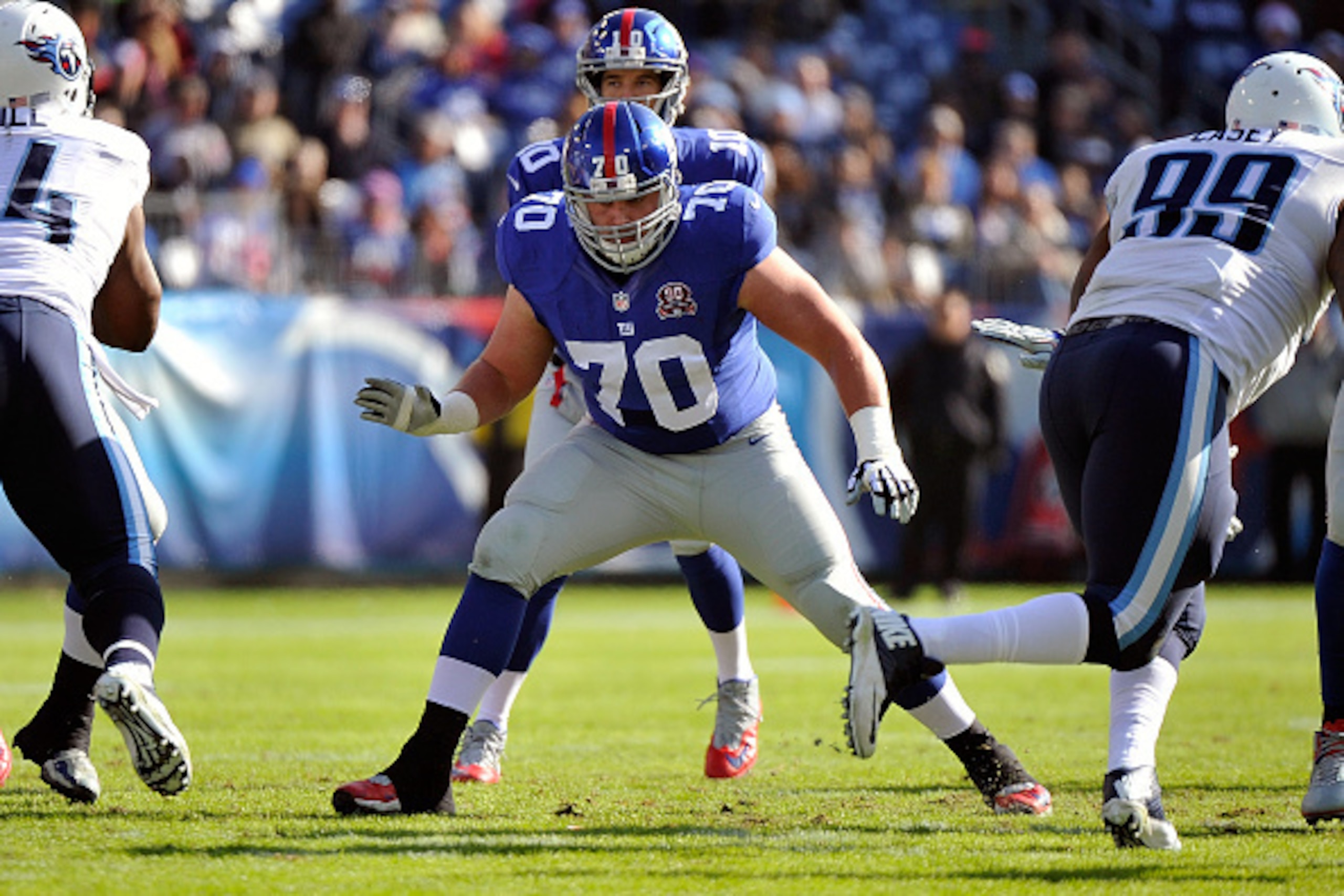
Weston Richburg had some growing pains in his rookie season, but that’s to be expected for a rookie who played nearly his entire career at Colorado State at center and then was thrust into the starting left guard position after projected starter Geoff Schwartz suffered an injury before the regular season.
Put into a tough spot, Richburg performed well for the most part. Except for Week 12, when he was benched in favor of Adam Snyder, Richburg started the New York Giants’ other 15 games and allowed just two sacks, per Pro Football Focus.
Undersized for the guard position at 6’3” and 298 pounds, Richburg was not great this year as a run-blocker, but he showed some ability to get to the second level and pick up defenders downfield. Should he move back to his best position of center in 2015, he would likely make a bigger impact in the ground game.
Regardless of which position he lines up at going forward, expect Richburg to improve with experience, just as he did over the course of his rookie year.
40. John Brown, WR, Arizona Cardinals
11 of 50
John Brown’s totals for the 2014 season of 48 receptions and 696 receiving yards don’t stand out, especially within a historically great class of rookie wide receivers, but they’re quite impressive for a third-round pick from Pittsburg State who had to work with three different starting quarterbacks.
A 5'10" speedster with an excellent ability for tracking deep balls, Brown quickly made a name for himself in the preseason.
The rookie continued to deliver with big plays in the regular season, especially in the first half of the year. Brown had five touchdowns in the first nine games of his rookie season, all of which came in the second halves of comeback wins by the Arizona Cardinals.
Although Brown only had receptions on 47.1 percent of his targets, according to Pro-Football-Reference.com, only four of his non-receptions were considered drops by Pro Football Focus. His production was more sporadic than consistent—he had seven games with two or fewer catches—but looks to be an excellent addition nonetheless as Arizona’s slot receiver.
39. Timmy Jernigan, DE, Baltimore Ravens
12 of 50
Timmy Jernigan didn’t get a chance to start for the Baltimore Ravens until Week 15, after veteran defensive end Haloti Ngata had already been suspended for a week, but the rookie showed even in rotational capacities that he has the skills to be a highly disruptive defensive lineman.
Among 3-4 defensive ends who played at least 25 percent of their teams’ snaps this year, Jernigan tied for sixth in run-stop percentage and second in pass-rushing productivity, per Pro Football Focus.
At a position where most players don’t accumulate big numbers, Jernigan finished the year with 23 total tackles and four sacks, despite starting three games and playing just 312 total snaps, as he missed four games with a knee injury.
Jernigan might lose his starting spot for the postseason, as he suffered a foot injury in Week 17 and Ngata is returning from suspension, but the Ravens should make sure to utilize the rookie frequently as a rotational defensive lineman if he is healthy. The second-round pick from Florida State has proved to be an asset with his ability to work his way into opposing backfields.
38. Russell Bodine, C, Cincinnati Bengals
13 of 50
A 16-game starter for the Cincinnati Bengals at center, fourth-round pick Russell Bodine suffered some bad beats this season, but he performed well enough that he should get the opportunity to continue growing in that role going forward.
Bodine only allowed two sacks this year, according to Pro Football Focus. An agile North Carolina product who led all 2014 NFL Scouting Combine participants with 42 repetitions on the bench press, Bodine also showed he could generate movement with his quickness and strength as a run-blocker.
As noted by ESPN.com’s Coley Harvey, the Bengals often ran the ball behind Bodine this regular season. Meanwhile, he tied for 14th in PFF’s pass-blocking efficiency rankings for centers who played 50 percent or more of their teams’ snaps this year.
The 6’3”, 306-pound interior lineman will continue playing a key role in the middle of Cincinnati’s offensive line going into this year’s playoffs—and likely into next year and beyond.
37. Christian Kirksey, ILB, Cleveland Browns
14 of 50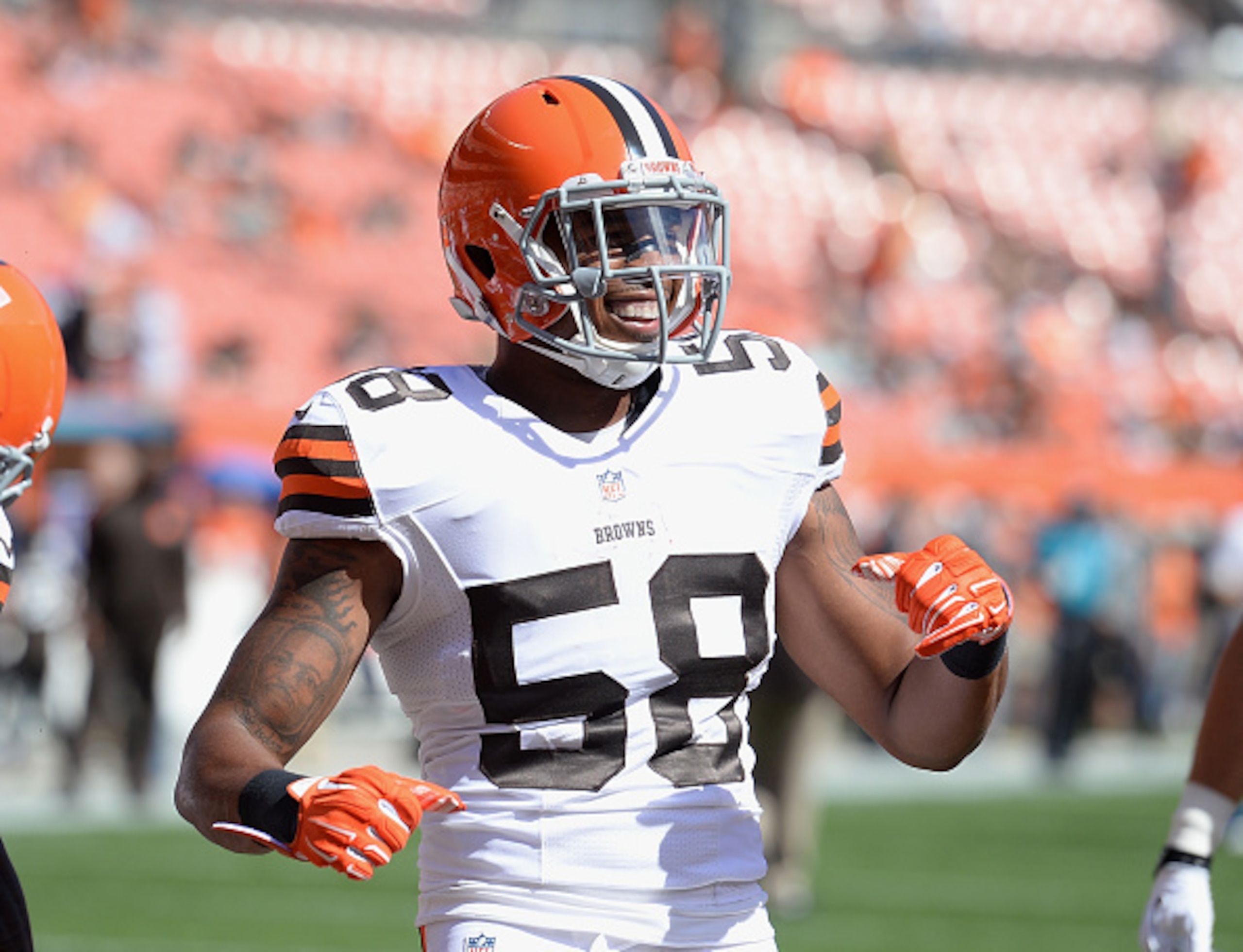
While much has been made of the failures of the Cleveland Browns’ two first-round picks in their rookie years, the Browns had many productive contributors from the rest of their 2014 class, including third-round pick Christian Kirksey.
Kirksey bounced in and out of the starting lineup but was consistently a part of the team’s inside linebacker rotation along with veterans Karlos Dansby and Craig Robertson. He finished the year with 81 total tackles, the fourth-most on the team, and eight starts.
The Iowa product ranked fifth among all NFL inside linebackers in tackling efficiency, as he missed just five tackles this year, according to Pro Football Focus. Effective as a run-stopper, he also performed well in pass coverage and finished the year with three passes defensed and two sacks.
Kirksey should continue to be a valuable part of Cleveland’s defensive front-seven rotation going forward.
36. Gabe Jackson, LG, Oakland Raiders
15 of 50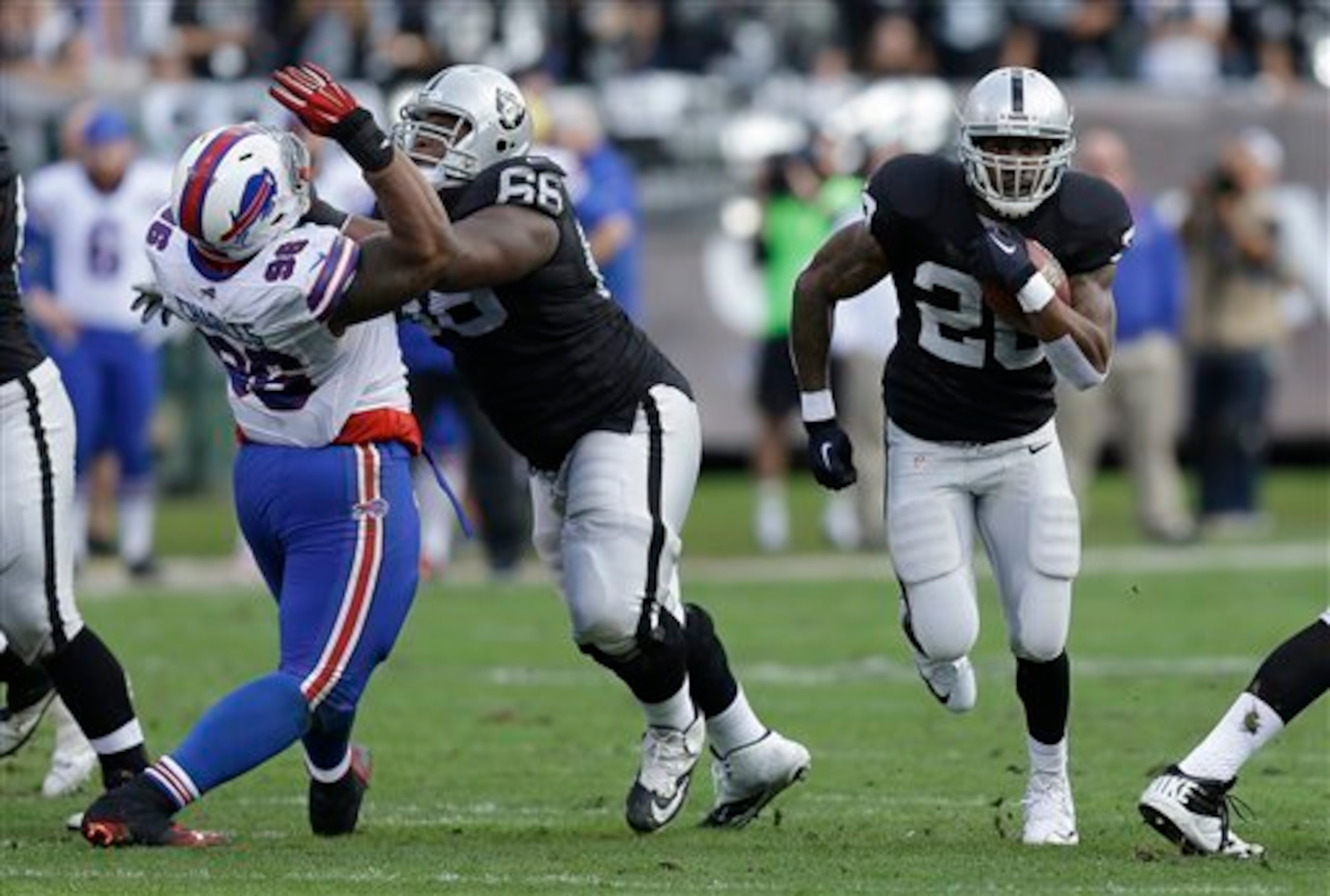
A mammoth of a man at 6’3” and 336 pounds, Gabe Jackson achieved immediate success this season as he started 12 games for the Oakland Raiders at left guard.
Heralded most at Mississippi State for his ability to drive defenders off the line of scrimmage as a run-blocker, Jackson was actually at his best as a pass-blocker for the Raiders this season. He allowed just one sack in 528 pass-blocking snaps, according to Pro Football Focus.
Jackson is not a guard who makes a great deal of downfield blocks, but his size and power enable him to win consistently in a phone booth. As a result, the third-round pick was a solidifying presence on the offensive line this year, with the exception of three games he missed with a knee injury.
On a Raiders offense that is as talent-starved as any unit in the NFL, Jackson has already emerged as one of its best players.
35. Aaron Lynch, OLB, San Francisco 49ers
16 of 50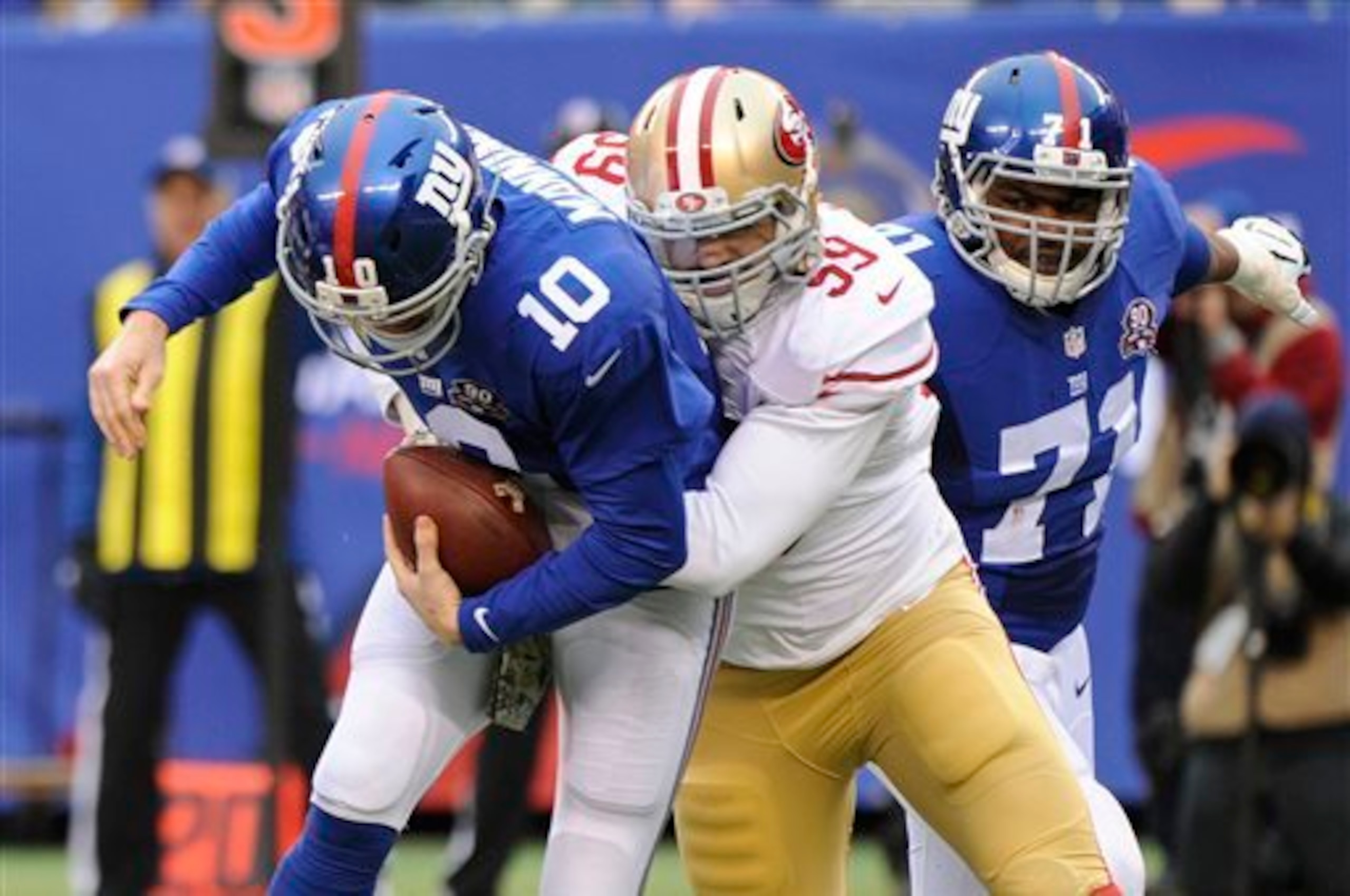
An underachiever during his collegiate career at South Florida and Notre Dame, fifth-round pick Aaron Lynch started to play up to his potential in his first NFL season with the San Francisco 49ers.
Used primarily as a situational pass-rusher, Lynch recorded six sacks despite starting only three games in his rookie year. In total, he recorded 40 pressures on 304 pass-rushing snaps, according to Pro Football Focus, ranking eighth in per-snap pass-rushing production among 3-4 outside linebackers who played 50 percent or more of their teams’ snaps this year.
Lynch also recorded four pass deflections this year. He had 23 total tackles but played more than twice as many snaps against the pass than he did versus the run, according to PFF.
An explosive athlete at 6’5” and 270 pounds, Lynch’s ceiling remains higher to become a more complete player. The skill he showed in bringing pressure off the edge this season was encouraging progress for the talented but previously troubled defender.
34. Derek Carr, QB, Oakland Raiders
17 of 50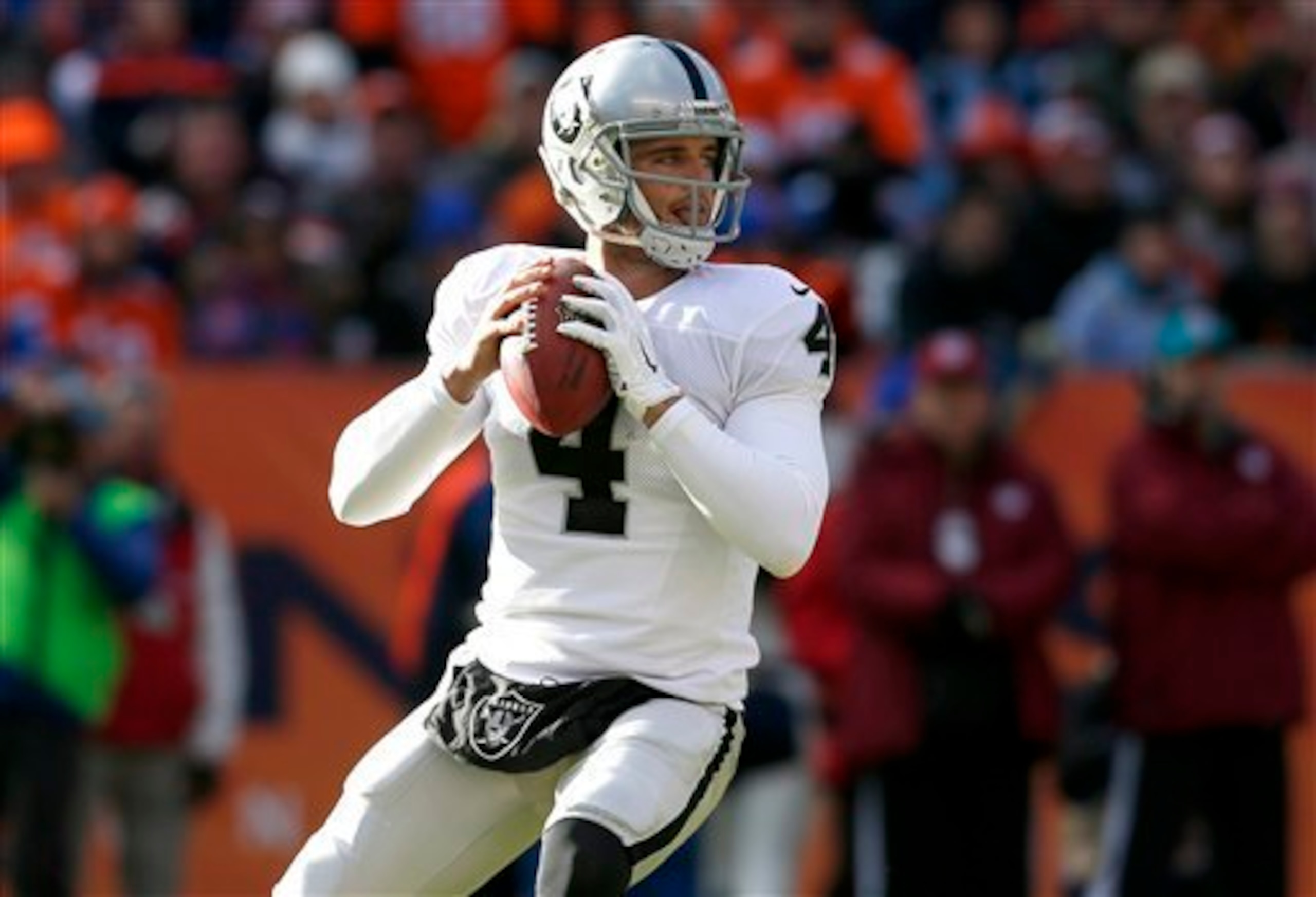
The only rookie quarterback to start all 16 of his team’s games this year, Derek Carr endured the struggles typical of first-year signal-callers but also showed flashes of greatness that have inspired belief that he can be the Oakland Raiders’ long-term answer under center.
On a talent-deficient Raiders offense, Carr threw for 3,270 yards and 21 touchdowns while completing 58.1 percent of his passing attempts. He helped lead Oakland to wins in three of its final six games.
With 16 turnovers (12 interceptions, four lost fumbles) and a league-low 5.46 yards per passing attempt, Carr finished the year with a quarterback rating of 76.6, which was better than only three other starters in the NFL this season.
What was evident this season is that the second-round pick from Fresno State has the arm talent and athleticism that NFL teams covet in a franchise quarterback. He should have earned at least one more year as Oakland’s starter, especially considering how many other issues the Raiders still have with their roster.
33. Cody Parkey, K, Philadelphia Eagles
18 of 50
With 32 made field goals and 54 converted extra points, Cody Parkey put as many kicks through the uprights this year as any other place-kicker in the NFL.
Parkey missed just four field-goal attempts this season, giving him a field-goal percentage of 88.9 that tied him for eighth among all kickers in the league.
He had his worst game at a bad time, as he missed two field goals in a Week 16 loss to the Washington Redskins that led to the Philadelphia Eagles’ elimination from the playoffs, but he was otherwise reliable this year.
The undrafted rookie's leg strength was evident this year, as he made all four of his field-goal attempts from beyond 50 yards, and 46 of his 98 kickoffs were touchbacks.
32. Chandler Catanzaro, K, Arizona Cardinals
19 of 50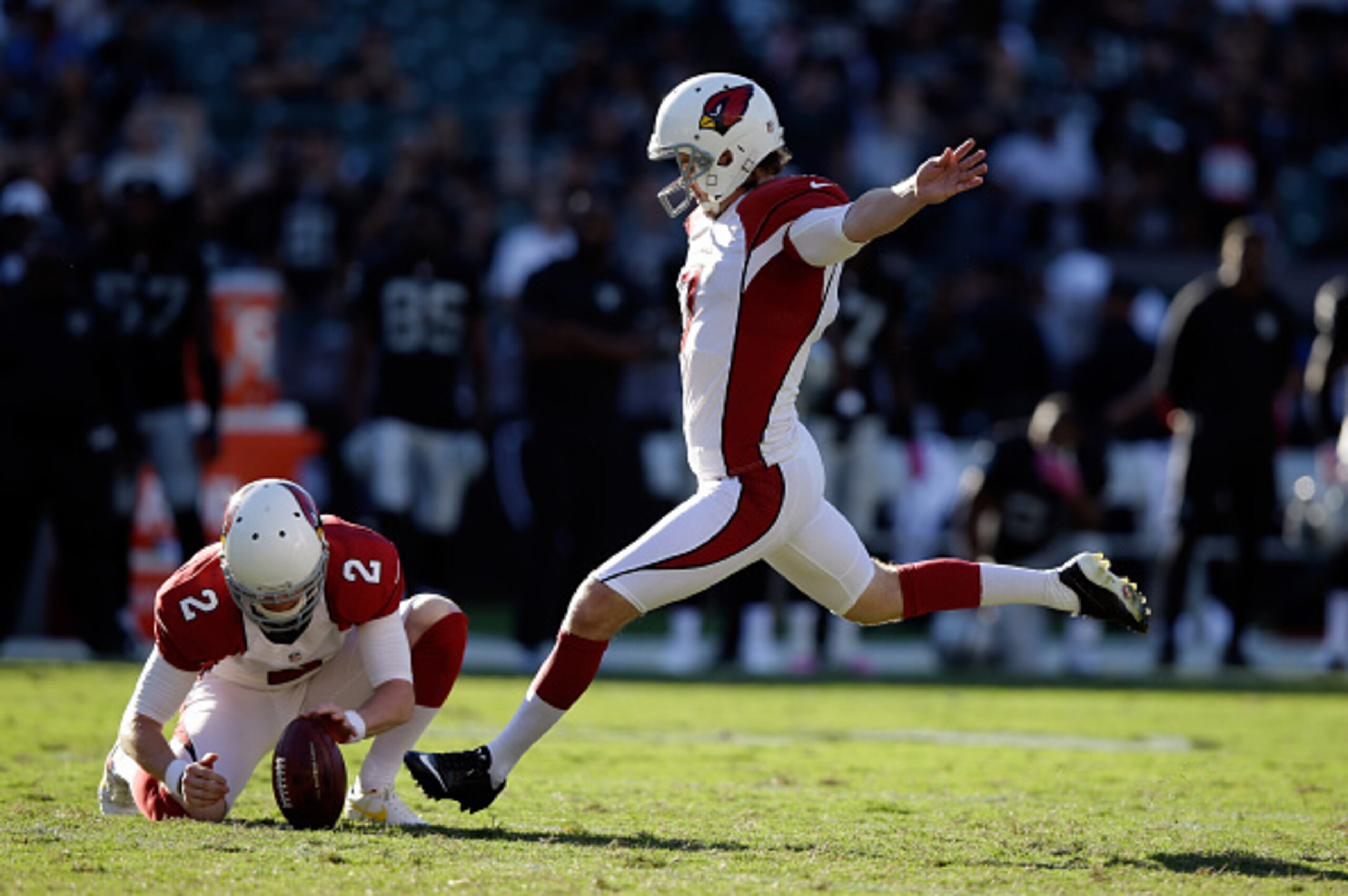
Like Cody Parkey, Chandler Catanzaro made all but four of his field-goal attempts in his rookie year.
The undrafted rookie finished 10th in the NFL with a field-goal percentage of 87.9. His 29 made field goals included 12 makes on 14 attempts from 40 yards or more, while he had the same percentage on kicks from between 30 and 39 yards out.
Catanzaro’s longest field goal was only 51 yards, but he showed plenty of leg strength on his kickoffs, even though he was never a regular kickoff specialist at Clemson. In total, he put exactly half of his kickoffs (38 of 76) into the end zone for touchbacks. He ranked as the sixth-best kicker in the NFL on kickoffs this year, according to Pro Football Focus.
One could make the case either way as to whether Catanzaro or Parkey was the best rookie kicker in the NFL this season, but Catanzaro’s success and consistency on kickoffs give him the slight edge in these rankings.
31. Bashaud Breeland, CB, Washington Redskins
20 of 50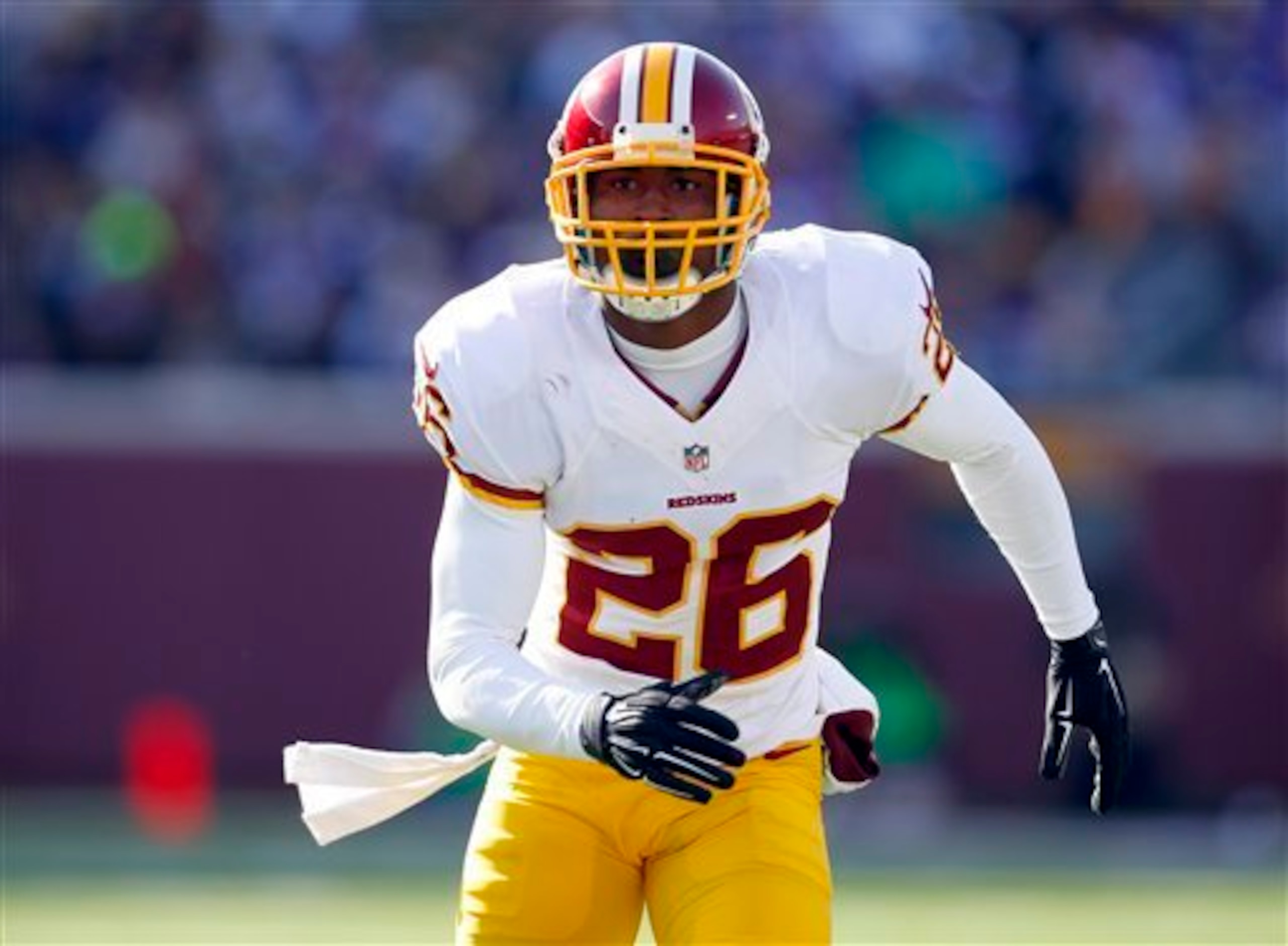
Pressed into duty as a starting cornerback on the outside after DeAngelo Hall suffered a season-ending injury in Week 3, Bashaud Breeland emerged as the best defensive back, even with no shortage of errors of his own, in a weak Washington Redskins secondary this year.
A fourth-round pick from Clemson, Breeland’s playmaking ability was evident throughout his rookie year as he recorded 13 passes defensed, including two interceptions, along with two forced fumbles and 67 total tackles.
Breeland clearly improved in coverage over the course of the season. While he gave up at least 68 receiving yards in five of his first eight starts as an outside cornerback, he allowed no more than 66 yards in any of his last six starts, according to Pro Football Focus. By the end of the season, opposing teams were picking on his counterpart in the starting lineup—struggling second-year cornerback David Amerson—much more frequently than they were targeting Breeland.
In addition to his progress in coverage, he was excellent against the run. He ranked third in run-stop percentage among all cornerbacks who played at least 50 percent of their teams’ snaps against the run this year, per PFF.
30. Justin Ellis, NT, Oakland Raiders
21 of 50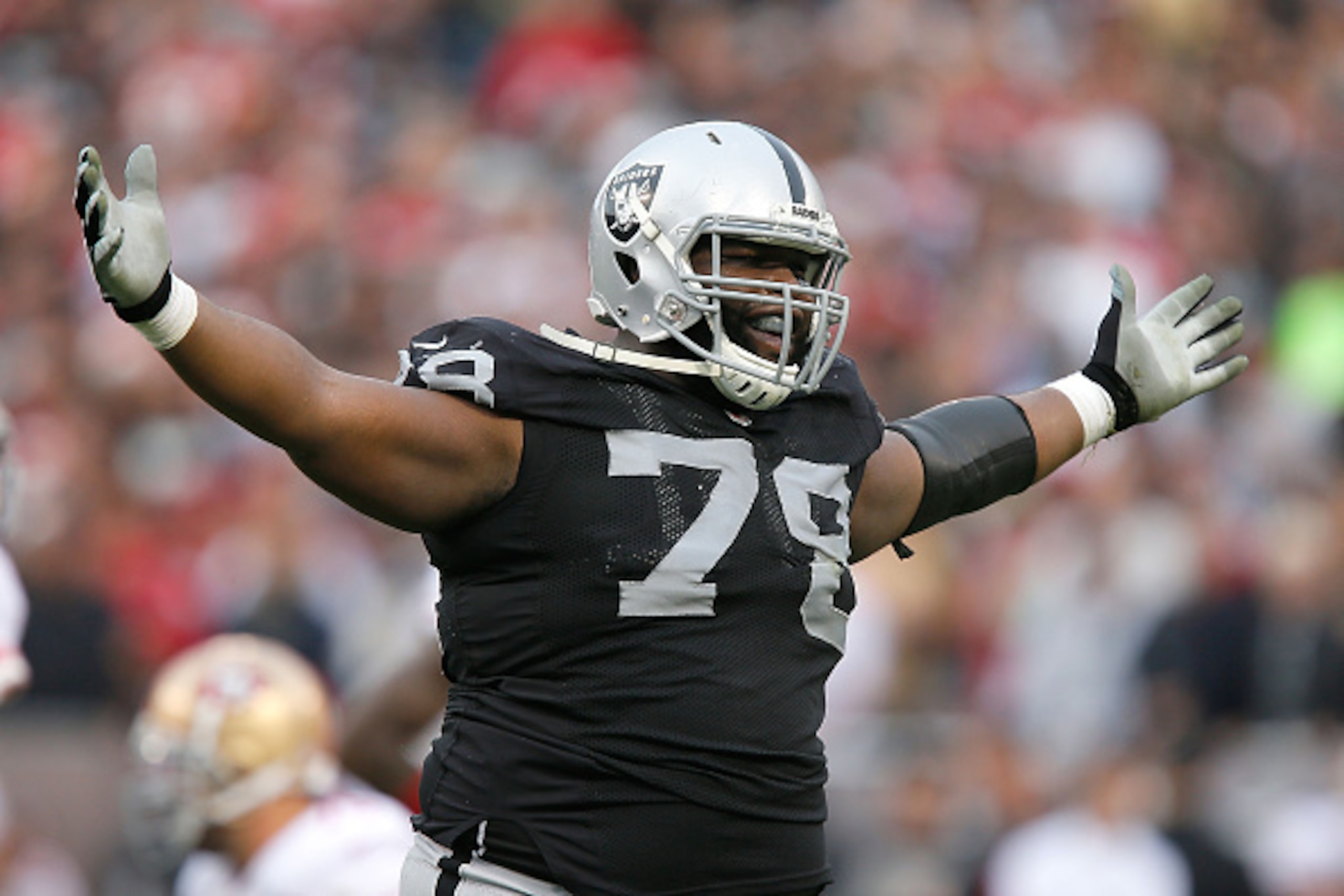
A prototypical nose tackle at 6’2” and 334 pounds, Justin Ellis didn’t make many marks on box scores this year but still made a significant impact by clogging gaps and occupying blockers, freeing up players around him to make plays.
Graded by Pro Football Focus as the league’s 16th-best defensive tackle against the run this year, Ellis recorded 21 total tackles, including two for loss.
Ellis might never be a game-changer, but his size and strength make him tough to move. He also has enough quickness to occasionally break through to the backfield to make stops or bring pressure.
For the role he was asked to play by the Oakland Raiders this year, Ellis was better than adequate. The fourth-round pick from Louisiana Tech should continue to be good value and a solid starter on their defense.
29. Seantrel Henderson, RT, Buffalo Bills
22 of 50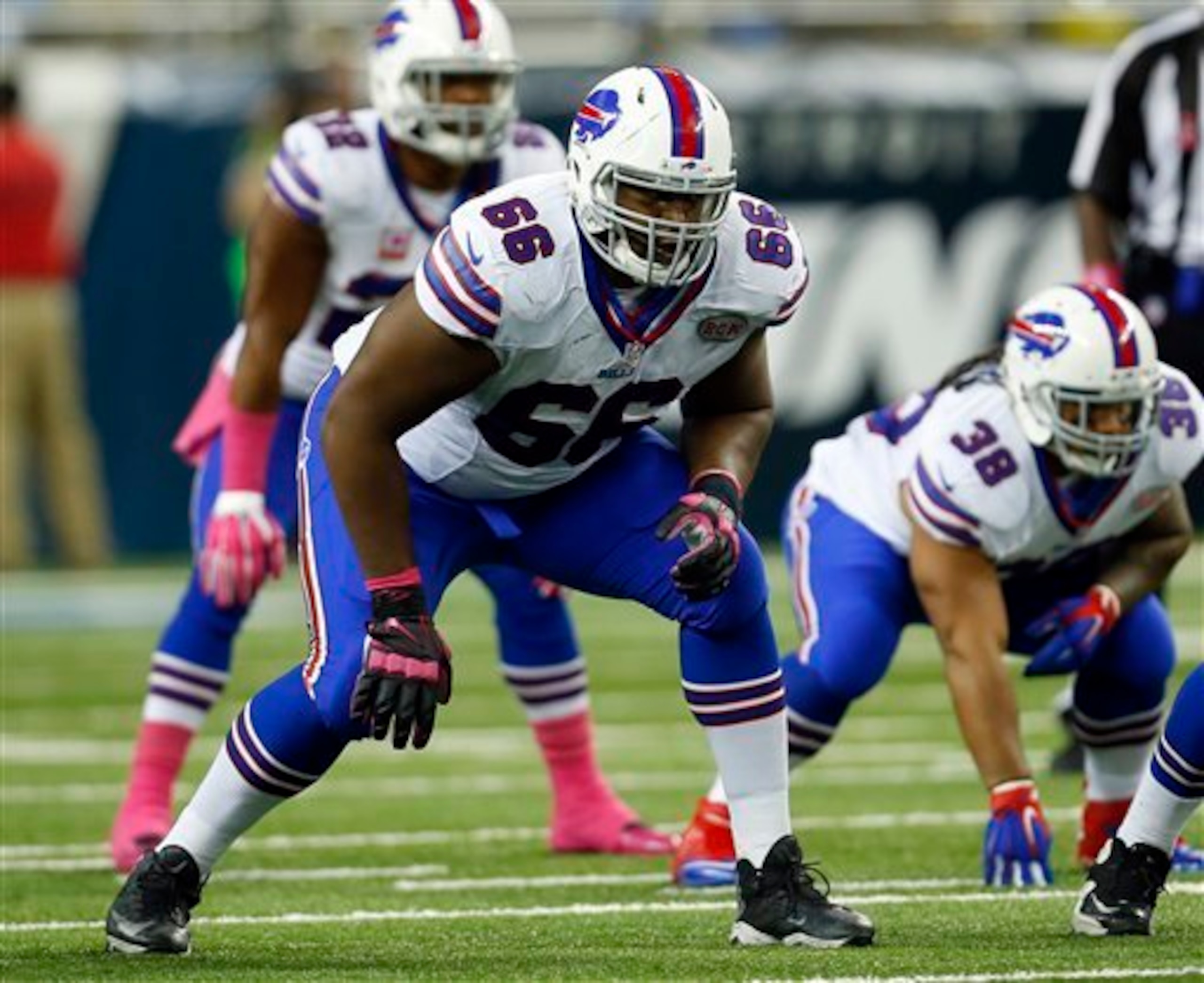
The first seventh-round pick to start all 16 games of his rookie season since 2004, Seantrel Henderson had the struggles one might expect from a first-year offensive tackle in his position, but he improved throughout the year and ultimately played as well as anyone on a shaky Buffalo Bills offensive line.
Henderson, who was a star recruit out of high school but underachieved and had off-field issues at Miami, started to make good on his potential in his rookie year. He was not able to generate much movement as a run-blocker, but he displayed good quickness and solid progression as a pass-blocker.
Bills head coach Doug Marrone, a former offensive lineman and offensive line coach, said Monday that he felt Henderson “was a productive winning player” in 15 of his 16 starts this season, according to Chris Brown of BuffaloBills.com.
Henderson ranked just 38th among NFL offensive tackles this year in pass-blocking efficiency, per Pro Football Focus, but he allowed only six sacks in 632 pass-blocking snaps. He was also one of six offensive tackles to play 1,000 snaps this season and have four or fewer penalties.
28. Jack Mewhort, LG, Indianapolis Colts
23 of 50
A late second-round selection but the Indianapolis Colts’ first pick in the 2014 draft, Jack Mewhort became an immediate starter and provided the most adequate play of any of the team’s interior offensive linemen this season.
Mewhort, a versatile offensive lineman who played his final two years of his Ohio State career at left tackle, made a natural transition kicking inside as an NFL rookie. He started 13 of the Colts’ first 15 games at left guard, only missing two due to an ankle injury, and allowed just one combined sack in those contests, according to Pro Football Focus.
Improvement will be expected going forward, as he was neither a great pass-blocker nor a dominant run-blocker. More importantly, however, Mewhort was never a significant liability, as he committed just five penalties in his first year.
It’s uncertain where he will line up going forward, as he moved to right tackle for the Colts’ regular-season finale. His versatility and technically sound play should ensure that he continues to be a key player along the offensive line, at one position or another, for years to come.
27. Kyle Fuller, CB, Chicago Bears
24 of 50
It didn’t take Kyle Fuller long to show the NFL why the Chicago Bears selected him with the No. 14 overall pick in the 2014 draft. In his first six games, he recorded three interceptions, three forced fumbles, six total passes defensed and 30 total tackles.
From that point forward, the Virginia Tech product’s rookie season quickly went downhill, as he made few big plays but had many made against him. Between Week 7 to Week 15, Fuller recorded just one pass deflection but had 477 receiving yards and four touchdowns go against him, according to Pro Football Focus.
He finished the year on a stronger note, recording three passes defensed including one interception in his final two games. Overall, however, inconsistency defined his season. He allowed 1.68 yards per coverage snap this season—tied for the sixth-most allowed among NFL cornerbacks who played at least 50 percent of their teams’ snaps, per PFF.
Fuller was overmatched by some of the top receivers he faced this year, but that’s typically the case for a rookie cornerback thrust into a starting role. It remains evident that Fuller, while he still has a long way to go in his development, has big-play ability.
26. Bryan Stork, C, New England Patriots
25 of 50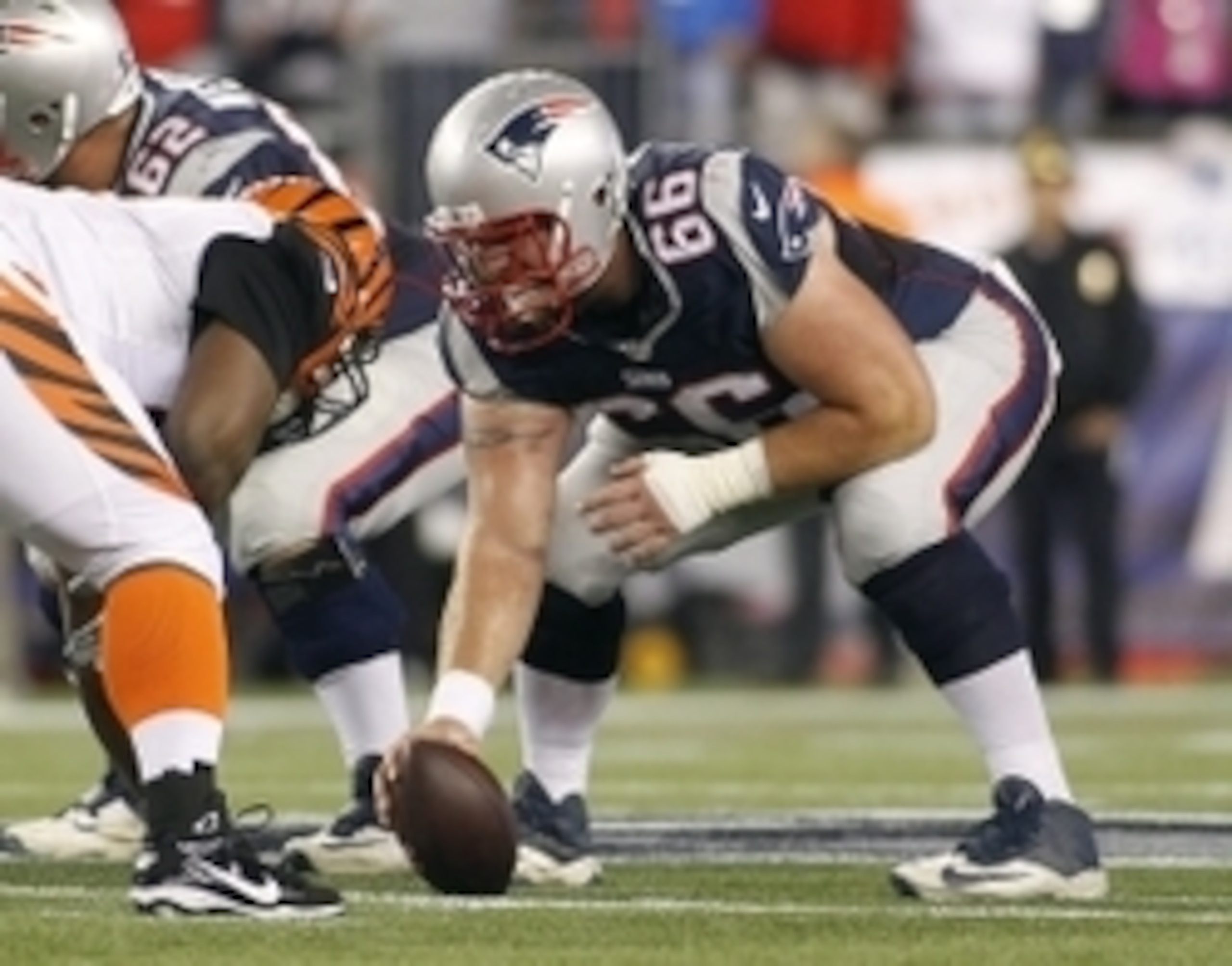
After struggling through some early personnel shifts on their offensive line, the New England Patriots found stability up front once they turned to fourth-round pick Bryan Stork to take over their starting job at center.
The insertion of Stork was not the only reason the Patriots offensive line’s play improved significantly—Dan Connolly and Ryan Wendell fared far better as the starting guards than Josh Kline and Jordan Devey did—but he was a huge factor in the team’s offensive improvement, as he gave the team a reliable anchor in the middle.
In 458 pass-blocking snaps this year, Stork allowed just one sack and 13 total pressures, according to Pro Football Focus. He has not excelled as a run-blocker, but he typically holds his ground at the line of scrimmage while he can move to the second level and pick up downfield blocks.
Stork has played an important role in the Patriots going into the postseason as the No. 1 team in the AFC, and he looks to be a long-term fixture in the middle of their offensive line.
25. Bradley Roby, CB, Denver Broncos
26 of 50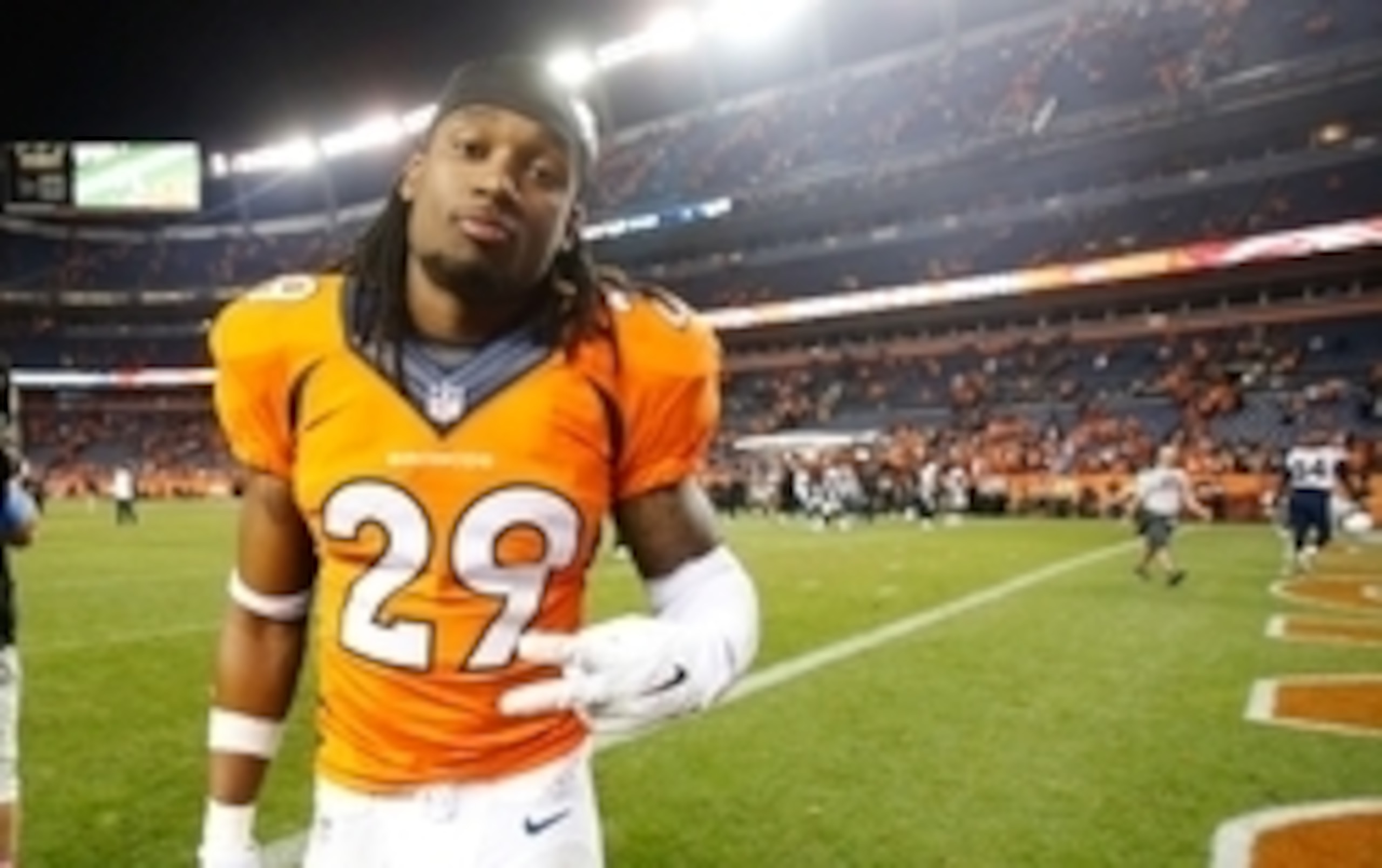
Used as both a slot cornerback and outside cornerback in his rookie season, Bradley Roby quickly emerged as a playmaker in the Denver Broncos secondary, though he also had a number of big plays made against him.
Roby recorded 13 passes defensed in his rookie year, including two interceptions, along with 65 total tackles, two forced fumbles, one fumble recovery and one sack. He had a solid year overall in coverage, allowing just 1.17 yards per coverage snap, according to Pro Football Focus.
The No. 31 overall pick from Ohio State had a rough midseason stretch from Week 7 to Week 12. He was beaten for a touchdown pass in six straight games, while he also failed to make a significant impact against the run in his rookie year.
Roby still has to become a more consistent, less mistake-prone player, but he had a promising first campaign at a position where NFL newcomers typically struggle. With the ability to play outside and inside, he should continue to play a major role in the Broncos secondary going forward.
24. Jordan Matthews, WR, Philadelphia Eagles
27 of 50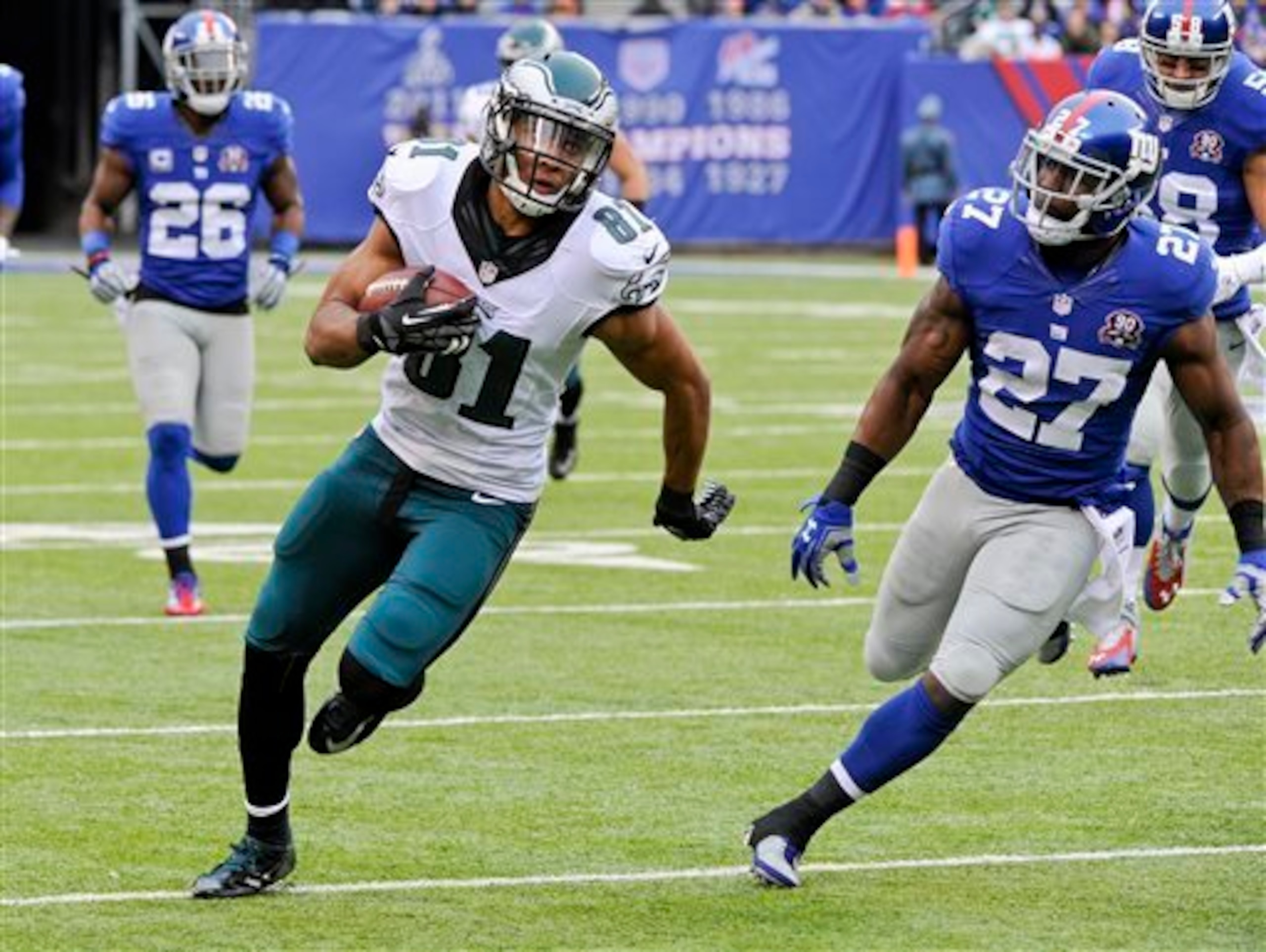
The SEC’s all-time leader in receptions and receiving yards, Jordan Matthews continued to be highly productive in his rookie season for the Philadelphia Eagles.
A second-round pick from Vanderbilt, he caught 67 passes for 872 yards and eight touchdowns—all numbers that ranked within the top five for rookie receivers.
Listed at 6’3” and 212 pounds, some viewed Matthews as a possession receiver more than a big-play threat coming out of college, yet he had 16 receiving plays of 20 or more yards in his debut NFL year.
A crisp route-runner who is typically sure-handed, Matthews had three 100-yard receiving games this season, all of which came in the second half of the year with Mark Sanchez at quarterback. He had more rapport with Sanchez than he had with Nick Foles early in the season, but he should continue to be one of the team’s top two wideouts regardless of who the quarterback is in 2015.
23. Ja'Wuan James, RT/LT, Miami Dolphins
28 of 50
The first half of Ja'Wuan James' rookie season went smoothly, at least relative to the fact that he was a first-year offensive tackle. An immediate starter on the right side for the Miami Dolphins, he allowed just two sacks in his first eight games, according to Pro Football Focus, and was adequate although not overpowering as a run-blocker.
After James moved to left tackle in Week 10 when Branden Albert went down with a season-ending injury, his season went sharply downhill.
Playing on the left side for the first time since high school—the No. 19 overall pick was a four-year right tackle at Tennessee—James failed to make a smooth transition. In his last four games alone, he allowed four sacks and 25 total quarterback pressures, per PFF.
While the end of his rookie season was disappointing, the reality is that the right side is where he belongs. One of just three first-year offensive tackles to start all 16 of his team’s games this year, James had the best year of any of them and should continue to succeed once he moves back to the right side in 2015.
22. Avery Williamson, ILB, Tennessee Titans
29 of 50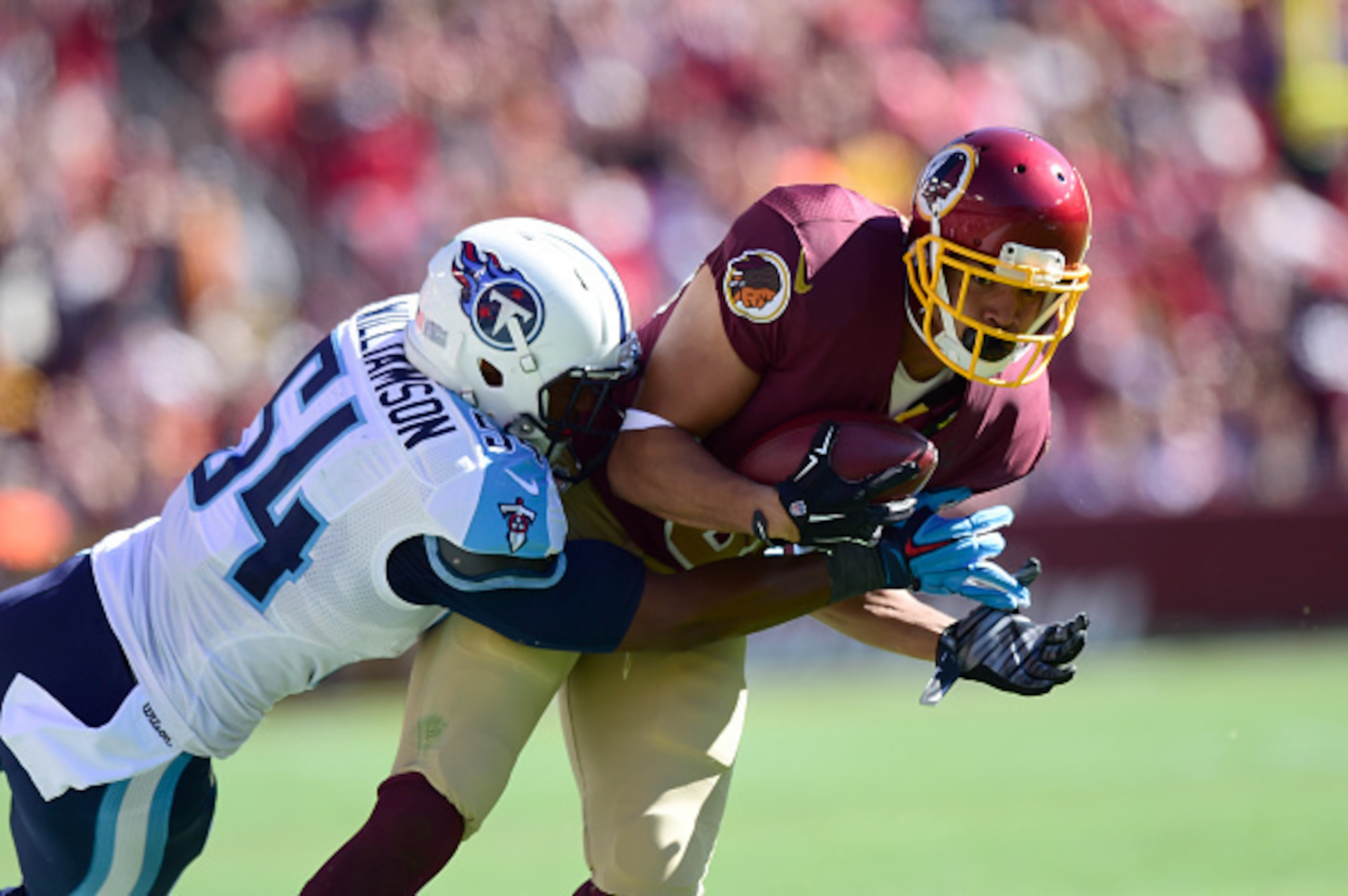
After taking over a starting inside linebacker position on the Tennessee Titans defense in Week 5, Avery Williamson quietly became one of the most effective rookie defenders in the NFL this year.
Williamson, who started each of the Titans’ final 12 games, accumulated 79 total tackles, three sacks, four passes defensed and two fumble recoveries over the course of the season.
A fifth-round pick out of Kentucky, he was a sound run defender all year; according to Pro Football Focus, Williamson had the third-best tackling efficiency among all NFL inside linebackers. He was also consistently solid in his play dropping back into coverage.
He’s flown largely under the radar so far—in part because he played his first season on a team with a bad defense that won two games—but he was one of the most solid presences on an otherwise shaky unit.
21. Telvin Smith, OLB, Jacksonville Jaguars
30 of 50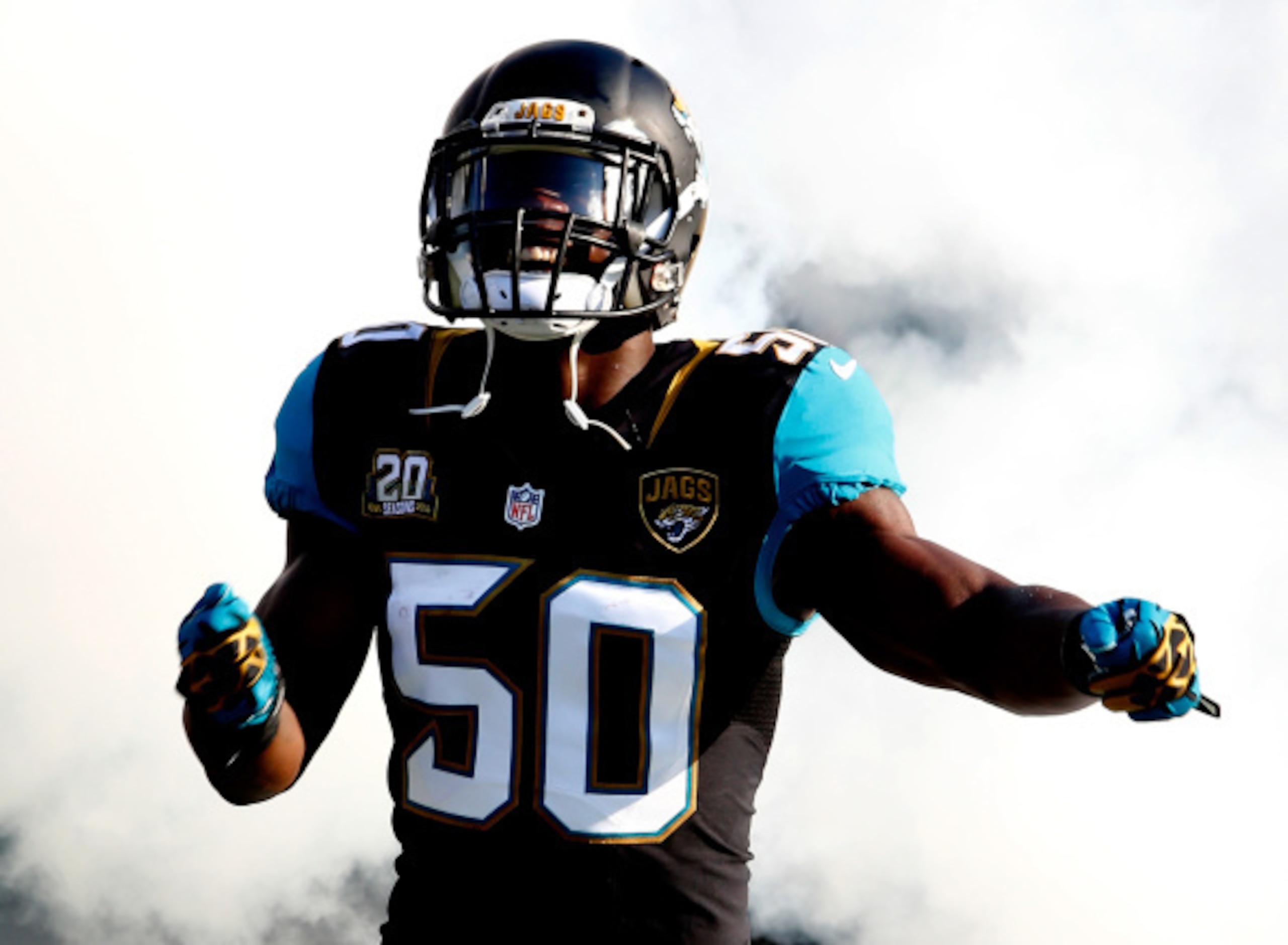
An undersized (6'3", 218 lbs) but explosively athletic linebacker, Telvin Smith made a strong case for speed and skill mattering more than size in his rookie season, as he emerged as a productive starter on the Jacksonville Jaguars defense.
Smith, who started nine games but was a part of the linebacker rotation in all 16 contests, finished his rookie year with 104 total tackles, nine tackles for loss (two sacks), four passes defensed (one interception), one forced fumble and two fumble recoveries.
The fifth-round pick from Florida State was active in run defense and consistently around the ball, especially late in the season, as he recorded double-digit tackles in four of Jacksonville’s final six games. Smith also provided solid play in dropping back into coverage.
Smith finished the year with 13 missed tackles, according to Pro Football Focus, which could be a side effect of being only 218 pounds. Overall, however, neither size limitations nor inexperience stopped him from becoming a core playmaker in Jacksonville in his rookie year.
20. Sammy Watkins, WR, Buffalo Bills
31 of 50
When Sammy Watkins was at his best this season, he validated the Buffalo Bills’ decision to trade a 2015 first-round pick to move up to the No. 4 overall slot in the 2014 draft to select him. A fast downfield receiving threat with the hand skills to make spectacular catches, Watkins scored six touchdowns this year and had six games with 75 or more receiving yards.
On the other end of the spectrum, he had nine games in which he had 35 receiving yards or less. For his first season as a whole, the Clemson product was inconsistent.
It could be argued that Watkins’ up-and-down production had as much to do with the Bills’ shaky quarterback play as it did with any deficiency in his ability to get open and make catches. And even though his numbers were statistically insignificant in more than half of his games, he still finished his rookie year with 65 receptions for 982 yards, both team rookie records.
Watkins needs to make catches more consistently and have fewer missed opportunities going forward, but what’s already evident is that he has game-changer ability and is drawing No. 1 receiver coverages from every opposing secondary as a result. He ranked second among all Bills in offensive yards from scrimmage this year and is already the team’s most dynamic offensive playmaker.
19. Deone Bucannon, SS, Arizona Cardinals
32 of 50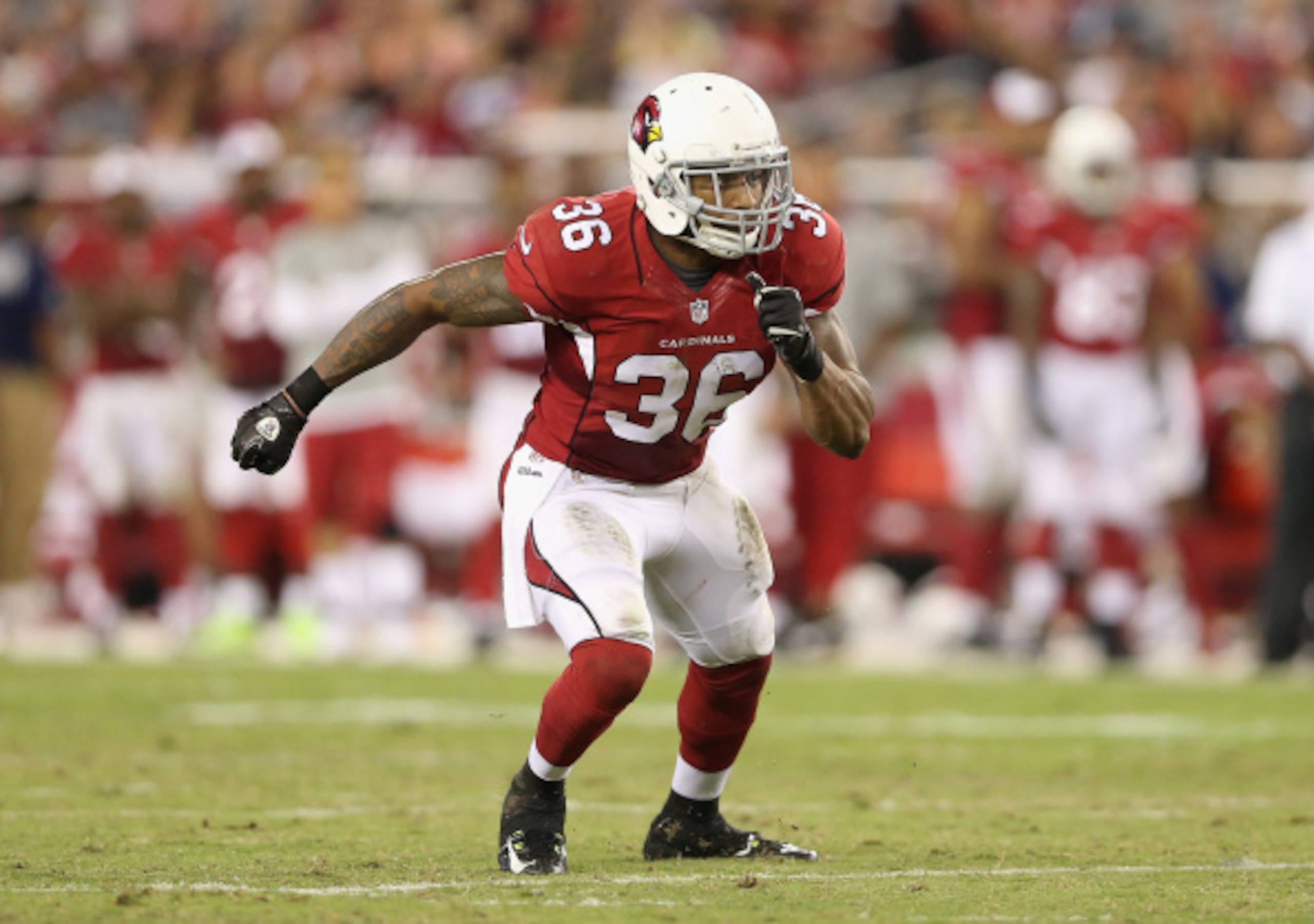
A hard hitter who doubled as a strong safety and situational linebacker, Deone Bucannon was a difference-maker for the Arizona Cardinals in his rookie season. He accumulated 81 total tackles, seven tackles for loss, two passes defensed, one forced fumble and one fumble recovery.
The 6’1”, 208-pound first-round pick from Washington State made big plays in the box all year. Bucannon allowed 1.08 yards per coverage snap, the third-most of any NFL safety who played 50 percent or more of his team’s coverage snaps this year, according to Pro Football Focus, but he did not give up many big plays in that capacity.
Bucannon was only credited with nine starts this year but played 65 percent of Arizona’s total defensive snaps, per PFF, while rotating in and out of a safety group that included four starting-caliber players in Rashad Johnson, Tony Jefferson, Tyrann Mathieu and Bucannon.
Also an active player on special teams this season, Bucannon was impressive for the most part in his hybrid defensive role and helped the Cardinals defense be among the NFL’s best this regular season.
18. Jarvis Landry, WR, Miami Dolphins
33 of 50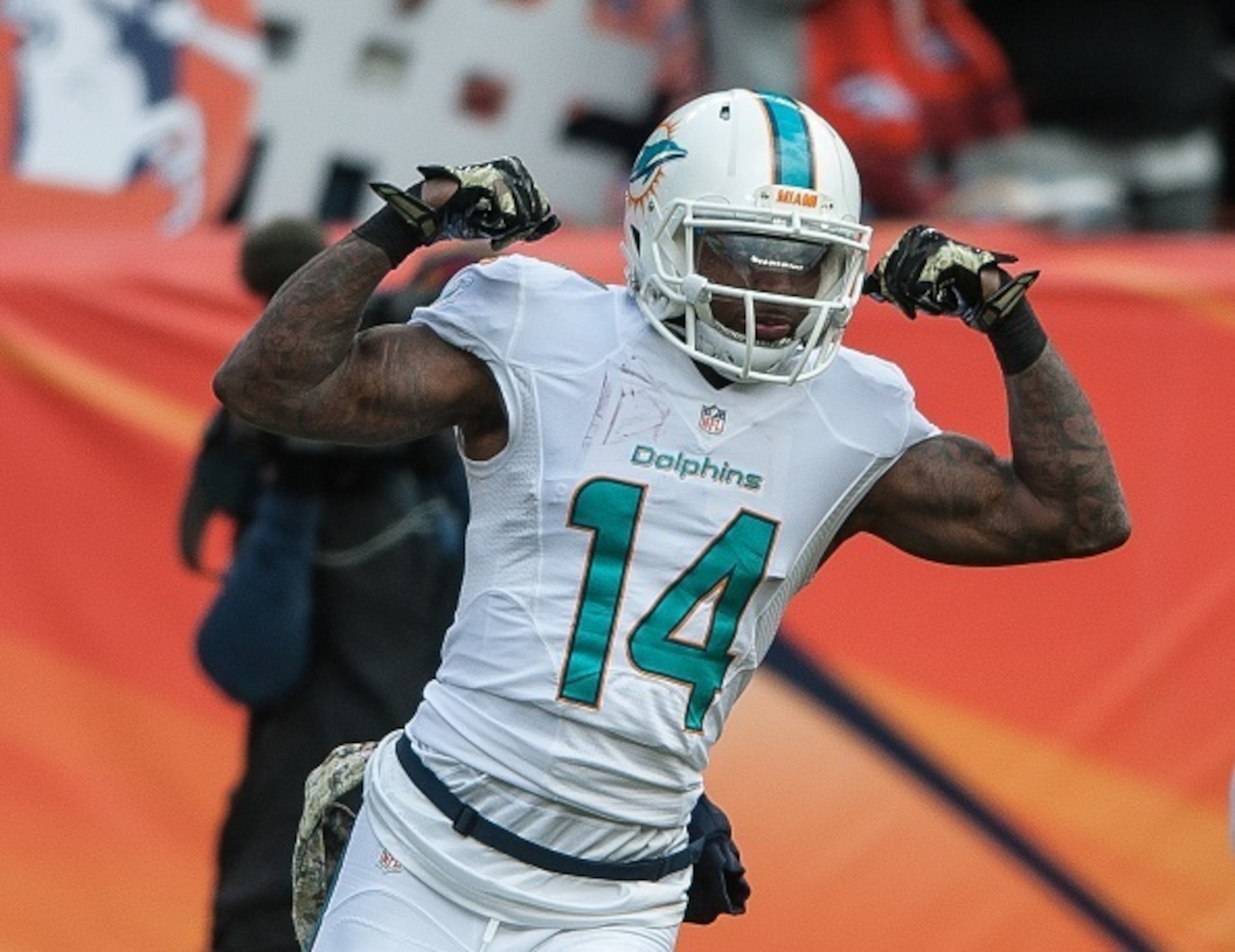
Already one of the team’s core players in his rookie season, Jarvis Landry led the Miami Dolphins with 84 receptions this year while also serving as the lead kickoff and punt returner.
Ideally suited for the slot receiver role, Landry emerged as a favored target of Dolphins quarterback Ryan Tannehill. He had at least five receptions in 11 Miami games, included each of the team’s last nine. He finished second among rookies in receptions, with catches made on 75 percent of his times targeted, according to Pro-Football-Reference.com.
It was clear in 2014 that Landry, who is slow for an NFL receiver, is a possession target with limited big-play ability. He had the lowest yards per reception, at 9.02, of any wide receiver with 40 or more catches in the NFL this season, according to Pro-Football-Reference.
He showed more ability to break away for big gains, however, on kickoff and punt returns. In total, the second-round pick from LSU combined 754 yards from scrimmage with 1,158 return yards to accumulate the fourth-most all-purpose yards among all NFL players in 2014.
17. Chris Borland, ILB, San Francisco 49ers
34 of 50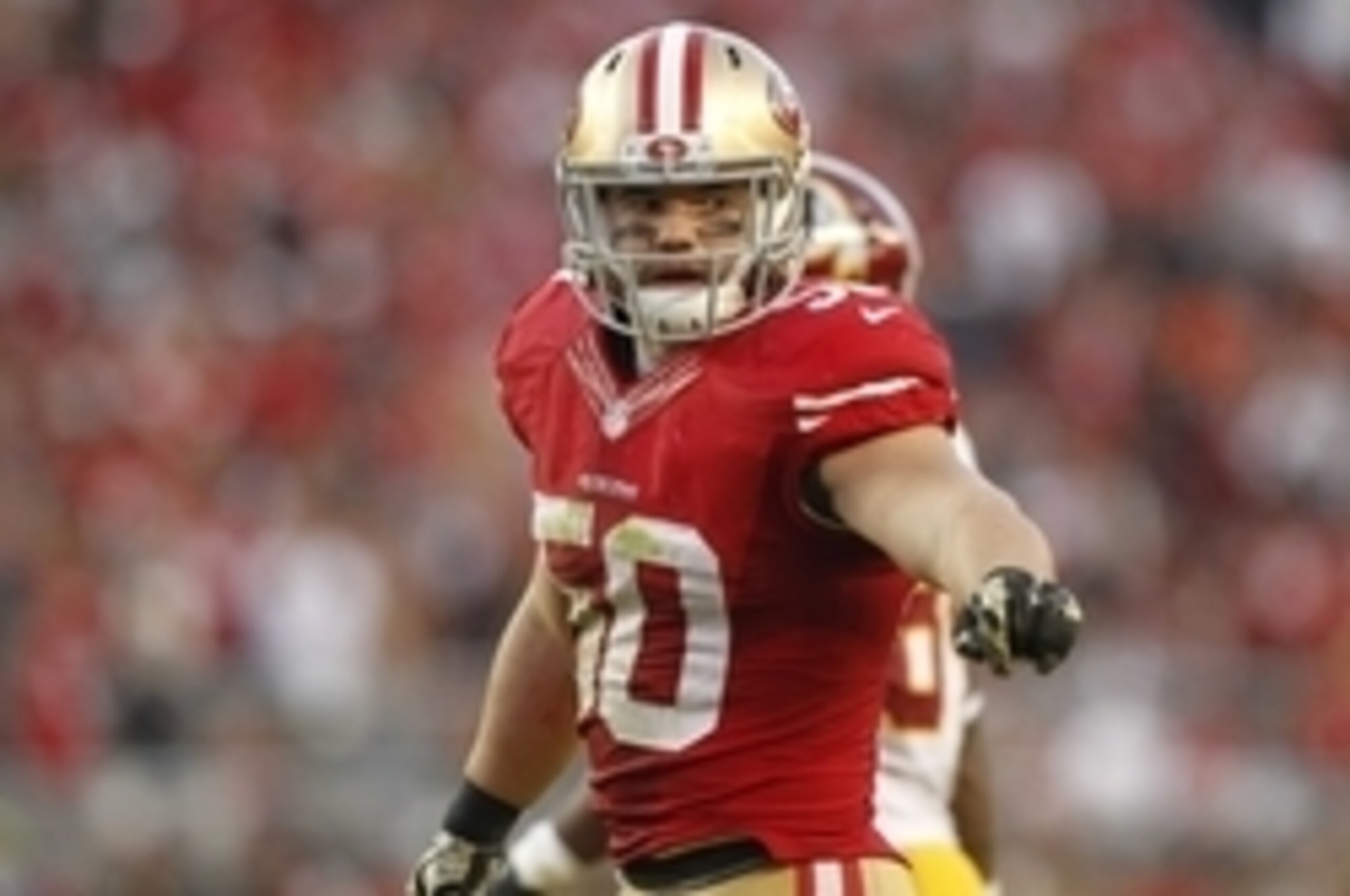
Chris Borland only saw playing time for the San Francisco 49ers defense in nine games this season, but he had more production in those games alone than most defensive rookies who played the entire year.
Borland, who might have never figured prominently into the 49ers defense this year had Patrick Willis not suffered a season-ending toe injury in Week 6, immediately emerged as a tackling machine. In his eight starts between Week 7 and Week 15 alone, he accumulated 100 total tackles, easily the most of any NFL defender in that eight-week span.
While Borland fell to the third round of the 2014 draft because of his lack of height (5'11") and speed, the Wisconsin product proved this year that his instincts and physicality more than make up for his limited physical measurables. Aggressive to the ball-carrier and seemingly always in the proper position, Borland is already performing at an elite level as a run-stopping inside linebacker.
He had some issues in pass coverage as a rookie and might never be great in that capacity, but his ability to make plays between the hashes was huge for the 49ers defense before he suffered a season-ending ankle injury. Even if Willis and NaVorro Bowman are both back and fully healthy in 2015, San Francisco must come up with a plan to get Borland on the field.
16. Preston Brown, OLB, Buffalo Bills
35 of 50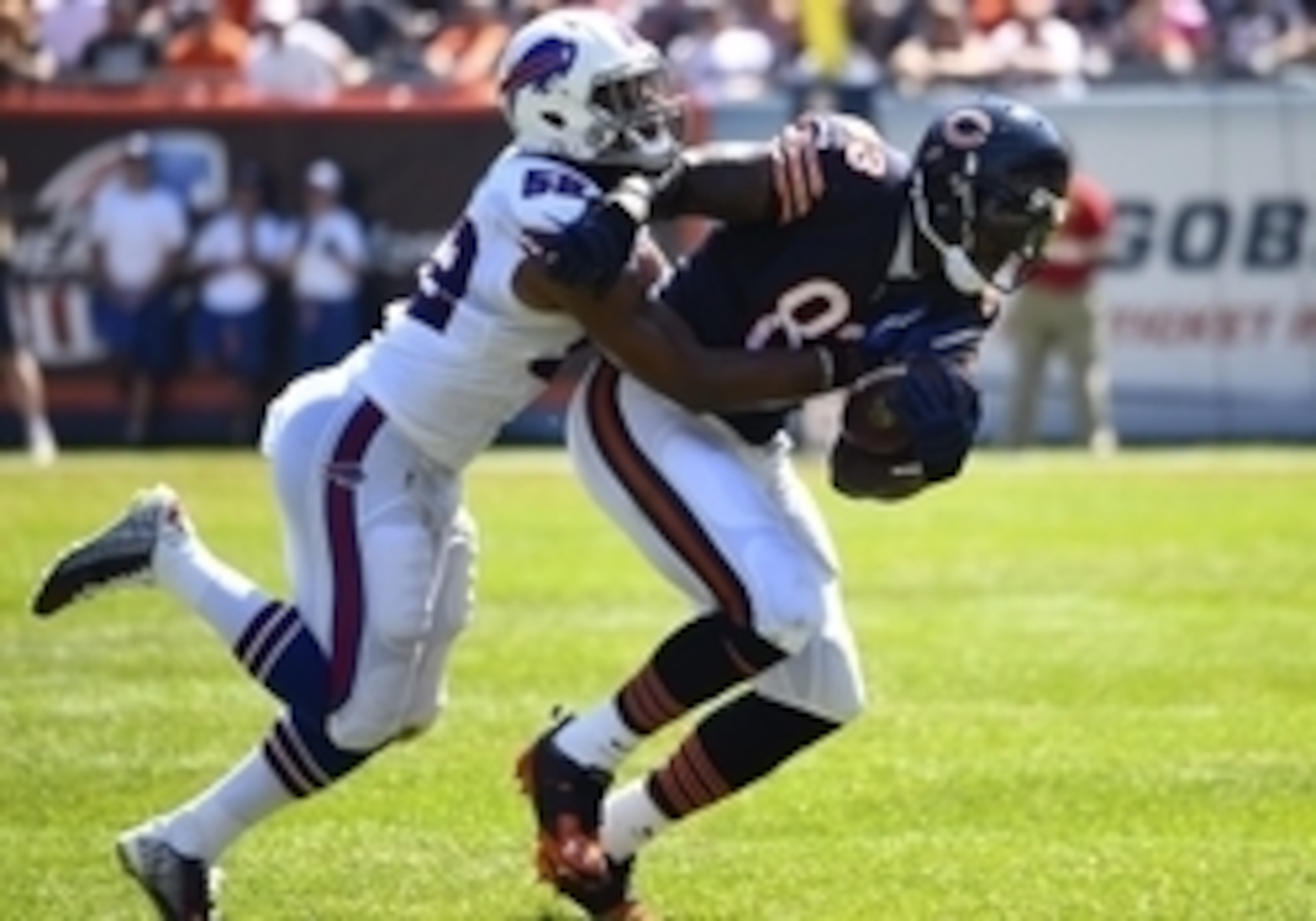
Expected to be a backup linebacker coming into the season, Preston Brown ended up playing the most snaps of any Buffalo Bills defender this year while starting 14 games and having a consistently productive rookie season.
Brown, who played a whopping total of 1,057 snaps, led the Bills with 109 total tackles this season while allowing just 0.59 yards per coverage snap—the best of any 4-3 outside linebacker to play more than 100 coverage snaps this year, per PFF.
A consistent tackler who had just six whiffs this year, Brown’s limited athletic range was exposed at times by plays toward the sidelines, but he was mostly able to mask that weakness by being instinctively in position and taking effective angles to the ball.
The third-round pick from Louisville quickly made veteran Keith Rivers a benchwarmer rather than a starter and established himself as one of the league’s more reliable linebackers. Even when Kiko Alonso returns to the lineup next season after missing all of this year with an injury, Brown should continue to be a mainstay in the Bills defense.
15. Anthony Barr, OLB, Minnesota Vikings
36 of 50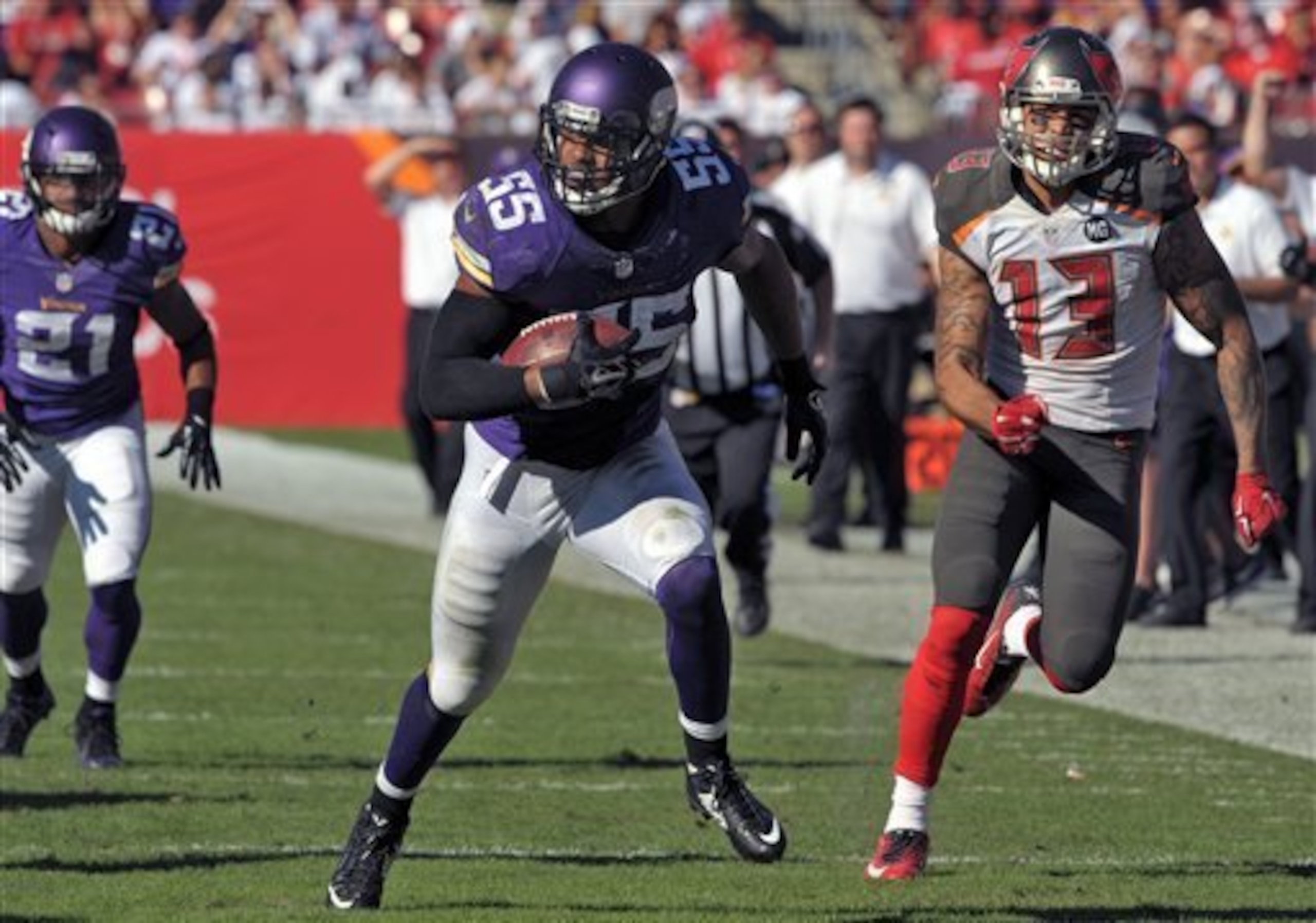
Through the first nine games of his rookie season, Anthony Barr looked to be a top candidate for this year’s Defensive Rookie of the Year award. Asked to play a multifaceted role for the Minnesota Vikings defense, the No. 9 overall pick from UCLA looked excellent as an active run defender and a difference-maker in pass defense, both rushing the passer and dropping back into coverage.
Barr struggled in his first couple of games after the bye week before suffering a knee injury in Week 13 that sidelined him for the rest of the season. Still, his play in the first half of the year was spectacular enough that he finished as one of the NFL’s best first-year players.
In a strong-side linebacker role that has him playing sometimes off the line of scrimmage and sometimes lining up on the edge, Barr accumulated 70 total tackles this season, four sacks, three passes defensed, two forced fumbles and three fumble recoveries, including one play in overtime where he forced a fumble, recovered it himself and returned it 27 yards for a game-winning touchdown against the Tampa Bay Buccaneers.
Expected to be a project coming into the NFL, Barr instead looked to be one of the most polished rookies in the league. He had significant issues with missed tackles this year—his 22 misses were the most among all 4-3 outside linebackers, according to Pro Football Focus—but he was otherwise great in his first professional campaign.
14. Ha Ha Clinton-Dix, FS, Green Bay Packers
37 of 50
While Ha Ha Clinton-Dix had no problem taking on significant coverage responsibilities in his rookie year, he also finished second on the Green Bay Packers with 94 total tackles for the season.
Often tasked with handling center field responsibilities as a deep free safety, Clinton-Dix did a good job of manning the back end of the defense while not allowing any big plays over the top. According to Pro Football Focus, Clinton-Dix did not give up any touchdown passes or receiving plays longer than 22 yards this year.
That’s particularly impressive because it’s not as though he simply hung out at the back end of the field all the time and waited for plays to come to him. To the contrary, Clinton-Dix was an aggressive defender who came up to make plays in the box all year; he had six passes defensed including one interception.
Clinton-Dix needs to become a more consistent tackler—he had 15 misses this year, per PFF—and didn’t necessarily establish himself as a game-changer this season by making big plays. That said, he took on a challenging, important role in the Packers secondary and was on the right end of plays far more often than he was exposed.
13. Kelvin Benjamin, WR, Carolina Panthers
38 of 50
Already the Carolina Panthers’ No. 1 wide receiver as a rookie, Kelvin Benjamin caught 73 passes for 1,008 yards and nine touchdowns. Those numbers ranked third among NFL rookies this season.
A 6’5”, 240-pound target, the No. 28 overall pick from Florida State immediately started putting his size and contested-catch ability to good use in his first season in the league, as he made highlight-reel plays throughout the year.
As productive as Benjamin was, he could have been better. Among 11 drops this season, tied for the second-most among all NFL wideouts per Pro Football Focus, Benjamin let multiple touchdowns and other big plays slip out of his hands.
Benjamin’s big numbers for the year had as much to do with the volume of times he was targeted—146 times, the sixth-most of any player in the NFL—as his playmaking ability. That said, the fact that the Panthers tried to get the ball to him that many times in his rookie year shows just how valuable he already is to their offense.
12. Brandon Linder, RG, Jacksonville Jaguars
39 of 50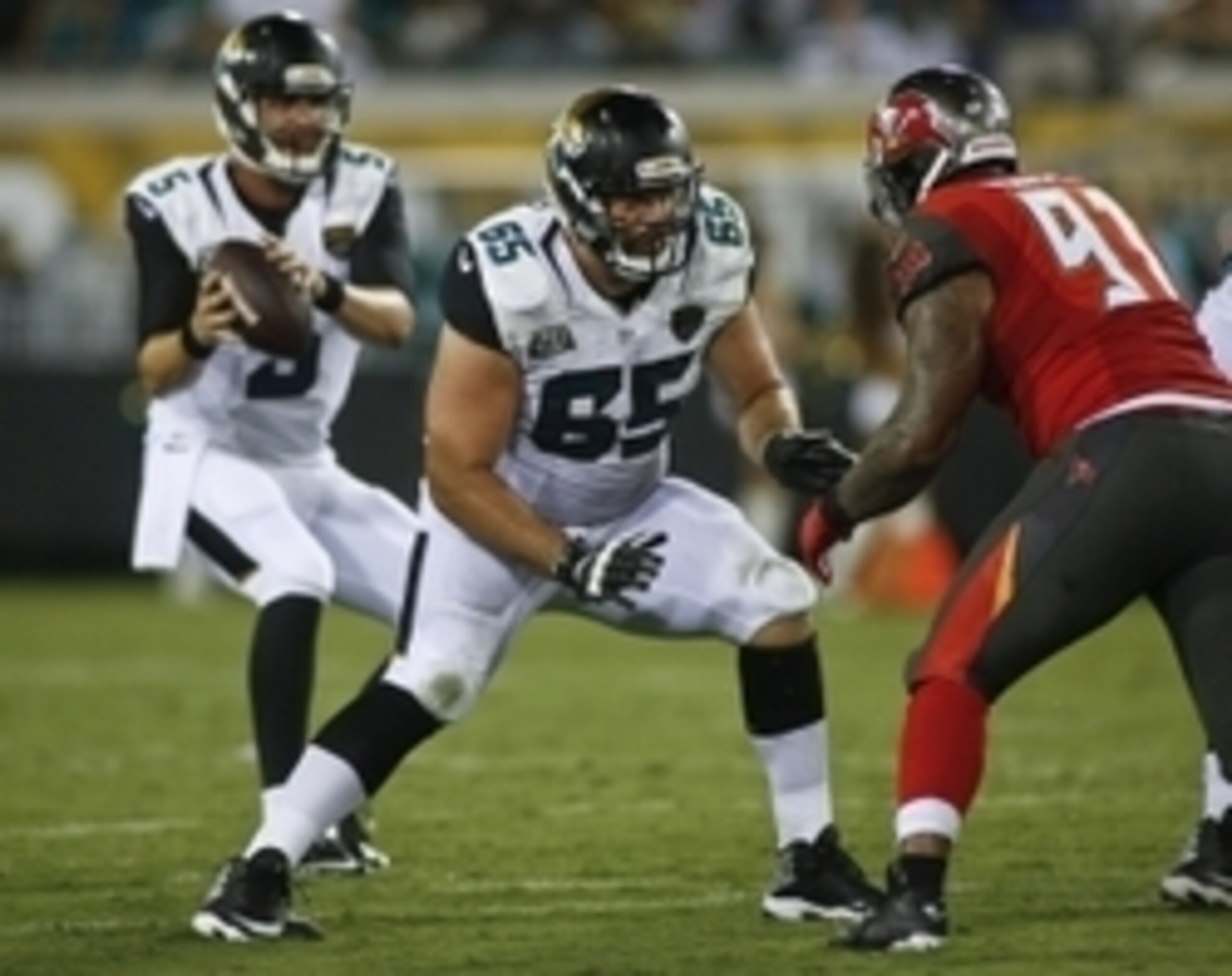
Perhaps the most surprising star of the 2014 rookie class, Brandon Linder started 15 games at right guard for the Jacksonville Jaguars this season and was among the most consistently well-performing interior offensive linemen in the NFL.
He allowed just five sacks and 14 total quarterback pressures in 564 pass-blocking snaps this year, according to Pro Football Focus, while he also made a difference as a run-blocker. As a result, PFF graded Linder as the 10th-best overall guard in the league this year.
A third-round pick from the University of Miami, Linder was flagged for just two penalties this year and was in the lineup for every game but one, which he missed with a shoulder injury.
Rated by PFF as the best player in 2014 on a young Jacksonville offense, Linder looks as though he will be a long-term staple of the offensive line.
11. E.J. Gaines, CB, St. Louis Rams
40 of 50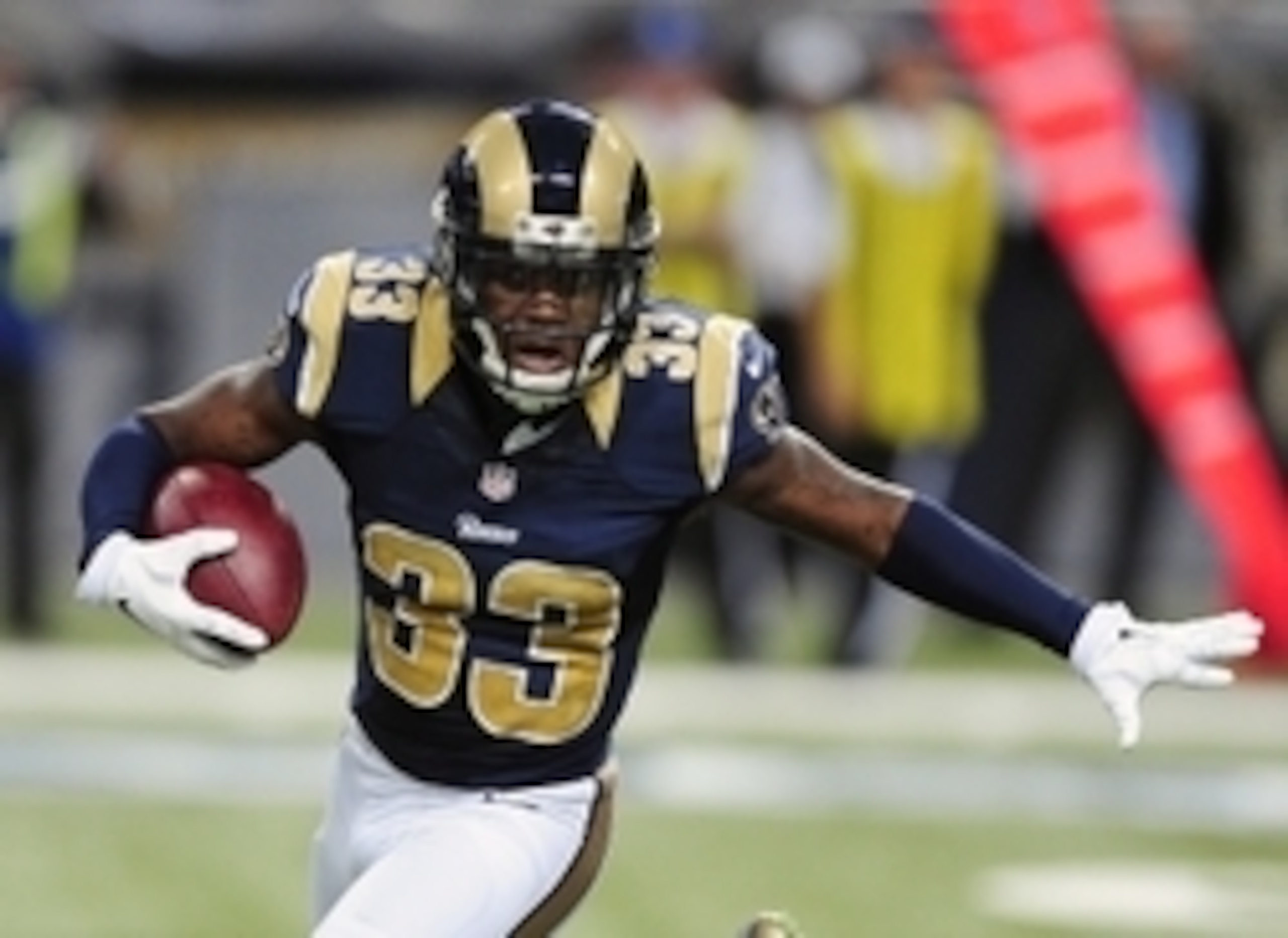
Nearly all the rookie cornerbacks who saw a great deal of playing time for their teams this year, including those included within this top 50, struggled significantly in their debut NFL seasons. Surprisingly, the lone exception was E.J. Gaines, a sixth-round pick from Missouri who started 15 games for the St. Louis Rams.
Gaines, who spent the majority of the year starting outside but also played some games in the slot, had great consistency in coverage for a rookie cornerback, especially considering how far into the draft he was selected. He allowed just 1.03 yards per coverage snap this season, which was the 14th-best mark among cornerbacks who played 50 percent or more of their teams’ coverage snaps, per Pro Football Focus.
With two interceptions among 15 total passes defensed—the most among rookies this year—Gaines frequently showed his ability to make plays on the ball in the air. He was also productive against the run, as he finished second among NFL cornerbacks in run-stop percentage, per PFF, while he accumulated 70 total tackles.
Gaines was not expected to be a starter all year for the Rams, but after having to replace an injured Trumaine Johnson at the beginning of the season, he took the opportunity and ran with it. Now he looks to be one of the 2014 draft’s biggest steals—and a defensive back St. Louis can count on for reliability going forward.
10. Mike Evans, WR, Tampa Bay Buccaneers
41 of 50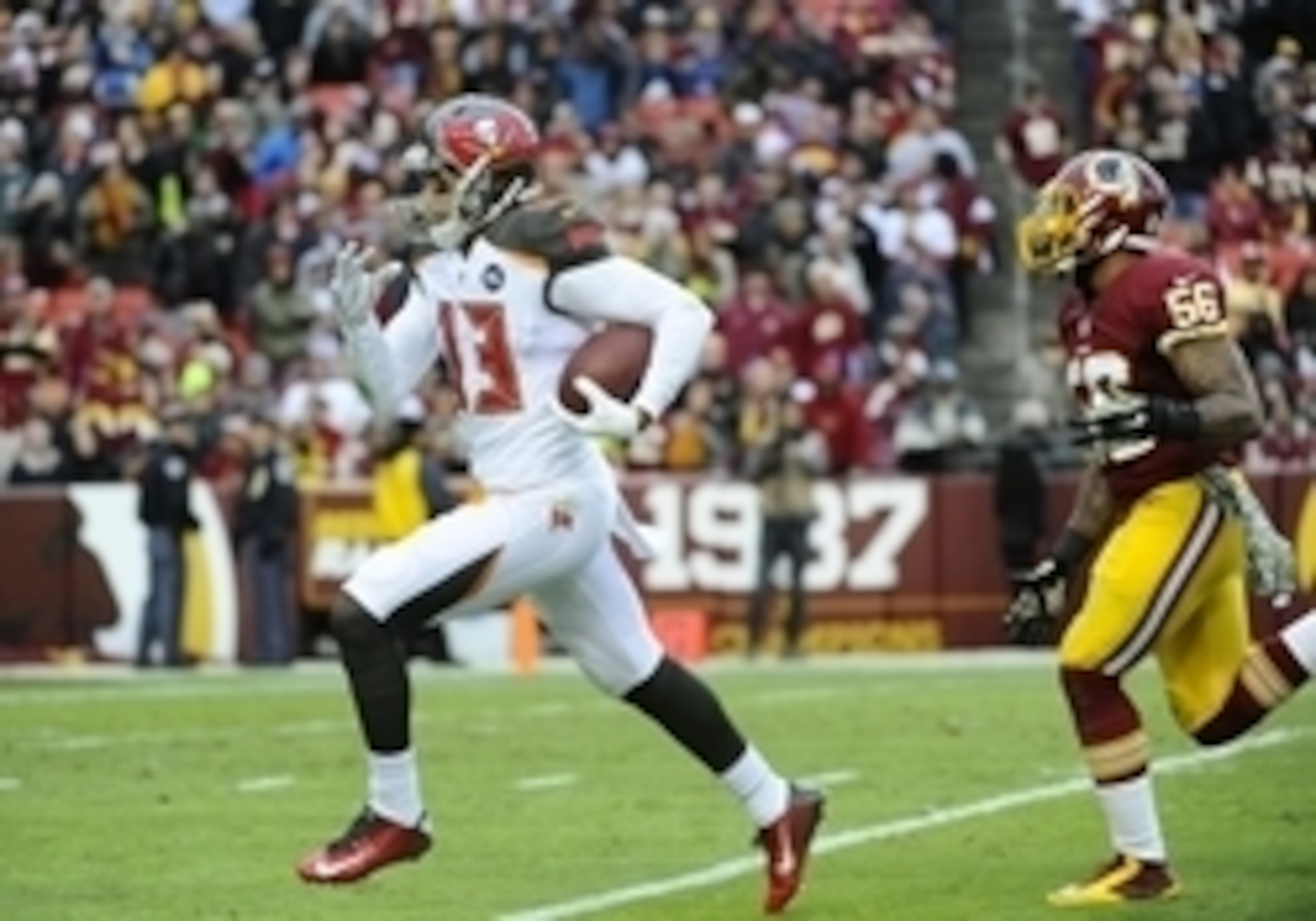
One of the lone bright spots in a disastrous year for the Tampa Bay Buccaneers offense, Mike Evans made good on his team’s No. 7 overall pick. He accumulated 1,051 receiving yards and 12 receiving touchdowns—both were in the top two among rookie pass-catchers—on 68 receptions.
A big downfield target at 6’5” and 231 pounds, Evans frequently demonstrated his ability to make tough adjustments to passes in the air and win against coverages in contested-catch situations. He proved to be a big-play weapon, as he had 20 receptions that went for 20 yards or more in his rookie season.
Despite playing on an offense with one of the league’s worst quarterback situations, Evans caught multiple passes in all 15 games that he played in. While he made some great efforts for difficult catches, the Texas A&M product finished the season with only four drops, according to Pro Football Focus.
A mismatch because of his great size and complementary athleticism, Evans should make even more big plays going forward, especially if Tampa Bay can upgrade over Josh McCown and Mike Glennon at the quarterback position.
9. Teddy Bridgewater, QB, Minnesota Vikings
42 of 50
A 12-game starter for the Minnesota Vikings this season, Teddy Bridgewater made steady improvement over the course of the year and ended up having a season that stacks up impressively against other recent performances by rookie quarterbacks.
Bridgewater completed 64.4 percent of his passing attempts—the third-best in NFL history for a rookie quarterback—while his quarterback rating of 85.2 was the seventh-best among rookie signal-callers all-time, according to Chris Tomasson of the St. Paul Pioneer Press. He threw for 7.3 yards per passing attempt this year while completing 14 touchdown passes against 12 interceptions.
While pressure often exposes the flaws of rookie quarterbacks, Bridgewater rarely look fazed by it. In fact, while playing behind a porous offensive line and with an unspectacular group of wide receivers, he had the best accuracy percentage under pressure among all NFL quarterbacks this year, according to Pro Football Focus (h/t Krauserrific on Twitter).
Bridgewater didn’t make a great deal of spectacular plays in his rookie year, but he managed the Vikings offense like a veteran and helped lead his team to six of its seven wins. With a year of experience now under his belt, Bridgewater should have more opportunities to make big plays going forward.
8. Jeremy Hill, RB, Cincinnati Bengals
43 of 50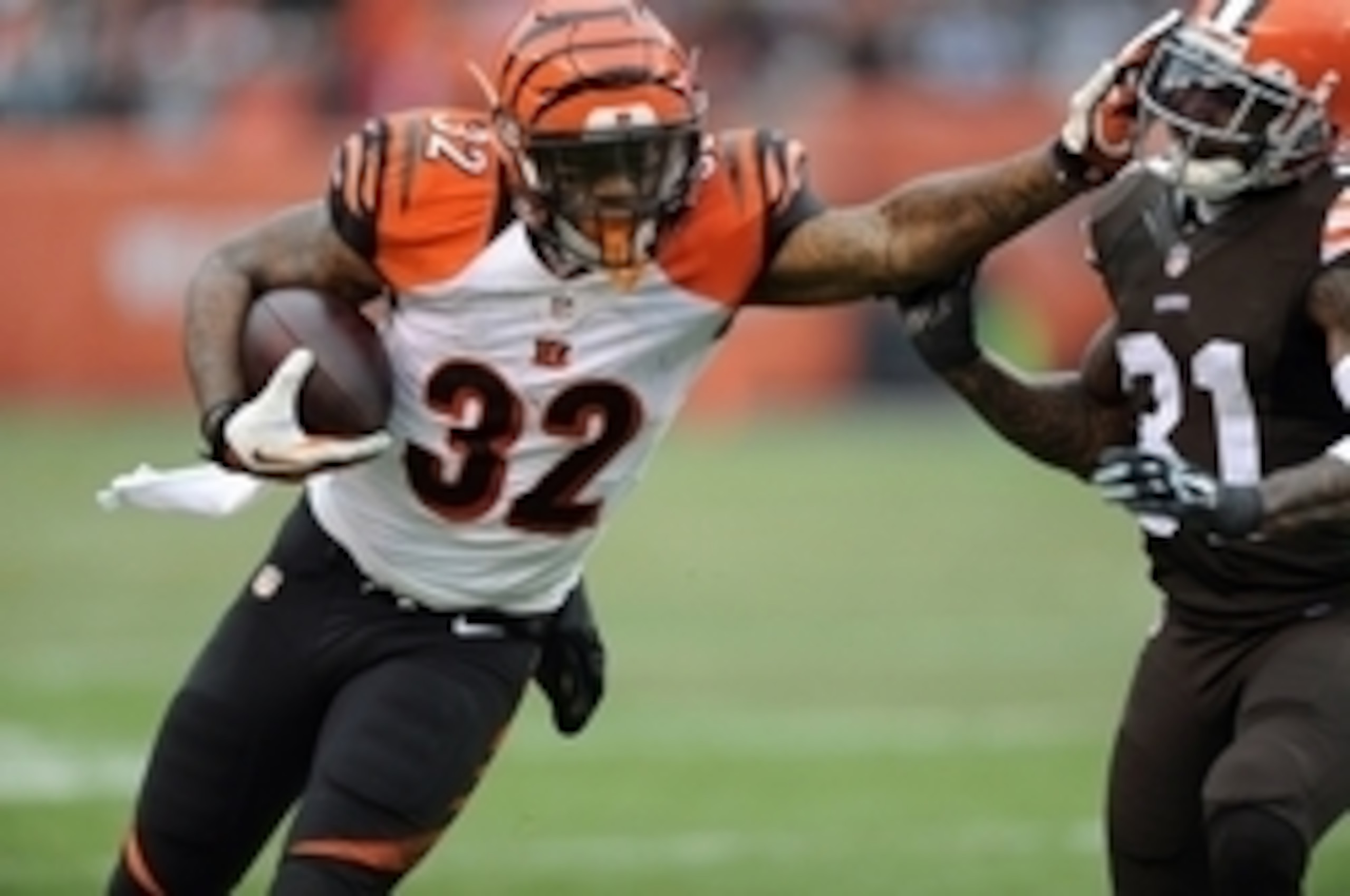
After picking up a gradually increasing workload and eventually seizing the Cincinnati Bengals’ starting running back job from Giovani Bernard in the second half of the season, Jeremy Hill tore through opposing defenses down the stretch of the 2014 season to run for 1,124 yards, easily the most among rookies and the eighth-most among all NFL runners.
A 6’1”, 238-pound back who keeps runs going through contact and has good burst for his size, Hill only got stronger as the season progressed. He ran for 100 yards or more in five of the Bengals’ final nine games this season and led all NFL rushers with 929 yards on the ground between Weeks 9 and 17.
Hill scored nine rushing touchdowns this season, tied for the third-most in the NFL, and averaged 5.06 yards per carry, the third-best average among backs who topped 1,000 rushing yards. Meanwhile, he added 27 receptions for 215 yards.
The second-round pick from LSU had five fumbles this year, so he will have to improve his ball security, but Hill’s rookie season was otherwise a tremendous success.
7. Corey Linsley, C, Green Bay Packers
44 of 50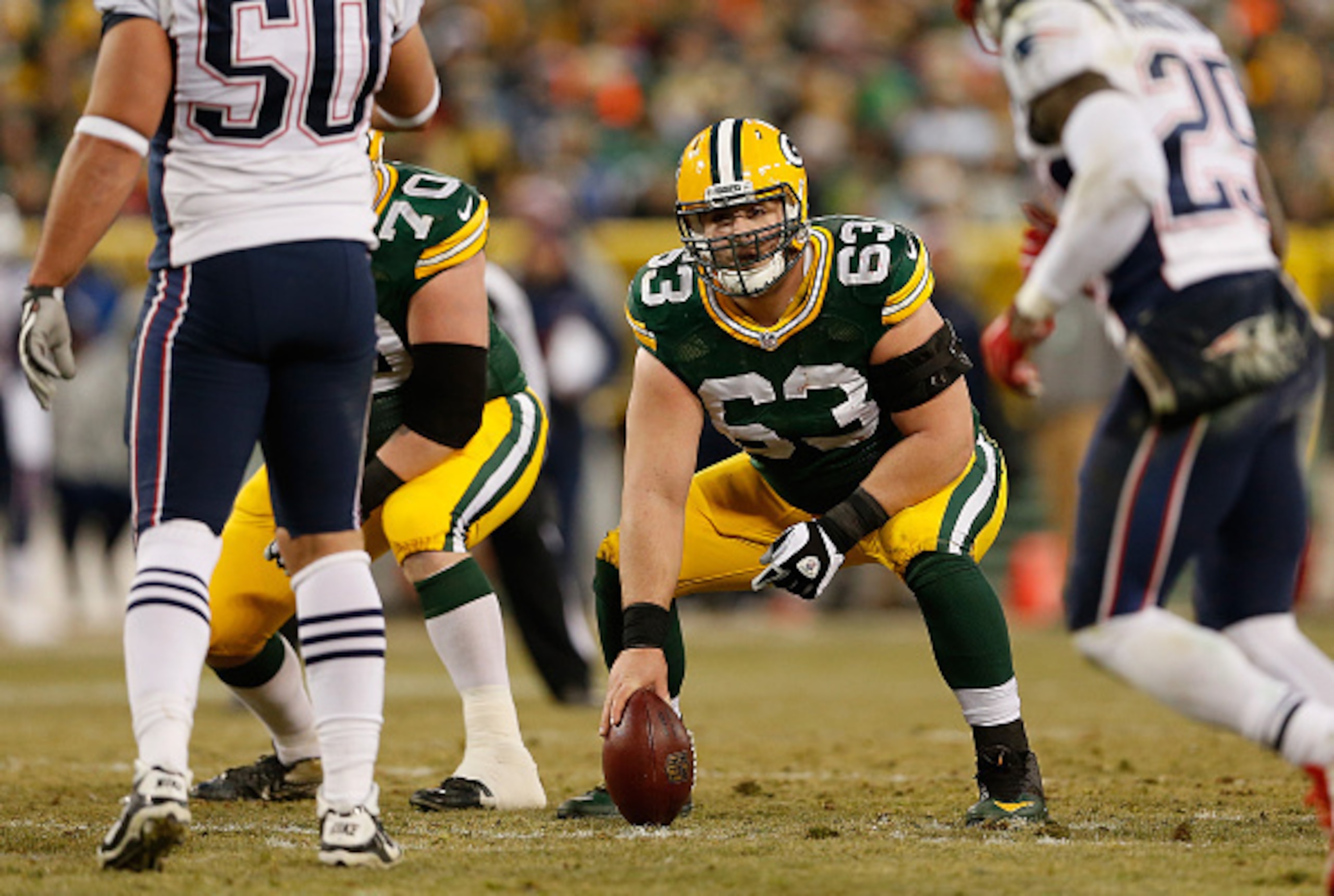
The Green Bay Packers had the NFL’s best scoring offense this regular season, and a quietly significant factor in their success was the consistently effective play of rookie center Corey Linsley in the middle of their offensive line.
A fifth-round pick from Ohio State who only assumed the starting job right away because of an injury to J.C. Tretter, Linsley performed so well this year that giving the position back never became a consideration for the Packers.
Linsley started all 16 games for the Packers at center this year and allowed just one sack in the process, according to Pro Football Focus. Strong at the line of scrimmage and able to accelerate downfield for second-level blocks, Linsley also had a great year as a run-blocker.
Through one season, no player has looked like a better value from the 2014 draft than Linsley, who was the No. 161 overall pick yet has already established himself as the linchpin of the Green Bay offensive line.
6. C.J. Mosley, ILB, Baltimore Ravens
45 of 50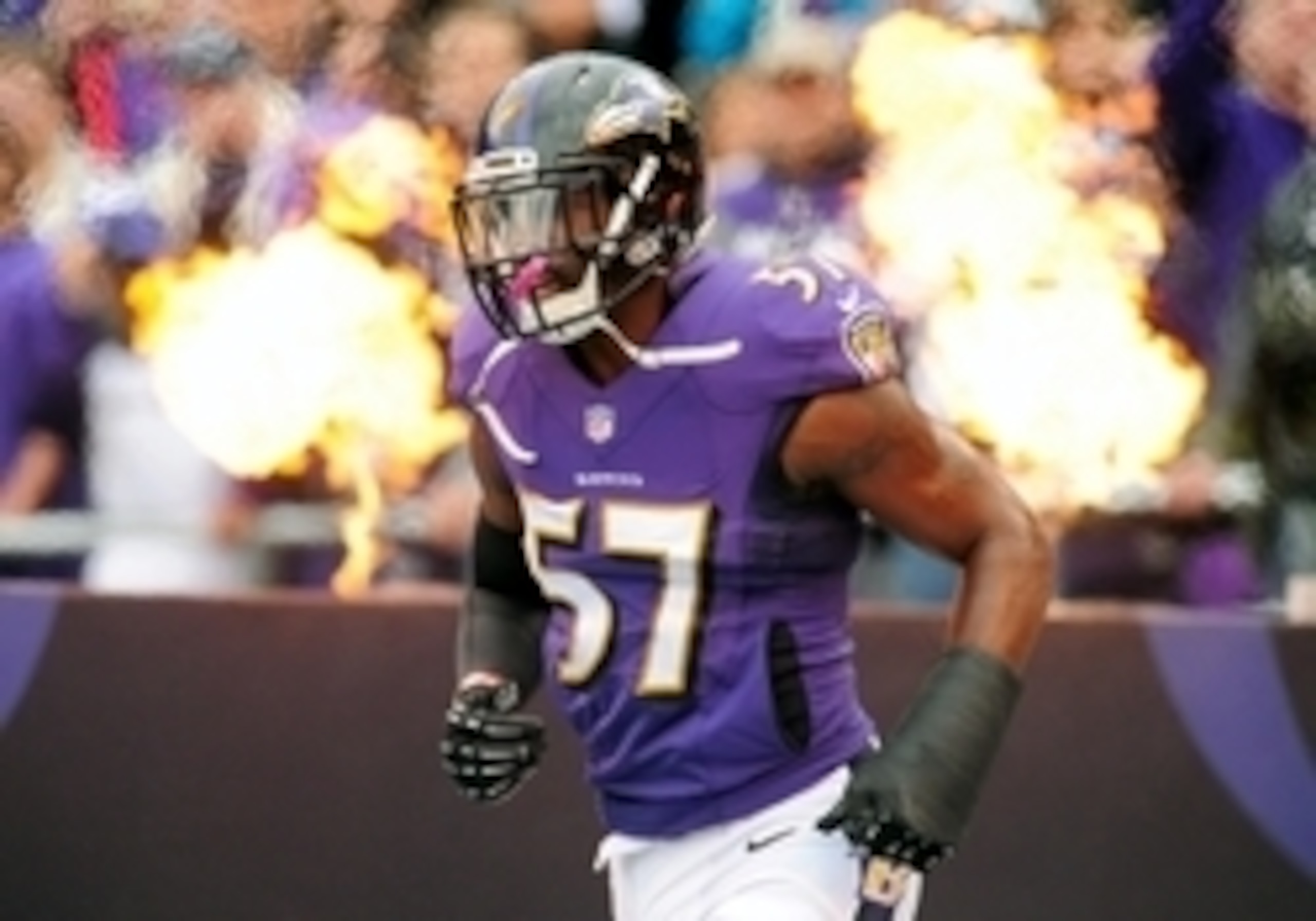
A true plug-and-play linebacker as he was expected to be, C.J. Mosley started all 16 games for the Baltimore Ravens at inside linebacker this season and was highly productive.
The No. 17 overall pick from Alabama recorded 133 total tackles, the seventh-most among all NFL players, including eight tackles for loss and three sacks. Mosley also had eight passes defensed, including two interceptions, plus one forced fumble and one fumble recovery.
An every-down player on the Ravens defense from the beginning, Mosley displayed his playmaking range and ability to do it all—run-stopping, pass-rush blitzing, dropping back into coverage. He had some issues in the coverage aspect, allowing 1.17 yards per coverage snap according to Pro Football Focus, but should improve in that area as he gains experience.
Mosley’s consistently impactful rookie season came as no surprise, and it should be a sign of things to come. An instinctive player who tackles soundly and has good short-area quickness, the Pro Bowl selection should continue to establish himself as one of the league’s premier linebackers.
5. Zack Martin, RG, Dallas Cowboys
46 of 50
The Dallas Cowboys had arguably the NFL’s best offensive line this season. A huge factor in the unit’s success was the addition of Zack Martin, who had an excellent rookie season as the team’s starting right guard.
A converted left tackle from Notre Dame, Martin had no trouble with his transition to a new position. Dominant in pass protection all year while effective as a run-blocker, the No. 16 overall pick proved to be the missing puzzle piece for the Cowboys offensive line.
Martin did not allow a single sack this season, according to Pro Football Focus, and ranked third among all NFL guards in pass-blocking efficiency, with just 10 total pressures allowed in 517 pass-blocking snaps. Meanwhile, he also played a key role in helping lead Cowboys running back DeMarco Murray to a league-leading 1,845 rushing yards this year.
Having also been flagged for just two penalties all season, Martin graded out as PFF’s seventh-best guard in the NFL this year.
4. Joel Bitonio, LG, Cleveland Browns
47 of 50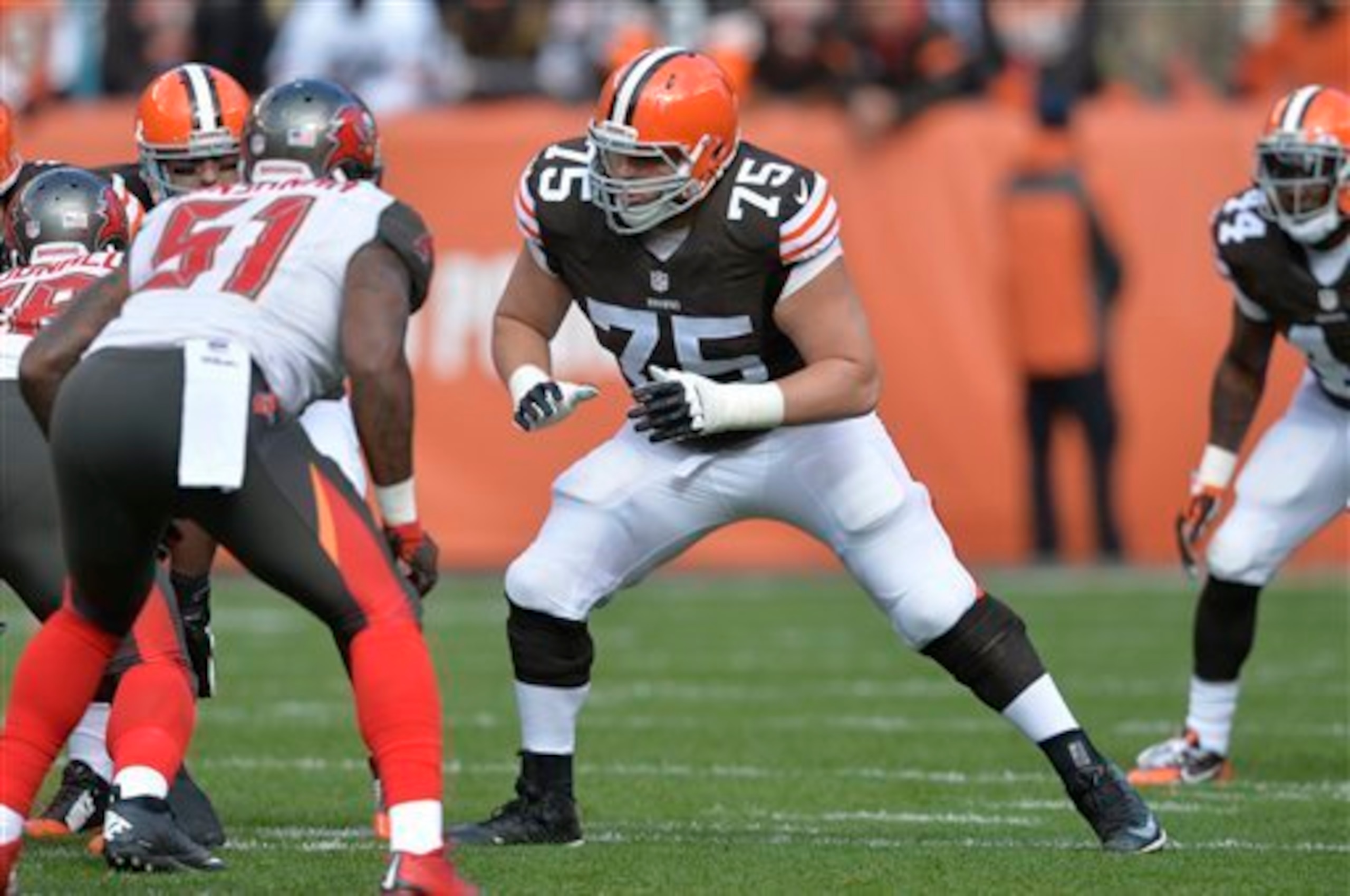
Joel Bitonio did not receive nearly as much national attention this season as Zack Martin—largely because the Cleveland Browns were not nearly as successful as the Dallas Cowboys and their offensive line did not have the same across-the-board success—but Bitonio was individually even more dominant than Martin was this year.
A 16-game starter at left guard, Bitonio had an excellent rookie season as a pass-blocker, allowing just one sack and 15 total quarterback pressures, per Pro Football Focus. The second-round pick was even better as a run-blocker, as he drove defenders away from the ball with power and utilized his great athleticism to explode to the second level and pick up key downfield blocks.
Bitonio, a converted left tackle from Nevada, made a natural transition to his new position. He formed a left side of the Browns offensive line, in combination with perennial Pro Bowl left tackle Joe Thomas, that might already be the NFL’s best.
Graded as the third-best guard in the entire NFL this season by PFF, Bitonio had the best rookie season of any player selected outside the first round of the 2014 draft.
3. Odell Beckham Jr., WR, New York Giants
48 of 50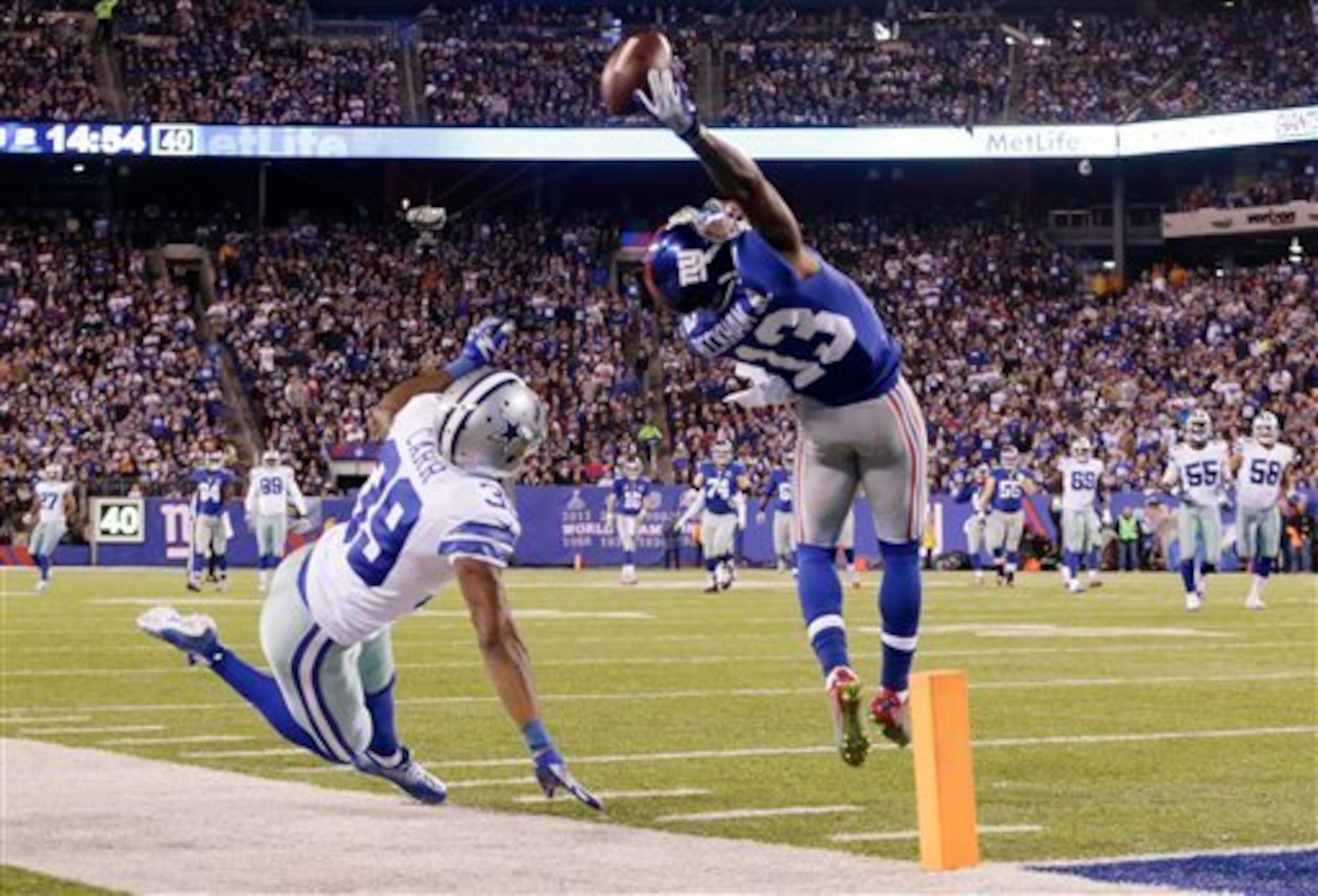
Seemingly a sure bet to win this year’s Offensive Rookie of the Year award, Odell Beckham Jr. rapidly soared to superstardom with a remarkably productive second half of his debut NFL season.
Despite missing the first four games of his season with a hamstring injury, Beckham led all rookie receivers and finished in the top 10 among NFL pass-catchers in all three major categories, catching 91 passes for 1,305 yards and 12 touchdowns.
In the second half of the season alone, he caught 73 passes for 1,043 yards—both were the most among all NFL receivers in their final eight games of the year—while he also had nine touchdown catches in that span. He tied an NFL record held by Dallas Cowboys legend Michael Irvin by gaining 90 or more receiving yards in nine straight games.
Best known for a ridiculous one-handed catch he made on Sunday Night Football in November against the Dallas Cowboys, Beckham has already proved that he is a truly special talent. The No. 12 overall pick from LSU has made his case for being among the NFL’s elite wide receivers.
2. Khalil Mack, OLB, Oakland Raiders
49 of 50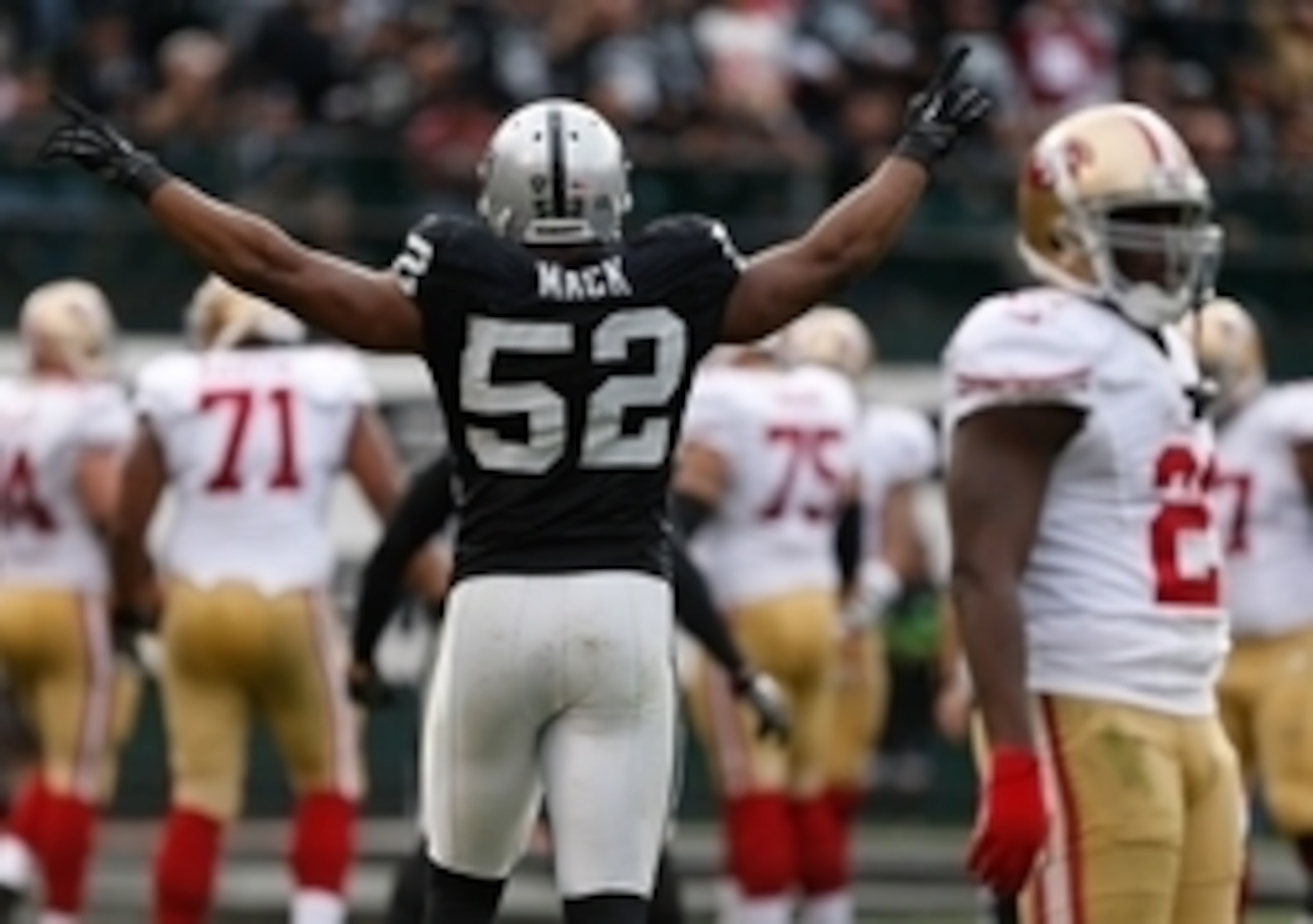
Khalil Mack’s remarkable rise to prominence continued in his rookie season for the Oakland Raiders, as the 2-star recruit turned Mid-American Conference superstar emerged as one of the NFL’s best defensive players during his first year in the league.
A strong-side linebacker who can do everything from rushing the passer off the edge to dropping back into coverage and being a difference-maker against the run both along the line of scrimmage and in space, Mack was an impact player in every facet of the game during his debut season.
He recorded 75 total tackles, including 16 tackles for loss and four sacks. Outstanding against the run, Mack was also regularly disruptive as a pass-rusher, as he recorded 54 total quarterback pressures and three batted passes, according to Pro Football Focus.
One year into his NFL career, Mack is already the best player on Oakland’s roster. The No. 5 overall pick from Buffalo gives the Raiders a young superstar to build their otherwise talent-strapped defense around.
1. Aaron Donald, DT, St. Louis Rams
50 of 50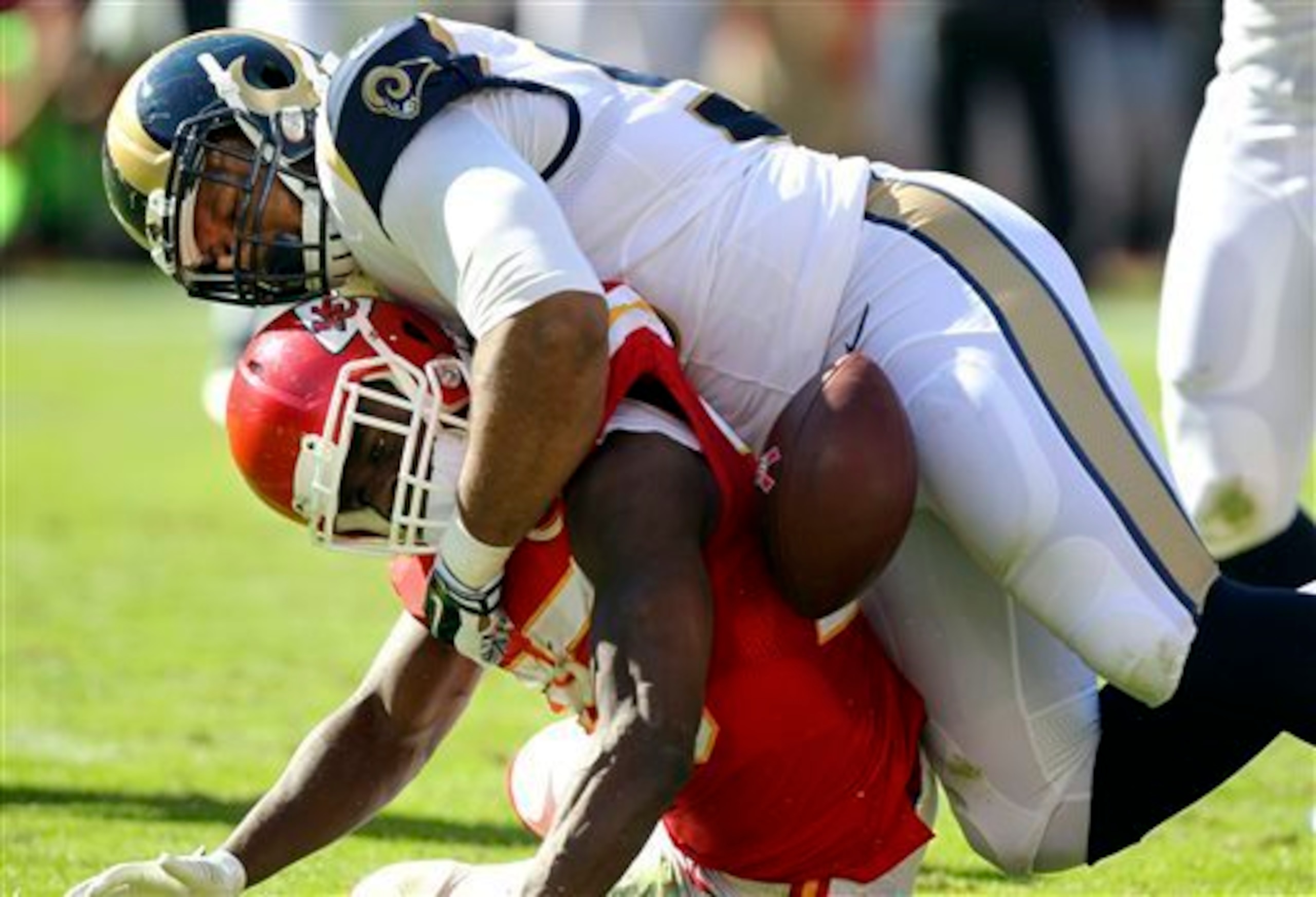
Fresh off a dominant senior season at the University of Pittsburgh, Aaron Donald continued to wreak havoc upon his competition in his first season in the NFL. The St. Louis Rams’ No. 13 overall pick has already become one of the league’s best interior penetrators.
An undersized but strong and exceptionally quick defensive tackle, Donald beat blockers into gaps all season to blow up plays in the backfield. He recorded 18 total tackles for loss and nine sacks; both marks ranked second in the NFL among all defensive tackles.
While Donald’s big plays came as little surprise, considering how explosive he is and his skills with his hands, just as impressive was his ability to hold up over the course of the game as a run-stopper. Despite being one of the NFL’s smallest defensive tackles at 6’1” and 285 pounds, Donald was strong at the point of attack and did not allow bigger offensive linemen to push him around.
The case can certainly be made that either Mack or Beckham should hold the No. 1 spot over Donald—all three have been spectacular—but Donald has been disruptive to a degree rarely seen from his position, especially from a rookie. Graded by PFF as the NFL’s best defensive tackle this year, Donald also gets the nod in these rankings as the league’s top rookie performer for the 2014 season.
Dan Hope is an NFL/NFL draft Featured Columnist for Bleacher Report.

.jpg?w=2560 "Steelers Saints Football")



.jpg?w=2560 "🚨 Week 8 AP Top 25 Poll")
