Nationals' Jordan Zimmermann Deserves a Contract Worthy of an Ace
It is decision time for the Washington Nationals ownership group.
After a second disappointing postseason ousting in three years, the team is being forced to make difficult financial decisions, in part because “The Plan,” set forth by the Lerner Group and meant to improve the team through draft picks and field a competitive team to fill its stadium, has worked well.
Chief among the Lerner Group’s decisions is star pitcher Jordan Zimmermann, who was part of that plan when he was drafted in the second round of the 2007 amateur draft. Zimmermann has established himself among the best starting pitchers in the game, and now, with his free agency hanging over the club after the 2015 season, it is time for the Nationals to pay up or move on.
TOP NEWS

MLB Commissioner Defends Salary Cap
Miz Sets WS Record Already ⛽
Brewers Get 1st WS Win Since 1982 💪
The Nationals attempted to reach a long-term deal with Zimmermann before this season started, but the sides were “too far apart to get that done,” as Zimmermann told The Washington Post in January after he agreed to a two-year, $24 million contract.
That deal bought out his final two arbitration seasons and gave him security going into free agency, but since that deal was signed, two significant happenings unfolded. Neither of them good for the Nationals' chances of keeping Zimmermann or keeping the team as the clear favorite in the National League East beyond 2015.
The first was the Cincinnati Reds signing Homer Bailey to a six-year, $105 million contract. That deal was finalized about a month after Zimmermann signed his two-year deal, and at the time, the two pitchers were seen as comparable.
| ERA | IP | K/BB | ERA+ | FIP | WAR | |
| Jordan Zimmermann | 3.10 | 409 | 3.78 | 126 | 3.43 | 7.0 |
| Homer Bailey | 3.58 | 417 | 3.46 | 110 | 3.64 | 6.2 |
Considering the Nationals have other players entering free agency after next season—reliever Tyler Clippard, shortstop Ian Desmond and starter Doug Fister—that kind of nine-figure deal for Zimmermann seemed unlikely even before this season started.
Now that Zimmermann’s 2014 season is complete, it looks even more unrealistic that the Nationals can afford him and keep guys like Desmond and Fister.
Zimmermann, who made a second consecutive All-Star team and will likely be in the top five of the NL Cy Young Award voting, had a 2.66 ERA, 2.68 FIP, 1.072 WHIP and 141 ERA-plus—all are career bests—including a no-hitter to finish off the regular season and a dominant Game 2 performance in the National League Division Series against the San Francisco Giants.
Those numbers left Bailey’s contract in the dust and put Zimmermann at an elite level. According to FanGraphs, since the start of 2012, Zimmermann is fifth in the majors in ERA (2.96) and 12th in the majors in total WAR (12.3) for pitchers. Both numbers are better than teammate Stephen Strasburg's (3.10 and 11.7) during that time.
The kind of company Zimmermann shares in that span is top-shelf, and any market-value contract he receives going forward will be at the same level.
The Los Angeles Dodgers gave Zack Greinke (2.96 ERA and 11.6 WAR since 2012) $147 million over six years, and he now seems comparable to Zimmermann, who is about two years younger than Greinke—although Greinke was younger when he signed his deal compared to Zimmermann if he does sign after next season.
That kind of production and market value on their own might be enough to price out the Nationals. And if that is not enough, there are the team’s future commitments.
Ryan Zimmerman and Jayson Werth are aging pillars, and Werth will make $63 million through 2017 and Zimmerman a ridiculous $74 million through 2019. Both guys, particularly Zimmerman, have already shown real signs of age and declining production.
Then there are the guys who haven’t been paid yet. Desmond is a fan favorite, and the Nationals don’t currently have anyone to replace him if he doesn’t come back after next season. Also, since the start of 2009 and before this season, Desmond was the team’s most valuable offensive player in terms of WAR.
Fister was arguably the club’s best starting pitcher this year, but his age—he will be 31 next season—might make him expendable for the Nats. Tyler Clippard has been a dynamite reliever for the team, but we’ll figure the Nationals can afford to lose him after next season since bullpens can be fickle things.
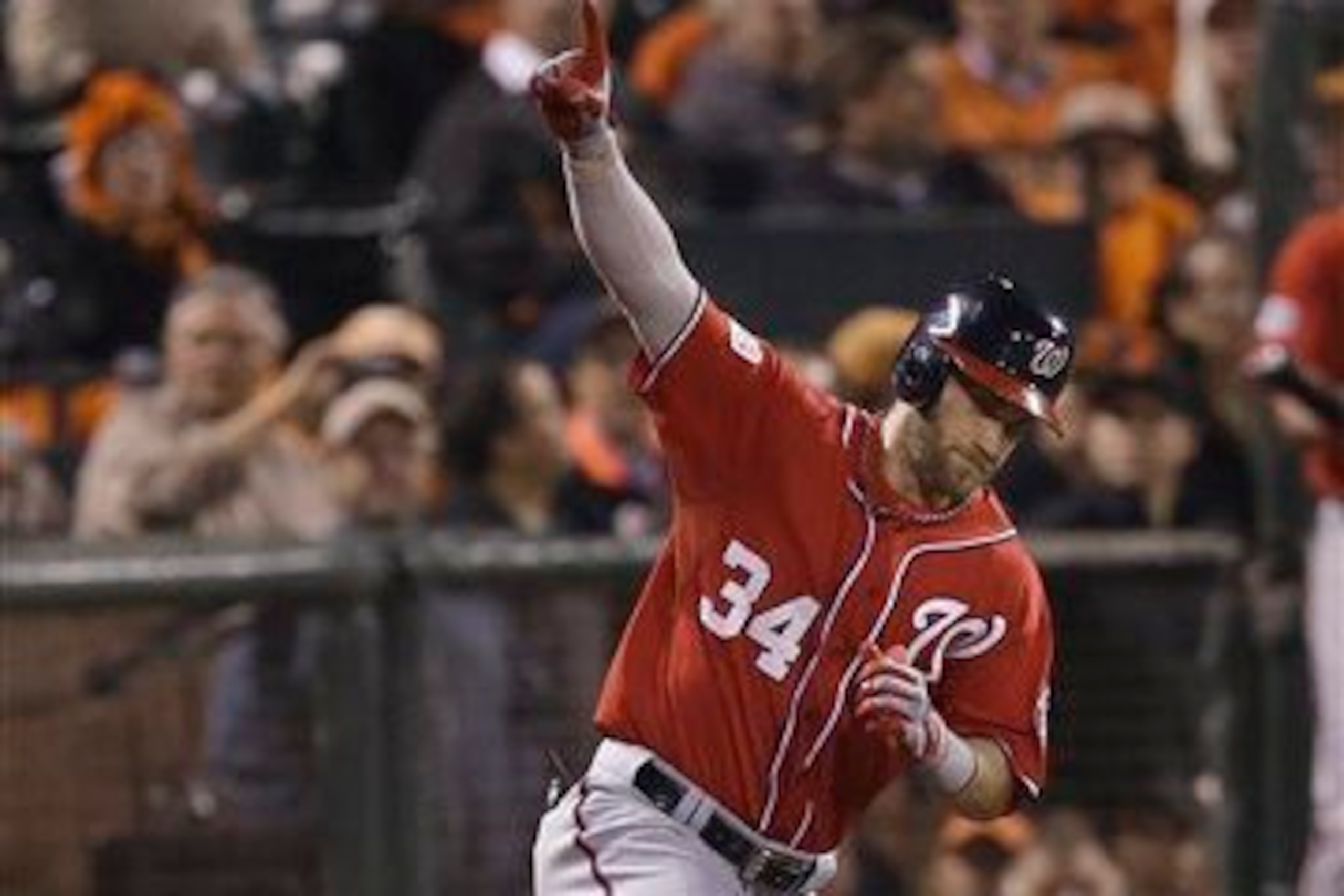
That still leaves Strasburg and Bryce Harper, the young pillars of the franchise who are still arbitration eligible but will demand megadeals when the time comes.
With this in mind, Zimmermann has also said, on more than one occasion, he will not take a hometown discount to stay in Washington.
“A lot of people get the impression I’m trying to break the bank and get a boatload of money,” Zimmermann told The Washington Post last December. “I want a fair deal. I don’t want something team-friendly. I want to get paid my value.”
Zimmermann’s case, more than any other the Nationals face in the coming offseason, is difficult for the team to assess because of what he will cost and future commitments the team will have to make—you assume the team will not allow Strasburg or Harper to get to free agency after the 2016 and 2018 seasons, respectively.
Do the Nationals bite the bullet and sign Zimmermann to his market value? Or do they lowball him and risk him walking away? Or—and this could be quite likely if the team decides it doesn’t want to make such a large financial commitment to him—does the team trade Zimmermann during this offseason for a nice haul of prospects and major league-ready players?
Zimmermann is a bona fide ace at this point in his career, and he deserves to be paid as one.
That means the team risking financial flexibility later down the road to keep one of the league’s top pitchers or allowing its World Series window to further close while it parts ways with Zimmermann in a trade—since allowing him to walk in free agency for nothing more than a gamble of a draft pick—would be foolish.
Regardless of what the call is, the Lerner family and general manager Mike Rizzo should make it within the next couple months for the clarity of the organization’s future.
Anthony Witrado covers Major League Baseball for Bleacher Report. He spent the previous three seasons as the national baseball columnist at Sporting News and four years before that as the Brewers beat writer for the Milwaukee Journal Sentinel. Follow Anthony on Twitter @awitrado and talk baseball here.
.png?w=2560)

.jpg?w=2560 "NFL House in Paris Closes for Protests")

.jpg?w=2560 "Trevon Diggs Cut by Seahawks")